- Topics 1567
- Industrial 59
- Troubleshooting Guides 32
- Restaurant Management 145
- Bar Management 69
- Catering Tips 43
- Bakery Management 44
- Food Trucks & Concessions 36
- Advertising & Marketing 41
- Eco-Friendly Tips 13
- Facility Layout & Design 47
- Coffee Shop Tips 32
- Installation & Maintenance 63
- Janitorial & Pest Control 34
- Safety & Sanitation 122
- Startup Tips 110
- Menu Design 13
- Kitchen & Cooking Tips 108
- Hospitality Management 25
- Pizza & Sandwich Shop Tips 20
- Smallwares 42
- Food Prep 102
- Tabletop Items 21
- Disposables 28
- Calculators & Tools 7
- Consumables 77
- Warewashing & Laundry 22
- Cooking Equipment 107
- Food Storage & Refrigeration 57
- Beverage Equipment 42
- Office Supplies 6

In any commercial foodservice operation, keeping prepared foods at the right temperature should always be emphasized. Not only does this practice enhance food safety by keeping foods out of the temperature danger zone, but it also preserves the quality and texture of your signature dishes, ensuring they are fresh and ready to serve. Depending on the nature of your business, there are various types of commercial food warmers available to meet your specific needs. Understanding the differences between these food warmers will help you choose the best option for your establishment and maintain consistent food quality.
Shop All Food Holding and Warming Equipment
Learn more about the different types of food warmers:
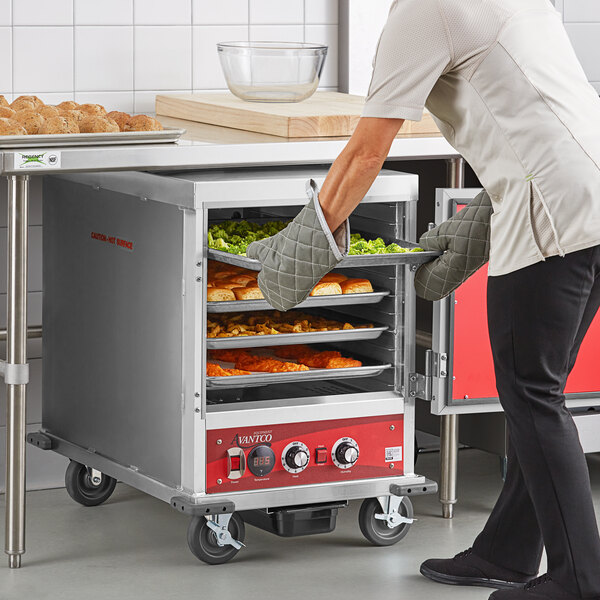
Holding cabinets are large commercial kitchen appliances designed to hold large batches of food at safe serving temperatures. Foods can be prepared in advance and held until they are ready to be served, preventing bacterial growth and preserving moisture content so your food doesn’t dry out. Commercial holding cabinets work by creating an insulated, temperature-controlled zone where food can rest. They use digital or dial controls to adjust settings within the unit, and come in humidified or non-humidified options based on the foods you’re handling. Many commercial-grade holding cabinets also offer internal convection fans to circulate air.
- Types of holding cabinets: Standard holding cabinets, undercounter holding cabinets, pizza holding cabinets, proofing cabinets, countertop holding cabinets
- Best for: Keeping bulk cooked meals and ingredients warm in restaurants or commercial bakeries
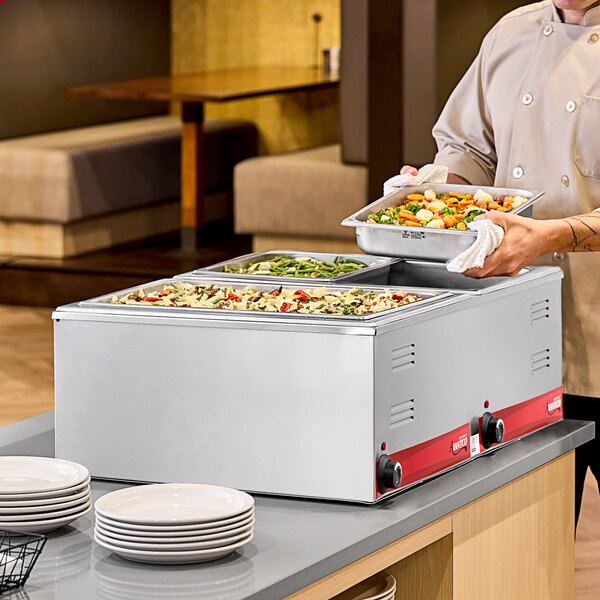
Countertop food warmers are compact units that hold pre-cooked foods in limited batches. Their small footprint makes them ideal for kitchens with limited space, as they can be conveniently placed on countertops or other surfaces without taking up too much room. You can use them to keep entrees and side dishes at optimal temperatures until they are ready to serve, or to create a self-serve, buffet-style dining setup for your guests. Countertop food warmers function differently based on which type you choose. Some, like Bain Marie warmers, use heated water to keep foods warm, while others, like rethermalizers, rapidly heat foods using an induction system or water bath.
- Types of food warmers: Bain Marie warmers, soup kettle warmers, rethermalizers
- Best for: Buffets and limited on-site catering operations, food expos and service stations
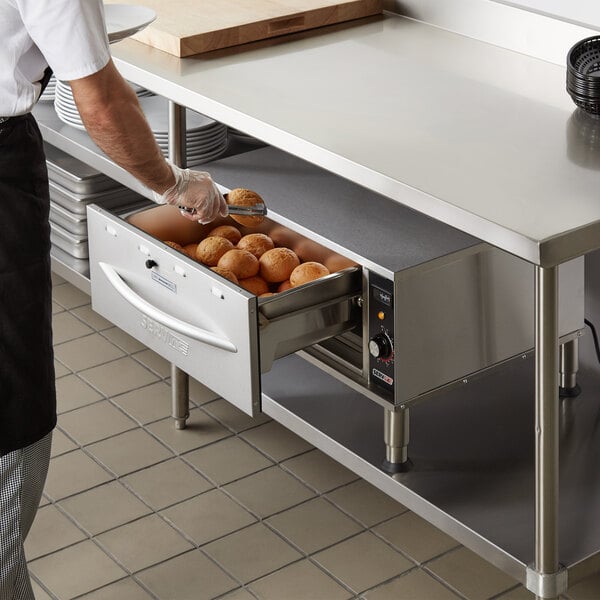
Drawer warmers are cabinet-style warmers designed to warm food and ingredients in bulk. They feature adjustable thermostatic or digital temperature controls and are designed for even heat distribution, keeping foods at the right temperature with professional consistency. Drawer warmers are most commonly used to hold finished dishes, but can also be used to hold ingredients in bulk. They can be built into your existing kitchen layout or placed underneath existing countertops and prep surfaces to save space. Warming drawers typically feature powerful heating elements spaced evenly throughout the cabinet. Thick insulation provides steady temperature control, keeping heat and humidity from escaping while foods rest.
- Types of drawer warmers: Freestanding drawer warmers, built-in drawer warmers, undercounter drawer warmers
- Best for: Keeping plated meals warm for serving, high-volume ingredient holding
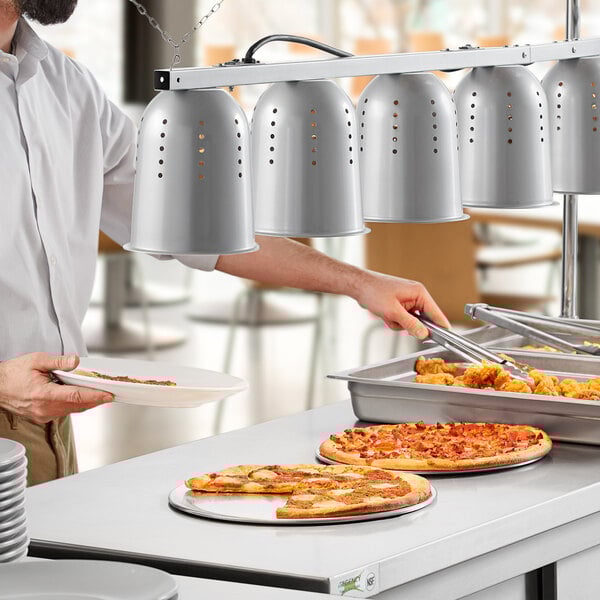
Heat lamps are overhead warming devices that emit low, controlled heat to keep foods from falling out of the temperature danger zone. Unlike most types of holding equipment, these lamps can be used both in the front and back of house. You can use them to create an eye-catching food display for your buffet or serving area, install them over a carving station, or keep them in your kitchen to keep orders warm before taking them to the table. While there are different types of heat lamps to choose from, most utilize a specialized infrared bulbs or heating strips to heat food directly. They should always be mounted directly above a heating area, and as long as food is placed under them, they should be kept at the right temperature.
- Types of food heat lamps: Freestanding heat lamps, clamp and screw-on lamps, hanging heat lamps, strip warmers
- Best for: Carving stations, buffet food displays
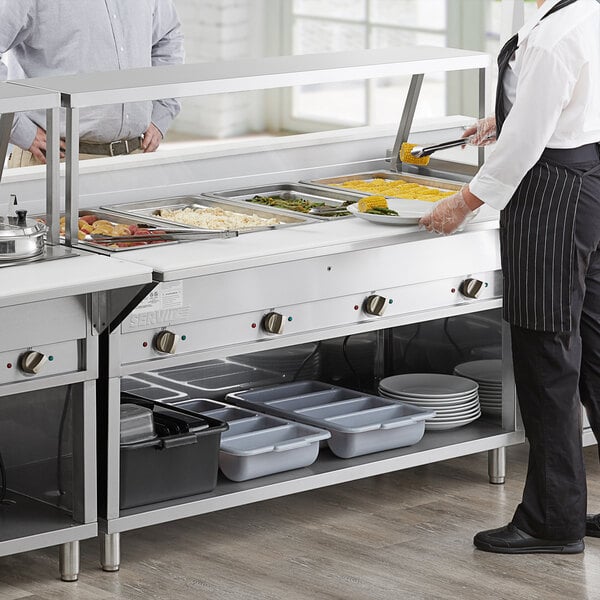
Steam tables are large heating units with pre-made openings. They feature a drop-in design that allows you to insert food pans into the table, creating an organized display while reducing the risk of cross-contamination. Different types of steam tables offer unique advantages. Some can be kept in your kitchen to hold bulk foods or ingredients, like steamed vegetables or pasta, while others can be used in your front-of-house area for buffet service or catering. They hold water underneath the pans, which is warmed by a heating element or gas burner to create steam. You can choose between open-well tables, which feature an exposed heat source for both dry and moist heating, or sealed-well tables, which use a covered heat source and are ideal for moist heating.
- Types of steam tables: Open well steam tables, sealed-well steam tables, mobile steam tables
- Best for: High-volume serving operations, like cafeterias, food halls, or buffets, quick service setups
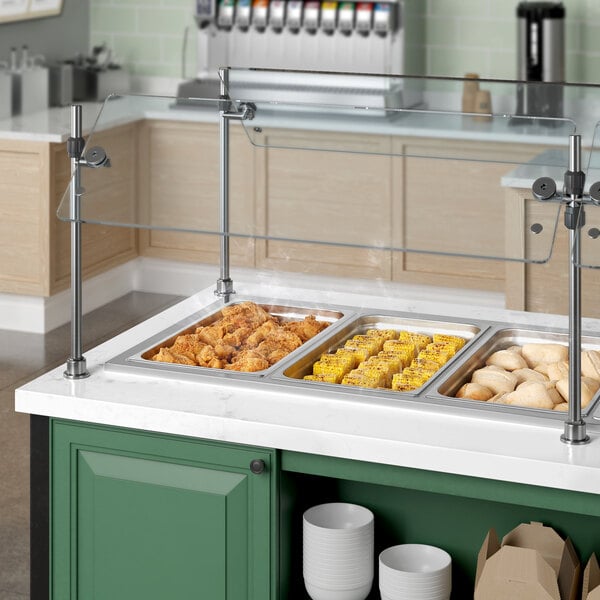
Hot food wells feature a similar design to steam tables, with specialized compartments designed to hold large batches of food. The main difference between them is that while steam tables are designed to work with removable pans, food wells feature a permanent well that can be refilled with fresh food throughout service. Hot food wells also feature a smaller footprint, making them ideal for operations with limited space. Like steam tables, you can choose between dry or moist heating units, with dry units relying on an internal heating element while moist units use heated water to produce steam.
- Types of hot food wells: Drop-in food wells, soup wells, dual temperature wells, triple temperature wells
- Best for: High-volume serving operations
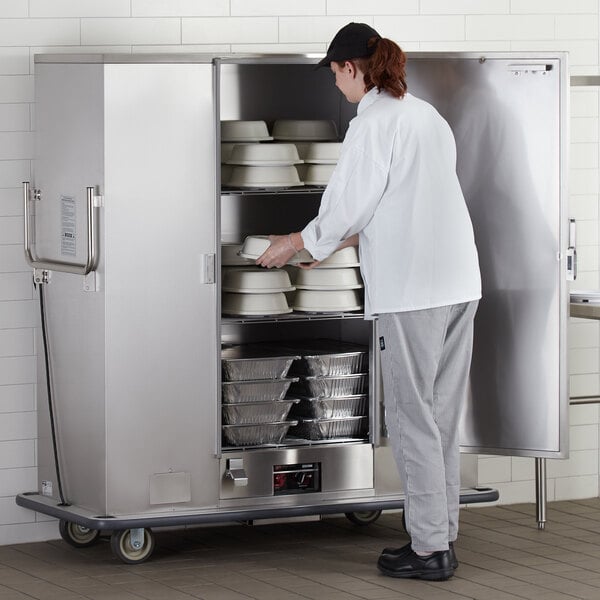
Heated banquet cabinets are large, heavy-duty heating appliances designed for high-volume warming. They are designed to hold large batches of prepared foods, featuring spacious shelves that can be stacked with food trays. These robust units are typically designed with mobility in mind, as they are most commonly used for large gatherings and on-site catering. You can wheel them on-site at weddings, banquets, conferences, and other busy events where you’re preparing food in bulk beforehand. Also called Queen Mary cabinets, heated banquet cabinets use internal heating elements and can easily be plugged into standard outlets. They utilize radiant heat to keep the cabinet warm without drying foods out and feature sturdy walls, as well as locking doors, to keep foods secure during transportation.
- Types of banquet cabinets: Electric banquet cabinets, canned fuel banquet cabinets
- Best for: Catering, high-volume food transport
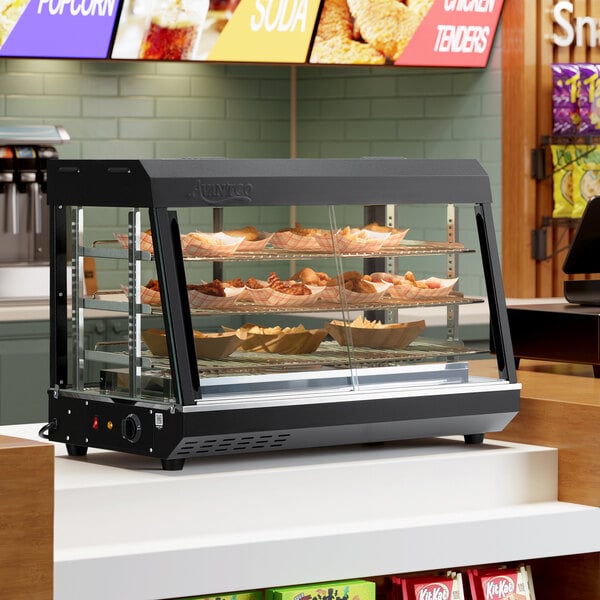
Hot food display cases are specialized holding cabinets designed to merchandise prepared foods and snacks in retail or front-of-house settings. You’ll commonly find them at grab-and-go stations, convenience stores, concession stands, or grocery stores offering to-go meals. Their main purpose is to promote impulse sales, and because of that, they typically feature a large glass construction that makes it easy to see what is inside. A hot food display case can be plugged into an outlet near the counter for easy operation and utilize conduction, convection, or infrared heat, depending on the model or manufacturer. Use them for fried foods, baked goods, and quick snacks.
- Types of hot food display cases: Drop-in hot food display cases, self-service display cases, full-service display cases, pretzel warmers
- Best for: Merchandising snacks at concession stands, convenience stores, or self-checkout
Food Warmer Purchasing Considerations
No matter what kind of foodservice business you operate, many variables can impact what kind of food warmer you need. Carefully evaluate your restaurant concept, menu, and the needs of your staff while you plan out what equipment to buy. Additionally, consider how many hours a day you'll be open and what kinds of food prep tasks you anticipate while serving your full menu. Keeping these considerations in mind will help you identify the right food warmer for your culinary needs.
Will Your Food Warmers Be In The Front- or Back-Of-House?
The first question you should ask is where your food warmers will be located. Different types of restaurants necessitate different layouts, which will require specific types of equipment to operate efficiently. Some food warmers might work great in both the front- and back-of-house, while others might only be suited for one zone.
- Front-of-house: If you're focusing on food warmers for your front-of-house area, you'll want to emphasize visibility and organization. Concession stands, grab-and-go stations, buffet-style dining, and hot bars all utilize warming equipment not just to keep foods at safe temperatures, but to increase impulse purchases or entice guests to try a specific dish. Common front-of-house food warmers include hot food display cases, hot food wells, heat lamps, and select steam tables.
- Back-of-house: When choosing warming equipment for your back-of-house operations, food safety, bulk food prep, and ease of access should be your main focus. Commercial kitchens can be busy, so optimizing your equipment to ensure optimum workflow is also key. Holding cabinets, drawer warmers, and steam table pans are commonly found in commercial kitchens, while countertop food warmers and heated banquet cabinets are excellent options for catering businesses.
What Types of Food Do You Serve?
Not all food warmers work best for every type of food. Analyze your menu and the ingredients you use to determine which types of warming equipment will help ensure peak food quality. In most cases, you'll need a combination of different types of equipment for the best results.
- Steamed foods and vegetables: Steam table pans, hot food wells, and countertop food warmers are ideal for holding steamed vegetables, entrees, or ingredients that need to maintain moisture content.
- Fried foods: Depending on what type of service you offer, fried foods should ideally be held in a hot food well or hot food display case.
- Soups and sauces: Bulk soups and sauces can be stored in a soup kettle, soup well, or countertop food warmer.
- Bread: Hot holding and proofing cabinets are ideal for bakeries and restaurants holding bulk bread products or baked goods.
What Type of Service Do You Provide?
Consider how you'll be serving food and how your customers will order while choosing which type of food warming equipment to buy. Not only does this impact how long you'll need to keep food warm, but it also impacts how much food you'll need to prepare. Your service type can also impact ingredient prep and where you keep warming equipment in the kitchen.
- Sit-down service: If you're offering standard restaurant-style dining, your focus should be on keeping ingredients and prepared foods fresh and fulfilling orders fast. Standard holding cabinets and warming drawers are great for this, as well as hot food wells or countertop food warmers for some kitchens.
- Buffet-style dining: If you're serving food in a buffet, you should emphasize ease of access and make sure everything on the menu is clearly visible. Steam table pans, drop-in hot food wells, and countertop food warmers are easy to refill and allow guests to serve themselves. Heat lamps can also be used if you're offering a carving station.
- Catering: No matter if you're catering food at an event or preparing it for pickup, your focus should be on bulk food prep and storage. Countertop food warmers are easy to set up and can be transported if you're offering services on-site, while heated banquet cabinets are ideal for holding bulk prepared foods.
- Grab-and-go: For concessions and grab-and-go operations, the emphasis should be on preserving food quality while merchandising them in a neat, organized way. Countertop food warmers are designed with visibility in mind and allow guests to grab whichever food option catches their eye. They are also easy to restock if the product starts to run low.
Commercial food warmers come in a range of styles and sizes to meet the diverse and dynamic needs of the foodservice industry. Whether you're looking to hold ingredients in bulk, create eye-catching food displays, or safely transport prepared meals to a different location, we offer a large selection of food warmers and commercial holding equipment to help you maintain food quality and reduce the risk of foodborne illness.

Over his 5+ years with WebstaurantStore, Jason has spent countless hours learning, researching, and writing about the foodservice industry. With expertise in technical topics, he takes pride in helping customers and readers understand everything from troubleshooting their equipment to the fundamentals of starting a business.
Learn more about this author and WebstaurantStore's Content Writing Team here!
Related Resources

October 2026 WebstaurantStore Coupon Code
Fall flavors are in full swing, and the deals at WebstaurantStore are just as irresistible! Stock up on everything your kitchen needs for a busy stretch of autumn, from disposables and pantry staples to equipment that keeps service moving. Browse our featured sale items below, and use code SPICE26 at checkout to save up to 20% on your purchase. Hot drinks, cozy desserts, and warm soups take center stage this time of year, so there's plenty here to fuel your seasonal menu. Sign up for our emails to get exclusive deals and coupon codes delivered straight to your inbox! Looking to save even more? Check out the new Webstaurant Rewards® Visa Business Card ! Sign up for a new card today and start earning rewards on every WebstaurantStore purchase
Catering Supplies Checklist
While catering shares similar core equipment to restaurant kitchens, it also requires supplies and equipment that can withstand frequent movement, maintain food safety during transport, and support rapid service in different environments. Operators need to think about multiple factors such as cooking and hot holding, presentation, guest service, and post-event breakdown, ensuring nothing is missing once service begins. A well-structured checklist helps reduce costly oversights, improves service quality, and supports compliance with food safety and sanitation standards across different venues and service styles. Use our downloadable catering checklist to account for all your supplies and quantities. Regardless of if you're a seasoned caterer
Kitchen Equipment Every Restaurant Needs
Selecting the appropriate restaurant kitchen equipment is crucial for success when opening a new restaurant or renovating your existing business. Every concept, whether it’s a fast-casual cafe or fine dining restaurant, requires a tailored set of tools to operate efficiently and deliver consistent quality. This is where commercial kitchen design plays a key role, helping you align your equipment choices with your menu, workflow, and space constraints. We compiled a comprehensive list of essential restaurant equipment to provide a starting point for equipping your kitchen. Though this list serves as a foundation that encompasses the staples nearly every restaurant needs, you can expand it to meet your unique requirements. Download Equi
Join Our Mailing List
Receive coupon codes and more right to your inbox.