Menu engineering combines behavioral psychology, pricing strategy, and sales data to help operators highlight the most profitable items, reduce guest decision fatigue, and improve overall operational efficiency. When paired with menu psychology tactics, it encourages guests to spend more with less friction. To help you create a successful menu, this guide breaks down proven menu psychology principles paired with step-by-step menu engineering tactics across multiple menu types.
What Is Menu Psychology?
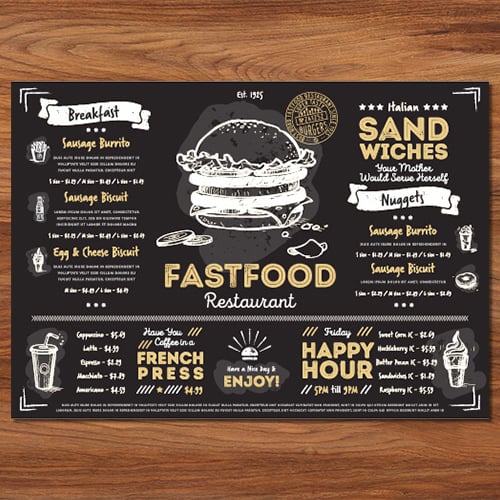
Menu psychology is the study of how menu design, wording, and layout influence guest purchasing behavior. The goal is to make ordering feel easy, confident, and emotionally satisfying while also subtly guiding guests toward higher-margin items. Most guests spend less than two minutes reviewing menus. Therefore, a well-designed menu doesn’t just inform guests of their options; it immediately directs their attention to the items that are most profitable for operators and most consistently enjoyed by patrons, encouraging a larger bill and a higher satisfaction rate.
Core Menu Psychology Principles
Understanding how customers perceive and interact with menus helps operators increase their sales. Discover the six primary principles of menu psychology:
- Limit Choices: Too many options increase anxiety and decision delay. Psychologists call this cognitive processing pattern the paradox of choice. To prevent this, the best practice is to limit menu sections to 5–7 items when possible.
- Make Menus Scannable: Even if your menu is more than one or two pages, menu engineers agree that if it's scannable with fewer choices per category, guests will still feel at ease when ordering. Use clear section headers, bold or distinct item names, easy-to-read fonts and spacing, and strategic use of white space.
- Use Appetite Stimulating & Associative Colors: Studies show that colors affect appetite and desire. Red, yellow, and orange stimulate appetite and urgency. Green, tan, and neutral tones communicate freshness and sustainability. Blue is considered an appetite-repressing color, so use it selectively when it's the logical choice for items like drinks or seafood.
- Humanize and Emotionalize Dish Names: Dishes with personality make customers feel like they’re ordering something special, and they evoke happy memories of childhood or feelings of comfort and closeness. Names like “Grandma’s Sunday Pot Roast”, “Chef Mike’s Wood-Fired Ribeye,” and “Campfire Hot Chocolate” evoke nostalgia, trust, and comfort.
- Use Photos Strategically: Photos should be used sparingly. Limit photos to one per page or section of your menu and let your restaurant’s social media handle heavy visuals. The best application for photo use is in fast-casual and family dining applications.
- Choose an Ergonomic Format: The tactile experience matters as much as the layout. Your menu should fit comfortably on your tables, be easy to hold, and not obstruct the dining space.
Menu Psychology by Restaurant Type

While general tips such as strategic placement and menu design apply across all sectors, each type of restaurant has its unique factors and best practices. By tailoring menu psychology strategies to specific business types, restaurants can effectively influence customer behavior and drive sales.
- Quick Service (QSR): Offer for 5-7 options per section to offer a variety of choices without overwhelming. Incorporating combo anchoring encourages customers to opt for bundled meal deals, increasing order value. QSRs often employ a photo-forward approach, showcasing visually appealing dishes to entice customers. Clear value framing highlights affordability for quantity, influencing customers' perception of pricing and encouraging them to make a purchase.
- Fast Casual: Fast casual establishments often focus on offering customization options to patrons without overwhelming them with choices. Menus in fast casual restaurants are strategically designed to feature a balance between "Build Your Own" options and "Chef Crafted" selections, catering to customers who seek control over their meals as well as those looking for expertly curated dishes. This framing approach helps fast casual restaurants effectively engage customers and increase order value.
- Casual & Full Service: The strategic placement of high-profit items in the Golden Triangle area on the menu catches diners' attention and increases the likelihood of ordering them. Decoy pricing highlights specific dishes as better value options, influencing customers to choose higher-margin items. Additionally, server-assisted upselling techniques play a crucial role in recommending premium menu items and increasing overall check averages.
- Fine Dining: With minimal emphasis on price, fine dining establishments focus on crafting story-driven descriptions that evoke a sense of luxury and sophistication. By forgoing photos on their menus, fine dining restaurants rely on eloquent language and elegant presentation to entice diners and elevate the overall dining experience.
- Bars & Breweries: Bars and breweries can leverage menu psychology to increase sales by strategically placing high-margin items at the top and bottom of their menus. Using signature cocktails as anchors can draw attention to profitable items, while offering flights and bundles can entice customers to order more items.
What Is Menu Engineering?
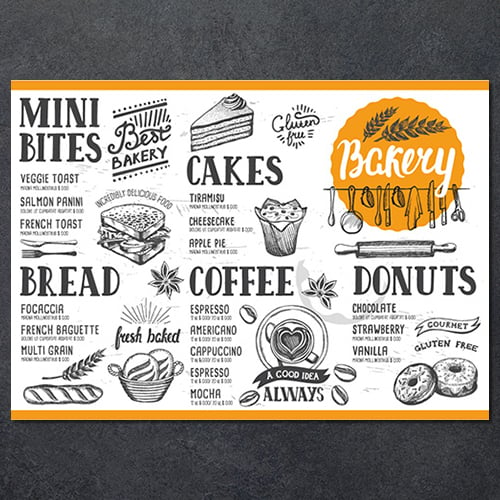
Menu engineering is a strategic, data-driven approach that restaurants use to maximize profitability. It employs a data charting tool called the menu matrix to analyze the popularity and profitability of menu items. This analysis helps restaurants make informed decisions about menu pricing, item promotion, and menu layout to drive sales and increase profits.
What Is the Menu Matrix?
The menu matrix is an analysis method that helps operators identify what to promote, revise, protect, or remove. It evaluates each menu item based on its popularity and profitability, allowing operators to compare the number of units sold to the margin or contribution produced. The menu matrix is formatted into a spreadsheet or database, so menu engineers can easily apply the findings to their menu designs for increased sales and reduced food waste.
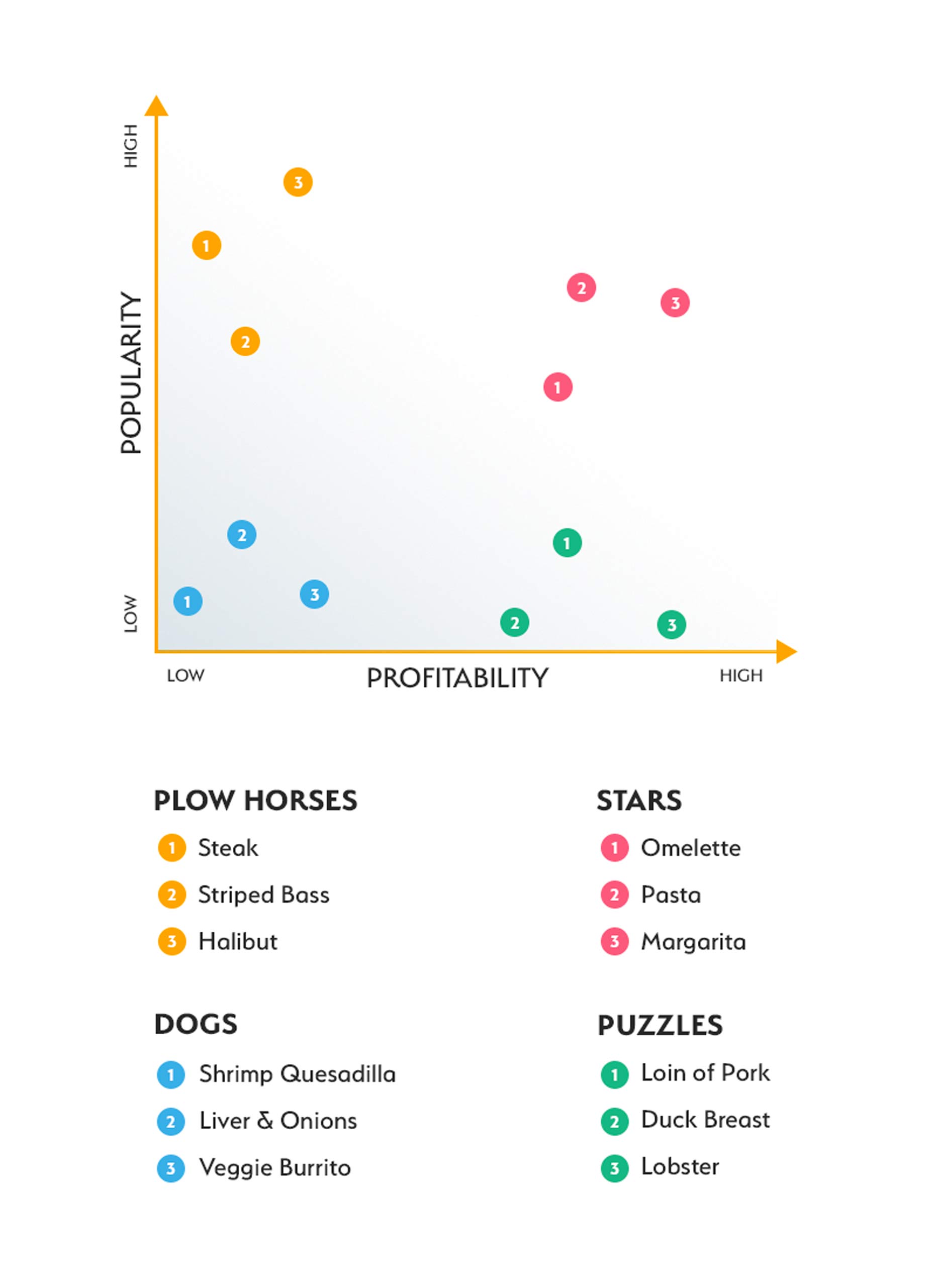
Plotting out your menu items with the menu matrix is the easiest way to discern their ranking. Choose a timeframe to track your menu items (typically 60 to 90 days). Record the volume sold of each item along with the profit brought in by each menu item. Plot the information on a graph; the Y axis will reflect the volume sold, and the X axis will reflect the profit of the item. Based on the data collected, menu items are then added to four distinct categories: stars (high profitability and high popularity), plowhorses (low profitability and high popularity), puzzles (high profitability and low popularity), and dogs (low profitability and low popularity). Operators can then apply these findings and update their menus accordingly.
Menu Matrix Template
Review the menu matrix template below for a visual guide you can follow when creating your own.
How to Use the Menu Matrix
The menu matrix isn’t about cutting items; it’s about making informed decisions. When used consistently, it helps you: highlight what already works, fix what underperforms, simplify menus without hurting guest satisfaction, and increase profit with minimal operational disruption. Follow the steps below to turn sales data into actionable menu changes that improve profitability, reduce food waste, and simplify operations.
1. Collect Menu Performance Data
To use the menu matrix, you must first collect data to analyze. Start with a defined analysis period. 60 to 90 days is ideal for most restaurants. Pull the following data for each menu item directly from your POS system to ensure accuracy:
- Number of units sold
- Menu price
- Food cost (recipe cost per plate or pour)
- Contribution margin (menu price - food cost)
2. Calculate Popularity and Profitability
Determine how each item compares to the rest of the menu. Start by calculating the average number of units sold per item. Find its profitability and calculate the average contribution margin across all menu items. Items earning above average margin are considered high-profitability. You don’t need perfect precision in your calculations; directionally accurate data is enough to reveal patterns.
3. Plot Items on the Menu Matrix
Using a spreadsheet or menu engineering template, plot each item. The X-axis signals profitability, and the Y-axis signals popularity. This will place every item into one of four menu matrix categories: stars (high profit/high popularity), plowhorses (low profit/high popularity), puzzles (high profit/low popularity), and dogs (low profit/low popularity).
4. Identify Action Items for Each Category
Use the menu matrix findings to apply targeted actions based on each quadrant. Below are suggestions on how to make changes to each category of menu items.
- Stars (High Profit, High Popularity): Feature prominently on the menu. Place in Golden Triangle locations. Maintain recipe and portion consistency. Avoid unnecessary price increases.
- Plowhorses (Low Profit, High Popularity): Slightly reduce portion size or ingredient cost. Increase price carefully if demand isn’t price-elastic. Avoid featuring or upselling aggressively.
- Puzzles (High Profit, Low Popularity): Rename the item with stronger descriptive language. Reposition higher or lower in the menu section. Add a visual cue or server recommendation. Consider bundling or pairing (especially with drinks).
- Dogs (Low Profit, Low Popularity): Remove from the menu where possible. Keep only if strategically necessary (kids’ menu, dietary needs). Never highlight, promote, or upsell.
5. Pair Menu Engineering with Menu Psychology
With your action items and data, you can adjust the menu layout itself using menu engineering techniques:
- Arrange Menu Sections: Place your star items in the center, top-right corner, and top-left corner. Psychologists fittingly call these three areas “The Golden Triangle," and it refers to the way our eyes tend to move when first looking at a menu.
- Highlight Profitable Items: Include a photo, graphic, colored or shaded box, border, or surround the item(s) with white space. Only highlight one or two items per section.
- Arrange Lists: In each section, place your most profitable items at the top of the list and one at the bottom. Studies show that people notice and order the top two items or the last item in each section more often than the others.
- Employ Decoy Menu Items: Include a “decoy” menu item that would seem overly expensive to guests and place it near your high-profit margin items. They may already have a reasonable price, but when compared to the “decoy” item, they will appear even more attractive. Or put a “decoy” item next to your high-profit, pricey items that would seem more reasonable when compared to the “decoy” item(s).
- Bracket Menu Items: “Bracketing" refers to including two portion options for one dish without including the exact size. The “larger” size will have a steeper price (e.x., $31), while the “smaller” size will have a cheaper price (e.x., $22). The customer won’t know exactly how much smaller the small portion is, but it will appear to offer better value since it costs less. The “smaller” portion can be the one you wanted to sell the whole time, but this tactic makes the meal item more attractive by making guests believe they're choosing a dish of good value.
- Use the Price Nesting Method: Focus on writing engaging meal descriptions and list the price discreetly after each meal description in the same size font. This way, customers' eyes will glide right over the price.
- Remove Price Symbols: Currency indicators remind customers that they’re spending money and can even make them feel like they are spending more than they are. Soften the price by eliminating dollar signs. Avoid prices ending at .99 as they sound cheap or gimmicky to many consumers.
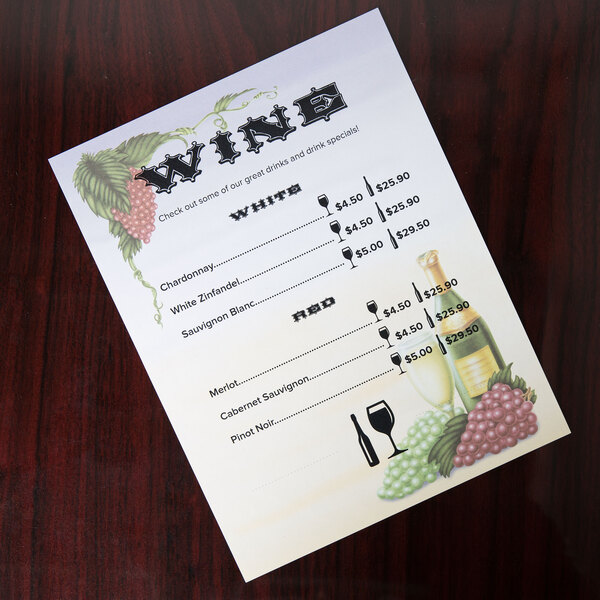
- Avoid Price Trails: Price trails are dotted lines that connect your menu items to their price, which is often listed on the other side of the page. This shifts the focus from your dish description to the price. Additionally, placing your prices in a column next to your dishes helps guests easily compare prices and encourages them to choose the cheapest item.
6. Evaluate Operational Impact Before Finalizing
Not all profitable items are operationally efficient. An item must work for both guests, the kitchen, and labor costs to be a true star. Inventory management software will help you assess how quickly ingredients are being used. Before printing or publishing updates, evaluate:
- Prep time
- Ticket time impact
- Ingredient cross-utilization
- Labor intensity
- Food waste risk
7. Track Menu Performance
After implementing changes based on your menu matrix findings, it is crucial to monitor the results and reevaluate regularly to ensure the continued success of your menu strategy. Tracking performance for a period of 30 to 90 days allows you to gather sufficient data to assess the impact of the changes made. During this monitoring period, compare item sales and margins to the previous period to determine the effectiveness of the adjustments. Note any shifts in average check and order patterns, as these insights can help you understand customer behavior and preferences in response to the menu changes.
How Often Should You Re-Engineer Your Menu?
A best practice is to rebuild your menu matrix quarterly or after experiencing major food cost changes of 5% or more. This proactive approach ensures that your menu remains optimized for profitability and customer satisfaction. Regularly reevaluating your menu matrix allows you to adapt to evolving market trends and customer preferences, ultimately driving increased revenue and customer loyalty. Use the following as an indicator of how often you should adjust and make changes to your menu:
- Quarterly: pricing review
- Biannually: full menu engineering
- Seasonally: limited-time items
- Immediately: after food cost changes >5%
Menu Engineering Tips for Specific Menu Types
Your main menu, digital menu, dessert menu, happy hour menu, specials menu, and drink menu should all support the same goal: guiding guests toward high-value decisions with minimal friction. However, each sub-menu serves a different purpose in the guest journey and has unique engineering considerations. Use these targeted menu engineering tips to maximize profitability without adding complexity.
How to Engineer Your Digital Menu
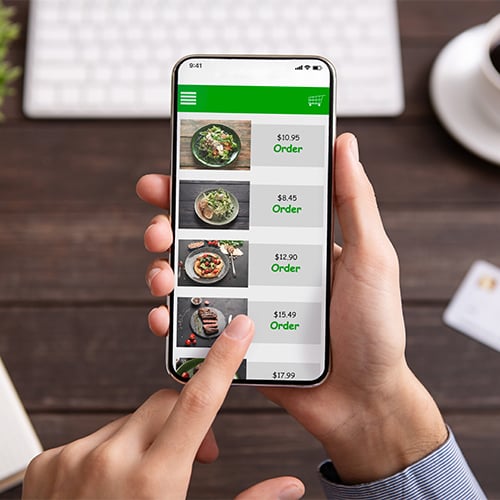
Digital menus behave differently. Most consumers have a shorter attention span when interacting with a digital menu, so they require clearer categories, faster load times, and minimal scrolling. Follow these digital menu best practices for a more profitable online, QR, and delivery app menus:
- Mobile-responsive design
- Photo-heavy (especially delivery)
- Fewer clicks = higher conversion
- “Best Sellers” category at the top
- Smart item suggestions (“Customers also order”)
How to Engineer Your Happy Hour Menu
Happy hour menu engineering is a strategic approach to designing menus that leverage time-based menu psychology to drive traffic and increase sales during specific hours of the day. By offering discounted prices on select items or creating special promotions during designated happy hour times, businesses can attract customers looking for a deal while also boosting revenue during traditionally slower periods. Follow these best practices when designing your happy hour menu:
- Anchor happy hour prices against regular menu pricing.
- Use urgency cues like “Only from 4–6 PM”.
- Frame pricing as “special” or “exclusive,” not cheap.
- Bundle items (drink + small plate).
- Feature high-margin beverages prominently.
- Avoid deeply discounted, labor-intensive items.
- Use a dedicated menu or insert and clearly list start/end times.
How to Engineer Your Dessert Menu
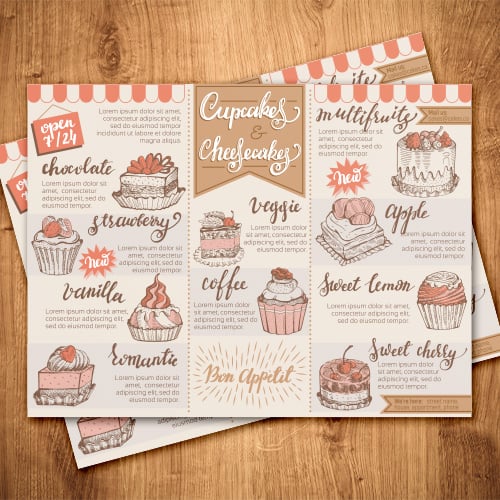
Dessert menus offer operators a high-margin add-on sale opportunity. Desserts can typically be made in large quantities and then sold in small, individual portions at a high markup for the cost of ingredients. Here are some best practices for engineering your dessert menu.
- Offer dessert menus after the meal, not alongside entrees.
- Limit options to 4–6 desserts.
- Use indulgent, sensory language (rich, molten, decadent).
- Feature one signature dessert verbally or visually.
- Use round pricing instead of 0.99.
- Adjust the portions of popular but low-margin desserts.
- Rename or reposition high-margin but low-selling desserts.
How to Engineer Your Specials Menu
To create urgency without menu clutter, consider placing limited-time specials in prominent locations on your menu. By strategically engineering your specials menu, you can drive sales and create excitement among your patrons.
- Limit specials to 1–3 items at a time.
- Emphasize seasonality, freshness, or chef inspiration.
- Use scarcity phrases like “while supplies last”.
- Guests expect specials to cost more, so price competitively.
- Train servers to explain and recommend specials.
- Use specials to move excess inventory.
- Promote strong performers to the permanent menu after matrix review.
How to Engineer Your Drink Menu
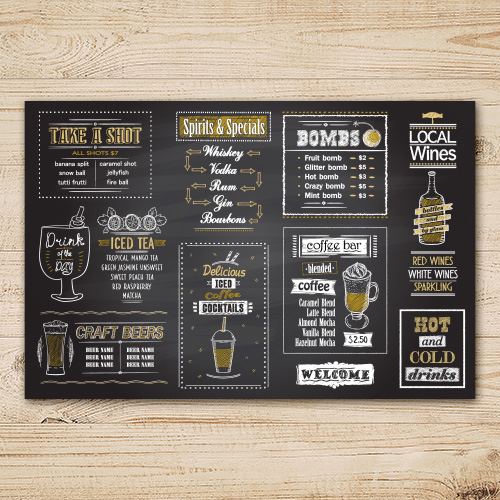
Maximizing beverage profit through strategic placement and competitive drink pricing is key in beverage menu engineering. By strategically positioning high-profit margin beverages and utilizing dynamic pricing strategies, such as bundling or happy hour promotions, restaurants can drive sales and increase overall profitability. Here is how you can maximize beverage profit through placement and pricing:
- Place signature and high-margin drinks at the top.
- Use creative names, not just ingredient lists.
- Group drinks by style (refreshing, spirit-forward, zero-proof).
- Use decoy pricing to frame premium options.
- Avoid price columns to reduce comparison shopping.
- Highlight local or exclusive beers.
- Describe wine varietals with tasting notes instead of technical jargon.
- Emphasize house-made syrups or fresh ingredients in your cocktails.
How Menu Language Influences Sales
Words sell. Specifically, 12–18 words per description outperform a very short or overly long menu copy. Appetizing food descriptions that clearly set the expectations of what the guest will receive are vital for customer satisfaction. Additionally, creating a sense of exclusivity or emotional trigger can lure guests towards the most expensive menu item.
High-Impact Description Techniques
When writing your menu, use the following high-impact language techniques in your descriptions for maximum impact:
- Sensory Language: Crispy, velvety, smoky
- Origin Signals: Texas-raised, Neapolitan-style
- Process Cues: Slow-braised, house-made
- Emotional Framing: Signature, comfort classic
How to Describe Health Foods
The words “low-fat,” “healthy,” and “light” can reduce value perception as they are associated with less flavorful foods. While the culture is increasingly trending towards health-consciousness (leading many people to choose to cook most of their meals at home), most want their meals out to feel indulgent and high-value. Including markers like “organic,” “cage-free eggs,” “grass-fed and finished,” “dressings made with EVOO,” and “fried in beef tallow” show why something is considered healthy and are more effective than making a health claim.
To engineer a successful restaurant menu, utilize the menu matrix to analyze sales data and customer preferences. By applying data-driven insights, you can optimize menu items and pricing strategies and increase profitability. Pair this with menu psychology tips to enhance the overall dining experience and drive customer satisfaction.

Corrinn loves writing, researching, and cooking, so she’s grateful she’s gotten to blend these three passions as a longform writer on the content team at WebstaurantStore for 5 years and counting. Creating resources that help operators succeed and lacing them with entertainment to make them smile is her "why".
Learn more about this author and WebstaurantStore's Content Writing Team here!