
- Topics 1582
- Industrial 59
- Troubleshooting Guides 32
- Restaurant Management 144
- Bar Management 70
- Catering Tips 46
- Bakery Management 46
- Food Trucks & Concessions 42
- Advertising & Marketing 41
- Eco-Friendly Tips 13
- Facility Layout & Design 47
- Coffee Shop Tips 32
- Installation & Maintenance 63
- Janitorial & Pest Control 34
- Safety & Sanitation 121
- Startup Tips 111
- Menu Design 11
- Kitchen & Cooking Tips 106
- Hospitality Management 26
- Pizza & Sandwich Shop Tips 24
- Smallwares 42
- Food Prep 103
- Tabletop Items 21
- Disposables 28
- Calculators & Tools 7
- Consumables 77
- Warewashing & Laundry 22
- Cooking Equipment 107
- Food Storage & Refrigeration 58
- Beverage Equipment 43
- Office Supplies 6

How to Choose the Right Food Service Chemicals for Your Commercial Kitchen
Last updated on May 28, 2026Foodservice chemicals for commercial kitchens include a range of specialized products designed to clean, sanitize, disinfect, and maintain every surface, piece of equipment, and operational area. From cleaning beer glasses to ensuring food-contact surfaces meet health code standards, each chemical serves a defined role within a structured cleaning process. Selecting the right solutions requires an understanding of how different formulations interact with soil types, surfaces, and regulatory requirements, as well as how they impact safety and efficiency in a fast-paced kitchen environment. Operators must also account for factors like chemical strength, application method, and proper handling to protect both staff and food quality. Below, we break down how these chemical categories function in practice so kitchens can maintain compliance, reduce risk, and operate at a consistently high standard of cleanliness for patrons.
Shop All Foodservice Chemicals
Foodservice chemicals are specialized cleaning, sanitizing, and maintenance products used in commercial kitchens to remove soil, eliminate microorganisms, and maintain compliance with health and safety regulations. They range from products physically used on food products themselves, like vegetable wash, to harsh chemicals used to disinfect surfaces that don't come in contact with food.
Restaurant Cleaning Process
The restaurant cleaning process consists of three distinct steps: cleaning, sanitizing, and disinfecting. Each requires specific chemicals to achieve safe, code-compliant results. These steps are sequential and interdependent, meaning the effectiveness of later stages depends entirely on how well earlier ones are completed. Sanitizers and disinfectants cannot work properly on surfaces that still contain grease, food residue, or biofilm, making proper cleaning the foundation of the entire process.
- Cleaning: This first stage focuses on removing visible debris, grease, and organic matter from surfaces using detergents or degreasers. Without this step, soils can block chemical action, preventing sanitizers or disinfectants from reaching microorganisms.
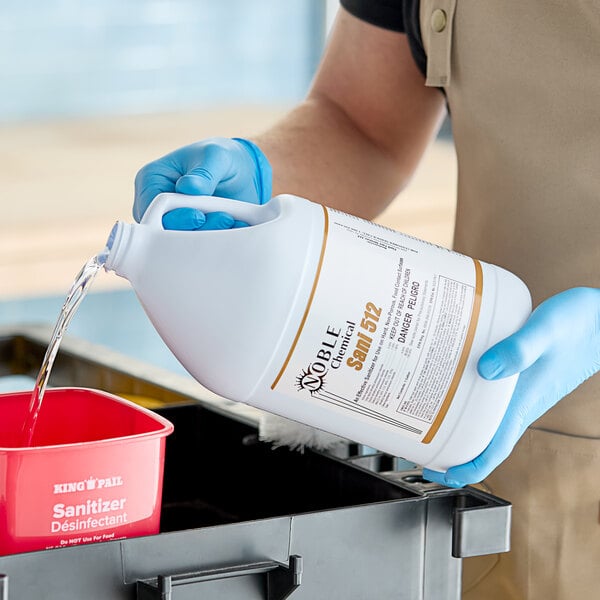
- Sanitizing: Once a surface is clean, sanitizers are applied to reduce microbial levels to standards set by health regulations. Their effectiveness depends on correct dilution, contact time, and a surface free of residue.
- Disinfecting: Reserved for higher-risk situations, disinfecting uses stronger chemicals to kill a broader range of pathogens on non-food-contact surfaces. While not always required in food prep areas, it plays a key role in managing illness risks in shared or high-touch spaces.
When choosing a foodservice chemical you need to evaluate the intended task, product versatility, packaging format, chemical form, safety requirements, and environmental impact. Each of these factors directly affects cleaning performance, staff efficiency, regulatory compliance, and overall operating costs in a commercial kitchen.
- Task: Start by identifying the job the chemical needs to perform, deciding if you need to remove soil, reduce bacteria to safe levels, or eliminate pathogens entirely. Using the wrong category can lead to failed health inspections or unnecessary chemical use that increases costs without improving outcomes.
- Versatility: Some products are designed for single-purpose use, while others can handle multiple surfaces or applications. Choosing a versatile solution can simplify inventory and training, but it should never come at the expense of effectiveness in critical cleaning tasks.
- Package Size: Consider how frequently the product will be used and the available storage space when selecting container sizes. High-volume kitchens often benefit from bulk packaging, while smaller operations may reduce waste and spoilage with more manageable quantities.
- Chemical Form: The physical form influences dosing accuracy, storage, and ease of use. Liquids offer convenience, powders often provide cost savings for heavy-duty cleaning, and tablets deliver consistent portion control with minimal measuring.
- Safety: Evaluate labeling, required protective equipment, and handling procedures to confirm staff can use the product without risk. Chemicals with clear instructions and lower hazard classifications can reduce training time and workplace incidents.
- Environmental Impact: Look at packaging materials and compliance with environmental standards when comparing options. More sustainable choices can support corporate responsibility goals and may align with local regulations or green certification programs.
Food surface contact chemicals are specifically formulated to clean and sanitize surfaces that come into direct contact with food, guaranteeing they meet health code requirements and prevent cross-contamination. These solutions are critical for sustaining safe prep environments across cutting boards, countertops, and food processing areas in commercial kitchens.
- Surface Cleaners: Before sanitizing can be effective, soils like grease and food debris must be removed using dedicated surface cleaners. These products break down buildup quickly, allowing sanitizers to properly reach and treat the surface.
- Sanitizers: Used after cleaning, sanitizers reduce microorganisms on food-contact surfaces to safe levels without leaving harmful residues. Common options include chlorine, quaternary ammonium, and iodine-based formulas, each with specific concentration and contact time requirements.
- Cutting Board and Block Whitener: Designed for deep cleaning porous and heavily used prep surfaces, these chemicals lift stains, odors, and embedded food particles. They also help restore appearance and extend the usable life of cutting boards and butcher blocks while supporting sanitation standards.
Warewashing chemicals are cleaning and sanitizing agents used to remove food soil, grease, and bacteria from dishes, utensils, and glassware in commercial kitchens. Selecting the correct type of warewashing chemicals provides consistent results across three compartment sinks and dish machines while maintaining efficiency and meeting sanitation standards.
- Manual Dishwashing Chemicals: In three-compartment sink setups, operators rely on a sequence of detergent, rinse, and sanitizer to properly clean wares. These products are formulated to cut through grease quickly while remaining safe for repeated, hands-on use by staff.
- Machine Dishwashing Chemicals: Designed for dish machines, these chemicals typically include detergents, rinse aids, and sometimes delimers. They work together to prevent spotting, control mineral buildup, and deliver consistent cleaning performance at scale.
- Glass Washing and Sanitizing Chemicals: Glassware requires specialized solutions that remove residue without leaving streaks or affecting clarity. These formulas are often low-foaming and optimized to protect delicate surfaces while keeping proper sanitation for beverage service.
Equipment cleaning chemicals are specialized formulations designed to remove grease, carbon buildup, mineral deposits, and organic residue from commercial kitchen equipment. Using the correct product for each piece of equipment helps maintain performance, extend service life, and prevent contamination or off-flavors in food and beverages.
- Oven Cleaner and Grill Cleaner: Built to break down heavy carbon and baked-on grease, high-strength oven and grill cleaners restore cooking surfaces and improve heat transfer. Many require controlled application and proper ventilation due to their potency.
- Ice Machine and Refrigeration Cleaner: Mineral scale and biofilm can quickly compromise cooling systems, making dedicated ice machine and refrigeration cleaners essential for keeping efficiency and ice quality. These products are typically nickel-safe and designed for the regular descaling and sanitizing cycles involved in cleaning an ice machine.
- Beer and Wine Line Cleaning Chemicals: Beverage lines accumulate yeast, sugar residue, and bacteria that can alter flavor and clarity. Routine cleaning with line-specific chemicals preserves product integrity and ensures a consistent pour.
- Deep Fat Fryer Cleaner: Instead of relying on manual scraping, fryer cleaners dissolve grease and carbon deposits inside vats and on heating elements. This process reduces labor while helping maintain oil quality and cooking consistency after cleaning your fryer.
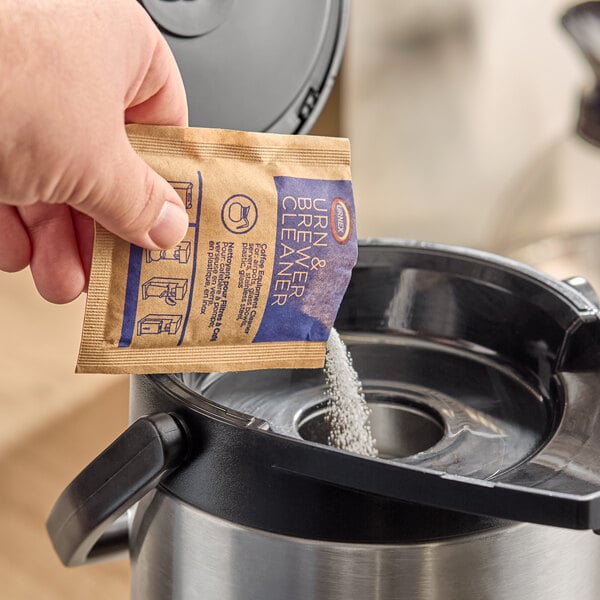
- Coffee and Espresso Machine Cleaner: Coffee and espresso machine cleaners target internal components like group heads and boilers to keep extraction consistent and equipment running smoothly. Coffee oils and mineral buildup can affect taste and machine function over time.
- Popcorn Kettle Cleaners: Formulated to cut through sugary residue and burnt oil, these products simplify cleanup in concession equipment. Regular use prevents buildup that can impact flavor and heating performance.
- Soft Serve Machine Cleaner and Sanitizer: Dairy-based equipment requires strict cleaning protocols to prevent bacterial growth. These solutions are designed for frequent use, combining effective soil removal with food-safe sanitizing properties.
Some foodservice chemicals are used to maintain non-food-contact areas such as commercial floors, drains, and restrooms in kitchens and dining spaces. These products support overall sanitation, prevent infrastructure issues, and help create a safe, presentable environment for both staff and customers.
- Delimers and Descalers: Delimers and descalers dissolve mineral buildup, keeping equipment and water systems operating properly. Hard water deposits can accumulate on sinks, dish machines, and plumbing fixtures, reducing efficiency and causing long-term damage.
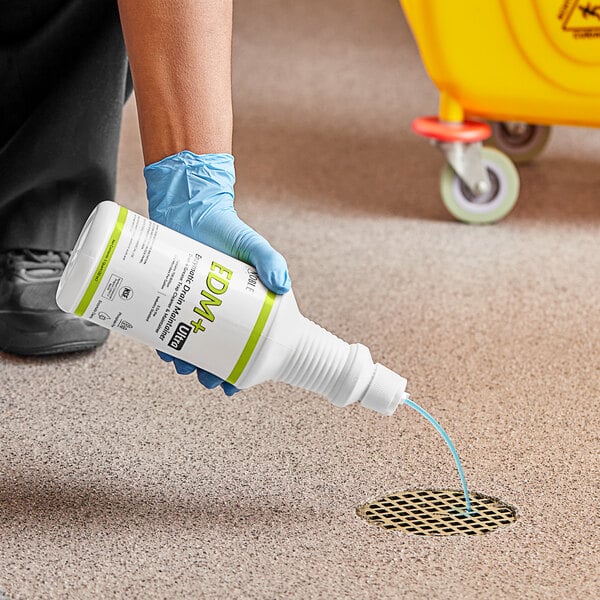
- Drain Openers and Maintainers: Grease, food waste, and soap residue often collect in kitchen drains, leading to slow flow or blockages that can be cleared with drain openers and maintainers. Targeted formulas break down organic matter and help prevent costly plumbing issues when used as part of a routine maintenance schedule.
- Floor Cleaners: High-traffic kitchen floors require floor care chemicals that can cut through grease while upholding slip resistance. Options range from heavy-duty degreasers for back-of-house use to neutral cleaners suited for routine maintenance in dining areas.
- Restroom Chemicals: Clean, well-maintained restrooms rely on a combination of restroom cleaning chemicals such as disinfectants, bowl cleaners, and odor control solutions. These products are designed to eliminate germs, remove stains, and maintain a hygienic environment that reflects overall facility standards.
Food grade and food safe lubricants are specialized products used to reduce friction and protect moving parts in commercial kitchen equipment while remaining safe for incidental food contact. These lubricants are essential for sustaining equipment performance, preventing wear, and meeting food safety standards in regulated environments.
- Grease: Thicker and more adhesive than oils, grease is ideal for high-load components like gears, bearings, and slide mechanisms. It stays in place under pressure and temperature fluctuations, providing long-lasting protection in demanding kitchen equipment.
- Lubricants: Designed for general maintenance, these products work across a variety of components such as hinges, seals, and conveyor systems. Many are formulated for NSF-rated incidental contact, making them suitable for use around food prep and processing areas.
- Oils: Light weight and easy to apply, food-grade oils are commonly used on smaller or more precise moving parts that require smooth, low-resistance motion. They are especially useful in equipment where buildup must be minimized and regular reapplication is manageable.
Food safety compliance and chemical handling in commercial kitchens centers on using approved products correctly, maintaining accurate dilution levels, and helping staff follow standardized safety procedures. These requirements are not optional, as they are directly tied to health code enforcement and inspection outcomes. Proper chemical management also reduces operational risk by limiting contamination, misuse, and inconsistent cleaning performance.
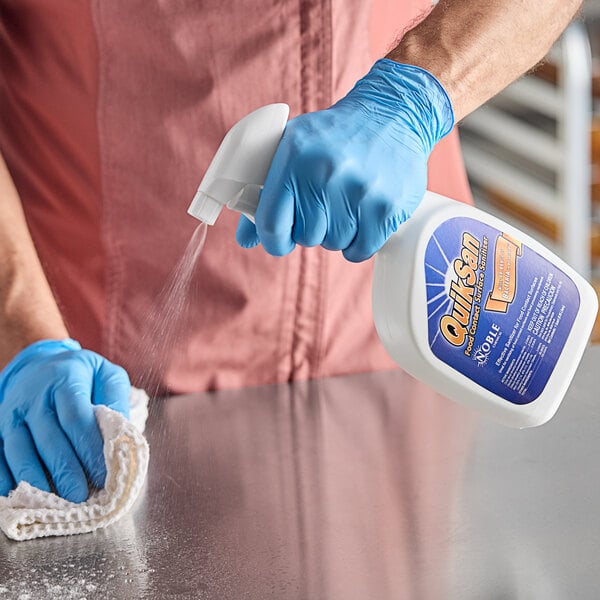
- EPA-Registered Sanitizers/Disinfectants: Only EPA-registered products are approved for killing or reducing harmful microorganisms in regulated foodservice environments. These chemicals must be used according to label instructions, including contact time and concentration, to remain compliant and effective.
- NSF Certifications for Food-Contact Use: NSF-listed chemicals are verified for safe use on or near food-contact surfaces without introducing harmful residues. This certification helps operators quickly identify products suitable for prep areas, warewashing systems, and food equipment.
- Proper Dilution Systems: Accurate dilution is critical for both safety and performance, with many sanitizers requiring specific parts-per-million (ppm) ranges to be effective. Proportioning systems or automated dispensers help eliminate guesswork and ensure consistent chemical strength across shifts.
- SDS Accessibility and Staff Training: Safety Data Sheets (SDS) must be readily available so staff can reference hazard information, handling procedures, and emergency responses. Regular training helps employees understand proper usage, protective equipment requirements, and spill protocols.
- Labeling and Secondary Containers: When chemicals are transferred from original packaging, secondary containers must be clearly labeled to prevent misuse or cross-contamination. Proper labeling includes product name, dilution information, and hazard warnings to maintain a safe working environment.
When foodservice chemicals are matched to specific tasks, equipment demands, and regulatory expectations, operators can streamline workflows and maintain a higher standard of cleanliness without overcomplicating training or inventory. The most effective setups balance safety and practicality, ensuring that staff can execute procedures correctly during busy shifts without cutting corners. By approaching chemical selection with intention and a clear understanding of how each category functions in day-to-day operations, commercial kitchens are better positioned to protect food quality and pass inspections with confidence.

With almost a decade of content marketing experience, Kevin has learned the ins and outs of various business sectors. Over his four years as a Longform Content Writer with WebstaurantStore, Kevin has spent hours researching and writing about the intricacies of the foodservice industry. Specializing in marketing guides, technical writing, and structured how-to content, he enjoys providing readers with content that guides them in growing and running their bar or restaurant.
Learn more about this author and WebstaurantStore's Content Writing Team here!
Related Resources

May 2026 WebstaurantStore Coupon Code
May has arrived, and seasonal savings are heating up alongside the spring weather here at WebstaurantStore! With peak catering season underway and holidays like Memorial Day around the corner, now is the time to stock up on essential supplies and equipment! Take a look at our wide array of sale items below and don't forget to enter the code MAYFLOWERS at checkout to enjoy 15% off your purchases! Looking to save even more? Check out the new Webstaurant Rewards® Visa Business Card ! Sign up for a new card today and start earning rewards on every WebstaurantStore purchase, and save on a WebstaurantPlus subscription. Have a look at some incredible deals on disposable items with May's monthly coupon code! Whether you're looking for disposable pa

Food Safety Guidelines
Food safety guidelines are put in place to keep customers safe and prevent the risk of a foodborne illness outbreak. Any operation that serves food should establish protocols that meet the legal requirements for safe food handling. In this guide, we'll outline the most important aspects of food safety to help you build an effective program for your business and pass your next health inspection . Click below to learn about important food safety programs: Personal Hygiene Proper Food Handling Cleaning and Sanitizing Pest Control Purchase from Approved Suppliers Food Safety Training Food Safety Guidelines for Restaurants We'll cover the most important aspects of a successful food safety program so you can prevent a foodborne illness outbreak a
Types of Compartment Sinks
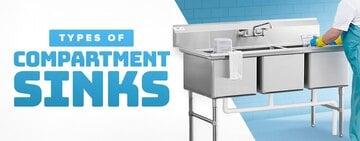
Compartment sinks are an essential piece of equipment in any commercial kitchen, providing a convenient and efficient way to wash and clean dishes as well as prep food items. These sinks can come with multiple compartments, each serving a specific purpose and function. Commercial kitchens are subject to strict health and safety regulations, and having the right type of compartment sink is crucial to maintaining a clean and sanitary workspace. Compartment sinks are available in various sizes and configurations to suit different needs and kitchen layouts .
Join Our Mailing List
Receive coupon codes and more right to your inbox.