- Topics 1570
- Industrial 60
- Troubleshooting Guides 32
- Restaurant Management 145
- Bar Management 69
- Catering Tips 43
- Bakery Management 44
- Food Trucks & Concessions 36
- Advertising & Marketing 41
- Eco-Friendly Tips 13
- Facility Layout & Design 47
- Coffee Shop Tips 32
- Installation & Maintenance 63
- Janitorial & Pest Control 34
- Safety & Sanitation 122
- Startup Tips 110
- Menu Design 13
- Kitchen & Cooking Tips 108
- Hospitality Management 25
- Pizza & Sandwich Shop Tips 21
- Smallwares 42
- Food Prep 103
- Tabletop Items 21
- Disposables 28
- Calculators & Tools 7
- Consumables 77
- Warewashing & Laundry 22
- Cooking Equipment 107
- Food Storage & Refrigeration 57
- Beverage Equipment 42
- Office Supplies 6

Waste containers are a small line item that affects a lot: custodial labor, code compliance, site safety, whether you'll pass a health inspection, and the impression your space makes on customers and tenants. The wrong container means more liner changes, more replacements, and inconsistent setups from one location to the next, while the right one holds up to daily use, fits your liners, and is easy to reorder. Whether you're outfitting one site or standardizing across many, this guide covers sizing, shape, material, and specialty styles of waste receptacles.
Shop All Trash Cans and Recycling Bins
Use the following links to learn more about commercial trash cans:
Trash Can Sizes
Size is one of the most important factors in choosing trash cans. A trash can that is too big for a room takes up valuable floor space and can be a visual distraction. A can that is too small will need to be emptied repeatedly, which hurts productivity and cleanliness and adds labor through extra trips and liner changes. For most commercial spaces, 32 to 40 gallons is the standard size and a reliable starting point, which you can scale up or down based on the area. Choosing a single size within that range simplifies liner purchasing.
For an effective trash removal program, consider your business' volume and the daily waste you produce. High-volume operations such as restaurants, cafeterias, and sizeable venues may need several large trash cans for back-of-house use. Front-of-house areas benefit from smaller, discreet cans in the sight of guests. Space-saving slim cans work well next to counters and in areas where you need a small footprint.
| Capacity | Standard Types | Best Used For |
|---|---|---|
| Under 10 gallons | Countertop cans, wastebaskets, under-counter cans, restroom step-ons | Self-service and sample stations, guest restrooms, office desks, and small prep spots where waste is low but frequent |
| 10-20 gallons | Round and square utility cans, slim and corner space-savers, decorative cans | Front-of-house guest areas, small prep stations, breakrooms, and tight corners or wall spaces |
| 23-28 gallons | Square utility cans with swing or drop-shot lids, slim rectangular cans, step-on cans | Moderate-traffic service stations, dish drop areas, and restrooms that need hands-free disposal |
| 32-40 gallons | Round Brute-style cans, square utility cans, mobile cans with dolly, recycling bins | The commercial standard. Main kitchens, dining rooms, and back-of-house workstations; the most common all-purpose size |
| 44-55 gallons | Round heavy-duty cans, square utility cans, mobile and wheeled cans, can-lid sets | High-volume dish pits, loading docks, bulk cleanup, event waste, and busy back-of-house areas |
| 64-96 gallons | Rollout and wheeled carts, outdoor cans, multi-stream recycling stations | Curbside pickup, outdoor high-traffic areas, and large-volume recycling or compost sorting |
| 100-150+ gallons | Tilt trucks, cube trucks, industrial cans, dumpsters | Warehouses, plants, construction, and landscaping; consolidating and transporting heavy loads (tilt trucks handle 300-2,300 lb.) |
| Shape | Strengths / Trade-offs | Best Placement |
|---|---|---|
| Round | Most durable, easiest to clean and drain, resists cracking, and stable; wastes corner space | High-volume back-of-house: dish pits, cook lines, and loading docks |
| Square | More capacity per footprint than round and sits flush to walls; corners are slightly harder to clean | Dining rooms, along walls, and moderate-traffic service areas |
| Rectangle / Slim | Narrowest footprint, hugs walls and fits tight aisles; lowest capacity per unit | Prep lines, narrow galley kitchens, breakrooms, and expo stations |
| Material | Strengths | Trade-offs | Best Used For |
|---|---|---|---|
| Plastic (polyethylene, heavy-duty plastic, or resin) | Light weight, resists dents, rust, and corrosion, easy to wash, and usually the lowest cost | Can crack in extreme cold, fade in direct sun, or absorb odors over time; may need weighting or anchoring in windy spots | Kitchens, back-of-house, break rooms, restrooms, loading docks, and general high-volume indoor and outdoor use |
| Steel (powder-coated or galvanized) | Strong and impact-resistant, stays put in wind, and the coating adds weather resistance at a moderate price | Heavier than plastic, and chips or scratches in the coating can lead to rust over time | Parks, campuses, parking lots, entrances, lobbies, and high-traffic indoor and outdoor areas |
| Stainless Steel | Polished, professional appearance, resists corrosion, and wipes clean easily | Higher upfront cost, shows fingerprints and scratches (especially polished finishes), and can dent | Lobbies, waiting areas, healthcare settings, and guest-facing spaces |
| Concrete | Very heavy, so it stays put outdoors, and withstands weather and high-volume use | Difficult to move once placed, and can chip or crack if struck | Parks, shopping centers, hotels, and permanent outdoor installations |
| Wood | Warm, natural appearance that blends with upscale interiors and hospitality settings | Needs more care than other materials and is sensitive to moisture, so it suits sheltered or indoor locations | Hotel lobbies, restaurant dining rooms, lounges, and other indoor guest-facing areas |
Tip: For guest-facing areas, brushed stainless steel hides fingerprints better than polished. For outdoor areas, look for powder-coated or galvanized steel, or heavy concrete where cans shouldn't move. For spaces that are moved or pressure washed often, plastic is usually the most practical choice.
When determining the type of trash or recycling container you need, think about where you'll be placing your receptacle, how much waste it will hold, and whether it will need to be transported. A healthcare facility, for example, needs different containers for patient rooms, lobbies, and exterior grounds. The same is true for restaurants, offices, schools, and warehouses, where each area has its own traffic level, sanitation needs, and cleanup routine. Start by mapping your space by area, then choose a container type for each based on how you'll use and service it. Once you know what works, standardizing on a few models across your locations makes multi-site operations, reordering, training, and liner purchasing much simpler. Take a look at the various types and styles of trash cans below to determine which are best for your business.
Commercial Trash Cans
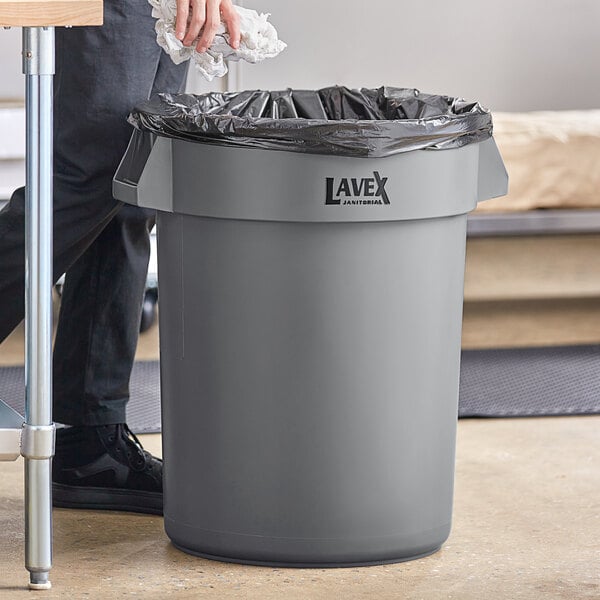
Made with high-quality, commercial-grade materials, commercial trash cans are designed to withstand heavy-duty use in any high-traffic facility. They typically come in a round or square shape and range in size from 6 gallons to 150 gallons. The term commercial trash can covers a wide variety of styles, so it is important to know where you want to place your receptacle when selecting a type. Below are some common types of commercial trash cans.
- Step-On Trash Cans: Ideal for hospitals, bathrooms, and kitchen prep areas, step-on trash cans feature pedals at the bottom that allow you to open the can without using your hands.
- Disposable Trash Cans: Perfect for high-volume indoor and outdoor events, disposable trash cans are low-cost, easy to set up, and disposable after the event is over.
- Countertop Trash Cans: Place countertop trash cans at self-service stations to collect straw wrappers, coffee stirrers, or sugar packets. They're also great for sample stations where customers need to dispose of used toothpicks or tasting spoons.
- Medical Trash Cans: Featuring step-activation for hands-free use, medical trash cans are designed to support safe containment of infectious waste.
Outdoor Trash Cans
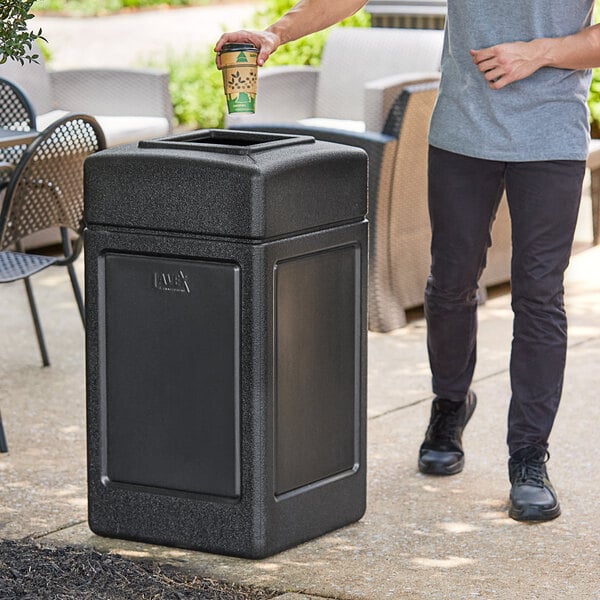
Maintain a clean and inviting outdoor facility, park, or stadium with outdoor trash cans. They are made with heavy-duty plastic, steel, or concrete to last in any kind of weather, and boast covered or partially covered lids for convenient disposal of discarded goods while keeping unsightly trash out of sight. In addition to withstanding the elements, some outdoor trash cans are designed to be animal-resistant. Their reinforced construction and locks protect against repeated clawing and chewing by bears, making them great for campgrounds, parks, and complexes. Check out the specialty styles of outdoor trash cans below.
- Drive-Thru Trash Cans: Coming with a chute-style lid, drive-thru trash cans make it easy for customers to dispose of trash directly from their cars. They also help minimize odor and keep rainwater from filling the can, so they are easy to empty.
- Outdoor Cigarette Receptacles: Ideal for use outside your business to efficiently collect cigarette waste, outdoor ashtrays and cigarette receptacles come as either stand-alone units or with a larger compartment to also hold regular trash. It is wise to always have at least one cigarette receptacle located on your property to prevent cigarettes from winding up on the ground and littering your premises.
- Pet Waste Stations: If you operate a dog-friendly business, park, or campground, it is helpful to install a pet waste station to keep your property clean and designate a specific area for pet waste disposal.
Industrial Trash Cans
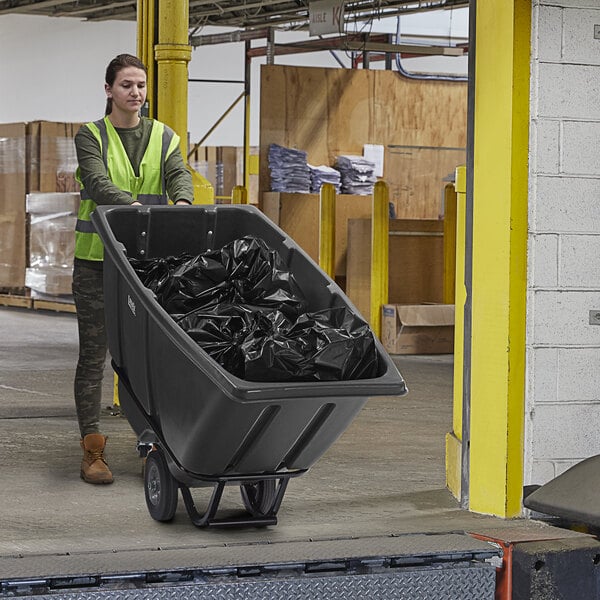
Use an industrial trash can to handle large loads of waste and heavy or bulky materials that standard containers can't accommodate. They are ideal for warehouses, manufacturing plants, distribution centers, landscaping businesses, and construction sites, where debris is generated continuously and needs to be consolidated quickly. Some industrial trash cans are equipped with casters for easy maneuvering to larger waste receptacles. Others are stationary to serve as a dumpsite for large amounts of trash. When choosing one, consider the weight you'll haul, how far it needs to travel, the width of your aisles and doorways, and whether your team will unload by hand or tip into a dumpster. Matching these details to the right style means fewer trips, less strain on staff, and containers built to handle heavy daily use. Discover common styles of industrial trash cans:
- Wheeled Trash Cans: Featuring two large wheels at the rear of the can, wheeled trash cans can be used stationary, and then you can tilt them onto their wheels for easy transport around your facility. Compared to tilt trucks, wheeled trash cans have a smaller footprint.
- Tilt Trucks: Boasting ample weight capacities, tilt trucks are designed to handle anywhere from 300 lb. to 2,300 lb. of trash and raw materials. Their design makes it easy for one person to unload the trash.
- Cube Trucks: Compared to tilt trucks, cube trucks have four equal-sized casters, and they remain in the same position when stationary and in transit. They boast large capacities, are easy to maneuver, and have high walls that keep items from falling while moving.
- Dumpsters: Use dumpsters to collect and consolidate trash outside of your building. Many types of dumpsters feature sealed rim lids to prevent leaks and odors.
Decorative Trash Cans
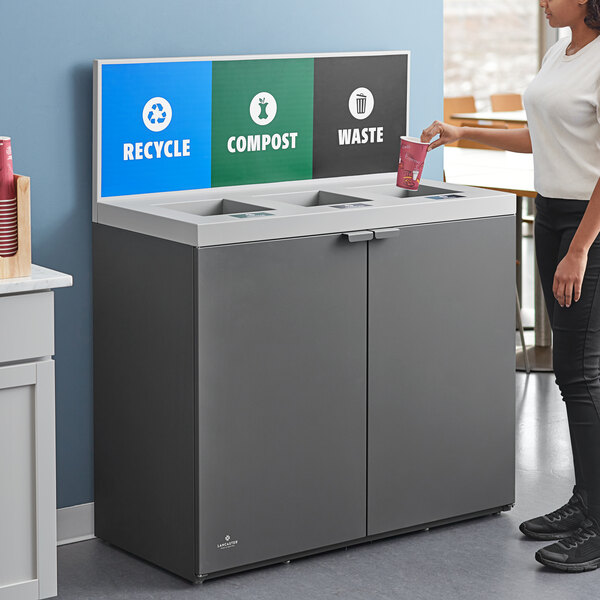
Perfect for front entryways, conference rooms, waiting rooms, and lobbies, decorative trash cans come in different styles, finishes, and colors to blend into your venue for inconspicuous waste management. These are the containers your customers, tenants, and visitors see first, so select durable finishes that resist scratches and dents, and choose designs with easy-access liner changes so your custodial team can service them quickly. You can choose between indoor and outdoor models and between waste and recycling bins. Below are some common styles of decorative trash cans.
- Stainless Steel Trash Cans: Featuring a stylish, clean appearance, stainless steel trash cans are ideal for front lobbies, waiting areas, and other rooms where you need a durable waste disposal option that won't sacrifice style.
- Concrete Trash Cans: Durable, weather-resistant concrete trash cans feature a heavy weight to keep them secure outdoors. They are ideal for high-volume settings, such as shopping malls, parks, and hotels that need stylish yet practical waste receptacles.
- Multi-Stream Decorative Trash Cans: Make it easy for guests to sort trash and recyclables with a multi-stream decorative outdoor trash can. They maximize floor space by providing both waste and recycling in one unit.
- Decorative Recycling Bins: Providing stylish, easily identifiable decorative recycling bins will help further your facility's green initiatives without detracting from your aesthetic.
- Decorative Outdoor Trash Cans: Maintain the upscale appearance of your grounds while providing exceptional waste control with decorative outdoor trash cans. They typically feature an open top to enable hands-free disposal for maximum sanitation.
Space-Saving Trash Cans
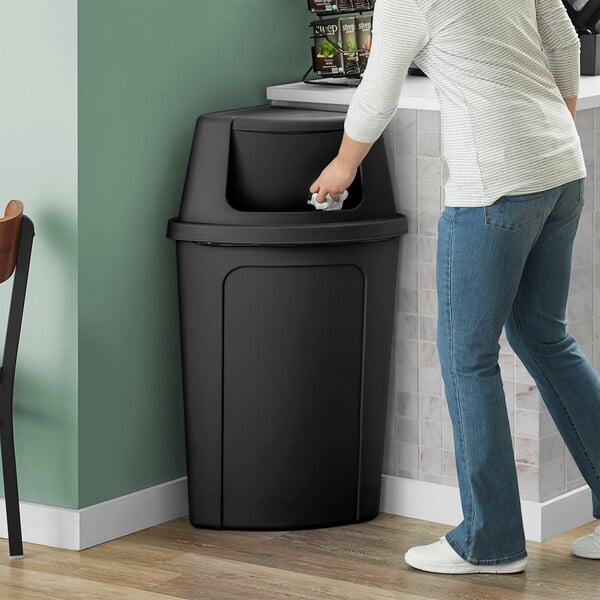
Maximize the available square footage with space-saving trash cans. They are great for small kitchens, bathrooms, break rooms, and offices with little available space. Many of these trash cans have a slim profile and are designed to fit in corners, hug walls, or fit into a recessed cutout. Because they hold less than a standard utility can, they work best where waste is light to moderate or where staff can empty them on a regular schedule. Before you buy, measure the space's footprint, including door swing, walkway clearance, and any counter or cabinet height, so the can fits without blocking traffic. Also check that your liners match the smaller dimensions of these cans, since slim and corner shapes often take different liner sizes than round or square models. Pairing a space-saving can with a nearby recycling bin is an easy way to support recycling in tight areas without adding clutter. Explore common styles of space-saving trash cans:
- Undercounter Trash Cans: These trash cans feature a sloped front opening that makes them the perfect size for storing under most commercial-height counters to save space. Many undercounter trash cans feature handles for easy access when you need to pull them out or push them back under the counter.
- Slim Trash Cans: Featuring a slim profile and rectangular shape, slim trash cans are great for placing in breakrooms, kitchens, narrow hallways, and other tight spaces while remaining out of the footpath.
- Corner Trash Cans: The triangle design of a corner trash can allows it to be inconspicuously placed in corners around your dining area and office.
- Half-Round Trash Cans: The design of a half-round trash can fits flush against a wall to reduce obstruction in high-traffic areas. They are available in heavy-duty plastic or stainless steel, making them great for indoor and outdoor use.
- Wall-Mounted Trash Cans: Ideal for bathrooms and kitchens, wall-mounted trash cans keep the container out of the way of foot traffic and leave floors clear for cleaning.
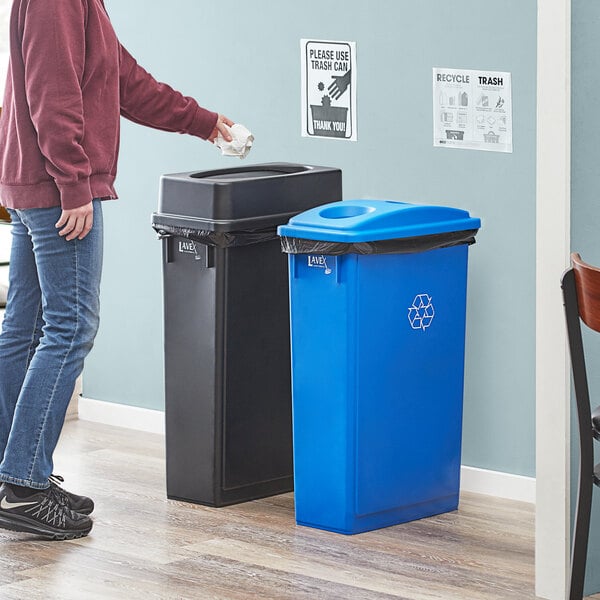
Responsibly dispose of plastic, glass, tin, aluminum, and paper by placing commercial recycling bins throughout your facility to keep your recycling program running smoothly. Wherever you place your bins, communicate to your staff and guests which materials are accepted and whether a bin is meant for only one type of material. For example, not all plastic can be recycled the same way, so post signs or graphics identifying which items can be recycled. Placing recycling bins next to your trash cans gives people an easy alternative when they're deciding where something goes, and it keeps the stations consistent from one area to the next. Color-coded bins and labeled openings help reduce contamination, which matters because one wrong item can keep a whole bin from being recycled. Before you buy, confirm which materials your hauler accepts and whether your city or county has recycling or composting requirements for businesses, since these vary by location. Choose bin capacities that match how often your team empties them, and match liner sizes and colors to each stream so collection stays quick and organized. Below are some popular recycling bin styles.
- Multi-Stream Recycling Cans: Great for keeping recyclables organized, multi-stream cans provide multiple openings and at least two separate containers to efficiently sort recyclables.
- Curbside Recycling Bins: Use curbside recycling bins to hold a large amount of recyclables. Due to their short height, they are ideal for leaving at the curb for recyclables pickup without being blown over by the wind.
- Compost Bins: Place designated compost bins near your trash and recycling cans to provide a disposal container for organic waste that can be composted. Starting a composting program can reduce the waste you send to the landfill and suits restaurants, cafeterias, and other food-handling operations.
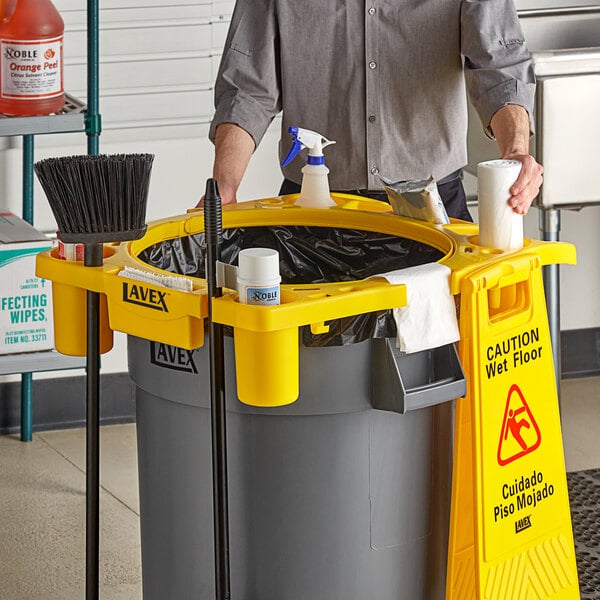
Trash can and recycling bin parts and accessories replace missing or broken parts, lengthen the lifespan of your garbage can, and help users easily transport the cans. The right accessories also protect your investment and keep day-to-day servicing fast, since a container is only as useful as the liners, lids, and labels that go with it. Consider stocking accessories alongside your containers so replacements are always on hand and custodial staff members aren't waiting on a missing part. Discover some of the most essential trash can parts and accessories below:
- Trash Can Liners: Otherwise known as garbage bags, trash can liners protect the inside of your trash can from getting messy and allow for easy trash removal. There are different types of can liners with varying levels of thickness, so be sure to purchase the correct liner for each can.
- Trash Can Lids: Lids are essential for minimizing odors and keeping debris from falling into your trash can. Some trash cans come with lids already attached, whereas some can be chosen based on your needs.
- Dollies: Use trash can dollies to protect the bottom of cans from damage due to dragging on floors or pavement. They are great for use in kitchens or for janitorial staff where the cans are regularly moved around. Some even have lock features to secure the can while stationary.
- Flatware Retriever Lids: A magnetic component on flatware retriever lids catches metal flatware when accidentally thrown away by guests, saving you money in the long run.
- Caddy Bags: These caddy bags wrap around a can and provide easy storage for janitorial staff.
- Signs: Turn ordinary trash cans into specific trash / recycling containers with clear symbols to indicate various waste options.
- Rigid Liners: A rigid plastic construction fits neatly inside a can, resists tearing, and helps keep the can itself clean.

Corrinn loves writing, researching, and cooking, so she's grateful she's gotten to blend these three passions as a longform writer on the content team at WebstaurantStore for 5 years and counting. Creating resources that help operators succeed and lacing them with entertainment to make them smile is her "why".
Learn more about this author and WebstaurantStore's Content Writing Team here!
Related Resources

October 2026 WebstaurantStore Coupon Code
Fall flavors are in full swing, and the deals at WebstaurantStore are just as irresistible! Stock up on everything your kitchen needs for a busy stretch of autumn, from disposables and pantry staples to equipment that keeps service moving. Browse our featured sale items below, and use code SPICE26 at checkout to save up to 20% on your purchase. Hot drinks, cozy desserts, and warm soups take center stage this time of year, so there's plenty here to fuel your seasonal menu. Sign up for our emails to get exclusive deals and coupon codes delivered straight to your inbox! Looking to save even more? Check out the new Webstaurant Rewards® Visa Business Card ! Sign up for a new card today and start earning rewards on every WebstaurantStore purchase

Biodegradable, Compostable, & Zero Waste Explained
One of the fastest-growing foodservice trends is switching from traditional disposables and foodservice products to eco-friendly options. When searching for eco-friendly products for your restaurant, you may come across the terms "biodegradable", "degradable", and "compostable". We explain the differences between biodegradable, degradable, and compostable products, and how your restaurant can go zero waste with eco-friendly disposables. Biodegradable, Compostable, and Degradable: What's the Difference? Biodegradable, compostable, and degradable products are made from different materials and deteriorate under distinct circumstances. We break down what each material is to help you make an informed decision when buying green disposable dinnerw

Restaurant Food Waste Solutions
As a foodservice operator, you're constantly faced with the tyranny of the urgent, so it's easy to overlook food waste prevention. According to the National Restaurant Association, the United States foodservice sector generates an estimated 22 to 33 billion pounds of food waste each year. Environmental and humanitarian concerns aside, reducing food waste is vital for a restaurant's financial success . The average restaurant loses anywhere from 4 to 10 percent of the food they purchase to food waste, so reducing food waste can cut your costs by 2 to 6 percent. In the tight margins of a restaurant budget, this effort is more than worth your while. We walk you through the different aspects of reducing food waste so you can put an effective pla
Join Our Mailing List
Receive coupon codes and more right to your inbox.