- Topics 1577
- Industrial 59
- Troubleshooting Guides 32
- Restaurant Management 144
- Bar Management 70
- Catering Tips 46
- Bakery Management 45
- Food Trucks & Concessions 41
- Advertising & Marketing 41
- Eco-Friendly Tips 13
- Facility Layout & Design 47
- Coffee Shop Tips 32
- Installation & Maintenance 63
- Janitorial & Pest Control 34
- Safety & Sanitation 121
- Startup Tips 111
- Menu Design 11
- Kitchen & Cooking Tips 106
- Hospitality Management 26
- Pizza & Sandwich Shop Tips 23
- Smallwares 42
- Food Prep 102
- Tabletop Items 21
- Disposables 28
- Calculators & Tools 7
- Consumables 77
- Warewashing & Laundry 22
- Cooking Equipment 106
- Food Storage & Refrigeration 58
- Beverage Equipment 43
- Office Supplies 6
Restaurant aprons are a vital part of most restaurant employee dress codes. Aprons protect clothing from spills and stains and make foodservice staff look professional. They also help uphold food safety standards. We explain the benefits and uses of the different types of aprons so you can select the apron style that befits your restaurant business model.
Shop All Aprons
Skip to the apron information that interests you:
Discover the different styles of aprons, their applications, and how to wash them so you can purchase every apron style your business requires.
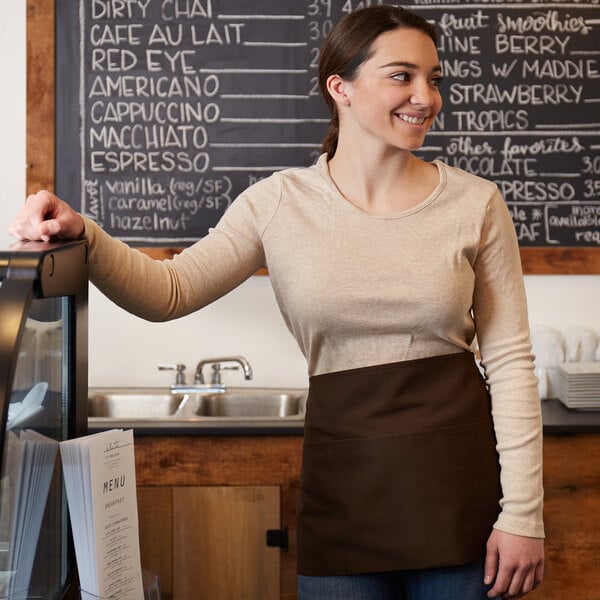
1. Server Aprons and Waist Aprons
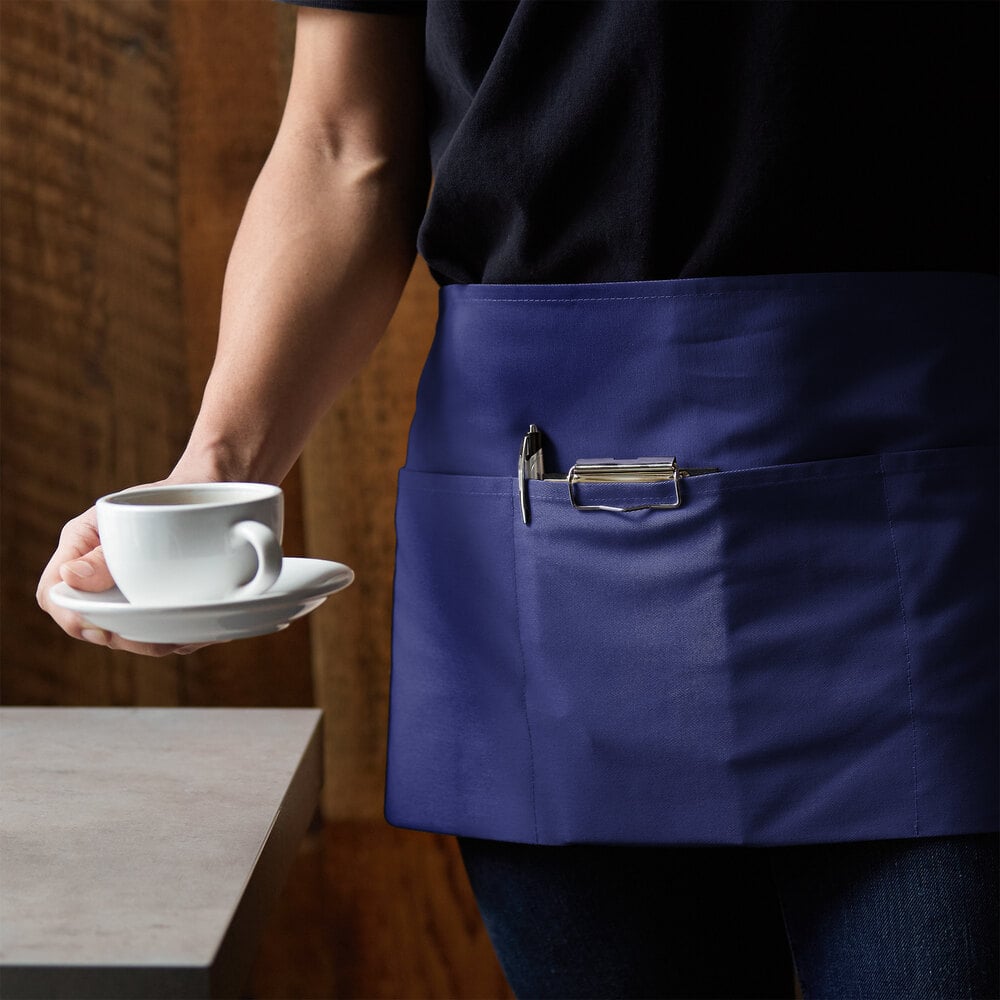
Since they do not provide full body coverage, server and waist aprons are not suitable for back-of-house use. However, their shorter length offers comfort for servers walking throughout your facility, making them a valuable part of a server's dress code. Most server aprons include pockets so your waitstaff can have pens, guest checks, and beverage straws close at hand.
Server Apron Applications:
- Front-of-house servers
- Bussers
- Head waitresses or waiters
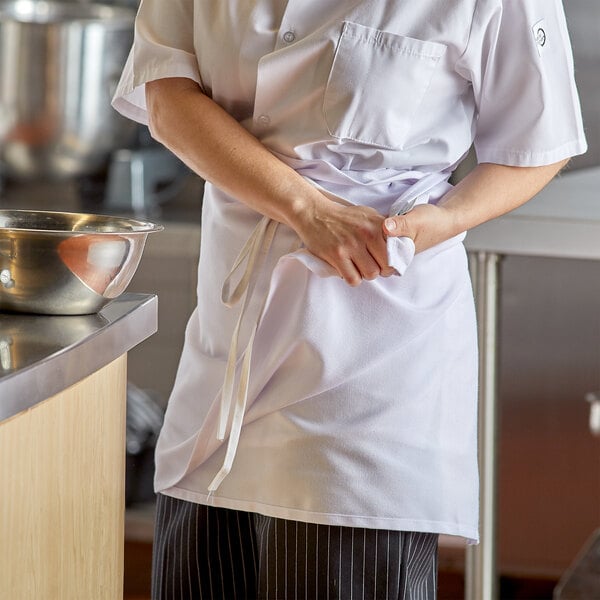
2. 4-Way Aprons
As their name suggests, 4-way waist aprons have 4 layers and are the perfect choice for staff who must use their aprons multiple times before washing them. If the outer layer becomes soiled, the wearer can switch it to the next clean surface. These aprons save laundering costs since your staff won't need to change aprons as often.
4-Way Apron Applications:
- Chefs
- Back-of-house kitchen staff
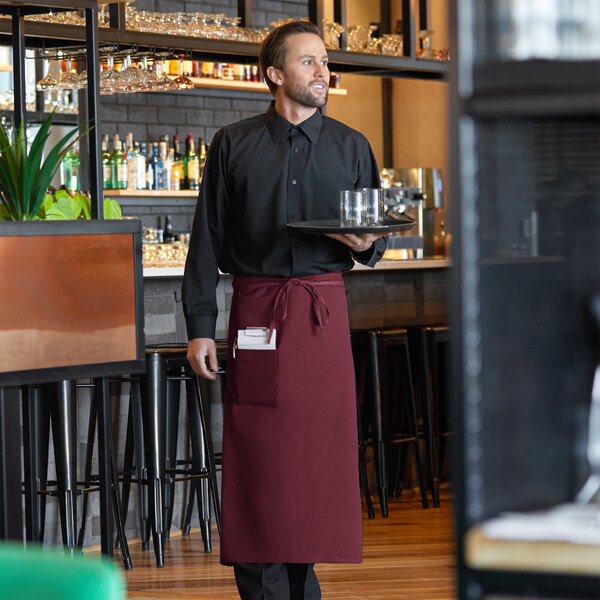
3. Bistro Aprons
Just like waist aprons and 4-way aprons, bistro aprons do not provide upper body coverage. Bistro aprons are distinguished by their long length, which provides greater coverage and protects pants from stains. They're ideal for completing messy jobs like wiping down tables. Additionally, most bistro aprons include pockets so your waitstaff can have pens, guest checks, and beverage straws close at hand.
Bistro Apron Applications:
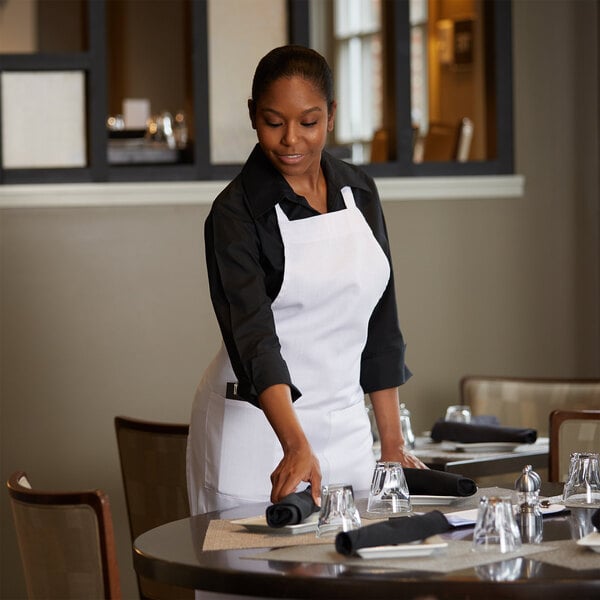
4. Bib Aprons
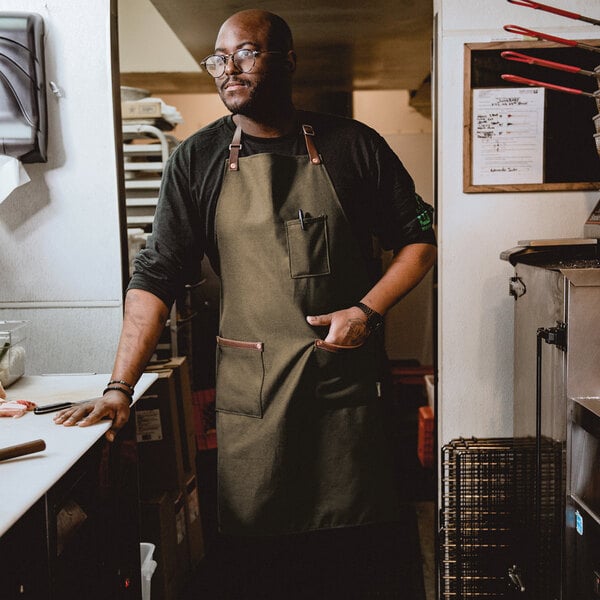
This traditional apron style ties around the back of the waist and has a loose neck loop. Many bib aprons feature pockets to let staff carry order pads, guest checks, thermometers, or other handy kitchen utensils with them as they're working. Bib aprons, also called chef aprons, are one of the best aprons for kitchen staff because they offer full body coverage and protect staff from spills and backsplash.
Bib Apron Applications:
- Kitchen Staff
- Servers
- Butchers
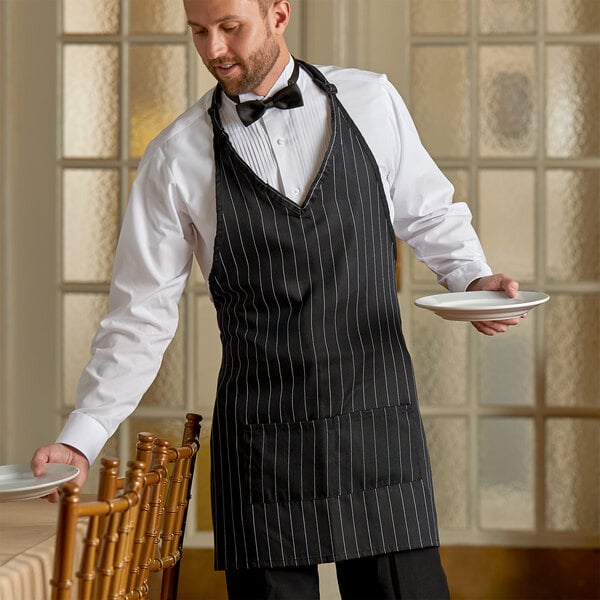
5. Tuxedo Aprons
Ideal for front-of-the-house staff in fine dining establishments, banquets, and catered events, tuxedo aprons are an upscale version of the standard bib apron. They're ideal for front-of-the-house staff in fine dining establishments, banquets, and catered events. Pair tuxedo aprons with a white button-down shirt and bow tie for a crisp, clean restaurant server dress appearance.
Tuxedo Apron Applications:
- Waiters at fine dining establishments
- Catering staff
- Buffet line staff
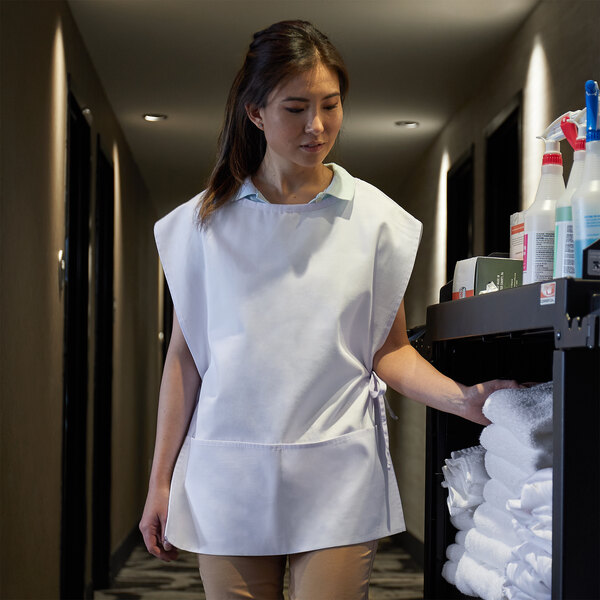
6. Cobbler Aprons
Also known as smock aprons, cobbler aprons offer both front and back coverage. The side ties are adjustable so you can make the apron snug or loose. They're great for keeping employees' shirts clean underneath, but they end around the waist or mid-thigh. Due to their versatility and comfortable fit, smock aprons are used in bakeries, schools, hospitals, and housekeeping.
Cobbler Apron Applications:
- Bakers
- School cafeteria workers
- Hospital staff
- Housekeeping staff
7. Dishwasher Aprons
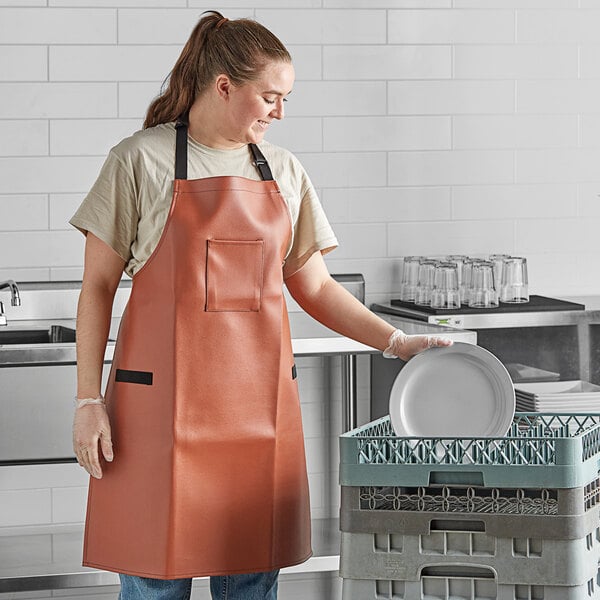
As their name suggests, dishwasher aprons are specially designed to help your dishwashers stay dry as they clean large volumes of dishes in your restaurant, hotel, cafeteria, or assisted living community. These waterproof aprons come in full-length designs that extend past the knees. Some dishwasher aprons are heat-resistant, fire-retardant, and cut-resistant. These aprons shield clothing and skin from potential harm caused by residue on pots, equipment grime, grease, and chemicals while working at a 3-compartment sink or loading a dishwasher.
Dishwasher Apron Applications:
- Dish room staff
8. Disposable Aprons
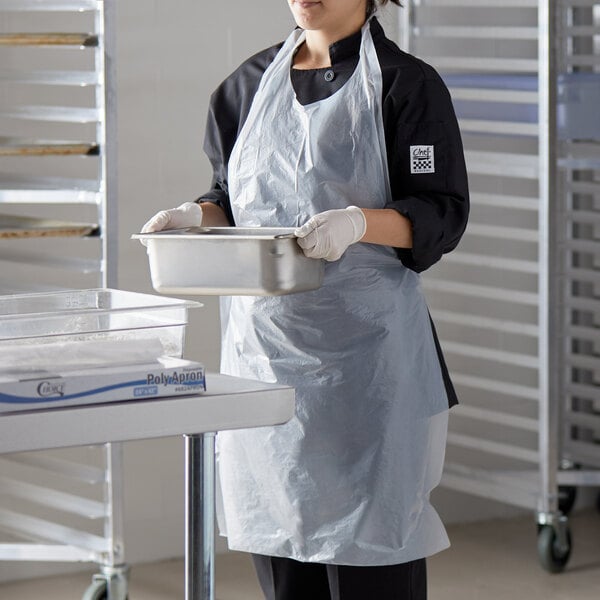
Dishwashers and bussers cleaning tables benefit from these non-porous, waterproof disposable aprons. Made of water-resistant polyethylene or polypropylene, you can throw away disposable plastic aprons after using them. Single-use aprons reduce the chances of cross-contamination and are ideal for working with raw meat and fish, slicing deli products, and using harsh chemicals.
Disposable Apron Applications:
- Deli staff
- Cleaning staff
- Bussers
- Dishwashers
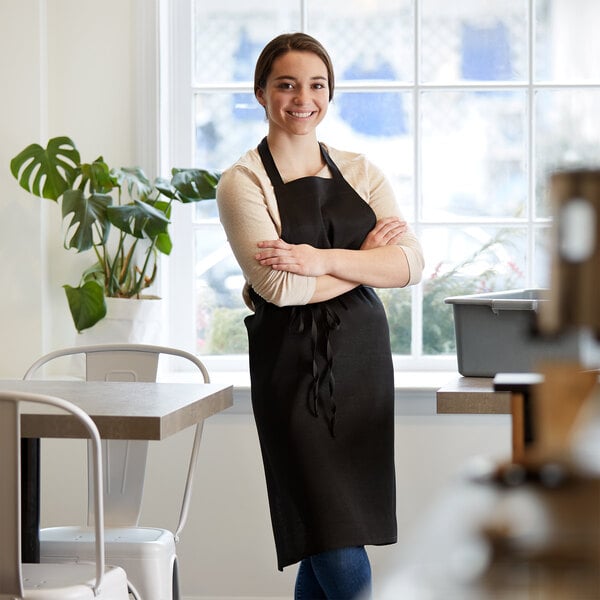
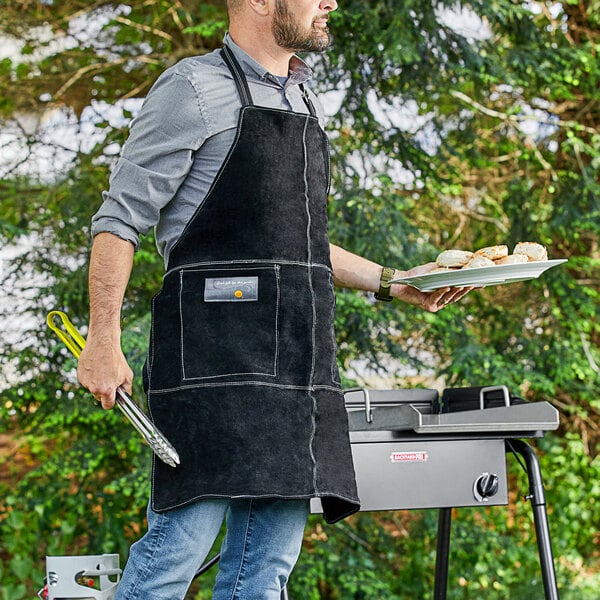
In most cases, the best apron fabrics are 100% cotton or poly blends. Durable cotton aprons fade and soften after each wash, and poly blend aprons are lightweight, durable, and retain their color. However, choosing the type of apron fabric your business needs is dependent upon what your staff will be doing.
For your front-of-house staff, comfort and a professional appearance are the priorities. Back-of-house staff requires heavy-duty apron materials or disposable designs to protect against spills and stains. We break down the different types of apron fabrics so you can select the apron material that works best for your business.
- Wrinkle-resistant
- Professional appearance
- Durable
- Heavy-duty
- Sleek appearance
- Ideal for butchers
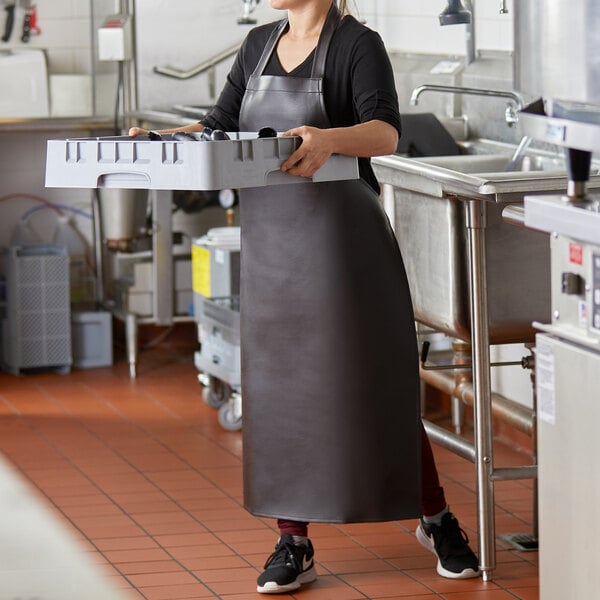
- Heavy-duty
- Resists chemicals, oils, and greases
- Easy to clean
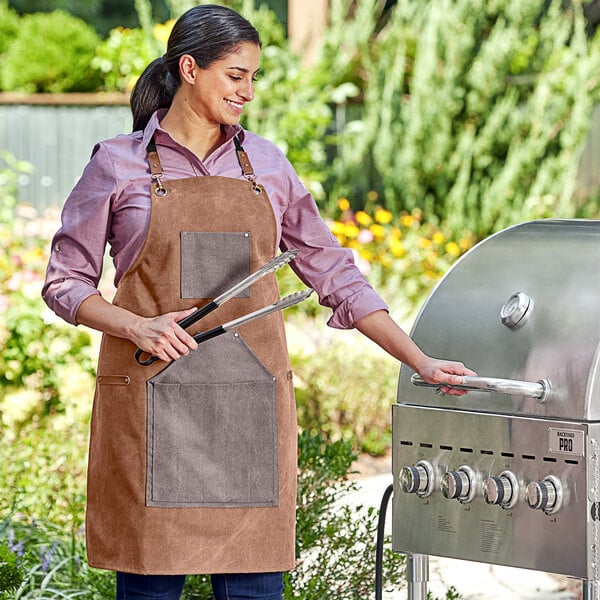
- Durable
- Comfortable
- Trendy yet professional appearance
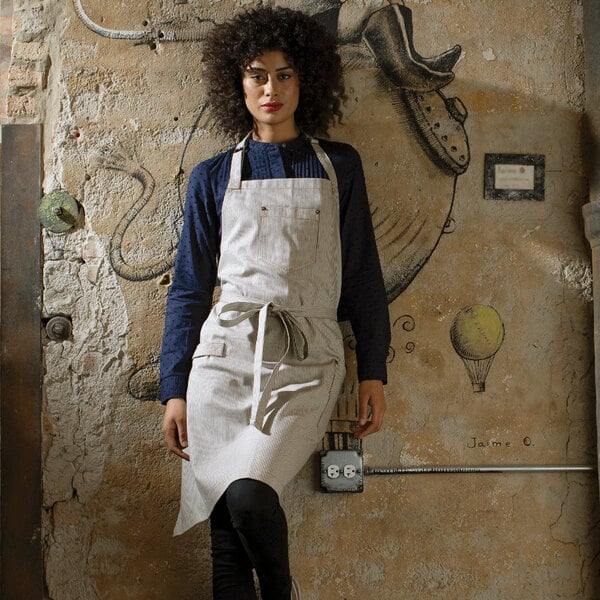
- Equally as comfortable as cotton
- Stronger than cotton
- Wrinkle-resistant
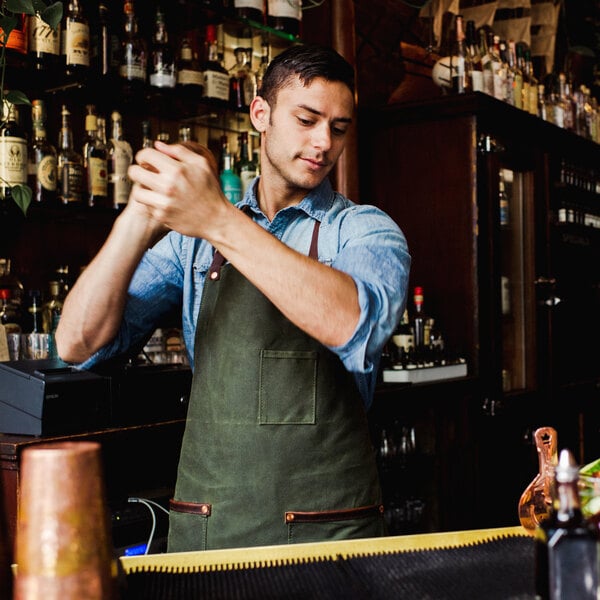
Waxed Canvas Aprons
- Water-resistant
- Wears well over time
- Industrial appearance
- Comfortable
- Durable
- Easy to clean
- Wrinkle-resistant
- Comfortable
- Holds color well
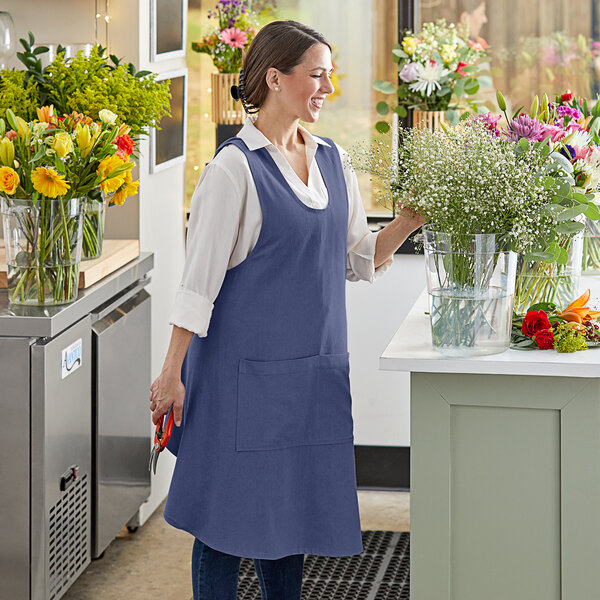
Cotton/Linen Aprons
- Breathable
- Will get softer with wear
- Rustic, lived-in feel
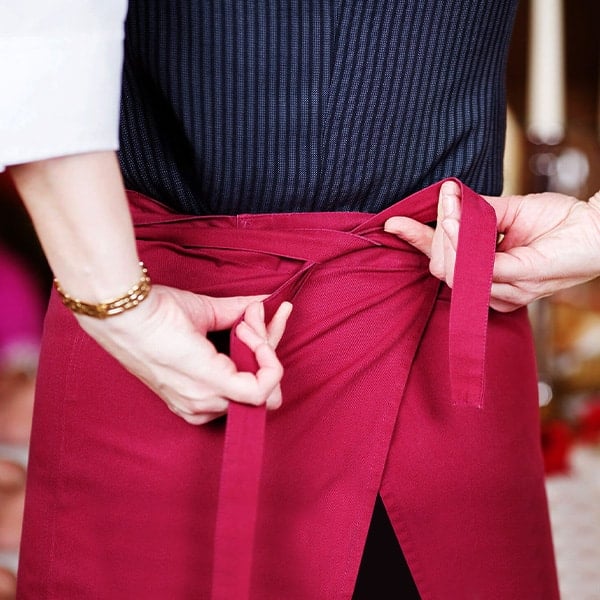
How should aprons be worn in the food service industry to make sure they stay tied correctly? Follow the basic steps below to learn how to tie an apron:
- Put the apron on so the front surface covers the front of the body. Inspect where the apron falls and adjust accordingly.
- Take the waist drawstrings behind you and tie them in a bow around your waist. If the strings are long, you can cross them behind your back and bring them around to the front to tie the bow.
- Pull the knot snug and tug on the apron to ensure it fits properly.
While the exact method for washing aprons may vary slightly by their material, we break down the basic steps for washing commercial aprons below.
Machine wash aprons with similarly colored items in cold water.
Machine dry the aprons on a low-heat setting.

Before first use, wash aprons in cold water to reduce fading and bleeding. If their color bleeds, wash them a few more times with items of similar coloring to reduce color transfer.
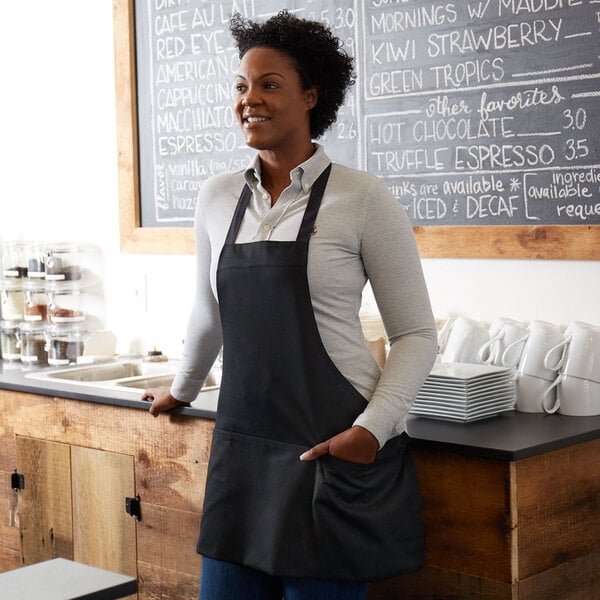
Aprons are an essential part of any restaurant's dress code. Discover why aprons are essential for foodservice professionals below:
- Professional Appearance: Maintain a professional dress code in both the front and back of the house.
- Many Colorful Options: Select one color for a uniform appearance, or use more than one color to easily identify different chefs in your kitchen.
- Sanitary: Chefs and servers are more likely to keep their clothes free from spills, stains, and messes.
- Easily Changed: Unlike other articles of clothing, aprons are quickly and easily changed when they become dirty or soiled during a busy shift. Aprons are convenient and cost-efficient to keep on hand for this very reason.
- One Size Fits Most: Long, adjustable drawstrings ensure a proper fit and accommodate people of different sizes.
The modern word apron evolved from the Medieval French word naperon which means "small tablecloth". Naperon was frequently mispronounced as "an apron". By the 17th century, the word apron was used to describe protective garments worn over clothing. While the word apron didn't exist until the 17th century, protective articles existed in even the earliest civilizations. The fertility goddess of the Bronze Age Minoan civilization of ancient Crete was depicted with an apron, and aprons were worn by ancient Egyptian pharaohs and Assyrian priests.
Back to TopRelated Resources

A Guide to Promotional Foodservice Apparel
Foodservice brands are no longer competing solely on menu innovation or price. Restaurants, grocers, and cafes are increasingly rivaling streetwear brands in how their apparel shows up in the real world. Customers don't just want a great meal; they want to feel connected to the brands they support. A well-designed hoodie or cap signals belonging, telling a story about taste, community, and values, without a single word spoken. For operators, this means apparel isn't just promotional - it's an extension of the brand experience , designed to live well beyond the point of purchase. Shop All Custom Apparel

Server Sidework Checklist for Your Restaurant
If you operate a restaurant, you know that it's important to train your servers well . They should be able to take orders, deliver meals, and sort the bill with professionalism and efficiency. However, there is a whole slew of sidework in a restaurant that must be accomplished to keep the establishment running smoothly. It's important to maintain a balance for your servers between sidework duties and tip-producing tasks so they can be compensated appropriately at the end of the day. According to the Tip Regulations Under the Fair Labor Standards Act that was put into effect on Dec. 28, 2021, tipped employees should not be performing non-tip producing labor for longer than 30 minutes. Keep reading to learn how to create a side work task list
Guidelines for Training Restaurant Servers
Regardless of a restaurant's size or style, the serving staff represents the face of every dining establishment. These individuals have the most face time with your customers during their visit, and positive interactions can go a long way to ensuring those same patrons return. Hiring the right employees for the job from the start is always ideal, but the introduction of a structured server training program can pay huge dividends for your business. Server Training By putting some thought and effort into a restaurant training program, you can immediately emphasize your workplace culture for every new hire and lower the turnover rate for your business. The following guidelines for restaurant server training will help you establish an effective
Join Our Mailing List
Receive coupon codes and more right to your inbox.