- Topics 1581
- Industrial 59
- Troubleshooting Guides 32
- Restaurant Management 144
- Bar Management 70
- Catering Tips 46
- Bakery Management 46
- Food Trucks & Concessions 42
- Advertising & Marketing 41
- Eco-Friendly Tips 13
- Facility Layout & Design 47
- Coffee Shop Tips 32
- Installation & Maintenance 63
- Janitorial & Pest Control 34
- Safety & Sanitation 122
- Startup Tips 111
- Menu Design 11
- Kitchen & Cooking Tips 106
- Hospitality Management 26
- Pizza & Sandwich Shop Tips 24
- Smallwares 42
- Food Prep 103
- Tabletop Items 21
- Disposables 28
- Calculators & Tools 7
- Consumables 76
- Warewashing & Laundry 22
- Cooking Equipment 106
- Food Storage & Refrigeration 58
- Beverage Equipment 43
- Office Supplies 6

Clean, dry floors are critical to maintaining safety, sanitation, and operational efficiency in any commercial kitchen. From managing spills to removing stubborn, stuck-on debris, the tools you choose play a direct role in how quickly and effectively your staff can reset work areas. Floor squeegees and floor scrapers are built to handle these challenges, each excelling in different cleaning scenarios that demand speed, precision, or force. Selecting the right combination of tools helps reduce slip hazards, protect flooring, and keep workflows moving without unnecessary downtime.
Shop All Floor Care Supplies
A floor squeegee is a cleaning tool designed to push liquids and light debris off hard floor surfaces using a flat blade, typically made of rubber or foam. They're used to quickly clear water, grease, and food particles from tile, concrete, or quarry floors during and after service. The wide blade and straight edge allow staff to move large volumes of liquid toward drains with minimal passes, improving cleaning speed and reducing slip risks. Most models pair with threaded handles for extended reach, making them practical for large prep areas, dish rooms, and walk-ins.
What Is a Floor Scraper?
A floor scraper is a rigid cleaning tool built to remove stuck-on materials like dried food, gum, or hardened grease from floor surfaces. Instead of pushing liquid, it uses a firm metal or plastic blade to apply downward force and lift residue that mops and squeegees can't dislodge. Scrapers are especially useful in areas with heavy buildup, such as cook lines or under equipment. Their design prioritizes leverage and control, allowing operators to restore surfaces before final cleaning steps.
Squeegee vs Floor Scraper
Squeegees move liquids, while scrapers remove adhered debris. A squeegee is the faster choice for clearing spills and washdown water, helping maintain dry, safe walking surfaces during active shifts. A scraper, by contrast, is used when residue bonds to the floor and requires force to break free before rinsing or sanitizing. In most commercial kitchens, both tools are used together as part of a complete floor cleaning process.
Floor squeegees and floor scrapers are used in commercial settings to remove liquids, debris, and hardened buildup from floors to maintain safety and sanitation. Each tool serves a distinct role, and understanding where they fit in daily operations helps businesses clean more efficiently and protect high-traffic work areas.

- Clearing Water: Restaurants and cafeterias rely on squeegees to move large amounts of water toward floor drains after equipment and floor cleaning. This keeps prep areas dry and reduces slip hazards before the next shift.
- Managing Spills: Bars, coffee shops, and juice counters often deal with constant liquid spills. A squeegee allows staff to quickly push away water, soda, or alcohol without interrupting service for extended cleanup.
- Removing Grease Buildup: Floor scrapers are commonly used in high-output kitchens where oils and food residue accumulate and harden near fryers, grills, and ranges. Scraping breaks up this layer so it can be properly cleaned and sanitized.
- Cleaning Under Heavy Equipment: In bakeries, pizzerias, and institutional kitchens, scrapers help dislodge debris in hard-to-reach areas beneath ovens, mixers, or prep tables where buildup tends to go unnoticed.
- Post-Event Cleanup: Catering companies and banquet facilities use both tools together, using scrapers to remove stuck food waste from temporary prep zones, followed by squeegees to clear rinse water and speed up breakdown.
- Dishroom and Warewashing Areas: Constant splashing and runoff make these zones prone to pooling, and squeegees help staff manage water accumulation throughout service, keeping traffic lanes safer and more manageable.
Choosing the right floor squeegee or floor scraper depends on matching the tool's design to your floor conditions, debris type, and daily cleaning demands. The right selection improves cleaning speed, reduces labor strain, and ensures floors meet safety and sanitation standards.
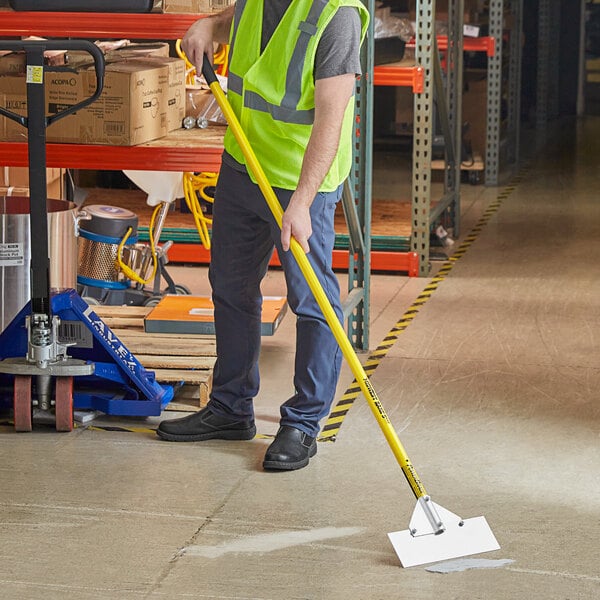
- Floor Type: Smooth surfaces like sealed concrete or tile pair well with straight rubber blades, while textured or grout-heavy floors often require foam or dual-blade squeegees that can reach into uneven areas.
- Soil Type: Light liquids and rinse water call for flexible squeegee blades, whereas dried-on food, grease, or sugar buildup requires a rigid scraper with enough edge strength to break adhesion.
- Area Size: Wide squeegee heads cover large kitchen floors or processing areas faster, while narrower options offer better control in tight spaces like walk-ins or behind equipment.
- Blade Material: Rubber is a common all-purpose option, but foam works with uneven floors better, and metal scraper blades deliver the force needed for stubborn residue in high-heat zones.
- Durability Requirements: High-volume kitchens benefit from heavy-duty frames and replaceable blades, while lower-traffic operations may prioritize cost-effective, lighter-duty options.
Floor squeegee frame materials determine durability, weight, corrosion resistance, and how well the tool performs in specific cleaning environments. Selecting the right frame material helps balance longevity, sanitation requirements, and ease of daily use.
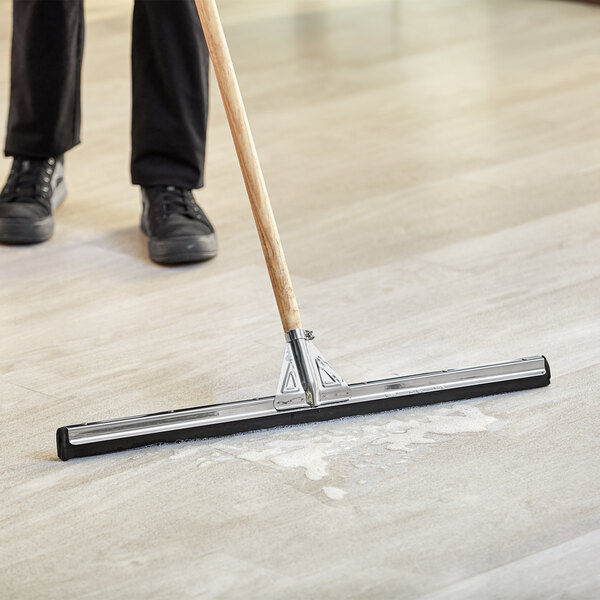
- Plastic: Light weight and resistant to rust, plastic frames are a practical choice for light-duty cleaning in smaller kitchens or front-of-house areas. They're easy to handle but may damage under pressure in demanding back-of-house conditions.
- Steel: Known for strength and rigidity, steel frames hold up well under heavy use and provide consistent blade pressure across the floor. However, they require proper coating or care to prevent rust in wet environments.
- Metal: This broad category includes mixed alloys designed for general-purpose durability, often found in mid-range squeegees. They offer a balance between cost and strength but vary in corrosion resistance depending on the specific composition.
- Stainless Steel: Designed for sanitation-sensitive environments, stainless steel resists corrosion, chemicals, and frequent washdowns. It's a common choice in food processing facilities and commercial kitchens with strict hygiene standards.
- Aluminum: Lighter than steel but still durable, aluminum frames reduce operator fatigue during extended cleaning tasks. They naturally resist rust, making them suitable for wet areas like dish rooms and washdown zones.
Floor squeegee handle materials affect grip, weight, durability, and how well the tool holds up under repeated commercial use. The right handle material can reduce fatigue, improve control, and withstand exposure to moisture, chemicals, and temperature changes.
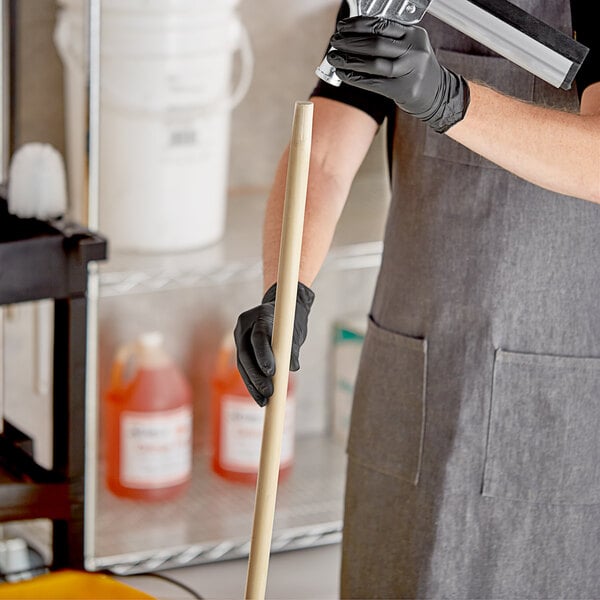
- Aluminum: A go-to option for many kitchens, aluminum offers a strong yet light weight build that's easy to maneuver during long cleaning shifts. Its natural resistance to corrosion makes it well-suited for wet areas like dish rooms and prep lines.
- Wood: Traditional and cost-effective, wood provides a solid grip and sturdy feel. That said, it can absorb moisture over time, which may lead to cracking or sanitation concerns if not properly maintained.
- Fiberglass: Designed for durability without added weight, fiberglass handles resist splintering, warping, and chemical exposure. They're often chosen in high-volume operations where tools see frequent, demanding use.
- Steel: Heavier than other options, steel delivers maximum strength and rigidity for aggressive cleaning tasks. Protective coatings are typically required to prevent rust in environments with constant water exposure.
- Plastic: Light weight and easy to clean, plastic handles are commonly used in lighter-duty applications or color-coded systems. While resistant to corrosion, they may lack the structural strength needed for more intensive back-of-house cleaning.
Floor squeegee and floor scraper features are built-in design elements that improve sanitation, organization, and ease of use in commercial cleaning workflows. These details help staff clean more efficiently while supporting compliance with safety and hygiene standards.
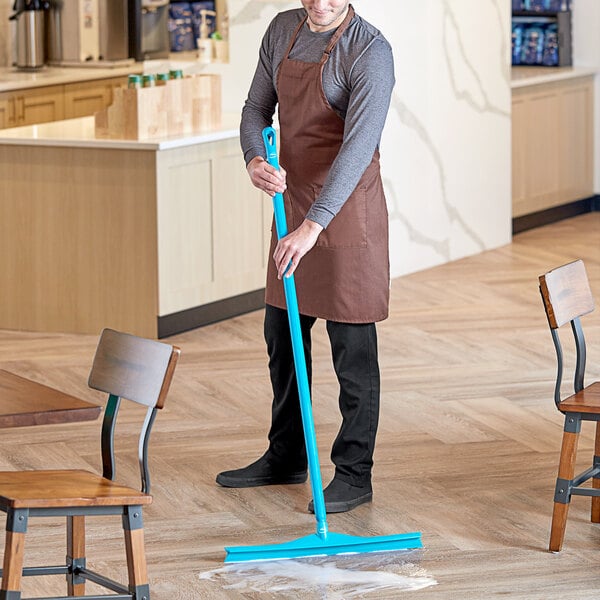
- Color-Coded Design: Tools are manufactured in distinct colors to designate specific cleaning zones, such as prep areas, raw food zones, or restrooms. This reduces the risk of cross-contamination and aligns with HACCP-based sanitation programs.
- Hanging Hole: Many handles include a built-in hole at the top for wall storage on hooks or racks. Keeping tools off the floor promotes faster drying, improves organization, and helps maintain sanitary conditions.
- Dishwasher-Safe: Some squeegees and scrapers are made from materials that can withstand commercial dishwashers or high-temp sanitation cycles. This allows for thorough cleaning between uses, especially in environments with strict hygiene protocols.
- Ergonomic Handling: Designed with grip shape, weight distribution, or slight contouring in mind, ergonomic features reduce strain during repetitive cleaning tasks. This is particularly valuable in high-volume kitchens where staff use these tools multiple times per shift.
- BPA-Free: Plastic components labeled BPA-free are manufactured without bisphenol A, a chemical sometimes restricted in food-contact environments. While these tools don't directly contact food, using compliant materials supports broader food safety standards and purchasing requirements.
Selecting the right floor squeegees and floor scrapers comes down to how well the tools align with the realities of a commercial operation. When properly matched to the environment, these tools help prevent slips, protect different types of kitchen flooring, and keep sanitation routines consistent under pressure. Operators who invest in durable materials, task-specific designs, and easy-to-maintain features position their teams to work faster without sacrificing results. In a setting where cleanliness directly impacts safety, compliance, and customer perception, the right floor cleaning tools become a foundational part of day-to-day execution.

With almost a decade of content marketing experience, Kevin has learned the ins and outs of various business sectors. Over his four years as a Longform Content Writer with WebstaurantStore, Kevin has spent hours researching and writing about the intricacies of the foodservice industry. Specializing in marketing guides, technical writing, and structured how-to content, he enjoys providing readers with content that guides them in growing and running their bar or restaurant.
Learn more about this author and WebstaurantStore's Content Writing Team here!
Related Resources

May 2026 WebstaurantStore Coupon Code
May has arrived, and seasonal savings are heating up alongside the spring weather here at WebstaurantStore! With peak catering season underway and holidays like Memorial Day around the corner, now is the time to stock up on essential supplies and equipment! Take a look at our wide array of sale items below and don't forget to enter the code MAYFLOWERS at checkout to enjoy 15% off your purchases! Looking to save even more? Check out the new Webstaurant Rewards® Visa Business Card ! Sign up for a new card today and start earning rewards on every WebstaurantStore purchase, and save on a WebstaurantPlus subscription. Have a look at some incredible deals on disposable items with May's monthly coupon code! Whether you're looking for disposable pa
Hiring a Cleaning Service for Your Restaurant
Restaurant cleaning services can be a helpful addition to those who may be short on time or looking to ease the workload of their staff. A clean restaurant creates an inviting atmosphere, safer working conditions, and can help reduce the risk of cross-contamination . Commercial cleaning services that cater to the restaurant industry can be well-equipped to thoroughly sanitize and degrease high-volume kitchens and keep other areas in your restaurant looking good. Below are some helpful hints and tips for hiring the right professional cleaning service to fit your budget and needs. Shop All Janitorial Supplies Use the following links to navigate through the article: Importance of Keeping Your Restaurant Clean Limitations and Benefits of Hiring
How to Stock a Housekeeping Cart
Clean guest rooms are vital to the success of any hotel, resort, or vacation rental . With limited time to prepare each room for the next guest, your housekeeping staff needs to be organized and efficient. You can help your cleaning staff to perform the best job possible by beginning with a well-stocked housekeeping cart and the right housekeeping uniforms . Shop All Hotel Housekeeping Carts Benefits of an Organized Housekeeping Cart There is a limited timeframe between guest checkout times and new guest arrivals. If checkout is at 11am and check-in is at 4pm, this gives your housekeeping staff 5 hours to clean and stock your guest rooms. An organized, well-stocked housekeeping cart helps your staff make rapid progress while they clean room
Join Our Mailing List
Receive coupon codes and more right to your inbox.