- Topics 1570
- Industrial 60
- Troubleshooting Guides 32
- Restaurant Management 145
- Bar Management 69
- Catering Tips 43
- Bakery Management 44
- Food Trucks & Concessions 36
- Advertising & Marketing 41
- Eco-Friendly Tips 13
- Facility Layout & Design 47
- Coffee Shop Tips 32
- Installation & Maintenance 63
- Janitorial & Pest Control 34
- Safety & Sanitation 122
- Startup Tips 110
- Menu Design 13
- Kitchen & Cooking Tips 108
- Hospitality Management 25
- Pizza & Sandwich Shop Tips 21
- Smallwares 42
- Food Prep 103
- Tabletop Items 21
- Disposables 28
- Calculators & Tools 7
- Consumables 77
- Warewashing & Laundry 22
- Cooking Equipment 107
- Food Storage & Refrigeration 57
- Beverage Equipment 42
- Office Supplies 6

Green disposable dinnerware includes single-use plates, bowls, and serving pieces made to reduce waste impact compared with foam or conventional plastics. Below, we break down how to match materials and product formats to your menu and disposal options, so your sustainability claims align with what your local hauler or compost program can actually accept. You'll also learn which performance features to prioritize, so you can buy with confidence and avoid costly trial-and-error purchases.
Shop All Eco-Friendly Disposables
Eco-friendly disposable dinnerware materials are designed to reduce reliance on traditional foam and petroleum-based plastics while still meeting the realities of commercial service. The best option depends on what you're serving (hot, cold, oily, saucy), how long it must hold up (dine-in vs. delivery), and what disposal stream you can actually use (industrial composting, recycling, or landfill). Below, we break down the most common green dinnerware materials so you can choose a lineup that protects food quality and supports your waste goals.
1. Plant Fiber
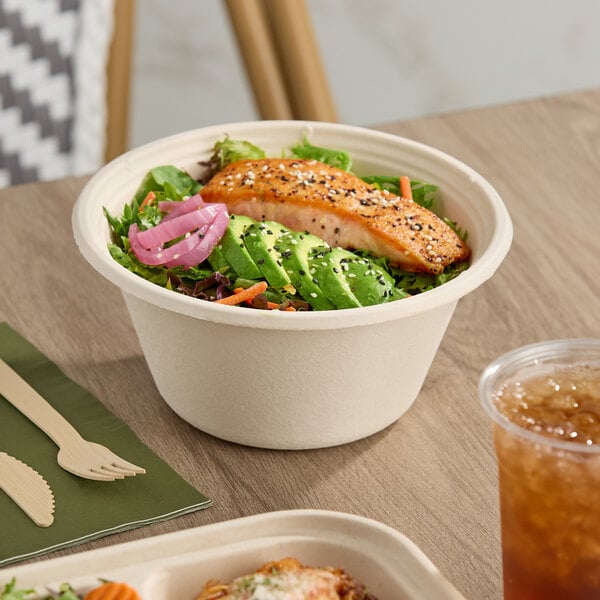
Plant fiber dinnerware is typically made from agricultural byproducts such as sugarcane bagasse or wheat straw that are pressed into plates, bowls, and trays. It tends to feel sturdier than thin paper and holds up well for hot entrees, fried items, and sauces with short-to-moderate holding times. It’s a practical pick when you want a fiber-based product that looks natural without feeling flimsy. Compostability varies by program and coatings, so it’s important to match plant fiber to what your local hauler accepts.
- Uses renewable, plant-based feedstocks (often agricultural byproducts)
- Performs well with hot foods and moderate grease exposure
- Natural look that works for grab-and-go and catered service
- Can soften if liquids sit too long, especially under heavy sauce loads
- Product quality varies by brand
- Compostable claims depend on local acceptance and any added coatings
2. Molded Fiber
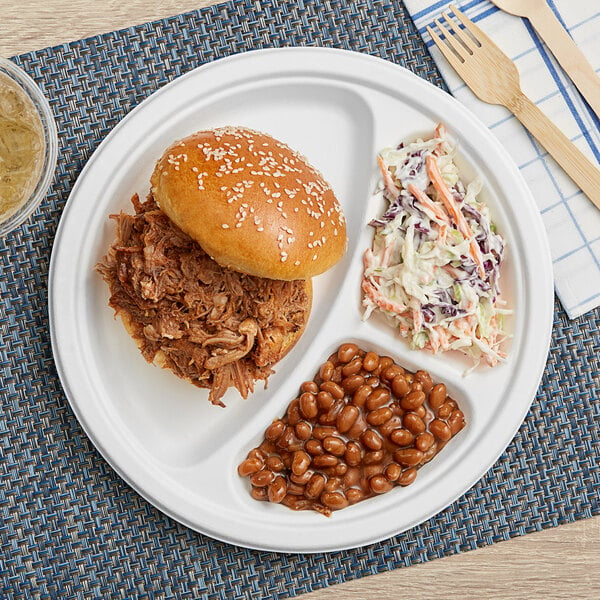
Formed from pulp (often recycled paper or wood fiber), molded fiber dinnerware is structured into shapes like bowls, trays, and compartment plates. It’s popular for high-volume operations because it balances cost control with a more sustainable profile than foam. Many molded fiber items are built for heat and grease resistance, but performance still depends on the product’s thickness and whether it uses a barrier layer. If you need a reliable workhorse for cafeterias, catering, or takeout combos, molded fiber is usually where you start.
- Strong structure for compartment plates, trays, and heavier portions
- Commonly available in bulk with consistent sizing for line builds
- Good option for hot service when paired with the right barrier finish
- Uncoated versions can absorb moisture and lose rigidity over time
- Barrier-coated products vary widely in grease and leak resistance
- Some facilities may restrict certain fiber items depending on additives
3. Wood
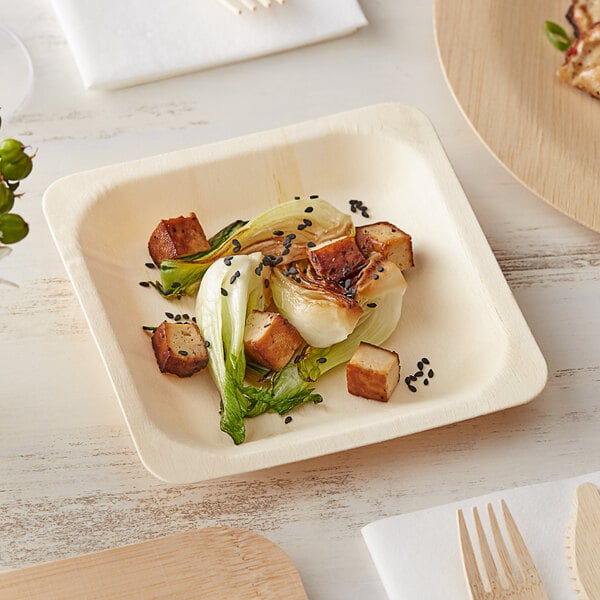
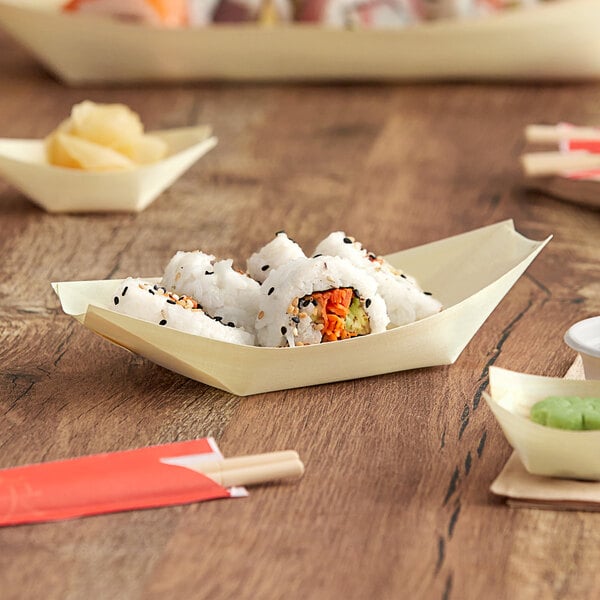
Wood dinnerware is typically made from birch or similar hardwoods and is most often used for tasting boats, cones, picks, and small appetizer pieces. It brings a premium presentation for events, food halls, and sampling programs where appearance matters. Because it’s naturally rigid, it performs well for dry to lightly sauced foods without collapsing under weight. It’s less suited for long-hold, high-liquid menu items, where seepage and softening can become noticeable.
- Rigid and stable for apps, tastings, and handheld portions
- Elevated presentation that pairs well with premium concepts
- Works well with warm foods
- Not ideal for high-liquid items or long holding times
- Higher unit cost than fiber for many formats
- Wood grain and thickness can vary, affecting consistency
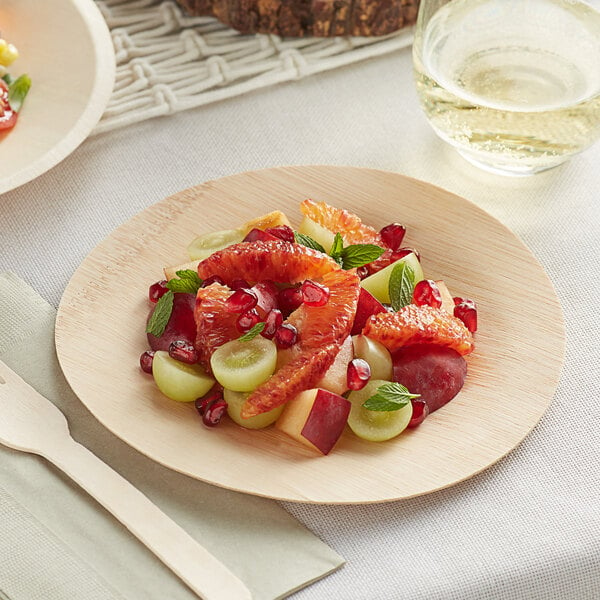
4. Bamboo
Bamboo dinnerware leverages a fast-growing renewable material commonly used for skewers, picks, boats, plates, and catering presentations. It’s a strong fit for operators who want a natural aesthetic with dependable rigidity for finger foods and plated apps. Bamboo also tends to handle warm foods and moderate moisture better than thin paper options. However, not all bamboo products are created equal, as some use binders or finishes that affect compostability and how they perform with oils and sauces.
- Renewable material with a sturdy, upscale appearance
- Holds shape well for apps, small plates, and catering service
- Performs better than basic paper for warm and moderately moist foods
- Coatings/binders can impact compostability and disposal options
- Less suitable for soups or high-sauce entrees over extended holds
- Premium look often comes with a premium price
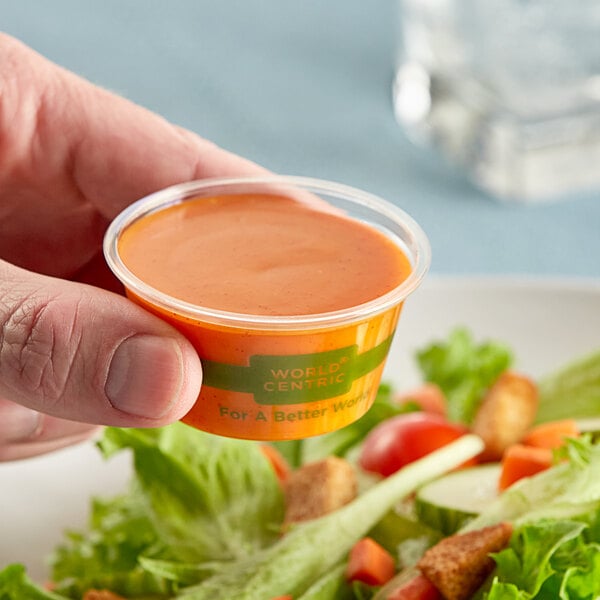
5. PLA Plastic
A plant-based type of plastic, PLA (polylactic acid) is most often used for clear cold cups, lids, and certain portion containers where visibility matters. It’s attractive when you want a clear plastic for salads, parfaits, and cold sides while supporting compostable programs that accept PLA. It is not a universal replacement for PET or PP, especially around heat, as standard PLA can warp or soften with hot foods and high-temp holding.
- Clear, display-forward material for cold foods and grab-and-go cases
- Plant-based alternative to traditional petroleum plastics
- Often available in commercially compostable, certified product lines
- Typically requires industrial composting, not suitable for backyard bins
- Heat limitations can cause warping with hot fill or high-temp holding
- Can contaminate recycling streams if it's mistaken for PET
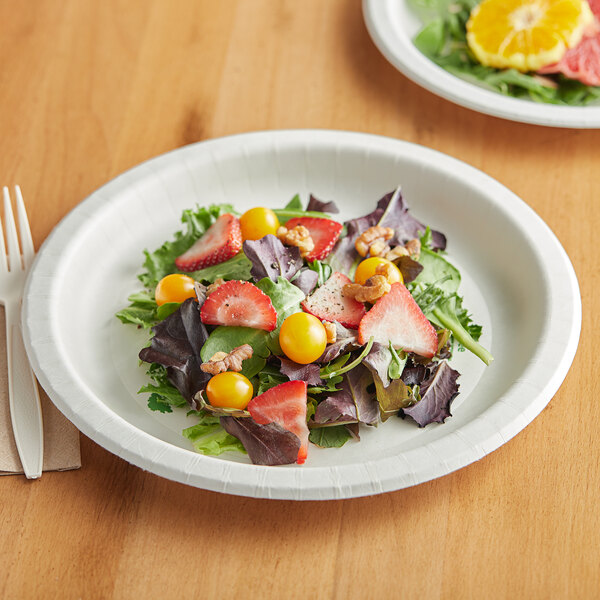
6. Paper
Used for plates, bowls, wraps, boats, and a wide range of quick-service formats, eco-friendly paper disposable dinnerware is typically made from never-used or recycled paper fibers. It’s a strong operational fit when speed, portion control, and storage efficiency matter, especially for dry items or short-hold service. Performance changes dramatically based on whether the paper is coated or lined. Uncoated paper absorbs moisture quickly, while barrier-treated paper holds up better to sauces and grease. Disposal also hinges on coatings and cleanliness, which can restrict recycling or compost acceptance.
- Light weight, cost-effective option for high-volume service
- Easy to store and stage, especially for fast-paced lines
- Barrier-coated versions can handle moderate grease and moisture
- Uncoated paper can weaken quickly with liquids, oils, or steam
- Liners and coatings may limit recycling or composting pathways
- Greasy or food-soiled paper is often rejected by recycling programs
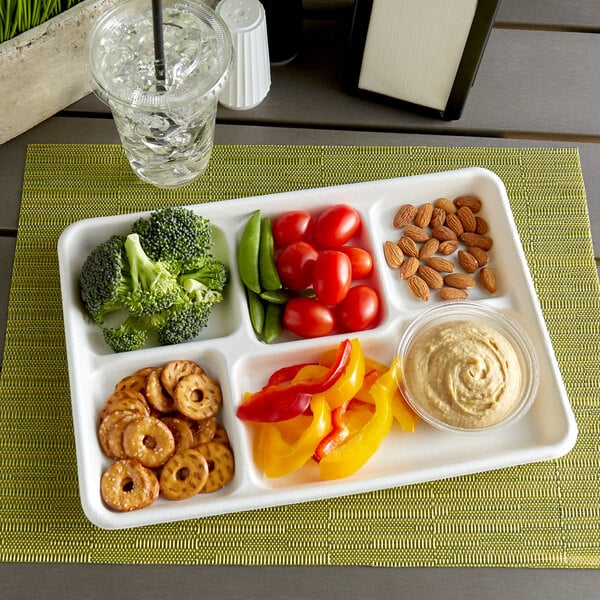
Eco-friendly dinnerware types are the common disposable service pieces, plates, bowls, trays, and small portion vessels made from greener materials. They make it possible to serve food efficiently while supporting your waste and sourcing goals. The formats below cover the core pieces most kitchens use to build a consistent, sustainable service system.
- Plates: Eco-friendly plates are flat or slightly rimmed disposable pieces used for entrees, appetizers, and desserts. Best for dry-to-moderately sauced items that need clean presentation and fast plating on the line.
- Platters: Wide, low-profile serving pieces, eco-friendly platters are used for catering spreads, shareable appetizers, and entree presentations that need extra surface area. Great for buffet lines and event service where you're staging food for multiple guests and want a clean, upscale presentation without switching to reusable ware.
- Bowls: Designed as deeper vessels, eco-friendly bowls are designed for soups, pasta, grain bowls, salads, and saucy foods. Ideal when you need spill control and enough wall height to protect food during transport.
- Trays: Sporting larger, rigid platforms (often with compartments), eco-friendly trays are used for combos, catering spreads, tastings, or cafeteria service. Best when you need portion separation, quick assembly, and reliable stacking in high-volume workflows.
- Ramekins: Eco-friendly disposable ramekins are small cups for dips, dressings, condiments, toppings, and sauce sides. Useful for portion control and preventing soggy fries, sandwiches, or appetizers by keeping wet components separate.
- Souffle Cups: Light weight portioning tools, eco-friendly souffle cups are commonly used for samples, sauces, and small sides, and they are often paired with tight-fitting lids. Ideal for delivery and grab-and-go setups where leakage prevention matters more than premium presentation.
- Punnets: Eco-friendly punnets are hinged or lidded produce-style containers used for berries, cut fruit, pastries, and cold sides. Great for merchandising in refrigerated cases because they protect product while keeping it visible and easy to carry.
- Cones: Handheld eco-friendly serving cones are used for fries, churros, popcorn, fried snacks, and tasting portions. Perfect for festivals, food halls, and quick-service counters where speed and one-handed eating drive the experience.
Coated disposable dinnerware has a barrier layer that improves resistance to moisture, grease, and heat. In contrast, uncoated disposable dinnerware is bare fiber that absorbs liquids more quickly and is better for drier foods. Coating is what keeps a bowl from weeping through during soup service or a plate from going limp under oily entrees, which matters for hold times and guest handling. The material used for coating eco-friendly disposable dinnerware varies between different products. Users should always look into specifications when considering their purchase.
Uncoated options can work well for bakery items, sandwiches, and short-turn service, and they're often easier to route into certain composting programs because there's no added liner to evaluate. When choosing between the two, weigh menu moisture and dwell time first, then confirm how any coating affects your disposal stream.
Eco-friendly dinnerware features are the performance and compliance markers that tell you how a disposable item will behave in real service. These labels help prevent failures such as warped containers or eco-friendly packaging that can't go where your waste program says it should. The most useful approach is to treat features as purchase filters. You should start with what your menu demands (hot, oily, wet, long-hold), then narrow to what your facility can process (composting or recycling rules). Use the definitions below to match the right claims to the right applications and avoid overpaying for features you don't need.
- No PFAS Added: Indicates the product is made without intentionally added PFAS, which have historically been used to boost grease resistance in fiber items. Great for programs prioritizing chemical transparency, especially for paper or plant fiber plates and bowls used with fried foods.
- Commercially Compostable: Means the item is designed to break down in an industrial composting facility, not in a backyard pile. Operators with verified access to commercial compost pickup and clear back-of-house separation practices make the best use of these products.
- BPI Certified: A third-party certification (Biodegradable Products Institute) that confirms compostability for products meeting certain standards. This certification is ideal when you need documentation for sustainability policies, municipal requirements, or compost hauler audits.
- Grease-Resistant: Designed to slow grease absorption and prevent oil spots, seep-through, or weakened structure. Great when serving fried chicken, fries, pizza slices, and other high-fat items that sit under heat lamps or travel in delivery bags.
- Oven-Safe: Rated to handle oven temperatures without scorching, deforming, or releasing odors under specified conditions. Ideal for catering drops, baked sides, or hot-hold finishing where food may go from prep to oven to service container.
- Oil-Resistant: Similar to grease-resistant but focused on sustained contact with oils, marinades, and fatty sauces that can soak packaging over time. These are great for long-hold takeout orders like wings, barbecue, and saucy noodles.
- Microwave-Safe: Indicates microwave use is appropriate under stated conditions and is often paired with guidance on wattage, time, and venting lids. Best for lidded bowls, portion containers, and meal prep packaging where steam management matters.
- Water-Resistant: Helps the product maintain rigidity when exposed to moisture, condensation, or watery sauces. These allow you to serve salads, cut fruit, steamed foods, and chilled grab-and-go items without creating excessive moisture buildup.
When the material, format, and barrier properties of your green disposable dinnerware are aligned, you protect food quality while supporting sustainability goals. Build a short approved list for each station, and you'll get consistent performance, cleaner sustainability messaging to guests, and an eco-friendly program your team can execute every shift without adding prep friction or surprise costs. To learn more about disposable products, check out our disposable flatware guide!
Related Resources

October 2026 WebstaurantStore Coupon Code
Fall flavors are in full swing, and the deals at WebstaurantStore are just as irresistible! Stock up on everything your kitchen needs for a busy stretch of autumn, from disposables and pantry staples to equipment that keeps service moving. Browse our featured sale items below, and use code SPICE26 at checkout to save up to 20% on your purchase. Hot drinks, cozy desserts, and warm soups take center stage this time of year, so there's plenty here to fuel your seasonal menu. Sign up for our emails to get exclusive deals and coupon codes delivered straight to your inbox! Looking to save even more? Check out the new Webstaurant Rewards® Visa Business Card ! Sign up for a new card today and start earning rewards on every WebstaurantStore purchase

Types of Disposable Flatware
Whether you manage a catering business , restaurant, or concession stand , disposable flatware is an essential product to have on hand. It provides a cost-effective utensil and facilitates easy cleanup in your workplace. There are several different varieties of disposable flatware, ranging from plastic utensils to eco-friendly alternatives. Continue reading to learn about the different types of flatware materials, flatware weights, and specialty utensils to help you find the best disposable solution for your establishment.

Best Plastic Silverware
Plastic silverware offers a convenient and cost-effective alternative to traditional utensils in the foodservice industry. Whether used for takeout, catering, or large-scale events, the best plastic silverware ensures durability, functionality, and an elevated dining experience. This guide highlights the best plastic silverware across various categories to help foodservice establishments make informed choices. Shop All Plastic Silverware Check out our top choices for the best plastic utensils: Best Plastic Utensils Overall: Visions Pre-Rolled Clear Heavy Weight Plastic Cutlery Set Best Budget Plastic Silverware: Choice Black Heavy Weight Wrapped Polystyrene Plastic Cutlery Pack Best Heavy-Duty Plastic Silverware: Hoffmaster 119973 CaterWrap
Join Our Mailing List
Receive coupon codes and more right to your inbox.