
- Topics 1570
- Industrial 60
- Troubleshooting Guides 32
- Restaurant Management 145
- Bar Management 69
- Catering Tips 43
- Bakery Management 44
- Food Trucks & Concessions 36
- Advertising & Marketing 41
- Eco-Friendly Tips 13
- Facility Layout & Design 47
- Coffee Shop Tips 32
- Installation & Maintenance 63
- Janitorial & Pest Control 34
- Safety & Sanitation 122
- Startup Tips 110
- Menu Design 13
- Kitchen & Cooking Tips 108
- Hospitality Management 25
- Pizza & Sandwich Shop Tips 21
- Smallwares 42
- Food Prep 103
- Tabletop Items 21
- Disposables 28
- Calculators & Tools 7
- Consumables 77
- Warewashing & Laundry 22
- Cooking Equipment 107
- Food Storage & Refrigeration 57
- Beverage Equipment 42
- Office Supplies 6

Whether you're starting a concession stand or operating a restaurant, finding the right type of squeeze bottle can improve portion consistency, ticket speed, line cleanliness, and how easily staff can work through a rush without constant refills or mix-ups. The best choice depends on practical factors like product thickness, dispensing control, and durability under daily use. Small differences in bottle design can create real portioning problems when multiplied across dozens or hundreds of orders. Below, we help compare these day-to-day performance factors so your station can be outfitted with bottles that support faster execution and cleaner workflows.
Shop All Squeeze Bottles
Use the following links to learn more about the different aspects of commercial squeeze bottles:
A squeeze bottle is a soft-sided condiment dispensing container that releases sauces, oils, and glazes when pressure is applied by hand. It gives cooks and prep staff faster, cleaner portioning than ladling from pans or dipping from open containers, especially when builds need to stay consistent across tickets. Squeeze bottles are useful in a wide range of operations, including quick-service restaurants, sandwich shops, burger counters, pizzerias, food trucks, concession stands, cafes, bakeries, bars, and catering kitchens.
Commercial squeeze bottles come in multiple types, each built around a specific dispensing style, refill workflow, and sanitation need. Choosing the right format helps staff portion faster, keep sauces identifiable, and avoid messy caps or wasted product during service.
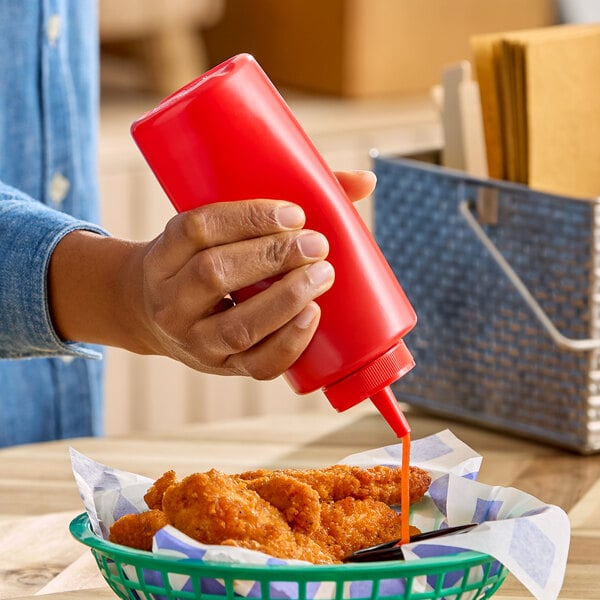
1. Standard Squeeze Bottles
Standard squeeze bottles are the everyday option for holding and dispensing common condiments like ketchup, mustard, mayo, and house sauces. They use a narrow neck and interchangeable tip/cap styles to control flow, making them easy to set up across multiple stations. They’re a strong fit when you need simple portioning without specialized features or equipment. For most operations, they’re the baseline bottle used for both prep and line service.
- Versatile, all-purpose dispensing
- Multiple tip styles available
- Easy to stock in bulk
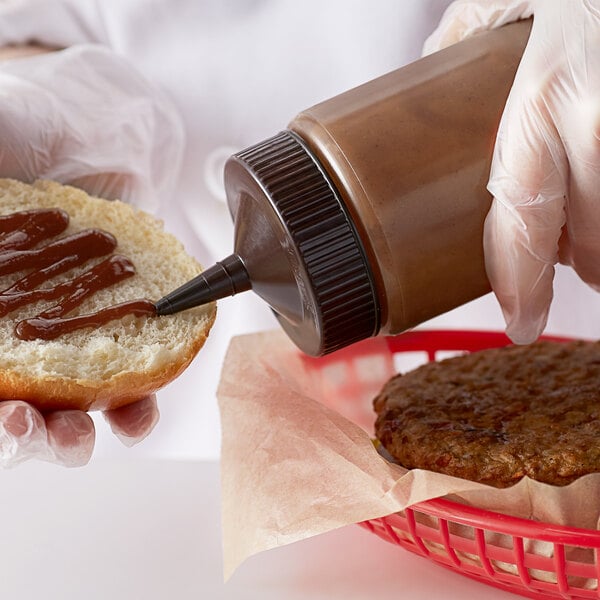
2. Wide Mouth Squeeze Bottles
Wide mouth squeeze bottles are designed for faster refills and easier cleaning, especially with thicker mixes like aioli, queso, or pastry creams. The larger opening reduces spills during prep and makes it simpler to scrape in product without a funnel. They also rinse out more thoroughly, which helps when you rotate flavors or switch sauces frequently. This style is often chosen when the prep team does high-volume batching.
- Faster filling with thick sauces
- Easier to clean by hand
- Less mess during prep
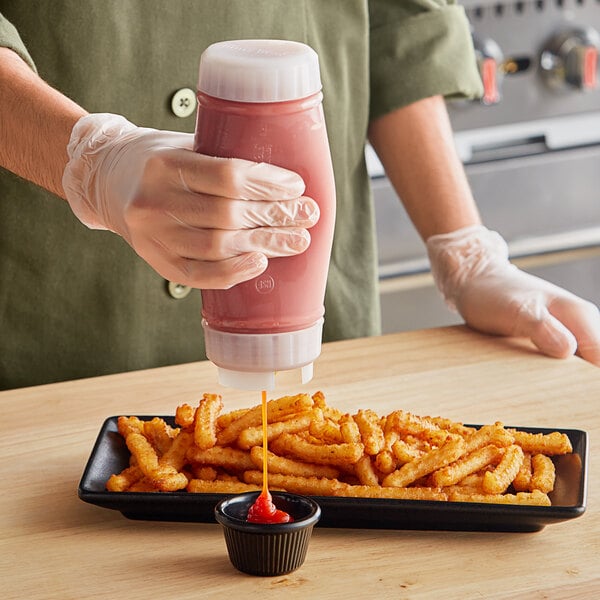
3. First In First Out Squeeze Bottles
First In First Out (FIFO) squeeze bottles load from the bottom and dispense from the top, so older product is used first by default. This design helps crews keep rotations tight for sauces that separate or have short shelf lives. Because refills happen without removing the top cap, staff can top off quickly while keeping the dispensing tip cleaner. FIFO bottles are common on busy condiment rails where speed and rotation matter.
- Bottom-fill, top-dispense design
- Supports sauce rotation habits to keep products fresh
- Quick top-offs during rushes
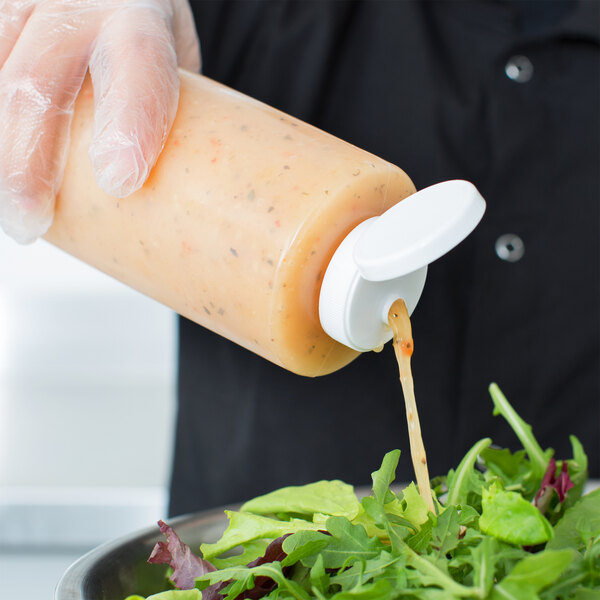
4. Hinged Squeeze Bottles
Hinged squeeze bottles use an attached flip-top cap that stays connected to the bottle, reducing lost caps and keeping stations cleaner. They’re useful when staff are opening and closing bottles constantly, since the lid flips with one hand and snaps shut between uses. The tethered cap also helps limit accidental tip contamination from being set down on counters. This type works well for self-serve areas and fast-paced lines.
- Flip-top cap stays attached
- One-handed open/close
- Fewer lost caps on station

5. Squeeze Bottle Brushes
Brush squeeze bottles combine a squeeze reservoir with a brush applicator, making them ideal for glazing, buttering, and saucing items evenly. They’re often used for BBQ sauce on proteins, garlic butter on bread, or egg wash on baked goods where coverage matters more than a thin line. The brush head helps control spread and reduces double-dipping compared to open containers. Many kitchens keep separate brushes for allergens or specific sauces to reduce cross-contact risk.
- Even coating for glazes and washes
- Better coverage than a standard tip
- Useful for bakery and grill applications
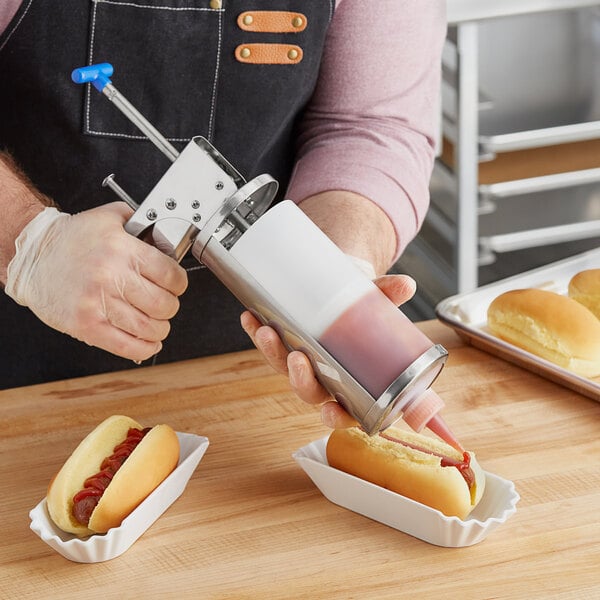
6. Dispensers/Sauce Guns
Dispensers or sauce guns are trigger-operated tools that portion sauce from a container or bag through a nozzle for consistent output. They’re built for speed, repeatable portion sizes, and less hand fatigue when dispensing hundreds of servings. Many models support thicker sauces and can be paired with different nozzles for lines, dots, or wider flow. This option fits operations that need controlled portions at scale like sandwich lines and pizza builds.
- Trigger-style, repeatable portions
- Faster output for high volume
- Handles thicker sauces well
Squeeze bottle materials determine how a bottle feels in hand, how it handles hot or cold product, and how well it survives constant washing and daily compression. The right material helps prevent leaks, keeps sauces flowing at the expected speed, and avoids premature cracking or warping on the line. Material choice also affects visibility for quick ID, plus whether a bottle is better suited for thin condiments, thick emulsions, or high-use dispensing tools like sauce guns. Use the breakdown below to match the bottle's build to your menu and station demands:
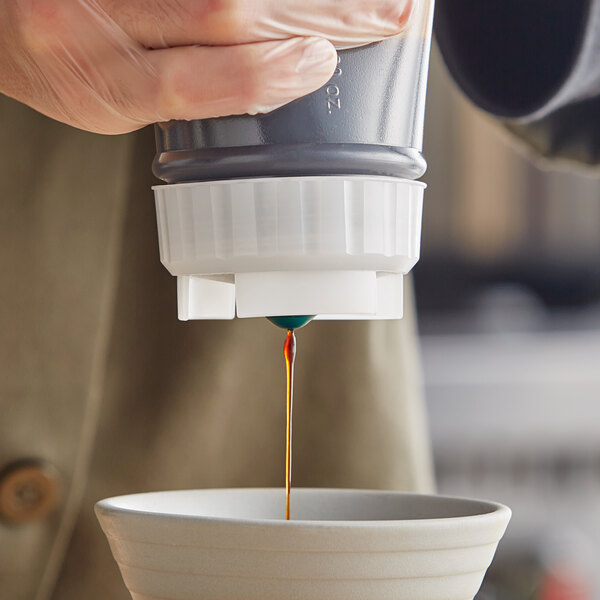
- Polyethylene: A flexible, squeezable material that rebounds well, making it a common choice for everyday condiment bottles. It's typically used for ketchup, mustard, dressings, and house sauces because it dispenses smoothly without feeling stiff in colder kitchens.
- Silicone: A soft, high-grip material that stays pliable and is less likely to crack, which helps with thicker sauces and frequent squeezing. Silicone bottles are often used for aioli, ganache, syrups, and other viscous products where you want steady flow and easy emptying with minimal waste.
- Stainless Steel: A rigid, long-life material used when sanitation, temperature tolerance, and professional presentation are priorities. Stainless steel is often used for sauce guns that hold hot oils, melted butter, or high-end plating sauces. This material holds up well in busy kitchens that run aggressive dish cycles.
Squeeze bottle colors are used to identify sauces at a glance, which speeds up preparation and helps prevent mix-ups during peak service. Many kitchens use recurring color conventions to speed identification on the line, though assignments vary by menu and operation. Color-coding also supports allergen awareness and cross-contact control when similar-looking sauces sit side by side. The pairings below reflect typical back-of-house usage, though any operation should still label bottles clearly for compliance.
- Red: Most often used for ketchup, cocktail sauce, or red chili sauces like sriracha. It's a natural match for tomato-based condiments that staff reach for constantly on burger, fry, and sandwich stations.
- Yellow: Commonly reserved for types of mustard and mustard-based sauces. Yellow squeeze bottles also hold cheese sauce for nacho toppings in some setups.
- White: A go-to for mayonnaise, ranch, and sour cream-based drizzles, as well as other pale dressings.
- Green: Typically used for herb-forward sauces like chimichurri, pesto, green goddess, or salsa verde. Many operations also assign green to jalapeno or avocado-based condiments to keep them distinct from white emulsions.
- Orange: Often filled with burger sauce, spicy mayo, buffalo-mayo blends, or orange-leaning dressings like some French or chipotle sauces.
- Blue: Common for specialty or non-standard items where you want a strong visual cue, such as blue cheese dressing or certain dessert syrups. Some kitchens also use blue to mark seafood-only sauces to separate them from general line condiments.
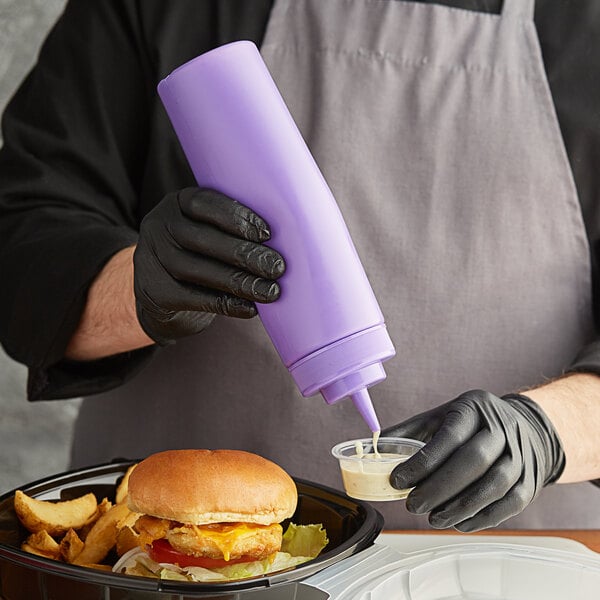
- Purple: Frequently used as a clear indicator that there's an allergen-free condiment inside. It can also serve as a vessel for niche applications like berry coulis, grape-based glazes, or purple slaw dressings in quick-service prep.
- Brown: Typically used for BBQ sauce, steak sauce, hoisin, or other dark, sugar-forward sauces. It's also a practical choice for chocolate sauce or caramel drizzle in dessert stations where color clarity matters.
The capacity of a squeeze bottle determines how often a station needs refills, how easy the bottle is to handle one-handed, and how well portions stay consistent across a rush. Smaller bottles shine when you're doing detailed finishing work or want tight control over premium sauces, while larger bottles reduce downtime on high-volume lines. Capacity also impacts cold storage and mise en place, since oversized bottles can crowd rails and lowboys if you run many types of sauces. Use the ranges below to match bottle size to throughput, menu complexity, and prep workflow.
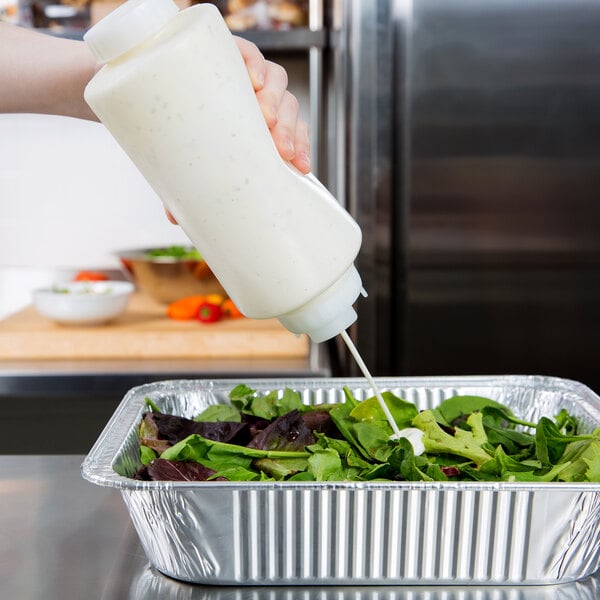
- 1-4 oz. Squeeze Bottles: Best for garnish-level sauces, plating drizzles, extracts, and high-cost condiments used in small amounts. These work well for bakeries, cafes, and chef-driven kitchens that need precision and prefer frequent refreshes to keep product tasting sharp.
- 6-12 oz. Squeeze Bottles: A flexible mid-size range for most day-to-day line sauces like aioli, ranch, vinaigrettes, and house blends. It fits well in sandwich shops, fast-casual concepts, and bars because it balances easy handling with enough volume to avoid constant top-offs.
- 16-21 oz. Squeeze Bottles: Designed for higher-throughput stations where the same condiments are used repeatedly, such as ketchup, mustard, and core sauces on burger and fry lines. This size is a strong match for quick-service concession food ideas where refill breaks slow production.
- 24-36 oz. Squeeze Bottles: Built for bulk dispensing and prep-heavy environments, including commissaries and catering kitchens. These larger bottles are commonly used for base sauces, oils, and high-usage dressings.
Squeeze bottle parts and accessories improve control, organization, and sanitation by tightening how sauces are stored, labeled, and dispensed on the line. The right add-ons reduce leaks, keep tips cleaner between uses, and make it easier for staff to grab the correct sauce without slowing down. They also help standardize stations across shifts, which matters when multiple employees rotate through the same prep and service areas. Below are the common accessories that make squeeze bottles more effective in real kitchen conditions:

- Caps: Caps seal the bottle and shape the pour, whether you need a tight line, a wider stream, or a clean shutoff between uses. Choosing the right cap style helps prevent dried-out tips, keeps sauces from dripping onto rails, and reduces mess during storage.
- Bottle Bands: Bottle bands are color-coded rings that slide onto the neck or body to identify contents quickly. They reinforce labeling systems when multiple sauces look similar, which helps prevent incorrect builds and supports allergen-aware setups.
- Squeeze Bottle Organizers: Organizers hold bottles upright in a fixed layout so stations stay consistent through a rush. They cut down on bottles tipping, keep bottles from rolling into prep space, and make restocking faster at shift change.
- Valves: Valves regulate flow and can reduce backflow, which helps sauces dispense more cleanly and predictably. They're especially useful for thinner liquids and high-usage bottles where drips and inconsistent portions become a constant problem.
- Funnels: Funnels widen the fill point and guide product into the bottle without smearing the neck or wasting sauce on the outside. They speed up batch-to-bottle transfers, reduce cleanup time, and help keep hands and work surfaces cleaner during prep.
Related Resources

October 2026 WebstaurantStore Coupon Code
Fall flavors are in full swing, and the deals at WebstaurantStore are just as irresistible! Stock up on everything your kitchen needs for a busy stretch of autumn, from disposables and pantry staples to equipment that keeps service moving. Browse our featured sale items below, and use code SPICE26 at checkout to save up to 20% on your purchase. Hot drinks, cozy desserts, and warm soups take center stage this time of year, so there's plenty here to fuel your seasonal menu. Sign up for our emails to get exclusive deals and coupon codes delivered straight to your inbox! Looking to save even more? Check out the new Webstaurant Rewards® Visa Business Card ! Sign up for a new card today and start earning rewards on every WebstaurantStore purchase

Concession Stand Food Safety
From baseball to soccer or football to hockey, every sport has one thing in common. Concession stands are a staple at any sporting event , offering anything from popcorn and pretzels to cheesesteaks and corn dogs. But is your concession stand practicing proper food safety? Concession stands can be especially susceptible to issues with under-trained staff, the weather, and pests. Keep reading to learn how you can ensure proper food safety is practiced at your concession stand. Offer Proper Training for Employees Because concession stands are only open during specific seasons and sporting events, chances are they aren't run by a full-time staff. While there may be one consistent owner or manager, the food will most likely be prepared and serv

Types of Hot Dogs
During the Great Depression, the hot dog emerged as a quintessential American food, symbolizing convenience, affordability, and a taste of tradition all in one bite. President Franklin D. Roosevelt served this humble yet beloved sausage sandwich at the White House to the visiting King of England, George VI. This iconic moment solidified the hot dog's place in American culinary history. Not only is it a storied food, but with the rise of inflation and economic uncertainty, the hot dog is making a resurgence. Like the different types of American BBQ , hot dogs are diverse. There are countless regional variations of the hot dog, with different parts of the country building a unique dish on the base of sausage and bun. Shop All Hot Dogs Click b
Join Our Mailing List
Receive coupon codes and more right to your inbox.