- Topics 1570
- Industrial 60
- Troubleshooting Guides 32
- Restaurant Management 145
- Bar Management 69
- Catering Tips 43
- Bakery Management 44
- Food Trucks & Concessions 36
- Advertising & Marketing 41
- Eco-Friendly Tips 13
- Facility Layout & Design 47
- Coffee Shop Tips 32
- Installation & Maintenance 63
- Janitorial & Pest Control 34
- Safety & Sanitation 122
- Startup Tips 110
- Menu Design 13
- Kitchen & Cooking Tips 108
- Hospitality Management 25
- Pizza & Sandwich Shop Tips 21
- Smallwares 42
- Food Prep 103
- Tabletop Items 21
- Disposables 28
- Calculators & Tools 7
- Consumables 77
- Warewashing & Laundry 22
- Cooking Equipment 107
- Food Storage & Refrigeration 57
- Beverage Equipment 42
- Office Supplies 6

Selecting the correct sponge or scrubber, whether it be an abrasive scouring pad or a gentle cellulose sponge, directly impacts food safety and labor costs. Below, we detail how durability grades and material composition determine a scrubber's ideal application. Understanding these factors makes it easier for you to purchase products that effectively meet the daily cleaning demands of your foodservice environment and keep your equipment sanitary and undamaged.
Sponge vs Scrubber
Sponges are designed for absorption, while scrubbers are created for abrasion and removal. A sponge's porous structure soaks up liquids and suds, making it the correct tool for wiping broad surfaces, cleaning dishware, and applying disinfectants without leaving scratches. A scrubber incorporates coarse materials to scrape away adhered soil, useful for tackling baked-on grease on sheet pans or scale in sinks. Using a sponge on a task that requires a scrubber wastes labor, while using a scrubber on a delicate surface incurs costly damage.
Selecting the correct sponge or scrubber type is critical for kitchen efficiency, as each tool is designed for specific cleaning tasks and surfaces. Using the wrong type can waste labor, damage equipment, and compromise food safety standards.
1. Sponges
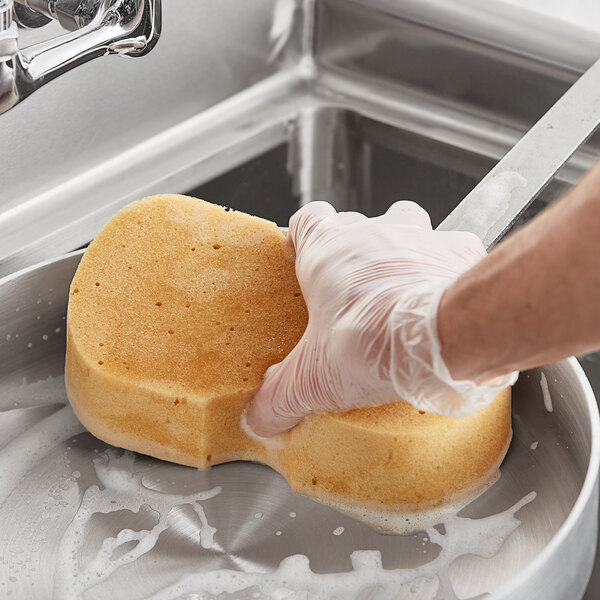
Standard cellulose or synthetic foam sponges are the workhorses for general wiping, light cleaning, and absorbing liquids on non-abrasive surfaces. Their soft, porous structure makes them ideal for wiping down stainless steel fixtures, cleaning dishware, and mopping up spills without leaving scratches. They can also be color-coded to prevent cross-contamination between areas like food prep and bathroom cleaning.
- Safe for non-stick and delicate surfaces
- Best for general wiping and light soil removal
- Sometimes color-coded for cross-contamination prevention
2. Scouring Pads
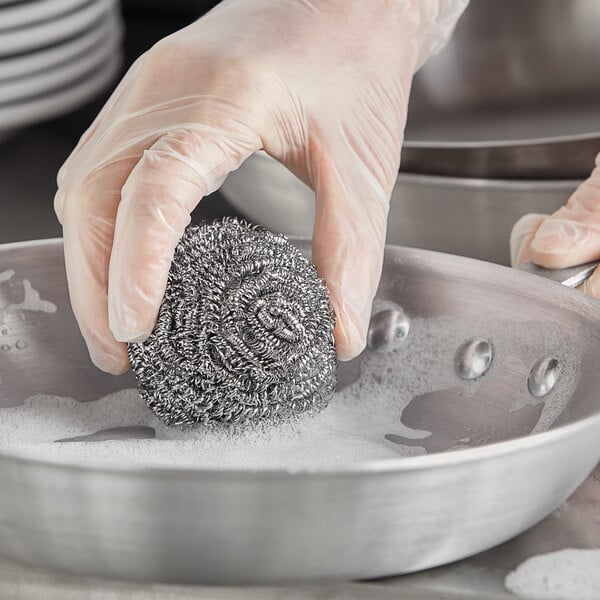
Constructed from abrasive materials like stainless steel or nylon, scouring pads are designed for aggressive cleaning where food residues are burned-on or stubbornly adhered. They are great for tackling carbonized grease on grill grates, baked-on debris in sheet pans, and mineral scale in sinks, but their harsh abrasives can scratch delicate surfaces. Selecting the correct aggressiveness is key to removing debris without causing costly damage to kitchenware.
- Made from abrasive materials
- Removes tough, baked-on grease and carbon
- Useful for cleaning grill grates, oven racks, and sheet pans
3. Combination Pads
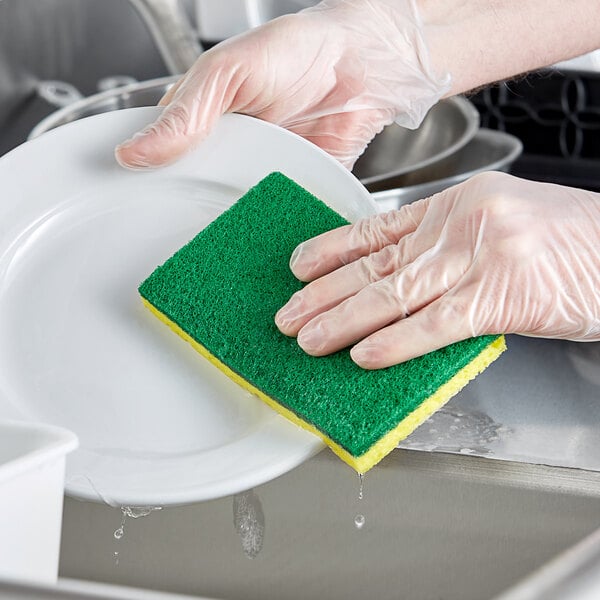
These dual-sided tools merge a non-scratch sponge with an integrated abrasive pad, streamlining two cleaning steps into one product for faster workflow. The sponge side handles general wiping and suds application, while the bonded scouring side tackles localized stuck-on food on pots, pans, and stainless steel worktables. They offer a versatile balance for all-purpose kitchen cleaning but may wear out more quickly under heavy scrubbing demands.
- Dual-function design increases cleaning speed
- Ideal for pots, pans, and stainless countertops
- Provides abrasive action without separate tools
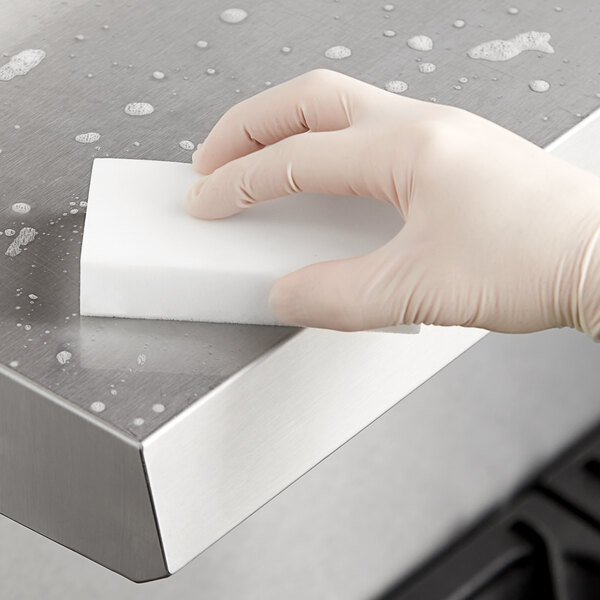
4. Erasers
Also known as melamine foam pads or "magic erasers," these unique tools use micro-abrasion to lift marks from smooth surfaces without traditional liquid chemicals. They are highly effective for removing scuffs from walls, cleaning stainless steel fronts on coolers, and erasing stubborn stains from plastic cutting boards or countertops. They disintegrate with use, making them a single-use product best for targeted spot cleaning rather than large-area scrubbing.
- Erases marks from walls and sealed surfaces
- Requires only water, no chemical cleaners
- Disintegrates with use for targeted spot cleaning
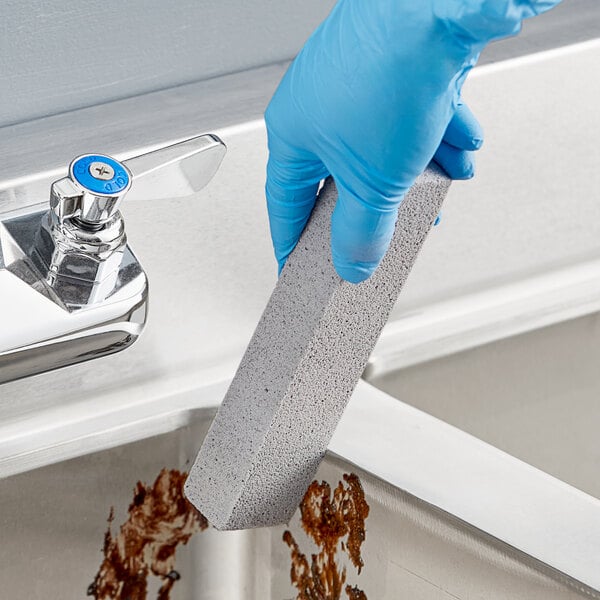
5. Scouring Sticks
These dense, rectangular blocks of abrasive material are made for vertical surface cleaning and reaching into tight corners. Their rigid structure provides focused pressure to remove heavy lime scale from sinks, clean corrosion from dishwasher racks, and scrub textured floor tiles without bending. They provide controlled, heavy-duty abrasion where standard pads are less effective.
- Rigid design for vertical and textured surface
- Effective on lime scale and rust stains
- Reaches into corners and grout lines

Durability in sponges and scrubbers is determined by their construction density and material resilience, directly dictating which kitchen task they can withstand without wearing out. Selecting the appropriate durability prevents frequent replacement and ensures consistent cleaning performance during busy service periods.
- Extra Heavy-Duty: Built with densely packed, coarse abrasives or reinforced materials, extra heavy-duty pads and scrubbers attack the most demanding, carbonized soils. This grade is best for hard tasks like cleaning commercial grill grates, removing baked-on conveyor oven grease, and scrubbing heavily soiled floor mats.
- Heavy-Duty: Heavy-duty pads and scrubbers are designed for regular, high-pressure scrubbing on tough, routine messes. These are the standard for scouring baked-on food from sheet pans and tackling greasy range hood filters.
- Medium-Duty: Medium-duty sponges and scrubbers balance durability with finer abrasives for daily cleaning without scratching. Use these for wiping down stainless steel worktables, cleaning microwave interiors, and removing light stains from cafeteria trays and dishware.
- Light-Duty: These sponges are composed of soft, non-abrasive materials for delicate surfaces and final polishing. Assign these to wiping dining room condiment stations, cleaning non-stick cookware, and polishing stainless steel fixtures to a streak-free finish.

The material composition of a sponge or scrubber dictates its core functionality, determining what it can clean effectively and what it might damage. Choosing the correct base material is a critical decision that impacts surface integrity, hygiene protocol adherence, and long-term supply costs. Each substance offers distinct properties that must be matched to the specific mess and surface in your operation.
- Synthetic Fibers: Typically made from polyester or polyurethane, these materials offer high durability and resistance to heat and chemicals. They are common in heavy-duty scouring pads for grill backsplashes and in combination pads that withstand repeated use in pot sinks.
- Cellulose Fiber: Derived from wood pulp, this natural material is highly absorbent and soft, making it ideal for general spill cleanup and wiping down non-abrasive surfaces. Its lower durability means it is often deployed for light-duty tasks like polishing serviceware or cleaning dining room tables.
- Stainless Steel: These coarse metal filaments provide the most aggressive abrasion for removing severe carbonization and rust. Reserve them for tasks like cleaning commercial charbroilers or scrubbing industrial range hoods, but never use them on any surface that can be scratched.
- Foam: Often made from durable, reticulated polyurethane, foam offers a non-abrasive, porous structure that holds soap and water effectively. It is the preferred material for applying chemical sanitizers to broad surface areas and for cleaning delicate equipment like slicer blades.
- Nylon: A plastic-based fiber woven into pads that provide consistent, controlled abrasion without metal's harshness. Nylon scouring pads are a standard for daily cleaning of stainless steel cookware and removing light baked-on food from sheet pans.
- Plastic: In scrubbers, this usually refers to solid polymers like melamine foam (erasers) or bonded pumice in scouring sticks. These materials use micro-abrasion to lift stains from sealed surfaces or scrape off mineral deposits, useful for cleaning restroom fixtures or descaling dish station sinks.
Treating cleaning tools as specialized equipment, not generic supplies, helps you standardize results across shifts. Pairing specific materials and durability grades to exact tasks optimizes labor, controls costs, and preserves your investment in surfaces and appliances. For similar cleaning products, learn more about types of mops that can be used in your commercial kitchen.
Related Resources

October 2026 WebstaurantStore Coupon Code
Fall flavors are in full swing, and the deals at WebstaurantStore are just as irresistible! Stock up on everything your kitchen needs for a busy stretch of autumn, from disposables and pantry staples to equipment that keeps service moving. Browse our featured sale items below, and use code SPICE26 at checkout to save up to 20% on your purchase. Hot drinks, cozy desserts, and warm soups take center stage this time of year, so there's plenty here to fuel your seasonal menu. Sign up for our emails to get exclusive deals and coupon codes delivered straight to your inbox! Looking to save even more? Check out the new Webstaurant Rewards® Visa Business Card ! Sign up for a new card today and start earning rewards on every WebstaurantStore purchase
Cleaning, Sanitizing, Disinfecting: What’s the Difference?
Ensuring a safe, compliant commercial kitchen hinges on understanding the critical differences between cleaning, sanitizing, and disinfecting. These terms are often mistakenly used interchangeably, and while all three are essential pillars of food safety, each targets distinct threats and achieves unique levels of pathogen reduction crucial for health code compliance. Mastering these distinctions is fundamental for developing an effective cleaning checklist that prevents cross-contamination and foodborne illness outbreaks in your establishment. Shop All Cleaning Supplies Use these links to learn more about cleaning, sanitizing, and disinfecting: What Is Cleaning? What Is Sanitizing? What Is Disinfecting? What Is the Difference Between Clean

Types of Mop Handles
Mop handles play a crucial role in the efficiency and effectiveness of any cleaning routine. No matter what type of mop you're using, a good handle provides a sturdy and ergonomic grip, allowing for easy maneuverability and control while cleaning various surfaces. From traditional wooden handles to light weight aluminum handles, choosing the right mop handle can greatly impact the efficiency and effectiveness of your cleaning routine. Shop All Mop Handles, Frames, and Accessories Use the following links to explore everything you need to know about mop handles: What Is a Mop Frame? Mop Handle Materials Mop Handle Attachment Styles Mop Handle Considerations Mop Handle Length Mop Handle Features Mop Handle Maintenance Tips
Join Our Mailing List
Receive coupon codes and more right to your inbox.