- Topics 1577
- Industrial 59
- Troubleshooting Guides 32
- Restaurant Management 144
- Bar Management 70
- Catering Tips 46
- Bakery Management 45
- Food Trucks & Concessions 41
- Advertising & Marketing 41
- Eco-Friendly Tips 13
- Facility Layout & Design 47
- Coffee Shop Tips 32
- Installation & Maintenance 63
- Janitorial & Pest Control 34
- Safety & Sanitation 121
- Startup Tips 111
- Menu Design 11
- Kitchen & Cooking Tips 106
- Hospitality Management 26
- Pizza & Sandwich Shop Tips 23
- Smallwares 42
- Food Prep 102
- Tabletop Items 21
- Disposables 28
- Calculators & Tools 7
- Consumables 77
- Warewashing & Laundry 22
- Cooking Equipment 106
- Food Storage & Refrigeration 58
- Beverage Equipment 43
- Office Supplies 6

Twine may appear to be a simple spool of string, but it can be a valuable asset in any commercial kitchen. From trussing a maple-glazed turkey to securing items for storage or presentation, twine offers a simple yet effective solution for a variety of kitchen tasks. It is flexible and strong, allowing for easy manipulation and customization. We'll explore the various ways in which twine can be utilized in a commercial kitchen to enhance efficiency and organization.
Shop All Types of Twine
Types of Twine
Twines can differ by their material and strength, which changes how they should be used. Some twines are ideal for cooking, because they're able to withstand heat without imparting flavor onto food, while other twines are perfect for decoration and packaging. We break down the different types of twine and how they are best used:
Butcher Twine
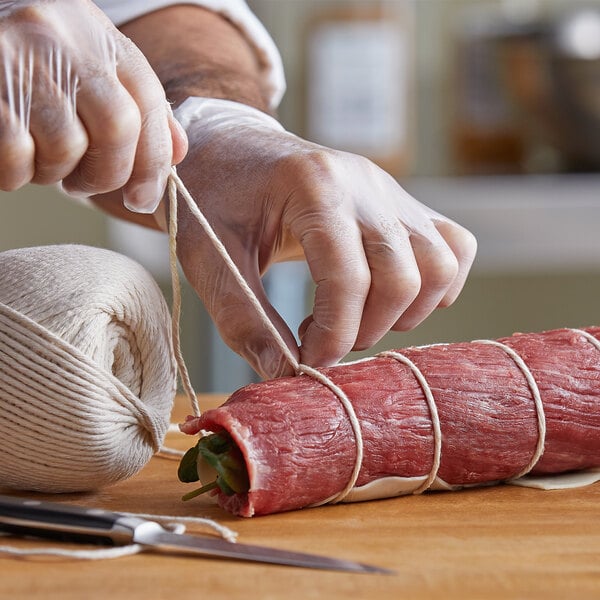
Butcher’s twine, also known as cooking twine or kitchen twine, is a versatile tool in commercial kitchens. It can be made from 100% cotton, polyester/cotton blend, or linen. Butcher twine is heat-resistant and food-safe, making it ideal for trussing meats, securing stuffed poultry, and tying roasts. Its strength and durability ensure that your culinary creations maintain their shape during cooking, resulting in beautifully presented dishes that are evenly cooked. Butcher twine is a must-have for any professional kitchen looking to elevate their plating and cooking techniques.
Uses: Butcher's twine is perfect for trussing poultry, tying roasts to ensure they keep their shape, securing stuffed meats, and tying off a bundle of herbs. Butcher’s twine can also be used to tie off sausage or for smoking, drying, or curing meats.
Baker's Twine
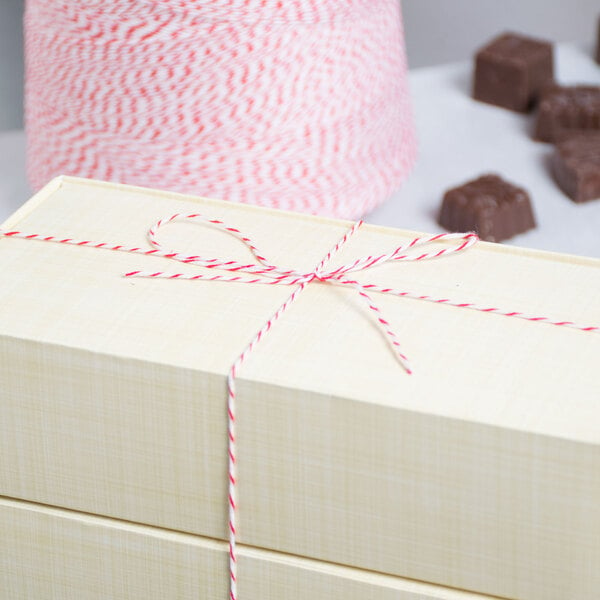
Baker's twine is commonly used in commercial or home bakeries and restaurants for packaging. Made from 100% cotton or a polyester/cotton blend, this twine is food-safe but not intended for cooking. Its durable and strong nature ensures that your packages are securely held together during shipping and storage while also adding a decorative touch to your presentation. Available in a variety of colors, baker's twine is a must-have for any commercial kitchen looking to enhance visual appeal for shipping baked goods.
Uses: The durability and visual appeal of baker’s twine make it perfect for tying off bags of cookies or candy, securing a cake box, or adding a decorative touch to your plating.
Industrial Twine
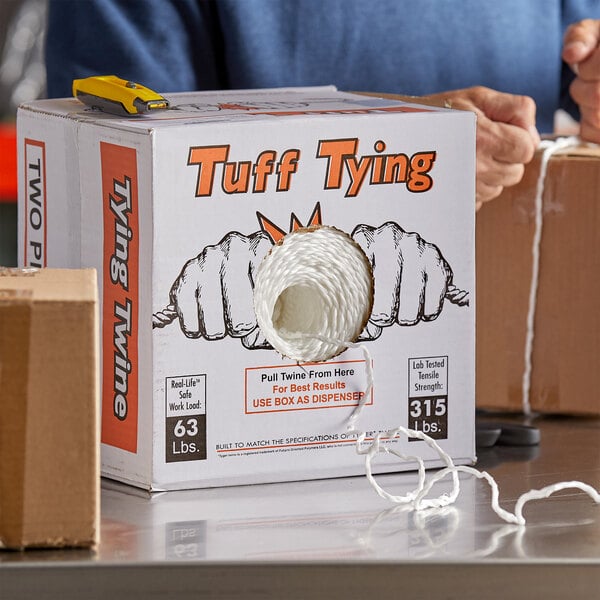
Industrial twine offers durability and strength for a variety of applications. This twine is waterproof to resist rotting and mildew. Primarily used for securing and bundling items, industrial twine is not suitable for direct contact with food due to its synthetic materials. Often made of polypropylene, its robust construction makes it ideal for heavy-duty tasks such as tying bundles of packing materials or securing packages for transport.
Uses: This twine is great for general and industrial uses. Its durability makes it ideal for securing items in your distribution center, food truck, or retail shop. Organize your storage rooms by using industrial twine to bundle newspapers, cardboard, bins, and crates.
What Is Twine Made Of?
Twine can be made of natural materials like cotton, hemp, jute, and linen, or from synthetic materials like polyester and polypropylene. Depending on how you plan to use your twine, some materials may be better suited than others.
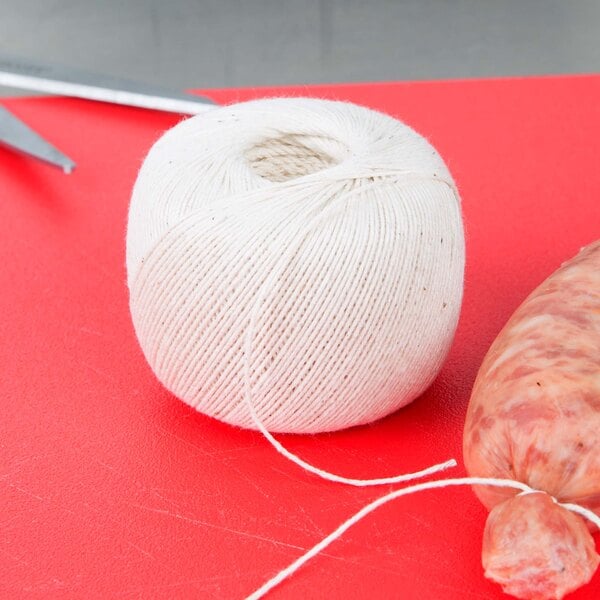
Cotton Twine
Cotton is one of the more affordable and versatile materials for twine. Cotton twine is commonly used for trussing meats, securing herbs for soups and stocks, and tying up bundles of vegetables. Its natural fibers are heat-resistant, making it safe for use in ovens and on grills. Additionally, its soft texture ensures that it won't damage delicate foods or scratch surfaces.
Uses: Cotton twine is best used as butcher twine since it’s soft and oven-safe. Its durability also makes it an excellent twine for securing boxes or keeping food items bundled together.
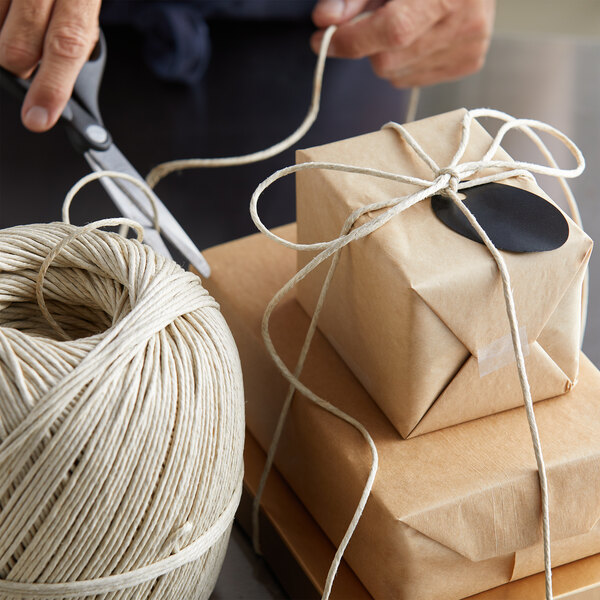
Hemp Twine
Made of 100% hemp, hemp twine is commercially compostable and adds a natural touch to your displays. Perfect for securing or tying, this low-stretch, durable twine is food-safe but should not be used with heat or put into the oven. This natural fiber twine is a popular choice for bundling produce, bouquets, or tying off packages for a rustic and homemade look.
Uses: This sturdy twine is ideal for securing shipping packages, inventory, and homemade or homegrown goods at farmers' markets. This twine can also be used similarly to baker’s twine to add a natural decorative touch to your food items.
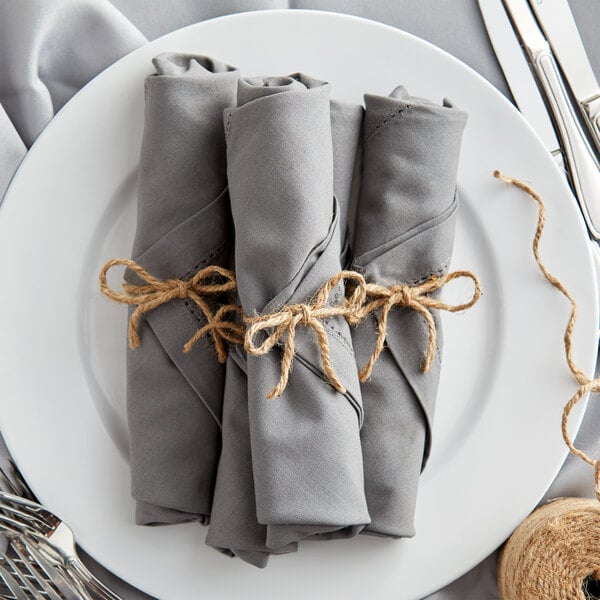
Jute Twine
Jute twine is a natural fiber twine made from the jute plant. While jute twine is food-safe and excellent for tying meat and herbs or securing food packaging, it is not heat-safe. This makes jute twine ideal for cold applications in the kitchen, such as bundling produce or creating decorative accents for food presentations.
Uses: Jute twine is perfect for adding a rustic and natural decoration to your food display. It’s great for securing packaging and even for hanging herbs. Use jute twine in your garden to gently hold up plants or to hold picked vegetables in bundles.
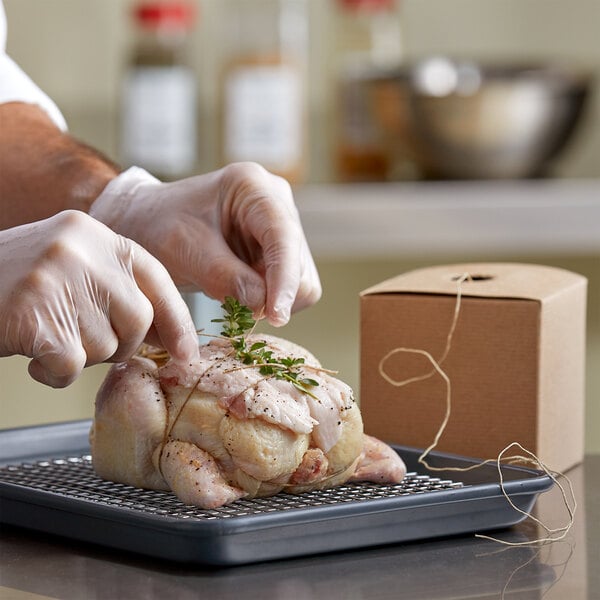
Linen Twine
Linen twine is made from flax plants and dries faster than most natural materials, giving it antibacterial properties. Linen is durable, oven-safe, food-safe, and has low stretching capabilities. Out of all the natural twine materials, linen is one of the strongest and holds knots the best.
Uses: Linen twine is perfect for hanging meats for smoking purposes or for tying roasts and stuffed meats. Due to its strength and antibacterial properties, this twine is also the ideal natural option for use in shipping facilities, storage areas, and warehouses.
Polyester / Cotton Twine
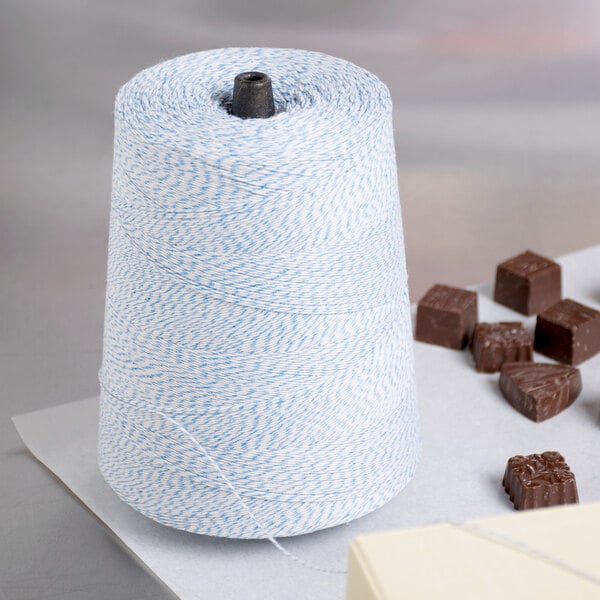
Polyester/cotton twines have different properties depending on their thickness. Thicker twines made of this blend are durable with some stretch, while thinner, colored versions tend to have a greater stretch and are more suited for decoration or crafting purposes.
Uses: Thicker blended twine is best as a butcher twine because of its durable strength. Thin poly/cotton twine is usually colored to spruce up packaging or used to add an eye-catching element to table settings.
Polypropylene Twine
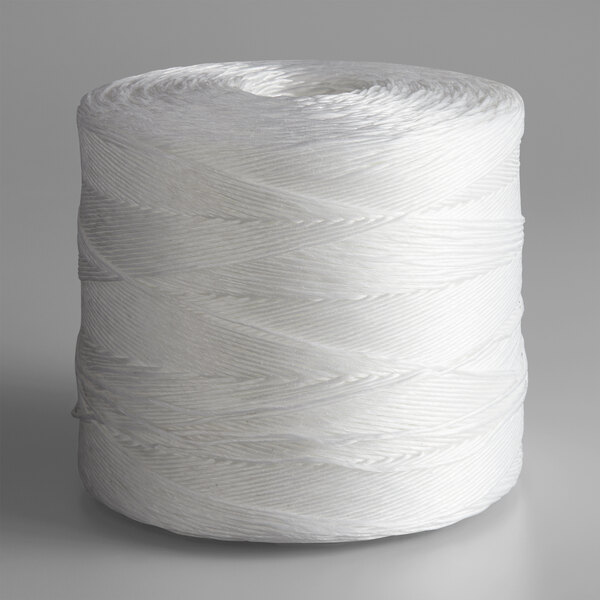
Polypropylene twine is extremely durable and has little stretch. It resists rot, mildew, and moisture damage, making it the longest-lasting twine material. However, it is not food-safe and is best suited for industrial tasks.
Uses: Twine made of polypropylene is perfect for securing inventory, cargo, and storage containers. Use polypropylene twine in damp, dark areas since it resists moisture damage and rot, or use it with heavy items since it's durable and low-stretch.
Synthetic Twine vs Natural Twine
Synthetic twine and natural twine are both versatile products. However, they both also have their unique advantages and disadvantages. In general, synthetic twine, like polypropylene and polyester, is better suited for industrial tasks, while natural twine, like cotton, hemp, jute, and linen, is better suited for kitchen and craft use.
Natural Twine
- Environmentally friendly
- Food-safe
- Some materials are oven-safe
- Will not affect the flavor of food
- Not all natural twines are oven-safe
- Some natural twines may drop fibers during use
- Not resistant to water or oil
- Less durable than synthetic twine
Synthetic Twine
- Strong and durable
- Affordable
- Resistant to oil and water
- Resistant to abrasion
- Some materials are not for use with food
- Not oven-safe
- Not resistant to water or oil
- Not environmentally friendly
What Affects Twine Strength?
The ply, weight, and size of a twine can greatly affect its tensile strength. Tensile strength is the amount of tension an item can withstand before breaking and it's measured in mPa (megapascal pressure unit). Look for the ply, weight, size, and tensile strength of a twine to help you identify which one will be best for your needs.
- Twine Ply: Ply refers to the amount of strands or plies that are twisted or braided together to form one single strand. For most kitchen twines, the plies are twisted together. The more plies within the twine, the stronger it will be.
- Twine Weight: A twine's weight can help determine its strength. It can be light, medium, or heavy, with heavy being the strongest.
- Twine Size: The twine's size can be determined most accurately by its diameter in millimeters or inches; the larger the diameter, the stronger the twine. However, sometimes size is identified by gauge. The gauge is a number that corresponds with a certain diameter and it is preceded by the # symbol. The larger the number, the larger the diameter of the twine. Different manufacturers can use alternative diameter correspondents to a gauge, so it's important to double-check the twine's diameter in millimeters or inches if that information is given.
Related Resources

June 2026 WebstaurantStore Coupon Code
Summer is upon us, and to celebrate WebstaurantStore has blazing hot deals all month long! With summer vacations underway and holidays like Independence Day rapidly approaching, now is the time to stock up on essential supplies and equipment you'll need to get through the summer season. Take a look at our wide array of sale items below and don't forget to enter the code SUMMERSALE at checkout to enjoy up to 20% off your purchases! Looking to save even more? Check out the new Webstaurant Rewards® Visa Business Card ! Sign up for a new card today and start earning rewards on every WebstaurantStore purchase, and save on a WebstaurantPlus subscription. Have a look at some incredible deals on disposable items with June's monthly coupon code! Whe
Stuffing a Turkey: Is It Safe?
There are numerous factors to consider when preparing your Thanksgiving turkey, from safe stuffing practices to proper carving techniques . Cooking stuffing inside a roasted turkey is a long-standing tradition at many Thanksgiving feasts. However, it's essential to be aware that this practice can pose a cross-contamination risk if the stuffing is not cooked properly. We'll go over how to correctly and safely cook stuffing inside your turkey by maintaining the correct temperature control. Is It Safe to Cook Stuffing Inside of the Turkey? Although cooking stuffing in a baking dish is the most straightforward method to achieve thorough cooking, it is possible to safely cook stuffing inside the turkey by following the appropriate steps. For tho
What Is Butcher Paper?
Butcher paper is a special paper product designed for wrapping raw meats and fish to protect against airborne contaminants and flavor contamination. Also useful for cooking and preparing meat and packaging sandwiches and subs, butcher paper is available in a variety of colors and sizes to suit the unique needs of any business. Whether you're starting a butcher shop , overseeing a deli, or selling your homemade sausages at a farmer's market, butcher paper is an essential tool for your business. Read on to learn about the different styles and features of butcher paper and its best applications. Shop All Butcher Paper Types of Butcher Paper 1. White Butcher Paper White butcher paper is uncoated, FDA approved, and perfect for efficiently wrappi
Join Our Mailing List
Receive coupon codes and more right to your inbox.