
- Topics 1577
- Industrial 59
- Troubleshooting Guides 32
- Restaurant Management 144
- Bar Management 70
- Catering Tips 46
- Bakery Management 45
- Food Trucks & Concessions 41
- Advertising & Marketing 41
- Eco-Friendly Tips 13
- Facility Layout & Design 47
- Coffee Shop Tips 32
- Installation & Maintenance 63
- Janitorial & Pest Control 34
- Safety & Sanitation 121
- Startup Tips 111
- Menu Design 11
- Kitchen & Cooking Tips 106
- Hospitality Management 26
- Pizza & Sandwich Shop Tips 23
- Smallwares 42
- Food Prep 102
- Tabletop Items 21
- Disposables 28
- Calculators & Tools 7
- Consumables 77
- Warewashing & Laundry 22
- Cooking Equipment 106
- Food Storage & Refrigeration 58
- Beverage Equipment 43
- Office Supplies 6
Shop All Commercal Patio Heaters
Use the following links to explore outdoor heating options, so you can make a more informed purchase for your outdoor space!
Outdoor patio heaters can come in two main different types: freestanding and mounted. Which option is best for you mainly depends on how much portability and floor space you need.
Freestanding Patio Heaters
If you don't need to install your patio heater permanently or want the versatility to move a heater from one spot to another, a freestanding patio heater is an ideal choice. These models don't typically require mounting brackets and most of them use portable propane tanks for power, although natural gas models are also available. Each freestanding heater has its own control, allowing your staff to turn on only the heaters that are needed at any given time. Let's breakdown the four styles of freestanding patio heaters so you can decide which is best for your business.
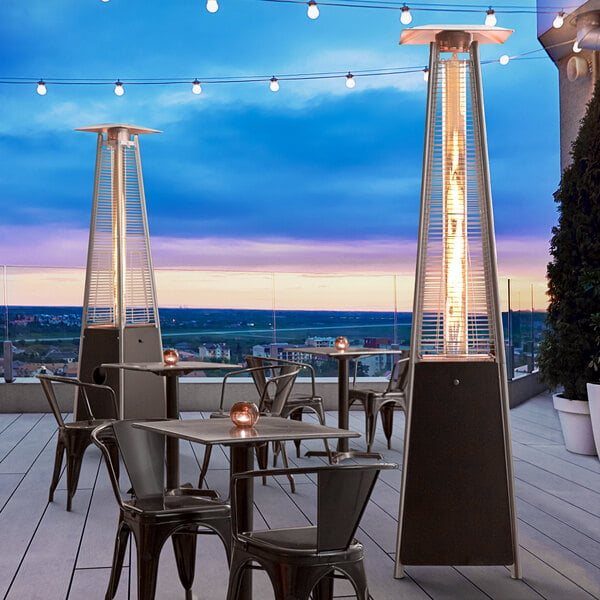
- Pleasing appearance
- Provide ambiance
- Ideal for small spaces
- Mid-range prices
- Least efficient
- Heats the least amount of space
- Little to no wind-resistance
- Non-directional
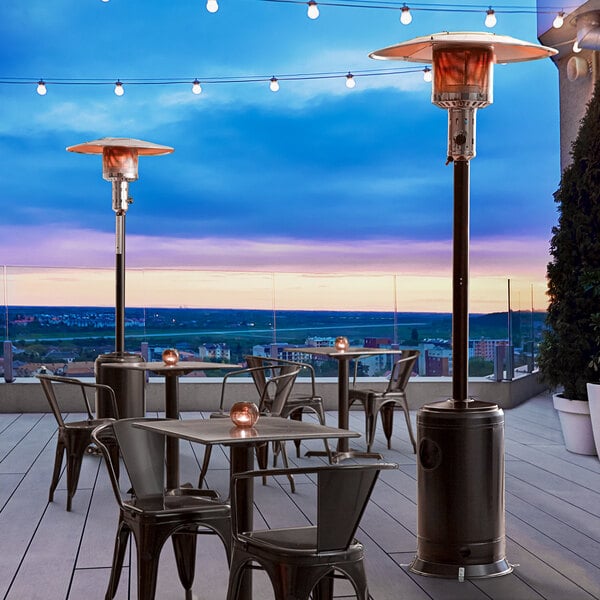
- Pleasing appearance
- Different sizes available
- Ideal for small spaces
- Great for areas where guests are standing or walking
- Least expensive to purchase
- Not very efficient
- Heats a small amount of space
- Little wind resistance
- Easy to tip or knock over
- Non-directional
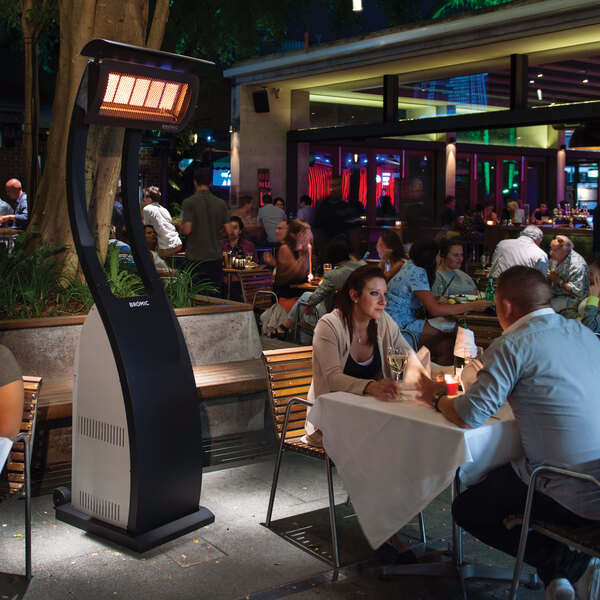
- Chic, modern appearance
- Black color blends in with surroundings
- Greatest wind-resistance
- Most efficient
- Heats the largest area - 180 sq. ft.
- Anti-tilt structure resists tipping
- Directional heating
- Doesn't need to impede walkways
- Most expensive up front
- Larger footprint than other types
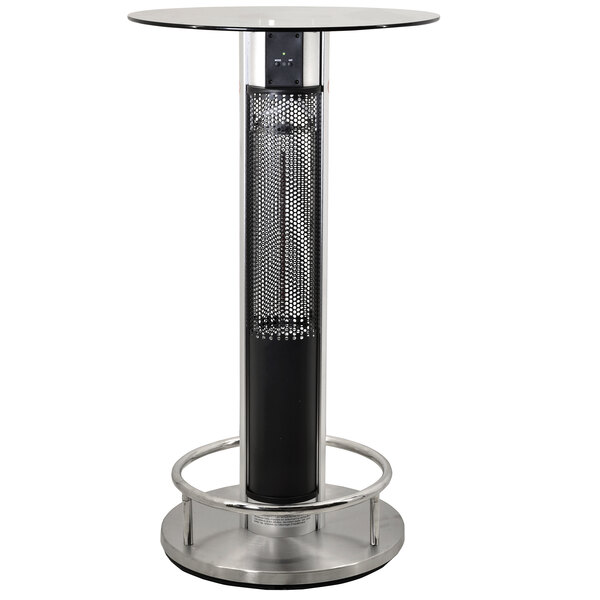
- Adds table space
- Keeps customers warm without taking up extra space
- Chic and modern design
- Safety shutoff in case of tipping
- Still functions as a table even when turned off
- Does not heat the upper air
- Not very efficient or wind resistant
- Non-directional
- Small coverage area
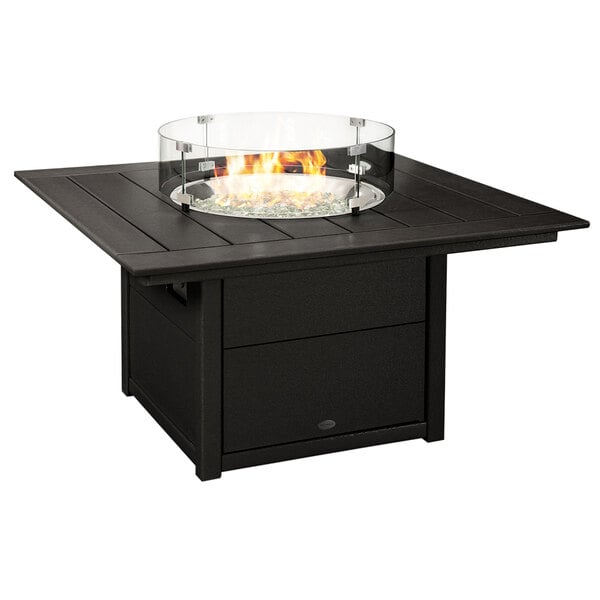
- Pleasing appearance
- Provide warm ambiance - not intended for cooking
- Add rustic appeal
- Provide a small amount of warmth
- Only warm small areas
- May require greater clearances and special installation
Wall or Ceiling Mounted Patio Heaters
For permanent installation on patios and decks, wall- or ceiling-mounted outdoor heaters may be your best choice. By strategically placing permanent heaters, you can provide consistent heat directed precisely where it is needed. Heaters mounted above customer areas don't take up any floor space so you'll have more room for tables and chairs, as well as room for customers and staff to walk.
Some permanently mounted heaters have more control options so that you can operate them remotely. Also, many wall-mounted heaters can be linked together to create zones that can be easily controlled with the touch of a single button.
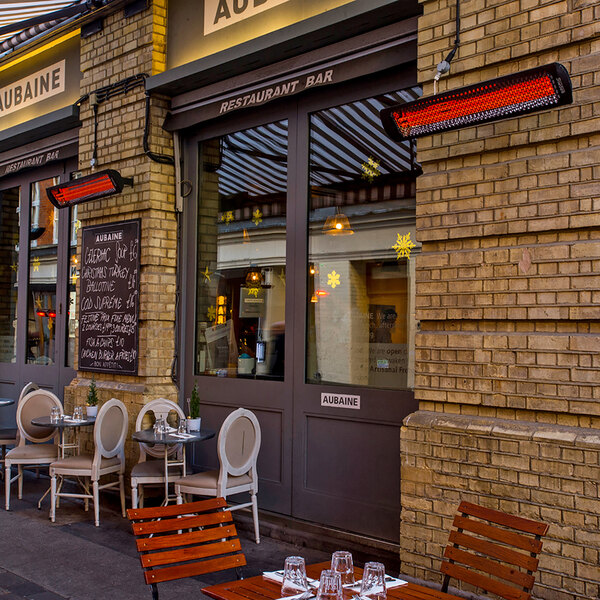
- Mount out of the way of traffic
- Allow more space for tables
- Typically more efficient than freestanding units
- More control options
- Less obtrusive
- May be more expensive
- More complex to install
- May require professional layout / design / installation
- Not portable
Make sure you choose a power type that best fits your location and the utilities you have available. Also, keep in mind that electric and gas units each have different mounting and ventilation requirements.
There are many considerations when choosing between electric, natural gas, and propane patio heating options. For example, in a rural location, you may not have access to natural gas so electric heaters might be the best option for you. If your business already uses natural gas for cooking and indoor heating, this fuel type may be the best choice for you because it is readily available and often less expensive than electricity. The choice between an electric patio heater, a natural gas patio heater, and a liquid propane patio heater is usually easy to make, but read on for additional pros and cons of the different fuel types.
Natural Gas Patio Heaters
Natural gas patio heaters feature a built-in gas line to eliminate portable propane tanks, which can help save on costs and provide a safer environment for your guests.
- Least expensive to operate
- Provides a greater heat output than electric outdoor heaters
- Provides heat coverage to a large area
- Constant fuel source eliminates the need to refill a fuel tank
- Ceiling- or wall-mounted to keep aisles clear and leave more space for seating
- Professional installation required
- Requires larger clearances
- Placed in a permanent location
- Cannot be recessed
- Must be placed in a well-ventilated space
Propane Gas Patio Heaters
Outdoor propane heaters connect to and house propane tanks for their fuel source. Since they are not tethered to an electrical power cord or a gas line, you can use them in just about any outdoor application.
- The most convenient type for operators that need portable outdoor heaters
- Easy to set up and transport
- Many provide 360 degree heating
- Require propane tanks, which can get costly
- Requires large clearances
- Cannot be recessed
Electric Patio Heaters
Outdoor electric patio heaters provide heat from a renewable energy source. They offer plug-and-play convenience, making them easier to set up and use than gas alternatives.
- Requires smaller clearances
- Flush mount models are available for recessed installation
- Available with multiple heat level settings
- Easy to set up and use
- Most expensive to operate
- Take longer to heat up than gas models
- Can only be placed near electrical outlets
Investing in an outdoor heater is great way to prepare your restaurant for colder weather and increase profits by keeping your outdoor space open for longer.
Make the Most of the Seasons
Extend your patio seating season! Since spring and fall can be cool in many climates, a lot of restaurants can only use their outdoor spaces during a few of the warmest months. By properly heating your patio or deck area with a system of outdoor heaters, you can make those spaces comfortable for customers to use earlier in the spring, later into the autumn, and even potentially during the wintertime if you choose to make your patio a destination for winter dining.
Open Earlier, Stay Open Later
Even in warm climates, customers may become chilly sitting outside after sunset. By adding patio heaters to your space, you can ensure more available seats for the dinner rush - boosting your profits over the long term! Or, if you open early in the morning for breakfast, you can allow customers to comfortably enjoy the sunrise from your deck.
Increase Revenue and Profits
When you make your outdoor seating areas usable for several more hours each day and for several more months each year, that adds up to a substantial increase in profits for your business. While the upfront costs of installing patio heaters may seem daunting, you can make up those expenditures and get a return on your investment very quickly with the increase in revenue.
How Much Could My Revenue Increase?
To see what the additional revenue could be for your business, simply follow this formula and use the revenue information from your own restaurant.
How much revenue does each seat generate per shift (in dollars)? x How many additional shifts will your patio operate per day? x How many additional days per year will your patio operate? = Estimated Total Additional Revenue per Year
Example: 40 x 50 x 1 x 60 = $120,000The control style and a unit's material are two factors to keep in mind when further narrowing down the type of patio heater that is best for your outdoor space.
Outdoor Heater Controls
Most freestanding patio heaters will have the controls mounted on the unit itself. If you choose to go with a wall- or ceiling-mounted heater system, there are some additional options that you can choose from!
When you are shopping for a patio heater, pay attention to what control options are offered. Also, remember that there are often different controls available for single-stage and two-stage units. Below are some common control choices and their benefits and drawbacks.
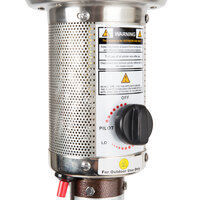
A single control for each patio heater, mounted on the unit itself. Usually a simple on/off toggle.
- Super simple to use
- Allows you to turn on only the heaters you need
- Less expensive
- May be difficult to reach for some employees
- Requires each unit to be turned on manually
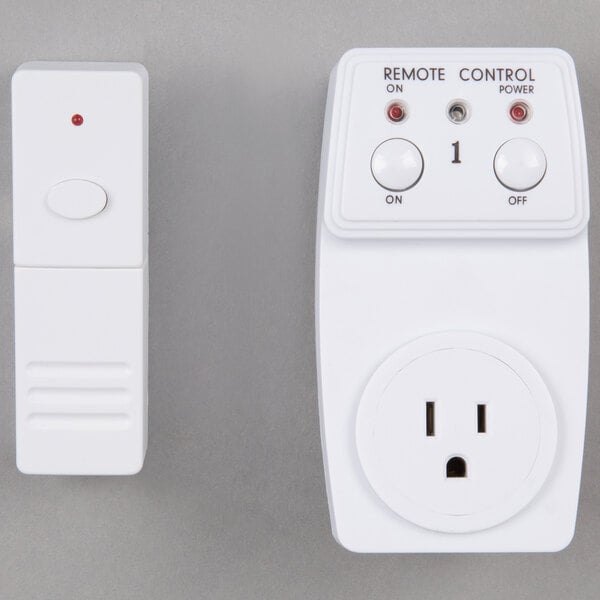
Works like a ceiling fan remote. Wired and wireless controllers are available that send a signal to turn the heater on or off.
- Easy to use
- Different versions can be permanently mounted or handheld
- Can be placed where it is easy for employees to reach
- In some cases remote controls are not designed for single heaters
- Multiple remotes may be required for multiple zones of heaters
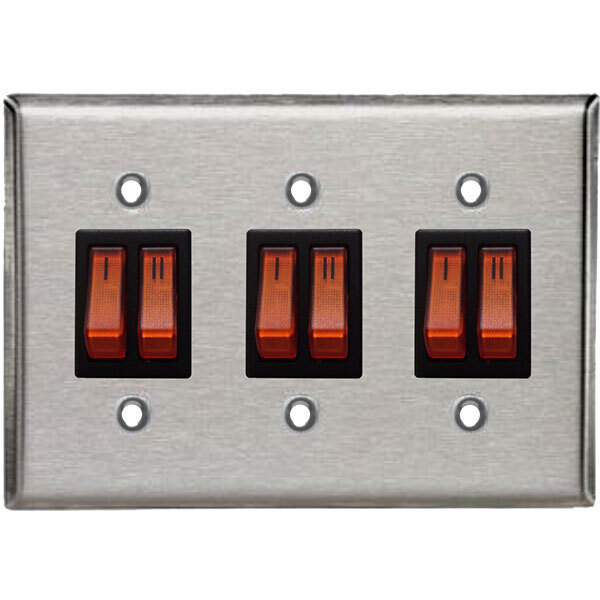
Allows heaters to be set up in zones for greater control over which heaters are turned on, and when.
- Only turns on the heaters that you need at any given time
- Can be mounted at a location that is easy for employees to reach
- More expensive and complex to set up and operate
- Not available on all patio heaters / systems
Patio Heater Materials
Coastal environments can be particularly harsh on any metal or wood furniture and equipment that is used outdoors. This is something you already know if your business is near the water! To make sure your patio heaters last as long as possible, consider purchasing units made of marine grade type 316 stainless steel if your business is located in an area where salt water corrosion is an issue.
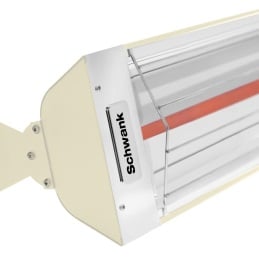
- Durable and weather-resistant
- More colors available
- Coating can be damaged or scratched
- May corrode quickly in harsh coastal environments
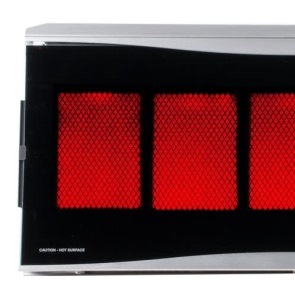
- Durable and weather-resistant
- Sleek and professional
- Some models have a more industrial appearance
- May corrode quickly in harsh coastal environments
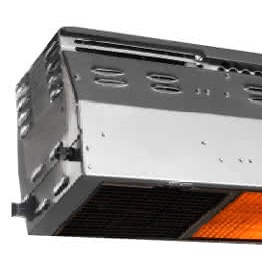
- Designed to resist corrosion in harsh coastal conditions
- Some models have a more industrial appearance
- Most expensive
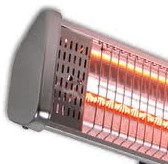
- Generally corrosion-resistant
- Less expensive for mounted units
- Less durable than other models
- More industrial in appearance
Laying out your patio heater system can be tricky, so knowing the dimensions of the space, the clearances available, and the amount of coverage you need is important.
How to Choose a Patio Heater
If you only need to heat a small space, it is easy to choose the patio heaters yourself. When you are deciding what patio heater will best suit your business, there are a few questions to ask yourself:
- How much area do you need to heat? Small spaces may benefit from freestanding heaters while larger areas can be heated using wall-mounted heaters with the correct coverage area. Know how much space you have to heat and double-check the math to be sure the heaters you choose will be up to the job.
- What is the weather like at your location? If it is usually a bit breezy, you may want to invest in infrared patio heaters which have better wind resistance. Or, you may need to use additional heaters to make up for the challenging ambient conditions on your patio.
- How much will the patio heaters be used? If they will only be used infrequently, you may not need to invest in an expensive system of wall-mounted heaters as freestanding units may do the job.
- What utilities are available? If electrical connections or natural gas plumbing are not available in your outdoor space, your options may be limited to propane-operated heaters.
When to Ask an Expert
If, however, you need to create a system of patio heaters to warm a large outdoor space, the process can be a little more complicated. You might want to consult with the installer or a professional designer to make sure that the system of heaters you choose is properly-suited to your space and that the heaters are placed in the correct positions. Many patio heater manufacturers also offer consultations and free resources to help create the perfect outdoor heating solution for you.
Below are some safety tips to keep in mind when installing and operating your patio heater
How to Keep Your Patio Heater From Tipping Over
The easiest way to keep your patio heater from tipping over is to add weight to the base to balance out its top-heavy design and add more stability. This can be done by placing a sandbag on the base or filling it with sand or concrete. When you are purchasing a patio heater, be sure to look for an anti-tilt base to reduce the chances of your outdoor heater blowing over.
Indoor vs. Outdoor Use
While some electric patio heaters may be approved for use inside, most electric models and all gas models should only be used in open, outdoor, well-ventilated areas with a minimum of combustible surfaces nearby. Be sure to check your local building and fire codes to make sure that there are no restrictions on the use of outdoor heaters in your municipality.
Clearance from Flammable Materials
While you want to be sure that your patio heater puts out enough heat and is close enough to the area you wish to keep warm, it's also important to remember that the patio heater itself will get hot. Placing a patio heater too close to flammable materials like wood, cloth, or paper can be dangerous.
Plus, be sure not to allow furniture or other items to come into contact with the heater to protect your furnishings and prevent damage to the heater itself. Most outdoor heaters have specific requirements for installation in locations that are near combustible surfaces.
If you need to hang your heater from a wooden patio overhang, mount it to a sided exterior wall, or place it near non-metal patio furniture, be sure to consult the specification sheet and manual for the unit you choose. Make sure that your location can accommodate the clearances recommended by the manufacturer. In some cases, an additional shield or heat deflector may be required. Additional commercial patio heater parts and accessories are also available for proper installation and maintenance of your new outdoor heating system.
Related Resources

June 2026 WebstaurantStore Coupon Code
Summer is upon us, and to celebrate WebstaurantStore has blazing hot deals all month long! With summer vacations underway and holidays like Independence Day rapidly approaching, now is the time to stock up on essential supplies and equipment you'll need to get through the summer season. Take a look at our wide array of sale items below and don't forget to enter the code SUMMERSALE at checkout to enjoy up to 20% off your purchases! Looking to save even more? Check out the new Webstaurant Rewards® Visa Business Card ! Sign up for a new card today and start earning rewards on every WebstaurantStore purchase, and save on a WebstaurantPlus subscription. Have a look at some incredible deals on disposable items with June's monthly coupon code! Whe
A Guide to Commercial Outdoor Furniture
Creating a lively patio area for your guests to eat or socialize in can be a profitable addition to your establishment. This is especially true for those featuring outdoor kitchens and other unique dining experiences. Whether you run a niche restaurant or a large hotel chain, customers love being able to enjoy the outdoors during their visit. Learn more about the types of outdoor restaurant furniture to use in your patio areas as well as the various accessories you can add to restaurant settings, pool settings, or simple social settings. Shop All Restaurant Patio Furniture Use the following links to learn more about commercial outdoor furniture: Commercial Patio Furniture Commercial Pool Furniture Outdoor Picnic Tables and Park Furniture Ou

A Guide to Commercial Patio Umbrellas
As outdoor dining continues to grow as an appealing option for customers, patio space is an asset like never before. Guests love indulging in your crisp salads and colorful entrees as they take in the fresh air and atmosphere of your outdoor space. Your patio needs to be comfortable and protected from weather and the elements, which is why patio umbrellas are an absolute must during the summer season. In order to make your patio space as profitable as possible , even in hot weather, use outdoor umbrellas to curate a cool, relaxing, and shady spot for your customers. Shop All Patio Umbrellas Click any of the tips below to skip to the patio umbrella information that interests you: Anatomy of a Commercial Patio Umbrella Outdoor Umbrella Canopy
Join Our Mailing List
Receive coupon codes and more right to your inbox.