- Topics 1543
- Industrial 59
- Troubleshooting Guides 32
- Restaurant Management 142
- Bar Management 66
- Catering Tips 41
- Bakery Management 48
- Food Trucks & Concessions 47
- Advertising & Marketing 40
- Eco-Friendly Tips 11
- Facility Layout & Design 49
- Coffee Shop Tips 31
- Installation & Maintenance 60
- Janitorial & Pest Control 35
- Safety & Sanitation 112
- Startup Tips 111
- Menu Design 11
- Kitchen & Cooking Tips 104
- Hospitality Management 26
- Pizza & Sandwich Shop Tips 30
- Smallwares 40
- Food Prep 102
- Tabletop Items 20
- Disposables 26
- Calculators & Tools 8
- Consumables 71
- Warewashing & Laundry 22
- Cooking Equipment 101
- Food Storage & Refrigeration 54
- Beverage Equipment 39
- Office Supplies 5
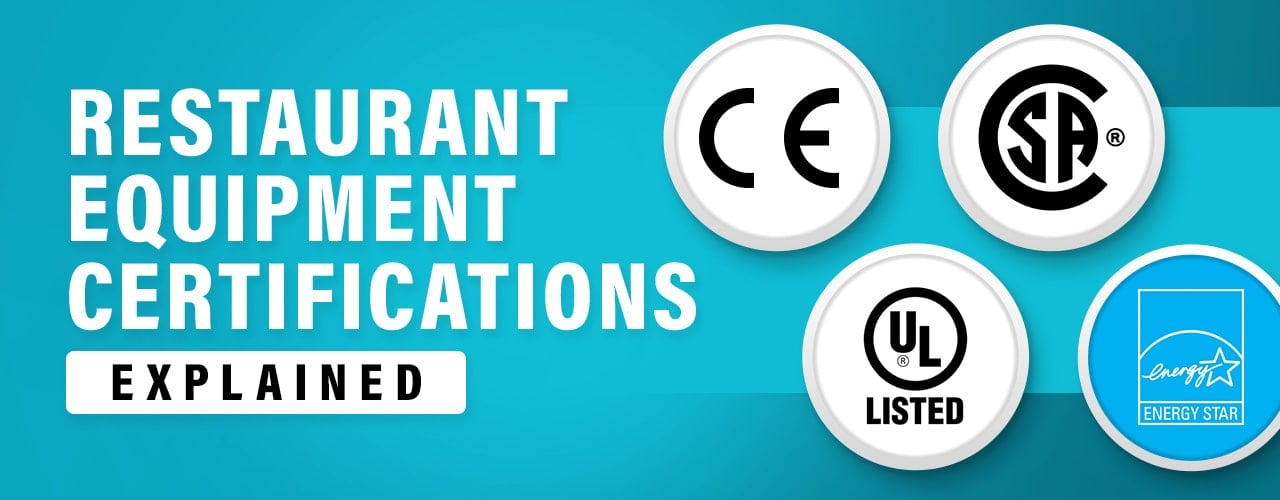
Restaurant Equipment Certification and Registration Marks Explained
Last updated on Feb 23, 2026In the foodservice industry, safety and sanitation are critical. To protect both equipment operators and end consumers, independent certifying and testing agencies work with manufacturers to verify that restaurant equipment and smallwares meet established safety and performance standards. Products that comply with these requirements can be identified by specific certification marks displayed on the equipment or listed in their specification sheet. We will discuss some of the most common third-party testing agencies, the significance of their certification marks, and how they can impact your business.
What Are Equipment Certification and Registration Marks?
Equipment certification and registration marks indicate that a product has been independently evaluated against recognized safety, sanitation, performance, or energy-efficiency standards. Depending on the certification, the product may be tested for safe operation, suitability for food contact, or compliance with health or building codes.
Purchasing certified equipment reduces risk, simplifies health inspections, supports regulatory compliance, and protects both staff and customers. Certified products are also more widely accepted by inspectors, insurers, and institutional buyers, making them a practical and reliable choice for both small and large operations.
Common Equipment Certification and Registration Marks
There are several types of certifications that equipment can receive, depending on its category and intended use. Some certification bodies apply the same testing standards across multiple certification programs, while others specialize in specific areas, such as energy efficiency.
NSF
NSF is an independent not-for-profit certification agency and standards developer for several industries, including food and beverage. The NSF sanitation certification for commercial foodservice equipment indicates that it has been independently tested and verified to meet established standards for food safety, sanitation, material quality, and cleanability. Certification applies to both food-contact and non-food-contact equipment used in commercial kitchens.
- Common NSF-Certified Products: Food prep tables, sinks, refrigerators, ice machines, beverage dispensers, shelving, and smallwares
- Benefits of Purchasing NSF-Certified Products: Simplifies health inspections, supports food safety programs, enables code compliance, and reduces the risk of contamination

UL Solutions
UL Solutions is a global certification and standards development organization that provides testing, inspection, and certification services to support safety, security, and sustainability. It offers a comprehensive, single-provider certification solution covering a wide range of services for equipment, including electrical, fire, gas, and mechanical safety, sanitation, and energy efficiency. The UL EPH mark is widely recognized and trusted as a benchmark for evaluating the sanitary design, construction, and performance of commercial food equipment.
- Common UL-Certified Products: Cooking equipment, warming equipment, refrigeration units, dishwashers, and powered small appliances
- Benefits of Purchasing UL-Certified Products: Supports code compliance and provides confidence that equipment is safe to install and operate in commercial environments
CSA Group
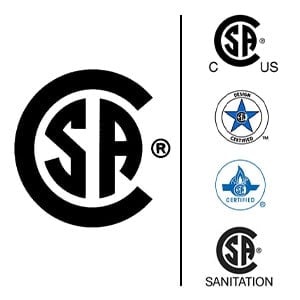
CSA Group is a certification agency and standards developer that provides safety and performance certification, with a strong presence in Canada and North America. CSA evaluates electrical and gas-powered equipment to verify compliance with applicable safety, energy, and sanitation standards and codes.
- Common CSA-Marked Products: Ovens, ranges, refrigeration units, beverage equipment, and powered appliances
- Benefits of Purchasing CSA-Marked Products: Widely accepted by inspectors and utilities, and helps equipment meet regional safety requirements
Intertek
Intertek provides product safety certification through its ETL Listed mark, certifying against the same safety standards used by UL. Intertek provides comprehensive testing, inspection, certification, and advisory services to ensure industrial, electrical, and consumer equipment meets safety, regulatory, and performance standards.
- Common ETL-Listed Products: Cooking equipment, refrigeration units, beverage machines, and food prep equipment
- Benefits of Purchasing ETL-Listed Products: Supports safety compliance and inspection approval
ENERGY STAR®
ENERGY STAR® identifies equipment that meets energy efficiency standards established by the Environmental Protection Agency and the Department of Energy. A product is awarded the ENERGY STAR® label when it meets the program’s standards, as demonstrated through verified performance data confirming reduced energy and water consumption without loss of functionality. Before purchasing a product with the ENERGY STAR® label, operators can review its energy usage estimates to make an informed decision.
- Common ENERGY STAR®-Labeled Products: Refrigeration units, dishwashers, fryers, steamers, and hot food holding equipment
- Benefits of Purchasing ENERGY STAR®-Labeled Products: Has the potential to lower utility costs, reduce environmental impact, and support sustainability initiatives, while often qualifying for rebates or incentives
Other Equipment Marks
This list of marks is not issued by accredited certification bodies. Instead, these marks signify compliance with specific regulatory requirements.

CE
The CE mark is a manufacturer's self-declaration, indicating that a product complies with the applicable European Union (EU) health, safety, and environmental protection requirements. While CE marking is mandatory for products sold within the EU, it may also appear on equipment used globally, particularly from international manufacturers. It’s important to note that equipment bearing the CE mark will require additional certifications to meet North American requirements.
- Common CE-Marked Products: Commercial ovens, mixers, coffee equipment, and refrigeration units
- Benefits of Purchasing CE-Marked Products: Signals conformity with EU safety directives
AHRI
The Air Conditioning, Heating, and Refrigeration Institute (AHRI) is a leading trade association representing manufacturers of HVACR and water heating equipment. It administers the AHRI Product Performance Certification Program, a voluntary, third-party program that verifies manufacturers’ performance claims through standardized testing and ongoing compliance oversight. The certification is especially significant for equipment that must deliver consistent, reliable temperature control.
- Common AHRI-Certified Products: Refrigeration systems and HVAC units
- Benefits of Purchasing AHRI-Certified Products: Verified performance and efficiency ratings, simplified compliance with codes and standards, and potential eligibility for utility rebates and incentives

FCC
The Federal Communications Commission (FCC) regulates interstate and international communications by radio, television, wire, satellite, and cable across the United States, including all states and U.S. territories. Within the foodservice industry, FCC certification is essential for equipment that uses wireless or electronic communication technologies, ensuring devices operate safely, do not cause harmful interference, and comply with federal electromagnetic standards. As operations increasingly rely on connected, automated, and digitally controlled equipment, FCC compliance helps protect system reliability, data integrity, and uninterrupted operation in technology-dense environments.
- Common FCC-Certified Products: Wireless POS systems, Wi-Fi and Bluetooth-enabled appliances, smart thermostats and HVAC control systems, and remote temperature monitoring sensors
- Benefits of Purchasing FCC-Certified Products: Compliance with U.S. regulatory requirements, reduced risk of operational disruptions caused by signal interference, and improved reliability of connected systems and data communications
ADA Compliant
While ADA compliance is not a formal equipment certification, it is an important consideration for restaurant owners when selecting equipment and designing their spaces. ADA-compliant restaurant equipment is designed to meet the Americans with Disabilities Act (ADA) accessibility standards, ensuring that spaces, tools, and fixtures can be safely and comfortably used by people with a wide range of physical abilities. For business owners, investing in ADA-compliant equipment is important not only because it helps meet legal requirements and reduce liability, but also because it creates a more inclusive and efficient workplace.
- Common ADA Compliant Products: Adjustable-height prep tables, service counters, hand sinks, and reach-in refrigeration
- Benefits of Purchasing ADA-Compliant Products: Supports inclusive employment and guest accessibility while meeting legal standards, and improves safety, ergonomics, and efficiency for both front- and back-of-house operations
Related Resources
Restaurant Licenses and Permits
Operating a restaurant requires more than acquiring startup cash , finding a location, and writing a menu. It takes obtaining various licenses and permits to ensure compliance with local, state, and federal regulations. Getting the writs and proofs you need for each restaurant license takes time, so it's important to start the process as early as possible. We explain what you can expect with each of the following business licenses and permits as you work towards opening your restaurant. Click any of the license types below to learn more: Business License Employer Identification Number Certificate of Occupancy Food Service License Sign Permit Building Health Permit Employee Health Permit Other Permits to Consider What Licenses and Permits Ar
ADA Bathroom Requirements for Restaurants
ADA restroom requirements are an essential aspect to consider when designing or renovating a restaurant. These requirements are outlined by the Americans with Disabilities Act (ADA) and are aimed at ensuring that individuals with disabilities have equal access to facilities. ADA bathroom requirements cover various aspects such as the number and location of accessible restrooms, clear floor space, grab bars, sinks, and doorways. By adhering to ADA regulations , restaurants can provide a comfortable and inclusive dining experience for all patrons. Shop All Handicap Bathroom Accessories Click below to learn about restroom ADA compliance: ADA Restroom Layout ADA Bathroom Stall Requirements ADA Lavatory Requirements The Importance of ADA Complia
Equipment Installation Checklist
As an operator, you put so much time and energy into researching commercial kitchen equipment, deciding whether to purchase it new or used , and what the best deal on shipping is, so it can be easy to overlook one essential element - what to do when it arrives. To help the installation of your equipment go smoothly, we've created a checklist you can use to stay organized and efficient when your kitchen equipment arrives. Shop All Restaurant Equipment Click below for a downloadable restaurant equipment installation checklist: Download our Restaurant Equipment Installation Checklist PDF 1. Plan for Delivery Before scheduling the delivery, consider the time required for installation and decide what time of day will work best for you. If you or
Join Our Mailing List
Receive coupon codes and more right to your inbox.