
- Topics 1570
- Industrial 60
- Troubleshooting Guides 32
- Restaurant Management 145
- Bar Management 69
- Catering Tips 43
- Bakery Management 44
- Food Trucks & Concessions 36
- Advertising & Marketing 41
- Eco-Friendly Tips 13
- Facility Layout & Design 47
- Coffee Shop Tips 32
- Installation & Maintenance 63
- Janitorial & Pest Control 34
- Safety & Sanitation 122
- Startup Tips 110
- Menu Design 13
- Kitchen & Cooking Tips 108
- Hospitality Management 25
- Pizza & Sandwich Shop Tips 21
- Smallwares 42
- Food Prep 103
- Tabletop Items 21
- Disposables 28
- Calculators & Tools 7
- Consumables 77
- Warewashing & Laundry 22
- Cooking Equipment 107
- Food Storage & Refrigeration 57
- Beverage Equipment 42
- Office Supplies 6

A dunnage rack is a raised storage platform designed to keep food, ingredients, and supplies off the floor, helping commercial kitchens maintain proper sanitation, improve organization, and comply with food safety guidelines. By creating a barrier between stored products and the floor, dunnage racks protect inventory from moisture, dirt, pests, and accidental damage while making cleaning underneath storage areas easier. They're often found in walk-in coolers, freezers, dry storage rooms, and receiving areas to support safe, efficient inventory management. Understanding the different types, materials, and features of dunnage racks can help operators choose the right solution for their storage needs while maximizing available space and maintaining regulatory compliance.
Shop All Dunnage Racks
Dunnage racks are used to keep food, beverages, and supplies elevated off the floor, protecting inventory while helping commercial kitchens meet food safety and sanitation requirements. Many local health departments follow the FDA Food Code, which generally requires food and food-contact items to be stored at least 6" above the floor to reduce the risk of contamination and allow for proper cleaning underneath storage areas. Beyond regulatory compliance, dunnage racks improve air circulation around stored products, minimize exposure to standing water and pests, and help prevent damage to cases and containers in walk-in coolers, freezers, and dry storage rooms. Elevating heavy inventory also creates a more organized storage system, making it easier for staff to clean, rotate stock, and access products efficiently during daily operations.
Are Dunnage Racks Required by Health Code?
Dunnage racks are often required to help foodservice operations comply with health code storage requirements, as the FDA Food Code generally requires food and food-contact items to be stored at least 6" off the floor to prevent contamination and allow for proper cleaning. While health codes don't necessarily require NSF-listed dunnage racks in every jurisdiction, NSF-certified models can help operators demonstrate that their equipment is designed for commercial foodservice environments. Using NSF-listed dunnage racks can also help operators meet sanitation standards by providing equipment designed for commercial foodservice environments, while supporting HACCP programs by reducing contamination risks and improving product organization. Keeping inventory elevated further simplifies FIFO (First In, First Out) stock rotation, making it easier to monitor expiration dates, access products quickly, and maintain a safe, well-organized storage area.
Commercial dunnage racks are available in several configurations to accommodate different storage, merchandising, and beverage service applications. Selecting the right style depends on the inventory you're storing, how much weight the unit needs to support, and where it will be used within your operation.
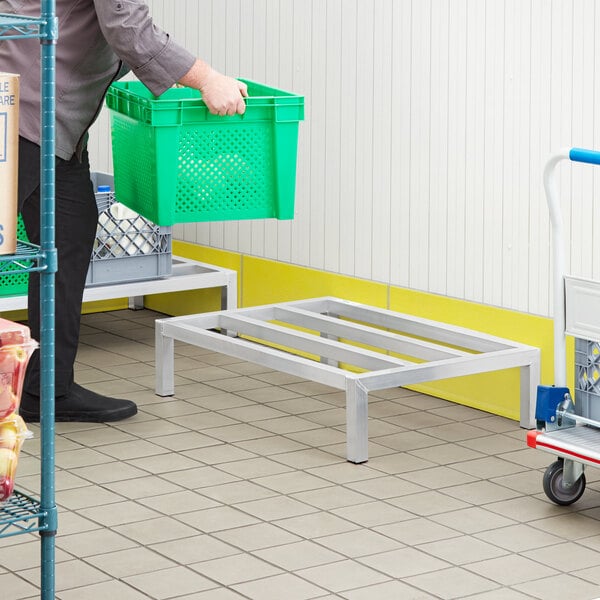
1. Standard Dunnage Racks
Standard dunnage racks are the basic heavy-duty platforms that elevate food, ingredients, and supplies above the floor to support sanitary storage and comply with food safety requirements. They are commonly placed in walk-in coolers, freezers, dry storage rooms, and receiving areas where operators need durable, high-capacity storage for bulk inventory. Available in a range of sizes, heights, and weight capacities, dunnage racks help maximize your restaurant's storage while protecting products from moisture, dirt, and pests. Their simple, open design also makes it easier to clean underneath stored inventory.
- Ideal for bulk ingredient and supply storage
- Keeps stored ingredients 6" off the ground
- Frequently found in coolers, freezers, and dry storage
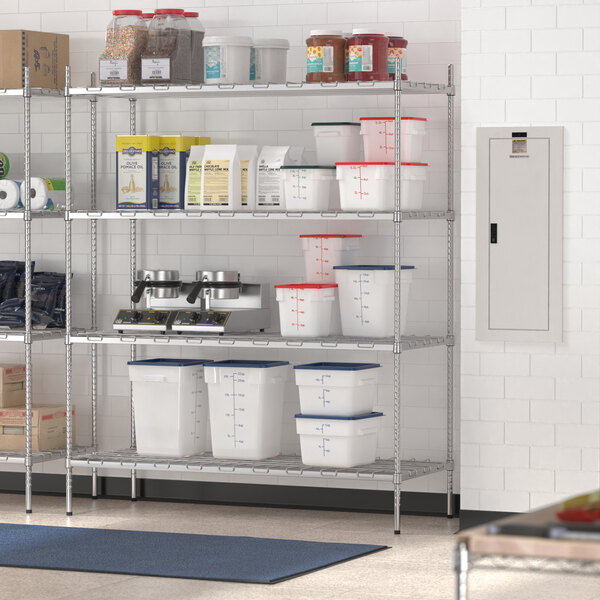
2. Dunnage Shelving Unit
Combining the benefits of elevated storage with multiple shelving levels, dunnage shelving units allow operators to organize inventory while maintaining proper floor clearance. Shelving units are well suited for kitchens with limited storage space because they increase vertical capacity without expanding the storage footprint. Many models feature adjustable shelves to accommodate products of different sizes and simplify inventory organization, making them especially useful for operations that need quick access to a wide variety of ingredients or packaged goods.
- Maximizes vertical storage space
- Adjustable shelving on many models
- Provides organized access to frequently used inventory
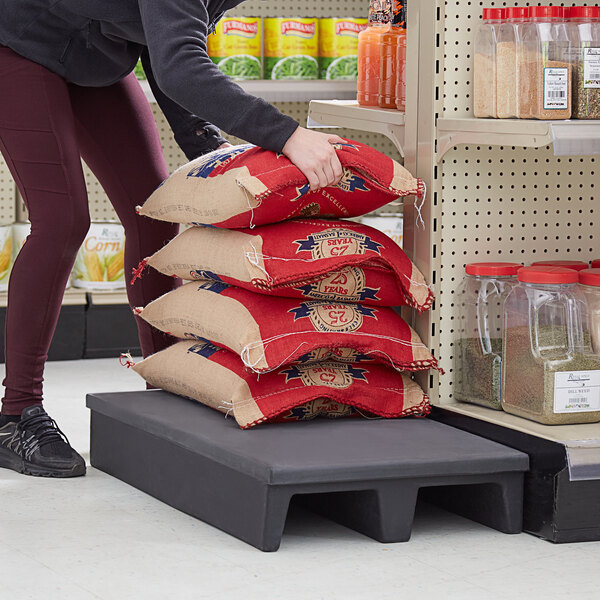
3. Display Stands
Unlike standard dunnage racks that prioritize back-of-house storage, display stands elevate merchandise while making products easier for customers to browse. Grocery stores, convenience stores, warehouse clubs, and other retail foodservice businesses often use them to merchandise beverages, packaged foods, seasonal items, or promotional displays. Their low-profile design also makes it easy to restock merchandise throughout the day.
- Built for merchandising and product presentation
- Well suited for retail foodservice environments
- Keeps displays elevated off the floor
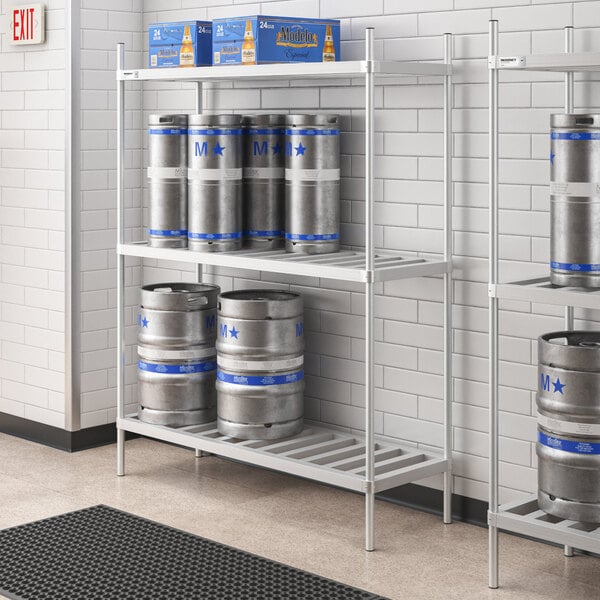
4. Keg Racks
Keg racks provide a dedicated storage solution for organizing beer kegs inside walk-in coolers and beverage storage areas. By securely supporting multiple kegs, they improve space utilization while reducing the effort required to retrieve and rotate inventory. Many designs allow kegs to be stacked safely, helping bars, breweries, and restaurants increase cooler capacity without sacrificing accessibility. A well-organized keg storage system also contributes to safer material handling for employees.
- Designed specifically for keg storage
- Improves cooler organization and capacity
- Simplifies inventory rotation and retrieval
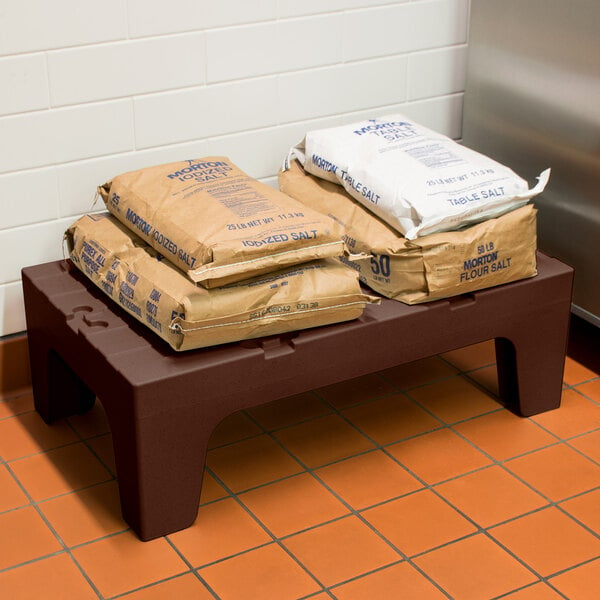
Solid and vented dunnage racks both elevate inventory off the floor, but they are designed for different storage conditions. Solid dunnage racks feature a continuous top surface that fully supports boxes, bags, and irregularly shaped containers, making them a good choice for products that could sag or tip between openings. Vented dunnage racks use slotted or open-grid tops that allow air, moisture, and spills to pass through, improving airflow around stored products and making them especially well suited for walk-in coolers, freezers, and other damp environments.
When deciding between the two, consider the type of inventory being stored, the amount of airflow required, and whether maximum product support or improved ventilation is the higher priority for your operation.
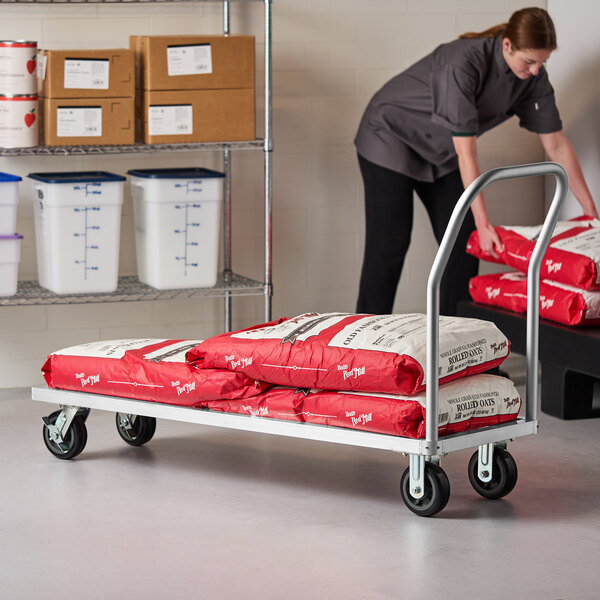
Mobile and stationary dunnage racks serve the same basic storage purpose, but each is designed for a different workflow. Mobile dunnage racks are equipped with casters, allowing staff to transport heavy ingredients or supplies between receiving, storage, and prep areas while making it easier to clean beneath the unit. Stationary dunnage racks remain in a fixed location and typically offer greater stability for long-term storage in walk-in coolers, freezers, and dry storage rooms where inventory changes less frequently.
For operations that regularly move products throughout the kitchen, mobile models can improve flexibility and portability, while stationary racks are often the better choice when maximum load support and dedicated storage space are the primary priorities.
The best material for a dunnage rack depends on factors like the type of items being stored, the environment where the rack will be placed, and the amount of weight it needs to support. Kitchens, warehouses, and foodservice facilities often choose materials based on durability, corrosion resistance, and ease of cleaning. Learning the differences between each option can help operators select a dunnage rack that fits their storage needs.
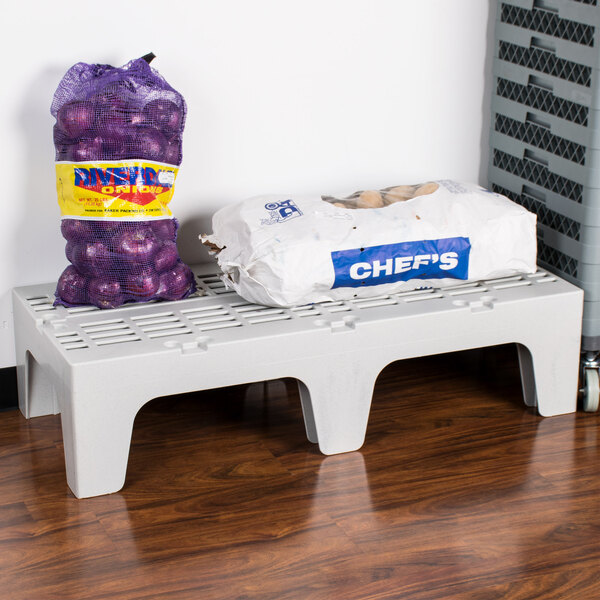
- Aluminum: Light weight yet durable, aluminum dunnage racks are a common choice for walk-in coolers, freezers, and other areas exposed to moisture. The material naturally resists rust and corrosion, making these racks easy to maintain in refrigerated storage environments.
- Plastic: For kitchens that need a rack that can withstand frequent washing and moisture exposure, plastic dunnage racks offer a practical solution. They are non-corrosive and often used for storing food products in coolers, freezers, and prep areas where sanitation is a top priority.
- Steel: When maximum load capacity is the main consideration, steel dunnage racks provide the strength needed for heavy-duty storage. These racks are typically found in dry storage rooms, warehouses, and back-of-house areas where operators need to support large containers, equipment, or bulk supplies.
- Stainless Steel: Built for demanding foodservice environments, stainless steel dunnage racks offer excellent durability while standing up to corrosion, stains, and repeated cleaning. Their sanitary surface makes them especially useful in commercial kitchens, food production areas, and facilities with strict hygiene requirements.
- Metal Wire: Featuring an open construction that allows air to circulate around stored items, metal wire dunnage racks help improve ventilation and visibility. They are typically selected for refrigerated storage spaces because the design allows cold air to move around products while making inventory easier to monitor.
Dunnage rack parts and accessories include shelves, casters, frames, and connectors that improve storage capacity, mobility, and organization in commercial kitchens. Additional components allow operators to customize racks for specific applications or replace damaged parts without purchasing an entirely new unit. Accessories can help maximize available storage space, make inventory easier to access, and adapt racks to changing kitchen layouts.
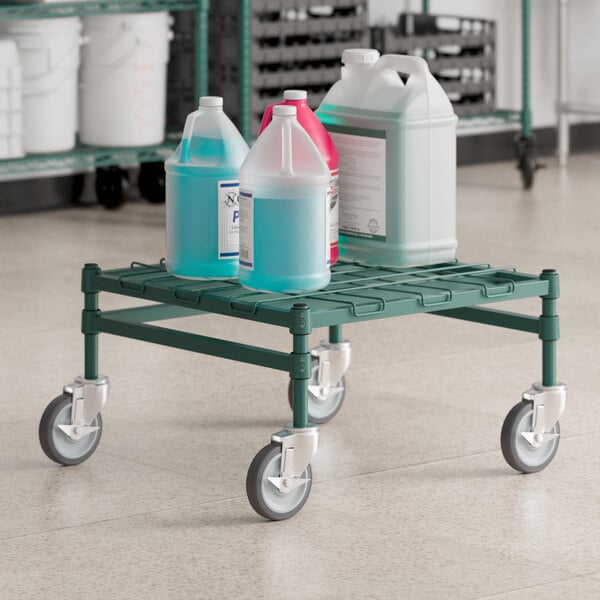
- Removable Shelves: Dunnage rack shelves create additional storage levels, allowing operators to organize more products within the same footprint. They are useful for separating ingredients, containers, and supplies while keeping items elevated and accessible.
- Casters: Adding casters to a dunnage rack allows the unit to be moved easily for cleaning, restocking, or kitchen reconfiguration. Mobile dunnage racks are especially helpful in storage areas where operators need to frequently access floors, walls, or equipment behind the rack.
- Frames: The frame serves as the main support structure of a dunnage rack, providing the foundation that holds stored items above the floor. Replacement frames or modular frame components can help repair existing units or create customized storage configurations.
- Connectors: Used to join multiple dunnage rack sections together, connectors help create larger storage systems that maximize available space. These accessories are commonly used in warehouses, walk-in coolers, and large commercial kitchens where expanded storage areas are needed.
To choose a dunnage rack, evaluate the type, size, mobility, material, and features that best fit your commercial storage application. The right rack should support your products, withstand the conditions of the storage area, and help your operation stay organized while meeting food safety requirements. Whether you're outfitting a walk-in cooler, dry storage room, or warehouse, comparing these key factors will help narrow down your options. Considering your day-to-day workflow before purchasing can also improve efficiency and make stored inventory easier to access.
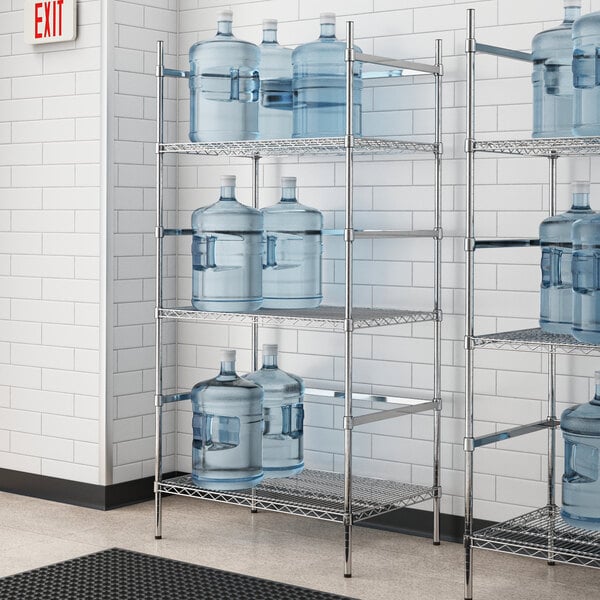
- Type: Start by selecting a dunnage rack designed for your intended application. Standard racks work well for general storage, while shelving units, display stands, or keg racks are better suited for specialized foodservice and beverage operations.
- Size: The dimensions of the rack should fit your available storage space while providing enough capacity for your inventory. Be sure to account for aisle clearance, doorways, and the footprint of surrounding equipment before choosing a size.
- Mobility: If your staff regularly cleans beneath storage equipment or rearranges inventory, a mobile dunnage rack with casters can save time and reduce lifting. Fixed racks, on the other hand, are often preferred when a permanent storage layout is needed.
- Material: Storage conditions play a major role in determining which material is the best fit. Aluminum, plastic, and stainless steel perform well in damp or refrigerated environments, while steel offers excellent strength for heavy-duty dry storage applications.
- Features: Look beyond the basic platform to determine whether additional features will improve daily operations. Adjustable shelving, modular connectors, high weight capacities, or stackable designs can provide added flexibility as your storage needs change.
A well-chosen dunnage rack supports cleaner storage practices, protects valuable products, and helps create a safer commercial kitchen. Additionally, selecting the right style and construction while understanding health code requirements and daily storage needs can improve inventory organization and extend the life of stored goods. Used in walk-in coolers, dry storage rooms, and receiving areas, the right dunnage rack helps maintain food safety standards while keeping ingredients and supplies clean, accessible, and ready for use throughout the workday.

With almost a decade of content marketing experience, Kevin has learned the ins and outs of various business sectors. Over his four years as a Longform Content Writer with WebstaurantStore, Kevin has spent hours researching and writing about the intricacies of the foodservice industry. Specializing in marketing guides, technical writing, and structured how-to content, he enjoys providing readers with content that guides them in growing and running their bar or restaurant.
Learn more about this author and WebstaurantStore's Content Writing Team here!
Related Resources

October 2026 WebstaurantStore Coupon Code
Fall flavors are in full swing, and the deals at WebstaurantStore are just as irresistible! Stock up on everything your kitchen needs for a busy stretch of autumn, from disposables and pantry staples to equipment that keeps service moving. Browse our featured sale items below, and use code SPICE26 at checkout to save up to 20% on your purchase. Hot drinks, cozy desserts, and warm soups take center stage this time of year, so there's plenty here to fuel your seasonal menu. Sign up for our emails to get exclusive deals and coupon codes delivered straight to your inbox! Looking to save even more? Check out the new Webstaurant Rewards® Visa Business Card ! Sign up for a new card today and start earning rewards on every WebstaurantStore purchase

Gondola Shelving Explained
First impressions are crucial when customers enter your retail space. Gondola shelving is the foundation of your merchandising display, serving as a backdrop for your products. The systems offer excellent flexibility and versatility with store layout and product arrangement, allowing you to easily configure the units to meet specific display and storage needs . We'll go over everything you need to know about gondola shelving so you can choose the best system for your retail space. Shop All Gondola Shelving
Best Wire Shelving Kits
Compare and contrast top wire shelving kits with our wire shelving reviews. Whether you're displaying products for sale, mounting shelves in your kitchen, or looking to expand your storage area, our wire shelving kits are the perfect addition to your workplace. Choose from shelving kits for a wide range of applications, including in dry, wet, and retail environments. We also sell shelving kits with various capacities, ensuring you find the kit that matches the products you'll be storing. Use these wire shelving reviews to make informed purchasing decisions.
Join Our Mailing List
Receive coupon codes and more right to your inbox.