
- Topics 1568
- Industrial 59
- Troubleshooting Guides 32
- Restaurant Management 145
- Bar Management 69
- Catering Tips 43
- Bakery Management 44
- Food Trucks & Concessions 36
- Advertising & Marketing 41
- Eco-Friendly Tips 13
- Facility Layout & Design 47
- Coffee Shop Tips 32
- Installation & Maintenance 63
- Janitorial & Pest Control 34
- Safety & Sanitation 122
- Startup Tips 110
- Menu Design 13
- Kitchen & Cooking Tips 108
- Hospitality Management 25
- Pizza & Sandwich Shop Tips 21
- Smallwares 42
- Food Prep 102
- Tabletop Items 21
- Disposables 28
- Calculators & Tools 7
- Consumables 77
- Warewashing & Laundry 22
- Cooking Equipment 107
- Food Storage & Refrigeration 57
- Beverage Equipment 42
- Office Supplies 6

The deep fryer is an integral part of many kitchen concepts, from snack bars to food trucks to five-star restaurants. These versatile appliances use heated cooking oil to fry foods, creating a crispy outer layer with mouth-watering flavors. With different types of deep fryers available, it's crucial to identify the best fit for your business. To assist you, we've compiled a list of the best commercial deep fryers for different applications. Our recommendations are based on thorough industry research, valuable customer feedback, and insights from our seasoned industry experts.
Shop All Commercial Fryers
Check out our top choices for the best commercial fryers:
- Best Electric Deep Fryer: Frymaster 11814E High Production Electric Floor Fryer
- Best Outdoor Deep Fryer: Crown Verity PF-1-LP Portable Outdoor Fryer
- Best Compact Deep Fryer: Vulcan CEF75 Electric Countertop Fryer
- Best Gas Deep Fryer: Pitco® SG14-S Natural Gas Stainless Steel Floor Fryer
- Best Budget Deep Fryer: Avantco F3-ES-N Natural Gas Stainless Steel Floor Fryer
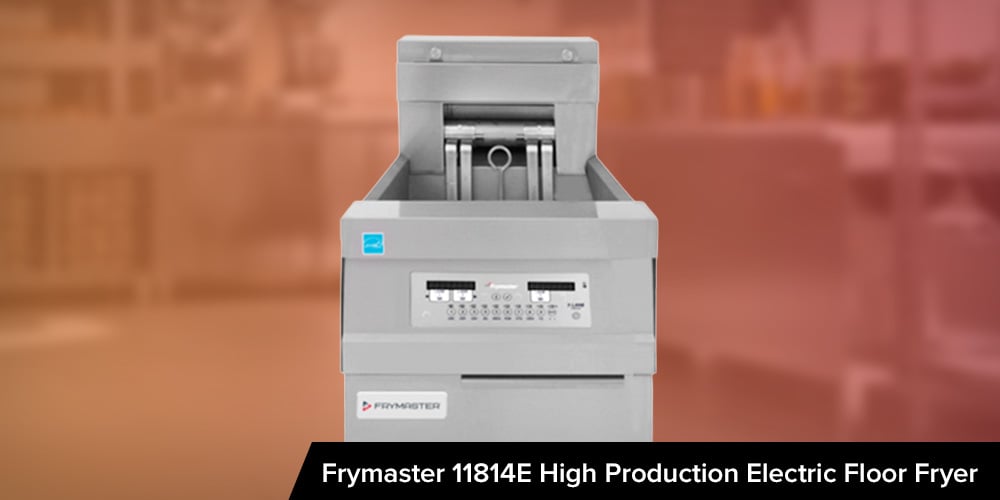
Paired with an RTD 1-degree compensating temperature probe, the Frymaster 11814E high-production electric floor fryer offers superior accuracy in maintaining the desired frying temperatures. Its digital control set features an intuitive touchpad interface, and the LED display can be easily toggled between Fahrenheit and Celsius. For added convenience, this fryer includes a melt cycle specifically designed to handle solid shortening blocks. The frypot is constructed of durable stainless steel, which is resistant to corrosion, and features a large cold zone and a forward-sloping bottom, helping to collect and remove sediment efficiently.
Shop the Frymaster 11814E High Production Electric Floor Fryer | $10,700.00
Read customer reviews for the Frymaster 11814E High Production Electric Floor Fryer.
- 60 lb. oil capacity
- Simple digital controls with touchpad interface, lighted LED display, and melt cycle
- Long-life heating element design ensures consistent results
- Stainless steel frypot, door, and cabinet sides
- Electric fryers take longer to heat up
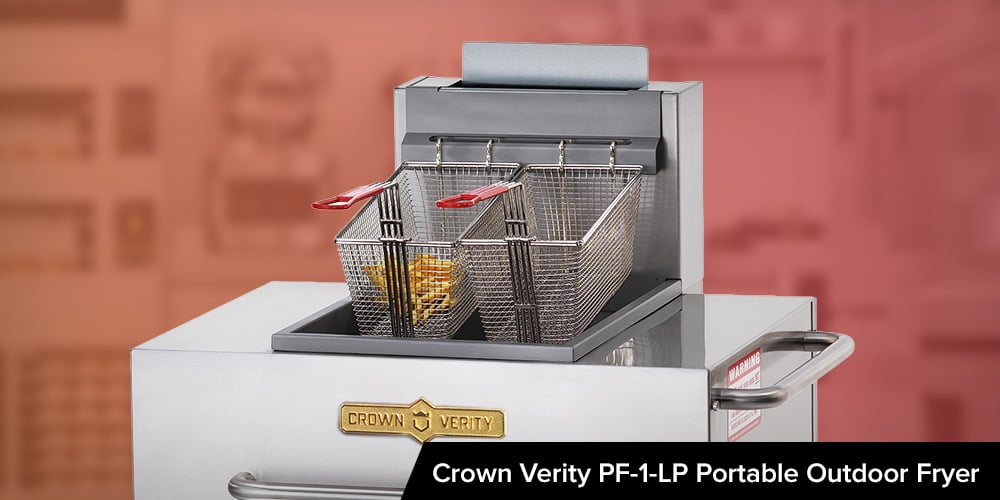
Equipped with a standard 30 lb. propane tank, the Crown Verity PF-1-LP portable outdoor fryer ensures quick heat-up times and recovery. Its millivolt thermostat control offers the flexibility to adjust temperatures between 200 and 400 degrees Fahrenheit precisely. Whether you're catering an event or frying outside a food truck, maneuvering this fryer over any terrain is a breeze thanks to its large 14" rear wheels and built-in stainless steel handle. The high-limit safety shut-off automatically activates if extreme temperatures are reached, while a convenient combination gas shut-off valve and pilot ignition system offers maximum operational security.
Shop the Crown Verity PF-1-LP Portable Outdoor Fryer | $4,386.00
Read customer reviews for the Crown Verity PF-1-LP Portable Outdoor Fryer.
- Mobile design is ideal for caterers, company parties, and special events
- 200 to 400 degrees Fahrenheit temperature range
- High limit safety shut off turns fryer off if extreme temperatures are reached
- Combination gas shut-off valve and pilot ignition system
- Liquid propane is more expensive to operate than other fuel types
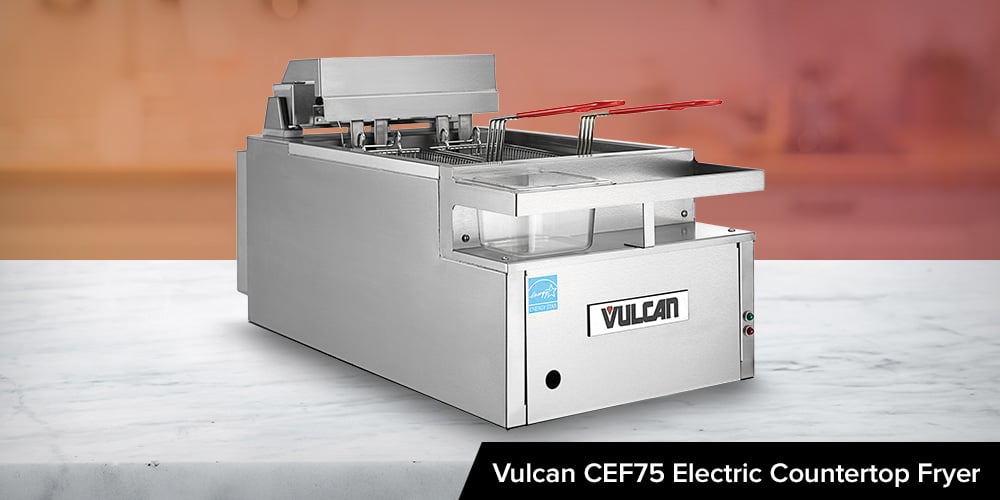
The Vulcan CEF75 electric countertop fryer is a top choice for small concession stands and bars where fried foods are a must-have. With a generous 75 lb. capacity, this fryer packs a punch while maintaining a small countertop footprint. The 16-gauge stainless steel frying tank ensures durability and longevity, while the front condiment rail keeps towels, tongs, or food pans within easy reach. Equipped with twin fry baskets featuring plastic-coated handles, it makes frying a breeze. The included tank brush, clean-out rod, and drain extension further enhance the user experience, making cleaning and maintenance a simple task.
Shop the Vulcan CEF75 Electric Countertop Fryer | $10,922.00
Read customer reviews for the Vulcan CEF75 Electric Countertop Fryer.
- Stainless steel front and sides with a 75 lb. stainless steel tank
- 1 1/4" drain valve with a quick disconnect drain pipe
- Front condiment rail is perfect for storing towels, tongs, or food pans
- Comes with twin fry baskets with plastic coated handles
- Electric fryers take longer to heat up
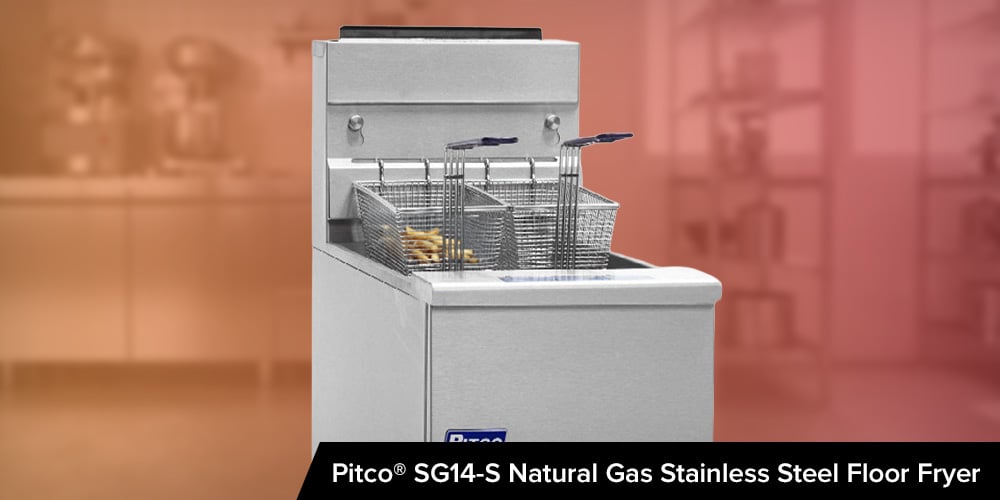
The Pitco® SG14-S natural gas stainless steel floor fryer offers a dependable and easy-to-use frying solution that can meet the demands of various kitchen setups. Its innovative Solstice burner technology eliminates the need for blowers or ceramics while still delivering ample power for efficient frying. The patented self-cleaning burner and down draft ensure that the fryer operates at peak efficiency, reducing maintenance needs and prolonging the unit's lifespan. For added convenience, it features an integrated flue deflector to help direct heat and exhaust gases, as well as 9" adjustable legs.
Shop the Pitco® SG14-S Natural Gas Stainless Steel Floor Fryer | $3,072.00
Read customer reviews for the Pitco® SG14-S Natural Gas Stainless Steel Floor Fryer.
- 40-50 lb. capacity
- 110,000 BTU
- Welded stainless steel tank
- Integrated flue deflector
- Users report trouble keeping the pilot light lit
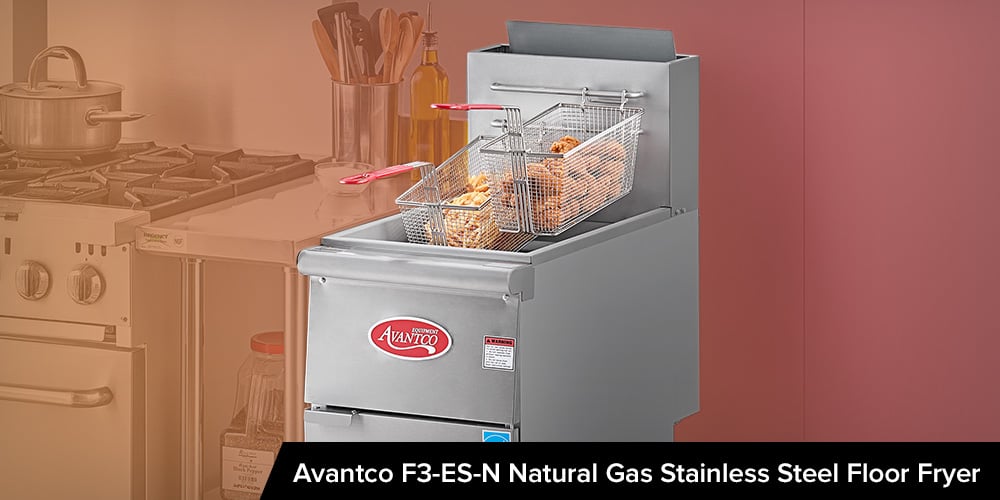
When it comes to finding a budget-friendly deep fryer that doesn't compromise on quality, the Avantco F3-ES-N natural gas stainless steel floor fryer stands out. It features a durable type 430 stainless steel tank designed for long-lasting use and boasts an impressive 35-40 lb. oil capacity. In addition to its robust construction, it is Energy Star Certified. This fryer also comes with a cool zone in its fry tank, collecting excess batter and crumbs and allowing them to sink to the bottom of the tank for effortless cleaning.
Shop the Avantco F3-ES-N Natural Gas Stainless Steel Floor Fryer | $1,029.00
Read customer reviews for the Avantco F3-ES-N Natural Gas Stainless Steel Floor Fryer.
- Energy Star rating ensures cost-efficiency and reduces carbon footprint
- Durable stainless steel construction with galvanized steel sides
- Thermostat allows temperature to be adjusted between 200-400 degrees Fahrenheit
- 35-40 lb. capacity fry pot and quiet 3 tube burner system
- Gas burners may be prone to clogs
How We Chose These Commercial Fryers
We identified select details to focus on during our process, striving to differentiate our selections based on utility and kitchen concept. These key factors included power type, installation, and burner style. To enhance efficiency and productivity, follow our recommendations and choose a fryer that aligns with your kitchen's limitations and requirements.
Deep Fryer Power Type
Commercial fryers typically come in three main power types: electric, natural gas, and propane. Each power type offers distinct advantages tailored to different kitchen setups, making it crucial to assess the specific needs of your establishment.
- Electric fryers: Electric fryers are ideal for kitchens that need consistent and accurate temperature control. These units are generally more affordable upfront compared to gas or propane fryers and are known for their ease of installation.
- Gas fryers: While gas fryers may have a higher initial cost, they are often more cost-effective in the long term due to lower energy expenses. Gas fryers are a preferred choice for kitchens that require quick heat-up times and efficient frying performance.
- Propane fryers: Propane fryers produce fewer emissions than gas fryers, contributing to a cleaner cooking environment. They combine the benefits of fast heating with enhanced portability, making them suitable for on-site cooking applications. However, propane is typically more expensive than natural gas, which may impact operating costs over time.
Deep Fryer Installation
In our research process, we carefully considered both floor fryers and countertop fryers to ensure that we provide you with a comprehensive selection of options. Whether your space requires a high-capacity fryer for heavy-duty frying tasks or a space-saving option for a smaller kitchen, our range of commercial fryers is designed to cater to your specific needs.
- Floor fryers: Floor fryers are designed to stand on legs or wheels on the floor of your kitchen, making them a permanent fixture in your cooking area. They are ideal for establishments that anticipate high-volume frying operations, as their sturdy construction and robust capacity make them suitable for demanding kitchens that need a reliable and efficient frying solution.
- Countertop fryers: Countertop fryers offer enhanced flexibility as they can be easily moved around your kitchen space. While they have a more limited capacity compared to floor fryers, countertop models are perfect for kitchens with limited space. Their compact design allows for easy placement and repositioning, making them a convenient choice for smaller establishments or kitchens with space constraints.
Deep Fryer Burner Style
In the realm of commercial fryers, the two primary styles of burners are open pot fryers and tube fryers. During our selection process, we thoroughly investigated each style to determine the best options available.
- Open pot burners: Open pot burners are situated underneath the exterior of the fry pot for easy cleaning and maintenance, making them ideal for frying low-sediment foods, like potatoes. However, it's important to note that open pot burners typically take longer to heat up compared to tube burners.
- Tube burners: Tube burners utilize a series of tubes inside the fry pot to heat the oil internally. This configuration enables more even heating throughout the oil, resulting in consistent frying and enhanced energy efficiency. Tube burners are particularly beneficial for high-volume frying operations where speed and efficiency are essential.
Back to Top
Whether you're preparing fried appetizers, fish, or desserts, fried foods are found on countless menus across the culinary landscape. Finding the right fryer will maximize kitchen efficiency and help you achieve perfect frying results, allowing you to keep your guests satisfied every time.
Related Resources

October 2026 WebstaurantStore Coupon Code
Fall flavors are in full swing, and the deals at WebstaurantStore are just as irresistible! Stock up on everything your kitchen needs for a busy stretch of autumn, from disposables and pantry staples to equipment that keeps service moving. Browse our featured sale items below, and use code SPICE26 at checkout to save up to 20% on your purchase. Hot drinks, cozy desserts, and warm soups take center stage this time of year, so there's plenty here to fuel your seasonal menu. Sign up for our emails to get exclusive deals and coupon codes delivered straight to your inbox! Looking to save even more? Check out the new Webstaurant Rewards® Visa Business Card ! Sign up for a new card today and start earning rewards on every WebstaurantStore purchase

Choosing the Best Oil for Your Commercial Deep Fryer
When it comes to deep frying, choosing the right oil is crucial for kitchen safety and for creating delicious fried foods. Different cooking oils have a range of smoke points and flavors, making it important to consider these factors when selecting the best oil. Also, keep in mind that a commercial deep fryer holds several gallons of oil. Delicate oils that are expensive and break down quickly with heat will not be efficient or cost-effective for deep frying. Keep reading to learn more about the best oils for your deep fryer. Shop Cooking Oil Click below to learn about the best oils for commercial deep frying: How to Choose the Best Oil Recommended Oils Cooking Oils to Avoid Deep Fryer Oil FAQ What Is the Best Oil for Deep Frying? Vegetable

Deep Fryer Parts and Accessories
Deep fryers play a crucial role in commercial kitchens. Whether you're preparing appetizers, entrees, or desserts, fried foods are immensely popular across a wide range of restaurant concepts. Because of this, it's crucial to ensure your deep fryers are in the best possible condition to keep up with demand and satisfy your customers. Understanding the components of a deep fryer allows you to diagnose any issues that might arise, perform quick maintenance, and ensure you are using your unit correctly. We'll outline the most important components of a deep fryer below. Shop All Commercial Deep Fryer Parts and Accessories Skip to the deep fryer part that interests you: Body Doors Fry Tank Fry Tank Cover Burner or Heating Element Basket Basket H
Join Our Mailing List
Receive coupon codes and more right to your inbox.