

As a coffee shop operator, you know that developing your menu and explaining your offerings to customers can feel overwhelming. With so many coffee beverages available to offer, it’s not always easy to understand the differences between them. We’ve broken down the most popular coffee drinks and their recipes so you can quickly get up to speed and stay aligned with current coffee trends. Skip to our printable coffee drinks chart for an easy visual guide you can display in your shop.
Brewing Styles Compared
Not all coffee is brewed in the same way. Different brewing styles can cause changes in the flavor and strength of the drink. Here are just a few brewing styles that you may incorporate in your shop:
- Drip Brew: Ground coffee is added to a brew basket and placed in an automatic coffee machine for this brewing style. Gravity is used to pass water through the grounds, resulting in a traditional cup of coffee.
- Pour Over: This brewing style is achieved by pouring boiling water slowly through coffee grounds as they sit in a filter basket. The coffee then drips into a single cup, resulting in a potent brew.
- Cold Brew: For cold brew, coarsely ground coffee is placed in room-temperature water and allowed to steep for an extended period of time. This results in a less bitter, highly caffeinated brew.
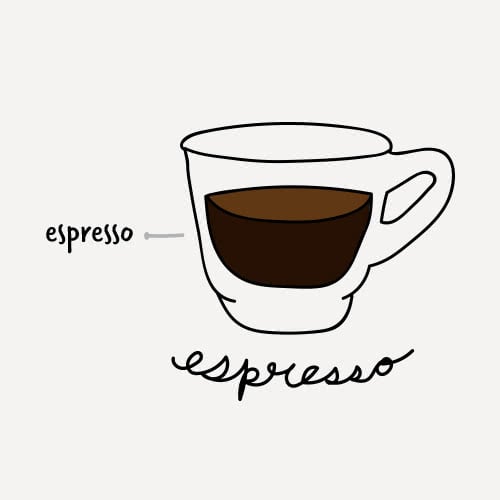
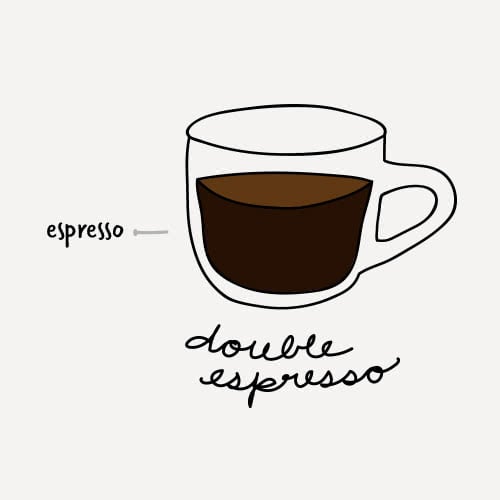
- Espresso: To achieve an espresso brew, you'll need an espresso or cappuccino machine. These machines pass pressurized hot water through a filter containing dark roasted, finely ground coffee beans. The force of the water produces a highly concentrated shot of coffee known as espresso. This is the method most commonly used for the base of coffee drinks.
- Ristretto: Brewed in a similar method to the espresso, pressurized water is passed through the coffee grounds. However, you would use half the amount of water. The shorter brewing cycle creates a more concentrated and darker shot of espresso.
6 Classic Coffee Drinks Video
Learn how to make 6 of the most common types of coffee drinks with our video:
Different Coffee Drinks
Most types of coffee drinks comprise three common ingredients: espresso, steamed milk, and foam. Additional toppings can be added to each coffee type based on your customers’ unique preferences. The following are just some of the coffee drink definitions and possible cup pairings you may consider adding to your coffee shop menu. It’s important to note that drink ratios may vary from coffee shop to coffee shop.
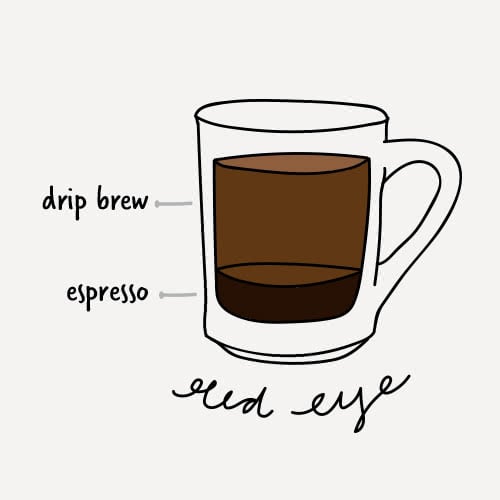
Red Eye
The red eye's purpose is to add a boost of caffeine to your standard cup of coffee.
- Ratio: 1 shot of espresso + 6 oz. of drip-brewed coffee
- Cup: 8 oz. Coffee Mug
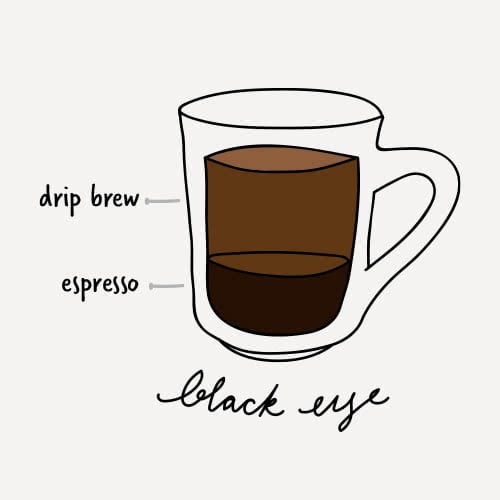
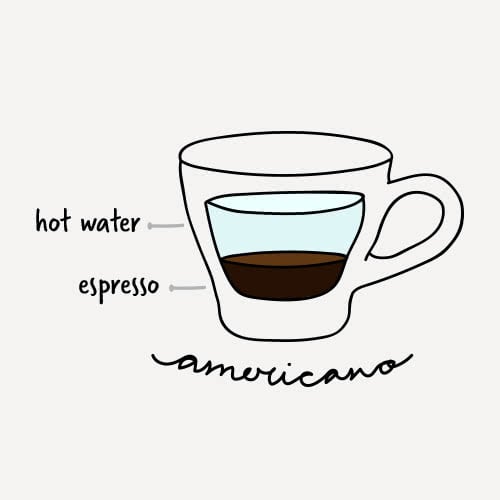
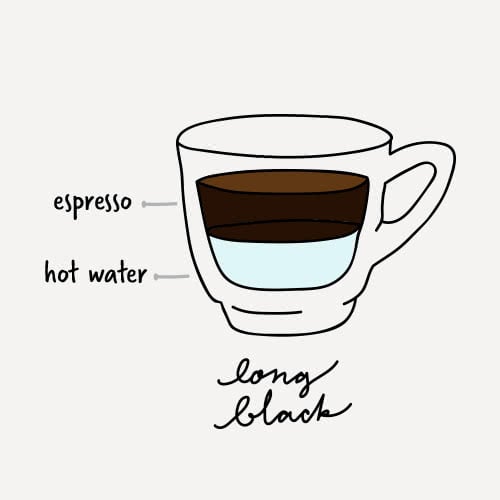
Americano
Americanos are popular breakfast drinks and are thought to have originated during World War II. Soldiers would add water to their coffee to extend their rations farther. The water dilutes the espresso while still maintaining a high level of caffeine.
- Ratio: 1 shot of espresso + 3 oz. of hot water
- Cup: 5-6 oz. Glass Coffee Mug
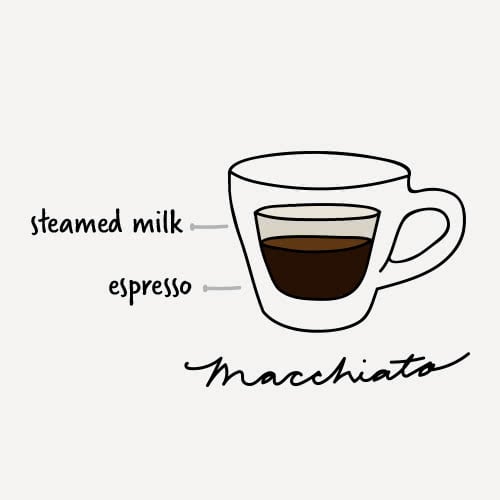
Macchiato
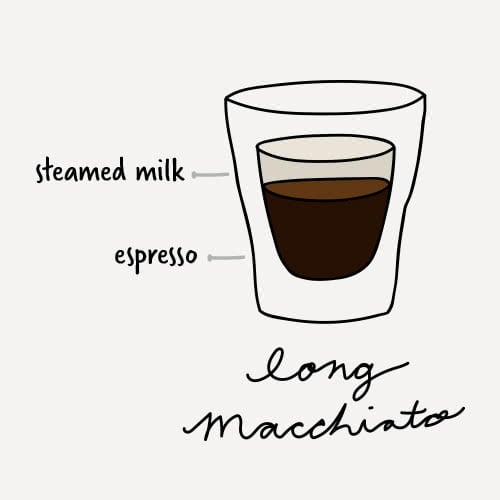
The word macchiato means mark or stain. This is in reference to the mark that steamed milk leaves on the surface of the espresso as it is dashed into the drink. Flavoring syrups are often added to the drink according to customer preference.
- Ratio: 1 shot of espresso + 1 to 2 teaspoons of steamed milk
- Cup: 3 oz. Glass Espresso Cup
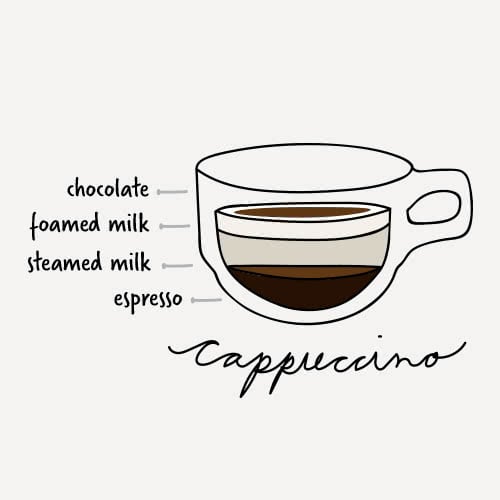
Cappuccino
Commonly enjoyed during breakfast in Italy, this rich coffee beverage is also popular in the United States. Known for its luxurious foam topping and the option to add a dusting of cocoa powder, it is often associated with feelings of indulgence and warmth.
- Ratio: 1-2 shots of espresso + 2 oz. of steamed milk + 2 oz. of foamed milk + sprinkling of chocolate powder (optional)
- Cup: 6-8 oz. Cappuccino Mug
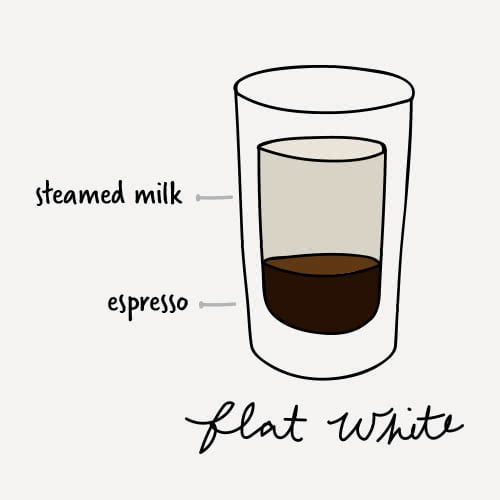
Flat White
A flat white also originates from New Zealand and Australia and is very similar to a cappuccino, but lacks the foam layer and chocolate powder. To keep the drink creamy rather than frothy, steamed milk from the bottom of the jug is used instead of from the top.
- Ratio: 1 shot of espresso + 4 oz. of steamed milk
- Cup: 6 oz. Glass Tumbler
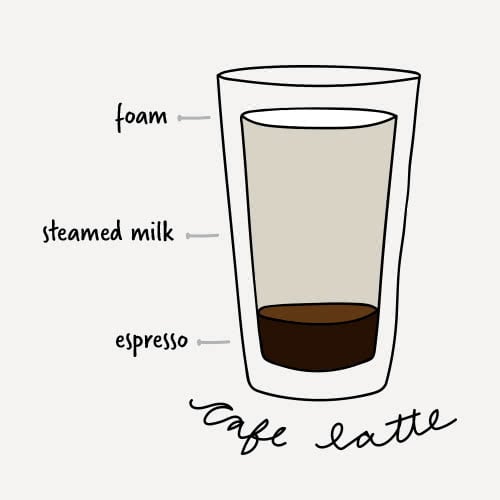
Cafe Latte
Cafe lattes are considered an introductory coffee drink since the acidity and bitterness of coffee are cut by the amount of milk in the beverage. Flavoring syrups are often added to the latte for those who enjoy sweeter drinks.
- Ratio: 1 shot of espresso + 8-10 oz. of steamed milk + 1 cm of foam
- Cup: 6-9 oz. Coffee Mug
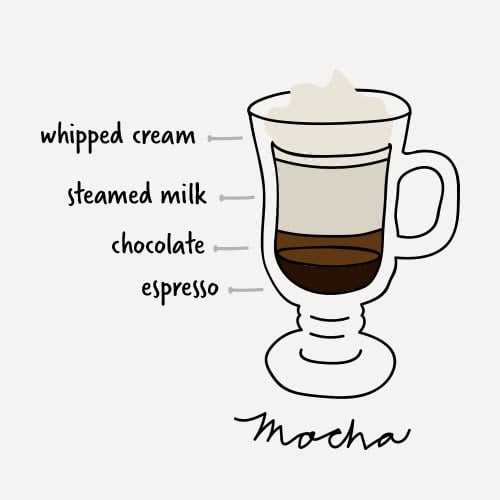
Mocha
The mocha is considered a coffee and hot chocolate hybrid. The chocolate powder or syrup gives it a rich and creamy flavor and cuts the acidity of the espresso. Offer patrons the option to top this sweet drink with whipped cream. Classic mochas use cocoa powder, but you can use white chocolate syrup to make a white chocolate mocha.
- Ratio: 1 shot of espresso + 1-2 oz. of chocolate syrup/powder + 1-3 oz. of steamed milk + 2-3 cm of foam or whipped cream
- Cup: 6-8 oz. Irish Coffee Mug
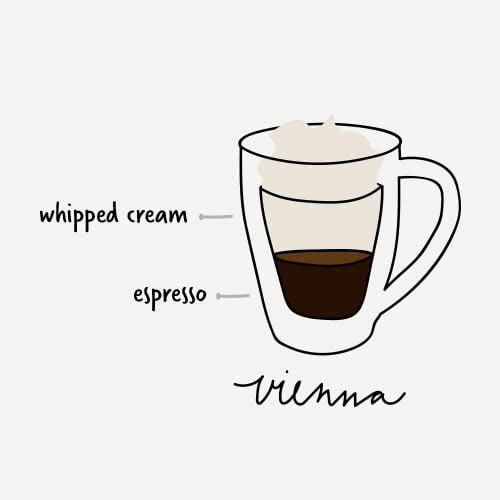
Vienna
There are a few variations on the Vienna, but one of the most common is made with two ingredients: espresso and whipped cream. The whipped cream takes the place of milk and sugar to provide a creamy texture.
- Ratio: 1-2 shots of espresso + 2 oz. of whipped cream
- Cup: 4-5 oz. Espresso Mug
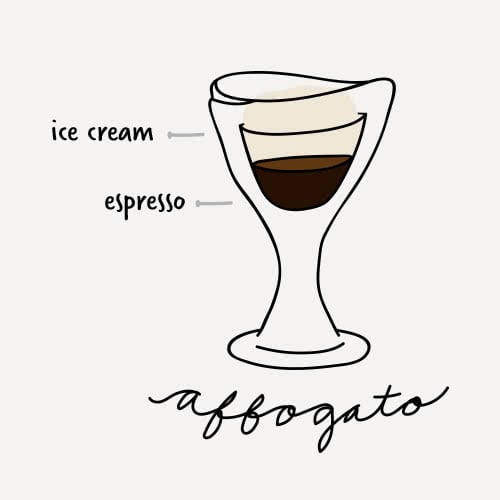
Affogato
Affogatos are more for a dessert coffee than a drink you would find at a cafe, but they can add a fun twist to your coffee menu. They are made by pouring a shot of espresso over a scoop of vanilla ice cream to create a sweet after-meal treat.
- Ratio: 1-2 shots of espresso + 1 scoop of vanilla ice cream
- Cup: 5-7 oz. Dessert Dish
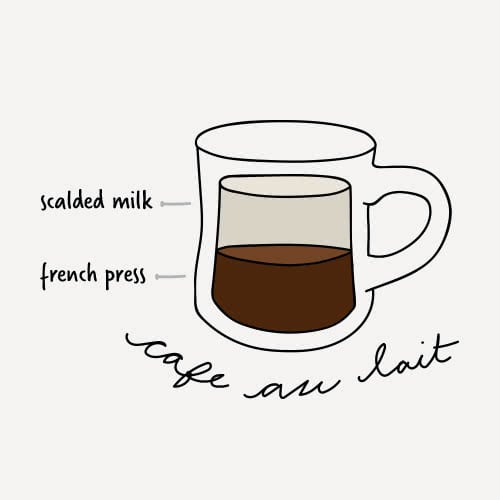
Cafe au Lait
The cafe au lait is typically made with French press coffee instead of an espresso shot to bring out the different flavors in the coffee. It is then paired with scalded milk instead of steamed milk and poured at a 50/50 ratio.
- Ratio: 5 oz. French press coffee + 5 oz. scalded milk
- Cup: 12 oz. Coffee Mug
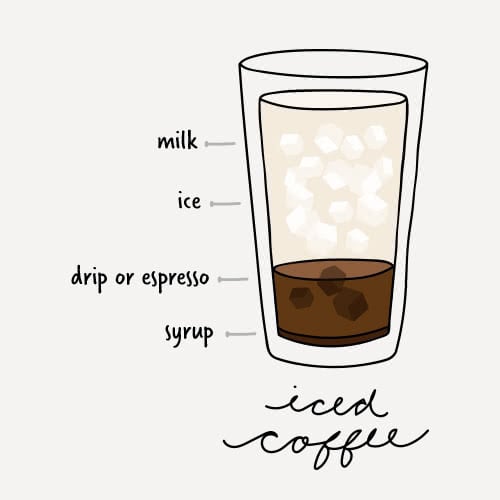
Iced Coffee
Iced coffees become very popular in the summertime in the United States. The recipes do have some variance, with some locations choosing to interchange milk with water in the recipe. Often, different flavoring syrups will be added per the preference of the customer. You can even top it off with some cold foam.
- Ratio: 2 oz. drip coffee or espresso + 4 oz. of ice + 4-6 oz of milk or water
- Cup: 14 oz. Mixing Glass
Coffee Drinks Chart
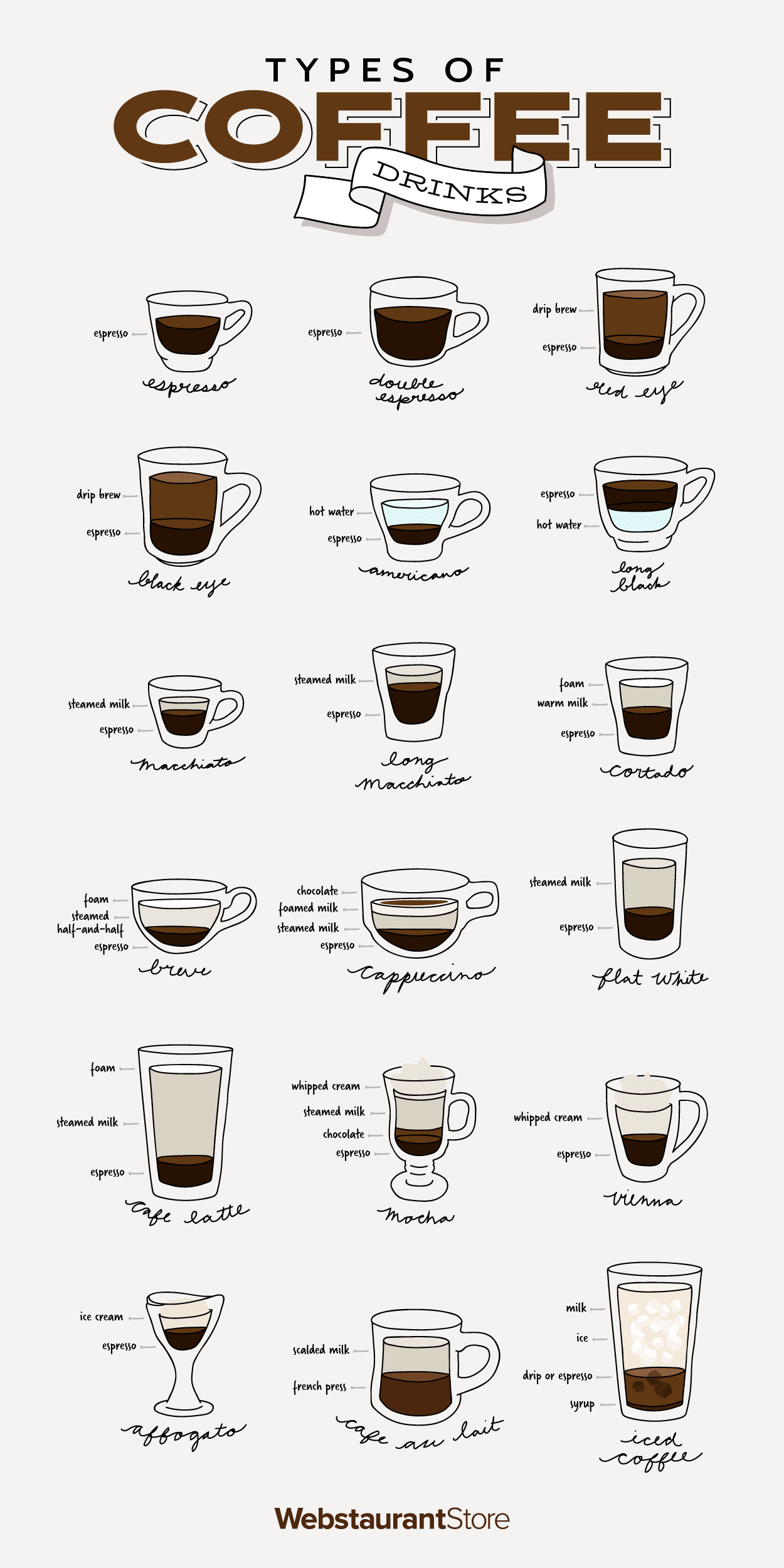
Being familiar with different types of coffee drinks allows you to cater to even more customers and improve your coffee service. Providing this information where customers can see it can help them make confident decisions about their coffee order and properly kick-start their day. If you truly want to elevate your coffee drink menu, start roasting your coffee in-house for the freshest flavor.

Janine has been with WebstaurantStore for over 10 years, starting in the Customer Solutions department before transitioning to a content writer role. This tenured experience with Web has given her a unique lens to identify the complex problems and solutions our core customers and readers wrestle with.
Learn more about this author and WebstaurantStore's Content Writing Team here!