
- Topics 1581
- Industrial 59
- Troubleshooting Guides 32
- Restaurant Management 144
- Bar Management 70
- Catering Tips 46
- Bakery Management 46
- Food Trucks & Concessions 42
- Advertising & Marketing 41
- Eco-Friendly Tips 13
- Facility Layout & Design 47
- Coffee Shop Tips 32
- Installation & Maintenance 63
- Janitorial & Pest Control 34
- Safety & Sanitation 121
- Startup Tips 111
- Menu Design 11
- Kitchen & Cooking Tips 106
- Hospitality Management 26
- Pizza & Sandwich Shop Tips 24
- Smallwares 42
- Food Prep 103
- Tabletop Items 21
- Disposables 28
- Calculators & Tools 7
- Consumables 76
- Warewashing & Laundry 22
- Cooking Equipment 107
- Food Storage & Refrigeration 58
- Beverage Equipment 43
- Office Supplies 6

Undercounter refrigeration is a foundational piece of commercial kitchen design, placing cold storage exactly where it's needed to support speed, consistency, and food safety. By eliminating unnecessary trips to reach-in units, these compact refrigerators and freezers streamline preparation and keep high-use ingredients within arm's reach. With a wide range of configurations, ventilation setups, and performance features available, selecting the right unit requires a clear understanding of how each option impacts daily service. Below, we break down the key considerations that separate a well-integrated refrigeration setup from one that slows production and limits capacity.
Shop All Refrigeration Equipment
- What Are Undercounter Refrigerators and Freezers?
- Benefits Of Undercounter Refrigerators and Freezers
- Undercounter Refrigerator Styles
- Undercounter Refrigerator and Freezer Door and Drawer Types
- Differences Between Undercounter Models, Chef Bases, and Worktop Models
- Front Breathing vs Side/Rear Breathing Undercounter Models
- How To Choose an Undercounter Refrigerator or Freezer
- Undercounter Refrigerator and Freezer Features
An undercounter refrigerator is a compact commercial refrigeration unit designed to fit beneath standard-height countertops while maintaining consistent, food-safe holding temperatures for refrigerated ingredients. These units are commonly installed at prep stations, cook lines, and bars to keep high-use items within immediate reach during service. Unlike larger reach-in equipment, undercounter refrigerators prioritize accessibility and throughput, often featuring front-breathing compressors for built-in installation. Their smaller footprint and targeted storage volume make them ideal for staging ingredients rather than bulk storage.
What Is an Undercounter Freezer?
An undercounter freezer is a space-saving commercial freezer built to sit below countertops and hold frozen products at stable subzero temperatures in high-demand work areas. It allows operators to store portioned proteins, desserts, or backup inventory directly at the station where they're needed, reducing reliance on distant walk-ins. These units are engineered for tight spaces, with insulation and compressor systems designed to recover quickly after frequent door or drawer openings. They support faster service and tighter station organization without sacrificing temperature control.
Undercounter refrigerators and freezers improve kitchen productivity by placing temperature-controlled storage directly at the point of use. This translates to faster prep, better organization, and more consistent temperature management during service.
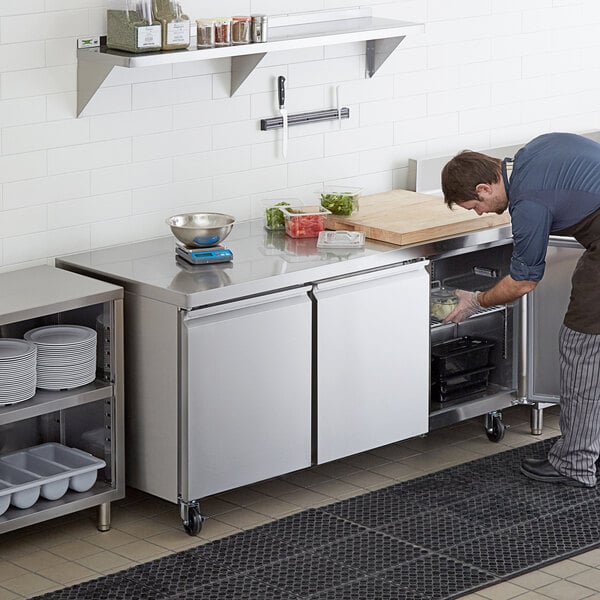
- Reduced Movement: Keeping ingredients within arm's reach cuts down on trips to walk-ins or reach-ins, which helps maintain pace during peak periods and limits interruptions.
- Better Station Organization: Dedicated undercounter units allow each station to hold its own mise en place, minimizing cross-traffic and keeping prep areas cleaner and more structured.
- Faster Ticket Times: When proteins, garnishes, or backups are stored directly below the workspace, assembly becomes easier and orders move through the line with fewer delays.
- Improved Temperature Consistency: Shorter door openings and reduced handling help maintain stable internal temperatures, supporting food safety and product quality.
- Space Optimization: A low-profile design makes use of otherwise unused space beneath counters, which is valuable in compact or high-density layouts.
Undercounter refrigerator styles refer to the different height and configuration options available to fit specific workspace, compliance, and capacity requirements in commercial kitchens. Selecting the right style affects how the unit integrates with counters, how much it can store, and whether it meets accessibility standards. Each style is designed to solve a distinct operational constraint, from maximizing storage to fitting within restricted clearances.
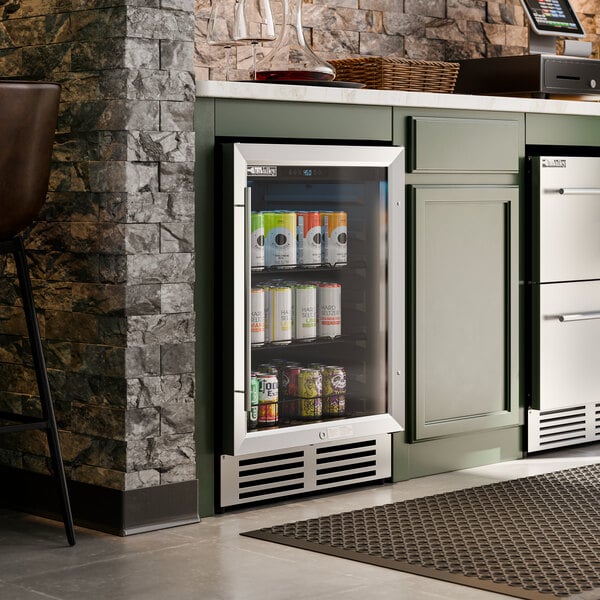
- Counter Height: Built to align with standard commercial countertops, these units create a continuous work surface while providing refrigerated or frozen storage directly below. This is the most common choice for prep lines and cook stations where continuity matters.
- Low Profile: Designed with a reduced overall height, low-profile models fit under non-standard counters or tight vertical clearances. They trade some internal room for installation flexibility in constrained layouts.
- ADA Height: Shorter units that comply with accessibility requirements under the Americans with Disabilities Act, making them suitable for public-facing areas or operations that must meet ADA guidelines. These models ensure proper counter height for wheelchair access without sacrificing core refrigeration performance.
- Stacked Kits: This configuration allows two undercounter units to be installed vertically, effectively doubling storage area within the same footprint. It's a practical solution for increasing output in areas where expanding horizontally isn't possible.
Undercounter refrigerator and freezer door and drawer types determine how products are accessed, organized, and protected during service. The right configuration impacts temperature retention, visibility, and how quickly staff can retrieve ingredients under pressure. Choosing between doors and drawers often comes down to whether the priority is speed, organization, or product display.
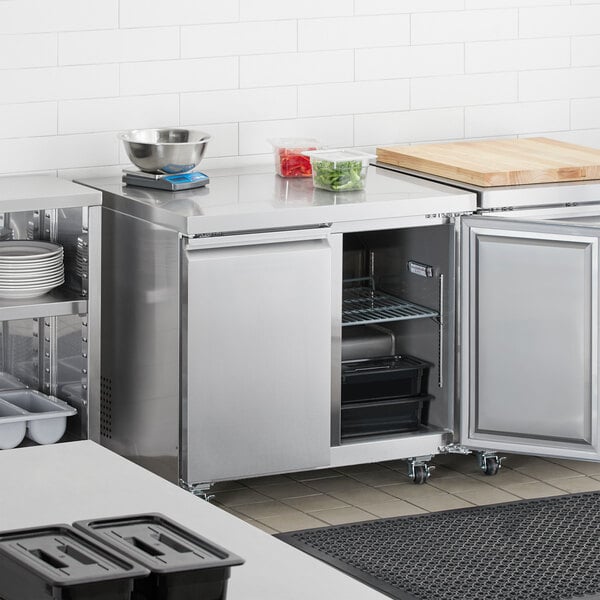
- Solid Doors: A fully insulated option that prioritizes temperature retention and energy efficiency, making it a reliable choice for back-of-house use. These units keep cold air contained during frequent openings, which is critical in high-volume kitchens.
- Glass Doors: Built for visibility, glass doors allow staff to quickly identify contents without opening the unit, reducing unnecessary temperature loss. They are commonly used in bars or service areas where both access and product display matter.
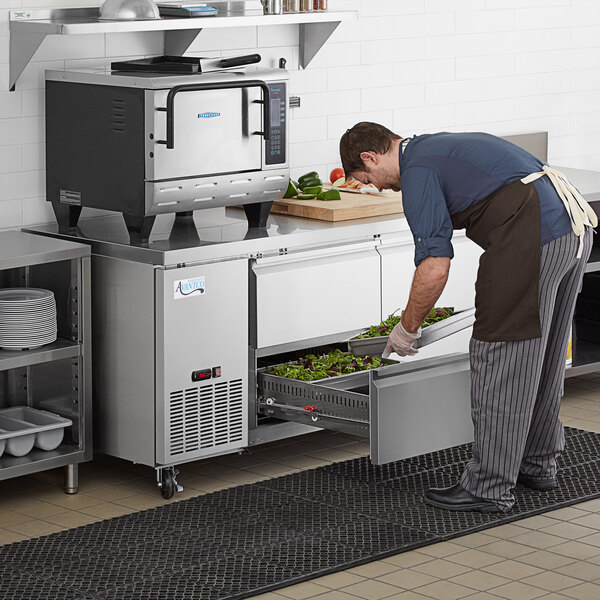
- Drawers: Instead of swinging doors, these units use pull-out drawers that organize ingredients in pans or sections for faster access. This setup works well in prep-heavy stations where portioned items need to be retrieved quickly without exposing the entire interior.
- Doors and Drawers: Some undercounter units blend hinged doors with pull-out drawers to balance bulk storage and fast-access organization in a single cabinet. This hybrid approach lets operators store larger backup inventory behind doors while keeping high-rotation ingredients immediately accessible in drawers for quicker service flow.
Undercounter refrigerators, chef bases, and worktop refrigeration units differ primarily in how they combine cold storage with workspace and equipment support. Undercounter models are designed to sit beneath existing counters, focusing on accessible refrigerated or frozen storage without adding a new work surface. Worktop units build on this by incorporating a usable countertop above, allowing operators to prep directly over cold storage. Chef bases take a different approach, using a reinforced top to support heavy cooking equipment like griddles or charbroilers while storing ingredients in drawers below.
Despite these differences, all three serve the same core function. The distinction comes down to load-bearing capacity, workspace integration, and how the unit fits into the station's layout. Undercounter units prioritize flexibility and placement, worktops add prep utility, and chef bases are engineered for equipment support under heat-producing appliances. Selecting between them depends on whether the station needs storage only, storage plus prep space, or storage combined with equipment elevation.
Front breathing and side/rear breathing undercounter models differ in how they intake and exhaust air, which directly impacts where and how they can be installed in a commercial kitchen. Front breathing units pull in and expel air from the front of the cabinet, allowing them to be built into tight spaces or enclosed cabinetry without requiring additional clearance on the sides or back. In contrast, side or rear breathing models rely on open airflow around the unit, which can limit placement but often allows for simpler designs and, in some cases, lower upfront cost.
Both types are capable of maintaining proper holding temperatures, but improper ventilation can lead to overheating, reduced efficiency, and compressor strain. Choosing between them comes down to installation constraints: tight, built-in layouts favor front breathing, while open environments can accommodate side or rear ventilation without performance tradeoffs.
Choosing an undercounter refrigerator or freezer comes down to aligning the unit's design, capacity, and installation requirements with how the station actually operates. The right decision supports faster service and consistent temperature control, while the wrong one creates bottlenecks or wastes usable space. Evaluating a few core factors upfront helps ensure the unit performs reliably under real kitchen conditions.

- Application: Whether it's a cook line, prep station, bar, or self-serve area, the unit should match how ingredients are used and accessed throughout service. A line cook's needs differ significantly from a bartender's, and the equipment should reflect that.
- Configuration: Doors, drawers, or combination units each change how staff interact with the unit during service. Drawers favor organized, portioned access, while doors provide more open storage for bulk or irregular items. Drawer units are typically preferred for high-frequency access and portioned ingredients, while door models are better suited for bulk or irregular storage.
- Capacity: Instead of focusing only on exterior width, consider how much product needs to be held and how often it will be restocked. Undersized units lead to overflow, while oversized ones waste energy and space. Many units are designed to accommodate standard steam table pans, which can impact how efficiently ingredients are stored and accessed during service.
- Installation Constraints: Clearance, airflow, and ventilation type determine where the unit can be placed without overheating or losing efficiency. Tight installations require careful specification. Units installed on cook lines or in high-ambient environments may require more robust cooling systems to maintain temperature during peak service.
- Compliance: Units may need to meet accessibility standards under the Americans with Disabilities Act or sanitation certifications from NSF International depending on the environment. Skipping this step can create issues during inspection or limit where the unit can be used.
Undercounter refrigerator and freezer features are the built-in technologies and design elements that affect performance, effectiveness, and day-to-day usability in commercial kitchens. The right feature set can improve temperature control, reduce maintenance, and ensure the unit fits both operational and regulatory requirements. Evaluating these features upfront helps operators avoid costly limitations after installation.
- Energy Star Qualified: Units with ENERGY STAR certification are designed to reduce energy consumption without compromising performance. Over time, this can lower utility costs in high-use environments.
- ADA Compliant: Models that meet standards under the Americans with Disabilities Act are built to proper height and accessibility specifications, making them suitable for public-facing or regulated spaces.
- LED Lighting: Interior LED lighting improves product visibility while generating less heat than traditional bulbs. This helps staff quickly locate items without impacting internal temperatures.
- Automatic Electric Defroster: Instead of manual defrosting, this feature cycles the unit to prevent ice buildup on evaporator coils. It reduces maintenance demands and helps maintain consistent cooling performance.
- Digital Temperature Controller: A precise, easy-to-read interface allows operators to monitor and adjust temperatures with accuracy. This supports food safety compliance and simplifies daily checks.
- Dual Temperature: Some units offer a dual temperature feature, separating refrigerated and frozen sections within a single footprint. This is especially useful in space-constrained kitchens.
- Alternate Condenser Location: Configurations with side- or rear-mounted condensers provide flexibility when front airflow isn't ideal or when specific installation constraints need to be addressed. This can be critical in custom layouts or enclosed cabinetry setups.
Selecting the right undercounter refrigerator or freezer is about building a station that can keep pace with service while maintaining strict temperature control and organization. These units reduce friction in daily operations, support consistent execution, and make better use of limited square footage. The impact is most noticeable during peak hours, where placement, access, and reliability directly influence output. By aligning equipment choice with menu demands, workflow, and installation conditions, operators can avoid common performance issues and extend the lifespan of their investment. A well-integrated undercounter solution becomes a quiet but essential part of a kitchen's ability to deliver speed, quality, and consistency at scale.

With almost a decade of content marketing experience, Kevin has learned the ins and outs of various business sectors. Over his four years as a Longform Content Writer with WebstaurantStore, Kevin has spent hours researching and writing about the intricacies of the foodservice industry. Specializing in marketing guides, technical writing, and structured how-to content, he enjoys providing readers with content that guides them in growing and running their bar or restaurant.
Learn more about this author and WebstaurantStore's Content Writing Team here!
Related Resources

May 2026 WebstaurantStore Coupon Code
May has arrived, and seasonal savings are heating up alongside the spring weather here at WebstaurantStore! With peak catering season underway and holidays like Memorial Day around the corner, now is the time to stock up on essential supplies and equipment! Take a look at our wide array of sale items below and don't forget to enter the code MAYFLOWERS at checkout to enjoy 15% off your purchases! Looking to save even more? Check out the new Webstaurant Rewards® Visa Business Card ! Sign up for a new card today and start earning rewards on every WebstaurantStore purchase, and save on a WebstaurantPlus subscription. Have a look at some incredible deals on disposable items with May's monthly coupon code! Whether you're looking for disposable pa

How to Clean and Organize a Commercial Fridge
In foodservice establishments that depend on cleanliness, a cluttered, disorganized, and dirty fridge can be a major problem. Not only can a dirty fridge cause bacteria to grow, but it can also cause your fridge to use more electricity and shorten its lifespan . Restaurants that are operating as take-out and delivery only establishments or are completely closed due to COVID-19 can use this opportunity to do a deep clean and organization of your walk-in coolers and freezers. In this blog post we'll cover step-by-step instructions on how to clean and organize your commercial refrigerator, walk-in, or freezer! 7 Steps to Clean Your Fridge Before you can re-organize your fridge, you should first clean it out, remove all expired food products, a
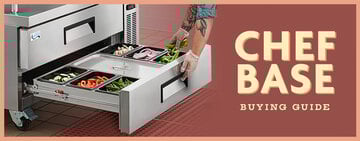
Chef Base Buying Guide
Whether you're outfitting a new restaurant with essential equipment or upgrading an existing kitchen, choosing the right chef base requires careful consideration of factors such as size, storage capacity, and ergonomic design. For restaurant operators, investing in the right equipment is not just a matter of convenience, it's a critical decision that impacts workflow, staff productivity, and overall operational success. By understanding the features and benefits that align with your kitchen's needs, you can make an informed decision when purchasing your chef base, enhancing efficiency and supporting your culinary team's success. Shop All Commercial Chef Bases Use the following links to learn more about the different purchasing conditions re
Join Our Mailing List
Receive coupon codes and more right to your inbox.