
- Topics 1567
- Industrial 59
- Troubleshooting Guides 32
- Restaurant Management 146
- Bar Management 70
- Catering Tips 43
- Bakery Management 43
- Food Trucks & Concessions 36
- Advertising & Marketing 41
- Eco-Friendly Tips 13
- Facility Layout & Design 47
- Coffee Shop Tips 32
- Installation & Maintenance 63
- Janitorial & Pest Control 33
- Safety & Sanitation 122
- Startup Tips 110
- Menu Design 13
- Kitchen & Cooking Tips 108
- Hospitality Management 25
- Pizza & Sandwich Shop Tips 20
- Smallwares 42
- Food Prep 103
- Tabletop Items 21
- Disposables 28
- Calculators & Tools 6
- Consumables 77
- Warewashing & Laundry 22
- Cooking Equipment 107
- Food Storage & Refrigeration 57
- Beverage Equipment 42
- Office Supplies 6

In a commercial kitchen, selecting the right gloves is non-negotiable for protecting your team from injuries and ensuring uncompromised food safety. Many tasks require specialized hand protection to mitigate risks such as cuts, burns, contamination, and cross-contact. Equipping staff with task-specific gloves, such as disposable gloves or oven mitts, builds a safer and more sanitary kitchen for all involved.
Shop All Gloves
What Is ANSI/ISEA 105-2024?
ANSI/ISEA 105-2024 is the current American National Standard that classifies hand protection performance levels across critical hazards, enabling commercial kitchens to select gloves with scientifically validated safety thresholds. This universal benchmark replaces guesswork with standardized testing protocols for cut resistance, chemical permeation, thermal protection, and other risks prevalent in foodservice environments. Operators use these ratings to match glove performance to specific station hazards, ensuring adequate defense against lacerations, burns, or chemical exposure.
Mechanical Protection Classifications
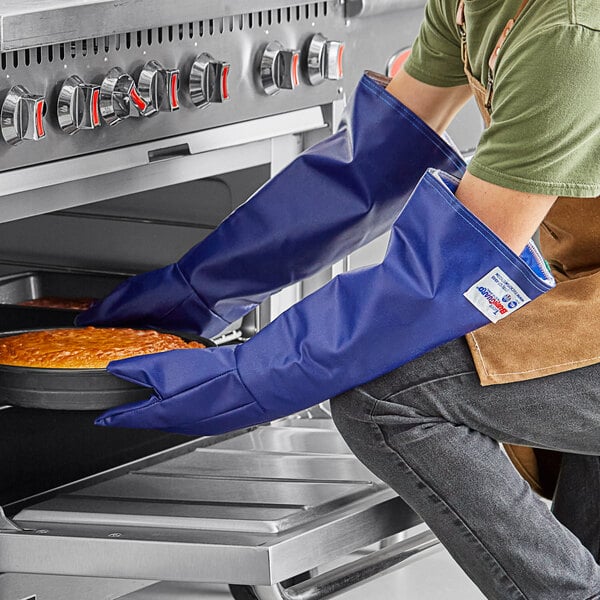
Mechanical protection encompasses cut (A1-A9), puncture (1-5), and abrasion (1-6) resistance levels determined through controlled lab testing. High cut resistance is important for tasks like butchering, as staff can be handling extremely sharp tools such as bone saws or mechanical slicers. Puncture ratings measure the force in newtons (N) required to pierce materials, vital for jobs such as shellfish shucking. A glove's abrasion level quantifies material durability against sandpaper friction, signifying how long the material can withstand cycles of pot scrubbing or tray scraping.
Chemical Protection Classifications
Chemical resistance evaluates glove performance against industrial chemicals. Permeation resistance levels range from 0 (breakthrough in under 10 minutes) to 6 (breakthrough in over 480 minutes). Degradation ratings indicate material swelling or cracking after 60-minute chemical exposure. Operators must cross-reference chemical safety data sheets (SDS) with manufacturer compatibility charts, as no glove resists all chemicals.
Heat and Flame Protection Classifications
Contact heat is rated Levels 0-5 under ANSI/ISEA 105 using ASTM F1060. Levels indicate the highest surface temperature a glove can touch for 15 seconds before a second-degree burn is likely.
Types of Kitchen Gloves
Unlike generic hand protection, professional foodservice demands specialized gloves engineered for specific tasks and hazards encountered daily. Using the wrong glove type can lead to preventable injuries and workflow inefficiencies.
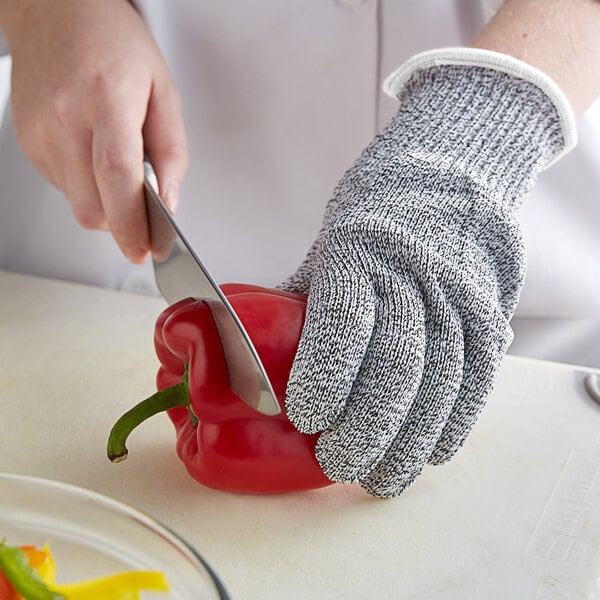
1. Cut-Resistant Gloves
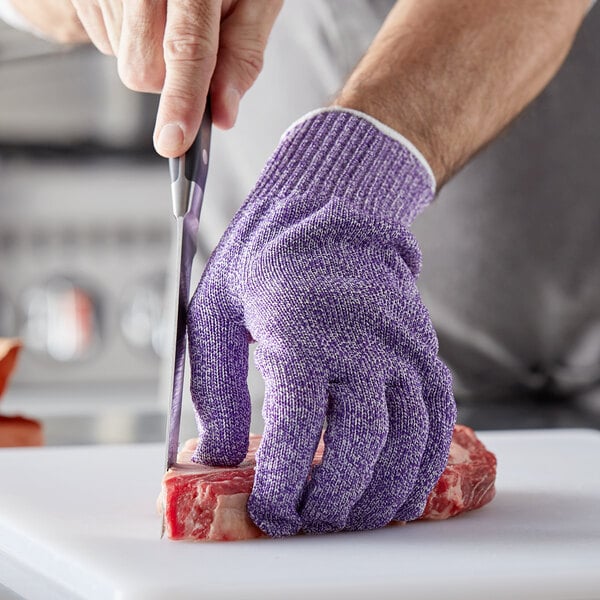
Cut-resistant gloves are essential personal protective equipment (PPE) designed to protect kitchen staff from lacerations and severe hand injuries during high-risk tasks involving sharp blades or equipment. They are a non-negotiable safety requirement in any commercial kitchen where knives, slicers, and mandolins are used daily. Investing in the correct level of cut protection significantly reduces preventable accidents while maintaining necessary dexterity.
- High-performance fiber construction
- Protection levels ranging from A1 (lightest) to A9 (heaviest)
- Ergonomic fitting for natural hand movement and knife control
- Breathable construction to reduce hand fatigue during prolonged use
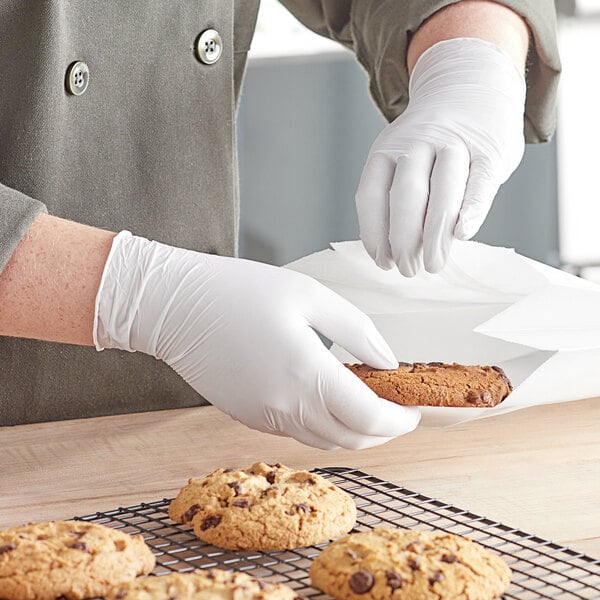
2. Disposable Gloves
Disposable gloves are the frontline defense in commercial kitchens, creating a single-use barrier against cross-contamination while handling ready-to-eat food, allergens, and hazardous chemicals. Mandated by health codes for tasks involving direct food contact, they are fundamental for sanitation compliance and allergen control programs.
- Materials such as nitrile, latex, and vinyl available
- Textured fingertips for enhanced grip
- Latex-free formulations for allergen-sensitive kitchens and latex allergies
- Some jurisdictions restrict latex gloves for food handling due to allergy risk
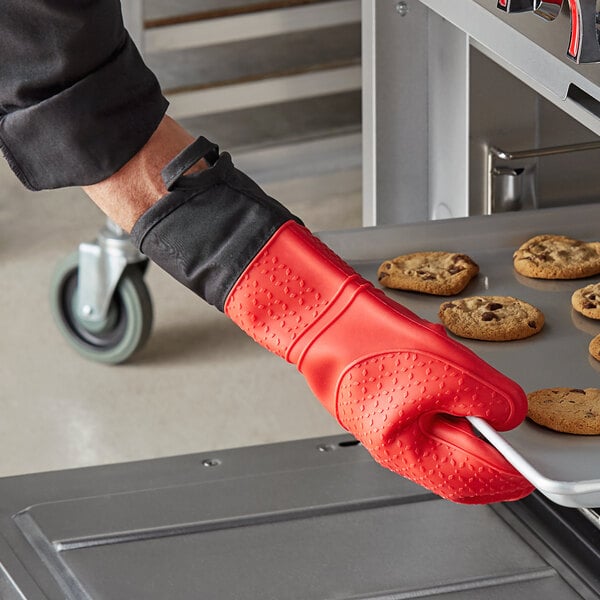
3. Oven Mitts/Gloves
Oven mitts and gloves provide critical thermal protection for kitchen staff handling hot pots, pans, bakeware, and equipment directly from ovens or steamers. They are essential PPE for preventing severe burns during high-heat tasks like plating, transferring items between cooking stations, and operating commercial combi ovens. Selecting the right heat-resistant gear ensures safety without sacrificing grip or mobility during fast-paced service.
- Specialized design from heat-resistant materials like silicone and leather
- Tested under ANSI/ISEA 105 heat levels ranging from Level 1 (lowest) to Level 5 (highest) protection
- Mitts provide full finger enclosure while gloves offer individual finger articulation
4. Grilling Gloves
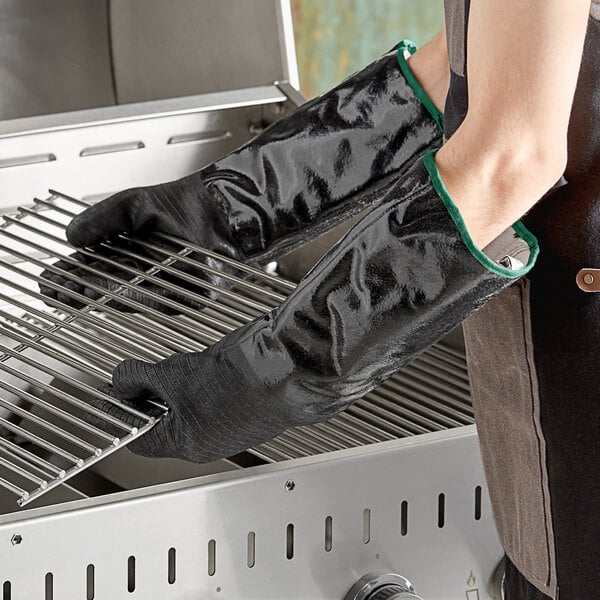
Grilling gloves are extreme-heat hand protection engineered for direct flame contact, searing surfaces, and grease environments in commercial kitchens. They incorporate specialized materials and extended coverage for wood-fired grills, charbroilers, and open-hearth cooking stations.
- Neoprene and leather construction for flame resistance
- Extended gauntlet cuffs protect against flare-ups and grease splatter
- Grease-resistant grip prevents items from slipping
5. Freezer Gloves
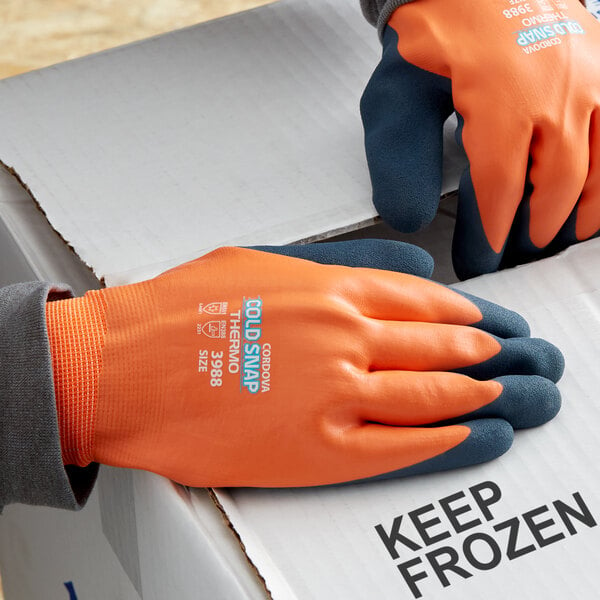
Freezer gloves are sub-zero hand protection engineered for extended exposure to frozen goods, dry ice, and commercial blast chillers. They combine specialized insulation with grip technologies for inventory handling in walk-in freezers and cold prep stations.
- Waterproof exteriors like PVC-coated nylon or neoprene
- Thermal-reflective linings or insulation to trap warmth
- Quick-dry inner fabrics with moisture-wicking liners prevent condensation buildup

6. Dishwashing Gloves
Dishwashing gloves are chemical and thermal barriers designed for commercial dish pits, manual pot scrubbing, and machine-loading tasks. They integrate material science and ergonomic engineering, making it easier to sanitize dishware in high-volume environments.
- Nitrile, PVC, or latex designs
- 12-14 inch coverage that shields forearms from splash-back
- Chemical resistance against common kitchen sanitizers
Kitchen Glove Purchasing Considerations
Beyond matching gloves to specific hazards (cuts, heat, chemicals), operators must prioritize durability, staff compliance, and long-term value. Overlooking key purchasing factors leads to preventable injuries, wasted budgets, and workflow disruptions in high-volume kitchens.
- Hazard Tolerance Verification: Confirm ANSI/ISEA 105 ratings for cut (A1-A9), heat (Levels 1-5), or chemical resistance (Levels 0-6) exceeding your specific task requirements. Under-specification risks injuries, while over-specification wastes budget.
- Sizing: Consider the size of gloves needed to outfit your staff, as ill-fitting gloves reduce dexterity and compromise protection.
- Material: Match material properties to the tasks they're best suited for to maximize safety. For example, silicone gloves are great for use with dry heat and PVC for cold.
- Grip and Dexterity: Validate textured palms, articulated fingers, and flexibility in real-task simulations. Poor grip causes drops (leading to burns/spills), while stiffness slows prep times.
Related Resources

Best Disposable Gloves Reviews
Selecting the best disposable gloves ensures safety, hygiene, and efficiency across industries. Foodservice workers need gloves that allow quick changes, while medical and industrial professionals require durability and protection from contaminants. Material, thickness, and application all influence the right choice for each setting. This guide highlights the top disposable gloves for different commercial uses, helping businesses find the best fit for their needs. Shop All Disposable Gloves

Restaurant Safety Tips
From handling sharp knives and hot equipment to navigating busy kitchens and dining areas, restaurant employees face a variety of hazards daily. Due to this, understanding and following safety guidelines is essential to creating a secure work environment and promoting a culture of safety among your restaurant staff. Not only do safety incidents threaten the wellbeing of your staff and customers, they also lead to lost productivity and increased costs for businesses. By implementing proper safety protocols and training, restaurants can prevent accidents and promote a culture of safety for all involved. Shop All Safety and Security Products Use these links to learn more about how to keep your restaurant and commercial kitchen a safe environme
Join Our Mailing List
Receive coupon codes and more right to your inbox.