- Topics 1577
- Industrial 59
- Troubleshooting Guides 32
- Restaurant Management 144
- Bar Management 70
- Catering Tips 46
- Bakery Management 45
- Food Trucks & Concessions 41
- Advertising & Marketing 41
- Eco-Friendly Tips 13
- Facility Layout & Design 47
- Coffee Shop Tips 32
- Installation & Maintenance 63
- Janitorial & Pest Control 34
- Safety & Sanitation 121
- Startup Tips 111
- Menu Design 11
- Kitchen & Cooking Tips 106
- Hospitality Management 26
- Pizza & Sandwich Shop Tips 23
- Smallwares 42
- Food Prep 102
- Tabletop Items 21
- Disposables 28
- Calculators & Tools 7
- Consumables 77
- Warewashing & Laundry 22
- Cooking Equipment 106
- Food Storage & Refrigeration 58
- Beverage Equipment 43
- Office Supplies 6
In the chaos of a fast-paced, commercial kitchen, you might not have time to convert measurements and resize your recipes. Whether you're an experienced chef or training new staff, understanding measurement conversions helps you reduce mistakes so you can confidently cook or bake your favorite dishes. This guide contains all the tools needed to accurately measure and convert ingredients, ensuring that your recipes turn out perfectly every time.
Shop All Measuring Spoons and Cups
Use the following links to convert different cooking measurements:
Converting kitchen measurements is crucial for multiplying or cutting a recipe down. Whether you're converting ounces to cups or teaspoons to tablespoons, we have you covered! Check out our list of common kitchen measuring conversions within the US imperial system below. If you're looking for conversions to the metric system, use our guide for US to metric cooking conversions.
Liquid Measurement Conversions
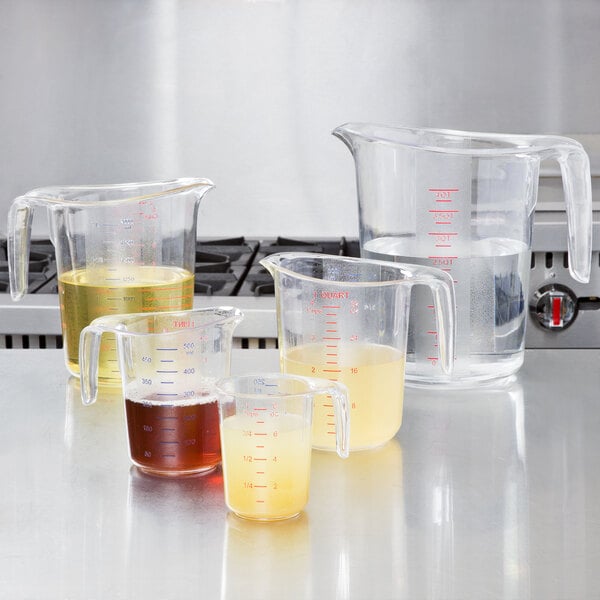
Use the following liquid measurement conversions to easily adjust your recipes.
- 1 fluid ounce = 2 tablespoons
- 1 cup = 8 fluid ounces
- 1 pint = 2 cups or 16 fluid ounces
- 1 quart = 2 pints or 32 fluid ounces
- 1 gallon = 4 quarts or 128 fluid ounces
Dry Measurement Conversions
Use the following dry measurement conversions to easily adjust your recipes.
- 1 tablespoon = 3 teaspoons
- 1/4 cup = 4 tablespoons
- 1/3 cup = 5 tablespoons + 1 teaspoon
- 1/2 cup = 8 tablespoons
- 1 cup = 16 tablespoons
Order of Measuring Cups
Many measuring cups and spoons come in measuring spoon and cup sets, but it still can be helpful to know the order of measuring cups by size when converting recipes. The standard measuring cup sizes in cooking from smallest to largest are 1/8 cup, 1/4 cup, 1/3 cup, 1/2 cup, and 1 cup. Similarly, the standard measuring spoon sizes in cooking from smallest to largest are 1/4 teaspoon, 1/2 teaspoon, 1 teaspoon, 1/2 tablespoon, and 1 tablespoon.
Use our kitchen measurements chart in your establishment as an easily accessible guide to cooking measurement abbreviations, cooking conversions, and measuring cup sizes.
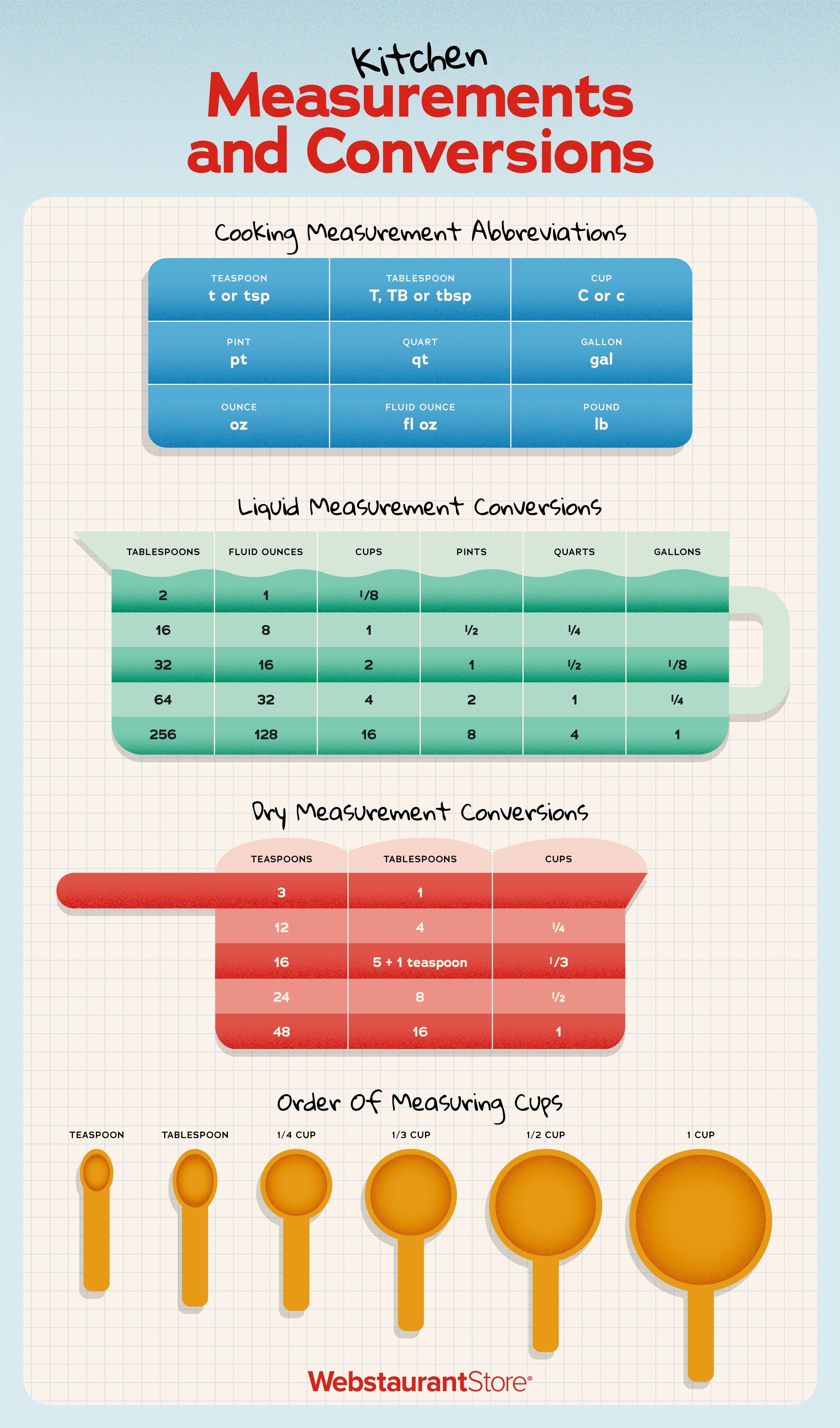
Both commercial kitchens and home cooks use a system of abbreviations for cooking measurements, some of which are easy to confuse. Mistaking a tablespoon for a teaspoon is a quick way to destroy entire recipes, so memorizing these abbreviations is vital. Below, we listed all standard cooking measurement abbreviations you might encounter in the kitchen.
Imperial System
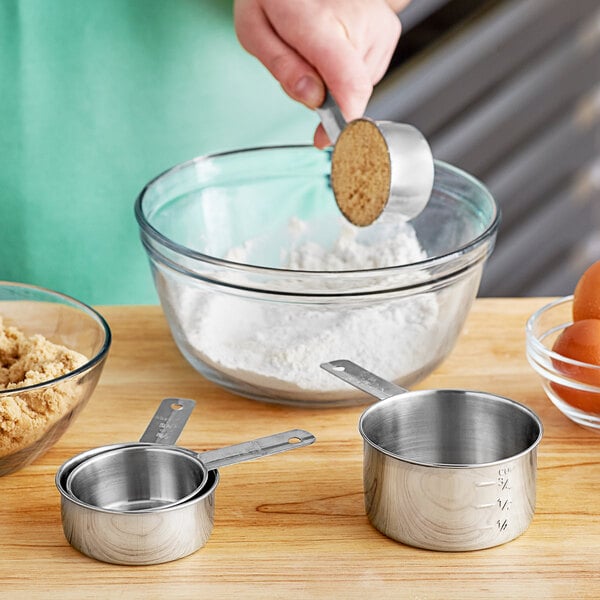
The following abbreviations are standard in the imperial system of measurements.
- Teaspoon = t or tsp
- Tablespoon = T, TB, or tbsp
- Cup = C or c
- Pint = pt
- Quart = qt
- Gallon = gal
- Ounce = oz
- Fluid ounce = fl oz
- Pound = lb
Metric System
The following abbreviations are standard in the metric system of measurements.
- Milliliter = mL
- Liter = L or l
- Gram = g
- Kilogram = kg
Liquid measuring cups are designed for measuring liquid ingredients like water, milk, and cooking oil. They feature measurement lines that allow you to accurately measure liquids without the risk of spilling. Dry measuring cups are designed to measure dry ingredients like flour, sugar, and spices. Each cup holds a specific measurement ranging from 1/8 cup to 1 cup, so they usually come in sets.
How to Measure Liquid Ingredients
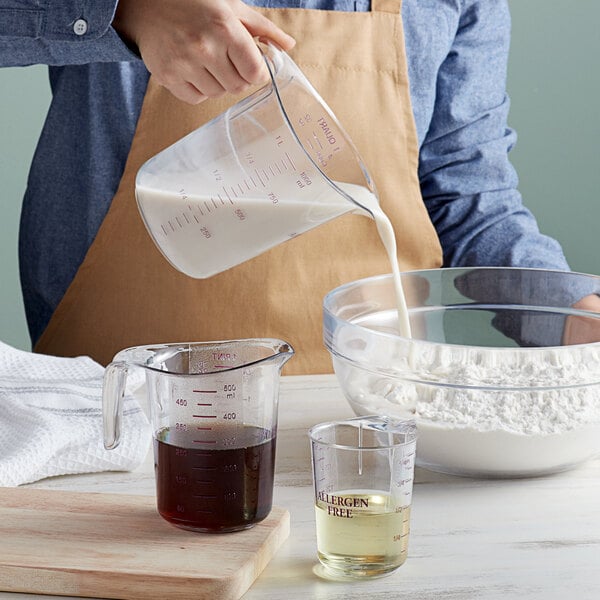
Liquid ingredients are measured in cups, pints, quarts, and gallons. For these ingredients, 1 cup = 8 fluid ounces.
- Use a liquid measuring cup placed on a level surface.
- Position yourself so that your eyes are level with the graduated markings on the cup.
- Pour the liquid into the cup until the liquid is level with the desired measurement line.
How to Measure Dry Ingredients
Dry ingredients are measured in teaspoons, tablespoons, cups, or by weight. For these ingredients, 1 cup = 4.5 ounces.
- Use a dry ingredient measuring cup for larger quantities and a measuring spoon for smaller quantities.
- Level the ingredient with a spatula, knife, or another utensil with a flat edge.
- Pack moist ingredients, such as brown sugar, tightly into the cup.
Related Resources

June 2026 WebstaurantStore Coupon Code
Summer is upon us, and to celebrate WebstaurantStore has blazing hot deals all month long! With summer vacations underway and holidays like Independence Day rapidly approaching, now is the time to stock up on essential supplies and equipment you'll need to get through the summer season. Take a look at our wide array of sale items below and don't forget to enter the code SUMMERSALE at checkout to enjoy up to 20% off your purchases! Looking to save even more? Check out the new Webstaurant Rewards® Visa Business Card ! Sign up for a new card today and start earning rewards on every WebstaurantStore purchase, and save on a WebstaurantPlus subscription. Have a look at some incredible deals on disposable items with June's monthly coupon code! Whe

Fahrenheit and Celsius Oven Temperature Conversions
Understanding oven temperature conversions is essential for chefs and bakers who work with recipes from different regions. While the United States primarily uses Fahrenheit, most of the world follows the Celsius scale from the metric system. Converting between these measurements ensures accurate results and reduces errors . This guide provides simple oven temperature conversions to help you confidently adjust recipes. Common Oven Temperature Conversions 350 Fahrenheit and 200 Celsius are two common temperatures that chefs might need to convert, so we've done the math for you. The favorite baking temperature of 350 Fahrenheit converts to 177 Celsius. When a recipe calls for 200 Celsius, set the oven to 392 Fahrenheit. Other standard oven con
Measuring Flour for Baking
One of the most common cake mistakes made while baking is measuring flour incorrectly. It may seem simple to reach into the bag with a measuring cup but this typically results in scooping out way more flour than the recipe calls for. Using too much flour can make your baked goods dense and dry. Use our guide to learn how to properly measure flour to get consistent results every time. Shop Flour in Bulk How to Measure Flour Use the following video to learn how to measure flour correctly: How to Measure Flour With a Scale The best way to measure flour for baking is by using a portion scale . Flour compacts easily, so dipping a measuring spoon into the flour will lead to inconsistent results. A portion scale will allow you to measure accuratel
Join Our Mailing List
Receive coupon codes and more right to your inbox.