
- Topics 1583
- Industrial 59
- Troubleshooting Guides 32
- Restaurant Management 144
- Bar Management 70
- Catering Tips 46
- Bakery Management 46
- Food Trucks & Concessions 43
- Advertising & Marketing 41
- Eco-Friendly Tips 13
- Facility Layout & Design 47
- Coffee Shop Tips 32
- Installation & Maintenance 63
- Janitorial & Pest Control 34
- Safety & Sanitation 122
- Startup Tips 111
- Menu Design 11
- Kitchen & Cooking Tips 105
- Hospitality Management 26
- Pizza & Sandwich Shop Tips 26
- Smallwares 42
- Food Prep 104
- Tabletop Items 21
- Disposables 28
- Calculators & Tools 7
- Consumables 76
- Warewashing & Laundry 22
- Cooking Equipment 105
- Food Storage & Refrigeration 58
- Beverage Equipment 43
- Office Supplies 6
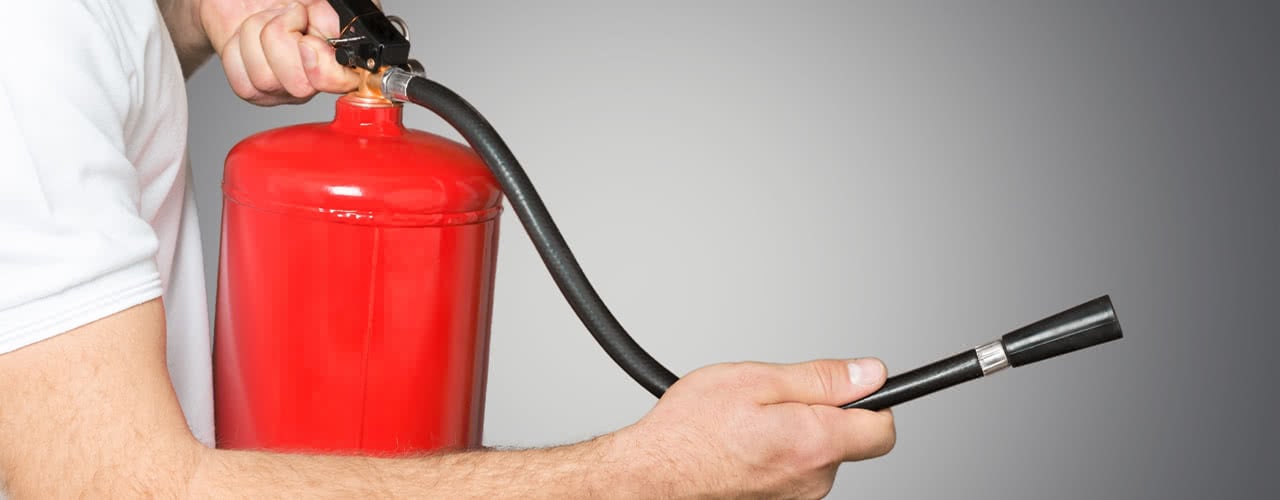
Fire safety should be a top priority in any workspace, whether it's a restaurant, office, warehouse, or any other type of commercial establishment. Keeping a fire extinguisher readily available in a central location is essential for developing an effective emergency response plan. However, simply owning any fire extinguisher is not enough. It is crucial to determine which type of fire extinguisher is best suited for your specific needs, ensuring you are equipped to handle various types of fires that may occur. We'll outline the main types of fire extinguishers, their uses, and how they operate so you can be fully prepared to take every necessary precaution.
Shop All Fire Extinguishers
Skip to a specific type of fire extinguisher:
A variety of different materials can fuel fires and, for that reason, are divided into different classes. Understanding each class of fire, its causes, and how to respond to it is crucial to building an effective fire response.
- Class A fires: Class A fires are the most common type of fire. They are fueled by solid materials such as wood, paper, fabric, and plastics. These fires can occur in homes, offices, and industrial settings.
- Class B fires: Class B fires are fueled by flammable liquids and gases. They commonly occur in locations such as gas stations, bars, and chemistry labs. Class B fires can spread rapidly and require special extinguishing agents such as foam or carbon dioxide fire extinguishers.
- Class C fires: Class C fires are electrical fires resulting from faulty wiring, electrical equipment, and appliances. Locations such as breaker rooms, server rooms, and construction sites are most at risk. Use a non-conductive extinguishing agent, such as carbon dioxide or dry chemical extinguishers, to safely extinguish them.
- Class K fires: Class K fires are fueled by grease, cooking oils, and fats, and are specifically related to foodservice kitchens. These fires pose a unique challenge due to the high temperatures involved.
Understanding the different types of fire extinguishers and their intended uses is essential for ensuring the safety of your establishment. By selecting the appropriate fire extinguisher based on the types of fires you are most at risk of, you can effectively protect your property and personnel in the event of a fire emergency.
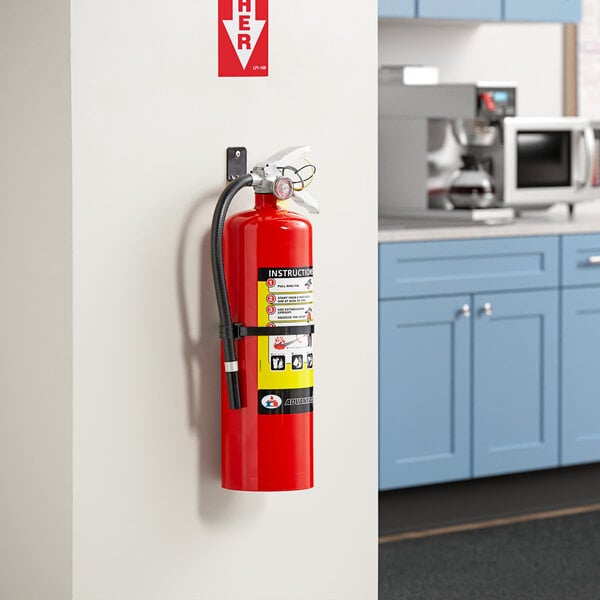
1. ABC Fire Extinguisher
ABC fire extinguishers are among the most versatile types available. As their name suggests, they are designed to combat class A, B, and C fires. They utilize a dry chemical agent, monoammonium phosphate, to effectively eliminate fires at their source. This chemical creates a thin layer of cover over the burning material, cutting off the oxygen supply and smothering the flames. In addition to suffocating the fire, the extinguishing agent undergoes a chemical reaction when exposed to high heat, rapidly cooling down the burning materials. The combination of these two actions makes ABC fire extinguishers extremely effective in quickly and efficiently extinguishing fires.
- Fight class A, B, and C fires
- Filled with monoammonium phosphate, a corrosive dry chemical agent
- Must be scrubbed off surfaces once the fire is out
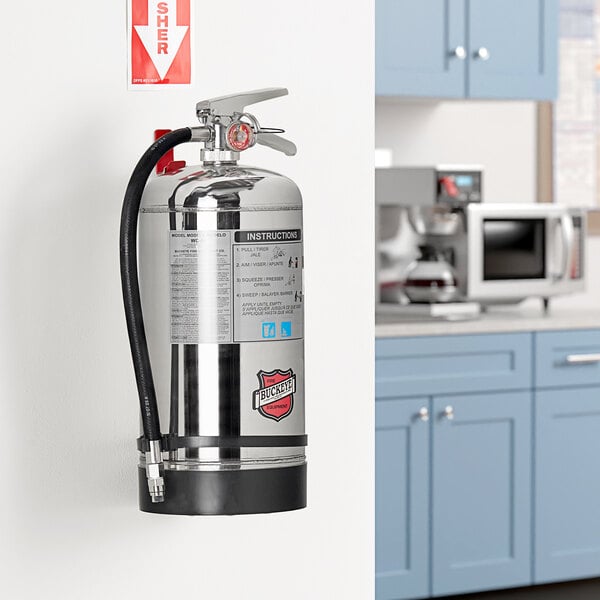
2. Class K Fire Extinguisher
In commercial kitchens, where the risk of class K fires is high, having a class K fire extinguisher is not just a recommendation but a necessity. These extinguishers use a wet chemical agent, typically potassium acetate, potassium carbonate, or potassium citrate, to suppress the fire. Once expelled, the chemical agent prevents oils from splashing and reduces the risk of reignition. Using the wrong extinguisher on a class K fire, such as a water or dry chemical extinguisher, can cause the fire to spread rapidly, leading to further damage and posing a significant risk to individuals in the vicinity.
- For fires fueled by cooking oils and greases
- Exclusively used in commercial kitchens
- Prevents reignition and oils from splashing
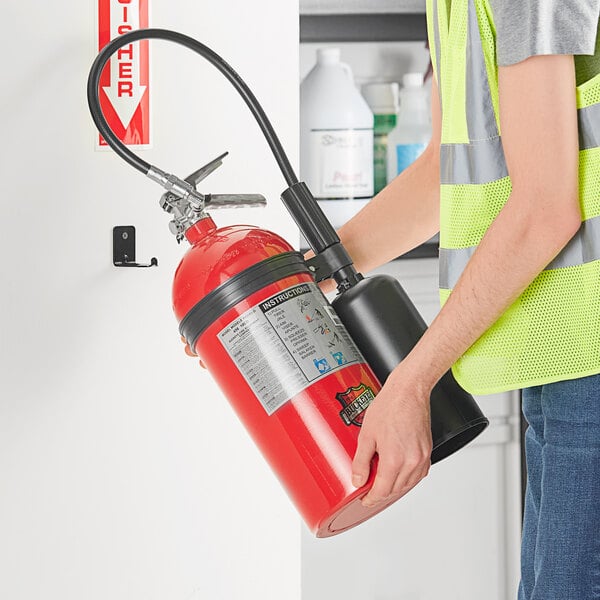
3. CO2 Fire Extinguisher
CO2 fire extinguishers are a vital tool for combating class C electrical fires. These extinguishers utilize non-flammable carbon dioxide, which is stored within the cylinder under high pressure. When discharged, the carbon dioxide displaces oxygen, suffocating the fire and depriving it of its fuel source. Additionally, the extreme cold temperature of the carbon dioxide upon exiting the extinguisher allows it to cool down the fire's source. It is important to note that due to the nature of how CO2 fire extinguishers operate, they are not suitable for use in confined spaces. The rapid displacement of oxygen can lead to a lack of breathable air, potentially causing the user to asphyxiate.
- Fight class C electrical fires
- Displace oxygen to suffocate the fire and rob it of its fuel source
- Not for use in confined spaces
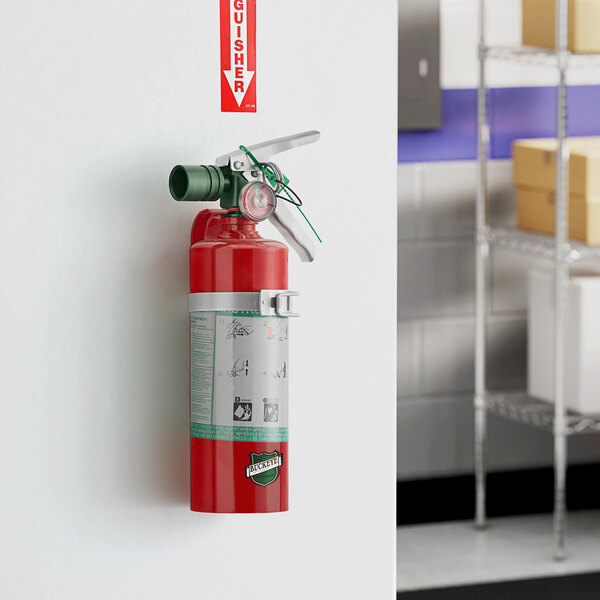
4. Halotron Fire Extinguisher
Halotron fire extinguishers are a versatile firefighting tool designed to handle class B and C fires, though they can also be effective in combating class A fires in some cases. These extinguishers utilize a rapidly evaporating liquid called hydrochlorofluorocarbon to extinguish fires without leaving residue behind. One of the key advantages of Halotron fire extinguishers is that the agent used is non-conductive, which means it will not cause static or thermal shock. This feature makes them particularly well-suited for environments with sensitive equipment or electronics, as well as areas where cleanup would be challenging, such as laboratories and computer rooms.
- Fight Class B, C, and sometimes A fires
- Non-conducting agent evaporates and won't cause static or thermal shock
- No residue left behind
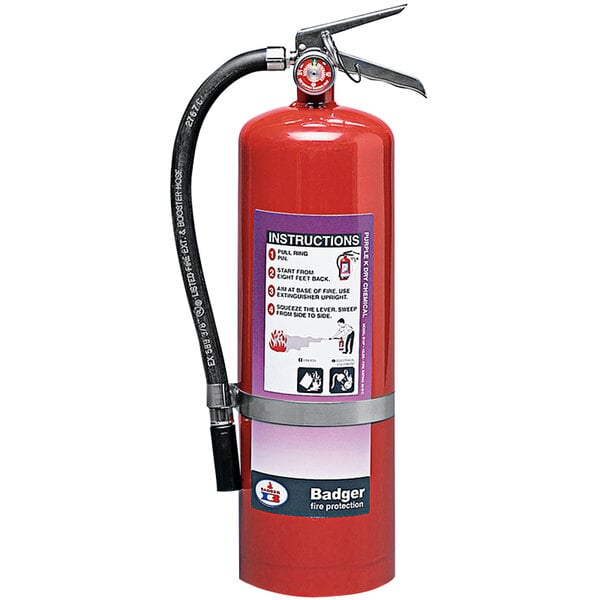
5. Purple K Fire Extinguisher
Purple K fire extinguishers are a specialized type of fire extinguisher designed to combat class B and C fires. Despite their name, Purple K extinguishers should not be used for class K fires. These extinguishers utilize a dry chemical component with a distinctive purple hue, potassium bicarbonate, to smother flames at the source. These extinguishers are particularly effective against flammable liquids such as oil and are capable of handling large-scale fires. Due to their effectiveness, Purple K extinguishers are commonly found in high-hazard industrial and commercial settings, like oil refineries and airports.
- Combat Class A fires and sometimes C fires
- Water serves as the extinguishing agent
- Often used in libraries, schools, and hospitals
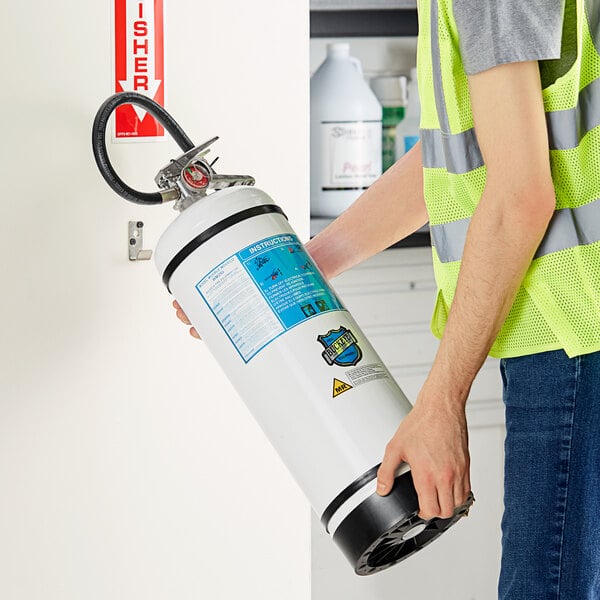
6. Water-Based Fire Extinguisher
Water-based fire extinguishers are designed to effectively extinguish fires caused by wood, paper, fabric, or select plastics by soaking the materials to prevent them from being combustible. While primarily used for Class A fires, water-based extinguishers can also be somewhat effective against Class C fires. These extinguishers are commonly found in libraries, schools, and hospitals, where strict safety standards are in place, and there is a minimal risk of a fire occurring. Note that water-based fire extinguishers utilize pressurized water as their extinguishing agent, which means they will leave puddles and can potentially damage certain electronics or fixtures in your workplace after use.
- Fight Class B and C fires; not for use with Class K fires
- Contain a dry chemical component
- Effective against flammable liquids as well as electrical fires
The size of a fire extinguisher is indicative of the amount of extinguishing agent it holds, typically measured in pounds. Having a baseline knowledge of the different sizes available can help you select the most appropriate option for your specific needs.
- Small fire extinguishers: Generally speaking a small fire extinguisher holds 2.5 lb. of extinguishing agent or less. Smaller fire extinguisher sizes are ideal for compact spaces or locations where storage is limited, like food trucks. These units can be conveniently stored in cabinets or mounted in easily accessible areas for quick deployment.
- Medium fire extinguishers: Medium fire extinguishers, with a capacity between 2.5 lb. and 10 lb., are versatile units that fit most standard commercial settings. They have an expanded capacity without being too bulky or heavy, allowing for easy transport or storage.
- Large fire extinguishers: These extinguishers usually boast a capacity of 10 lb. or more. These larger units often come equipped with built-in wheels, making them easier to transport and maneuver in case of an emergency. Their size allows for a greater volume of extinguishing agent, providing extended protection when needed most.
Fire extinguisher tags provide essential documentation of inspection, maintenance, and service history, ensuring that your extinguisher is in proper working condition and safe to use. Most fire extinguisher tags should indicate when the extinguisher was last checked, the name of the technician who performed the inspection, and when the next inspection is due.
When it comes to purchasing fire extinguishers, you have the option to buy pre-tagged extinguishers or get them tagged after purchase. Pre-tagged fire extinguishers are inspected before sale, allowing them to be used immediately upon delivery in most locales. On the other hand, untagged fire extinguishers cannot be used until they are properly tagged in accordance with federally mandated rules. According to NFPA-10 code, display tags are typically valid for 12 months from the date of inspection.
Extinguishers must be pressurized for extinguishing agents to travel up the pickup tube and out of the discharge nozzle. This pressure is administered by an expellant source, normally a gas cylinder, in a few different ways:
- Stored pressure: The extinguishing agent and expellant source are contained within the same cylinder. They are typically the most affordable option upfront, with lower service costs and instant activation.
- Pressure transfer: The extinguishing agent and expellant source are contained in separate cylinders, allowing for larger agent capacities than stored-pressure models. The agent cylinder doesn't have to be depressurized when replacing the agent, as is necessary in stored pressure units. In pressure transfer extinguishers, pressure is at its peak when initially activated and decreases throughout the discharge process.
- Regulated pressure: Offering the same benefits as pressure transfer extinguishers, pressure-regulated units feature an extinguishing agent and expellant source within separate cylinders. These models come with a pressure regulator to maintain consistent discharge during use. Because the regulator delivers consistent pressure from start to finish, a larger expellant cylinder is required than with pressure transfer units.
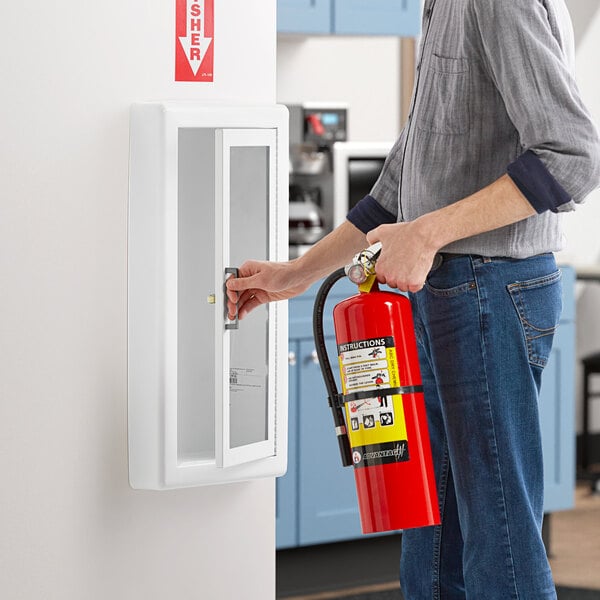
When it comes to finding the right fire extinguisher for your workplace, the accessories you choose are crucial to consider. Whether you are mounting it to the wall, hoping to keep it secured during transport, or posting signage, the visibility and protection of your fire extinguisher can be the difference between a quick response and a delayed response.
- Fire extinguisher brackets: These brackets ensure that the extinguisher is readily available in case of an emergency. Vehicle brackets are also available, designed to secure extinguishers even through bumps and vibrations, making them suitable for vehicles or areas with high movement.
- Fire extinguisher cabinets: These cabinets enclose extinguishers for tamper-resistance, providing an extra layer of security. Clear covers on the cabinets offer maximum visibility, allowing users to quickly identify the extinguisher inside.
- Fire extinguisher signs and labels: These signs and labels promote quick identification using eye-catching colors and lettering, making it easier for individuals to locate the fire extinguisher in an emergency. Proper signage can make a significant difference in ensuring that the extinguisher is easily visible and accessible when needed.
When it comes to choosing a fire extinguisher for your commercial establishment, understanding the different types available is crucial. The contents of the extinguisher and the types of fires you are most at risk of are key factors that will determine the effectiveness of the extinguisher in an emergency.
Related Resources

April 2026 WebstaurantStore Coupon Code
Spring is here, and great deals are blooming in the warm weather here at WebstaurantStore! Stock up on much-needed supplies and equipment for important upcoming events like Earth Day and Mother's Day! Take a look at our selection of sale items below and don't forget to enter the code BLOOM26 at checkout to enjoy 15% off your purchases! Looking to save even more? Check out the new Webstaurant Rewards® Visa Business Card ! Sign up for a new card today and start earning rewards on every WebstaurantStore purchase, and save on a WebstaurantPlus subscription. Have a look at some incredible deals on disposable items with April's monthly coupon code! Whether you're looking for disposable dessert cups for spring sweet treats or compostable hot cup o
Outdoor Grill Safety Guide
A safe and efficient grilling environment is essential for delivering high-quality meals and protecting your staff, customers, and business. While outdoor grilling brings undeniable flavor and appeal to your menu, it also comes with inherent risks. Whether you're using propane, gas, or charcoal grills, understanding and implementing proper safety protocols can mean the difference between successful service and a dangerous incident. Below, we provide actionable strategies to maintain a secure grilling station, prevent common injuries , and keep your operations running smoothly, all while upholding the highest safety standards. Shop All Commercial Grills and Griddles Click below to learn more about the different aspects of grill safety: Grill

Commercial Kitchen Hood Code Requirements
Each kitchen must comply with regulations and standards to function within the law. Regarding kitchen ventilation systems and related equipment, adherence to these guidelines is crucial in preventing potential dangers and upholding air quality in a professional environment. Use this guide to explore the purpose of kitchen hoods, their functionality, and the specific code requirements that you should follow to ensure a safe work environment. Shop All Kitchen Hoods Click the links below to learn about the different commercial kitchen hood code requirements: What Is a Kitchen Hood? Design and Layout Specifications Type I Hood Requirements Type II Hood Requirements Grease Filtration Guidelines Condensation Filtration Guidelines Cleaning Specifi
Join Our Mailing List
Receive coupon codes and more right to your inbox.