- Topics 1577
- Industrial 59
- Troubleshooting Guides 32
- Restaurant Management 144
- Bar Management 70
- Catering Tips 46
- Bakery Management 45
- Food Trucks & Concessions 41
- Advertising & Marketing 41
- Eco-Friendly Tips 13
- Facility Layout & Design 47
- Coffee Shop Tips 32
- Installation & Maintenance 63
- Janitorial & Pest Control 34
- Safety & Sanitation 121
- Startup Tips 111
- Menu Design 11
- Kitchen & Cooking Tips 106
- Hospitality Management 26
- Pizza & Sandwich Shop Tips 23
- Smallwares 42
- Food Prep 102
- Tabletop Items 21
- Disposables 28
- Calculators & Tools 7
- Consumables 77
- Warewashing & Laundry 22
- Cooking Equipment 106
- Food Storage & Refrigeration 58
- Beverage Equipment 43
- Office Supplies 6
Shop All Pizza Pans
Pizza Pans
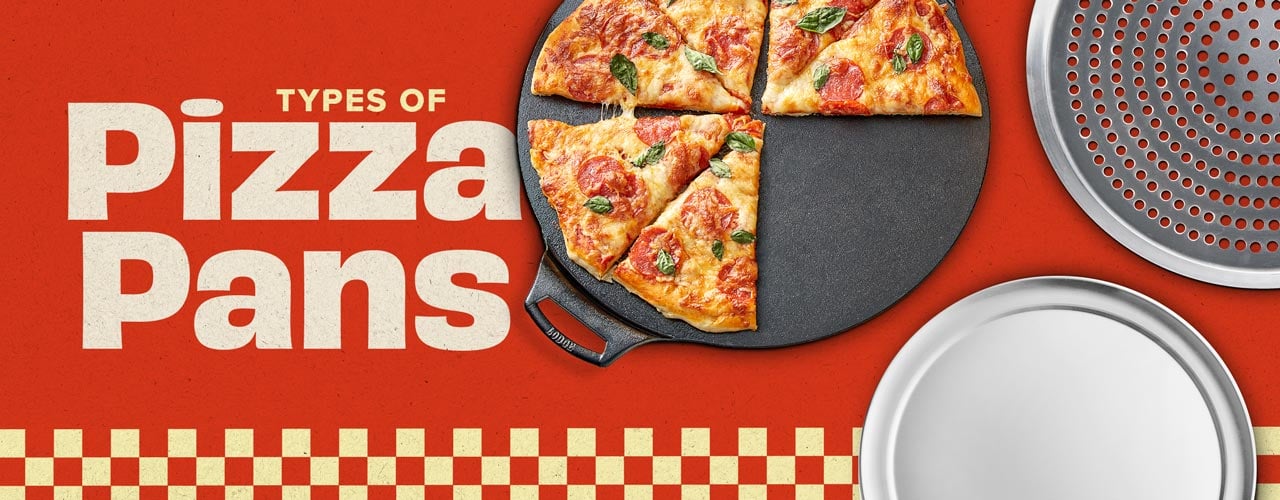
There are many unique types of pizza pans and each one of them produces a different style of pizza. The pizza pan you need depends on the type of pizza you would like to serve. Read on to learn more about the different pizza pans out there and how each style affects your pizza making.
Pizza Stone
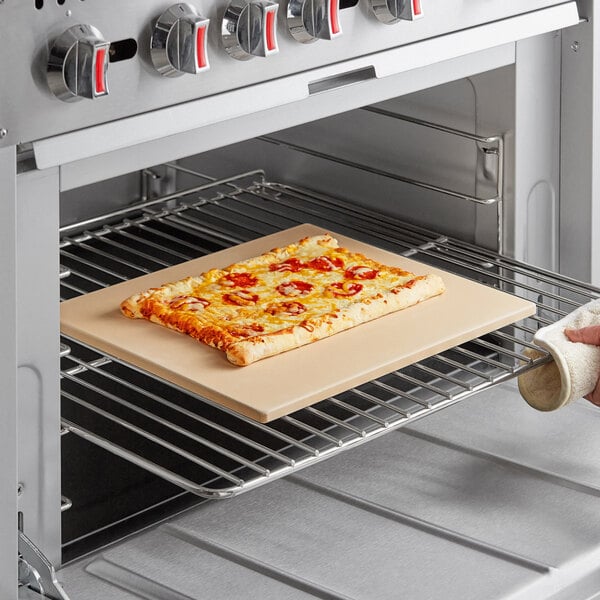
The main difference between a pizza stone vs pan is that a pizza stone provides an overall crispier crust. A ceramic or cordierite pizza stone mimics the cooking process for brick oven pizza, using the porous surface of the stone to absorb excess moisture from the dough and make the crust crispier as it bakes.
- Ideal for brick ovens or achieving brick oven pizza without the special equipment
- Come in a round, square, or rectangular shape
- Easy to use and clean
- Can be used to make cookies, biscuits, and bread
Cast Iron Pizza Pan
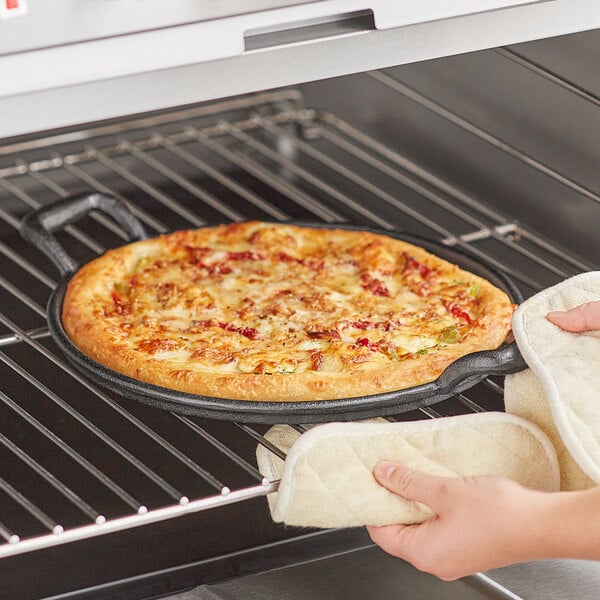
Use a cast iron pizza pan to produce crispy thin-crust pizza. Cooking with cast iron has many benefits, including excellent temperature retention to promote a nice, evenly-cooked crust. In addition to being used in the oven, a cast iron pizza pan can be used on the grill and stovetop.
- Raised edges provide structure for the pizza crust
- Ideal for oven-to-table service
- Durable, long-lasting, and easy to clean
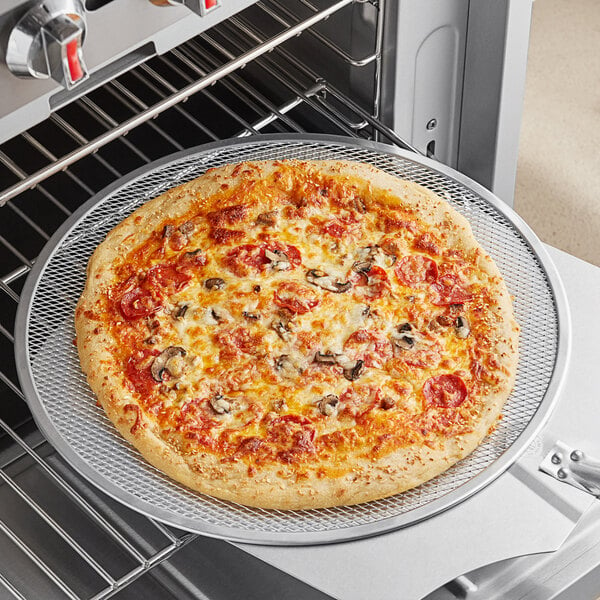
Pizza Screen
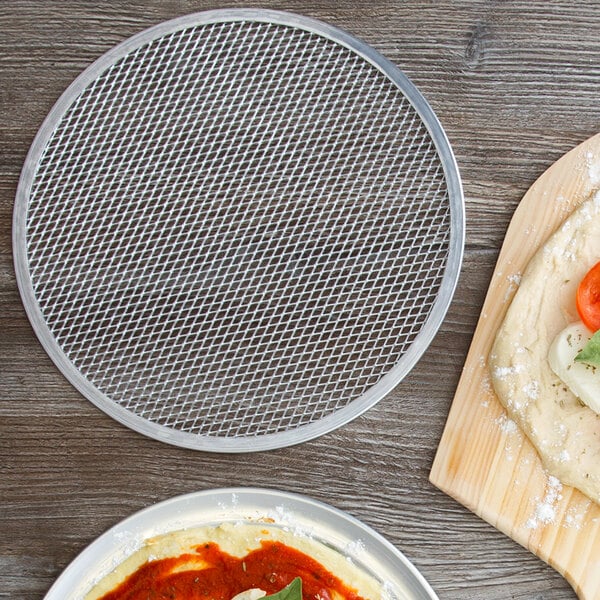
Ideal for producing crispy, thin-crust pizza, a pizza screen is a flat mesh disk that offers superior airflow and heat distribution. Its mesh design allows for the rapid circulation of air to quickly cook and brown the pizza dough. To see the best results, use a pizza screen to bake your pizza in a conveyor pizza oven.
- Helps pizza bake faster
- Typically made with aluminum
- Affordable, lightweight, and stacks for easy storage
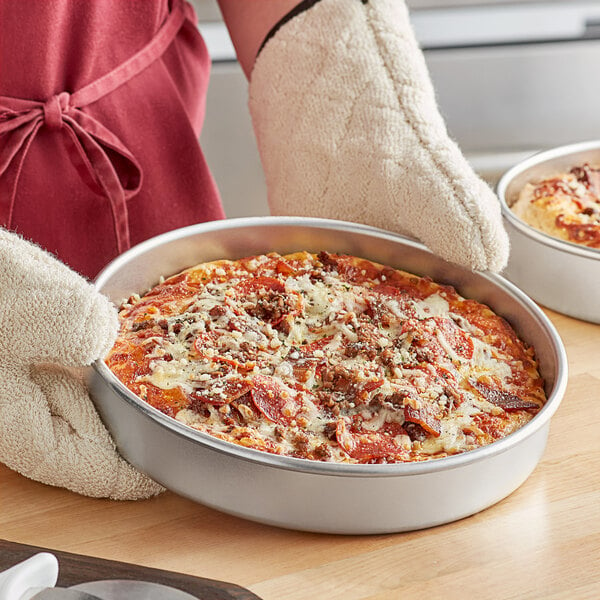
Deep Dish Pizza Pan
Compared to regular pizza pans, deep dish pizza pans have high metal sidewalls and are used to create the buttery, thick crust for Chicago-style pies. They commonly feature straight sides but are also available with tapered sides to easily stack and store.
- Come in a round and square shape
- Available with a solid or perforated surface
- Can also be used as a cake pan
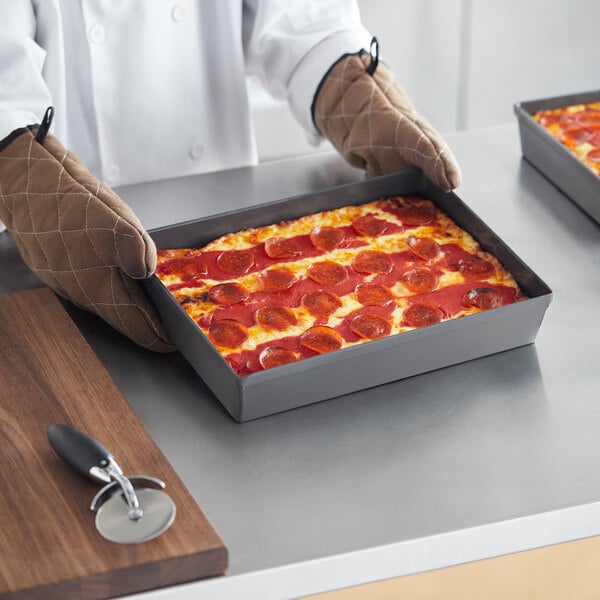
Detroit-Style Pizza Pan
A Detroit-style pizza pan features a rectangular shape and high sidewalls that is ideal for creating the popular regional pizza. It is typically made with dark hard anodized aluminum to help with browning and deliver the thick, extra-crispy crust the style of pizza is known for.
- Available in a rectangular or square shape
- Boasts enhanced heat distribution
- Also great for making cakes and baked goods
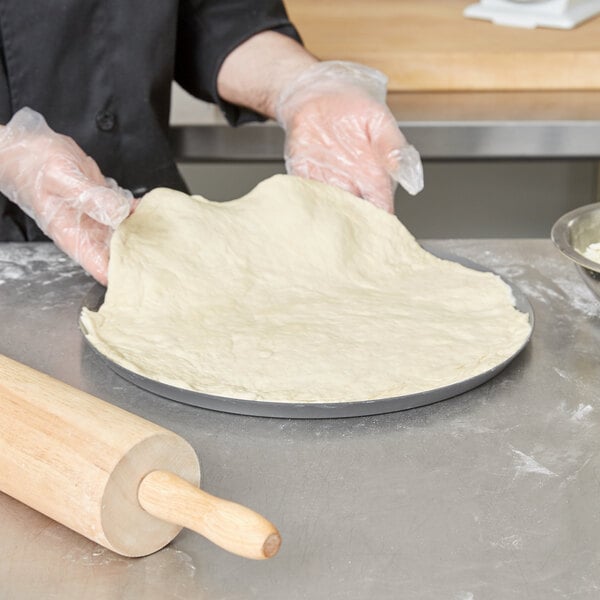
Cutter Pizza Pan
Featuring a flat, non-rolled edge, cutter pizza pans have an unfinished top edge that can cut dough, which allows you to roll out the dough over the pan with a rolling pin for fast, consistent results. Due to the angled rim, cutter pizza pans are best used to produce medium and thick crusts.
- Help speed up the pizza-making process
- Produce consistently-sized crusts
- Available with a solid or perforated surface
Coupe Pizza Pan
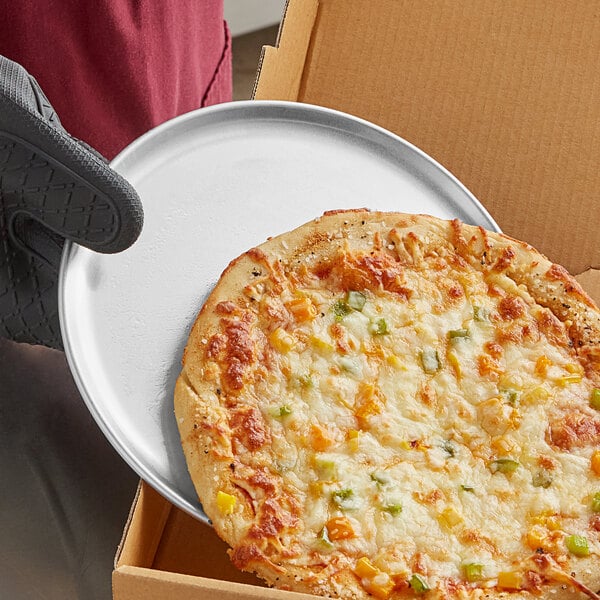
The most traditional pizza pan type in a pizzeria, coupe pizza pans are standard round pans that allows pizza makers to bake, slice, and serve pizza on the same pan. The coupe style is excellent for conducting heat, which cooks pizzas evenly and quickly.
- Made of aluminum or hard coat anodized aluminum for extra durability
- Feature rolled edges for structural integrity
- Economical choice
Wide Rim Pizza Pan
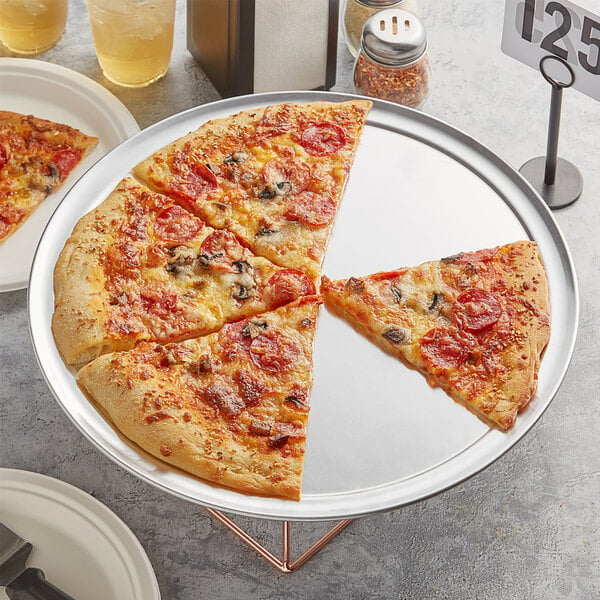
Very similar in construction to coupe pizza pans but with a wider rim, wide rim pizza pans are most often used for service and presentation. The extra room offered by wide rim pizza pans makes slicing, transporting, and serving pizza a breeze.
- Great for oven-to-table service
- Come in a round shape
- Economical choice
Best Pizza Pan for Crispy Crust
Pizza screens are the best pizza pan for crispy crust since their mesh design allows the air and heat to circulate and come in contact with the dough as it bakes. Pizza stones are also great for achieving a traditional crispy crust but will take much longer to cook than using a pizza screen.
The main difference between a pizza screen vs a pizza pan is that pizza screens feature a mesh construction and do not have sidewalls, while pizza pans have sidewalls, can come in solid and perforated surface styles, and can be used to serve pizza after cooking it.
How to Understand Pizza Pan Thickness
The chart below has the following columns: gauge, inches, millimeters, and pan material. It provides how thick each gauge is in inches and millimeters and the type of material each pan comes in. To understand what gauge means, think of thin-crust pizza. To have a crunchier crust, you will want a higher gauge, like 22 or 26. If you want a chewier crust, choose a thicker pan, like a 14 gauge.
Gauge | Inches | Millimeters | Pan Material |
|---|---|---|---|
14 | 0.0641 | 1.628 | Heavyweight Aluminum Pizza Pans |
18 | 0.0403 | 1.024 | Standard weight Aluminum Pizza Pans |
20 | 0.032 | 0.813 | Standard weight Aluminum Pizza Pans |
22 | 0.0299 | 0.759 | Tin-Plated Steel Pizza Pans |
26 | 0.0179 | 0.455 | Aluminized Steel Pizza Pans |
Pizza Pan with Holes vs No Holes
Not only does the type of pan and the thickness impact the style of the crust, but the pan surface also plays a big part in what the pizza crust will be like. Whether or not the pizza pan is solid or has holes will affect the airflow and heat distribution given to the pizza dough as it cooks. Read on to learn more about the different pizza pan surface styles to decide which is best for the crust you want to cook.
- Solid Pizza Pan - These pans have no holes or nibs and are the most common type of pizza pan. Because of this, it takes longer for the heat to transfer through the solid pan, resulting in a doughy crust.
- Nibbed Pizza Pan - A pizza pan with nibs has small bumps on the surface of the pizza pan, which helps with the overall airflow underneath the crust. A nibbed pizza pan also speeds up the baking time for pizza dough and makes the crust crispier than a standard solid pan.
- Perforated Pizza Pan - A perforated pizza pan has holes that allow air and heat to hit the crust directly for a crispier crust. This pan style also makes baking times much shorter.
- Super Perforated Pizza Pan - A super perforated pizza pan is just like a perforated pizza pan but with bigger holes to allow more air to hit the crust. It makes baking times even shorter and the crust much crispier than other pans.
Different Types of Pizza Pan Coatings
Coatings can assist with ease of cleaning but also impact how your pizza cooks. Below is a breakdown of standard pizza pan coatings.
Dark Coated Pizza Pans vs Light Coated Pizza Pans
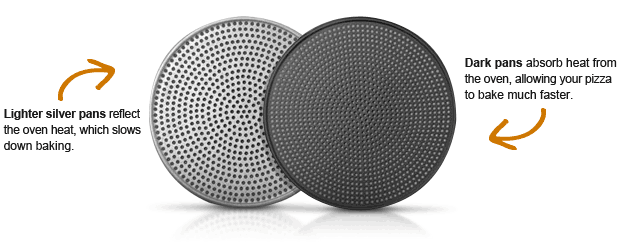
If you purchase dark coated pans, it's necessary to understand that darker finishes retain more heat and accelerate baking time. Lighter silver pans will reflect heat instead of absorbing it, which slows down the baking process.
Anodized Hard Coated Pizza Pans
These pizza pans have a corrosion-resistant anodic oxide finish that will not flake. You can also expect the cook time for your pizza to decrease with anodized hard coated pans because of their dark finish.
Silicone Glazed Pizza Pans
Silicone glaze pans are special because the glaze is applied to the pan in addition to the anodized hard coating. The silicone helps to reduce sticking, which cuts down the amount of pizza pan oil needed to coat the pan by almost 50%. Because of the coating, silicone glaze pizza pans do not require seasoning before first use.
Uncoated Pizza Pans
Uncoated pizza pans are the lightest in color and will require your pizza to cook longer in the oven due to their reflective properties. Uncoated pans will need to be seasoned before being used first.
How to Season a Pizza Pan
Most pizza pans need to be seasoned before they are first used. Seasoning a pizza pan isn't as hard as it seems, as long as you follow these 10 easy steps. After you first season your pan, it is necessary to periodically reseason it to prolong its life.
Preheat your oven to a normal baking temperature for pizza (somewhere between 450 and 500 degrees).
Hand wash your pan in warm soapy water.
Immediately pat the pizza pan dry.
Put the pan in the oven. Let it dry completely and warm up.
Remove your pan from the oven and cover both sides of the pan with a thin layer of shortening oil.
Cover a baking sheet with foil and place it on the bottom rack of the oven.
Place your pan back in the oven on the rack above the sheet pan.
Bake for 15 minutes.
Remove the pan from the oven and wipe off excess oil with a cloth.
Don't wash the pan. Allow the extra oil on the pan's surface to prevent the pizza crust from sticking.
How to Clean a Pizza Pan
After you use a metal pizza pan to make pizza, wash your pan by hand with a soft sponge and metal-safe detergent. When cleaning your pans, do NOT use:
- A dishwasher
- Coarse sponges
- Caustic cleaners
- Acidic detergents
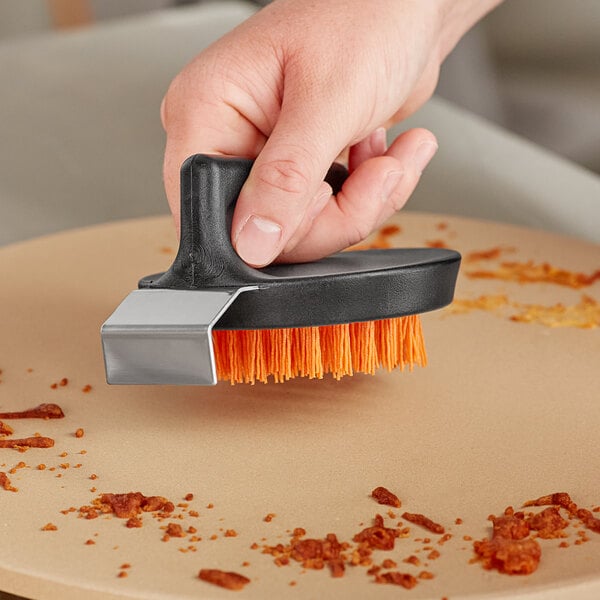
Clean your pizza stones by using a stiff-bristled brush to clear off any stuck-on food once the stone has cooled down.
Related Resources

June 2026 WebstaurantStore Coupon Code
Summer is upon us, and to celebrate WebstaurantStore has blazing hot deals all month long! With summer vacations underway and holidays like Independence Day rapidly approaching, now is the time to stock up on essential supplies and equipment you'll need to get through the summer season. Take a look at our wide array of sale items below and don't forget to enter the code SUMMERSALE at checkout to enjoy up to 20% off your purchases! Looking to save even more? Check out the new Webstaurant Rewards® Visa Business Card ! Sign up for a new card today and start earning rewards on every WebstaurantStore purchase, and save on a WebstaurantPlus subscription. Have a look at some incredible deals on disposable items with June's monthly coupon code! Whe

Types of Pizza Ovens
If you're starting a pizzeria , the pizza oven is the most important investment you'll make. There are five types of commercial pizza ovens: brick, conveyor, deck, convention, and countertop. To help you make an informed purchase, we break down the benefits, average cost, and production volume of each pizza oven category. Shop All Commercial Pizza Ovens Click any of the sections below to learn about the different pizza oven types: Brick Pizza Oven Conveyor Pizza Oven Pizza Deck Oven Convection Pizza Oven Countertop Pizza Oven Pizza Oven Comparison Charts What Is the Best Commercial Pizza Oven? Many foodservice professionals agree brick ovens are the best commercial pizza oven model. While it's natural to want the best commercial pizza oven,

What Is a Pizza Peel?
A pizza peel is a tool that lets you place pizzas in an oven while minimizing the risk of burns or injury. Sometimes referred to as a pizza shovel, a pizza paddle, or a pizza slider, they are comprised of a flat carrying surface attached to a long handle. Commonly found in pizza shops , peels come in several different shapes and sizes, allowing you to find one that best fits your oven and the pizzas you offer . In this blog, we'll investigate what a pizza peel is, how to use one, and how to keep dough from sticking to your peel. Shop All Pizza Peels Click the links below to skip to specific pizza peel information: What Is a Pizza Peel Used For? How to Use a Pizza Peel How to Keep Pizza from Sticking to Peel Pizza Peel FAQ How to Use a Pizza
Join Our Mailing List
Receive coupon codes and more right to your inbox.