- Topics 1571
- Industrial 59
- Troubleshooting Guides 32
- Restaurant Management 144
- Bar Management 71
- Catering Tips 43
- Bakery Management 43
- Food Trucks & Concessions 36
- Advertising & Marketing 41
- Eco-Friendly Tips 13
- Facility Layout & Design 48
- Coffee Shop Tips 32
- Installation & Maintenance 63
- Janitorial & Pest Control 34
- Safety & Sanitation 123
- Startup Tips 110
- Menu Design 13
- Kitchen & Cooking Tips 107
- Hospitality Management 25
- Pizza & Sandwich Shop Tips 20
- Smallwares 43
- Food Prep 104
- Tabletop Items 21
- Disposables 28
- Calculators & Tools 6
- Consumables 77
- Warewashing & Laundry 22
- Cooking Equipment 107
- Food Storage & Refrigeration 57
- Beverage Equipment 43
- Office Supplies 6

The right carpet extractor for a commercial foodservice operation is one that is sized to your carpet size and matched to how often spills and foot traffic hit it. Dining rooms, hotel lobbies, and event spaces all rely on clean carpet to look presentable, and leaving stains to set can mean replacing flooring that costs far more than the machine that would have saved it. Purchasing the wrong carpet extractor could leave you with soaked carpet that stays damp through the next seating, or a machine too small to finish a large ballroom before guests arrive. Below, we cover the key points to weigh when purchasing a carpet extractor, so you can pick a model that fits your space, your staff, and your cleaning schedule.
Shop All Carpet Extractors
A carpet extractor is a machine that injects water and cleaning solution into carpet fibers, then pulls the dirty liquid back out with a built-in vacuum motor. This two-step action lifts dried wine and tracked-in grease that a dry vacuum only skims from the surface. Most models hold separate clean and recovery tanks, so staff can see exactly how much soil comes out with each pass.
Carpet Extractor vs Floor Scrubber
A carpet extractor cleans soft flooring, while a floor scrubber cleans hard flooring such as quarry tile, sealed concrete, and vinyl. Scrubbers use rotating brushes or pads to agitate the floor, which suits a kitchen or back-of-house corridor but would shred or oversaturate carpet. Extractors rely on solution spray and suction instead, which is why a foodservice operation with both a dining room and a kitchen usually needs one of each rather than trying to make a single machine cover both.
Carpet Extractor vs Wet Vac
A wet vac is a type of vacuum that picks up liquid, but it doesn't spray or scrub anything, so it only removes what is already sitting on the surface. It works well for a spilled pitcher of water or a flooded mop closet, but it leaves stains and embedded soil behind. A carpet extractor adds a pressurized solution spray and a stronger recovery system, which lets it clean carpet fibers rather than just soak up a spill.
Commercial carpet extractors fall into different categories, each suited to a different job, from cleaning greasy stains to pulling floodwater out of a banquet hall. The right pick depends on how much carpet you have, what kind of soil you're dealing with, and whether the problem is one stain or a soaked floor.

1. Standard Carpet Extractors
A standard carpet extractor is the general-purpose machine that sprays cleaning solution into carpet and vacuums it back out in the same pass, typically with cold water. Sizes range from compact uprights with tanks under 2 gallons to walk-behind and ride-on models holding 25 gallons or more, so there’s a fit for a small cafe or a hotel corridor. Portable canister styles come with a hose and wand for stairs and upholstery, while self-contained units cover wide aisles without dragging hoses around. Most plug into a wall outlet, and cordless battery versions are available for large open floors.
- Everyday cleaning for dining rooms and hallways
- Tanks from under 2 gallons to 28 gallons
- Corded or battery-powered

2. Heated Extractors
A heated extractor is a carpet extractor with a built-in heater that warms the solution before it reaches the carpet, which helps loosen greasy, oily residue. This is great in dining rooms and hallways where cooking oil and fryer splatter can settle into a pile. Heater ratings commonly run from 1,100 to 1,750 watts, and pump pressure varies from around 100 PSI up to 500 PSI on higher-end units. You’ll pay more and draw more power than with a cold-water machine of similar size, but it'll be easier to tackle stains.
- Warms solution before dispensing
- Built to cut through grease
- Higher price point than cold-water equivalents

3. Spotters
A carpet spotter is a small extractor made for treating one stain at a time instead of an entire floor. Tanks run from under 1 gallon to about 3 gallons, and most pair with a hand tool for stairs, upholstery, and booth cushions. Front-of-house staff can grab one for a spilled drink or a smear of sauce between rushes without wheeling out a full-size machine. Some models add a heater, and cordless versions run on rechargeable batteries.
- Handles smaller single stains
- Compact enough for booths and stairwells
- Heated and cordless versions available

4. Steamers
A carpet steamer uses heated water vapor to loosen soil and lift stains, relying on steam rather than a spray-and-suction cycle. This close alternative to extractors spans handheld units with small boilers up to heavy-duty dry steam cleaners with twin boilers, and many come with a tool kit for upholstery, tile, and grout. Dry steam leaves far less moisture behind than an extractor, which makes steamers a good match for small treatment areas and hard surfaces next to carpet. Some models add a built-in vacuum to pick up loosened debris as well.
- Steam in place of solution spray
- Handheld through twin-boiler sizes
- Vacuum-equipped versions available
5. Flood Extractors
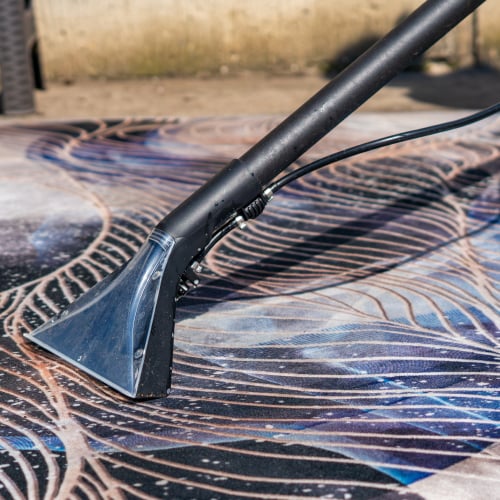
A flood extractor is a high-capacity machine that removes standing water from carpet after a burst pipe, a backed-up dishwasher line, or a sprinkler discharge. It’s built to pull water out rather than spray solution in. Ride-on versions cover banquet halls and hotel corridors quickly, while push-style units handle smaller rooms. Getting water out fast limits subfloor damage, and removing it within 24 to 48 hours keeps mold from taking hold.
- Pulls standing water after leaks and overflows
- Push-style and ride-on formats
- Not a routine cleaning machine
Carpet extractors are used in restaurants, hotels, event venues, bars, and casinos to deep clean carpet that daily vacuuming can't fully restore. Most operations run them on a schedule, plus on demand after a spill or a booked event.

- Event Turnover: Wedding venues, conference centers, and catering halls run an extractor after a function to lift champagne, cake frosting, and sauce that guests ground into the carpet. A self-contained walk-behind machine can finish a large room overnight.
- Scheduled Dining Room Cleaning: Full-service restaurants with carpeted dining areas typically schedule a deep clean on a closed day or after the last table leaves. It removes the film of food residue that builds up around table legs and server stations.
- Entry and Vestibule Carpet: Winter slush, road salt, and mud pile up in the first few feet inside the door. Hotels and restaurants in cold climates extract these entries frequently to keep salt stains from setting.
- Bars and Lounges: Spilled beer and sugary cocktails leave sticky residue that attracts dirt and makes carpet feel tacky underfoot. A heated extractor dissolves that residue, which is why nightclubs and hotel bars run one regularly.
- Chairs and Banquette Seating: Fabric-covered chairs and banquettes take the brunt of spilled drinks and sauce. A spotter or a portable unit with an upholstery tool cleans them in place, with no need to haul furniture out.
- Stairs and Corners: Spotters with stair tools handle carpeted steps and tight corners where a full-size machine won't fit.
- Hotel Corridors and Guest Areas: Room service trays leave drips and crumbs along hallways, and heavy foot traffic wears a path down the center. Hotels use walk-behind and ride-on extractors to clean long corridors in one continuous pass.
- Water Emergencies: A burst supply line, an overflowing dishwasher drain, or a triggered sprinkler can soak carpet in minutes. A flood extractor pulls the standing water out quickly, which limits mold and subfloor damage.
Carpet extractors run off either a wall outlet or onboard batteries, and the choice affects how far the machine can travel and how long a cleaning session can last. Corded models make up the large majority of commercial units. Battery-powered extractors are mostly the larger walk-behind, stand-on, and ride-on machines, though cordless spotters and some compact units exist.
- Corded: Plugs into a standard outlet, so there are no batteries to charge or replace and run time depends only on tank capacity. The cord ties you to nearby outlets and can snag on chair legs, which makes these best for small to mid-size rooms. Heated models also rely on this steady supply of power.
- Battery: Cordless units run on AGM or lithium-ion packs and come with an onboard or shelf charger. With no cord to trip over or outlets to hunt for, they cover ballrooms, hotel corridors, and large open dining areas well. They cost more upfront than corded machines and need a recharge cycle between shifts.
The right extractor comes down to how much carpet you clean, what lands on it, and who will be running the machine. Weigh these factors against your space and staffing before comparing models:

- Carpet Area: Count the total square feet you clean in one session. A single dining room or lobby suits a compact portable unit, while a ballroom or long hotel corridor calls for a walk-behind or ride-on machine.
- Tank Capacity: Larger tanks mean fewer trips to the mop sink to refill and dump, but they also add weight when full. Tanks range from under 2 gallons on small uprights to 25 gallons or more on ride-on models, so match the size to your longest uninterrupted cleaning job.
- Cleaning Path Width: Wider cleaning paths cover more floor per pass. A narrow head may require another pass, but it is easier to maneuver around tables, booths, and bar stools.
- Water Temperature: If grease from the kitchen or bar is the main problem, a heated extractor will break it down better. Cold-water models cost less and work well for light soil and routine maintenance.
- Power Source: Corded units are cheaper and never run out of charge, but they limit your range to the nearest outlet. Battery models give you freedom to roam but come with a higher price and charging time.
- Storage and Handling: Think about where the machine will be stored, how many flights of stairs it has to be carried up, and who will be moving it. A heavy unit that's a struggle to lift into a closet or load onto a service elevator tends to get used less.
Guests judge a dining room carpet within seconds of walking in, and a stained or musty floor can undercut even a well-run kitchen. Replacing carpet in a dining room or hotel corridor costs many times more than keeping it clean, so the extractor is a key piece of equipment to get right. Staff will also use equipment that's easy to reach and sized for the job, which means a well-chosen extractor ends up on the floor instead of sitting in a storage closet. With the right type, power source, and tank size in place, carpet care becomes just another task on the cleaning checklist rather than a headache.

With almost a decade of content marketing experience, Kevin has learned the ins and outs of various business sectors. Over his four years as a Longform Content Writer with WebstaurantStore, Kevin has spent hours researching and writing about the intricacies of the foodservice industry. Specializing in marketing guides, technical writing, and structured how-to content, he enjoys providing readers with content that guides them in growing and running their bar or restaurant.
Learn more about this author and WebstaurantStore's Content Writing Team here!
Related Resources

November 2026 WebstaurantStore Coupon Code
The deals at WebstaurantStore this November are something your kitchen will be thankful for! Get ready for Thanksgiving menus, catered holiday gatherings, and cozy seasonal desserts with sale items spanning disposables, pantry staples, and tools for the carving station. Browse our featured deals below and enter code GRATEFUL at checkout to save on your order. The busiest feasts of the year keep orders flowing out the door, so stocking up now helps your team serve every guest and survive the holiday rushes. Join our email list to get exclusive deals and coupon codes delivered straight to your inbox! Looking to save even more? Check out the new Webstaurant Rewards® Visa Business Card ! Sign up for a new card today and start earning rewards on

Approved Sanitizers for Foodservice
Proper sanitation is vital in commercial kitchens for preventing foodborne illnesses , ensuring compliance with health regulations, and protecting your customers and reputation. However, with so many sanitizing products available, it can be challenging to determine which ones are both functional and safe for use in foodservice operations. Below, we outline the tools and knowledge needed to maintain a hygienic environment in your commercial kitchen, while staying compliant with food safety standards . Shop All Surface Sanitizing and Disinfecting Chemicals Click below to learn more about the different types of foodservice sanitizers: Quaternary Ammonium Compounds (Quats) Chlorine-Based Sanitizers Iodophors Factors That Affect Foodservice Sani

Spill and Vomit Absorbents Buying Guide
Having the right spill and vomit absorbents on hand is key for managing and cleaning up spills and other acicdents that inevitably occur in commercial settings. When you understand the range of options and benefits that spill and vomit absorbents offer, you can effectively equip your establishment with the tools to handle accidents promptly and maintain a clean and safe environment. Below, we explore the different types of spill and vomit absorbents available, their key features, and factors to consider when choosing the right absorbent for your specific needs. Shop All Spill and Vomit Absorbents Use the following links to learn more about absorbents and how to use them: What Do Absorbents Clean? Types of Absorbents Absorbent Forms How to C
Join Our Mailing List
Receive coupon codes and more right to your inbox.