- Topics 1567
- Industrial 59
- Troubleshooting Guides 32
- Restaurant Management 145
- Bar Management 69
- Catering Tips 43
- Bakery Management 44
- Food Trucks & Concessions 36
- Advertising & Marketing 41
- Eco-Friendly Tips 13
- Facility Layout & Design 47
- Coffee Shop Tips 32
- Installation & Maintenance 63
- Janitorial & Pest Control 34
- Safety & Sanitation 122
- Startup Tips 110
- Menu Design 13
- Kitchen & Cooking Tips 108
- Hospitality Management 25
- Pizza & Sandwich Shop Tips 20
- Smallwares 42
- Food Prep 102
- Tabletop Items 21
- Disposables 28
- Calculators & Tools 7
- Consumables 77
- Warewashing & Laundry 22
- Cooking Equipment 107
- Food Storage & Refrigeration 57
- Beverage Equipment 42
- Office Supplies 6

From bustling bakeries to busy cafes and delis, efficiency in food prep can make all the difference. A commercial bread slicer takes the time and inconsistency out of slicing loaves by hand, ensuring uniform slices that are ready for service or packaging. Whether you're serving sandwiches, artisan loaves, or bagels, the right bread slicer helps streamline your workflow, reduce labor, and deliver consistent results your customers can count on. Our guide will break down the types, slice thickness options, and key purchasing considerations to help you choose the best bread slicer for your kitchen.
Shop All Commercial Bread Slicers
Types of Bread Slicers
Commercial bread slicers come in several designs, each suited to different operations and product types. The type of bread slicer you choose will primarily depend on your production volume and menu needs, but you'll also want to consider factors such as available space, budget, and the machine's overall versatility.
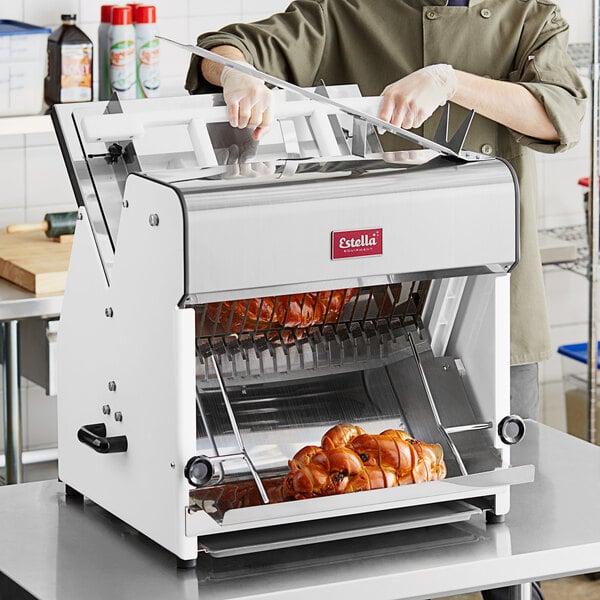
1. Countertop Bread Slicer
Compact and easy to access, countertop bread slicers are ideal for smaller bakeries, cafes, and restaurants that process a moderate volume of bread each day. Their space-efficient footprint allows operators to place them on existing prep tables or service counters without sacrificing valuable workspace. Designed for ease of use, these slicers can be operated by staff in either front- or back-of-house environments, helping streamline service while maintaining consistent slice thickness and product quality.
Countertop bread slicers typically feature accessible blades and crumb trays for quick daily cleaning. Most countertop models offer a fixed slice thickness, which can be limiting if you produce a wide range of breads and need multiple slice options. If space is tight and you can’t accommodate several units, a countertop slicer may not provide the versatility your operation requires.
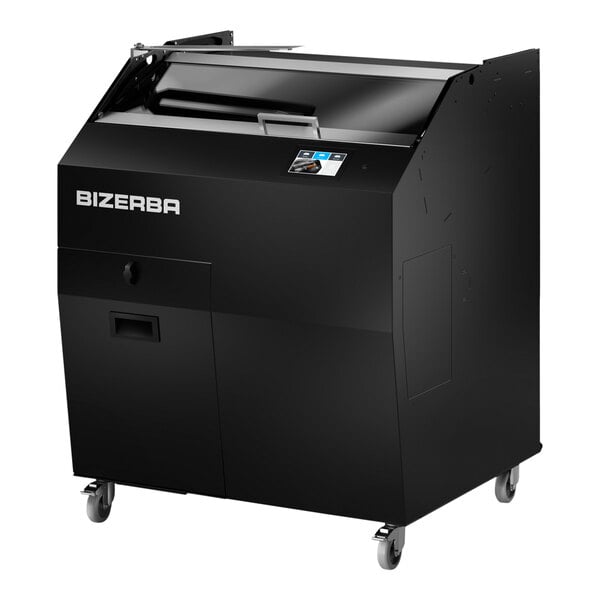
2. Floor Bread Slicers
For high-volume production environments, a floor (or freestanding) bread slicer provides the capacity, speed, and durability required to keep up with continuous demand. Engineered for rigorous, all-day use, these machines can process large batches of loaves with minimal downtime, making them indispensable in wholesale bakeries, commissaries, grocery stores, and high-output sandwich operations. Many can handle various slice thicknesses and come with touch screen controls to further streamline operations.
Although floor models come with a significantly higher price tag than countertop alternatives, their throughput and reliability make them essential for businesses that retail large quantities of pre-sliced bread or rely heavily on bread as a core menu component.
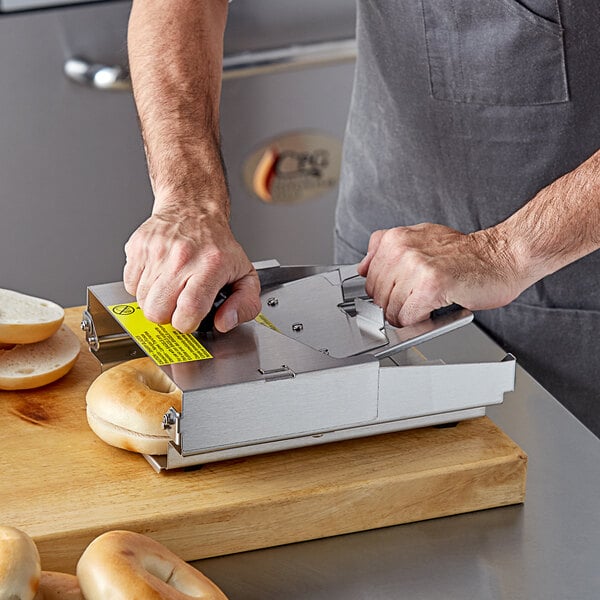
3. Bagel Slicer
Manually cutting bagels with a bread knife can be inefficient, inconsistent, and potentially hazardous in fast-paced foodservice environments. A bagel slicer streamlines this task by delivering clean, uniform cuts that prevent crushing, tearing, or uneven slicing. These slicers are widely used in breakfast-driven cafes, diners, bagel shops, and delis where speed, consistency, and safety are essential during peak hours.
Most bagel slicers feature a compact, manual design that integrates easily into both back-of-house prep areas and front-of-house service counters, providing staff with a dependable, user-friendly tool that speeds up workflow without occupying significant space.
Choosing the Right Slice Thickness
Consistency in slice thickness not only improves the dining experience but also ensures portion control and even toasting or grilling. The ideal slice thickness will depend on your menu applications, bread types, and desired presentation. Below are common slice ranges and the scenarios where they work best:
- Thin Slices (1/4" to 1/2"): Ideal for toast, tea sandwiches, or delicate loaves.
- Standard Slices (1/2" to 5/8"): Common for sandwich breads and general bakery use.
- Thick Slices (3/4" and up): Perfect for artisan loaves, Texas toast, or hearty sandwiches.
Bread Slicer Purchasing Considerations
Selecting the right commercial bread slicer is essential for maintaining product consistency, improving workflow efficiency, and supporting your overall production demands. The ideal machine will align with your bakery or kitchen's daily output, menu requirements, and available space while also offering the durability and ease of use needed in a professional foodservice environment. Before investing, take time to evaluate the key factors below to ensure your slicer delivers long-term value and seamlessly integrates into your operation.
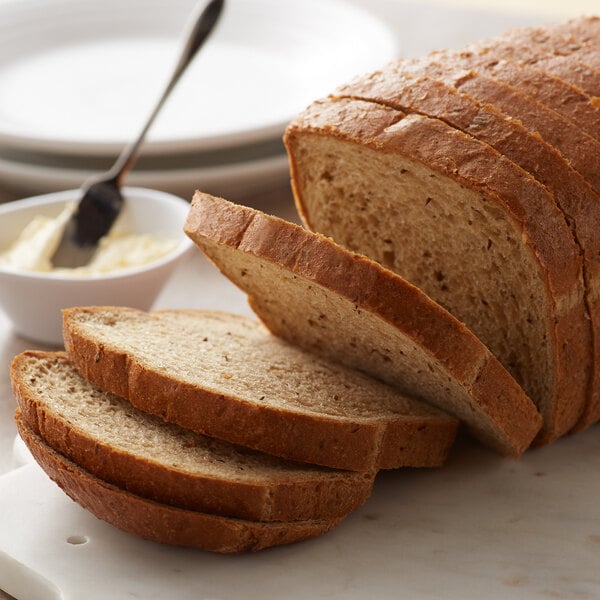
- Output volume: Determine how many loaves you need to slice per day and at what pace. High-volume bakeries or grocery stores may require continuous-duty floor models, while cafes or smaller kitchens may benefit from compact countertop units designed for moderate daily output.
- Bread types: Consider the variety of breads you produce, including crust hardness, loaf size, hydration, and crumb structure. Some slicers are designed specifically for soft-crusted loaves, while others can handle both soft and hard crusts, or are built exclusively for denser, hard-crusted breads.
- Slicing capabilities: Bread slicers come with a fixed or variable slice thickness. Fixed slice thickness models are ideal for operations producing consistent, standardized products such as sandwich loaves or packaged bread. Variable slice thickness models offer greater versatility for operations that slice multiple bread types throughout the day. Adjustable settings allow you to customize slice width for toast, sandwiches, retail loaves, or specialty menu items.
- Automatic vs gravity-fed operation: Automatic slicers pull loaves through the blades with minimal operator intervention, offering faster throughput and reduced labor, while gravity-fed slicers rely on manual loading and gravity to guide the bread, providing more control but at a slower pace.
- Electric vs manual: Electric bread slicers are powered by a motor for fast, efficient slicing with minimal effort. Ideal for high-volume bakeries and delis. Manual bread slicers are hand-operated and compact, making them best for low-volume or specialty settings where portability is important.
- Space availability: Ensure the slicer fits comfortably into your bakery layout without interfering with workflow or safety. Consider clearance requirements, loading/unloading access, and whether the machine will be placed in the back of house, on a prep line, or in a customer-facing area.
- Ease of cleaning and maintenance: Look for features that simplify daily upkeep, such as removable crumb trays, easy-access blade areas, tool-free cleaning components, and built-in safety guards. Machines that are simple to maintain tend to have longer lifespans and reduce the risk of operational downtime.
Related Resources

How to Braid Challah
Challah is more than just a loaf of bread. It's a weekly tradition, a holiday essential, and a versatile menu item that brings beauty to any table. For bakeries and caterers, offering fresh, beautifully braided challah can be a profitable way to serve your local community, especially customers who observe Shabbat or celebrate Jewish holidays like Rosh Hashanah and Sukkot. Once you've perfected your dough , mastering different braiding styles is the next step to creating standout loaves that look as good as they taste. In this guide, we'll cover four popular ways to braid challah, along with tips to help you nail the technique and creative menu ideas to make the most of any extra loaves. Learn about challah bread and the different braiding t

What Is Bread Flour?
Bread flour is a high-protein wheat flour specifically designed for yeasted baking. Its elevated gluten content, typically between 12-14%, creates a stronger, more elastic dough that can withstand the long fermentation and vigorous proofing process essential for certain types of bread . This robust network is what ultimately yields the tall, airy loaves with a distinctly chewy crumb and crisp crust that customers expect from artisan bakeries. Use these links to learn more about bread flour: What Is Bread Flour Made Of? Bread Flour vs All-Purpose Flour Bread Flour Substitutes How to Make Bread Flour Bread Flour FAQ What Is Bread Flour Made Of? Bread flour is a high-gluten flour milled primarily from hard red spring wheat, characterized by it

Bakery Marketing Strategies
To make your new bakery successful, it's important to define your target market and put an actionable plan in place to reach them. Developing a well-researched bakery marketing plan allows you to pick a location for your business in the heart of your ideal customer base and create content that resonates with them. Not just important for reaching customers, you must include market research and a bakery market analysis in your business plan to show future investors that your business has the potential for success. We've created a step-by-step guide to marketing your bakery so you can reach your sales goals. Use these links to skip to the bakery marketing information that interests you: Market Research Write a Market Analysis Set Marketing Goa
Join Our Mailing List
Receive coupon codes and more right to your inbox.