- Topics 1577
- Industrial 59
- Troubleshooting Guides 32
- Restaurant Management 144
- Bar Management 70
- Catering Tips 46
- Bakery Management 45
- Food Trucks & Concessions 41
- Advertising & Marketing 41
- Eco-Friendly Tips 13
- Facility Layout & Design 47
- Coffee Shop Tips 32
- Installation & Maintenance 63
- Janitorial & Pest Control 34
- Safety & Sanitation 121
- Startup Tips 111
- Menu Design 11
- Kitchen & Cooking Tips 106
- Hospitality Management 26
- Pizza & Sandwich Shop Tips 23
- Smallwares 42
- Food Prep 102
- Tabletop Items 21
- Disposables 28
- Calculators & Tools 7
- Consumables 77
- Warewashing & Laundry 22
- Cooking Equipment 106
- Food Storage & Refrigeration 58
- Beverage Equipment 43
- Office Supplies 6
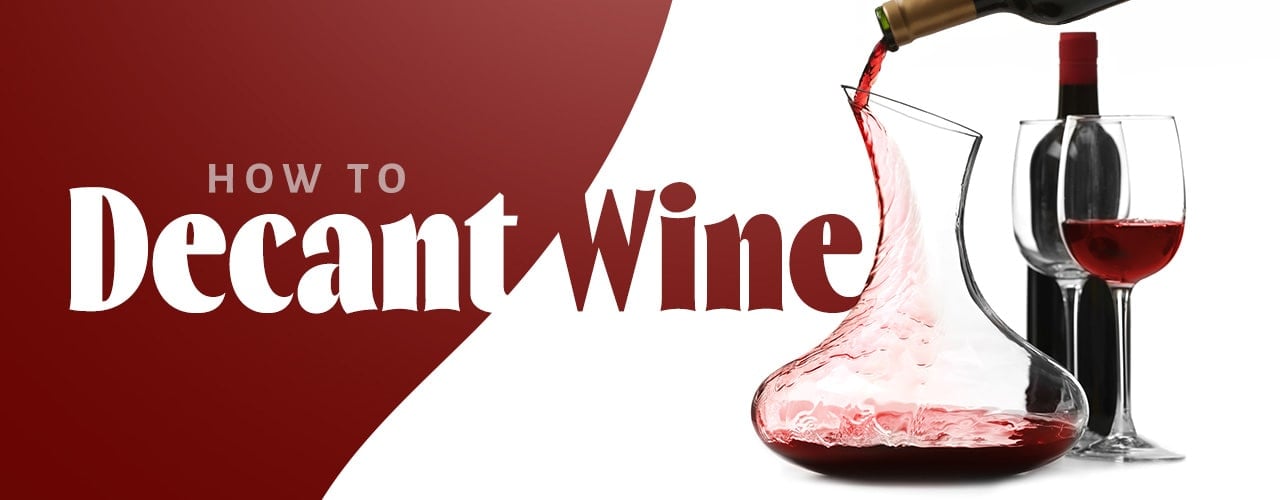
Decanting wine is a technique used to enhance wine's properties by allowing it to breathe and separating any sediment. Properly performing this method positively impacts the natural flavors of wine and creates an enjoyable experience for wine tasters. This comprehensive guide provides the steps to decant wine and explores the different types of wine decanters for everything on your wine list.
Shop All Wine Decanters
How to Decant Wine Video
What Is a Decanter?
A decanter is a serving vessel designed to separate sediment and aerate wines. Decanters typically feature a flared base, a narrow neck for pouring, and a flat or slanted top. Wine is usually poured into a decanter from the original bottle and served after varying amounts of time, depending on the type of wine and individual preferences.
Wine Decanter Purpose
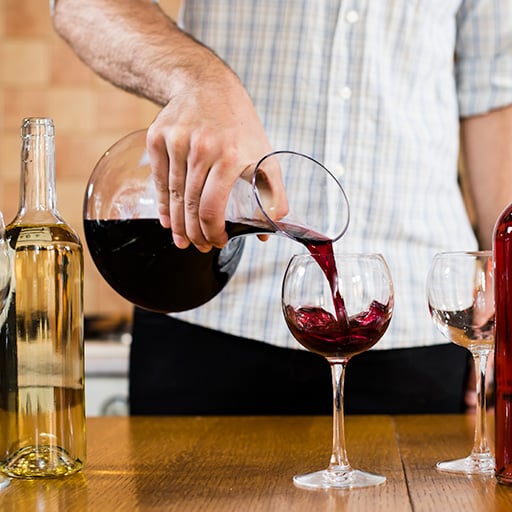
The decanting process has a different effect on each wine type. For some, it softens the acidity to produce a smoother taste. Others carry extra sediment, so it ensures that the appearance is appealing to wine lovers. Wine decanters also create an enticing wine presentation at wine tastings, upscale bars, vineyards, or high-end restaurants. Here's what you can expect from your wine after decanting it.
- Young red wine: Because young wine has not been gradually exposed to oxygen over time, its tannins may still be quite harsh. Exposure to oxygen in a wine decanter softens the tannins and opens up underlying aromas to create a smoother, more flavorful sip.
- Old red wine: Older wine is more likely to have accumulated sediment over time. A wine decanter helps separate sediment from the rest of the wine to prevent a bitter, acidic taste or an unsightly appearance.
- White and rose: Richer whites and roses can benefit from brief decanting to soften their acidity and open up their aromatics.
- Natural wine: Natural wines are more likely to suffer from volatile acidity upon immediate opening, so wine owners decant it to help round out the acidity for a smoother taste.
- Champagne and sparkling wine: Decanting these wine types can help reduce the carbonation to an enjoyable level so your guests have a better flavor experience. However, some customers enjoy bubbles in their wines, so learn more about your guests' preferences before starting the decanting process.
How to Decant Wine
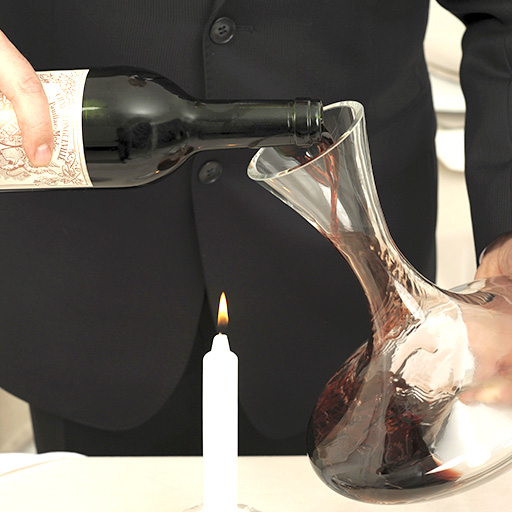
Decanting wine is a simple process that requires careful attention to detail. Follow these steps to decant wine before serving it.
Remove the wine bottle's cork and wipe the bottle neck clean.
Hold the neck of the bottle over a light source, such as a candle or flashlight. A candle reveals the sediment, warning you to stop pouring before the rest of it goes into the decanter.
Pour the wine slowly from the bottle into your decanter at a slight angle so it doesn't splash in the bottom of the decanter.
When the sediment reaches the neck of the bottle, stop pouring.
The clear wine in the decanter is now ready to serve or rest momentarily while decanting. Discard the remaining sediment and liquid from the bottle, and pour the wine from the decanter into your guests' wine glasses.
How Long to Decant Wine
There's no exact timeframe for decanting wine, so feel free to experiment to see what works for you and your specific type of wine. Begin by opening your bottle of wine and having a sip immediately, then pouring the wine into a decanter and sampling again after 20 minutes. Continue sipping the wine at regular intervals until you have achieved your desired taste. Remember that older wines can quickly become stale, so be careful not to decant your vintage wines for too long.
When to Decant Wine
If you don't know whether or not to decant a wine, smell or taste it right from the bottle. It may taste overly bitter, lack aromas and minimal fruity components, or have an odor like rotten eggs or a struck match due to hydrogen sulfide. In either of these cases, you should decant the wine to aerate it and remove any potential sediment.
Types of Wine Decanters
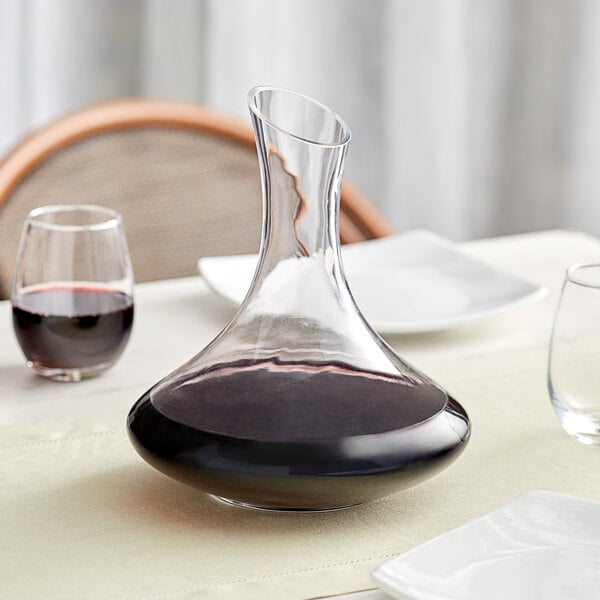
There are different types of decanters available to accommodate specific types of wine. Various bowl and neck shapes affect the wine flavor by accentuating their natural properties. Check out some popular decanter types sommeliers use in high-end wine venues.
- Small bowl decanter: A small bowl decanter is ideal for white wine, rose, and light-bodied red wines due to its narrow bowl.
- Medium bowl decanter: Though a medium bowl decanter has the same neck as a small bowl decanter, the shape is wide in the middle and perfect for medium-bodied red wines.
- Large bowl decanter: A large bowl decanter is characterized by a wide, circular bowl that allows full-bodied red wines to breathe properly.
- Swan decanter: A swan decanter is U-shaped with a broad neck on one end and a narrow pouring neck on the other. It's aesthetically pleasing and allows air to move continuously through the bowl to aerate the wine.
- Snail-shape decanter: A snail-shape decanter has a tall, circular bowl with an opening in the middle and a long neck, causing it to resemble a snail. It provides sommeliers with a better grip when pouring the wine.
- Cornetto decanter: Also known as a Cornett decanter, a Cornetto decanter has a slim design that exposes a smaller portion of the wine to air. This feature is ideal for fragile wines, including older wines that might be impacted by high oxygen exposure.
- Bell-shaped decanter: A bell-shaped decanter has a long neck, a bell-shaped bowl, and a punt that helps collect sediment from the wine.
- Duck decanter: Most decanters are considered functional before beautiful, but the primary purpose of a duck decanter is its aesthetic appeal. It features a clear bowl that maximizes flavor, an overarching handle, and an off-set spout to give it the appearance of a waddling duck.
Related Resources

June 2026 WebstaurantStore Coupon Code
Summer is upon us, and to celebrate WebstaurantStore has blazing hot deals all month long! With summer vacations underway and holidays like Independence Day rapidly approaching, now is the time to stock up on essential supplies and equipment you'll need to get through the summer season. Take a look at our wide array of sale items below and don't forget to enter the code SUMMERSALE at checkout to enjoy up to 20% off your purchases! Looking to save even more? Check out the new Webstaurant Rewards® Visa Business Card ! Sign up for a new card today and start earning rewards on every WebstaurantStore purchase, and save on a WebstaurantPlus subscription. Have a look at some incredible deals on disposable items with June's monthly coupon code! Whe
How to Reseal a Wine Bottle
Are you tired of finding half-empty bottles of wine losing their flavor? Learning how to reseal a wine bottle properly can help maintain the quality and freshness of your favorite wines. Whether you're a restaurant owner looking to preserve premium wines as part of your proper wine service or a wine enthusiast at home, mastering the art of resealing wine bottles is a valuable skill. Read on to learn five ways to reseal a wine bottle and store it so that you can keep your wine fresh for as long as possible. Shop All Wine Service Parts and Accessories Click the following links to learn more about resealing wine: 1. 5 Ways to Reseal a Bottle of Wine 2. Why Should You Recork Wine? 3. How to Store an Open Bottle of Wine 4. Wines That Oxidize Fas
How Many Glasses of Wine in a Bottle?
When you're pouring wine for your guests or performing a formal wine service , you should be familiar with how many glasses of wine you get out of one bottle. This way, you'll always provide the right-sized pour for each person and be able to offer suggestions on how many bottles are needed per table. You'll also have a better understanding of how to stock your wine inventory. Keep reading to learn exactly how many servings of wine are in one bottle. Shop All Wine Glasses Number of Servings in a Bottle of Wine There are about 5 servings of wine in a bottle when using a standard pour size (5 fluid ounces). A bottle of wine contains 750 milliliters of wine, which equals about 25.3 fluid ounces. If you are pouring 5-ounce servings, the bottle
Join Our Mailing List
Receive coupon codes and more right to your inbox.