- Topics 1568
- Industrial 59
- Troubleshooting Guides 32
- Restaurant Management 145
- Bar Management 69
- Catering Tips 43
- Bakery Management 44
- Food Trucks & Concessions 36
- Advertising & Marketing 41
- Eco-Friendly Tips 13
- Facility Layout & Design 47
- Coffee Shop Tips 32
- Installation & Maintenance 63
- Janitorial & Pest Control 34
- Safety & Sanitation 122
- Startup Tips 110
- Menu Design 13
- Kitchen & Cooking Tips 108
- Hospitality Management 25
- Pizza & Sandwich Shop Tips 21
- Smallwares 42
- Food Prep 102
- Tabletop Items 21
- Disposables 28
- Calculators & Tools 7
- Consumables 77
- Warewashing & Laundry 22
- Cooking Equipment 107
- Food Storage & Refrigeration 57
- Beverage Equipment 42
- Office Supplies 6
A Guide on Food Storage Container Sizes & Materials
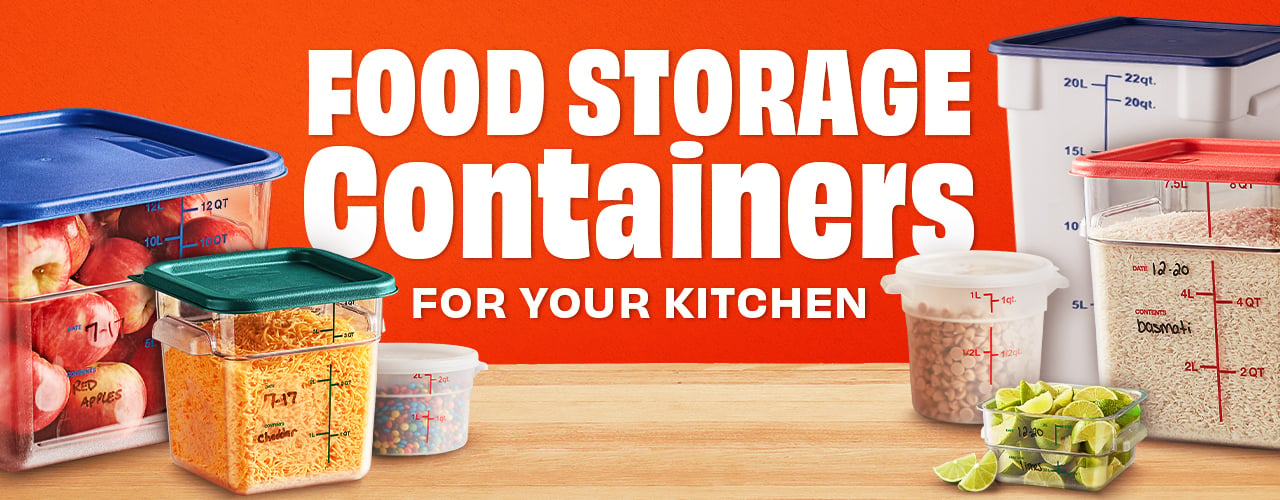
Last updated on Aug 4, 2026Food storage containers are commonplace in commercial kitchens, providing a versatile way to store bulk ingredients and prepared foods. These containers come in different shapes, sizes, and materials, and they can be arranged according to your kitchen's needs. Each type of food storage container is intended for a different function, and knowing which container to use helps you maintain a well-organized storeroom, extend the lifespan of ingredients, and maintain food safety. We'll outline what sets each type apart, as well as the different accessories you can choose from and key purchasing considerations.
Shop All Food Storage Containers
Learn more about food storage containers:
Material impacts the durability and texture of your food storage container, as well as what it can store and where it should be kept. Each type of material comes at a unique price point and lends itself to different foodservice concepts. The most common options include polycarbonate, polypropylene, polyethylene, SAN plastic, and stainless steel.

Polycarbonate Food Storage Containers
Polycarbonate food storage containers are one of the most popular options on the market. They boast crystal-clear visibility, providing a full view of the container’s contents. Made from durable polycarbonate plastic and designed with shatterproof construction, these containers not only keep food safe but also provide peace of mind that they can withstand busy, demanding foodservice environments. One of their key perks is that they resist food acids and oils. Not only does this keep the container looking clean and clear, but it also helps it resist odors, stains, and warping, maintaining a professional appearance over time. Because of their numerous benefits, these containers are also the most expensive option on the market.
- Best for: Storing bulk liquids, sauces, and soups, handling acidic or oily foods
- Temperature range: -40 to 210 degrees Fahrenheit
- Dishwasher and freezer safe
Polypropylene Food Storage Containers
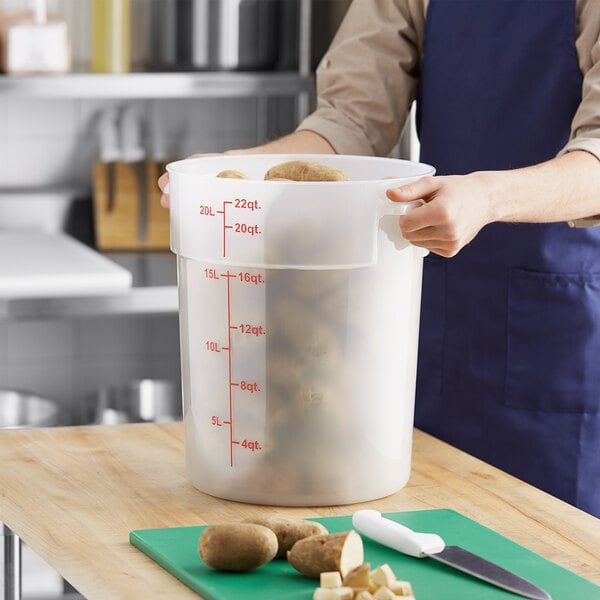
Polypropylene food storage containers feature a translucent appearance that makes them ideal for bulk, back-of-house storage. An important selling points is that they are 100% Bisphenol-A (BPA) free. That means these containers can be reheated if needed, making them especially helpful for storing prepared foods or leftovers. Polypropylene containers also offer high chemical resistance, protecting them against acidic foods and certain cleaning chemicals.
- Best for: Acidic or juicy foods, bulk room-temperature storage
- Temperature range: -40 to 160 degrees Fahrenheit
- Dishwasher, microwave, and freezer safe
Polyethylene Food Storage Containers
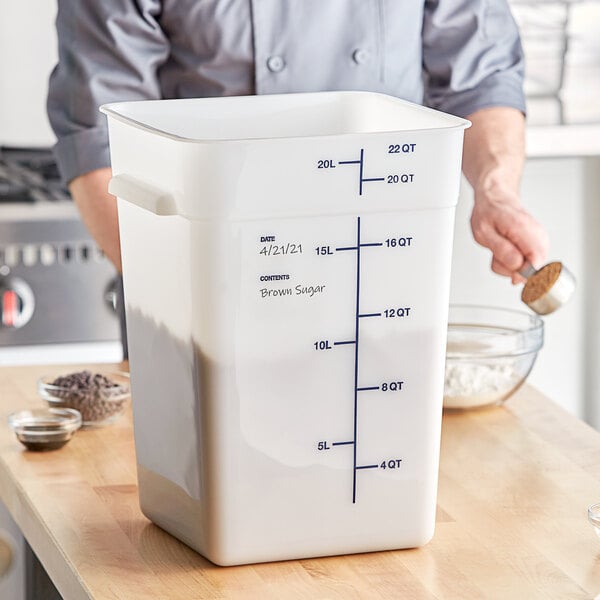
Polyethylene food storage containers feature a solid white appearance, keeping the contents completely hidden. Like polypropylene, they offer a 100% BPA-free food contact surface. However, polyethylene is softer and more flexible than the alternatives, which are more affordable but sacrifice durability. Polyethylene is known for its moisture resistance, making these containers especially helpful when freezing foods and ingredients for storage. Additionally, it is impact-, stain-, and chemical-resistant, giving you peace of mind that no matter what you store, it will hold up.
- Best for: Frozen or cold food storage
- Temperature range: -40 to 160 degrees Fahrenheit
- Freezer safe

SAN Plastic Food Storage Containers
Styrene Acrylonitrile Resin (SAN) plastic food storage containers feature a clear design for enhanced visibility. This material is rigid and shatterproof, providing prolonged durability in the kitchen and your food storage area. They are highly resistant to scratches, odors, and stains, but do not boast the heat resistance of other containers. Additionally, while they are BPA-free, these containers are known to shed microplastics over time, especially with prolonged exposure to hot or acidic foods.
- Best for: Storing bulk dry goods
- Temperature range: -40 to 160 degrees Fahrenheit
- Dishwasher safe

Stainless Steel Food Storage Containers
Stainless steel food storage containers are the most durable containers on the market, but they offer no visibility inside. These light weight containers feature an extremely rigid design for superior warp, crack, and leak resistance. It is completely resistant to corrosion and doesn’t absorb lingering odors. Because these containers are made from stainless steel, they are naturally BPA-free compared to their plastic counterparts. Like other metal containers, they are not microwave safe, so any contents that need to be heated must be transferred to a separate container.
- Best for: Storing prepared foods, storing foods with noticable odors
- Temperature range: -49 to 500 degrees Fahrenheit
- Dishwasher and freezer safe
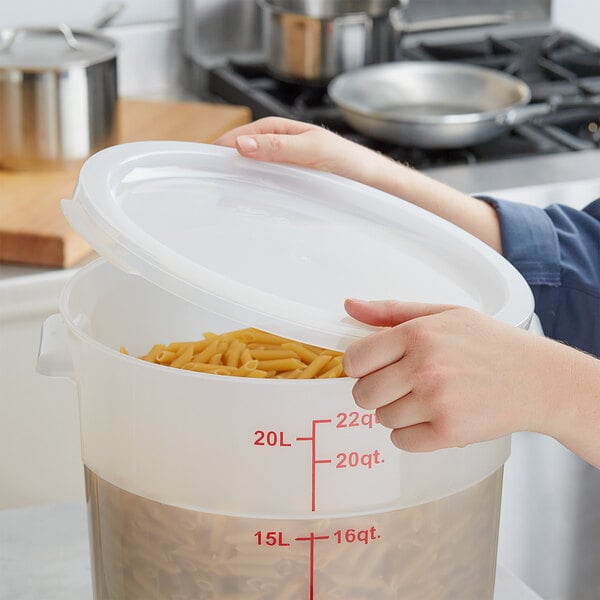
Just as important as the food containers themselves are the accessories you use with them. Whether you're looking for a tight seal, need to catch excess liquids, or make sure you get an even amount of product in each container, accessories impact the overall functionality and usefulness of each unit. The most common accessories include lids, drain trays, and scoops.
Snap-On Lids
Snap-on lids are designed to easily attach to or detach from your containers. Some are included as part of a set, while others must be purchased separately. These lids come in standardized sizes to match the specific food storage containers and ingredient bins you choose, ensuring a perfect match. They are designed to create an airtight fit, sealing freshness in and protecting foods from spoilage or contamination. Additionally, these lids are built to reduce the risk of spills or leakage, keeping both solid and liquid ingredients secure. Some lids even come color-coded, allowing for easy ingredient identification and helping you identify foods that contain allergens.
- Made from: Plastic, polycarbonate, polyethylene, polypropylene
- Best for: Sealing in freshness, color-coding ingredients
Drain Trays
Food storage drain trays are perforated, elevated platforms that fit snugly in a food storage container. Their perforated design allows excess liquids, juices, and condensation to separate from stored foods, while built-in feet or legs create space for liquids to drain below the tray. In doing so, these trays prevent food from getting soggy and increase the shelf life of foods. Additionally, drain trays reduce the risk of food spoilage and bacterial buildup.
- Made from: Polypropylene, polycarbonate
- Best for: Fresh produce, thawing or marinating foods, select types of meat
Kitchen Scoops
Kitchen scoops provide a versatile tool for portioning and ingredient handling. They are especially helpful when handling and storing bulk dry goods and can be stored inside the bin for easy access. Available in different shapes and sizes based on the types of foods you're using them for, these scoops are made from durable materials that can stand up to the wear and tear of a busy kitchen.
- Made from: Polypropylene, polycarbonate, polyethylene, plastic, stainless steel, aluminum
- Best for: Measuring and scooping ingredients
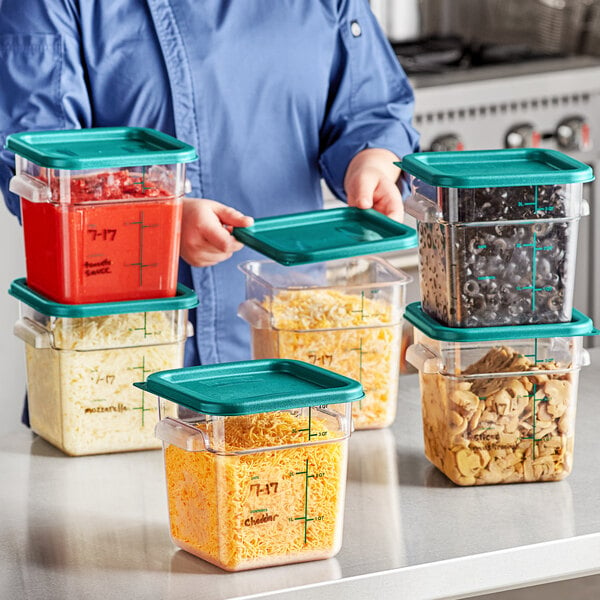
Not every food storage container is a perfect fit for every kitchen. Evaluate the foods on your menu, your cooking needs, and the preferences of your staff as you choose which container to buy. Consider how details like capacity, shape, certifications, and special features might impact your decision and selection.
Capacity
The right capacity of food storage container you need varies depending on how much of a specific ingredient you plan to carry, as well as the overall amount of food you expect to serve. For example, the needs of a food truck or snack bar will be significantly less than those of a five-star restaurant in a city.
- Small containers: Available as small as 8 oz., these containers are great for storing low-volume ingredients.
- Mid-size containers: These can range from 0.2 to 22 qt. And they are ideal for storing individual ingredients or batches of finished recipes.
- Large containers: Large containers can be as large as 12 gallons in size and are ideal for high-volume bulk storage and large batches of prepared foods.
Shape
While it might not seem like much upon initial inspection, the shape of your container plays a significant role in how food is stored. Generally speaking, there are two main shapes to choose from: round and square food storage containers.
- Round food storage containers: These containers allow for faster cooling times, and their rounded sizes help you scoop more out to reduce food waste. They are ideal for soups, sauces, and liquid ingredients, allowing you to stir the contents to keep them blended.
- Square food storage containers: These containers maximize storage space and hold more product in a smaller area. They are ideal for freshly chopped ingredients, such as fruits and vegetables.
Features
The features of your food storage container have a significant impact on functionality and convenience. Different features lend themselves to specific foodservice concepts, helping your staff work to their full potential.
- Freezer-safe food storage containers: Containers that are safe for freezer use feature rigid constructions that can withstand cold temperatures. They are ideal for storing bulk frozen foods, sauces, and soups.
- Graduated food storage containers: A graduated food storage container displays clear measurements on its side, typically either etched or printed on the exterior. They show you exactly how much product is left for easy portioning and food prep.
- Stackable food storage containers: A food storage container that is stackable saves valuable storage space when it isn't in use. These containers can stack with others of the same or similar brand.
- Microwavable food storage containers: These containers are designed to withstand heat in the microwave, keeping them from melting or leaching microplastics into your food.
NSF Certified
NSF International's primary function is to create sanitation safety standards for testing products. In most instances, restaurants will be required to have NSF-listed equipment and supplies to pass health inspections. NSF certifications are noted on every product that meets these industry standards.
Choosing the right food storage containers comes down to matching the material, size, shape, and features to your kitchen's specific needs. The right combination of containers and accessories helps maximize organization, preserve food quality, and support safe food handling. By considering these factors before you buy, you can build a storage system that improves efficiency and stands up to the demands of your operation.

Over his 5+ years with WebstaurantStore, Jason has spent countless hours learning, researching, and writing about the foodservice industry. With expertise in technical topics, he takes pride in helping customers and readers understand everything from troubleshooting their equipment to the fundamentals of starting a business.
Learn more about this author and WebstaurantStore's Content Writing Team here!
Related Resources

October 2026 WebstaurantStore Coupon Code
Fall flavors are in full swing, and the deals at WebstaurantStore are just as irresistible! Stock up on everything your kitchen needs for a busy stretch of autumn, from disposables and pantry staples to equipment that keeps service moving. Browse our featured sale items below, and use code SPICE26 at checkout to save up to 20% on your purchase. Hot drinks, cozy desserts, and warm soups take center stage this time of year, so there's plenty here to fuel your seasonal menu. Sign up for our emails to get exclusive deals and coupon codes delivered straight to your inbox! Looking to save even more? Check out the new Webstaurant Rewards® Visa Business Card ! Sign up for a new card today and start earning rewards on every WebstaurantStore purchase

Different Types of Restaurant Shelving
Creating and maintaining your storage area efficiently in your business can be challenging, particularly if you have limited space and lots to store. Purchasing a shelving unit allows you to organize and increase your storage space. There are different types of restaurant shelving, materials, components, and accessories to consider when purchasing a unit, each with pros and cons. With this in mind, we walk you through each shelving option, its benefits, and where it fits in your commercial kitchen . Shop All Restaurant Shelving Use the following links to explore different types of restaurant shelving: Restaurant Shelves Shelving Materials Types of Shelving Mounts Types of Specialty Shelving Shelving Accessories Popular Shelving Brands Where
A Guide to Dough Proofing Boxes
If you want to make better sourdough and yeasted bread or pizza dough, a proofing box is a useful tool for creating the optimal environment for your dough to rise. These versatile boxes are essential for proofing, storing, and maintaining the freshness of dough and baked goods, making them a valuable asset for pizzerias and bakeries. Shop All Proofing Boxes
Join Our Mailing List
Receive coupon codes and more right to your inbox.