
- Topics 1583
- Industrial 59
- Troubleshooting Guides 32
- Restaurant Management 144
- Bar Management 70
- Catering Tips 46
- Bakery Management 46
- Food Trucks & Concessions 43
- Advertising & Marketing 41
- Eco-Friendly Tips 13
- Facility Layout & Design 47
- Coffee Shop Tips 32
- Installation & Maintenance 63
- Janitorial & Pest Control 34
- Safety & Sanitation 122
- Startup Tips 111
- Menu Design 11
- Kitchen & Cooking Tips 105
- Hospitality Management 26
- Pizza & Sandwich Shop Tips 26
- Smallwares 42
- Food Prep 104
- Tabletop Items 21
- Disposables 28
- Calculators & Tools 7
- Consumables 76
- Warewashing & Laundry 22
- Cooking Equipment 105
- Food Storage & Refrigeration 58
- Beverage Equipment 43
- Office Supplies 6

Whether you need to utilize convection cooking, steam cooking, or a combination of both, combi ovens allow you to achieve the perfect level of consistency in every recipe. Short for combination ovens, these units are designed with ease of operation in mind, allowing you and your staff to program recipes in for easy training and meal prep. Because there are so many different types of combi ovens and it is essential to find the right fit for your kitchen, we've curated a list of the best combi ovens available. Our selections are based on thorough industry research, valuable customer feedback, and insights from our team of foodservice experts.
Shop All Combi Ovens
Check out our top choices for the best commercial combi ovens:
- Best Commercial Combi Oven Overall: Convotherm C4ET20.20GS
- Best Countertop Combi Oven: Blodgett BLCT-6E
- Best Touchscreen Combi Oven: Rational iCombi Pro 645ICP102NI
- Best Ventless Combi Oven: Rational iCombi Pro 645ICP101IVK
- Best Budget Combi Oven: Cooking Performance Group OCB210I
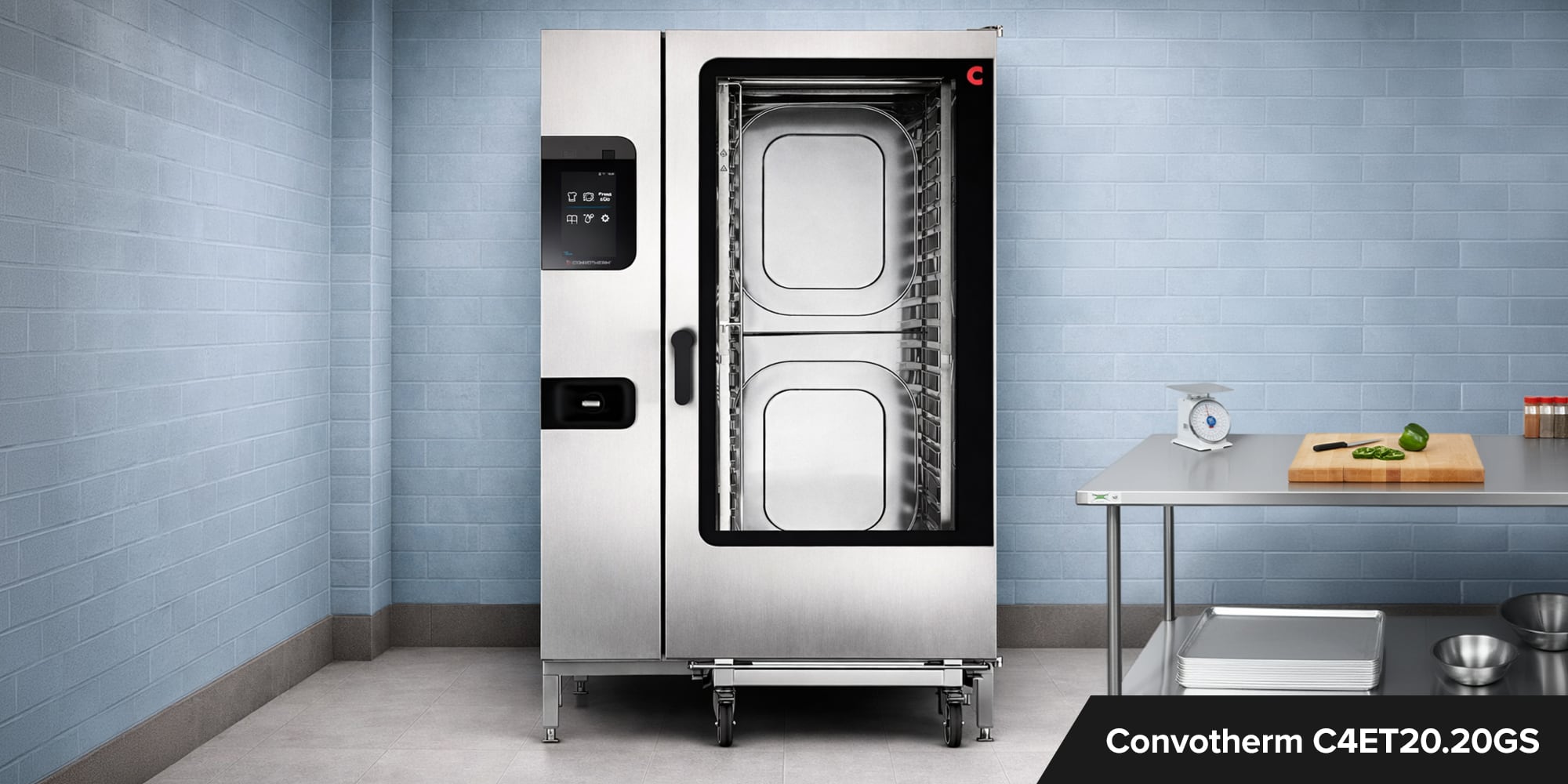
Whether you're steaming, baking, or roasting, you can count on the Convotherm C4ET20.20GS to deliver exceptional results. Utilizing boilerless/spritzer-generated steam technology, this oven delivers reliable steam production. With the ability to accommodate up to 40 half-size sheet pans or full-size steam table pans, or 20 full-size sheet pans, this oven is ideal for high-volume cooking environments. Its fan operates at five speeds with an auto-reverse function, ensuring even heat distribution and consistent cooking results. It also boasts five levels of humidification control, five levels of dehumidification control, and five levels of steam injection.
- Large digital display and touch screen for easy menu navigation
- Roll-in rack design
- Holds 20 full size or 40 half size sheet pans, or 40 full size steam table pans
- HACCP data storage and easy-access USB port
- Boilerless steam generators are less powerful
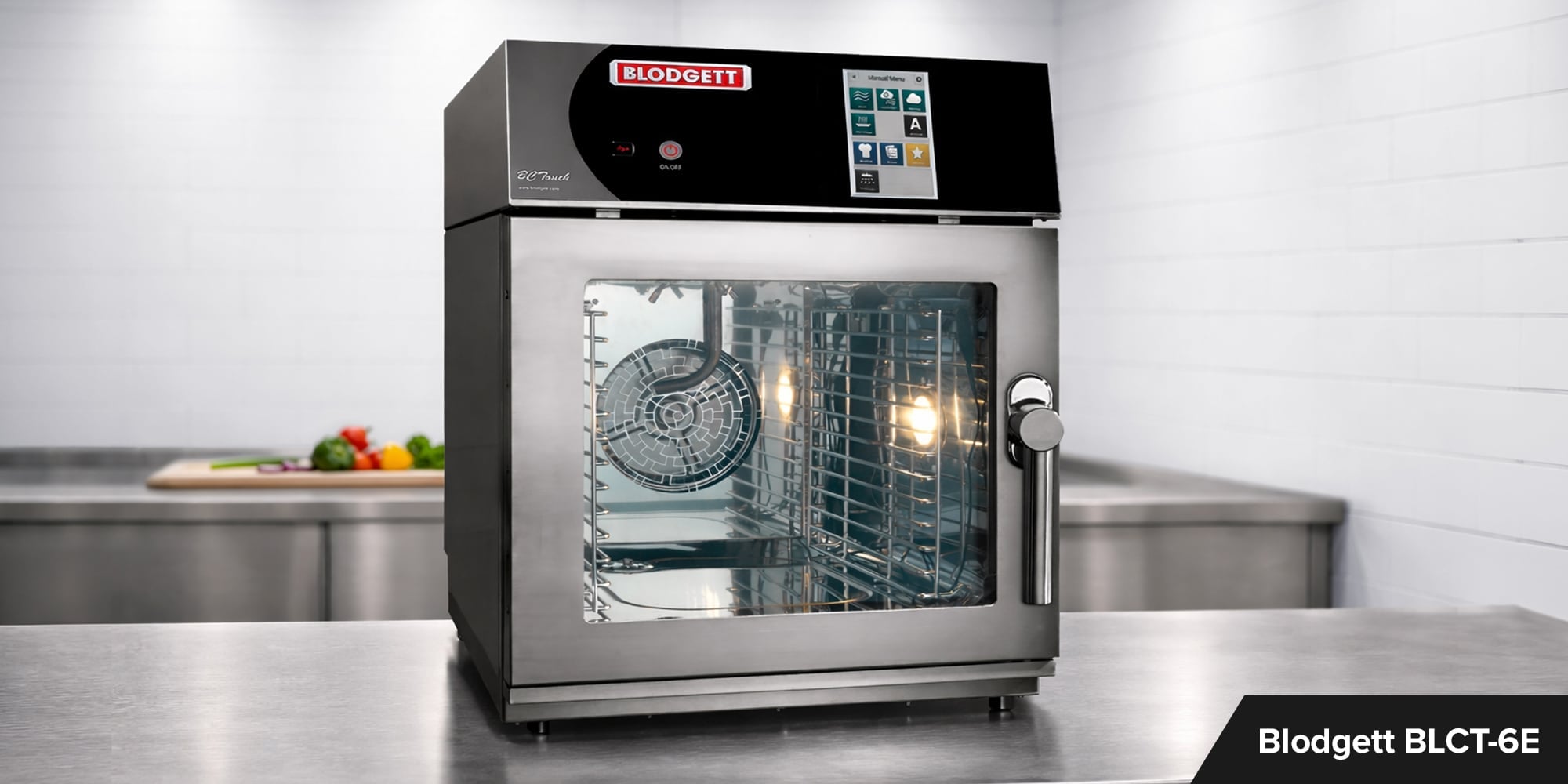
With cooking modes including hot air, CombiSmart, rethermalization, steaming, low-temperature steaming, forced steaming, proofing, and preheating, the Blodgett BLCT-6E offers versatility in preparing a wide range of dishes. Its SmartChef auto cooking feature, which comes equipped with presets for grilling, steaming, braising, browning, and breaded products, simplifies the cooking process. For added convenience, it can store up to 500 recipes, each with up to 15 steps. Moreover, it allows users to set individual timers for each rack for maximum control over the cooking process.
Shop the Blodgett BLCT-6E | $13,836.84
Runner Up: Blodgett BLCT-6E-H
- Holds (5) 2" deep hotel pans, (4) 2 1/2" deep hotel pans, or 6 half-size sheet pans
- Stores up to 500 recipes with up to 15 steps each
- Touchscreen provides simple, intuitive operation
- Allows you to set individual timers for each rack
- Boilerless steam generators are less powerful
- Users report temperature inconsistency
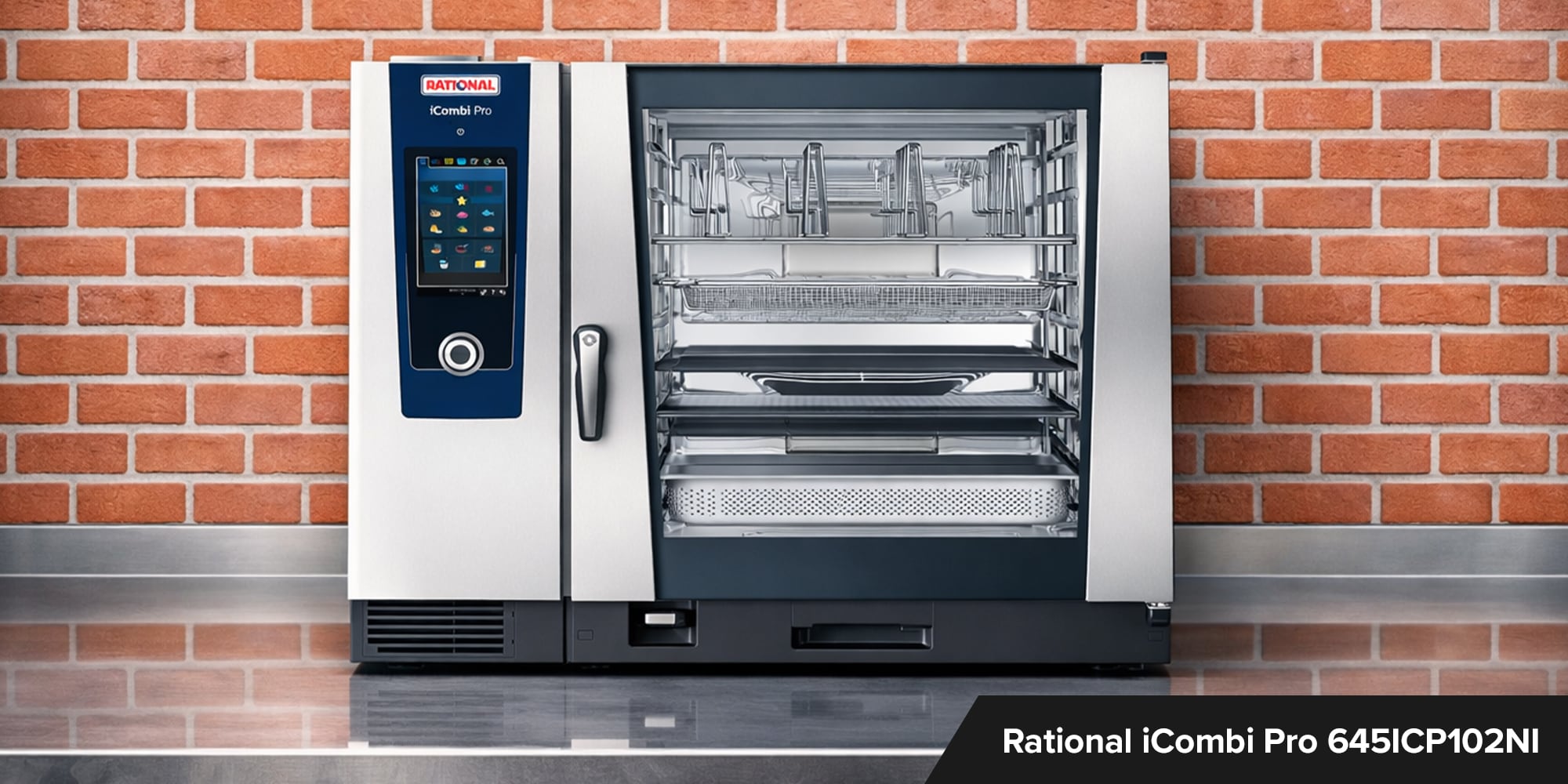
The Rational iCombi Pro 645ICP102NI is equipped with Rational's patented iCookingSuite, which offers six convenient cooking modes and the capability to detect product-specific requirements and load size. The unit is designed to accommodate up to ten full-size sheet pans or twenty full-size steam table pans. Its high-performance heating system, steam generator, and dehumidifier work together to create the optimal cabinet climate, ensuring even cooking and consistent results. In addition to its advanced cooking capabilities, the unit features cleaning settings that cater to your specific level of usage and limescale buildup, keeping maintenance tasks quick and hassle-free.
Shop the Rational iCombi Pro 645ICP102NI | $34,944.00
Read customer reviews for the Rational iCombi Pro 645ICP102NI.
- iCookingSuite ensures that your food is cooked to perfection every time
- iDensityControl maximizes your productivity while using true cooking intelligence to reduce cooking
- iProductionManager intuitively organizes and sequences the order of food production for best results
- iCareSystem identifies exactly what level of cleaning and descaling is needed
- Limited capacity compared to other units
- Users report higher risk of scale buildup
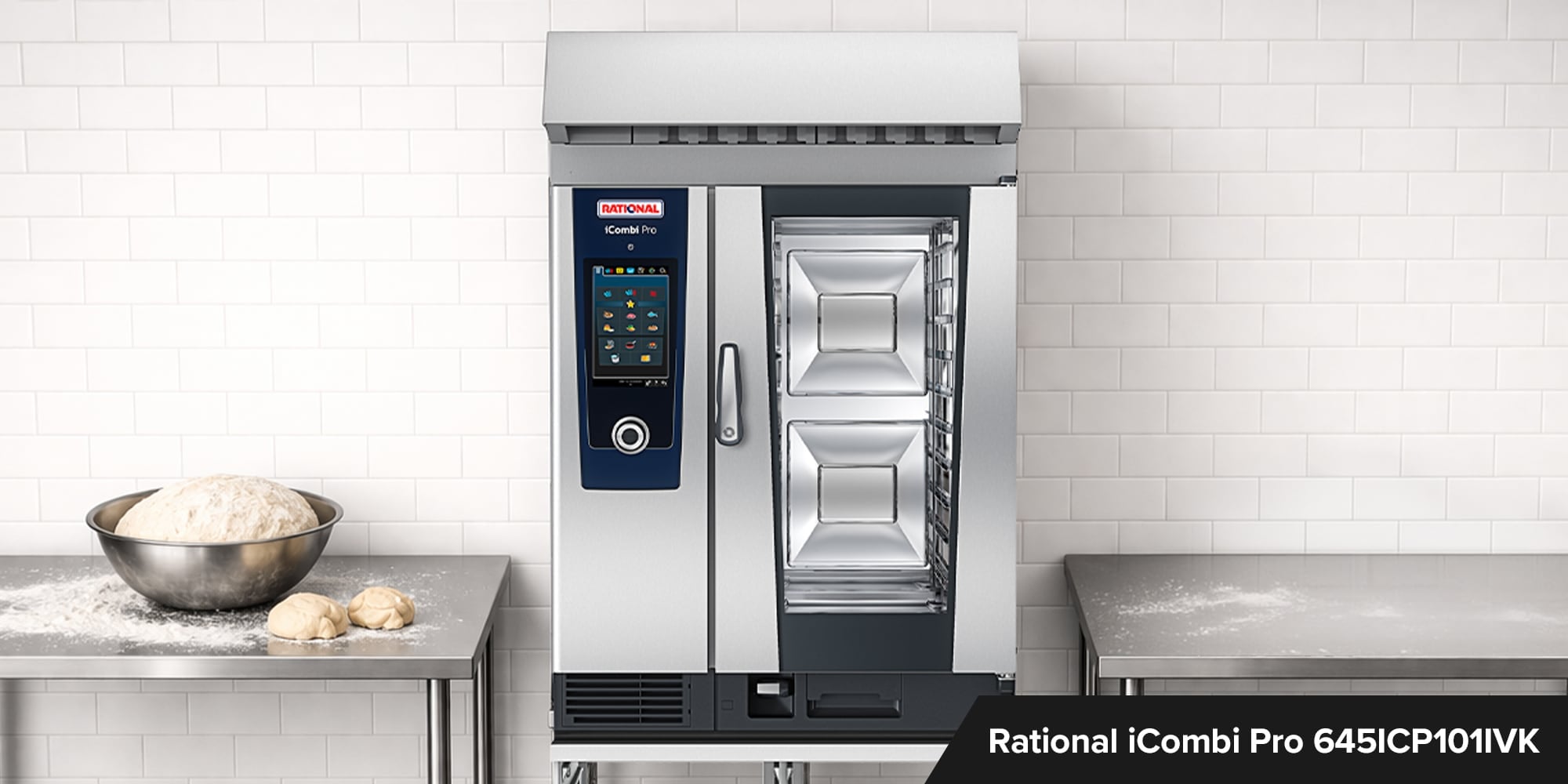
The Rational iCombi Pro 645ICP101IVK features Rational's UltraVent system, specially designed with cutting-edge condensation technology to absorb and dissipate steam. The vent system is constructed with durable stainless steel, ensuring longevity and durability even in the busiest back-of-house areas. Thanks to their patented iCookingSuite, which offers true cooking intelligence, this combi oven can adjust to specific recipes, ingredients, and cooking conditions. Program your own recipes in, or take full manual control over the cooking process, utilizing steam, convection, and combination cooking modes to achieve the desired outcome.
Shop the Rational iCombi Pro 645ICP101IVK | $30,576.80
Runner Up: Blodgett-Combi BLCT-6E-H
- Complete with everything you need to get started steaming, roasting, or baking upon arrival
- iCookingSuite ensures that your food is cooked to perfection every time
- iDensityControl maximizes your productivity while using true cooking intelligence to reduce cooking
- Included stand's feet are height-adjustable to customize with your floor
- Large design takes up additional floor space
- Users report higher risk of scale buildup
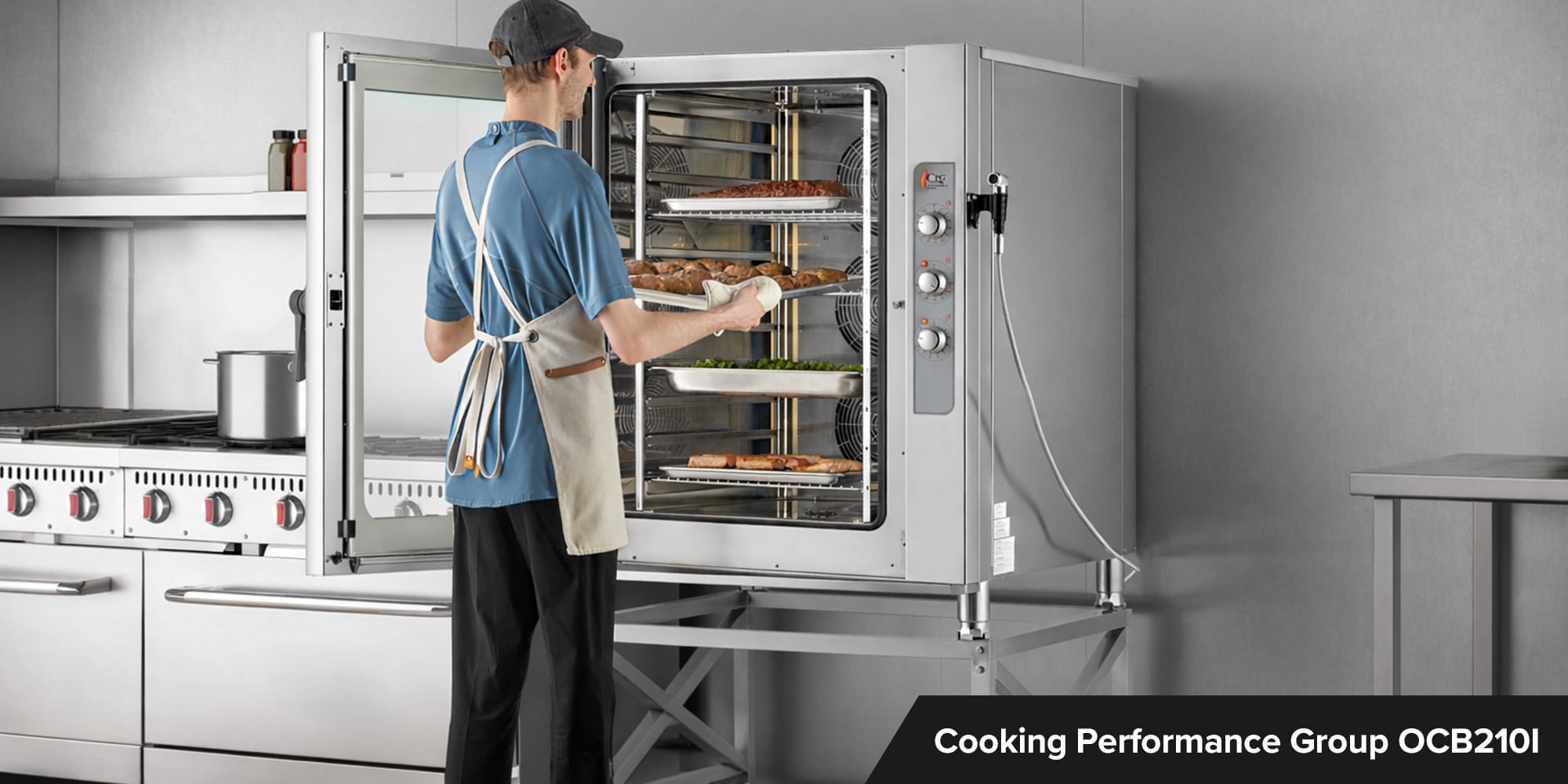
The Cooking Performance Group OCB210I is designed to meet the demands of busy kitchens without breaking your budget. It is capable of handling a maximum tray load of 20 lb. and features easy-to-use manual analog controls. Featuring an energy-efficient triple-pane glass door, this combi oven provides optimal insulation to help retain heat and improve cooking efficiency. Additionally, its durable type 304 stainless steel construction provides a sleek look and easy-to-clean surface.
Shop the Cooking Performance Group OCB210I | $7,999.00
Runner Up: Cooking Performance Group 2OCB16I
- Holds up to 10 full size sheet pans or 20 full size steam table pans
- Easy-to-use manual analog controls
- Triple-pane glass door with LED door light
- Maximum cooking temperature of 536 degrees Fahrenheit
- Users report long-term durability concerns
How We Chose These Combi Ovens
Combi ovens have revolutionized the way commercial kitchens operate by offering a versatile and high-powered cooking solution, but despite their benefits, they are still relatively new to the foodservice industry. Since many operators are still unaware of the full capabilities a combi oven can offer, we've outlined the key purchasing considerations we considered while making our product selections.
Combi Oven Steam Source
The steam source refers to how your combi oven generates steam in the cooking chamber. This steam plays a crucial role in maintaining moisture while your food cooks, reducing cook times, and preserving the texture of your signature recipes. Consider the volume of cooking you will be doing, the maintenance requirements you are willing to manage, and the power of steam needed for your specific recipes.
- Steam generator combi ovens: These combi ovens generate steam through a built-in boiler, which injects steam into the cooking chamber as the water evaporates. They are ideal for high-volume and continuous cooking operations, providing a reliable source of steam for consistent results.
- Boilerless combi ovens: Boilerless combi ovens spray water onto heating elements within the unit to generate steam. While these units use less water and require less maintenance compared to steam generators, they may not be as powerful in terms of steam production.
Combi Oven Size
Combi ovens typically feature pre-fabricated slots to insert food trays or pans, allowing for a fixed amount of food to be cooked at one time. Because of this, their size directly impacts how much you can cook at one time. Consider your kitchen's space constraints, output requirements, and the variety of dishes you'll be cooking to determine the best size combi oven for your commercial kitchen.
- Mini combi ovens: Mini combi ovens are countertop models designed to hold a limited quantity of food. They are ideal for operations with minimal output needs or lesser demand, as well as small kitchens or mobile food businesses.
- Half-size combi ovens: Half-size combi ovens hold 6-10 pans at once, offering half the capacity of a full-size unit. These are ideal for low- and medium-output kitchens, where space is limited.
- Full-size combi ovens: Full-size combi ovens are the largest option, capable of holding up to 20 pans at once. They are ideal for high-volume operations, such as catering businesses, where a large quantity of food needs to be prepared.
Combi Oven Features
As with any piece of kitchen equipment, combi ovens are not one-size-fits-all. Evaluate your output needs, space constraints, and operational requirements to ensure that you select a model that best suits your specific cooking demands.
- Double stack capacity: By stacking combi ovens on top of each other, you can save valuable counter space while maintaining high productivity.
- Field reversible doors: This feature allows you to change the orientation from which the door opens, making it easier to adapt to evolving kitchen configurations and busy operational environments.
- Programmable functionality: With the ability to program specific cooking parameters, such as time, temperature, and humidity levels, programmable combi ovens streamline cooking processes and ensure consistent results.
- Roll-in convenience: This feature is particularly beneficial for operations that require mobility or frequent repositioning of equipment, providing hassle-free maneuverability and enhanced operational efficiency.
- Ventless operation: Ideal for smaller operations or locations without proper ventilation systems, ventless combi ovens provide a convenient and space-saving solution for commercial kitchens.
No matter what kind of foodservice establishment you operate, combi ovens help you achieve your output goals without compromising on consistency. These units add value to any commercial kitchen, preparing food in the right conditions and minimizing uncertainty. By choosing the right combi oven for your commercial needs, you can set your business up to succeed.
Related Resources

April 2026 WebstaurantStore Coupon Code
Spring is here, and great deals are blooming in the warm weather here at WebstaurantStore! Stock up on much-needed supplies and equipment for important upcoming events like Earth Day and Mother's Day! Take a look at our selection of sale items below and don't forget to enter the code BLOOM26 at checkout to enjoy 15% off your purchases! Looking to save even more? Check out the new Webstaurant Rewards® Visa Business Card ! Sign up for a new card today and start earning rewards on every WebstaurantStore purchase, and save on a WebstaurantPlus subscription. Have a look at some incredible deals on disposable items with April's monthly coupon code! Whether you're looking for disposable dessert cups for spring sweet treats or compostable hot cup o

Fahrenheit and Celsius Oven Temperature Conversions
Understanding oven temperature conversions is essential for chefs and bakers who work with recipes from different regions. While the United States primarily uses Fahrenheit, most of the world follows the Celsius scale from the metric system. Converting between these measurements ensures accurate results and reduces errors . This guide provides simple oven temperature conversions to help you confidently adjust recipes. Common Oven Temperature Conversions 350 Fahrenheit and 200 Celsius are two common temperatures that chefs might need to convert, so we've done the math for you. The favorite baking temperature of 350 Fahrenheit converts to 177 Celsius. When a recipe calls for 200 Celsius, set the oven to 392 Fahrenheit. Other standard oven con

Kitchen Equipment Every Restaurant Needs
Selecting the appropriate restaurant kitchen equipment is crucial for success when opening a new restaurant or renovating your existing business. Depending on your type of restaurant, you might need to invest in fine china or extra deep fryers. We compiled a comprehensive list of essential restaurant equipment to provide a starting point for equipping your kitchen. Though this list serves as a foundation that encompasses the staples nearly every restaurant needs, you can expand it to meet your unique requirements. Download Equipment List PDF Click below to learn more about commercial kitchen equipment: Cooking Equipment Beverage Equipment Refrigeration Equipment Storage Equipment Food Prep Equipment Smallwares Janitorial Equipment 1. Cookin
Join Our Mailing List
Receive coupon codes and more right to your inbox.