



Berries are small, edible fruits that grow on shrubs, bushes, vines, or trees. Sweet and versatile, they come in a variety of styles, sizes, and colors, with regional forms and growing seasons to choose from. Whether you're mixing them into baked goods, reducing them into a sauce, or serving them on their own, they add value, flavor, and visual appeal to any menu. There are hundreds of types of berries to choose from, and to help you gain a better understanding, we'll outline the most popular varieties below so you know what to look for when you shop.
1. Blueberries
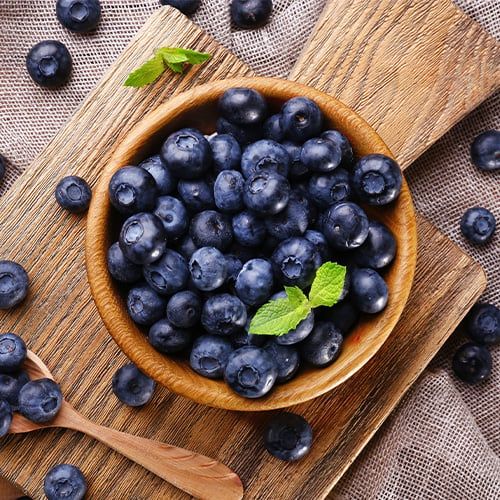
Blueberries are small, dark blue berries with a dusty, waxy surface that pack a flavorful punch. These berries boast a mild sweetness and a slight tartness, making them a great fit for both sweet and savory dishes. Native to North America, blueberries are best enjoyed during the peak harvest months of June through August. They are an excellent source of vitamin K and vitamin C, low in calories, and high in fiber, making them a smart choice for those looking to maintain a balanced diet. Furthermore, they are high in antioxidants, adding a burst of flavor to any menu while providing a range of health benefits and nutritional content.
- Blueberry size: Small
- Blueberry shape: Spherical
- Blueberry origin: North America
2. Strawberries
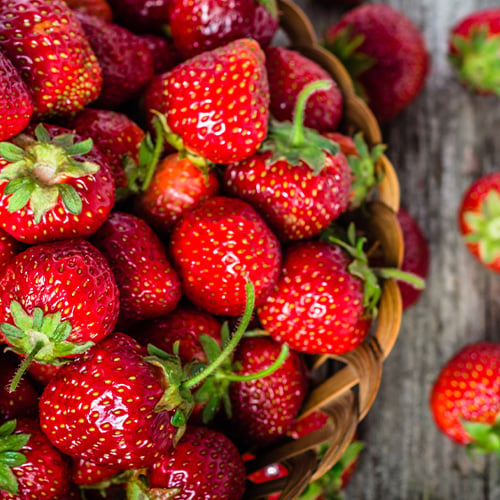
Strawberries are known for their vibrant red color, sweet flavor, and juicy texture. These large berries are easily recognizable by their external seeds and conical shape. The modern garden strawberry, a hybrid of North American and Chilean species, was first cultivated in France in the 1700s. Since then, they have become a staple in numerous types of global cuisine. Their peak growing season extends from spring to early summer, making them a seasonal delight. In terms of nutrition, they are a rich source of vitamin C. Despite their sweet taste, they are surprisingly low in calories, mainly composed of water, and offer a modest amount of fiber.
- Strawberry size: Large
- Strawberry shape: Conical
- Strawberry origin: North America and Chile
3. Blackberries
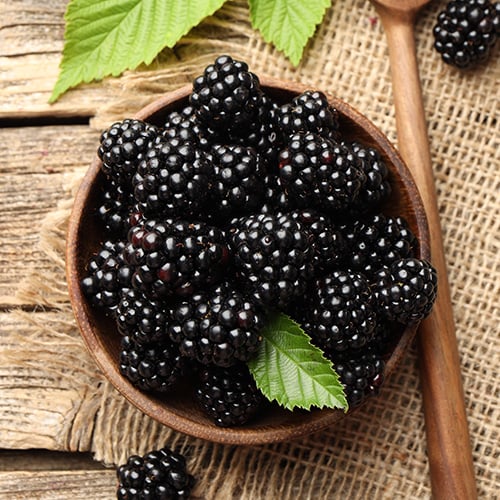
Blackberries are medium-sized cluster berries with a purple-black color and a sweet-tart taste with a slightly earthy undertone. Native to Europe, blackberries are now widely cultivated across temperate regions, including North America. Their peak harvesting season typically spans from July to September, providing ample opportunity to incorporate these flavorful berries into seasonal menus. They are rich in essential nutrients such as vitamin C and vitamin K, making them a valuable addition to a well-balanced diet. Furthermore, blackberries are low in calories and especially high in fiber.
- Blackberry size: Medium
- Blackberry shape: Cluster
- Blackberry origin: Europe
4. Cranberries
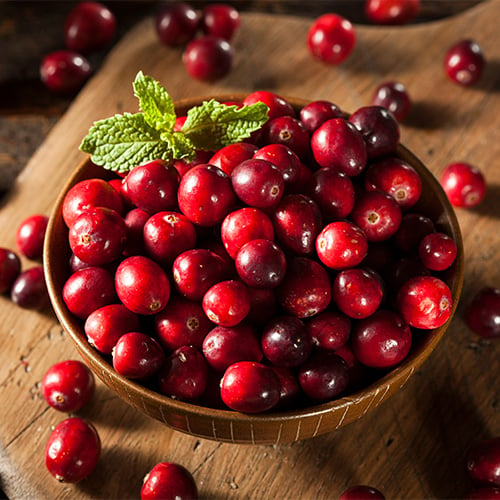
Cranberries are small- to medium-sized berries, with a firm texture and a deep red color. Commonly sold as juice, sauce, or dried fruit, these versatile berries are typically enjoyed in their processed forms rather than whole due to their sharp, tart taste. Native to North America, cranberries are harvested from September to November each year. The harvesting process often involves flooding bogs, allowing the buoyant berries to float to the surface for easy collection. They are a rich source of essential nutrients, including vitamin C, vitamin E, vitamin K, and manganese.
- Cranberry size: Small to medium
- Cranberry shape: Ellipsoid
- Cranberry origin: North America
5. Raspberries

Raspberries are medium-sized berries with a hollow core. They come in various colors, including the traditional red, as well as black, purple, and golden varieties. Known for their sweet-tart flavor and fragrant aroma, raspberries are native to Europe and northern Asia. When it comes to harvesting raspberries, they typically have a summer crop that peaks in June and July, with fall-bearing varieties extending the harvest season from August to October. In terms of nutritional content, raspberries are a good source of vitamin C, vitamin K, and manganese.
- Raspberry size: Medium
- Raspberry shape: Cluster
- Raspberry origin: Europe and Northern Asia
6. Goji Berries

With Chinese origins, goji berries are typically harvested from June to October and commonly sold dried. Also known as wolfberries, they are widely called a superfood because of perceived health benefits. They are notably high in essential nutrients such as vitamin A and vitamin C, making them a great choice for boosting your immune system and promoting overall health. Dried goji berries in particular are calorie-dense and provide a good source of protein, fiber, and iron, making them a nutritious snack option. These small, oblong berries have an orange-red color with a mildly sweet and tangy taste, often described as a cross between cranberries and cherries.
- Goji berry size: Small
- Goji berry shape: Ellipsoid
- Goji berry origin: China
7. Gooseberries
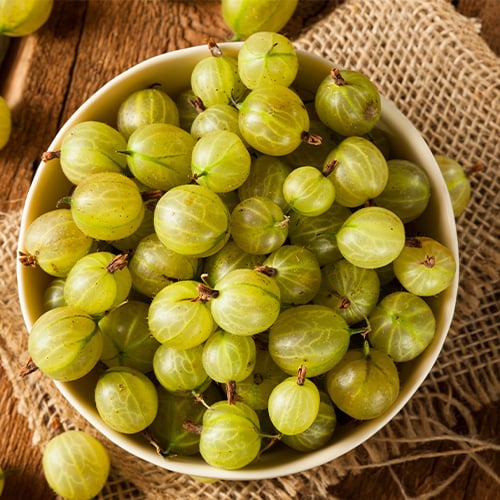
Often overlooked, gooseberries are medium-sized, grape-like berries that come in various colors such as green, yellow, red, or purple and are distinguished by visible external veining. When unripe, gooseberries are tart, but as they ripen, they develop a sweeter, grape-like flavor. Originating from Europe, western Asia, and northwest Africa, gooseberries are typically in season during early to mid-summer. They are a good source of vitamin C, low in calories, and high in fiber. Due to their unique flavor profile, gooseberries are commonly used in jams and pies.
- Gooseberry size: Medium
- Gooseberry shape: Spherical
- Gooseberry origin: Europe, Western Asia, and Northwest Africa
8. Mulberries
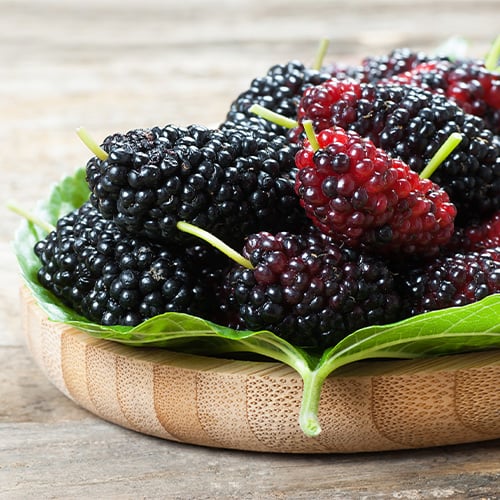
Mulberries are medium-sized, elongated cluster fruits that come in black, red, or white varieties. They taste mildly sweet, with the black type being richer and tangier. Originating in Asia, mulberries are in season from late spring through summer. They provide essential vitamins such as vitamin C and vitamin K, are low in calories, and high in iron. Whether enjoyed fresh, dried, or incorporated into recipes, mulberries are a versatile fruit that can enhance both sweet and savory dishes.
- Mulberry size: Medium
- Mulberry shape: Cluster
- Mulberry origin: Asia
9. Elderberries
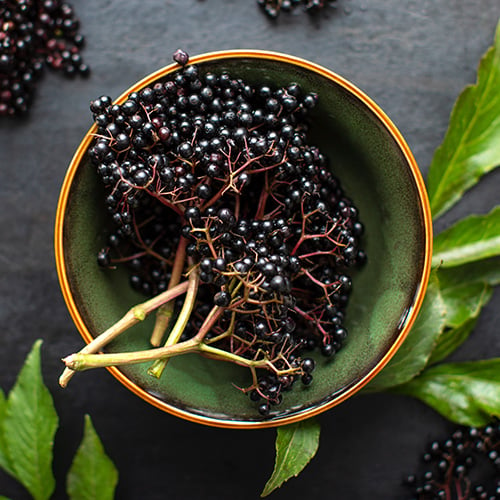
Elderberries are unique and versatile. These small berries feature a purple-black color and grow in large, distinctly drooping clusters. Native to Europe and North America, elderberries ripen in late summer, typically around August to September. They are high in vitamins C and A, as well as antioxidants, and stand out for their high fiber and calorie content, which makes them a great inclusion in hearty dishes. However, both the raw berries and their stems and leaves contain compounds that can cause nausea, and they should always be served cooked.
- Elderberry size: Small
- Elderberry shape: Cluster
- Elderberry origin: Europe and North America
10. Acai Berries
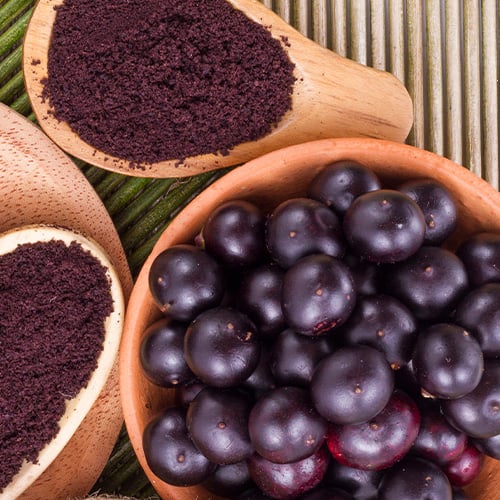
Acai berries, native to the Amazon region of Brazil, are small, deep purple berries. When whole, these tropical fruits feature a large seed that makes up most of the fruit, giving them a unique, grainy texture. In terms of taste, acai berries offer a blend of earthiness and a subtle hint of chocolate and sweetness. Their harvest season typically peaks in the Amazon's drier months, from approximately July to December. They are a good source of vitamins A and C, but what sets acai berries apart is their high fat content and antioxidant content. Because they are delicate and spoil easily, acai berries are commonly sold as a frozen pulp, powder, or puree, or made into acai bowls.
- Acai berry size: Small
- Acai berry shape: Spherical
- Acai berry origin: Amazon region of Brazil
11. Lingonberries
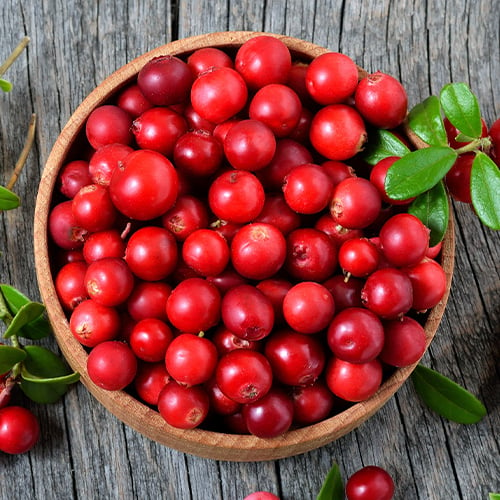
Lingonberries, with a small, red appearance, combine tartness with mild bitterness that adds depth to various dishes. Typically cooked with sugar to balance their natural flavor, lingonberries are versatile and used in both sweet and savory dishes. Originating from the boreal forests of Scandinavia, Russia, and Canada, lingonberries are harvested from late summer to autumn. They are packed with nutrients like vitamin C, vitamin E, and manganese. Lingonberries are low in calories and high in benzoic acid, a natural preservative that extends their shelf life and maintains freshness.
- Lingonberry size: Small
- Lingonberry shape: Spherical
- Lingonberry origin: Scandinavia, Russia, and Canada
12. Salmonberries
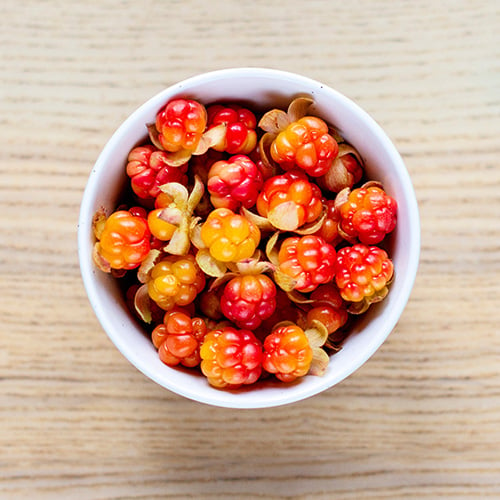
Salmonberries are a medium-sized berry variety that ranges in color from golden-yellow to orange-red. Generally described as mildly sweet and watery, some may find them slightly bland. Originating from the Pacific coast of North America, salmonberries grow abundantly from Alaska to California. A staple in the diets of the region's indigenous peoples, they were traditionally served alongside salmon roe, contributing to their unique name. They are typically ripe and ready for harvest from May to July. Salmonberries are low in calories but high in fiber, and contain vitamin C, vitamin K, and manganese.
- Salmonberry size: Medium
- Salmonberry shape: Cluster
- Salmonberry origin: Pacific coast of North America
13. Black Currants
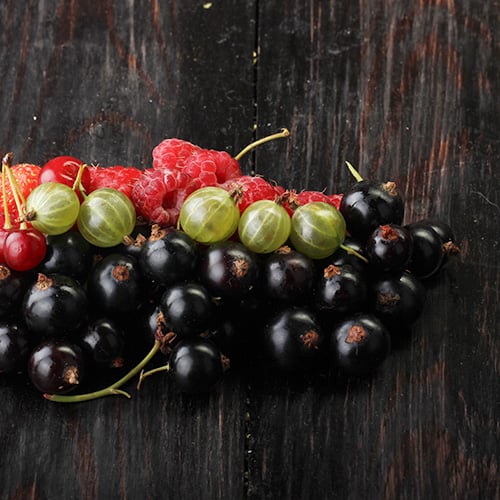
Black currants are small, glossy berries that are nearly black, with a slightly purple or violet undertone. They are recognized for their intensely tart, musky taste and traditionally hail from Europe and Northern Asia, typically harvested from July to August. One standout feature of black currants is their exceptional vitamin C content, which is far above most other berries. These berries have moderate calorie content, are rich in fiber, and are packed with antioxidants. In the kitchen, they are featured in juices, syrups, and liqueurs. Their unique flavor and nutrient profile make them a popular choice for adding depth and complexity to menus.
- Black currant size: Small
- Black currant shape: Spherical
- Black currant origin: Europe and Northern Asia
14. Boysenberries
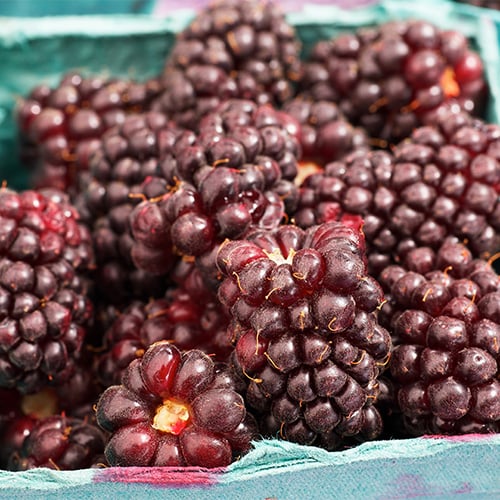
Boysenberries have a dark purple hue and a distinctive sweet-tart flavor with a wine-like richness. Developed in California in the 1920s by Rudolph Boysen, they are a hybrid of raspberry, blackberry, loganberry, and dewberry. With a short growing season from June to July, boysenberries are a seasonal delight. Despite their limited availability, these berries pack a nutritional punch, offering essential vitamins such as vitamin C, vitamin K, folate, and manganese, and are low in calories but high in fiber. Due to their delicate nature, fresh boysenberries are not commonly found in supermarkets beyond the West Coast. Instead, they are often enjoyed in frozen form or as preserves.
- Boysenberry size: Large
- Boysenberry shape: Cluster
- Boysenberry origin: California
15. Honeyberries
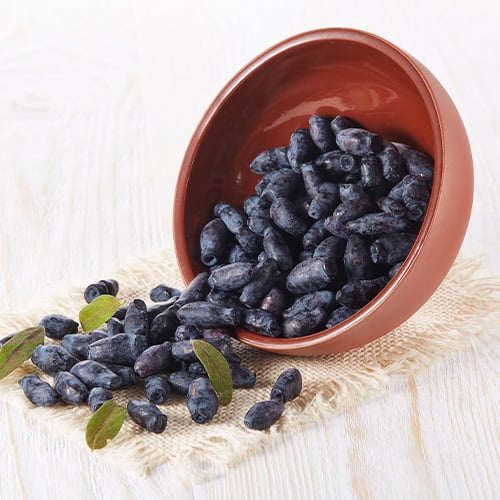
Honeyberries are small- to medium-sized oblong berries with a striking bluish-purple hue. Their flavor balances tartness and sweetness, reminiscent of a mix between blueberry and raspberry. Cultivated in Northern Russia, Siberia, and Japan, honeyberries are a cold-loving fruit and thrive in cooler climates. They are among the earliest berries to ripen, typically ready for harvest in late May to early June. These berries are a rich source of vitamin C and vitamin K, and are high in antioxidants.
- Honeyberry size: Small to medium
- Honeyberry shape: Ellipsoid
- Honeyberry origin: Northern Russia, Siberia, and Japan
16. Saskatoon Berries
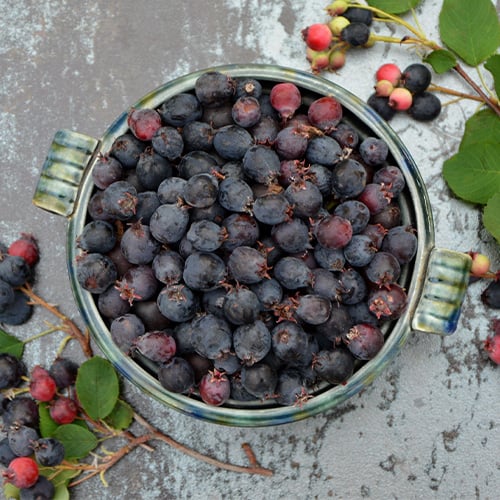
Saskatoon berries, also known as serviceberries or juneberries, are small, blue-purple berries that resemble blueberries in appearance but offer a distinctly different flavor profile. They boast a sweet taste with a nutty, almond-like undertone, attributed to the presence of seeds within the fruit. Originating from Western Canada and the Northern Great Plains of the United States, Saskatoon berries are typically harvested from June to July. They are a good source of vitamin C, iron, and manganese, with a high calorie and fiber content that produces a hearty, satisfying snack.
- Saskatoon berry size: Small
- Saskatoon berry shape: Spherical
- Saskatoon berry origin: Western Canada and Northern Great Plains of the US
Different Berry Shapes
Berries come in various shapes, influenced by the plant they grew on, the region they are from, and evolutionary adaptations. Each shape offers a unique texture and visual appeal, making it important to differentiate between them to choose the right types of berries for your culinary creations.
- Spherical berries: These are round and ball-like, with a smooth, uniform shape that looks the same from nearly every angle. Blueberries and grapes are classic examples, and their compact form makes them easy to pop straight into your mouth.
- Ellipsoid berries: These types of berries look like an oval or slightly stretched sphere, a bit longer than they are wide, with gently rounded ends. Cranberries often take this shape, giving them a tidy, egg-like look.
- Cluster berries: Rather than a single smooth fruit, these are made up of many tiny rounded segments (called drupelets) that join together into one berry. Raspberries and blackberries are the best-known examples, and their bumpy, textured surface is the giveaway.
- Conical berries: Wide at the top and tapering to a point at the bottom, these berries look like little cones or hearts. Strawberries are the classic example, and their pointed tip makes them easy to recognize at a glance.
Choosing the right berry comes down to matching flavor, shape, and seasonality to your menu: tart varieties like cranberries and lingonberries shine in sauces and preserves, while sweeter options like strawberries and blueberries suit baked goods and desserts. Buying in season, or sourcing frozen and dried forms for delicate or short-season berries like acai, boysenberries, and goji, helps you control costs and keep availability steady year-round. With so many varieties to choose from, a small, well-chosen rotation can keep your menu fresh and your guests coming back.

Over his 5+ years with WebstaurantStore, Jason has spent countless hours learning, researching, and writing about the foodservice industry. With expertise in technical topics, he takes pride in helping customers and readers understand everything from troubleshooting their equipment to the fundamentals of starting a business.
Learn more about this author and WebstaurantStore's Content Writing Team here!