
- Topics 1577
- Industrial 59
- Troubleshooting Guides 32
- Restaurant Management 144
- Bar Management 70
- Catering Tips 46
- Bakery Management 45
- Food Trucks & Concessions 41
- Advertising & Marketing 41
- Eco-Friendly Tips 13
- Facility Layout & Design 47
- Coffee Shop Tips 32
- Installation & Maintenance 63
- Janitorial & Pest Control 34
- Safety & Sanitation 121
- Startup Tips 111
- Menu Design 11
- Kitchen & Cooking Tips 106
- Hospitality Management 26
- Pizza & Sandwich Shop Tips 23
- Smallwares 42
- Food Prep 102
- Tabletop Items 21
- Disposables 28
- Calculators & Tools 7
- Consumables 77
- Warewashing & Laundry 22
- Cooking Equipment 106
- Food Storage & Refrigeration 58
- Beverage Equipment 43
- Office Supplies 6
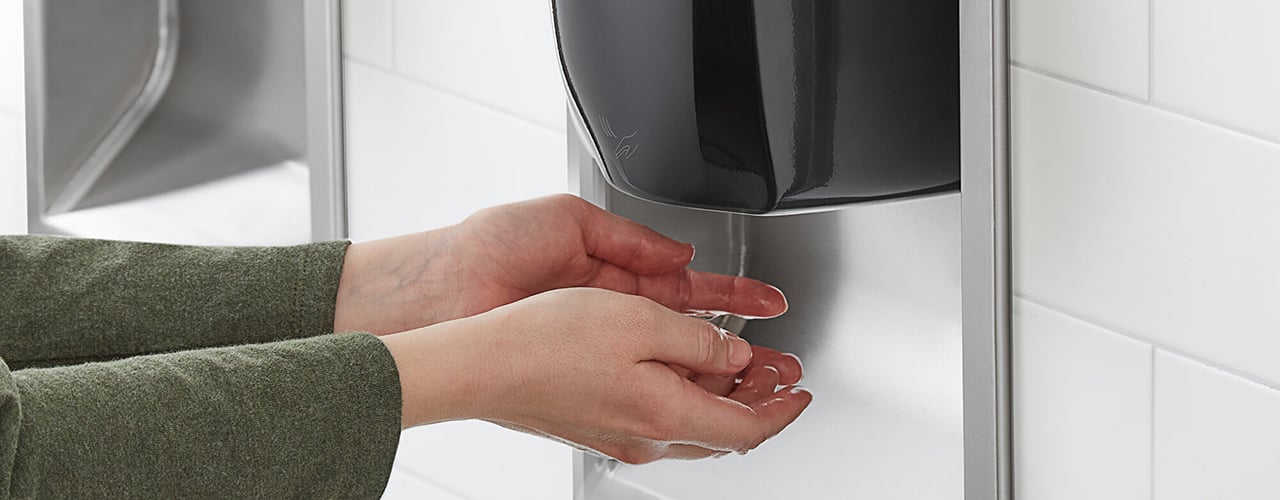
How to Choose the Best Hand Dryer
Factors to Consider When Purchasing a Hand Dryer
- Sanitation: Each hand dryer is different in its style and construction. Automatic hand dryers offer a hands-free solution, whereas push hand dryers require the user to touch the unit for operation.
- Efficiency: High-speed, automatic hand dryers use an infrared sensor, only turning on when a person's hands are within range and running for an average of 15 seconds. Traditional hand dryers must be manually turned on and run for an average of 30 seconds. They continue to run within this time frame, even if the user has walked away.
- Power: Hand dryers are designed with both high and low power. High-power hand dryers push air at a greater speed, using more energy yet reducing the overall dry time. Low-powered hand dryers release air out at a slower speed, so users can take more time to dry their hands if needed. The main trade-off between power and speed is how environmentally-friendly the hand dryer is.
- Maintenance: Hand dryers require weekly, quarterly, and yearly maintenance for peak performance. The exterior of the unit should be wiped down once per day with a damp cloth to prevent the buildup of debris within the air holes. Depending on if the usage is light or heavy, routine maintenance on the interior of the hand dryer should be performed every 4 or 12 months by a qualified professional to ensure the hand dryer meets the proper standards of care. If your unit uses a HEPA filter, the filter should be replaced every 6 to 12 months.
- Cost: Every additional feature, such as heat supply, filters, mounting kits, and other hand dryer parts and accessories influences the cost of the hand dryer, which means they can run anywhere between a few hundred to a few thousand dollars.
- Noise: The decibel level is largely dependent on the speed of the hand dryer. Typically, the higher the power, the louder the sound, although different hand dryer brands allow the noise level to be adjusted, such as with Excel's decibel nozzle. It's important to consider the environment surrounding the placement of your hand dryer to determine which hand dryer will suit your business's needs.
- ADA Compliance: All hand dryers must comply with ADA standards. In order to meet these qualifications, a hand dryer must not be placed higher than 4' from the floor, and if it's wall-mounted, must be recessed using a recess kit or not have a depth greater than 4". Traditional push hand dryers must be operable using only one hand and with a force no greater than 5 lb. Hand dryers must also be easy to visually locate.
Types of Hand Dryers
Here are some of the popular categories.
- Push Button: This type of hand dryer is operated through manual force. The hand dryer turns on when the button on the front is pushed and it runs for a predetermined amount of time.
- Automatic: An automatic hand dryer is touch-free. It turns on when hands are recognized by the infrared sensor and turns off once hands are moved away.
Mounting Types
The option is available to have a recess- or surface-mounted hand dryer, depending on the flow of your bathroom.
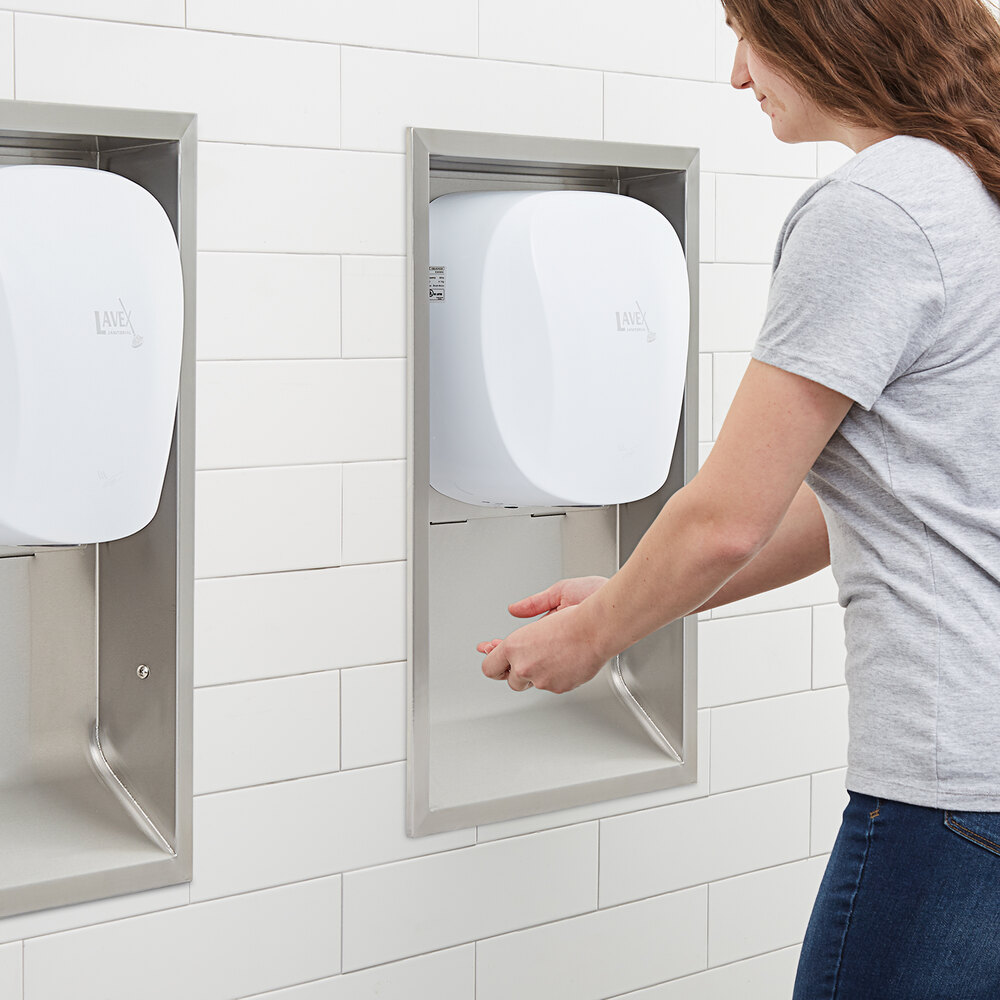
Recess Mount
Recessed hand dryers are built directly into a wall box and then installed onto a bathroom wall. They save wall space and are protected from potential damage.
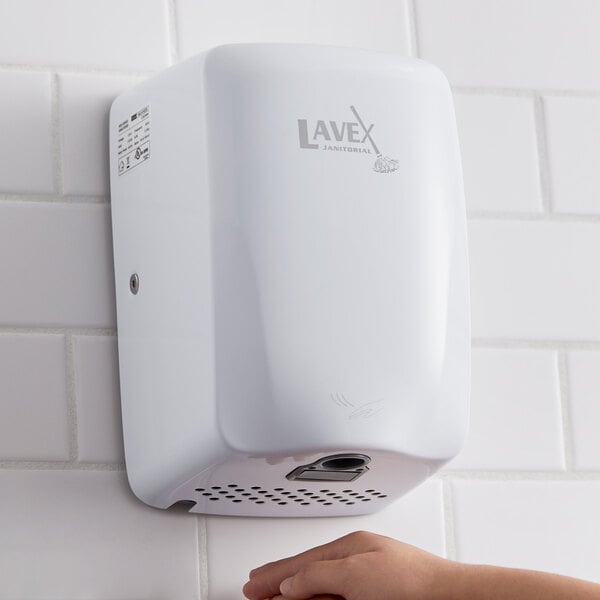
Surface Mount
Surface mount hand dryers are installed directly onto a bathroom wall. They don't require additional parts for installation and are easily noticeable.
Versatile Styles
Push button and automatic hand dryers come in 3 different styles as well.
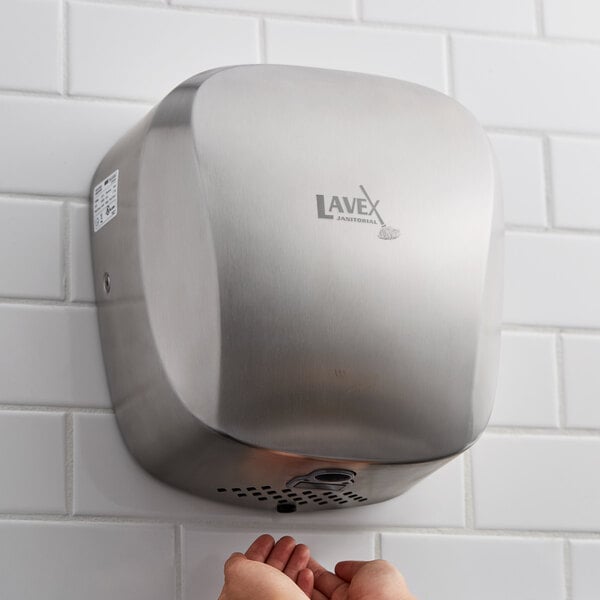
Hands Under
With this hand dryer, hot air is blown downward and away from the user. There’s no basin underneath, so the chance of germs being collected is minimal, although they can be diverted to the surrounding walls or floor.
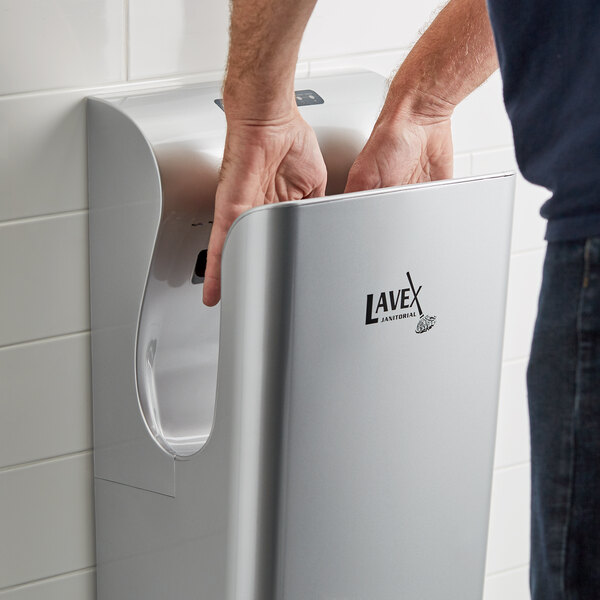
Trough
This hand dryer is designed for the user to insert their hands into it. While the dry time is relatively fast with a trough model, there is more of a chance of touching shared, unclean surfaces.

Sink Mount
This hand dryer is built directly into the top of a sink deck. The user can easily move from rinsing their hands to drying them without leaving the area. The water from the user’s hands is blown directly back into the sink, making this the most hygienic option.
Are Hand Dryers Sanitary?
Bacteria of Hand Dryers vs. Paper Towels
There are many sides to the hand dryer vs. paper towel debate. Paper towels are quiet yet wasteful, while hand dryers are louder yet produce zero waste. Hand dryers have a longer lifespan than paper towels, which must be frequently replenished. Here's a more in-depth breakdown:
- Easily accessible
- Virtually noiseless
- Can be used to open the bathroom door, reducing touchpoints
- Automatic dispenser is more hygienic than a conventional hand dryer
- Wasteful
- Costly in the long run
- Require upkeep and replenishing
- Breed bacteria if left damp and are not properly disposed of
- Certain models require the user to manually touch the paper towel dispenser
- Zero waste
- Easily accessible
- High-speed models with HEPA filters reduce spread of germs
- Touchless hand dryers reduce overall number of restroom touchpoints
- Higher upfront cost
- Can blow bacteria around if hands are not properly washed
- Noisy operation may not be suitable for some environments
- Installation fee with the potential for servicing and maintenance expenditures
- Certain models require the user to manually touch the hand dryer to activate it
HEPA Filters and Wall Guards
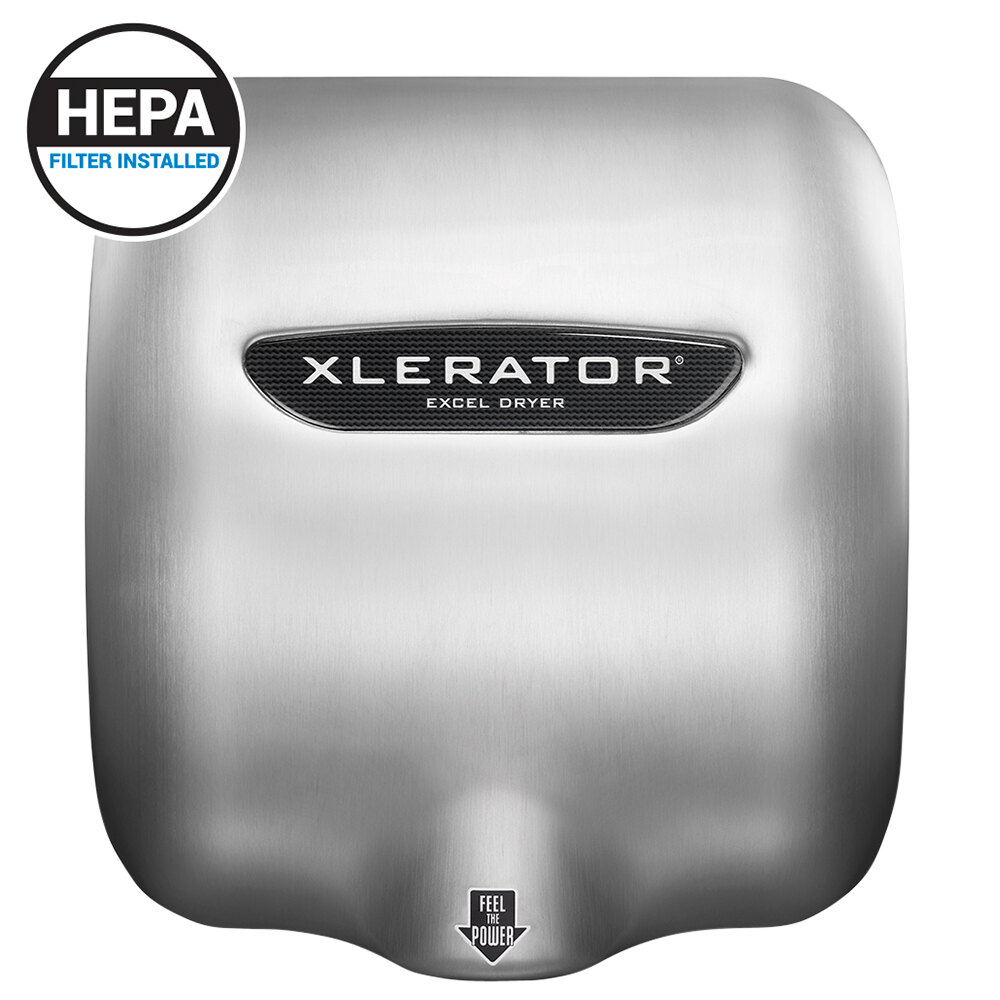
Modern hand dryers have the option to be installed with HEPA filters, which are certified to remove a high percentage of particulates from the surrounding environment. For example, 99.99% of viruses are removed from the air with XLERATOR hand dryers that feature HEPA filters. High-speed hand dryers with HEPA filters are the best defense against the spread of bacteria, outweighing both paper towels and conventional hand dryers. If your unit uses a HEPA filter, the filter should be replaced every 6 to 12 months.
Wall guards can also be used in conjunction with HEPA filters to keep the surrounding area hygienic. Wall guards feature antimicrobial designs that protect your walls from water droplet stains and other residue. This prevents bacteria from building up.
How to Install a Hand Dryer
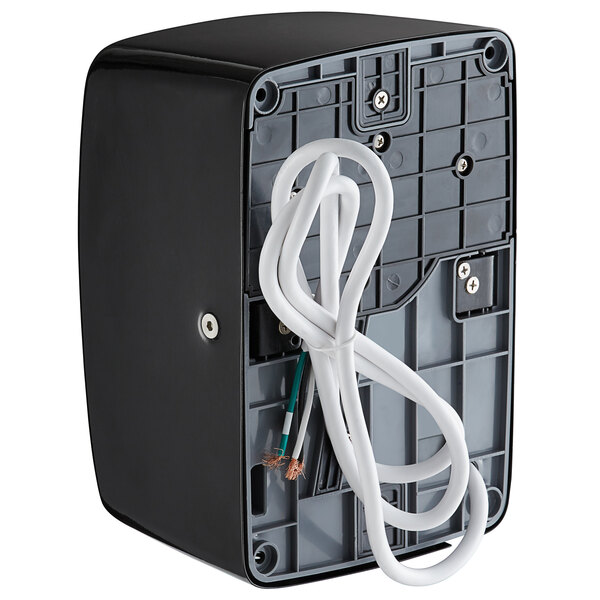
While the installation of a hand dryer is not complicated, it's highly suggested that it be done by a licensed electrician. Before installation, it's important to calculate the correct hand dryer voltage you'll need based on the current voltages being used throughout your business. A licensed electrician can determine how much voltage is available for use and compare that to the voltage settings of the hand dryers you're considering. Once installed, you can enjoy years of superior hand dryer performance!
Related Resources

June 2026 WebstaurantStore Coupon Code
Summer is upon us, and to celebrate WebstaurantStore has blazing hot deals all month long! With summer vacations underway and holidays like Independence Day rapidly approaching, now is the time to stock up on essential supplies and equipment you'll need to get through the summer season. Take a look at our wide array of sale items below and don't forget to enter the code SUMMERSALE at checkout to enjoy up to 20% off your purchases! Looking to save even more? Check out the new Webstaurant Rewards® Visa Business Card ! Sign up for a new card today and start earning rewards on every WebstaurantStore purchase, and save on a WebstaurantPlus subscription. Have a look at some incredible deals on disposable items with June's monthly coupon code! Whe

Restaurant Hand Washing Policy
Hand washing is one of the most important aspects of a restaurant's food safety program . Without a hand washing policy in place or a strong focus on consistent training, it's difficult to make sure your staff is following protocols. Keep reading to learn about the basics of hand washing and how to promote hand hygiene in your restaurant. Click below to navigate to the topic that most interests you: Where to Wash Hands How to Wash Hands When to Wash Hands Hand Care Guidelines How to Wash Your Hands the Right Way Check out our video for a step-by-step demonstation of proper hand washing: Unwashed hands provide a vehicle for germs to travel throughout your business, and any surface or item your employees touch could become contaminated. The h

Common Health Code Violations and How To Avoid Them
Restaurant inspections from your local health department can occur at anytime, without any advanced notice. Along with all the other daily stressors of operating a business, worrying about a possible health inspection can be overwhelming. We've made a health code violations list to remind you of some of the most common health violations in restaurants. Use our list as a general guide and research your local health department rules for the specific health codes for foodservice in your area. Click below to learn more about common restaurant health code violations: Time and Temperature Control Improper Food Storage Improper Tool and Utensil Storage Poor Personal Hygiene Poor Kitchen Sanitation Cross-Contamination Chemical Use and Storage Healt
Join Our Mailing List
Receive coupon codes and more right to your inbox.