Top Restaurant Design Trends of 2027
Last updated on Nov 13, 2026Corrinn McCauleyThe look of 2027 is less "photo op" and more "I could happily sit here for three hours." After years of neon signs, plant walls, and rooms built for the camera roll, guests are rewarding spaces that feel great to occupy. Comfort, beautiful lighting, and a little local personality are doing the heavy lifting. Discover the top 10 design trends we're betting on becoming big in 2027. Whether you're scouting a new restaurant location or upgrading your existing one, use our insider insight to create spaces customers want to frequent.
Minimalist Organic, with Jewel-Tone Accents
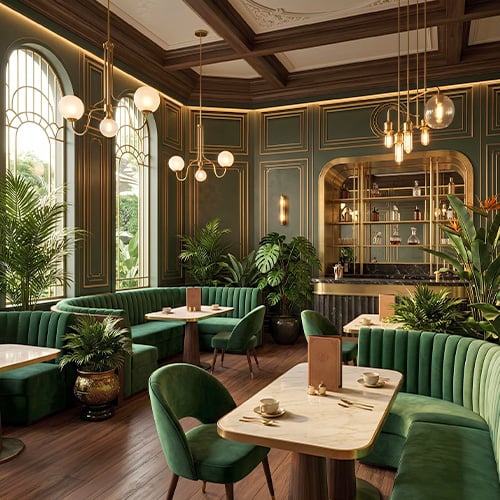
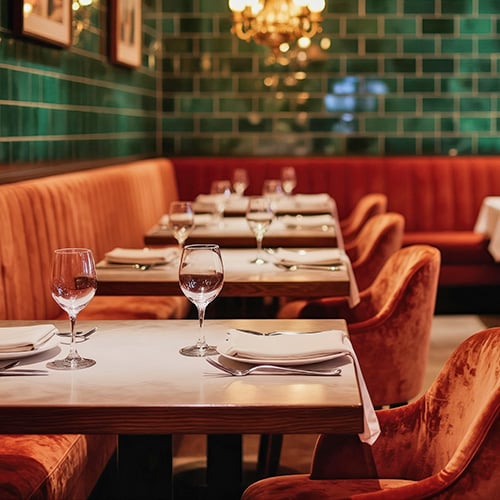
Indoor-outdoor is still the dream, but the plant-covered ceiling and the living wall have officially had their moment. When greenery is everywhere, it stops feeling special and starts feeling like a theme. The smarter move is choosing a few big artificial plants in stylish pots and placing them where they anchor a corner or soften a long wall so they feel intentional and a little sophisticated. Scale them to the room and keep them out of aisles and sightlines so they read as design instead of clutter. Then, add color, but with restraint. Keep the base neutral and earthy, then let one or two jewel tones (emerald, sapphire, amethyst, ruby) carry the room. Pick one hue and repeat it in two or three places, like a velvet banquette, a band of glossy tile, or the pots. The room will feel rich, not loud.
Comfort Over Perfection
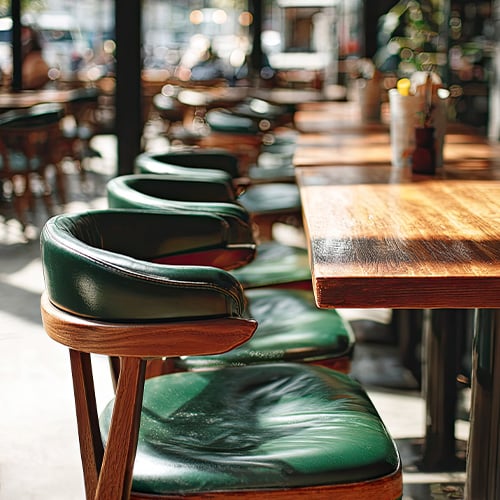
In 2027, operators are asking where the dining room can bend on perfect cohesion in exchange for real ease. The answer is in the seating. A comfortable guest stays longer, orders another round, and comes back. A guest perched on a decorative slab does not. Select upholstered seats with back support, a little extra width, and textures like velvet, chenille, and tweed that look luxe and feel even better. The bar gets the same treatment. High seating should be easy to get in and out of, with a manageable seat height, footrest, and enough space to slide in without climbing. Cushioned, back-supported bar seating tells solo diners, a growing crowd that tends to land at the bar, that they're welcome and not an afterthought. Your seating is competing with the customers' couch. Give them a reason to get off it.

Digital Printing
At the 2025 German trade show, Ambiente, a few booths featured digitally printed dinnerware, but in 2026 nearly every dinnerware booth showed some form of digital print, signaling a clear industry shift. From a technical perspective, digital print supports finer, more detailed patterns and delivers more consistent color reproduction across runs. These capabilities make it easier for manufacturers and designers to produce distinctive, intricate dinnerware designs and to maintain color consistency from piece to piece. Digital printing also streamlines customization. Shorter setup times and more flexible production allow faster turnaround for bespoke runs, making it practical for businesses to order smaller quantities with unique artwork or branding. As younger generations use social media differently and increasingly omit location tagging, logos printed on dinnerware provide a subtle, persistent way for restaurants and hospitality venues to identify and promote their establishment.
Social Geometry
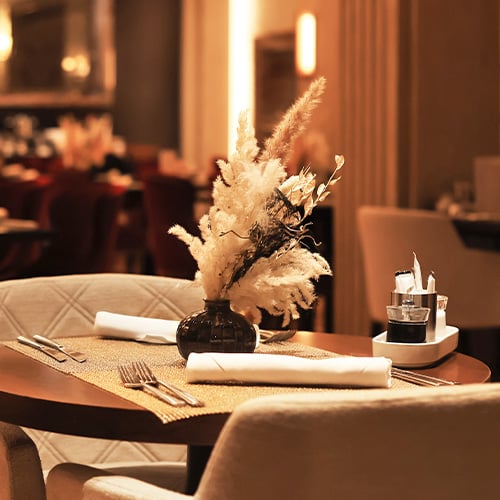
Guests don't linger when they feel exposed. A table stranded in the middle of the room is a stage, and most people would rather not perform their dinner. The fix is what designers call social geometry: arranging seating so people feel sheltered and connected at the same time. Anchor seating in corners and along walls, and keep the center-of-room tables to a minimum. Where you can't build booths, or don't want to fix your dining room layout with booth seating, recreate their comfort with chairs, using high backs, gentle angles, and groupings that let a party face each other without facing everyone else. Larger parties benefit most from this approach, since cozy, semi-private pockets let a group of six or more feel like they have the place to themselves. The same thinking applies at the bar. Point seats toward the bar and back bar rather than the dining room, so no one feels like they have an audience. Avoid reflective surfaces behind the bar, so patrons aren't watching themselves or feeling watched.
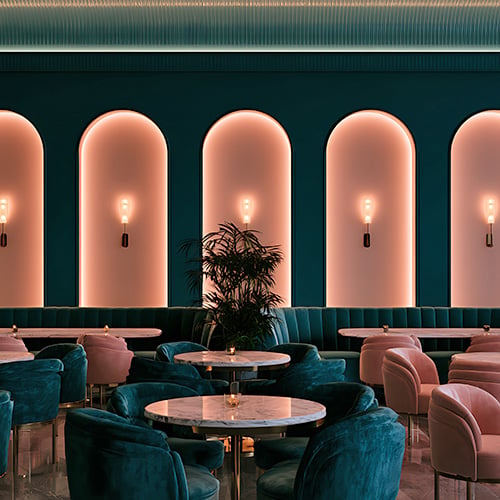
Layered Lighting (Goodbye, Big Light)
"The big light" is TikTok's name for that single, harsh overhead fixture, and Gen Z creators have turned shunning it into a viral cause. Videos tagged #BigLight have topped 100 million views. Their complaint is rooms that glow like a hospital corridor, with unflattering shadows and zero ambience. The restaurant version of the trend is open ceilings, indirect light, and a warm glow from several lighting sources at different heights. Think in three layers. Overhead light sets the baseline (put it on a dimmer and use warm, soft-white bulbs), wall lighting like sconces adds warmth, and a lamp or small fixture at the table keeps the menu readable. Keep more of the light at eye level and below, where it flatters faces and adds depth. More brands are releasing cordless, rechargeable tabletop lighting options equipped with Bluetooth apps or remote controls that sync all lamps, making it easier to turn on and set up lighting across a restaurant.
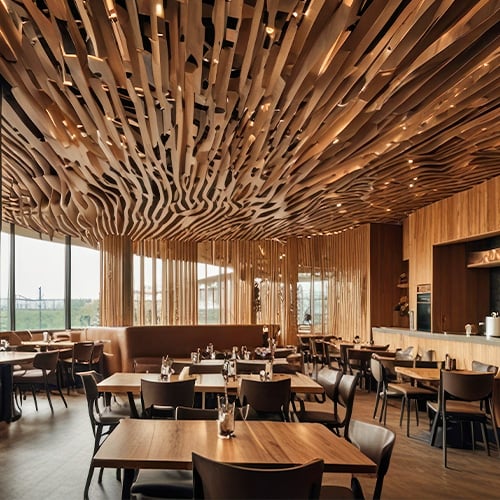
Acoustics You Can Actually Talk Over
A loud room is exciting for about 20 minutes. After that, guests are shouting, leaning in, and quietly deciding not to come back. Sound design has moved from afterthought to must-have, especially in rooms full of hard surfaces like glass, tile, and concrete. Start overhead. Textured ceilings help scatter sound waves and cut down on echo, and they look great doing it. Pair them with sound-absorbing materials such as acoustic panels, upholstered seating, curtains, and rugs, which do the heavy lifting where texture alone can't. Treat the loudest zones first, such as open kitchens, bar areas, and bare-floored corners. Try a simple test, too. Sit at your busiest table at peak hours, and if you can't talk at a normal volume without leaning in, the room needs work. If you want a tech assist, AI-driven sound systems can adjust music volume by zone and by how full the room is, keeping the vibe lively at a packed Friday dinner and gentle at a quiet Tuesday lunch.
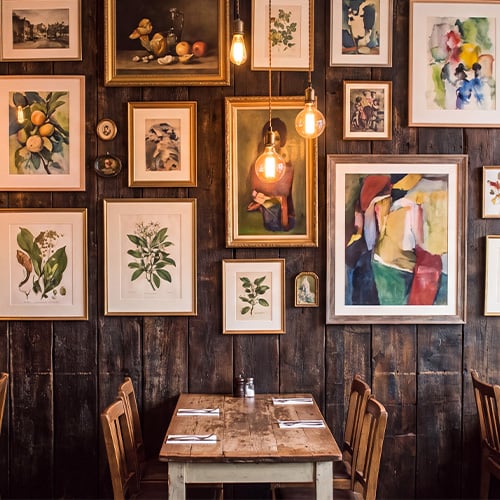
The Neighborhood Living Room
The smartest restaurants of 2027 turn themselves into the neighborhood's living room. They're flexible enough to serve different crowds at different hours and local enough that nobody could mistake them for a chain. In practice, that can look like a bright cafe by day that turns into dinner service with dimmed lighting, drapes, or movable partitions. A lunch spot can offer shelves of neighborhood makers' goods, from sauces to ceramics, which help the room feel rooted and add a revenue stream, while a wall or nook with rotating local artists gives regulars something new to see. Choose local materials like regional wood and stone, and touchpoints like coasters and napkins that tell the maker's story. Community programming like trivia nights, run clubs, and workshops gives people a reason to come back. Brunch spots can add a coffee-and-pastry window for guests who won't wait for a table, and a back room that opens for groups makes you a go-to place for parties and corporate events.
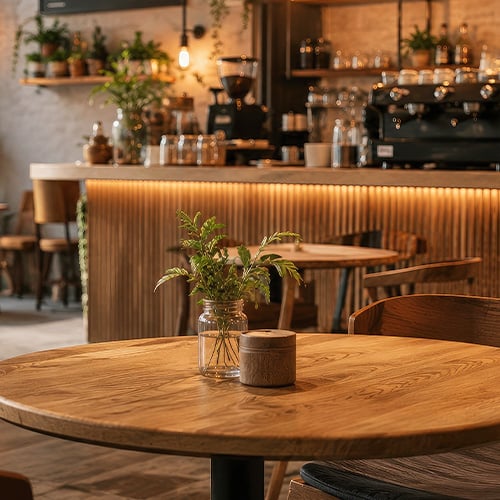
Planning Spaces with the 70/30 Rule
You pay for every square foot, so each should contribute to your business goals. A practical starting guideline is a 70/30 split, assigning roughly 70% of your space for the front of the house (where guests sit, drink, and spend) and about 30% for the back of house. This is not a hard rule; adjust ratios to fit your concept and service style. However, it provides a useful baseline, especially for small cafes where space is at a premium. The goal isn't to shortchange the back of house; it's to make it efficient. Oversized kitchens can create unnecessary travel distances for staff, reducing productivity. Well-designed kitchen layouts prioritize ergonomics and minimize movement on both sides of the service pass. Technology like a kitchen display system (KDS) that presents orders on screens with color-coding and real-time updates can also improve efficiency. Integrating inventory systems with ordering further reduces problems by preventing guests from ordering out-of-stock items.
Guest-Friendly Details
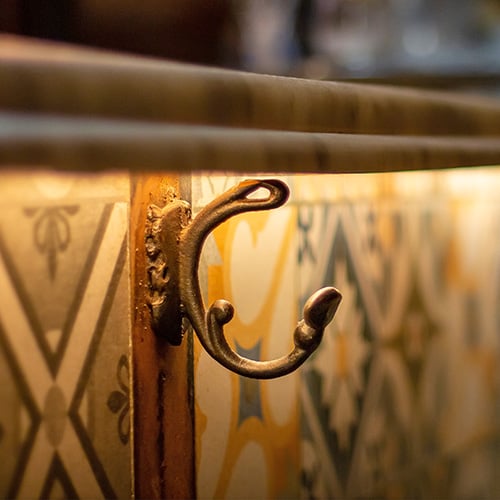
The best design upgrades are often the details guests notice only when they're missing. Predict the pain points and prevent them. Place purse hooks everywhere. Under tables, under the bar, and along walls. Purses and winter coats get a home, and your floor and chairs stay clutter-free. Clear the path to the restroom. Nobody should have to weave through a crowded dining room to find it. Unisex bathrooms with individual stalls and a shared handwashing area use space well and keep lines moving. If it's also beautiful, even better. Don't just make a space that's ADA-compliant; make it ADA-friendly. Wide aisles, tables that work for wheelchair users, and seating at multiple heights, so the bar isn't only for guests who can climb onto a tall stool. Check your local requirements and loop in your design team early.
Built to Last
Beautiful and durable are no longer an either-or choice. Chair rail and tile along the walls look good, protect against scuffs from chairs, carts, and bags, and wipe clean in seconds. It's one of the rare design choices that is both a style statement and a cost-saver, since it reduces repainting cycles and cleaning time. The same thinking applies to the rest of the room. Choose materials that can take a Saturday night, like hardwearing upholstery, easy-clean surfaces, and finishes that age well instead of looking tired. Spend your durability budget where the room takes the most abuse, like the bar rail, host stand, banquette corners, and door thresholds. Think in lifecycle cost, too. A commercial-grade chair or fabric that lasts for years beats a cheaper one you replace every season.
What Is Driving Restaurant Design Trends in 2027?
Restaurant design is shifting from spaces built to be photographed toward spaces built to be lived in. As we look ahead to 2027, five key influences are shaping the trajectory of restaurant layout, furnishings, and overall design.
- Comfort and Lingering: Guests want a reason to stay. Upholstered seating with back support, bar stools that are easy to get into, and layouts that make people feel sheltered rather than exposed turn a quick meal into a longer, higher-spending visit.
- Social Media Fatigue: Plant walls, neon signs, and rooms built for the camera roll are losing their shine. Guests are drifting toward simplicity and restrained color, and TikTok's anti-big-light movement shows how quickly a harsh, overdone look can go out of style.
- Sensory Atmosphere: Sound and texture shape how a room feels. Acoustic treatments and tactile materials like velvet and chenille create an ambience guests feel even when they can't name it.
- Soft Lights: Layered lighting creates a comfortable atmosphere. Guests love natural light too, so where windows are limited, strategically placed backlighting can mimic that soft, easy feeling. On a practical note, we recommend skipping the string lights. They look charming for about a month, then the bulbs start dying, and someone is on a ladder every week.
- Inclusive, Guest-Friendly Design: Wider seats, clear paths to the restroom, and small touches like hooks make a restaurant work for every guest, not just the ones the furniture was designed around.
- Efficient, Flexible Spaces: With every square foot paying rent, operators are leaning on the 70/30 split, compact kitchens, and rooms that shift from day to night. The best dining rooms act as the neighborhood's living room, with local retail, art, and events.
2027 is an exciting time to reassess your restaurant's decor. Guests want a comfortable space, so replace any attractive but uncomfortable furnishings. The next best place to spend is creating the ideal lighting. Whether you're integrating new trends into your existing foodservice business or starting a new concept, use this blog to guide your restaurant's design.

Corrinn loves writing, researching, and cooking, so she’s grateful she’s gotten to blend these three passions as a longform writer on the content team at WebstaurantStore for 5 years and counting. Creating resources that help operators succeed and lacing them with entertainment to make them smile is her "why".
Learn more about this author and WebstaurantStore's Content Writing Team here!