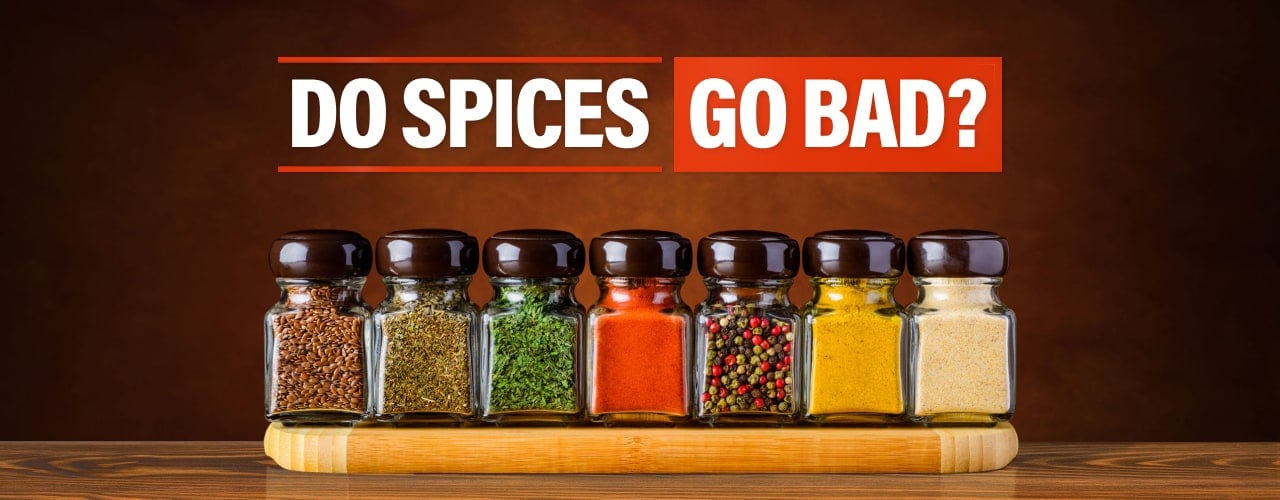
Spices don’t expire the way dairy or poultry does, but they don’t last forever either. Dried spices are shelf stable and rarely become unsafe, yet their aromatic oils fade over time, leaving jars that look fine but taste flat. How fast that happens depends on whether a spice is whole or ground and how it’s stored. In a commercial kitchen, an old seasoning means inconsistent dishes and bulk purchases losing value on the shelf. Below, we cover everything you need to know about spice storage, including how long different types of spices and herbs last, how to tell when a spice has lost its potency, and how to store your inventory so every jar stays useful longer.
Shop All Herbs and SpicesDo Spices Go Bad?
Spices do not expire in a way that would make you sick to consume them. However, they do expire in the sense that they lose their flavor potency as they pass their peak freshness. Spices are shelf stable and have no true expiration date. Store-bought spices usually carry a best-by date, which is a good prompt to retest and rotate stock. Health inspectors rarely cite spice dates, but old stock still costs you in flavor consistency and wasted product.
If you season your dishes with spices that are several years old, you may not achieve the flavor you were looking for. Flavor fades because, once exposed to oxygen, a spice begins to oxidize and break down. The natural essential oils escape and this weakens the flavor strength, aroma, and color over time. Ground spices will oxidize more quickly than whole spices due to their increased surface area.
Shelf Life of Spices

Each spice type has a different shelf life, and that can be impacted by how they are stored and if they are ground or whole.
Here are some general rules about the shelf life of spices:
- Ground Spices: Ground spices begin losing aroma within months of bottling, and they hold most of their flavor for 2 to 3 years. Grinding exposes far more surface to air, which is why ground cumin or paprika fades well before a whole seed would. Buy ground spices in quantities your kitchen can use within a season, not by the case.
- Whole Spices: Whole spices stay at peak for several months after bottling and keep most of their flavor for 3 to 4 years, with dense items like peppercorns and cinnamon sticks sometimes lasting longer. Their intact outer layer protects the oils inside, so they’re the safer choice for slow-moving inventory. Grind them to order when you need the strongest flavor.
- Spice Blends: Blends hold most of their flavor for about 2 years. Because a blend is only as durable as its most delicate ingredient, a rub or seasoning mix can taste dull before any single component has run out. Date and label each container when it’s opened or mixed, especially if you make blends in-house.
- Dried Leafy Herbs: Dried leafy herbs like basil, oregano, and parsley keep most of their flavor for 1 to 3 years. Thin leaves have little to shield them, so color and aroma go first. Rub a pinch on a clean spoon or gloved palm before a busy service.
- Seeds: Seeds such as coriander, mustard, and fennel keep most of their flavor for 3 to 4 years. The hard shell keeps the contents sealed until it’s cracked or ground. Seeds with high oil content, like poppy and sesame, can go rancid, so smell them before use.
- Fresh Herbs and Garlic: Most fresh herbs keep their quality for 1 to 2 weeks, so treat them like produce, not pantry stock. Order in small quantities and rotate them on your regular produce schedule. Whole garlic bulbs and fresh ginger last longer, but peeled or chopped garlic should be used within days, and garlic in oil must stay refrigerated and be used within your approved hold time. Anything you can’t use in time is better prepped or frozen than left to wilt in the walk-in.
- Salt: Salt holds its peak flavor indefinitely, since it’s a mineral with no aromatic compounds to lose. That makes it the one item you don’t need to date or rotate for flavor. Seasoned or flavored salts are the exception, because the added herbs and spices follow the shelf life of a blend.
How Long Do Spices Last?
Different spices within a vast culinary spice library will deteriorate at different rates due to their natural composition. Below we have a shelf life list of some of the more common seasonings that you may find in your spice cabinet.
- Allspice: 2-3 years (ground or dried)
- Basil: 5-7 days (fresh), 2-3 years (ground or dried)
- Bay leaves: 5-7 days (fresh), 2-3 years (ground or dried)
- Black pepper: 2-3 years (ground), 4-5 years (whole)
- Cayenne pepper: 2-3 years (ground), refrigerate for maximum freshness
- Chili powder: 2-3 years (ground), refrigerate for maximum freshness
- Cinnamon: 2-3 years (ground), 4-5 years (whole)
- Cloves: 2-3 years (ground), 4-5 years (whole)
- Cumin: 2-3 years (ground)
- Garlic: 3-5 months (whole bulbs, cool and dry), a few days (peeled or chopped, refrigerated), 2-3 years (ground or dried)
- Nutmeg: 2-3 years (ground or dried)
- Onion powder: 2-3 years (ground or dried)
- Oregano: 5-7 days (fresh), 2-3 years (ground or dried)
- Paprika: 2-3 years (ground), refrigerate for maximum freshness
- Poppy seeds: 2-3 years (whole)
- Rosemary: 1-2 weeks (fresh, refrigerated), 1-3 years (dried)
- Sage: 1-2 weeks (fresh, refrigerated), 1-3 years (dried), 1-2 years (ground)
- Salt: indefinite
- Thyme: 1-2 weeks (fresh, refrigerated), 1-3 years (dried)
- Turmeric: 2-3 years (ground)
How to Make Your Spices Last
Spices in a commercial kitchen usually get wasted at one of three points: when they’re ordered, when they’re shelved, and when they’re used on the line.
1. Buying Spices Correctly

Order each spice based on how fast it actually moves through your kitchen, not on the best price. Fast movers like black pepper, garlic powder, and cumin can justify bulk packaging, while slow movers like saffron, cardamom, and allspice are better bought in small containers even at a higher per-ounce cost. Check the best-by date at receiving, and buy from suppliers that turn spice inventory quickly, since product that has sat in a warehouse has already used up part of its shelf life.
For flavors that carry a dish, such as peppercorns, cumin seed, and coriander, consider buying whole and grinding in-house. Whole spices hold up longer on the shelf, and a dedicated grinder lets you prepare only what a prep list calls for. If you grind in-house, clean the grinder between spices, especially between allergenic ones like mustard and sesame.
2. Practicing Proper Spice Storage
Storage is easiest to maintain when every shift follows the same routine. When spices move out of the original packaging, transfer them to food-grade containers with tight lids, and label each one with the common name of the spice, along with the date received. Also record the lot code and best-by date from the original package, or keep the package until the container is empty. That’s the only way to act on a recall notice later. Keep lids on during service instead of leaving containers open on the line, so air and moisture stay out.
Choose a cool, dark, dry storeroom held between 50 and 70 degrees Fahrenheit, with spices on shelving at least 6" off the floor. Avoid shelves above the range, next to the dish machine, near the sink, or beside a window, since heat and moisture speed up flavor loss. Paprika, chili powder, cayenne, and other red pepper products are the exception and can go in the walk-in in sealed containers, but no dried spice should be frozen. Place new deliveries behind existing stock so older product gets used first, and treat fresh herbs separately. Most last only 1 to 2 weeks, so portion what you won’t use in time into small labeled containers with water or broth and freeze it for cooked applications like soups and sauces.
3. Using Spices Correctly
Train staff never to shake or pour spices straight over a steaming pot or pan. Steam rises into the container and causes clumping, and the moisture breaks down flavor in whatever is left in the jar. Instead, measure spices into a dry spoon or small bowl at a prep station away from the cooktop, then add them to the dish. For recipes with several spices, portion what a shift needs into smaller working containers at the start of prep, and leave the bulk containers closed in storage.
How Do You Know If Spices Are Still Good?

You can check the freshness of your seasonings with a few simple tests.
- Color Test - Spices vary in color between batches, but they also fade over time. If the color is much duller than when you bought it, the flavor has likely faded too.
- Sniff Test - Put a pinch on a clean spoon or gloved palm and rub it to release the oils. A weak aroma means the essential oils have faded. Never return the tested pinch to the container.
- Taste Test - Taste a small amount on a clean spoon before adding it to your dish, and discard the rest.
What to Do with Old Spices
Spices that are past their peak but still clean don’t have to go straight into the trash. A few techniques can bring back some of their aroma, and the rest can be used up in places where flavor strength matters less.
- Fry Your Spices Before Cooking: Cooking ground spices briefly in hot oil or fat at the start of a recipe pulls out fat-soluble flavor compounds that water can’t carry. It won’t restore oils that have already faded, but it recovers a good share of the aroma.
- Toast Spices in a Dry Pan: Dry toasting works best on whole seeds like cumin and coriander. Heat a saute pan over medium-low, spread a small amount of seeds in a single layer, and stir constantly for two to three minutes, just until the aroma turns pronounced. For larger batches, spread seeds on a sheet pan and toast in a 325 degrees Fahrenheit oven for several minutes, checking often. Ground spices scorch in well under a minute, so toast them for 20 to 30 seconds at most, or bloom them in oil instead. Move toasted spices to a clean, dry sheet pan right away, because leftover heat in the pan keeps cooking them, and let them cool completely before they go into a labeled container so no steam or moisture gets trapped.
- Repurpose or Discard Old Spices: Spices that are only a little dull can go into staff meals, large-batch stocks, or long braises, where a heavier hand makes up for lost strength. Discard anything that is clumped, musty, moldy, or showing insects, and never repurpose contaminated product.
Lifespan of Spices Chart
Check out the chart below for a visual overview of the different types of spices and their lifespans:

Spice Shelf Life FAQ
Below, we've answered some of the most frequently asked questions regarding the shelf lives of spices
Can Expired Spices Make You Sick?
Spices that are past their best-by date aren’t likely to make anyone sick just from age, since the date marks the end of peak flavor, not the point where the product turns hazardous. The bigger risks are contamination, mold, and moisture. Keep an eye on recall notices, and toss any container that is clumped, musty, or showing insects.
Age isn’t the main safety concern with spices. Dried spices have been linked to Salmonella contamination, which comes from the supply chain, not the shelf. Buy from approved suppliers, and be especially careful with spices added raw, such as finishing seasonings, because there’s no cook step to reduce risk.
Do Health Inspectors Check Spice Dates?
Spice dates are usually not checked as common health code violations because the FDA Food Code’s date-marking rule covers ready-to-eat, time/temperature control for safety foods, and dry spices fall outside that category. What inspectors do check is that any spice moved out of its original package into a working container carries the common name of the food under Food Code 3-302.12. Local codes and some care-facility surveys can be stricter, so marking each container with its received date is a low-cost safeguard.
How Often Should a Commercial Kitchen Replace Spices?
Treat the best-by date as the trigger to test, not an automatic discard. Check color and aroma, and replace anything that has faded, clumped, or smells off. Writing the received date on each container and using older stock first keeps those checks on schedule, especially for slow-moving items like cardamom or allspice.
Should Spices Be Refrigerated or Frozen?
Most spices belong in a cool, dry, dark storeroom, not the walk-in or freezer, with red peppers like paprika and chili powder as the main exception. Many manufacturers recommend refrigerating those to hold their color and freshness, but they advise against freezing any spice because it doesn’t extend shelf life. Repeatedly taking a jar in and out of the cold also creates condensation, which speeds the loss of flavor and aroma. If red pepper products do go in the cooler, keep them tightly sealed.
Spices rarely expire in a way that creates a safety problem, but the effects show up in your recipes long before an expiration date. Kitchens that order to match usage, put a received date on every container, and keep the spice shelf clear of the range hold onto the consistency regulars notice, and that matters more to the business than whatever the label says.

With almost a decade of content marketing experience, Kevin has learned the ins and outs of various business sectors. Over his four years as a Longform Content Writer with WebstaurantStore, Kevin has spent hours researching and writing about the intricacies of the foodservice industry. Specializing in marketing guides, technical writing, and structured how-to content, he enjoys providing readers with content that guides them in growing and running their bar or restaurant.
Learn more about this author and WebstaurantStore's Content Writing Team here!