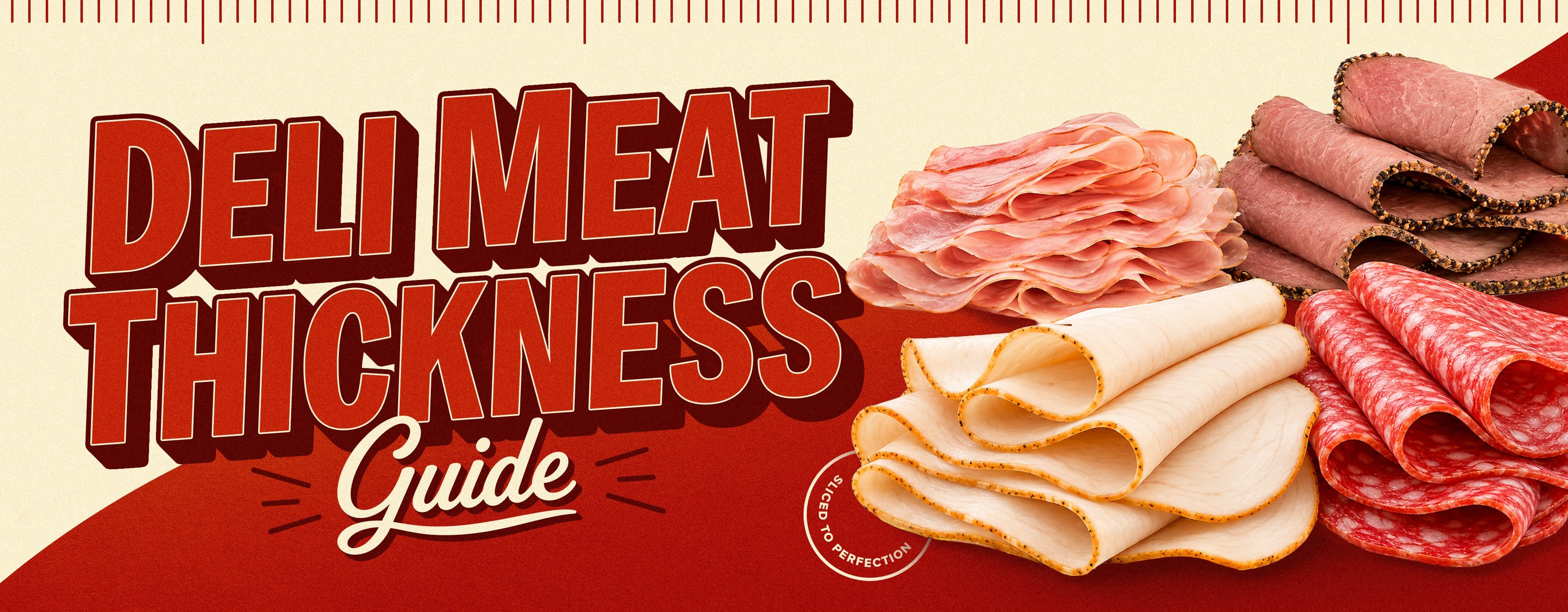
Deli Meat Thickness Guide
Last updated on Aug 20, 2026Kevin SinghelThe thickness of sliced deli products plays an important role in delivering the taste, texture, and portion size customers anticipate from common deli products. Steady slicing helps control portions and gives sandwiches, charcuterie boards, and other menu items a consistent texture customers expect. Understanding how deli slicer settings affect different thickness of cuts makes it easier to produce uniform slices while adjusting for the different meats and cheeses on your menu. Below, we cover the key concepts of deli meat thickness, allowing you to choose the right cut for each product and application.
How to Determine Deli Slice Thickness
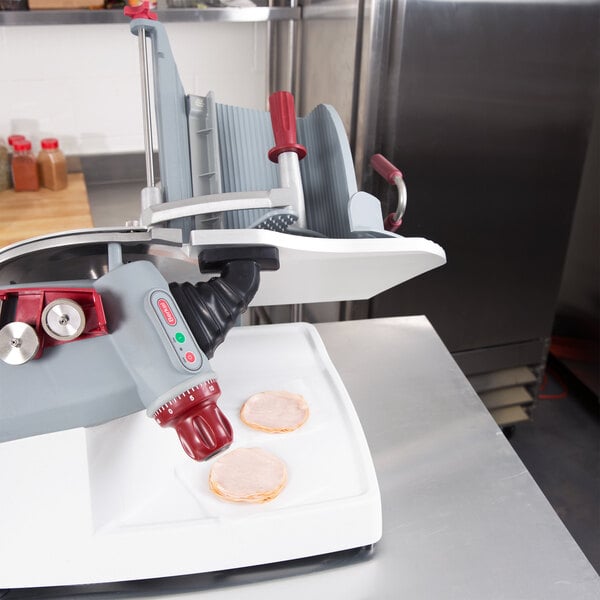
Deli thickness is determined by an adjustment knob or dial on a meat slicer, but the actual measurement represented by each setting varies by manufacturer and machine. Some slicers use numbered dials, while others may provide measurements in fractions of an inch or millimeters. Staff should consult the equipment manual rather than assume that a setting on one slicer matches the same number on another.
Although the dial establishes the physical thickness of the cut, customers will typically describe their preference using terms such as shaved, thin, sandwich style, or thick rather than specifying an exact measurement. Operators should establish the actual thickness associated with commonly requested descriptions on each slicer and train staff to use those settings consistently across shifts.
How to Change Deli Slice Thickness
To change deli thickness, adjust the thickness control dial or knob before using your meat slicer, moving it toward the thinner or thicker end of its range as needed. The direction of adjustment varies by machine, so operators should follow the manufacturer's instructions when making changes to thickness.
Deli Meat Slice Sizes
Categorization of deli thickness generally falls into four categories: shaved, thin, medium, and thick. While there are common approximate ranges for these cuts, the exact thickness can vary by slicer, product, and operator. These categories are best treated as suggested guidelines rather than universal measurements.
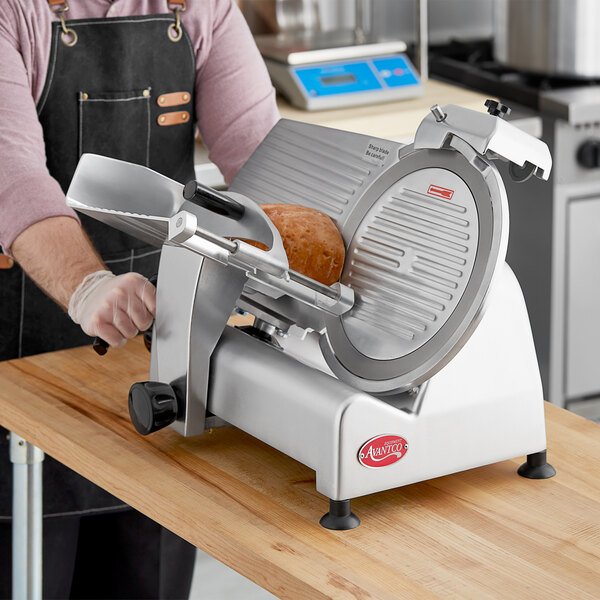
- Shaved: Shaved deli meat is typically less than 1/16" thick and has a paper-thin texture that works well for delicate meats and applications where the meat should fold or drape easily. This cut can also be useful for products such as prosciutto and other charcuterie. On average, between 30 - 50 shaved deli meat slices make up a 1 lb. order.
- Thin: Generally around 1/16" to 1/8" thick, thin slices provide more structure than shaved meat while remaining easy to layer. This is a common choice for everyday deli sandwiches featuring turkey, ham, roast beef, or similar cold cuts. A 1 lb. order of thin-cut deli product contains 25-35 slices.
- Medium: Medium slices are commonly around 1/8" to 3/16" and provide more structure and bite than thin cuts. This range can work well for sandwiches, wraps, plated dishes, and other applications where the meat needs to retain its shape. Ordering a 1 lb. order of medium-cut deli product will net you around 18-25 slices.
- Thick: Thick deli slices are generally more than 3/16", creating a substantial cut with a pronounced texture. Operators may use this style for dinner-style portions, plated dishes, or recipes where thicker pieces of meat are preferred. Around 10-18 slices are in a 1 lb. order of thick-cut deli product.
Shaved vs Thin Deli Slice
Shaved deli meat is thinner and more delicate than thin-sliced deli meat, making it easier to fold, drape, and loosely layer. The choice comes down to the product and application, with shaved cuts often suited to prosciutto, charcuterie, and layered dishes and thin cuts offering a solid choice for everyday sandwich service.
Best Deli Slice Thickness by Product
The correct thickness for a deli product varies based on the ingredient, with turkey and chicken generally benefiting from thinner cuts while roast beef and some cheeses can handle a more substantial slice. There is no single thickness that works for every deli product because texture, firmness, moisture content, and the intended preparation all affect how a food should be sliced. Additionally, customers may have different personal preferences than what is traditionally served. Operators should treat these recommendations as starting points and adjust the slicer based on the specific product, customer needs, and menu application.
| Product | Recommended Thickness | Best For |
|---|---|---|
| Turkey | Shaved to Thin (1/16") | Sandwiches, wraps |
| Ham | Thin to Medium (1/16"–3/16") | Cold sandwiches (thin) / hot sandwiches (medium) |
| Chicken | Thin (1/16") | Sandwiches, wraps |
| Roast Beef | Shaved to Medium (>1/16"-1/8") | Deli sandwiches (thin) / plated entrees (medium) |
| Cheese | Thin to Thick (1/16"-3/16") | Sandwiches (thin–medium) / melts, plated (thick) |
Because slicer dials and their measurements vary between manufacturers, users should use the machine's manual and establish consistent settings for common requests instead of assuming that the same number will produce the same cut on every unit. Establish a clearly defined slicing standard to help staff translate requests such as shaved, thin, sandwich style, or thick into repeatable cuts, making it easier to maintain portion consistency and deliver the intended texture across all of your menu items.

With almost a decade of content marketing experience, Kevin has learned the ins and outs of various business sectors. Over his four years as a Longform Content Writer with WebstaurantStore, Kevin has spent hours researching and writing about the intricacies of the foodservice industry. Specializing in marketing guides, technical writing, and structured how-to content, he enjoys providing readers with content that guides them in growing and running their bar or restaurant.
Learn more about this author and WebstaurantStore's Content Writing Team here!