Breading food is a foundational preparation technique used in commercial kitchens to add texture, protect moisture, and create the crisp finish customers expect from many fried and baked menu items. From fried chicken to vegetables and appetizers, a well-executed breading process can improve both product consistency and plate presentation across a wide range of applications. Understanding the basics of breading helps support smoother prep, more reliable results, and better control during busy rushes.
Shop All Bread Crumbs and Seasoned Breading MixesHow to Bread Food Video
Watch the video below for a visual step-by-step overview on how to bread food:
Standard Breading Procedure
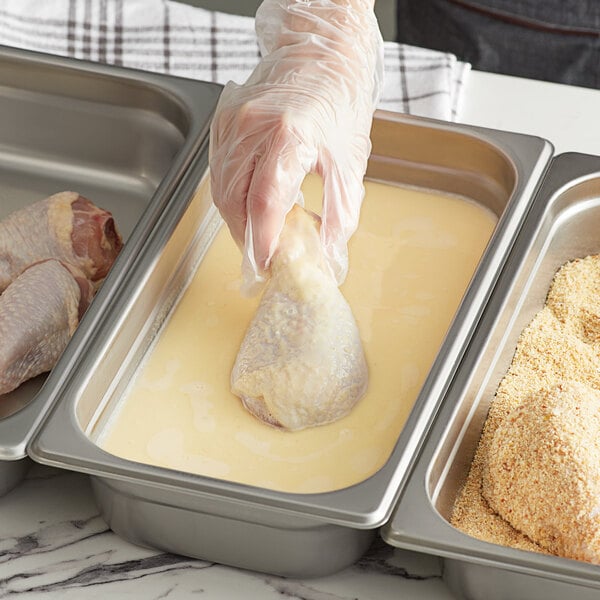
The standard breading procedure is a coating method that uses flour, egg wash, and breadcrumbs to help breading stick evenly and hold up during cooking. This process creates a more consistent crust, reduces breading loss in the fryer, and makes it easier to turn out uniform batches during service. Whether you are breading chicken cutlets, fish fillets, vegetables, or other fried items, following the same sequence helps improve both texture and presentation.
- Prep and Dry the Food: Start with a clean, trimmed portion and pat the surface dry with paper towels. Removing excess moisture helps the first layer adhere instead of sliding off during dredging.
- Coat the Item in Flour: Dredge the food lightly in flour or seasoned flour, then shake off the excess. This dry base gives the egg wash something to grab onto and helps build a more even coating.
- Dip in Egg Wash: Move the floured item into an egg wash or similar liquid binder until the surface is fully coated. The egg layer acts as the adhesive that helps breadcrumbs or breading stay attached through handling and cooking.
- Apply the Outer Breading: Press the item into breadcrumbs, panko, cracker meal, or another breading mixture until the exterior is evenly covered. A complete coating creates better color, texture, and coverage across the finished product.
- Let the Breading Rest: Set the breaded item on a sheet pan or rack for several minutes before frying or baking. This short resting period helps the layers set so the coating is less likely to fall off in the oil or on the line.
- Cook at the Proper Temperature: Fry, bake, or pan-fry the breaded food using the correct temperature for the product and cooking method. Stable heat helps the coating crisp properly without absorbing excess oil or separating from the food.
Breading Ingredients
- Your Choice of Food to be Breaded
- Milk or Buttermilk
- Flour
- Assorted Seasonings
- Breadcrumbs
- Egg Wash
Types of Batter and Breading
Breading ingredients include dry coatings like flour, breadcrumbs, panko, and cornmeal, as well as wet mixtures like tempura and beer batter. Each option changes the finished product’s texture, appearance, and hold time, so the right choice depends on your menu, fryer setup, and how the item needs to perform during service. Selecting the right coating helps balance crunch, coverage, speed of prep, and consistency from batch to batch.
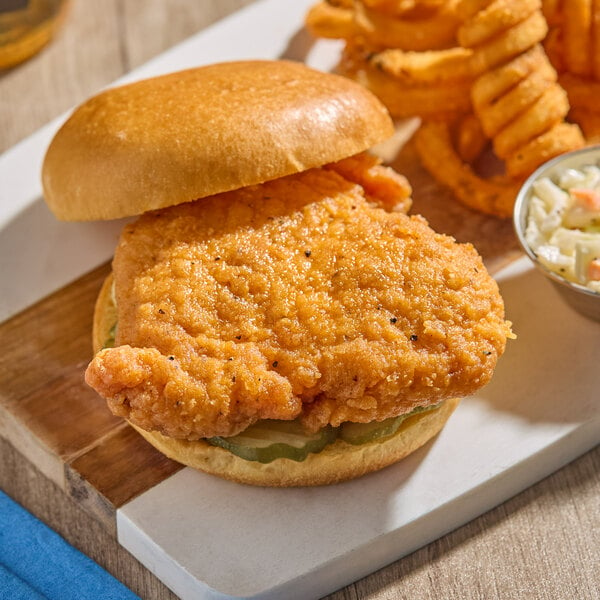
- Standard Breadcrumbs: Traditional breadcrumbs produce a more uniform, compact coating with a finer texture. They are a practical choice for operators looking for dependable browning and a classic crispy exterior on cutlets, appetizers, and center-of-plate proteins.
- Panko Breadcrumbs: Made from larger, flakier crumbs, panko creates a lighter, crunchier coating with more visible texture. Many kitchens use it when they want a crisp finish that stays airy rather than dense.
- Seasoned Flour Dredge: A flour-based coating is one of the simplest breading options and is often used for fried chicken, fish, and country-style dishes. It creates a thinner crust than heavier breadings and works well when you want even coverage without too much bulk.
- Cracker Meal: Cracker meal forms a rich, tightly packed crust with a slightly more substantial bite than standard breadcrumbs. It is often used for comfort-food applications where a fuller coating fits the dish.
- Cornmeal Coating: Cornmeal adds a grainier texture and a more distinct crunch than breadcrumb-based breadings. It is commonly used for fried fish, vegetables, and regional specialties where a crisp, coarse exterior is part of the appeal.
- Tempura Batter: Tempura batter is a light wet batter that fries into a delicate, crisp shell with minimal heaviness. It works especially well for vegetables and seafood when the goal is a thin coating that does not overpower the product underneath, and is very popular in Japanese cuisine.
- Beer Batter: Beer batter produces a puffed, golden crust with a thicker bite than lighter batters. Operators often use it for fish, onion rings, and pub-style items that need a hearty fried coating with strong visual appeal.
What Breadcrumbs Should I Use for Breading?
The best breadcrumbs for breading depend on the crust you want. Use regular breadcrumbs for a finer, tighter coating and panko for a lighter, flakier crunch. Panko is larger, lighter, and less prone to packing tightly than regular breadcrumbs, which helps it stay crispier longer and retain less oil, so many operators prefer it for fried sandwiches, cutlets, and reheated appetizers where texture needs to hold.
Breading FAQ
Below, we answer some of the most common questions regarding the breading process:
How to Make Breading Stick
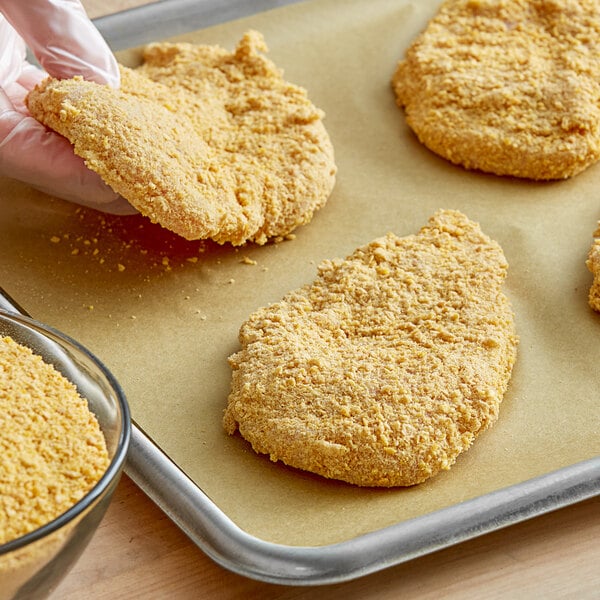
To make breading stick, start with a dry surface, follow the standard flour-egg-breadcrumb sequence, and give the coating time to set before frying. Flour acts as the base layer that helps the wet binder adhere, the egg or dairy wash holds the outer coating in place, and a short rest helps the breading attach more firmly. Pressing the crumbs on evenly and avoiding overcrowding in the fryer also reduces blow-off during service.
Do You Need to Marinate Before Breading?
You do not need to marinate before breading, as the standard breading procedure works without a marinade. Marinating is an optional step used to add flavor and, in some cases, help with tenderness or moisture retention. If you do marinate poultry, keep it refrigerated, use it within two days, and pat the surface dry before dredging.
Why Does Breading Fall off When Frying?
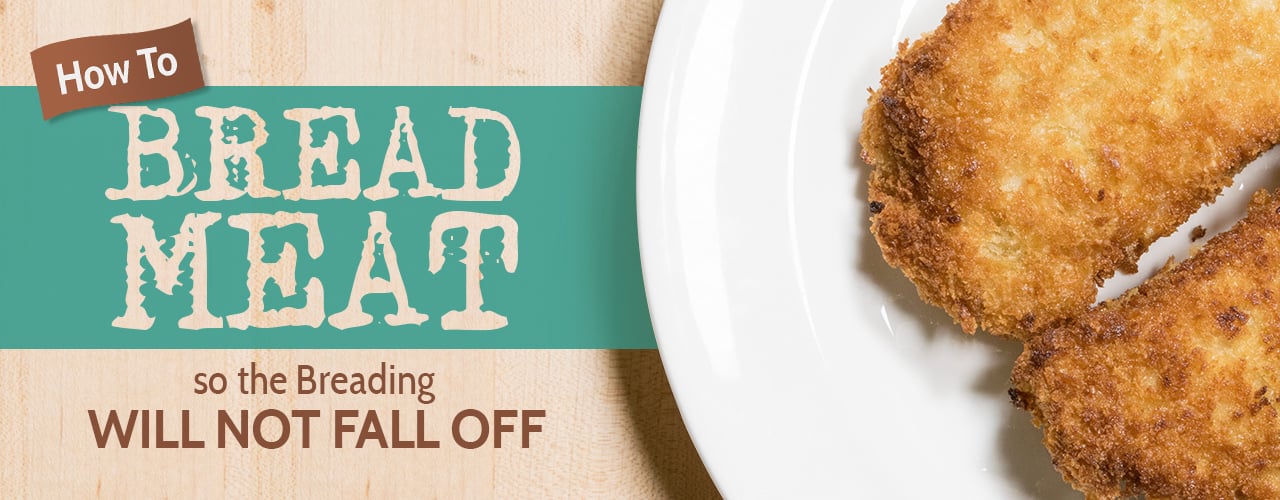
Breading usually falls off when frying because the coating was built on a wet surface, the flour layer was too heavy, the breaded item was not rested, or the fryer conditions worked against it. Excess flour can cause the wet layer to slide, skipping the rest period weakens adhesion, overcrowding disturbs the crust before it sets, and oil that is too cool can keep the coating from sealing quickly enough to stay attached.
What Is the Difference Between Panko and Regular Breadcrumbs?
The difference between panko and regular breadcrumbs is that panko is made from crustless bread and forms larger, airier flakes, while regular breadcrumbs are typically finer and more compact. This means panko gives fried food a lighter, crisper, more textured finish, while regular breadcrumbs produce a more uniform crust that works well when you want tighter coverage and a classic breaded look.
A reliable breading process gives your kitchen a repeatable way to turn out fried foods that look consistent, cook properly, and hold up under the pace of service. When your coating matches the item, the cooking method, and the texture you want on the plate, it becomes easier to control waste, protect product quality, and keep each batch aligned with your standards. From cutlets and seafood to vegetables and appetizers, understanding how breading works helps operators build fried menu items that are easier to execute and more satisfying to serve.