Food Processor vs Food Chopper vs Food Blender: What's the Difference?
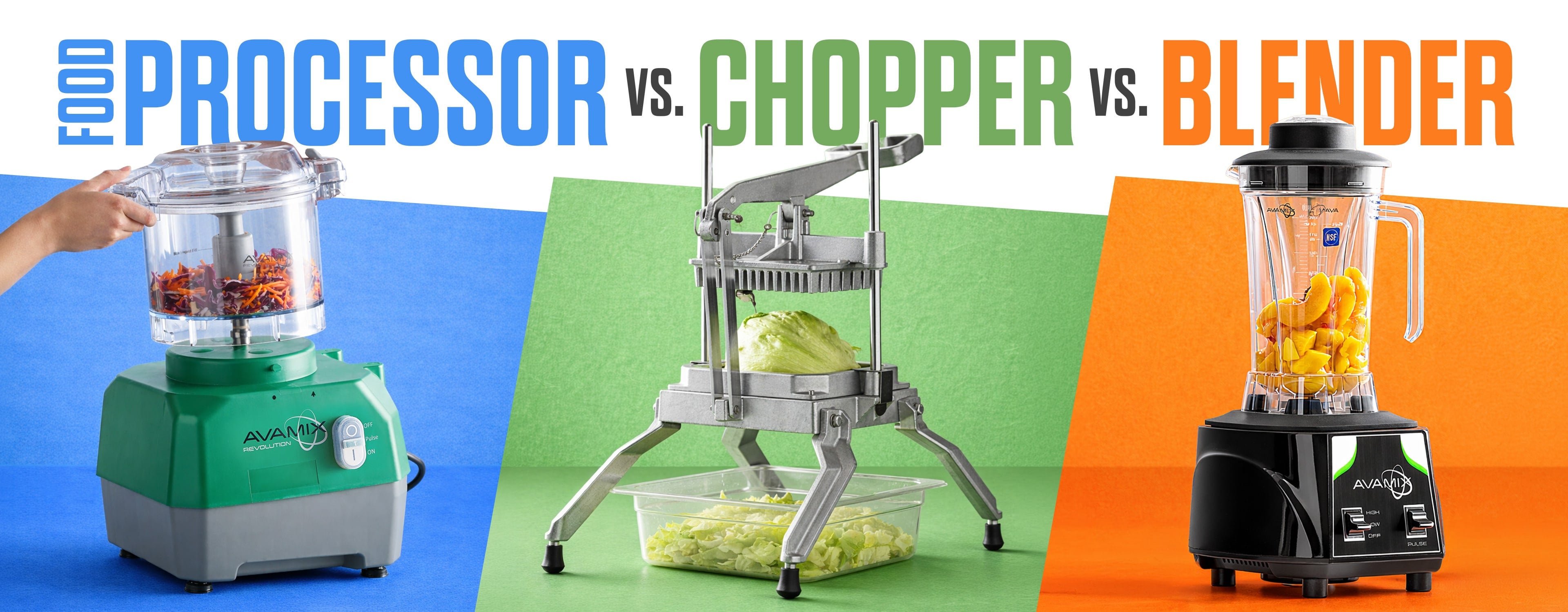
Last updated on Mar 17, 2026Kevin SinghelFood processors, food choppers, and food blenders each have their own niche uses in a commercial kitchen. Food processors are the most versatile for slicing, shredding, and mixing bulk ingredients, food choppers are best for fast, small-batch prep, and food blenders are designed for pureeing and liquefying foods and beverages. Choosing the right unit affects prep speed, labor efficiency, product consistency, and equipment spend just as much as it affects what can be made on the menu. Understanding the differences between these three machines helps commercial kitchen operators buy more strategically and avoid paying for capacity or functions they won’t use in daily operation.
What Is a Food Processor?
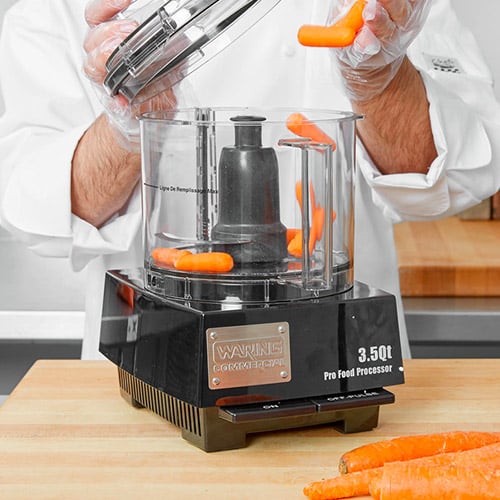
A food processor is a countertop food-prep machine that uses interchangeable blades and discs to chop, slice, shred, grate, mix, or puree ingredients quickly and consistently. It is used to reduce knife work on repetitive prep tasks such as shredding cheese, slicing vegetables, making sauces, and mixing small batches of dough or spreads. The best food processor units include a feed chute and work bowl, which lets staff process larger volumes with better portion consistency than hand prep alone. For restaurants, delis, caterers, and prep kitchens, a food processor is valuable because it saves labor time, speeds production, and helps standardize results across shifts.
How to Use a Food Processor
To use a food processor, install the correct blade or disc, load the bowl or feed chute with prepped ingredients, lock the lid, and run the machine using pulse or continuous speed until the desired cut or texture is reached. Staff typically choose slicing or shredding discs for produce and cheese, or an S-blade for chopping, mixing, and pureeing. They then process in controlled batches to keep results uniform and avoid overworking the product. After use, the unit should be unplugged and fully disassembled for cleaning and sanitizing so it is ready for the next prep task.
What to Make in a Food Processor
A food processor can make a wide range of prep items, from sliced vegetables and shredded cheese to sauces and dips. It is most useful for repeatable, labor-heavy prep work that needs to be done quickly and consistently during production.
- Sliced Vegetables: A food processor with a slicing disc can turn out uniform cuts for salad bars and sandwich stations. Consistent slice thickness improves cook times, portion control, and presentation across tickets.
- Chopped Herbs: Using the S-blade, staff can process herbs for soups, sauces, marinades, and dressings in seconds. Short pulses maintain control over texture, so ingredients are chopped instead of turned into a paste.
- Dips and Spreads: Food processors are a strong fit for thicker blends that need body and texture rather than a fully liquefied finish. They are commonly used in prep kitchens to batch sauces and spreads for service.
- Shredded Cheese: Operators can shred block cheese for pizzas, casseroles, tacos, and baked dishes much faster than hand grating. This is especially useful for high-volume kitchens that want to buy cheese in blocks and process it in-house.
- Nut Butters or Chopped Nuts: Food processors can chop nuts for baking and salad toppings or process them further into nut-based fillings and spreads, depending on the machine’s power. This is useful for bakeries, cafes, and scratch kitchens producing desserts or specialty sauces.
What Is a Food Blender?
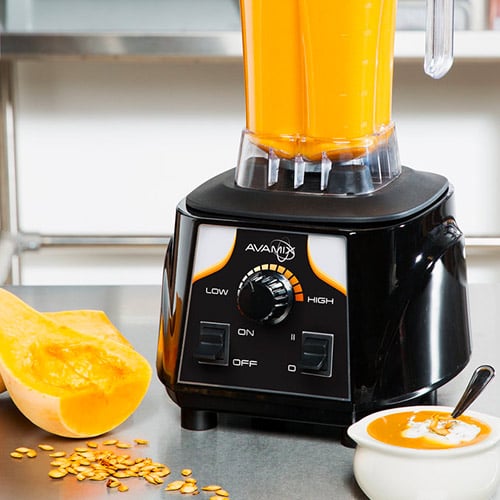
A food blender is a motor-driven kitchen machine that spins fixed blades at the bottom of a jar to blend, puree, and liquefy ingredients into a smooth mixture. Blenders are used for tasks like making smoothies, bar mixes, pureed soups, sauces, dressings, and frozen beverages where texture, consistency, and speed matter. Unlike a food processor, a blender is built for fluid movement inside the jar, which makes it better for liquids and pourable mixtures than for slicing or shredding solid ingredients. For restaurants, bars, and coffee shops, the right blender shortens prep time, improves drink and sauce consistency, and supports high-volume service.
How to Use a Food Blender
To use a food blender, add ingredients to the jar in the correct order, secure the lid, and run the machine at the needed speed until the mixture reaches the target texture. Operators usually start with liquids near the blades to improve circulation, then add softer items and heavier ingredients like ice or frozen fruit so the motor blends more efficiently. Staff should stop and scrape the jar when needed, avoid overfilling, and clean and sanitize the jar assembly after each use to maintain performance, prevent blender troubleshooting issues, and protect food safety.
What to Make in a Food Blender
A food blender is used to make smooth or pourable items such as beverages, purees, soups, and sauces. It is especially useful when recipes depend on fast blending, repeatable texture, and consistent results across batches.
- Smoothies and Fruit Beverages: Blenders are the standard choice for combining fresh or frozen fruit, juice, yogurt, and ice into a smooth drink. This makes them essential for cafes, juice bars, and breakfast programs with high drink volume.
- Milkshakes and Frozen Desserts: Commercial blenders can mix ice cream, milk, syrups, and inclusions into different types of desserts like thick shakes and blended sorbets.
- Frozen Cocktails and Bar Drinks: In bars and restaurants, blenders are used for drinks like frozen margaritas, daiquiris, and pina coladas that require ice to be crushed and incorporated evenly. Reliable blending speed maintains drink quality during rush periods.
- Pureed Soups: Blenders can turn cooked vegetables, stocks, and cream into smooth soups with a uniform finish. This is great for kitchens serving bisques, pureed vegetable soups, and menu items that need a refined texture.
- Purees for Desserts or Plating: Pastry and dessert stations use blenders to make fruit purees, custard bases, and dessert sauces with a smooth consistency, improving plate presentation and keeping batch quality consistent.
What Is an Immersion Blender?
An immersion blender is a handheld blending tool with a small blade head on the end of a shaft that blends ingredients directly in a pot, container, or food pan. It is commonly used for pureeing soups, blending sauces, and emulsifying dressings without transferring hot or liquid ingredients into a countertop blender jar. Compared with a standard blender, an immersion blender is more portable and convenient for in-container blending, but it is generally less suited for crushing large amounts of ice or producing high-volume blended drinks.
Shop All Food BlendersWhat Is a Food Chopper?
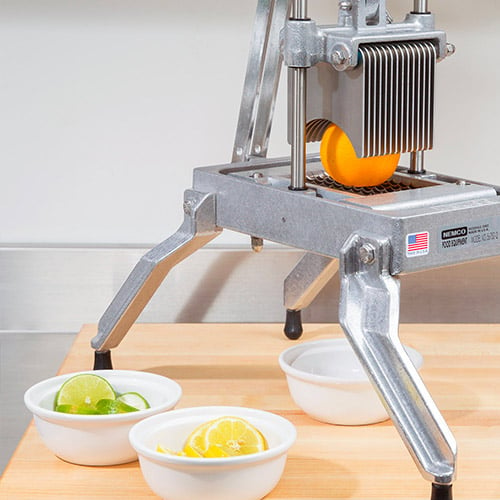
A food chopper is a commercial cutting tool that uses fixed blades and a press handle or push block to chop, dice, or cut produce into uniform pieces quickly. These units are commonly used for repetitive prep jobs like dicing onions, cutting fries, slicing tomatoes, or wedging fruit with more consistency than hand cutting. Compared with food processors and blenders, food choppers are more task-specific, but they are often faster for high-repeat cuts and easier to use on prep lines that need a predictable piece size. For restaurants, delis, and concession stands, they can reduce labor time, improve portion consistency, and standardize prep across shifts.
How to Use a Food Chopper
To use a food chopper, place the ingredient in the unit’s holder or on the blade assembly, then press the handle or push block through the blades to produce the cut size set by that chopper. Staff select the correct unit for the job (such as a tomato slicer), trim the product to fit, and run consistent batches to maintain uniform cuts and minimize waste. After use, blades and food-contact parts should be cleaned and sanitized thoroughly, especially when switching between produce types.
What to Make in a Food Chopper
A food chopper is employed to prepare uniform-cut ingredients for line service and batch prep, especially when a kitchen needs speed and repeatability more than multi-function processing. These tools are most valuable for produce-heavy stations and menu items that depend on consistent cut size for cooking time, portioning, or presentation.
- Diced Onions: Food choppers are widely used to dice onions for burger stations, salsa prep, soups, and sauce bases. A consistent dice helps with even cooking and keeps prep output more uniform during busy production windows.
- Tomato Slices: Tomato slicers produce even slices quickly, which improves sandwich build consistency and reduces slowdowns during prep. This is especially useful in delis, sandwich shops, and quick-service restaurants.
- French Fry Potatoes: Fry cutters can turn whole potatoes into uniform strips for fries, helping operators standardize cook times and yield. Even cuts also improve basket loading and finished product appearance.
- Lemon, Lime, or Citrus Wedges: Wedgers are commonly used in bars, cafes, and restaurants to prep garnish fruit fast with repeatable portion sizes. This speeds up drink service and reduces hand-cut variability.
- Cucumber Slices: Slicers can produce consistent rounds for salad bars, deli cases, and sandwich lines. Uniform thickness improves presentation and portion control across orders.
- Peppers and Onions: Chopper-style units can speed up prep for pizza lines, saute stations, and fajita mise en place. Consistent cuts also help ingredients cook at a similar rate.
Food Processor vs Food Blender
A food processor and a food blender are different in that a food processor is built to cut and mix solid ingredients, while a food blender is built to puree and liquefy ingredients into a smooth, pourable result. The better choice depends on the prep task, target texture, and how often that task repeats during a shift. Food processors support knife-work replacement jobs like slicing and shredding, while blenders are stronger for beverages, purees, and emulsified recipes.
- Primary Function: Food processors handle chopping, slicing, shredding, grating, and thicker mixing jobs, while blenders are designed for blending, pureeing, and liquefying.
- Ingredient Type: Food processors are better for solid or semi-solid ingredients like vegetables, cheese, nuts, and dough components. Blenders perform best when there is enough liquid to keep product moving through the blades.
- Texture Outcome: A food processor gives more control over coarse, chopped, shredded, or mixed textures. A blender is a better tool for smooth soups, sauces, smoothies, and other pourable mixtures.
Food Processor vs Food Chopper
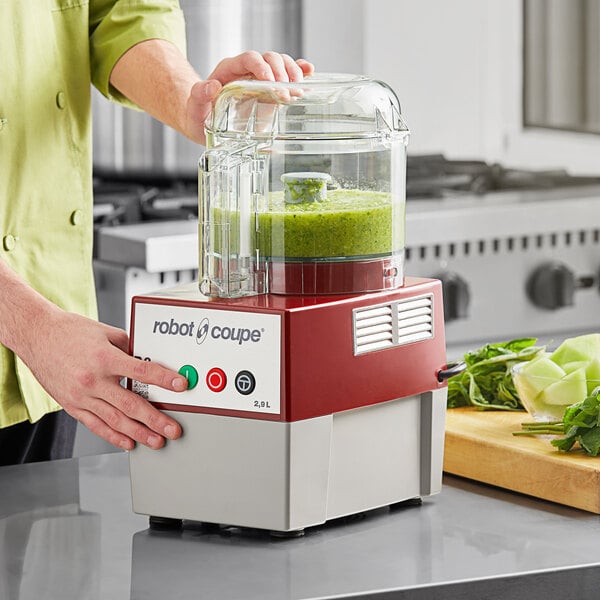
A food processor is a multi-use electric machine for several prep tasks, while a food chopper is usually a task-specific cutter designed to produce one consistent cut. Processors are better for varied prep lists that change by menu item, while choppers are often the better fit for repetitive line prep like fries, wedges, or diced produce. The right choice depends on whether the operation needs flexibility across many ingredients or fast output for one high-volume cut.
- Primary Function: A food processor is built to handle multiple prep jobs such as chopping, slicing, shredding, grating, and mixing with different blades or discs. A food chopper is built to perform a specific cutting job quickly, such as dicing onions, slicing tomatoes, or cutting potatoes into fries.
- Ingredient Type: Food processors can handle a broader range of ingredients, including vegetables, cheese, nuts, herbs, and some dough-based mixtures. Food choppers are most commonly used for firm produce and other items that match the unit’s blade pattern and intended application.
- Texture Outcome: A food processor can produce chopped, shredded, sliced, grated, or pureed results depending on the attachment and run time. A food chopper produces a fixed cut shape or size, which makes it especially useful when uniformity matters for cook time, portioning, or presentation.
Food Blender vs Food Chopper
A blender is made to combine ingredients into a smooth mixture, while a food chopper is designed to cut ingredients into uniform pieces. Commercial blenders are typically used for beverages, soups, and sauces, while choppers are used for prep-line cutting tasks that feed sandwich, salad, fry, and garnish stations.
- Primary Function: A food blender is designed to puree, emulsify, and liquefy ingredients in a jar using high-speed rotating blades. A food chopper is designed to slice, dice, wedge, or chop ingredients into defined pieces without turning them into a liquid or puree.
- Ingredient Type: Blenders work best with liquid-heavy recipes or mixtures that can circulate around the blade assembly, such as soups, smoothies, and sauces. Food choppers are better suited for whole or cut produce and other solid ingredients that need a repeatable cut pattern.
- Texture Outcome: A blender produces a smooth, pourable, or semi-smooth result depending on the recipe and blend time. A food chopper keeps ingredients in distinct pieces, which is important for applications where cut size and visual consistency affect the final dish.
FAQ
We answer some of the most common questions about blenders, processors, and choppers below:
Do You Need Both a Food Blender and a Food Processor?
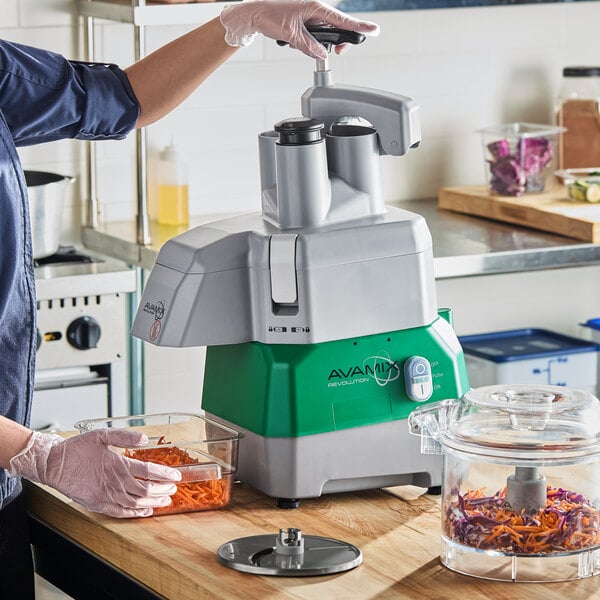
Many commercial kitchens need both a food blender and a food processor because they are built for different prep tasks. A blender is the better choice for smooth, liquid-heavy recipes like soups, sauces, smoothies, and bar drinks, while a food processor handles slicing, shredding, chopping, and thicker mixtures more efficiently. Operators with broad menus or high prep volume often get better labor savings and consistency by using each machine for the work it is designed to do.
When Can You Substitute Food Processors and Blenders?
Food processors and blenders can be substituted only for some overlapping tasks, such as pureeing sauces, blending dips, or chopping soft ingredients, but the results may differ in texture and speed. A blender can smooth out liquids better, while a food processor gives more control over thicker blends and chopped mixtures, so substitution usually works best when exact texture is not critical. In commercial kitchens, using a substitute may be acceptable during low-volume prep or equipment downtime, but it can slow production if done regularly.
Immersion Blender vs Food Processor
An immersion blender is best for blending liquids directly in a pot or container, while a food processor is better for chopping, slicing, shredding, and mixing thicker ingredients in a work bowl. Immersion blenders are especially useful for pureeing hot soups, emulsifying dressings, and finishing sauces without transferring product, which helps reduce handling and cleanup. Food processors offer more versatility for prep work because they can process solid ingredients and use different blades or discs for specific cuts.
Choosing between a food processor, blender, and commercial chopper comes down to the end result the kitchen needs to produce at speed: cut pieces, a smooth puree, or a repeatable, portion-ready slice or dice. When equipment matches the menu and the station workflow, prep stays predictable, tickets move faster, and staff spend less time fighting inconsistent batches or unnecessary cleanup. Stock the tools that solve the most frequent prep problems first, then add specialty units as volume grows so the kitchen stays cost-effective without sacrificing consistency.