
The difference between an average Bloody Mary and a great one usually comes down to the mix (and maybe the creative garnishes). Many brunch-goers are looking for the best Bloody Mary in town, and they will pay extra for a truly delicious cocktail. Making your own mix gives you complete control over the ingredients, ensuring a fresh and high-quality product. With homemade Bloody Mary mix, you can create a unique and customizable flavor profile that sets your establishment apart from the competition.
How to Make Bloody Mary Mix
Learn how to make your own Bloody Mary mix by watching our quick video:
Homemade Bloody Mary Mix
To get started with this recipe, you'll need a juicer that works with tomatoes. We recommend the AvaMix JE700 continuous feed juicer because it's suitable for making large batches of juice in busy establishments. It separates the pulp, seeds, and skin from the tomato juice so you're left with a smooth product. If you don't have a commercial juicer, you can puree the tomatoes in a food processor or blender, but you'll need to remove the solids with a strainer.
Approximate Yield: (8) 4-ounce servings
Ingredients
- 3 pounds ripe tomatoes
- 1/4 cup pickle juice
- 2 Tablespoons Worcestershire sauce
- 1 Tablespoon hot sauce (adjust to taste)
- 2 Tablespoons freshly squeezed lemon juice
- 1 teaspoon celery salt
- 1 teaspoon black pepper
- 1 teaspoon horseradish (optional)
- 4 1/2 ounces vodka (per cocktail)
Directions
- Start by washing tomatoes and removing stems
- Cut into quarters or smaller pieces
- Add tomatoes to juicer chute (should yield about 1 quart of juice)
- Mix remaining ingredients into tomato juice (use blender if desired)
- Transfer Bloody Mary mix to large pitcher and chill for at least one hour before serving
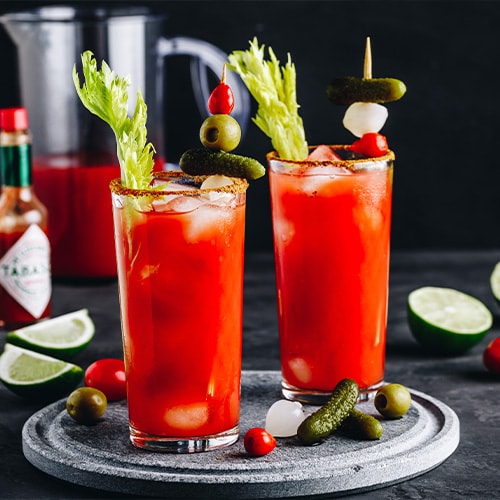
When you're ready to serve, fill a highball glass with ice, add 1 1/2 ounces of vodka, and top it off with 4 ounces of Bloody Mary mix. Give it a good stir, and garnish with celery stalks, olives, pickles, or any other garnishes you prefer.
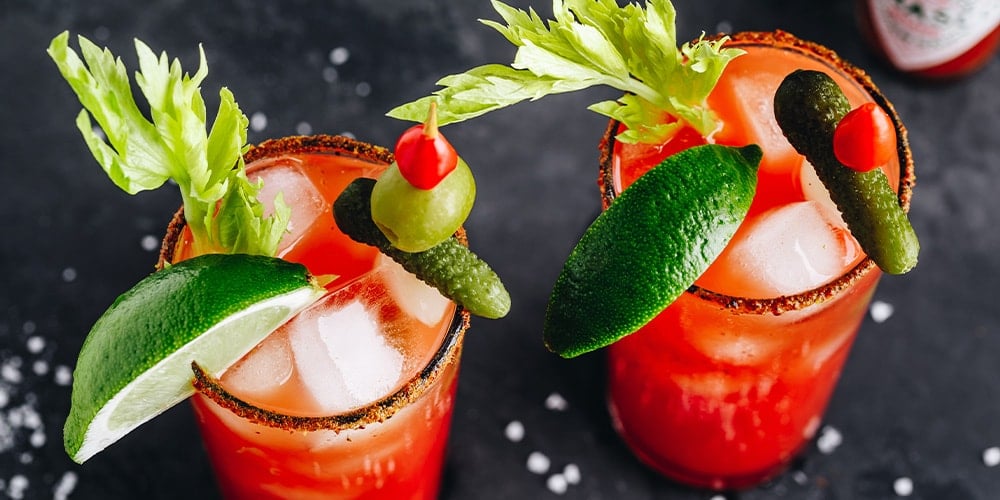
By mixing up your own blend of tomato juice, spices, and other flavorful ingredients, you have the freedom to customize the taste and intensity of your Bloody Mary cocktails. Plus, making your own mix allows you to control the quality and freshness of the ingredients, ensuring a superior drinking experience for your patrons. Whether you like it spicy, tangy, or with a unique twist, crafting your own homemade mix is a simple and cost-effective way to elevate your cocktail menu and impress your guests.
Related Resources

Different Types of Pickles
Pickles are a classic refrigerator staple, but when you go to the grocery store, you may be overwhelmed by all the different types of pickles available. Each type of pickle is canned and preserved in a unique way, resulting in distinct flavors, textures, and, therefore, uses! Below, we break down the different types of pickles that have stayed fan favorites for decades. Shop All Pickles Types of Pickles The many different types of pickles are beloved and favored for their distinct qualities. Their features range in both size and flavor. Below is a list of types of pickles with pictures to help you identify their differences: 1. Dill Pickles Dill pickles are the most commonly known pickle type. Dill pickles include vinegar, pickling salt, and dill in its brine, whether it be fresh, dried, or in seed form. Dill pickles can also be prepared to be Kosher certified. Found in many different pickle cuts, dill pickles are sold in whole, spear, chip, or slice form. Dill pickles can be used on or alongside sandwiches, burgers, and hot dogs. They also make great concession stand snacks when served alone in its whole form on a stick or battered and deep-fried in its chip form. 2. Full Sour Pickles Sour pickles are one of the pleasantly sour types of pickles that are actually lacto-fermented instead of pickled. This means that there is no vinegar in their brine like in a dill pickle brine, and instead solely relies on salt, water, and time to achieve the desired flavor. Because full sour pickles are fermented instead of pickled, they are full of healthy probiotics, making them ideal for snacking! 3. Half Sour Pickles Half sour pickles undergo the same fermentation process as full sour pickles. However, to create a more mild flavor, half-sour pickles only ferment for half the time as full sour pickles. Fermentation times depend on the company, but it can range anywhere between a week or a few months. 4. Sweet Pickles Sweet pickles are made just like dill pickles but have a low amount of sugar added to the brine mixture. Sweet pickles are not to be confused with candied pickles: pickles packed in a syrup-like brine. Because of their dynamic flavor profile, sweet pickles can be used in so many different applications: layering into a sandwich to add a sweet tang, stuffing into olives, chopping up into a relish to spoon onto hot dogs, or eating by themselves as a simple snack. 5. Bread and Butter Pickles Bread and butter pickles are a type of sweet pickle. These pickles are a true fan favorite, usually sold crinkle-cut into pickle chips. Bread and butter pickles usually have a few more inclusions than sweet pickles – none of them actually being bread and butter of course. These extra ingredients are usually onions, green or red peppers, and various seeds from coriander, mustard, and celery plants. Most commonly available in chip form, bread and butter pickles are made for piling high on juicy burgers or sandwiches with a beautiful cross-section. They’re also great fried or served alongside Texas-style BBQ. 6. Gherkins Gherkins are a type of pickle that is smaller than an average cucumber. These are usually made with young cucumbers, Kirby cucumbers, or Persian cucumbers. Gherkins can be sweet or savory, and they are usually crunchier than a dill pickle. Gherkin's small but mighty stature makes them perfect for slicing up and layering on sliders, cutting into spears for a Chicago-style hot dog, or dicing and folding into potato salads or tuna salads. 7. Cornichons Cornichons are a type of pickle that is even smaller than a gherkin, usually around two inches long or less. These French-style pickles are tiny yet pack a big punch flavor-wise with a stand-out acidic flavor. These pickles are perfect for making charcuterie boards, accompanying steak tartare, or serving alongside pate or terrine of foie gras. Their extra small size also makes them perfect for garnishing cocktails! 8. Pickled Peppers Besides cucumbers, peppers are another perfect fruit to pickle (yes, cucumbers and peppers are fruits!). Almost any pepper can be pickled, so there is a large variety to choose from with a range of Scoville units. Below are the most popular pickled pepper varieties: Pickled Jalapenos - Pickled jalapenos have a very high heat flavor. They’re best used in different Mexican dishes, such as tacos and nachos, and are also popular on pizzas. Pepperoncini - These Greek and Italian pickled peppers have a green-yellow hue and medium heat level. Pepperonicini work well in antipasti and Mediterranean-style dishes. Banana Peppers - Banana peppers get their name from their long and bright yellow banana-like look. They’re pretty mild as far as pickled peppers go, and pair very well with meats, especially with cold cuts on sandwiches or tossed in a tuna salad. Cherry Peppers - Cherry peppers look like heart-shaped cherries and have a fiery red hue. Their spice level can range from mild to very hot, and are great stuffed with cheese, tossed in a pasta salad, or as a topping on pizza. 9. Specialty Pickles While cucumbers and peppers are the most popular produce to pickle, the preservation doesn’t stop there. Vegetables that can be pickled are beets, cauliflower, onions, okra, carrots, and really any hearty vegetable. There are even popular pickled mixes such as giardiniera! Pickling isn’t just limited to vegetables. Fruits, eggs, meats, and fish have been pickled for centuries, preserving the delicacies and curating an even more flavorful end product. How are Pickles Made? Check out our video to learn about the three methods of pickling: <iframe itemprop="embedURL" width="560" height="315" src="https://www.youtube.com/embed/TdyDXGrtBnA?si=J7QdgZ9S6P4q3v6t?rel=0" frameborder="0" allowfullscreen></iframe> Pickles are made by submerging food in an acidic liquid. There are three different ways to go about pickling: refrigerated, processed, and fresh-packed. Below are the three pickling methods to use, each creating its own distinct flavor and texture: Refrigerated: Fresh cucumbers are submerged into jars with a pickling liquid of water, canning salt, and pickling spices and immediately put into the refrigerator. Pickles made with the refrigerated method produce ultra-crispy pickles but have the shortest shelf life of the three pickling methods. Processed: Also known as “cured” or “fermented”, processed pickles are added into a jar and covered in a salt-and-water-calculated brine. After being fermented for a few months, the pickles are taken out, rinsed, and submerged in a new liquid with pickle seasonings. This method takes the longest to prepare but has the sharpest and funkiest flavor. Fresh-Packed: The fresh-packed pickling method uses vinegar and pickle seasonings to preserve the cucumbers, which are then vacuum-sealed, pasteurized, and cooled, creating a shelf-stable product until the jar is opened. Fresh-pack pickles keep a lot of their color, are crispier than processed pickles, but aren’t as crispy as refrigerated. They’re also more flavorful than refrigerated pickles, but not as pungent as fermented pickles. Preserving in-season fruits and vegetables means you get to relive the seasons at your leisure. Thanks to pickling, we can enjoy summer-season cucumbers aged into different types of pickles throughout the entire year.

Worcestershire Sauce: What Is It and How to Use It
Few condiments punch above their weight quite like Worcestershire sauce. This dark, savory liquid has been a quiet workhorse in professional kitchens for generations. From marinades and salad dressings to BBQ sauces and classic cocktails like the Bloody Mary, Worcestershire sauce adds depth, complexity, and a hard-to-pin-down savory note. We’ll break down exactly what Worcestershire sauce is and how culinary professionals can put it to work. Shop All Bulk Worcestershire Sauce What Is Worcestershire Sauce? Pronounced wuhs-ter-sher (or wuhs-ter-sheer, depending on who you ask), Worcestershire sauce is a fermented condiment that originated in Worcester, England, in the early 19th century. It’s most famously associated with Lea and Perrins, the brand credited with commercializing the sauce after discovering that aging the mixture dramatically improved its flavor. Worcestershire sauce is built on a complex flavor base of vinegar (distilled or malt), molasses and/or sugar, tamarind, salt, and anchovies. That foundation is layered with aromatics like garlic and onion and a carefully balanced blend of spices that may include cloves, black pepper, chiles, mustard seeds, ginger, cardamom, coriander, and cinnamon. At its core, Worcestershire sauce is designed to enhance other ingredients rather than dominate them. Think of it as a flavor amplifier adding umami, acidity, sweetness, and spice all at once. What Does Worcestershire Sauce Taste Like? Worcestershire sauce is best described as savory, tangy, slightly sweet, and umami-forward. It’s not meant to be tasted straight in large quantities. Instead, it works behind the scenes, rounding out flavors and adding complexity to dishes. Flavor profiles you’ll notice are: Acidity from vinegar and tamarind Sweetness from molasses or sugar Saltiness and umami from anchovies Subtle warmth from spices How to Use Worcestershire Sauce If you’re wondering how to use Worcestershire sauce, the better question is: what can’t you use it for? Worcestershire sauce functions as a behind-the-scenes flavor enhancer, adding depth without calling attention to itself. Its blend of acidity, sweetness, savory notes, and spice makes it an extremely versatile tool for both foundational recipes and finishing touches. A little goes a long way - just a splash can deepen flavor and round out a dish without overwhelming it. Common Worcestershire Sauce Applications These are the classic, high-impact uses that Worcestershire sauce is known for: Marinades for beef, pork, and poultry Burger blends and meatloaf mixes BBQ sauces and steak sauces Salad dressings, especially Caesar and vinaigrettes Soups, stews, and braises Sauteed mushrooms and vegetables Cocktails such as Bloody Marys and Micheladas Unexpected but Effective Worcestershire Sauce Applications Here are some less obvious applications where Worcestershire sauce adds subtle complexity, taking ordinary dishes to unforgettable: Roasted vegetables, especially brassicas and root vegetables Cheese-based dishes like mac and cheese, beer cheese, or Welsh rarebit Fried food batters or seasoning blends Compound butters for steaks, seafood, or grilled vegetables Pan sauces and gravies after deglazing Deviled eggs Sweet-savory applications such as BBQ glazes or caramelized onions Grains and legumes, including lentils, beans, rice, and farro Dips and spreads like aioli or onion dip Tomato-forward dishes such as tomato soup or marinara Worcestershire Sauce FAQs We’ve cleared up some of the most common questions about what’s in Worcestershire sauce. Is Worcestershire Sauce Vegan? Traditional Worcestershire sauce is not vegan, as it contains anchovies. However, vegan and vegetarian versions are widely available and typically replace anchovies with ingredients like soy sauce, mushrooms, or seaweed to achieve a similar umami profile. Does Worcestershire Sauce Have Anchovies? Yes, most traditional Worcestershire sauces include anchovies as a core ingredient. They’re fully dissolved during fermentation, which is why the sauce doesn’t taste overtly fishy but still delivers strong savory depth. Does Worcestershire Sauce Have Alcohol? Some Worcestershire sauces contain trace amounts of alcohol due to the fermentation process. However, the alcohol content is typically minimal and comparable to other fermented condiments. With its layered flavor profile and wide range of applications, Worcestershire sauce is a pantry staple that belongs in nearly every foodservice operation. With its blend of acidity, savory, sweetness, and spice, it functions as both a flavor enhancer and a finishing tool, helping chefs round out dishes, boost meatiness, and add nuance to otherwise bland ingredients without introducing a dominant note. Now that you know all the ways Worcestershire sauce can elevate a dish, try adding it to that recipe you’ve been fine-tuning - the one that still feels just a little off - and see if it’s the secret you’ve been missing.

Mimosa Recipes
Mother's Day offers a significant opportunity for restaurants to profit. According to the National Restaurant Association (NRA), Mother's Day has remained the most popular day for dining out over the past two decades. For brunch diners seeking something special, mimosas are a delicious and easy cocktail to accompany your Mother’s Day brunch menu. We picked out five recipes for mimosas popular with crowds to help you bring in more revenue on your busiest day of the year and answer some common questions about mimosas to ensure everything runs smoothly. Shop All Champagne Glasses How to Make a Mimosa Our tutorial video teaches you how to make mimosas in classic and unique styles. We also provide detailed mimosa recipes so you can secure the ingredients you need or make cocktail ingredients. <iframe width="560" height="315" src="https://www.youtube.com/embed/v6DYVkzDPKw?rel=0" frameborder="0" allowfullscreen></iframe> Types of Mimosas From classic orange juice mimosas to tropical fruit juice mimosas, discover the most popular types of mimosas. We provide recipes for each type of mimosa so you can add them to your Mother's Day drink menu. 1. Orange Juice Mimosa An orange juice mimosa is a classic take on this popular drink. Freshly squeezed orange juice enhances the flavor of the cocktail, but storebought orange juice works too. Yield: 6 - 8 mimosas Orange Juice Mimosa Ingredients 3 cups orange juice, freshly squeezed 1 bottle dry champagne Triple sec (to taste) Orange twists for garnish Directions Fill half of champagne glass with orange juice. Top off glass with champagne. Add dash of triple sec. Garnish with orange twist. 2. Blushing Mimosa For a flavorful twist on the classic mimosa, a blushing mimosa includes pineapple and grenadine to embellish this cocktail. Blushing mimosas get their name from their light pink-orange hue, resembling blushing cheeks. Yield: 6 - 8 mimosas Blushing Mimosa Ingredients 2 cups orange juice, freshly squeezed 1 cup pineapple juice 2 Tablespoons grenadine 1 bottle champagne or sparkling wine Orange peel for garnish Directions Add 2 cups orange juice to liquid measuring cup. Add 1 cup pineapple juice to same cup. Add 2 Tablespoons grenadine to same cup and stir. Fill half of glass with the juice mixture. Top off glass with champagne. Garnish with orange peel. 3. Strawberry Pineapple Mimosa A strawberry pineapple mimosa offers a tropical flair to this delicious cocktail. In addition to orange juice, add pineapple juice and sliced strawberries to the champagne or sparkling wine. Yield: 6 - 8 mimosas Strawberry Pineapple Mimosa Ingredients 1 1/2 cups orange juice 1 1/2 cups pineapple juice 1 bottle champagne or sparkling white wine Strawberries, sliced, for garnish Directions Add 1 1/2 cups orange juice to liquid measuring cup. Add 1 1/2 cups pineapple juice into same cup and stir. Fill half of glass with juice mixture. Top off glass with champagne. Garnish with strawberry. 4. Peach Bellini Though not technically a mimosa, a peach bellini is a popular, champagne-based cocktail originating in Venice, Italy. It uses Prosecco, a peach puree, and occasionally other fruit for garnish. Yield: 4 - 6 drinks Peach Bellini Ingredients 16 ounce bag frozen peaches 1/2 ounces lemon juice 1/2 cup sugar 1/2 cup water 1 bottle of Prosecco or other sparkling white wine Directions Add 16 ounces of frozen peaches to commercial blender. Add 1/2 ounces of lemon juice to blender with lemon squeezer. Add 1/2 cup of sugar to blender. Puree and use mesh strainer to remove peach chunks over mixing bowl. Fill half of glass with puree. Top off glass with Prosecco. 5. Kir Royale A Kir royale is a French cocktail with a champagne base, much like mimosas. However, it also includes creme de cassis - a sweet, red liqueur made from blackcurrants - rather than fruit juice. Since it isn't present in the drink, fruit acts as a garnish. Yield: 4 - 6 drinks Kir Royale Ingredients 3- 4 Tablespoons creme de cassis 1 bottle champagne or dry sparkling wine Raspberries for garnish Directions Add 1 - 2 teaspoons of creme de cassis to each glass. Top off glass with champagne. Garnish with raspberries. Mimosa Recipe Resizer If you expect a large crowd on Mother's Day, you might need to adjust recipes to accommodate your customers. Use our recipe resizer to adjust our mimosa recipes for your anticipated number of patrons. Remember, it is always safer to have more ingredients than you need than to run out early. How to Make a Mimosa Bar Making a mimosa bar is an excellent option to accommodate customers during their Mother's Day brunch. A mimosa bar relieves your servers and increases customers' perceived value. For more control, dedicate a single staff member to working the mimosa bar and assembling drinks upon request. Use social media to advertise your bottomless mimosa bar and sell tickets to your Mother's Day brunch in advance, locking in a guaranteed set of customers. To get started, here are some simple steps for setting up a mimosa bar. Set up a self-serve station. Place the table with your mimosa bar ingredients in an accessible area so patrons do not feel crowded. Chill your champagne. Use a wine bucket to keep your champagne or sparkling wine cool. Monitor the bucket and ensure there is plenty of ice throughout the event. Replace empty bottles when necessary. Pour the juice into labeled glass carafes. Purchasing uniform, aesthetic carafes for the different types of juice on your mimosa bar creates an attractive presentation. Glass carafes allow the colorful juice to shine. Place champagne glasses on a serving tray, to enhance the visual appeal. Fill small bowls with mimosa garnishes. Place the garnish bowls in front of the juice they complement. Mimosa garnish ideas include fresh herbs, orange slices, berries, pineapple wedges, and pomegranate seeds. Add a serving spoon, fork, or toothpick to each bowl. Prevent contamination with serving utensils. Arrange decorations throughout the table. Flowers are a Mother's Day classic. Mimosa FAQ Before you start serving these delicious mimosas, other details come in handy. Knowing how many mimosas you can make with one bottle of champagne or which ingredients are in mimosas helps with recipe resizing and stocking supplies. Below are several common questions about mimosas to help prepare you for your Mother's Day brunch. What Is in a Mimosa? Mimosas consist of champagne or sparkling wine and fruit juice. Orange juice is the most popular option. The key aspect of mimosas is the fizz from the champagne, so open, store, and pour the champagne correctly to retain this quality. How Many Mimosas per Bottle of Champagne? A standard 750 mL bottle of champagne yields 6 - 8 mimosas. Other champagne-based drinks, like Kir royales, might only get 4 - 6 drinks per champagne bottle. What Is the Best Champagne for Mimosas? Since most fruit juices are sweet, using dry, extra dry, or brut champagne balances the flavors nicely. Avoid using doux or demi-sec champagne since their sweetness paired with the fruit juice will overwhelm the palate. Mimosa Garnish Ideas Try garnishing your mimosas with fresh herbs, orange slices, berries, pineapple wedges, pomegranate seeds, or dried fruit. Create a memorable Mother's Day brunch by adding one of these mimosa recipes to your Mother's Day drink menu. Better yet, offer a mimosa bar for more customer appeal. These cocktails are delicious, refreshing, and sure to hit the spot on mom's special day, allowing your establishment to become a yearly tradition for families.