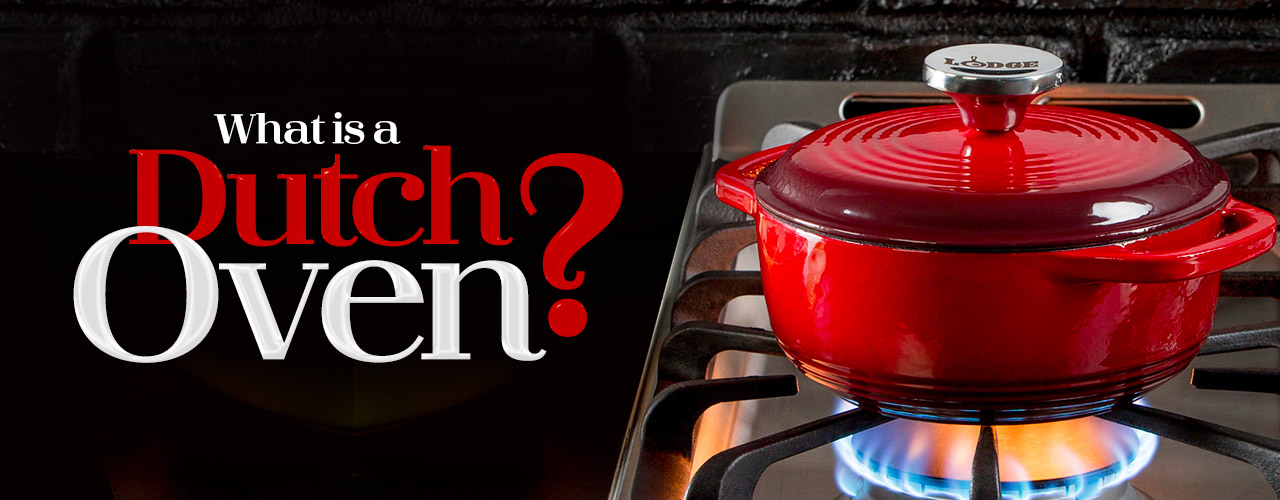
A dutch oven is a heavy cooking pot designed with a tightly fitting lid that helps to retain moisture and heat during the cooking process. Its unique construction allows for even heat distribution, making it ideal for braising, stewing, roasting, and baking. The dutch oven's ability to be used on both the stove and in the oven makes it a convenient and practical tool for a wide range of cooking applications. The dutch oven's versatility extends to its ability to go from stovetop to tabletop, making it a stylish serving vessel for soups, stews, and casseroles. Its classic design and rustic charm add a touch of elegance to any dining setting, making it a popular choice for restaurants and catering events.
Shop All Dutch Ovens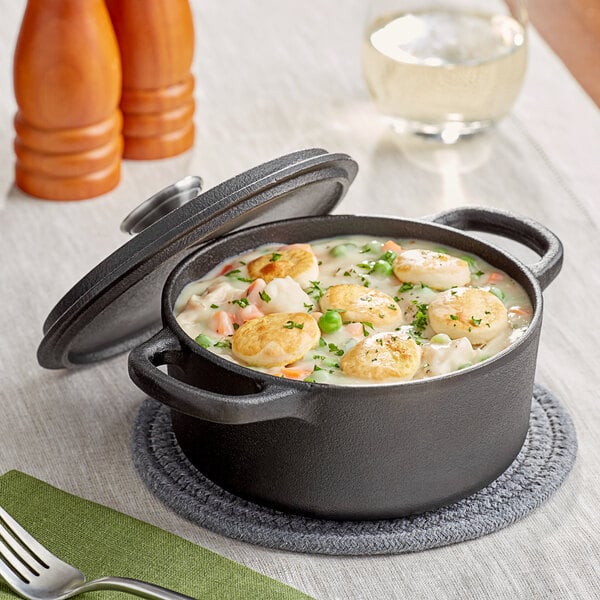
What Is a Dutch Oven Made Of?
Dutch ovens are typically made of cast iron, which provides excellent heat retention and distribution. Some dutch ovens also feature an enamel coating, which not only adds a pop of color but also makes them easier to clean and maintain. The sturdy construction of dutch ovens ensures that they can withstand high temperatures and heavy use, making them a valuable addition to any commercial kitchen.
What Do You Use a Dutch Oven For?
Whether you're searing meats on the stovetop or slow-cooking a hearty stew in the oven, the dutch oven can handle it all with ease. We explain the best dutch oven cooking methods below:
- Braising: A dutch oven is perfect for braising tough cuts of meat like brisket or short ribs. The heavy lid and thick walls of the dutch oven help retain moisture and allow the meat to cook slowly and evenly, resulting in tender and flavorful dishes.
- Roasting: Dutch ovens are great for roasting whole chickens, pork roasts, or even vegetables. The tight-fitting lid traps heat and humidity, creating a moist and succulent final product.
- Soups and Stews: Dutch ovens are ideal for making hearty soups and stews. The even heat distribution ensures that all ingredients are cooked evenly, and the large capacity allows for simmering large batches of soup or stew.
- Baking: Dutch ovens can be used for baking bread, cakes, and other desserts. The enclosed space of the dutch oven creates a steamy environment that helps bread rise and develop a crispy crust.
- Deep Frying: Dutch ovens with high sides are excellent for deep frying foods like chicken, french fries, or donuts. The heavy construction and even heat distribution make them a reliable choice for frying.
- One-Pot Meals: Dutch ovens are versatile enough to be used for one-pot meals like paella, risotto, or casseroles. The ability to start cooking on the stovetop and finish in the oven makes dutch ovens a convenient option for busy commercial kitchens.
How to Use a Dutch Oven
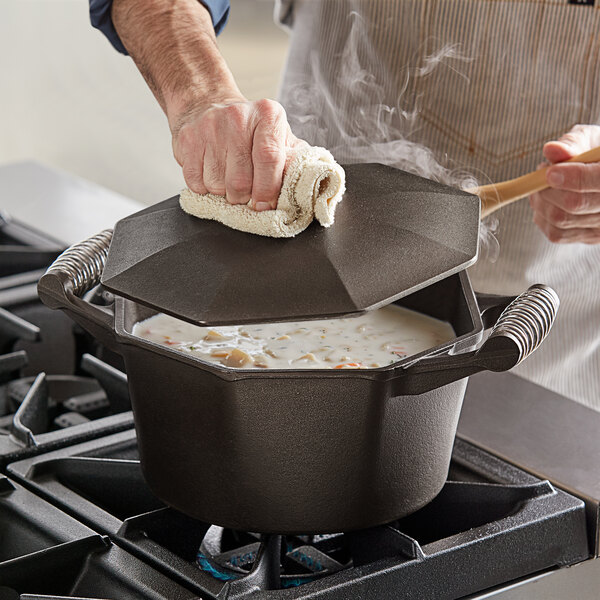
Using a dutch oven is a straightforward process once you know the basic steps. Follow these guidelines for using your dutch oven:
- Rinse Before First Use: Before using your new dutch oven for the first time, rinse it thoroughly with warm water to remove any dust or residue from the manufacturing process.
- Season New Dutch Oven: To prevent food from sticking and to improve the flavor of your dishes, season your new cast iron dutch oven by coating it with a thin layer of oil and baking it in the oven at a high temperature for about an hour. If you purchased an enamel coated dutch oven, you can skip this step.
- Add Ingredients and Heat Gradually: When using an enameled dutch oven for cooking, it is important to avoid heating it when it is empty. This precaution is necessary to prevent the enamel from cracking. To begin cooking, always add your ingredients to the dutch oven before applying heat. Due to their excellent heat retention properties, dutch ovens do not typically need high heat settings to cook efficiently.
- Wash the Dutch Oven: For a dutch oven that is already seasoned, you can use a stiff nylon brush along with hot water to remove any food residue. Once cleaned, promptly towel-dry the dutch oven to prevent rust formation. Consider heating the dutch oven over low heat to evaporate any remaining water droplets. Then, apply a light coating of oil before storing it. To properly clean an enameled dutch oven, begin by hand washing it with warm, soapy water. Use a gentle nylon pad or scraper to remove any residue. For tough food residue, fill the seasoned or enameled dutch oven with water and bring it to a boil to help loosen stubborn food particles.
- Store the Dutch Oven: Store a seasoned dutch oven in a cool, dry location. Place a folded paper towel between the lid and pot to ensure adequate air circulation. Certain enameled dutch ovens are equipped with rubber bumpers to safeguard the oven during transportation. If your dutch oven includes these bumpers, be sure to reapply them before storing it. This will help minimize the risk of chipping and scratching the enamel surface.
How to Season a Dutch Oven
Seasoning a cast iron dutch oven is an essential step to ensure its longevity and optimal cooking performance. By properly seasoning your dutch oven, you create a non-stick surface that prevents food from sticking and helps in developing rich flavors in your dishes. For a video guide on how to season cast iron generally, check out our pan seasoning resource. Below are the steps for seasoning a cast iron dutch oven specifically:
- Wash the Dutch Oven: Before seasoning, wash the dutch oven with warm, soapy water to remove any manufacturing residues or dirt. Rinse it thoroughly and dry it completely.
- Apply Oil: Using a paper towel or cloth, apply a thin layer of cooking oil or fat to the entire surface of the dutch oven, including the lid. Common oils used for seasoning include vegetable oil, canola oil, or flaxseed oil.
- Heat the Dutch Oven: Preheat your oven to a moderate temperature, typically around 375 degrees Fahrenheit. Place the dutch oven upside down in the oven to allow excess oil to drip off.
- Bake the Dutch Oven: Let the dutch oven bake for about an hour, allowing the oil to polymerize and create a protective layer on the surface. This process will help build up the seasoning layer.
- Cool and Repeat: Once the hour is up, turn off the oven and let the dutch oven cool down inside. You can repeat the seasoning process a few times to enhance the non-stick properties of your dutch oven.
- Store Properly: After seasoning, store your dutch oven in a dry place to prevent rusting. Avoid stacking other cookware on top of it to maintain the seasoning layer.
How to Clean an Enamel Dutch Oven
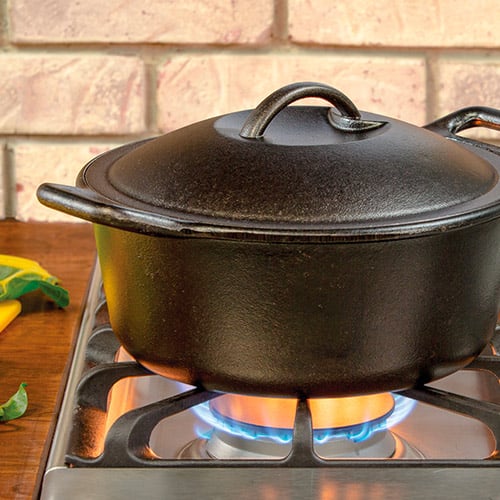
The enamel coating on your cast iron dutch oven is not only beautiful, but it also helps evenly sear meats and fry vegetables. For this reason, it is important to stick with the proper dutch oven cleaning process.
- Avoid hard scrubbing and refrain from using citrus juices or citrus-based cleaners. Using abrasive cleaning tools or acidic cleaners can dull or gouge the enamel coating.
- Never use steel wool on your enamel dutch oven.
- If your sauce boils over and bakes onto the side of your dutch oven, make a paste from baking soda and water and use a gentle scouring pad to preserve the glossy surface.
- Enamel coated dutch ovens do not need to be seasoned like standard cast iron dishes.
- If your enamel dutch oven has any exposed cast iron edges, you can lightly coat them with a high smoke point oil.
How to Clean a Cast Iron Dutch Oven
We provide steps and tips for cleaning your cast iron dutch oven to protect its integrity and longevity.
- Use warm water and a gentle soap to clean your cast iron dutch oven.
- Avoid hard scrubbing or using steel wool, because this can wear away at its valuable seasoning.
- It is best to season your dutch oven after each washing. To do so, simply rub your preferred type of cooking oil over the dutch oven's surfaces with a clean towel. Then place the dutch oven in your oven at 375 degrees Fahrenheit until the oil bakes off and becomes part of your cookware's coating.
Dutch Oven FAQ
Now that you understand what a dutch oven is and how to use it, we answer some frequently asked questions that arise when chefs are cooking with a dutch oven.
Why Is It Called a Dutch Oven?
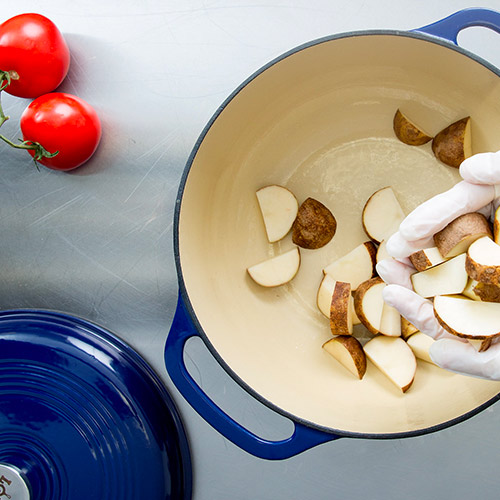
Dutch ovens have a fascinating history with multiple theories surrounding their name. One popular theory suggests that the term originated from the cast iron pots created by Englishman Abraham Darby. In 1704, Darby journeyed to Holland to study the Dutch casting process, which involved casting brass vessels in dry sand molds. Upon returning to England, he refined this technique by using better molding sand and introducing a baking process to enhance casting smoothness. This advancement allowed Darby to produce large quantities of pots, which he then distributed to the new colonies and beyond.
However, some historians challenge this explanation, noting that during that era, the term "dutch oven" was not commonly used outside the colonies. Instead, these pots were often known by descriptive names such as dinner pots, Gypsy pots, stew pots, and various regional designations. Another possible origin of the name "dutch oven" is believed to be early Dutch traders or salesmen who sold these newly produced cast iron pots or "ovens." Another widely accepted theory suggests that the name may have come from Dutch settlers in the Pennsylvania region who brought their cast iron pots and kettles with them.
What Does a Dutch Oven Look Like?
A dutch oven is a versatile cooking vessel that typically features a thick, heavy construction made of cast iron or enameled cast iron. It is characterized by its wide base, high sides, and tight-fitting lid, which helps to retain heat and moisture during cooking. Dutch ovens often have loop handles on either side for easy lifting and are available in various sizes and colors to suit different commercial kitchen needs.
What Is a Cocotte Pot?
A cocotte, pronounced ko-kot, is the French name for a dutch oven. You may see this term in recipes that originated outside of the United States. If your recipe calls for a cocotte, your dutch oven will serve the same purpose.
How to Store a Dutch Oven
When storing a dutch oven, ensure it is thoroughly dried to prevent rust, regardless of the type of cast iron. Enamel dutch ovens should be stored in spacious areas to avoid scratches on the coating. To maintain the shiny finish, avoid stacking enamel dutch ovens to prevent damage from contact with other pots or cabinet doors.
Back to TopUse this blog as a guide to properly caring for your dutch oven. By seasoning, cleaning, and storing your dutch oven correctly, you can enhance the quality of your dishes and save money by avoiding frequent replacements. For culinary inspiration, consider trying our flavorful Moroccan Lamb and Butternut Squash Tagine recipe.