- Topics 1577
- Industrial 59
- Troubleshooting Guides 32
- Restaurant Management 144
- Bar Management 70
- Catering Tips 46
- Bakery Management 45
- Food Trucks & Concessions 41
- Advertising & Marketing 41
- Eco-Friendly Tips 13
- Facility Layout & Design 47
- Coffee Shop Tips 32
- Installation & Maintenance 63
- Janitorial & Pest Control 34
- Safety & Sanitation 121
- Startup Tips 111
- Menu Design 11
- Kitchen & Cooking Tips 106
- Hospitality Management 26
- Pizza & Sandwich Shop Tips 23
- Smallwares 42
- Food Prep 102
- Tabletop Items 21
- Disposables 28
- Calculators & Tools 7
- Consumables 77
- Warewashing & Laundry 22
- Cooking Equipment 106
- Food Storage & Refrigeration 58
- Beverage Equipment 43
- Office Supplies 6

Choosing the best restaurant cookware for your kitchen is vital to the day-to-day operation of your foodservice business. There are many different cookware types to help you saute vegetables, create a great soup, or roast the perfect main entree. This guide will go over the different kinds of pans and pots and how to choose the best type of cookware and bakeware for your needs.
Shop All Commercial Cookware
Use the following links to learn about the types of cookware and bakeware out there to make more informed purchases for your kitchen!
Cooking pans typically have one long handle and are more shallow than pots. They are used for high-heat cooking methods like sauteing, frying, searing, and reducing. Read on to learn more about the 7 types of pans for cooking.
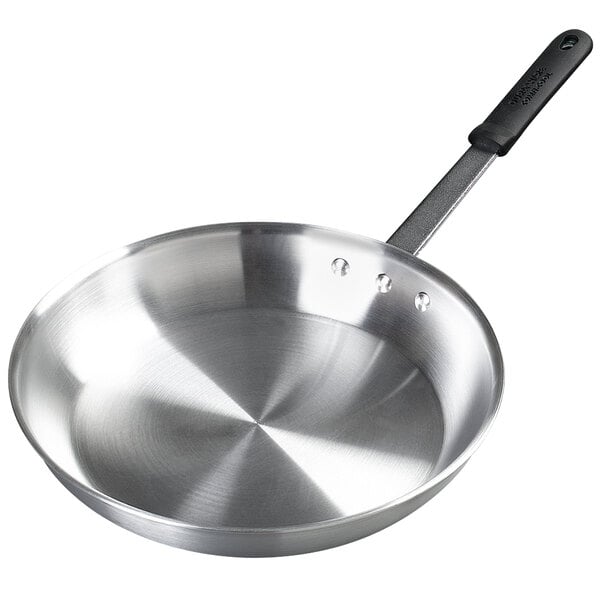
1. Fry Pan
Fry pans are an essential kitchen smallware that every restaurant should have in its cookware arsenal. They feature a round shape and moderately high, slightly sloped sides, which are helpful when tossing foods to evenly cook them in the pan.
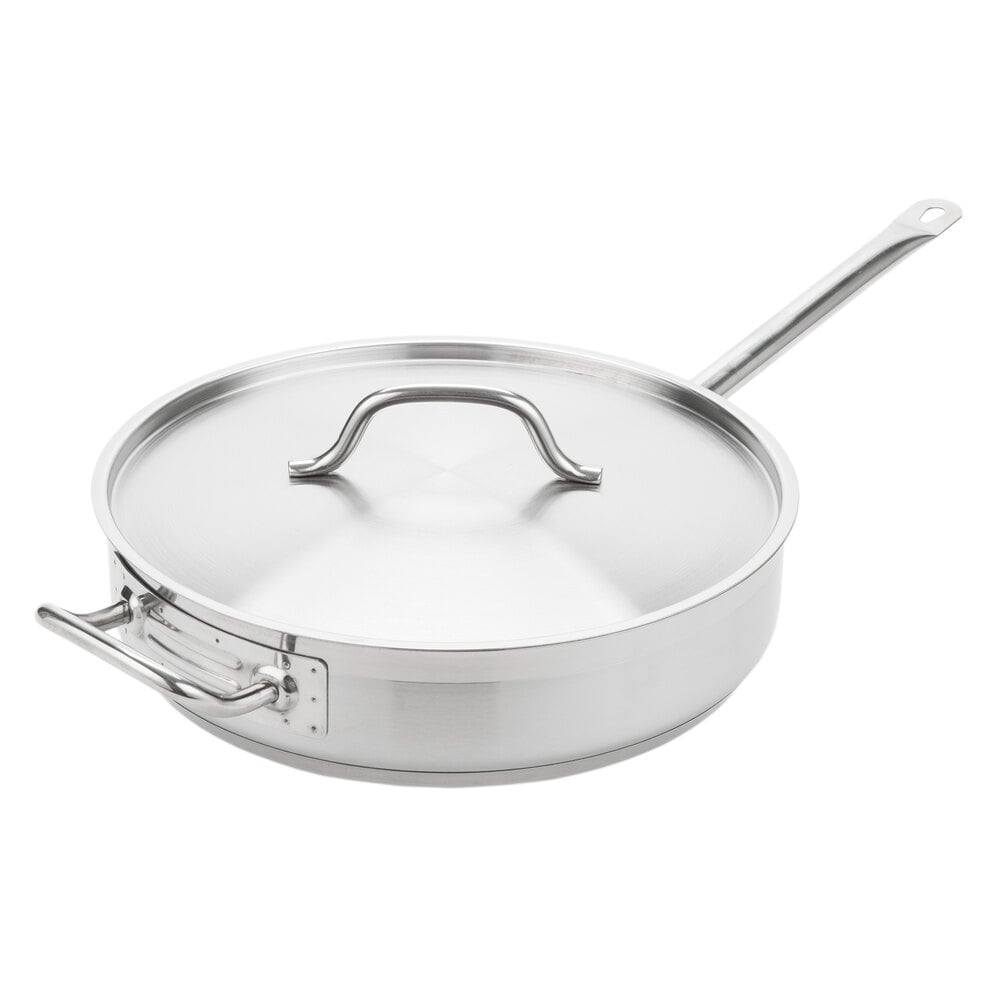
2. Saute Pan
A saute pan features a wide, flat bottom and high, vertical sides. The straight sides maximize the pan's cooking surface while allowing it to hold more liquid without the risk of it spilling over the sides.
- Wide bottom area for maximum heat conduction
- Straight, high sides help contain food and expose all sides to heat
- The long handle keeps hands out of reach of heat and allows easy maneuvering of food
- Ideal for sauteing, searing, braising, deglazing, poaching, and stir-frying
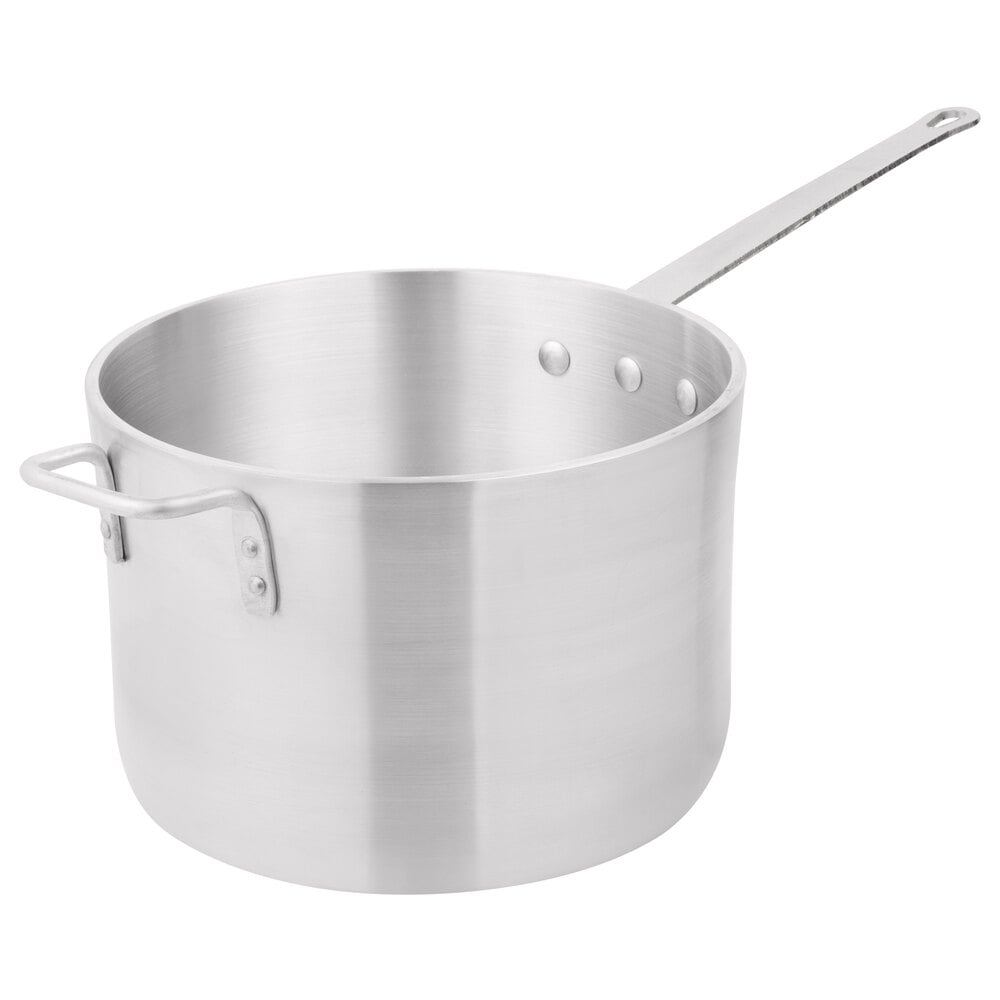
3. Sauce Pan
Saucepans have tall sides and narrow bases that heat liquid ingredients from all sides to promote reduction. Saucepans are the best choice for making different types of sauces, but they can also serve as a pot for simmering and boiling liquids. Choose from either a straight-sided saucepan with a wider bottom for maximum heat conduction or a tapered saucepan with a smaller bottom and flared sides for less heat exposure and more effortless stirring action.
- Lightweight design with a long handle
- Ideal for cooking at lower temperatures for a longer time
- Best for creating and reducing sauces
- It can also be used to cook vegetables and boil liquids
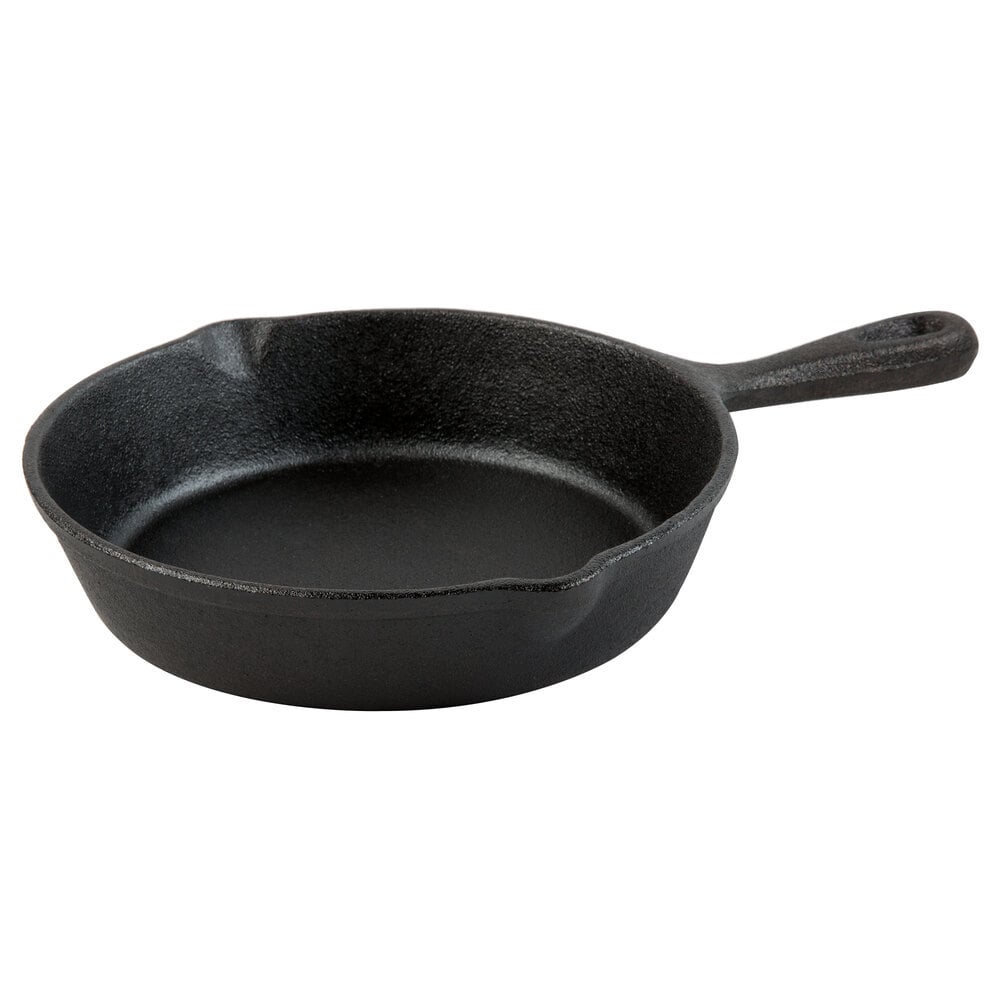
4. Cast Iron Skillet
Cast iron skillets can be used to cook a wide variety of foods, from searing steaks and bacon to baking a fruit cobbler or cookie cake to give them the perfect crust. A benefit of cooking with cast iron is that it can easily go from the stovetop to the oven to the table, making its versatility unmatched.
- Cast iron heats evenly and consistently with no "hot spots" so foods cook better with less chance of scorching
- Can easily go from the stovetop and/or oven to the table for fast, efficient service with less cookware used
- Can last a long time with proper cleaning and maintenance
- Ideal for sauteing, searing, frying, and even baking
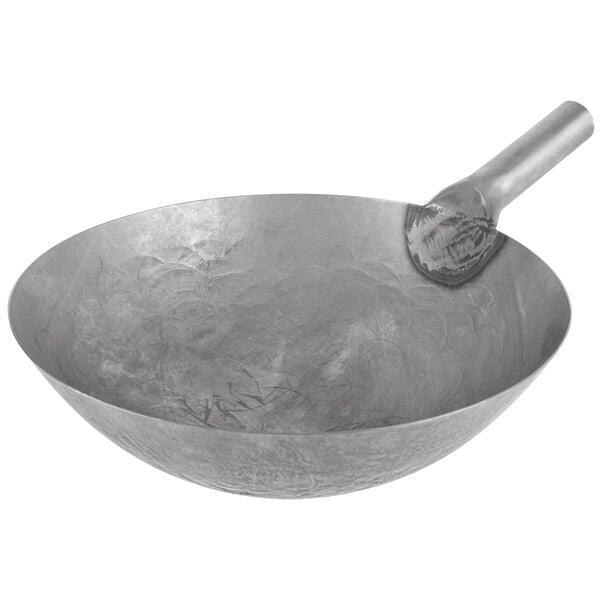
5. Wok
Woks are a type of Asian cookware that features a deep bowl with steep, high walls to cook foods from all sides of the pan. One of the many benefits of a wok is that food is cooked extremely quickly and thoroughly due to the even heat distribution. They are traditionally round-bottomed to cook on a wok range though flat-bottomed woks exist to be used on standard ranges.
- Feature round or flat bottoms for high heat concentration
- Deep curved sides make it easy to toss foods
- Ideal for stir-frying
- Mandarin woks feature a single standard handle while Cantonese woks feature two loop handles
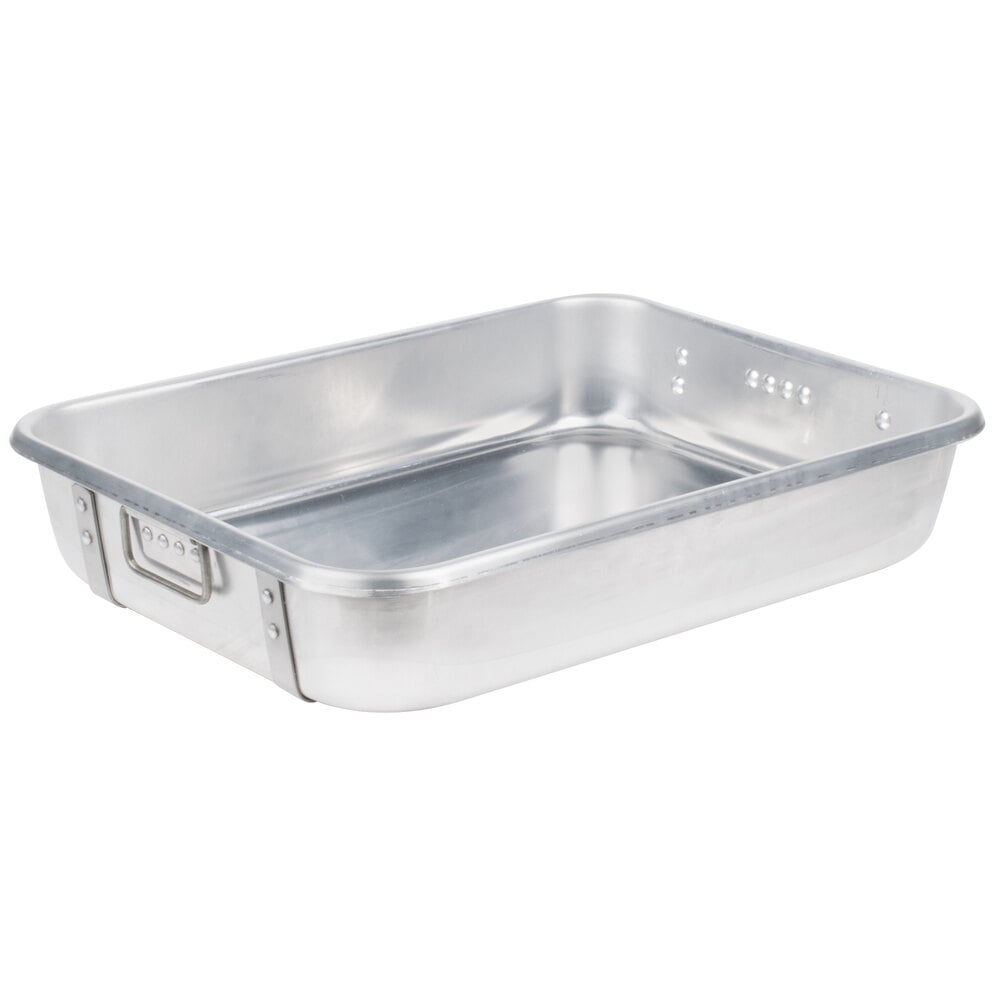
6. Roasting Pan
Roasting pans are versatile pieces of cookware that are used to cook roasts, whole turkeys, and chicken. They are typically rectangular and feature a flat bottom and shallow sides. They can also be used to roast vegetables or cook baked goods like cinnamon rolls.
- Handles allow for easy oven loading and unloading and transportation
- Shallow sides allow for optimum heat distribution
- Heavy-duty construction and large size accommodate roasts, hams, and turkeys
- Typically made from steel or aluminum
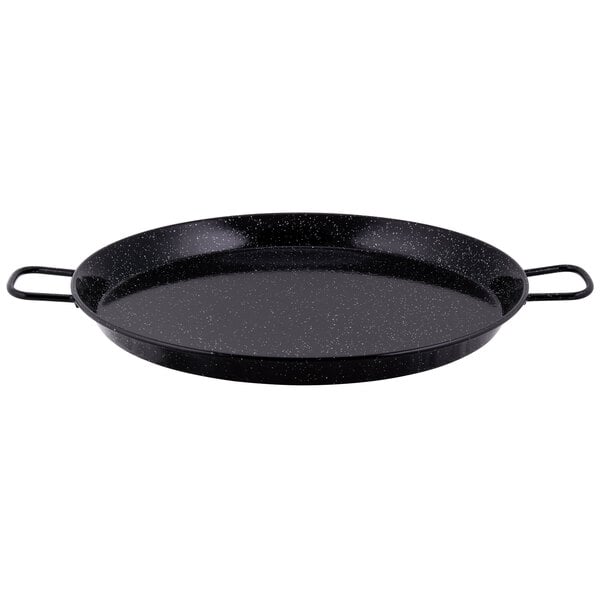
7. Paella Pan
A paella pan is designed to be shallow, so you can see all of the ingredients in your dish and stir them frequently. Its shallow construction and sloping sides help the paella cook evenly and help toast rice on the bottom of the pan.
- Dual side handles allow for easy maneuverability
- Compatible with all heat sources
- Typically made with steel or aluminum
Pots usually have dual handles on each side of the vessel and are deeper than pans since they are predominately used for heating and boiling liquids. Read on to learn more about the 7 types of cooking pots.
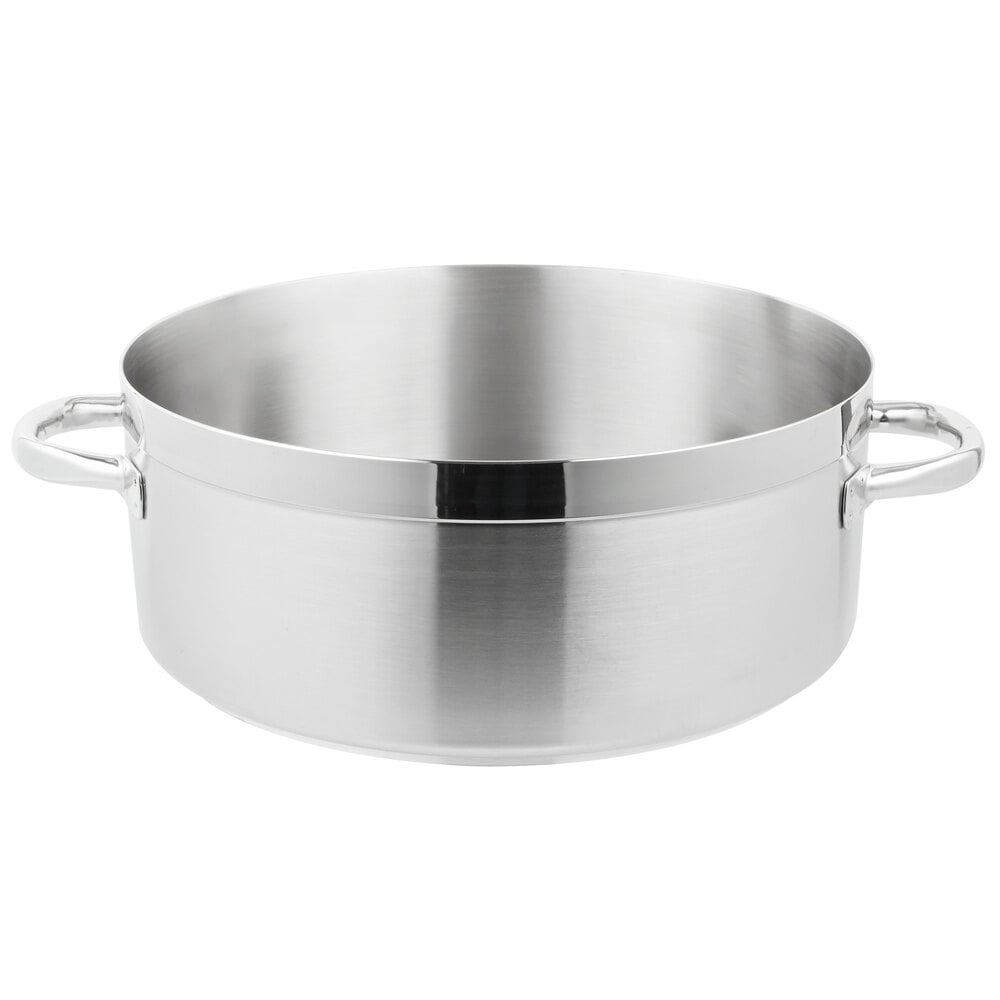
1. Brazier
Braziers, also called rondeau pans, feature a shallow height and wide cooking surface that is perfect for braising meats, vegetables, and legumes.
- A wide heating surface allows for the cooking of meats and vegetables in limited amounts of liquid
- Ideal for long, slow cooking which allows the liquid to add juices and flavor
- Typically oven-safe for greater versatility
- Feature a handle on each side
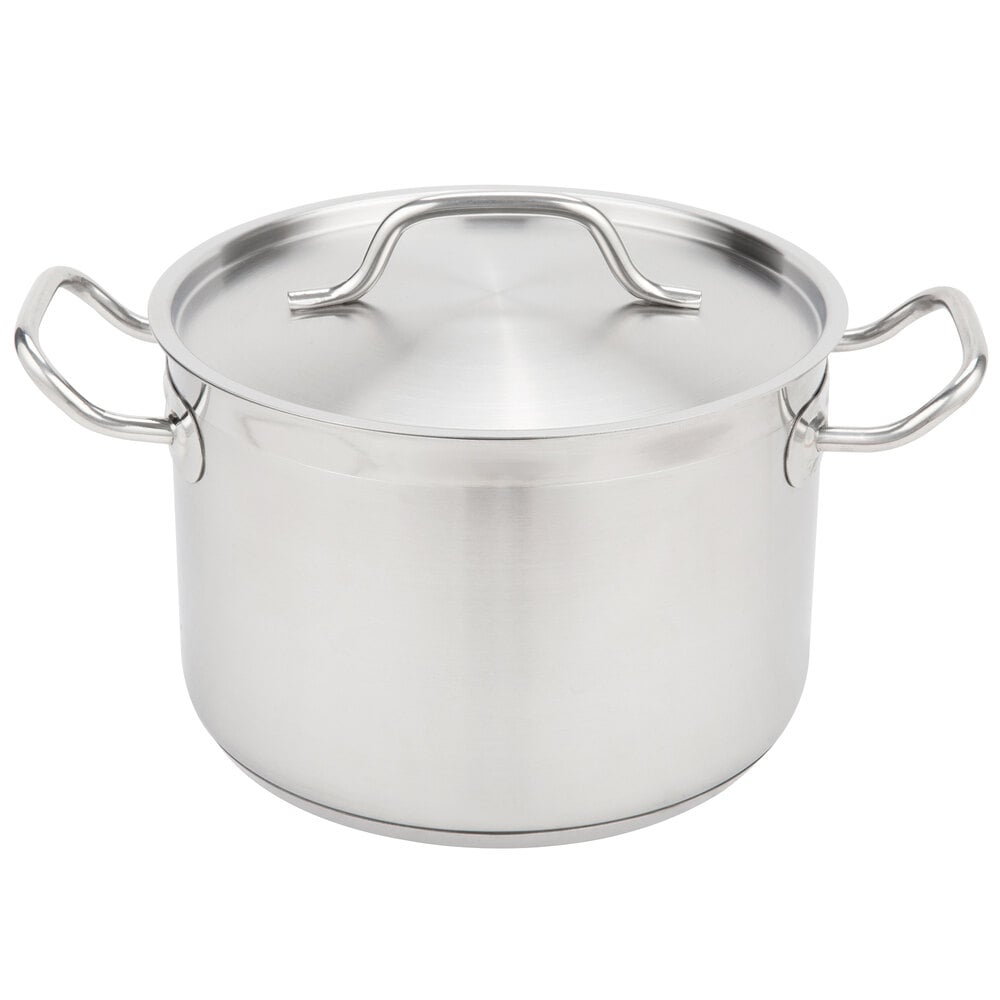
2. Sauce Pot
A sauce pot has a similar shape to a saucepan to promote the reduction of liquids; however, it has an overall larger volume, taller sides, and a larger base to cook larger quantities of sauces. It's best for slow cooking and simmering sauces like pasta sauce.
- Wide bottom area for maximum heat conduction
- Two loop handles for easier pouring and movement
- Ideal for slow-cooking sauces and soups while reducing the content
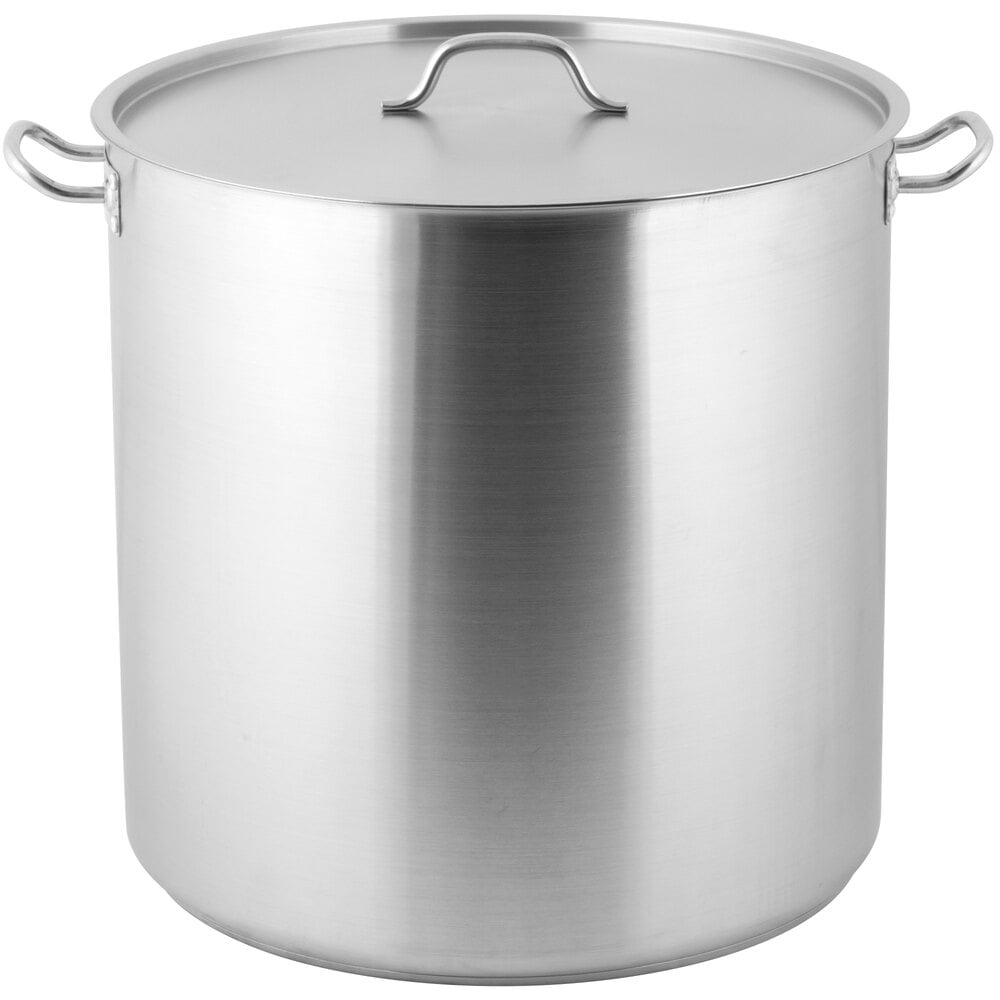
3. Stock Pot
A stock pot is the largest cooking pot in the kitchen and can be used to cook a variety of foods. It features a tall height that preserves liquids for longer and a thick base that promotes even slow simmering. A stock pot's smaller diameter also forces the liquids to bubble up through ingredients to maximize flavor transfer.
- Thick base for a good slow simmer
- Steam baskets are often used in stock pots to cook food with steam
- Ideal for stocks, soups, pasta, bulk vegetables, and seafood
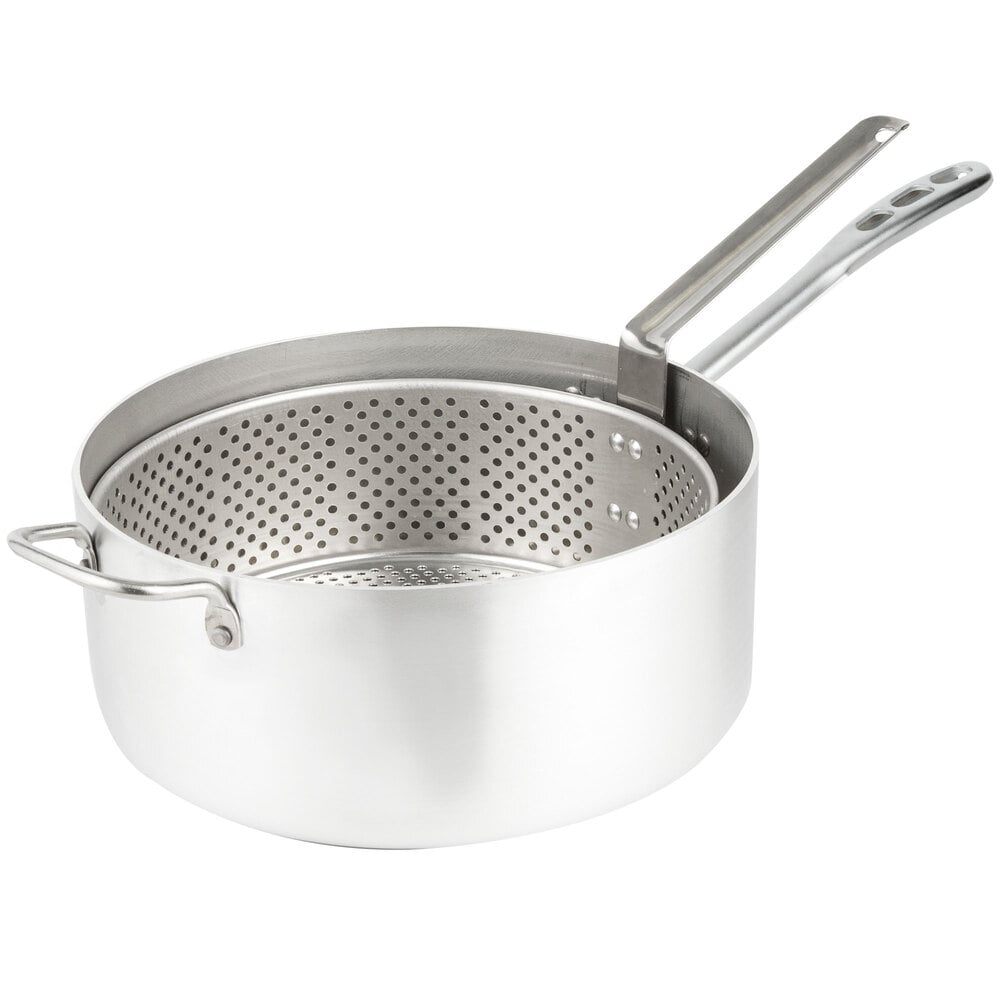
4. Fryer Pot
A deep fryer pot is a great alternative for kitchens wanting to offer small batches of fried food without the expense of a deep fryer. Many feature a side hook so that a draining basket can easily be attached to it for security.
- Wide bottom for excellent heat conduction and high sides for maximum capacity and safety
- Paired with a draining basket to lift foods out of hot liquid
- Ideal for frying french fries, chicken fingers, mozzarella sticks, and other classic fried foods
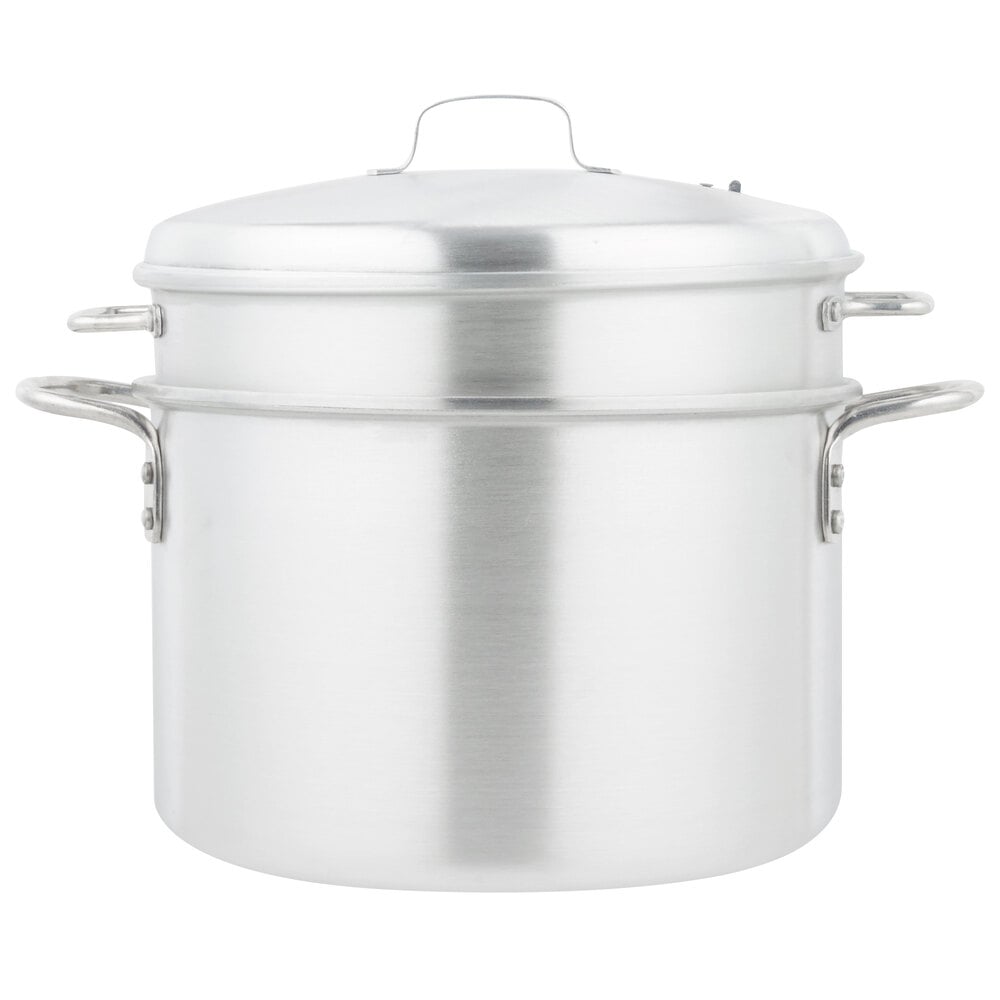
5. Pasta Pot
Pasta cookers come with fitted strainers that take the hassle out of cooking pasta. When your pasta is ready, simply lift the strainer basket to remove the pasta from the hot water. Also great for cooking vegetables and seafood, the baskets allow you to keep the food contained while straining out water, oil, or other liquids.
- Features a tall pot and removable perforated basket to hold food
- Great for cooking, steaming, and straining pasta, seafood, and veggies
- Include handles for easy movement and transportation
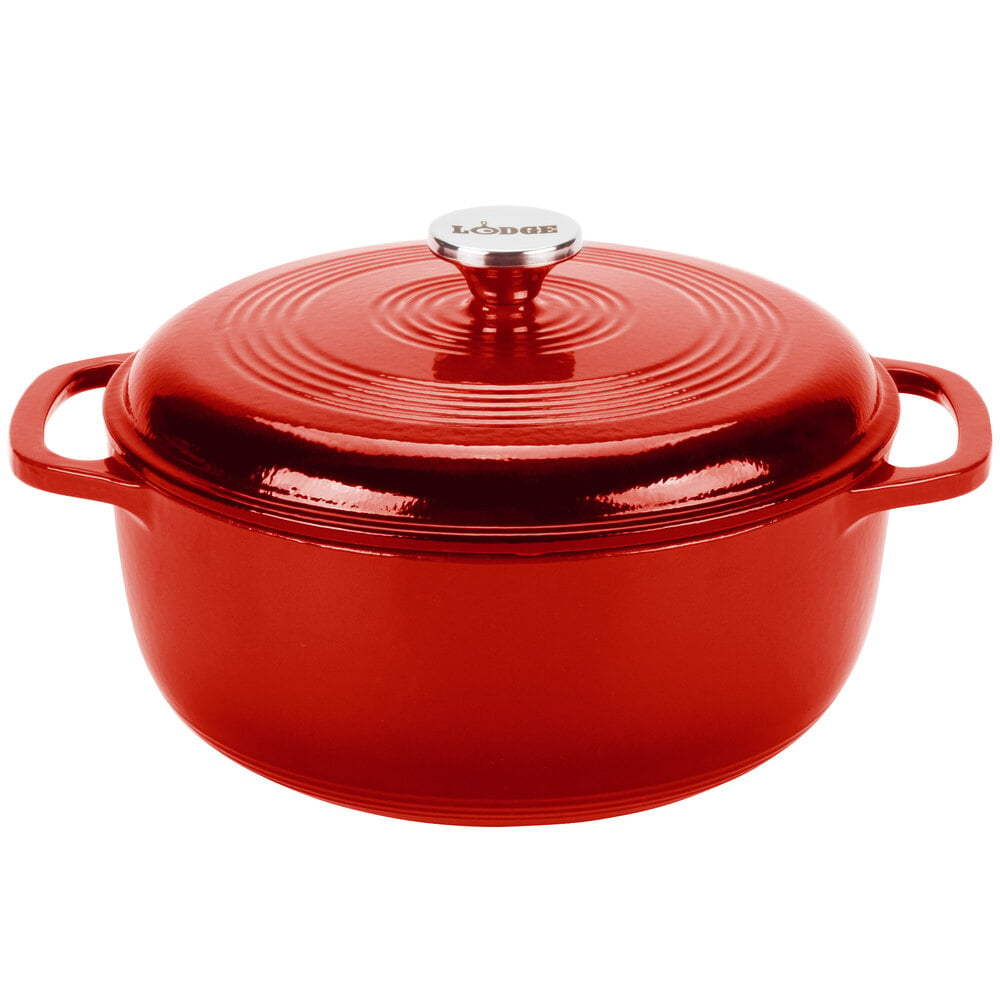
6. Dutch Oven
Dutch ovens, also known as cocotte pots, are heavy, wide, and relatively shallow pots with thick, curved walls and tight-fitting lids. Dutch ovens are versatile and are great for braising tough cuts of meat like chuck roast, lamb shanks, and pork shoulder, as well as cooking no-knead bread, soups, and stews.
- Heavy weight maintains constant temperatures for a long time to cook foods evenly
- Come in enamel cast iron or cast aluminum options
- Ideal for braising, searing, simmering, and baking
- Oven-safe and induction-ready
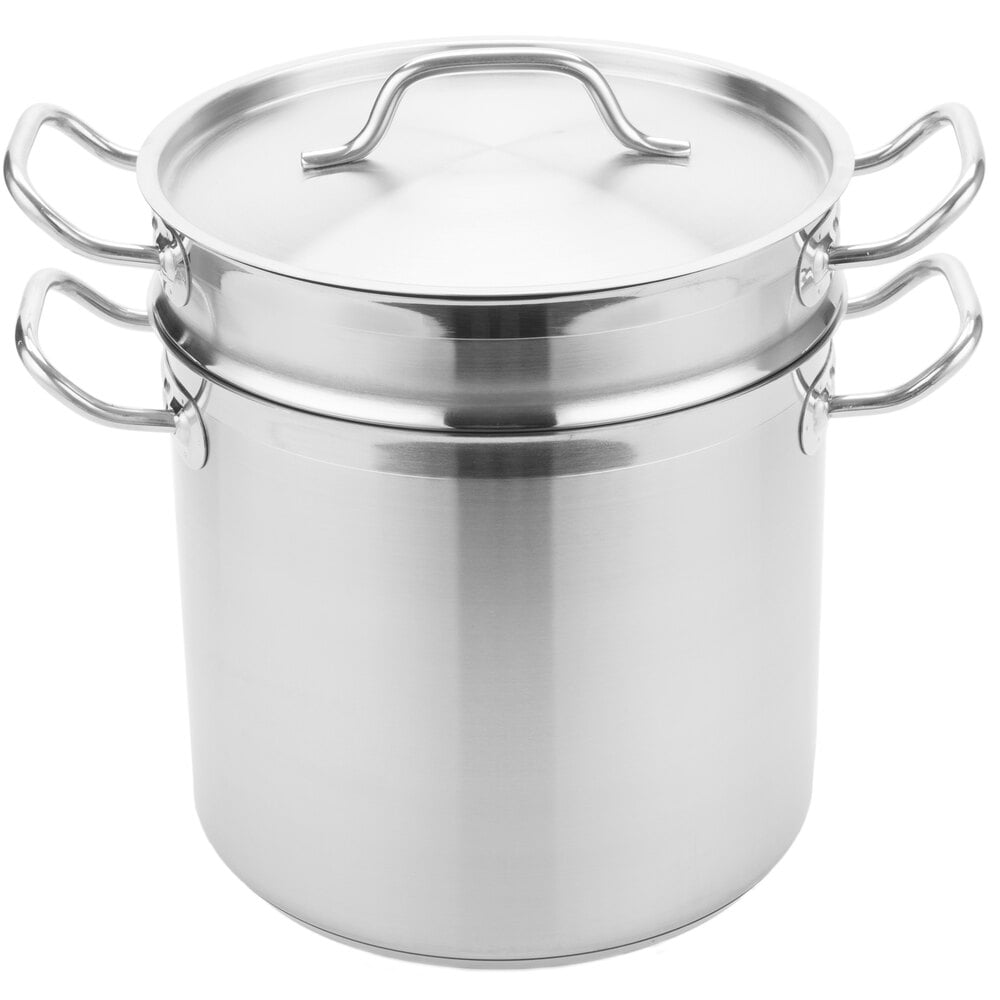
7. Double Boiler
Also known as a Bain Marie, a double broiler has an inner and outer container to perform temperature-sensitive tasks like melting chocolate and preparing delicate sauces and custards. A double broiler uses steam as a heat source to cook or melt food. The boiler pot is made to hold water while the inset fits tightly into the pot to heat the food gently but efficiently with steam.
- Pot, inset, and cover work together to heat more sensitive foods
- Ideal for creating sauces and melting chocolate
- Both the boiler and inset have outer handles for easy transport
Not just essential for bakeries, baking pans are useful for delis, restaurants, diners, and any other operation looking to create and serve their house-made goods. It's important to remember when choosing your baking pan that material, size, and color all affect bake time and results. We'll go over the 8 types of baking pans so that you can decide which pans are the best addition to your restaurant cookware.
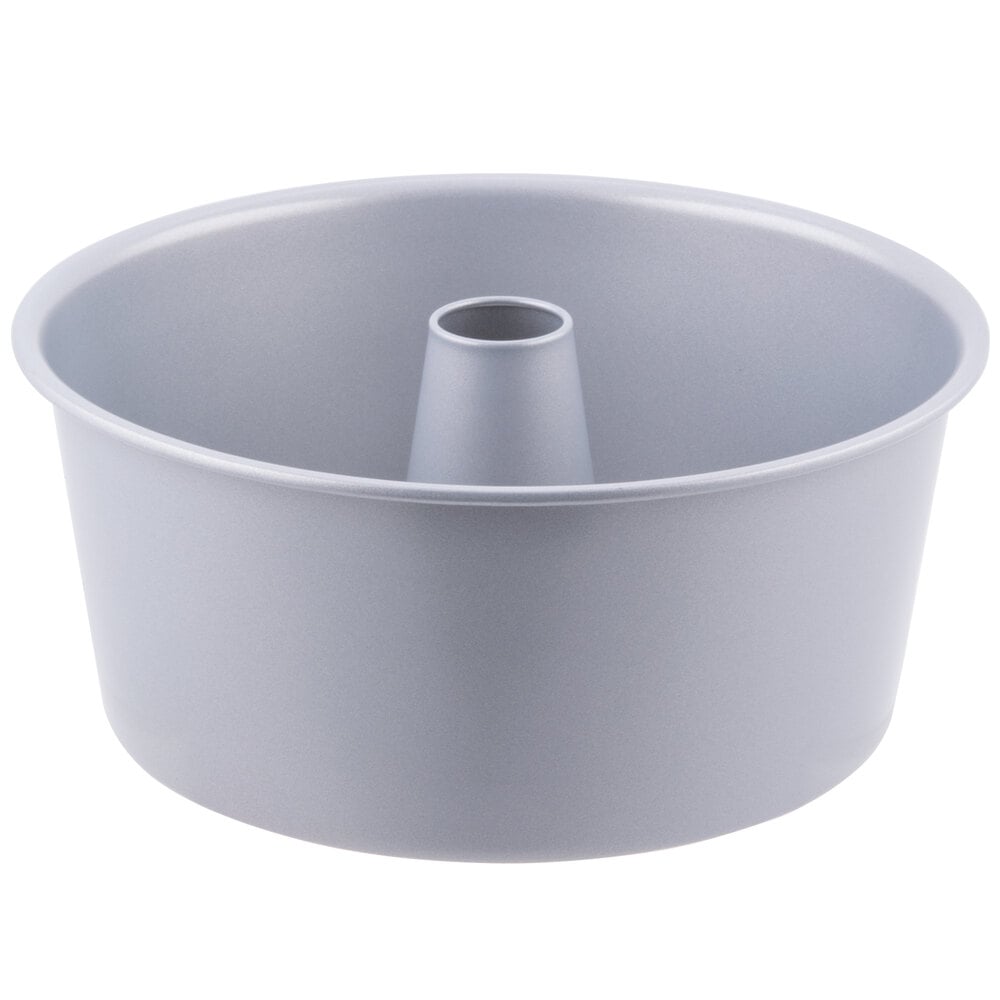
1. Angel Food Cake Pan
Angel food cake pans feature tall sides, smooth surfaces, and a tube in the center that is perfect for making angel food and fluted tube pan cakes. Many of the pans feature non-stick coatings for easy release and to help the cakes reach their light and fluffy texture. Some even feature a removable bottom for conveniently removing the cake and easier cleaning.
- Tubular design with a hollow core allows for even heating
- Ideal for angel food cakes and fluted tube pan cakes
- Straight sides and a non-stick surface help the cake rise
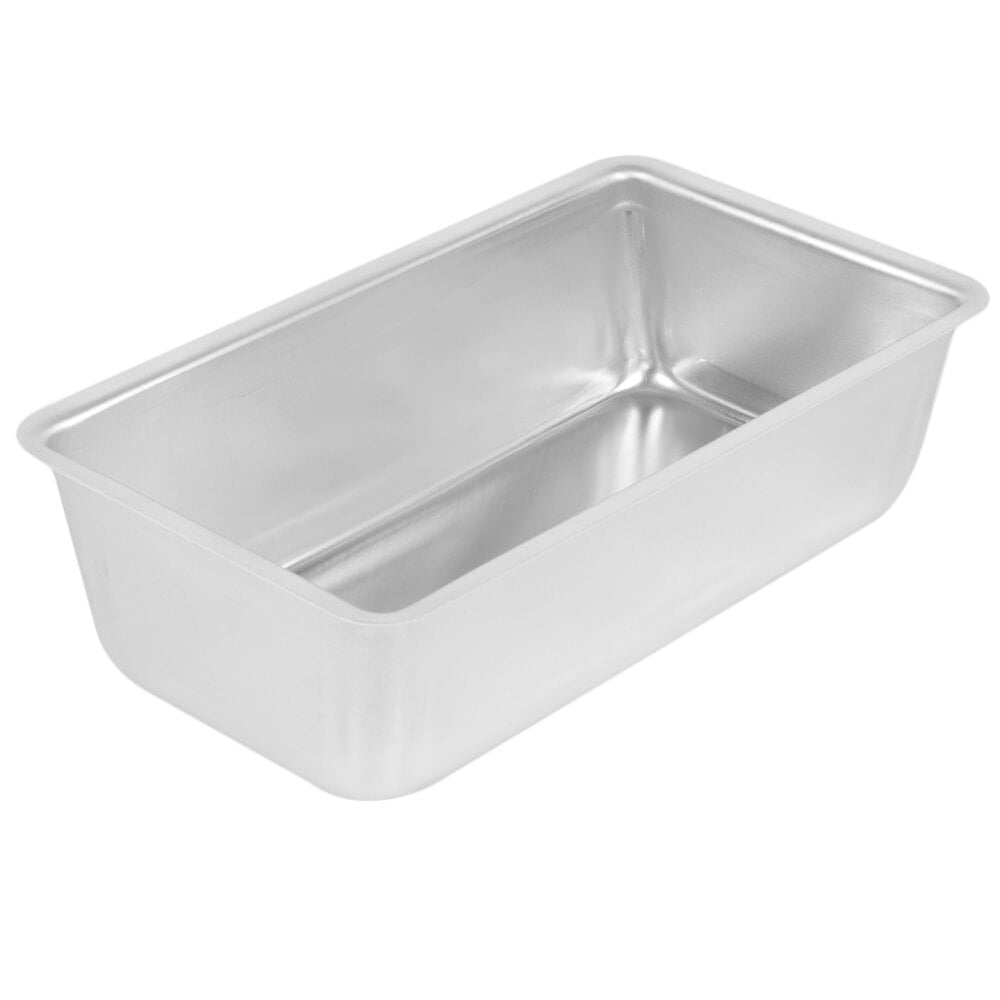
2. Bread and Loaf Pan
Bread and loaf pans are essential to any bakery, sandwich shop, or cafe looking to make house-made specialty bread. Bread pans come in a range of different mold shapes and sizes to be able to create french bread, sandwich rolls, and buns in addition to traditional bread loaves.
- Deep construction allows for high rising
- Perfect for bread, cake, and pudding
- Excellent heat conduction permits low-temperature baking for optimum results
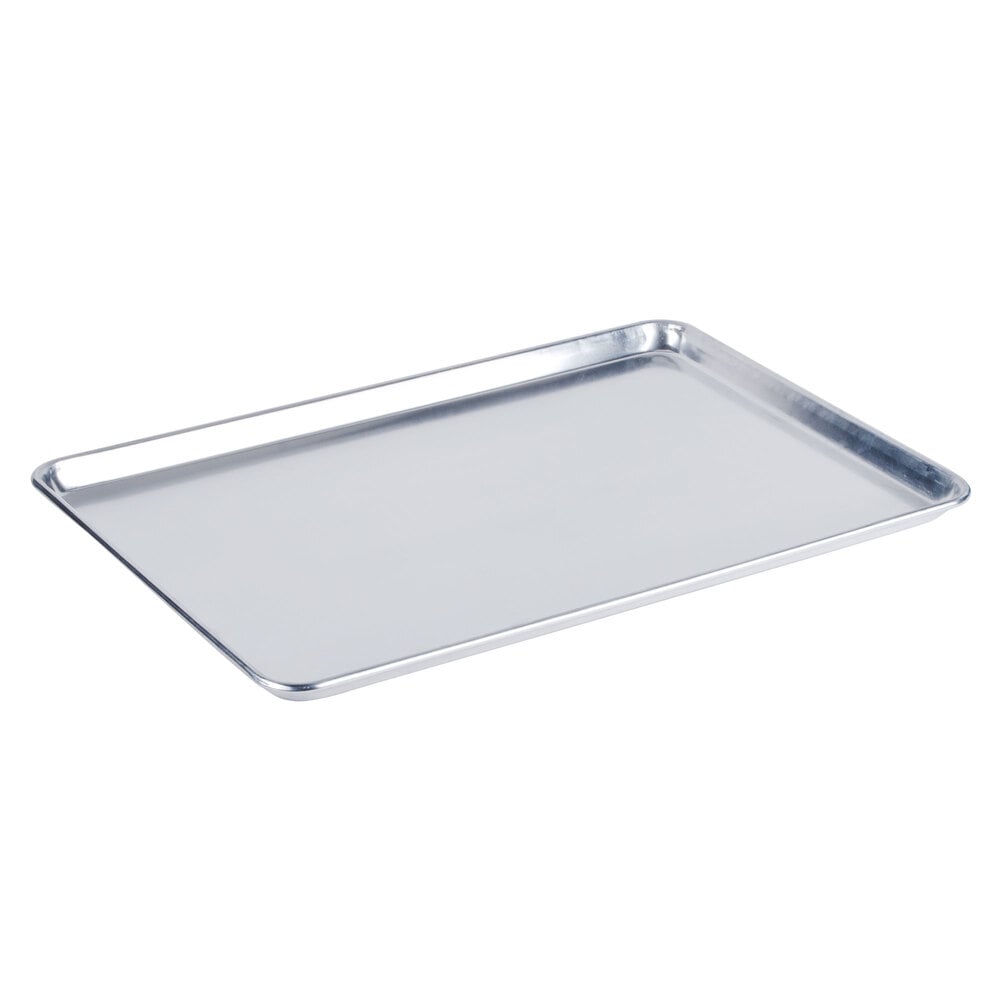
3. Sheet Pan
Sheet pans are one of the most used pieces of bakeware in any bakery, restaurant, or catering business. The thin sheet is ideal for baking cookies, rolls, and other foods that don't produce a lot of liquids, and the flat construction ensures even browning and baking. A majority of these pans feature non-stick surfaces or silicone glazes to allow easy removal of food products.
- Perfect for baking, broiling, cooling, or storing
- Upturned lips prevent products from sliding off and allow for easy handling
- Come in a variety of sizes and rim depths
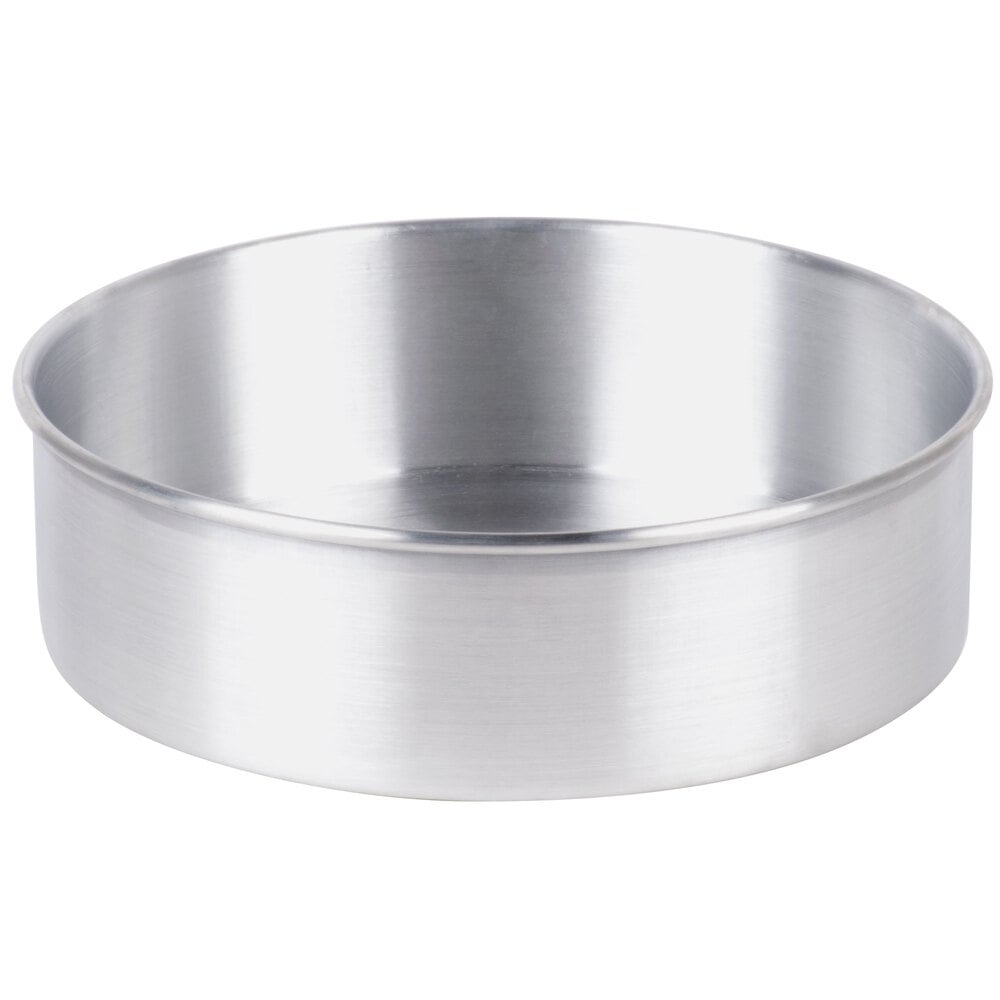
4. Cake Pan
Cake pans hold your batter while it’s in the oven and mold it into perfectly shaped cakes. Their tall, straight sides and flat bottoms help yield the ideal texture and rise. Based on the cake style and serving size you'd like to offer, the right type of cake pan is essential to your recipes. Many cake pans are made from aluminum to heat quickly and evenly, then cool quickly to prevent over-baking and dry cakes.
- Straight side walls for a clean, easy release
- Ideal for baking cakes and even deep dish pizzas
- Heat quickly and evenly then cool quickly

5. Muffin Pan
Commercial muffin and cupcake pans are made from aluminized steel, aluminum, cast iron, and even silicone to provide longevity in high-volume kitchens. Many have reinforced rims to prevent warping as well as non-stick glazes for easy release and cleanup.
- Ideal for mini-, standard-, and jumbo-sized muffins or cupcakes
- Can also be used for baking egg cups, mini quiches, and tarts
- Models available with 6 to 48 cups for high-volume efficiency
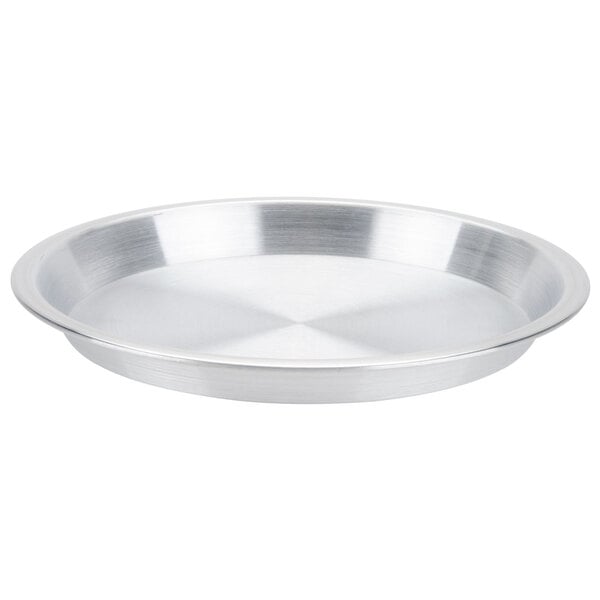
6. Pie Pan
Pie pans in tin or aluminum baking materials are great for heat conduction and promote even browning. Plus, they help avoid the danger of breaking glass or china pans in high-volume bakeries and restaurants. For a visually appealing presentation, choose glass or china pie pans to display in your bakery window or case.
- Angled sides prevent the crust from slumping
- A wide rim allows for simple fluting
- Standard depth and deep dish available
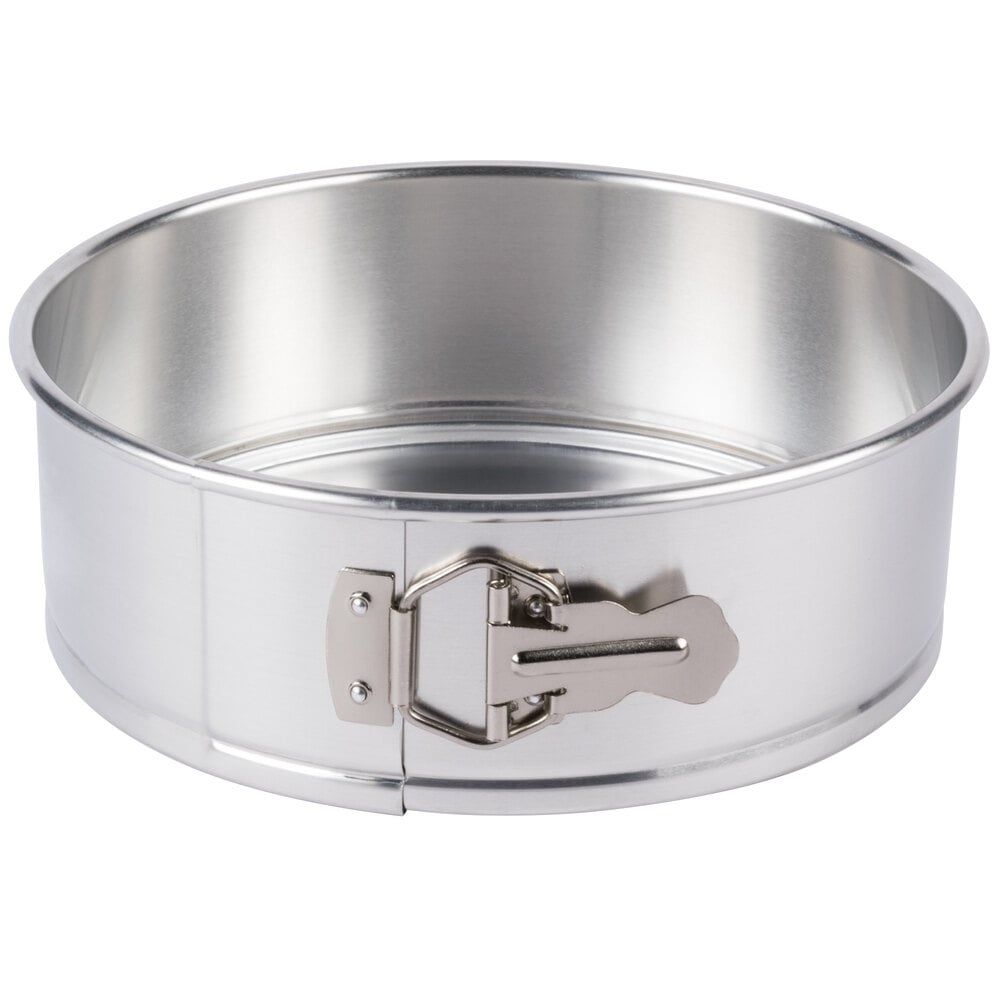
7. Springform Cake Pan
Springform pans are a type of cake pan with a removable bottom that attaches to its sides with a sprung collar. They are designed for use with delicate dishes that cannot be easily removed or flipped from the pan. Using a springform pan when making cheesecakes, ice cream cakes, tortes, and other delicate baked goods will ensure a flawless final product.
- Two-piece construction with removable sides for an easy release
- Ideal for cheesecake, tortes, quiche, and other dishes that may be difficult to remove from a standard pan
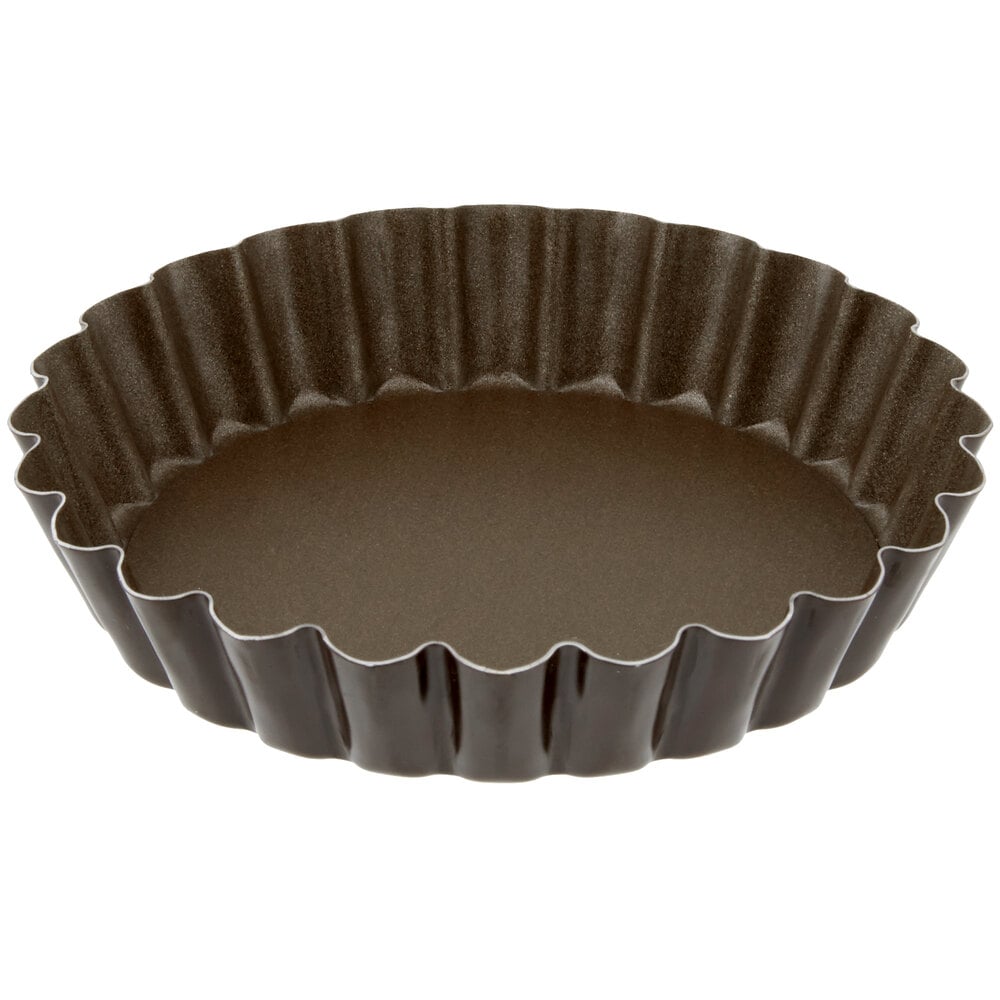
8. Tart Pan
Use a tart pan to perfectly form the crusts of baked dessert tarts, breakfast quiches, and miniature pies. Some feature a removable bottom that allows you to easily slip off the outer ring without marring your baked goods.
- Fluted sides make it easy to create a crisp, professional crust
- Come in a variety of sizes to form a variety of goods from petite tarts to large quiches
Let's go over the types of cookware materials you can choose for your kitchen. It is more than likely that you will need cookware and bakeware in a few different material types to ensure you have the correct pot or pan for your recipe.
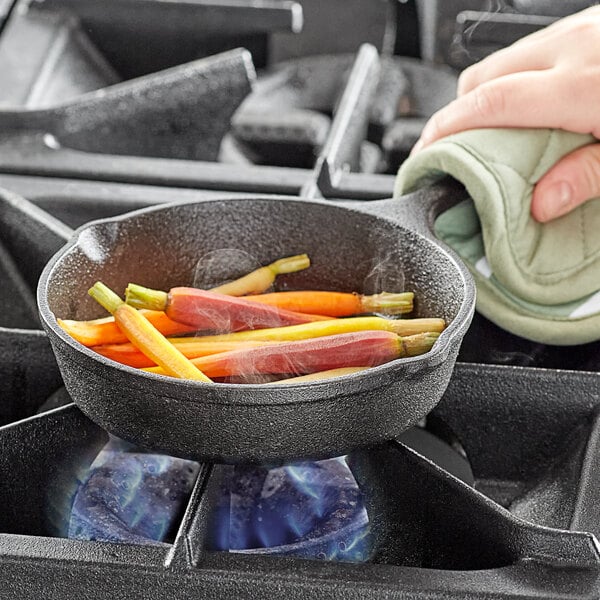
Cast Iron
Cast iron cookware is great at retaining heat, which allows for quicker recovery between dishes and makes it an ideal serving vessel to keep cooked foods hot. It can be used on electric, gas, induction, or open flame heat sources and can withstand very high temperatures without warping or damage. It does require more maintenance than other cookware materials, but the benefit is that with routine seasoning and proper cleaning techniques, cast iron cookware can last a lifetime.
- Durable
- Good heat conductor
- Maintains temperature
- Heavy
- Rusts if not kept conditioned and dried at all times
- Requires seasoning to maintain a non-stick surface
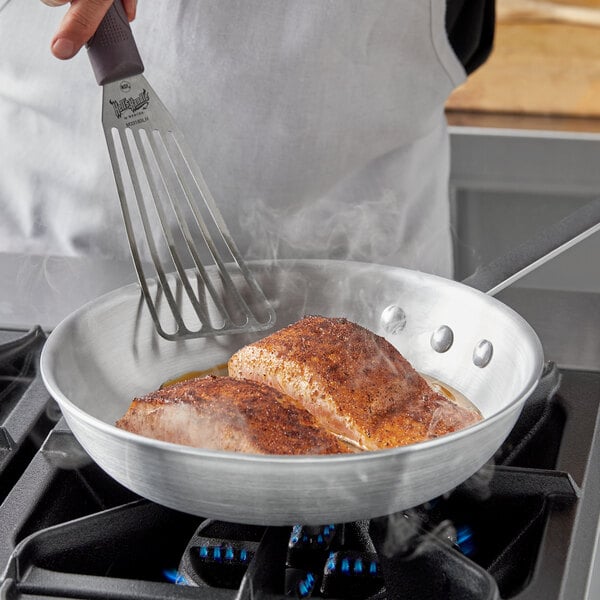
Aluminum
Aluminum cookware is affordable and an excellent conductor of heat. They are lightweight, so maneuvering them while cooking and cleaning requires less effort and is easier on the wrists. Pay attention to what ingredients you cook with when using bare aluminum cookware, unless it has a hard-anodized or non-stick layer, as it is reactive with acidic foods and can alter the flavor of your recipes.
- Excellent heat conductor
- Lightweight and easy to maneuver
- Affordable
- Prone to discoloration
- Reacts to acidic foods
Copper
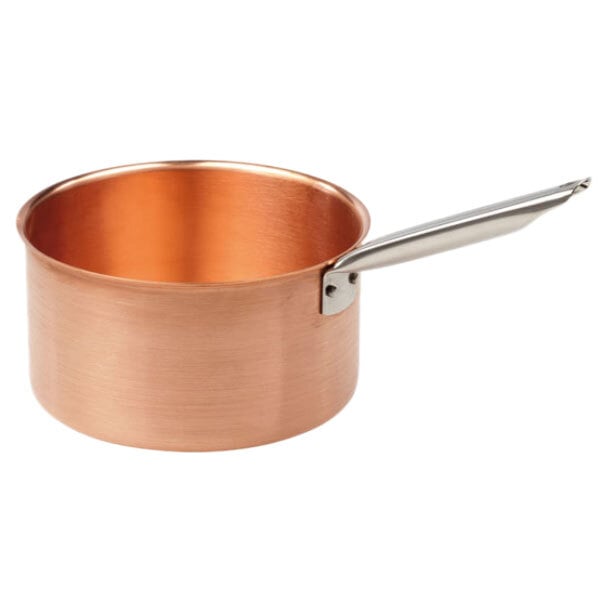
Out of all the material types, copper cookware is the best to ensure even heat distribution. They are also one of the most visually appealing materials, making them a great choice for catering events, buffets, and restaurants with open cooking concepts. To make sure it is safe and non-toxic to use, you should only look into purchasing copper cookware that is lined with another material like steel or tin.
- Best heat conductor for cookware
- Visually appealing
- Oven-safe
- Expensive
- Bends and dents easily
- Can react chemically with some foods to create poisonous compounds
Stainless Steel
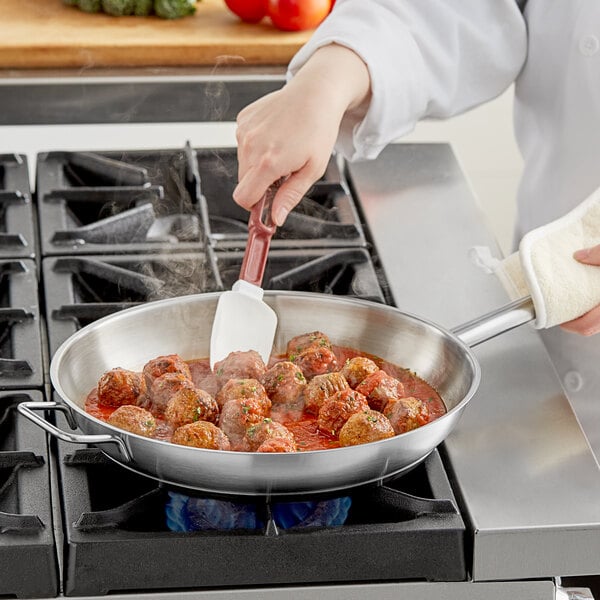
Stainless steel cookware holds many benefits including its durability, compatibility with induction cooktops, and its ability to be run through a dishwasher. Its nonreactive properties make it an excellent solution for your slow-simmering tomato sauces and other acidic recipes. However, stainless steel is a poor conductor of heat and can have trouble with even heating. To combat this, some manufacturers include an aluminum core in the cookware's bottom to promote heat distribution and eliminate hot spots.
- Durable and corrosion-resistant
- Resists staining
- Does not react to foods
- Easy to clean
- May feature a multi-ply construction to aid in heat conduction and distribution
- Poor heat conductor
- Prone to hot spots and scorching
Cast Aluminum
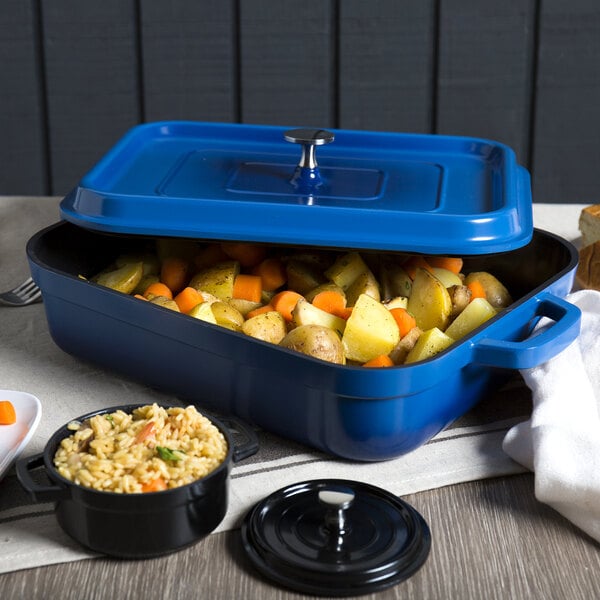
Cast aluminum cookware conducts and retains heat well and it is also quick to cool down. It is lightweight, making it easy to handle, and many feature a durable, food-safe ceramic enamel coating that resists sticking and rust for long-lasting use. Plus, cast aluminum cookware is compatible with induction cooktops and is oven-safe.
- Conducts and retains heat well
- Lightweight
- Inexpensive alternative to cast iron
- Resists rust and sticking foods
- Warps easily
- Potentially reactive to acidic foods, changing the taste of food
Cast Aluminum vs Cast Iron Cookware
Cast aluminum is easier to clean than cast iron but it does not last as long. Both cast aluminum and cast iron cookware have their advantages and disadvantages. When choosing between them, the most important factors to consider are how much you'll need to move your cookware, how quickly you need it to heat, how long you need it to stay heated, and the level of effort you want to put in with maintenance.
Cast aluminum cookware is lighter in weight than cast iron, making it easy to transport throughout your kitchen. This also makes cast aluminum the better choice for quick heat-up and cool-down times. Cast iron's thickness and heavy weight give it an advantage in heat retention, making it the better option for oven-to-table applications. While cast iron requires more maintenance, it does last a lifetime when properly cared for and is a worthwhile investment. Cast aluminum cookware is dishwasher-safe for convenience but only has a lifetime of a few years.
Cookware accessories can enhance the functionality of your existing pots and pans to help keep your chefs safe and workspaces clean. Some accessories can even help kitchens with limited space bring items onto their menu!

- Ideal for sealing in heat during the cooking process
- Reduces spatter to keep your cooktop surface clean
- Domed lids circulate moisture within pots or pans
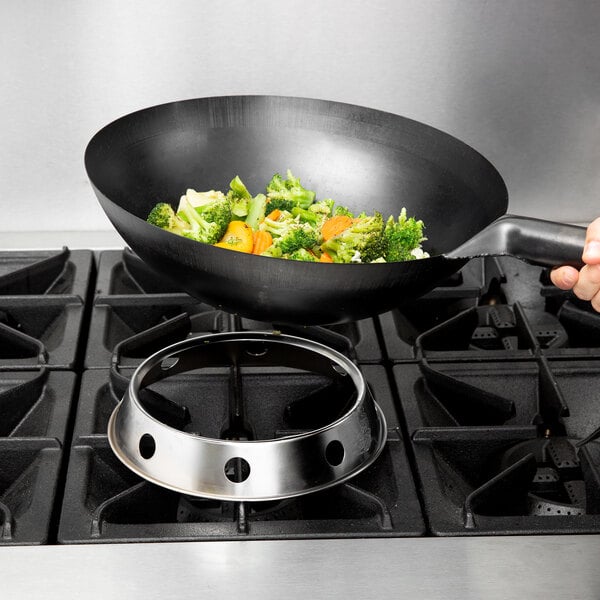
- Placed on top of a burner to support round-bottomed woks
- Vented design helps concentrate and direct the heat
- Prevent issues with tipping and wobbling
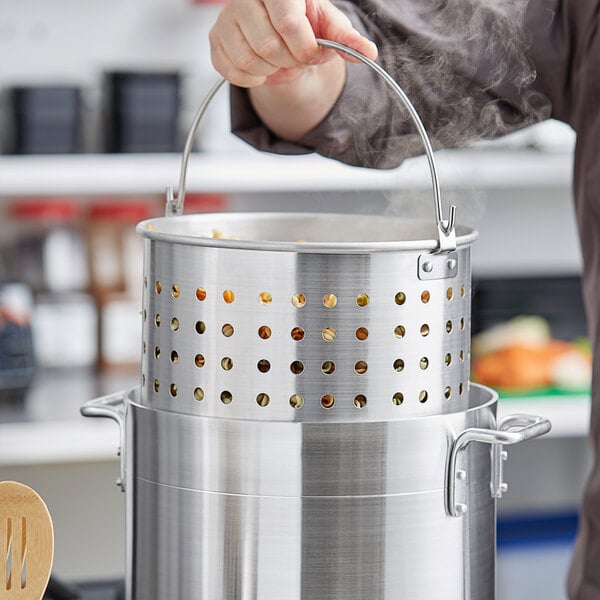
- Transforms stock pots into fryers, steamers, or pasta cookers
- Used to steam foods like vegetables and chicken
- Also great for blanching vegetables
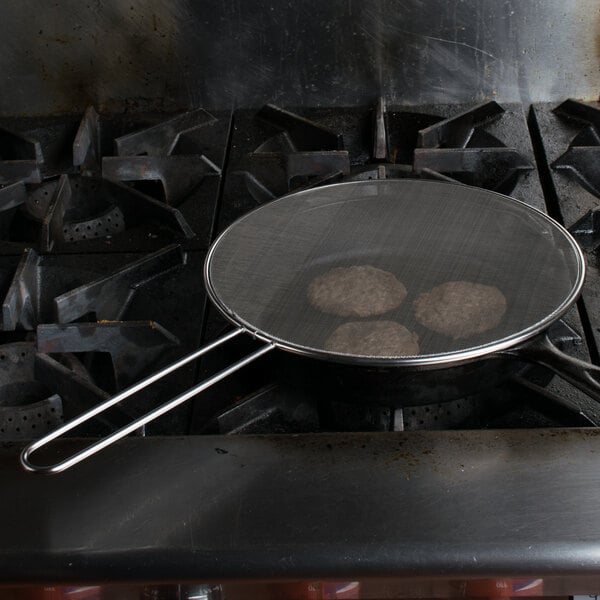
- Fine mesh design won't limit visibility
- Allows food to breathe while preventing oil and grease splashes
- Helps reduce oil burns and other injuries in the kitchen
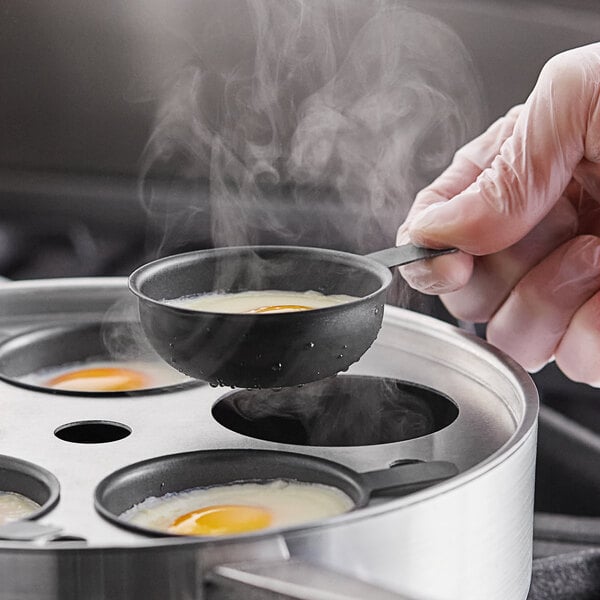
- Streamline the egg poaching process
- Individual cups consistently provide evenly-shaped poached eggs
- Models available with 4-15 cups for high-volume efficiency
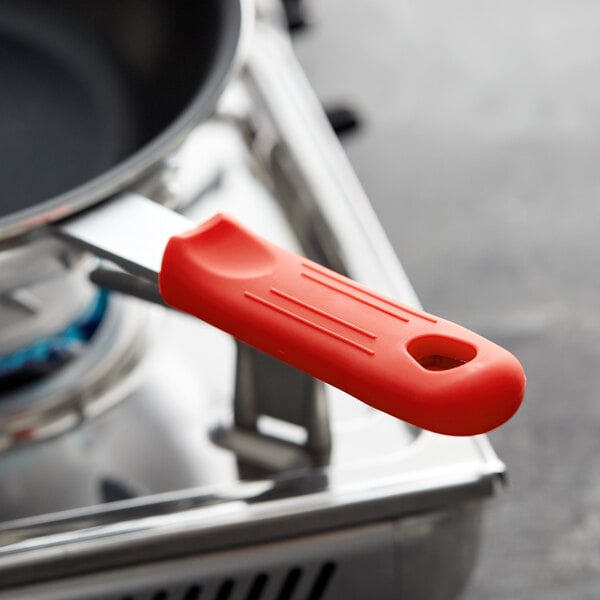
- Made of heat-resistant silicone to maintain a cool touch
- Slides on and off easily for simple cleaning
- Provides added comfort
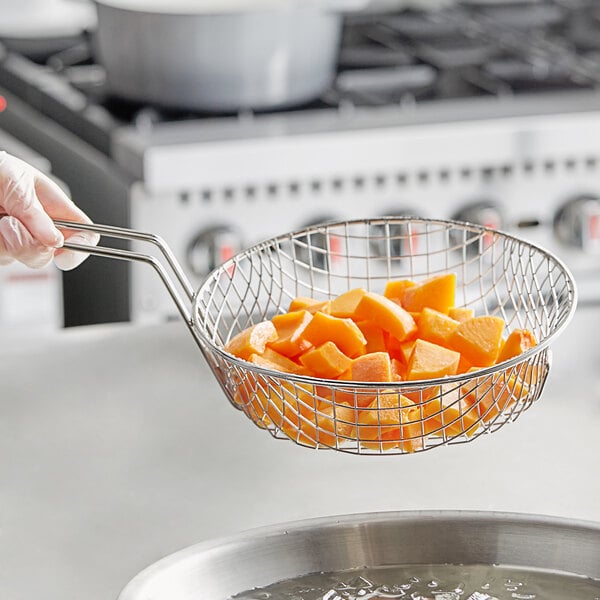
- Ideal for stovetop frying, boiling, blanching, and skimming
- Available in both coarse mesh or fine mesh options
- Keep hands away from the heat for safe cooking
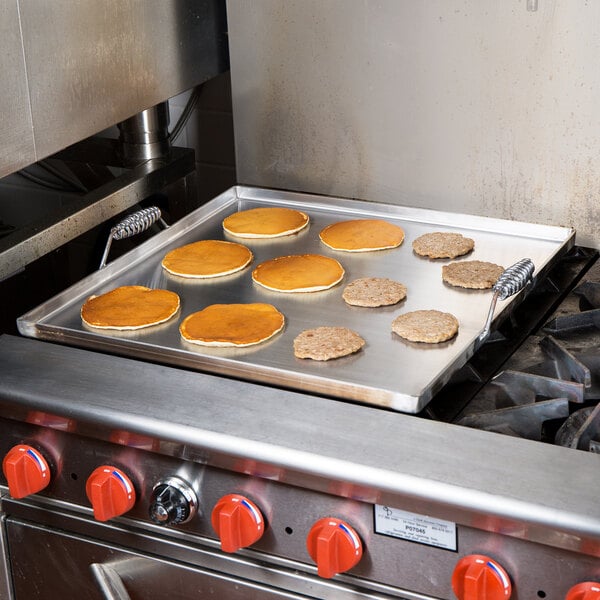
- Turns a portion of a stovetop into a griddle or grill
- Handles for easy placement and transportation
- Smooth, ribbed, and reversible designs provide versatility in cooking applications
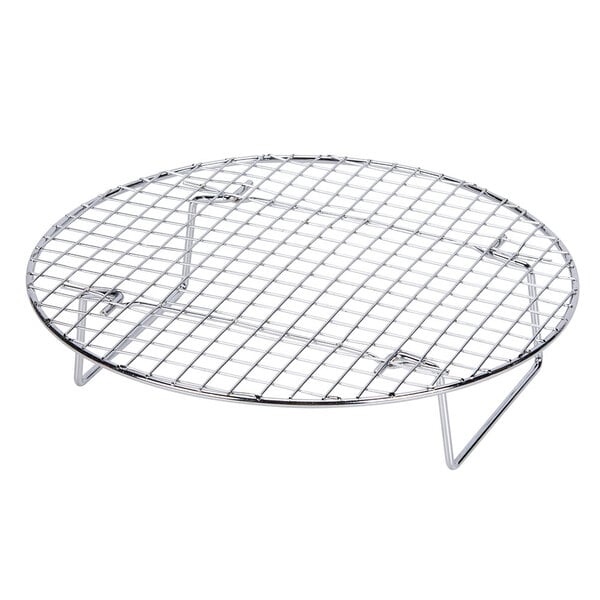
- Can fit inside stock pots, pressure cookers, or pans
- Keeps food from hitting the bottom of the pan
- Ideal for steaming fresh vegetables, seafood, and tamales
Since the handle is the only part of the pan that you will have direct contact with during the cooking process and transport, it is important to make sure it is strong and comfortable. Commercial cookware handles utilize two different types of handle styles: riveted and welded.
Riveted handles are attached to the cookware's body by two or more pieces of strong metal to ensure a durable connection that won't come loose or break over time. Cookware with welded handles, which is oftentimes referred to as rivetless cookware, allows for a smooth interior and is easier to clean.
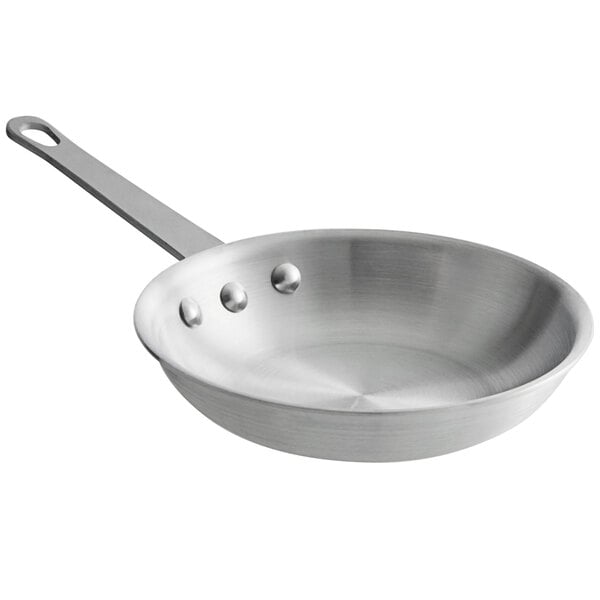
Riveted Handle
- Sturdiest handle type
- Never needs to be tightened
- Harder to clean than welded handles
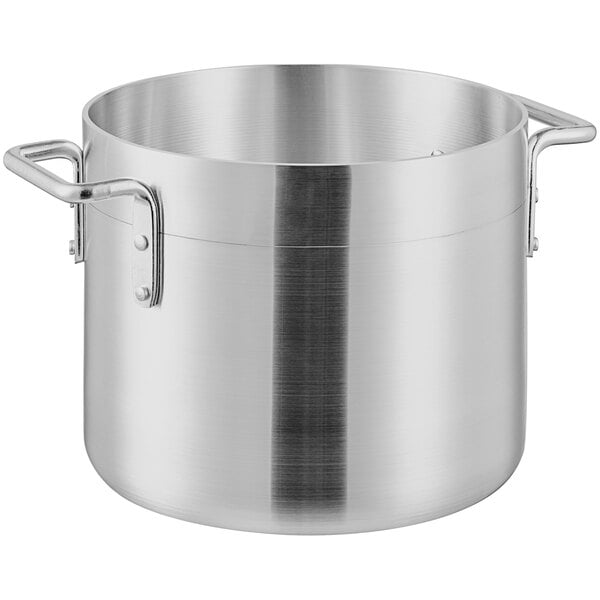
Welded Handle
- Allows for a smooth interior that is easy to clean
- Minimizes the opportunity for bacteria collection
- Not as sturdy as riveted handles
Knowing how your cookware was formed and its thickness are two important features to consider when purchasing the best cookware for your establishment.
How Is Cookware Formed?
Cookware is primarily molded through one of two processes known as drawing and spinning.
Drawing:
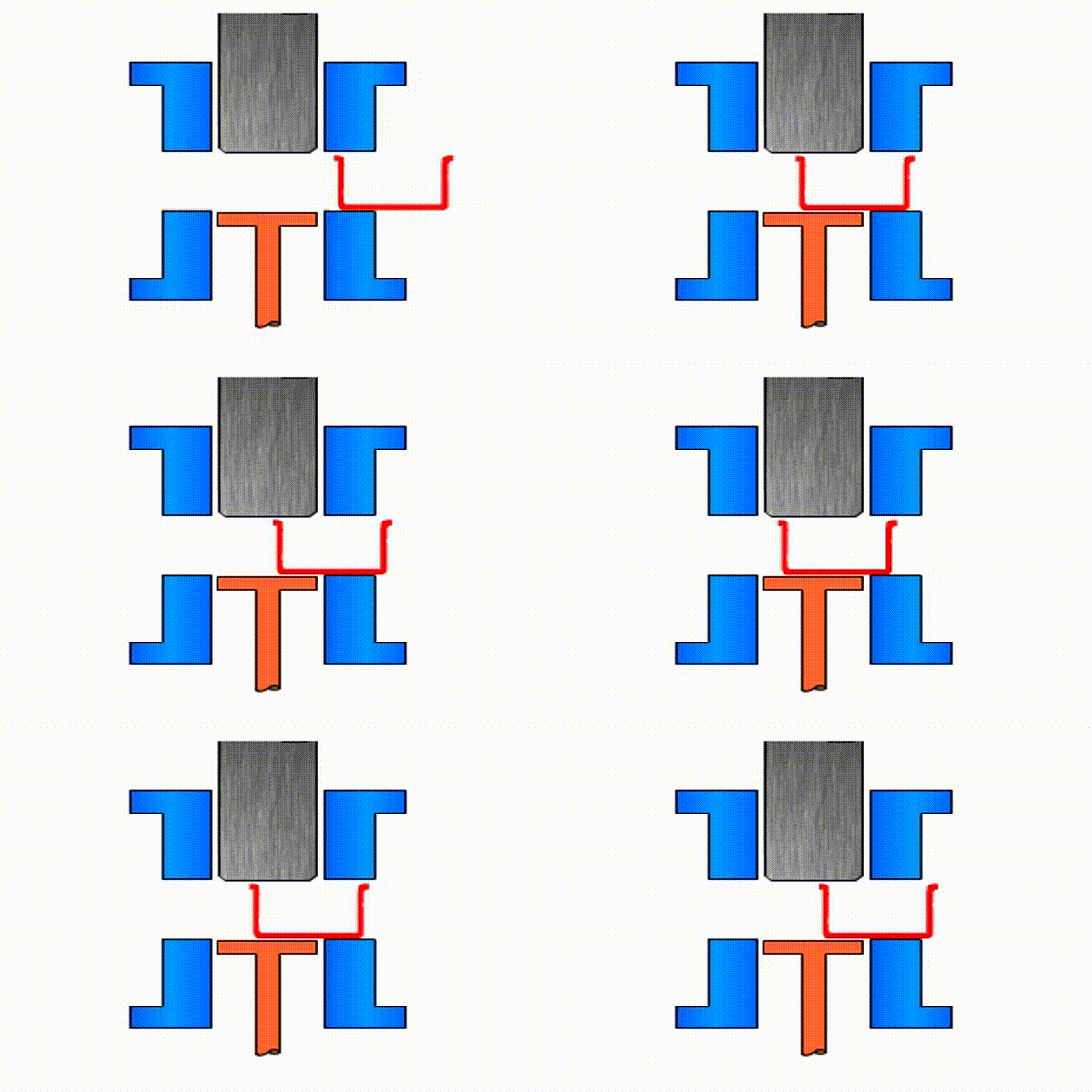
- Drawing is a metal forming process where sheet metal is "drawn" into a forming die by gradual pressure, which is applied by a mechanical punch.
- Drawn cookware can have variations in thickness throughout its construction, which can lead to uneven heat transmission from the stove's burner.
- Cookware formed this way is affordably-priced.
Spinning:
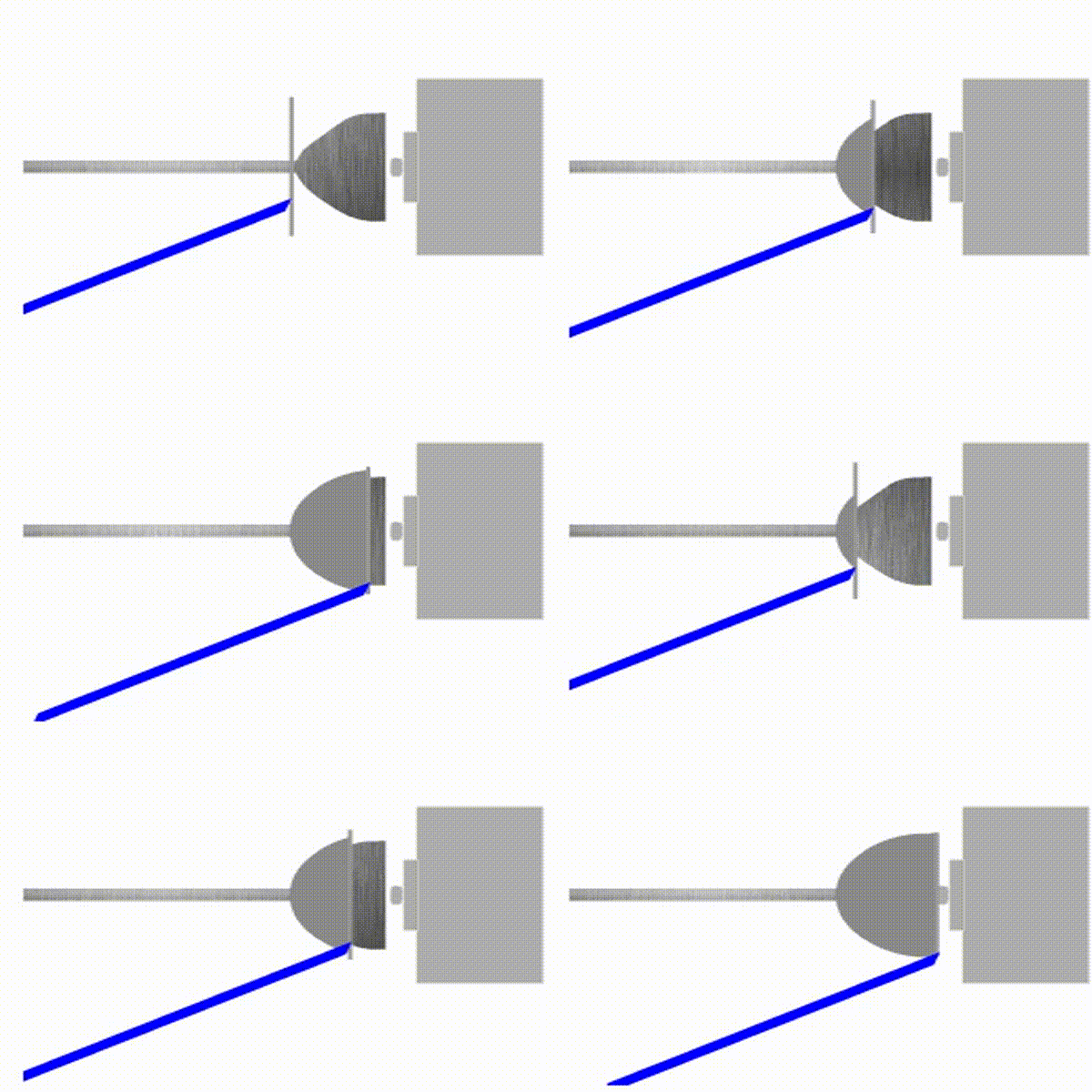
The spinning process starts with sheet metal placed between a mandrel (used to form the sheet) and a tailstock (which holds the sheet in place). The mandrel and tailstock then begin to rotate rapidly and force is applied to the sheet metal. This causes the tailstock to flow over the mandrel creating the desired shape.
- Spun cookware delivers reliable results. The force applied to the sheet metal flows across the surface numerous times to ensure the item's thickness is uniform throughout.
- Uniform thickness in spun cookware gives it a sturdier construction than drawn cookware.
Cookware Thickness
Beyond material construction, it is always important to consider the thickness of the cookware you're investing in. The thickness of cookware is generally measured in either gauge or millimeters. The way you read gauge or mm is different.
- Gauge: When reading gauge it is important to remember that the higher the gauge, the thinner the metal. Most of the cookware you find will fall somewhere between a thick 10 gauge construction and a thinner 22 gauge construction.
- Mm: When measuring in millimeters, remember that 1 mm is equal to 0.0394 inches. The higher the mm, the thicker the metal.
Pros and Cons of Thick Metal
- Sturdier
- Resistant to denting and warping
- Even heating and searing qualities
- Expensive
- Heavy to handle
- Requires a longer amount of time to heat up

Related Resources

June 2026 WebstaurantStore Coupon Code
Summer is upon us, and to celebrate WebstaurantStore has blazing hot deals all month long! With summer vacations underway and holidays like Independence Day rapidly approaching, now is the time to stock up on essential supplies and equipment you'll need to get through the summer season. Take a look at our wide array of sale items below and don't forget to enter the code SUMMERSALE at checkout to enjoy up to 20% off your purchases! Looking to save even more? Check out the new Webstaurant Rewards® Visa Business Card ! Sign up for a new card today and start earning rewards on every WebstaurantStore purchase, and save on a WebstaurantPlus subscription. Have a look at some incredible deals on disposable items with June's monthly coupon code! Whe
Different Types of Pizza Pans
Pizza is beloved all over the country and served at many cafes, pizzerias, food trucks, restaurants, and bars. A key aspect of a pizzeria's success is using the right equipment and tools to make a good pizza that customers will love. One factor that impacts your pizza is the pizza pan you use, so it's necessary to understand the different types and styles available, the impact the pan's thickness can have, and the maintenance that will keep your pizza pans lasting longer and in the best condition possible. Shop All Pizza Pans
Cooking Conversion Chart
Knowing how to convert measurements is an important skill to have in the kitchen. For example, in a restaurant or catering setting, you might have to convert a recipe that serves 300 people to accommodate 500 people. Additionally, if you're using a family recipe or one from the internet, you'll have to scale it up for use in a commercial environment. Cooking conversions are also especially useful in bakeries, where the ratio of ingredients needs to be exact to get the desired effect. Since memorizing volume conversions and converting between the U.S. and metric systems can be confusing, we created a cooking conversion chart for you to print out and keep on hand in your restaurant or bakery. Download Cooking Conversion Chart U.S. Measurement
Join Our Mailing List
Receive coupon codes and more right to your inbox.