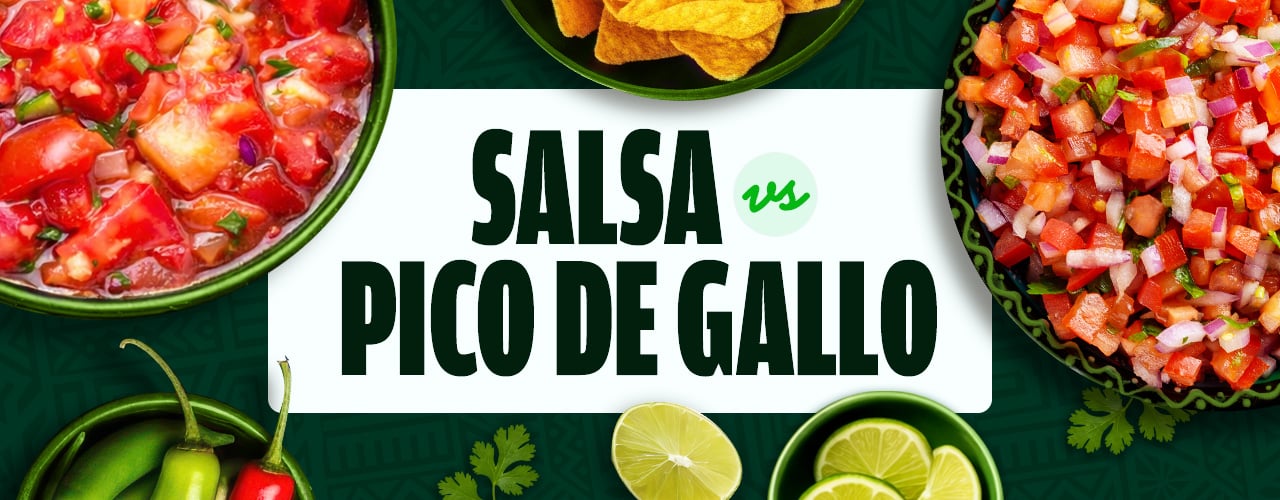
Pico de gallo and salsa are staples of Hispanic cuisine. Not only are they featured in countless recipes, but they are also among the most popular condiments on the planet, pairing well with a range of tastes and textures. While they share many similarities, pico de gallo and salsa are two distinct foods that each bring something different to the table. Key differences that separate them include their taste, texture, and the ingredients used to make them. We’ll outline what pico de gallo and salsa are, where they come from, and what sets them apart so you can optimize your menu.
Shop All Salsa and Mexican SaucesWhat Is Pico de Gallo?
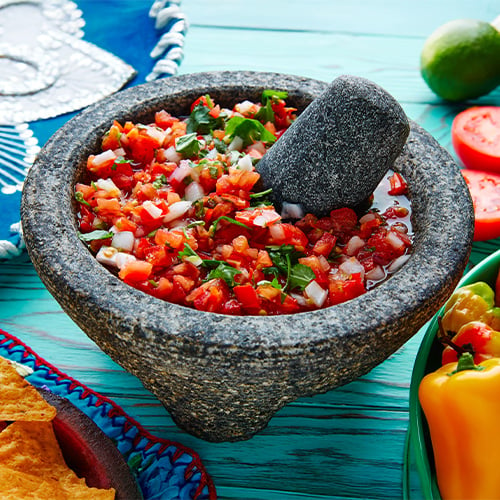
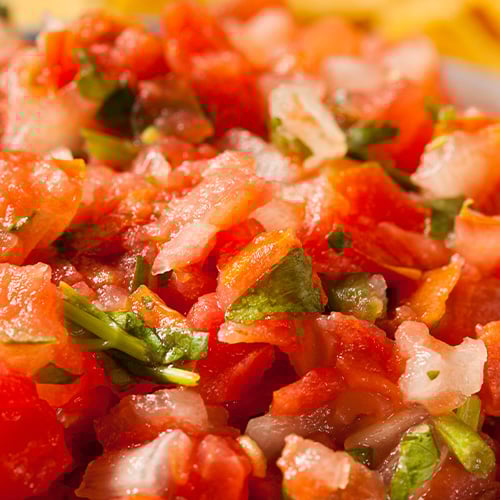
Pico de gallo is a Mexican condiment primarily made from a combination of diced tomatoes and onions, infused with the refreshing flavors of cilantro and lime juice. It adds a fresh and zesty kick to your menu, and for those seeking a bit of heat, jalapenos or serrano peppers can be included in the recipe to elevate the spice level. Two distinguishing features of pico de gallo are its chunky texture and low water content, which allow you to savor each ingredient. While it is commonly used as a condiment or topping, its versatility extends beyond just a dipping sauce. It can also be used as a main ingredient in different types of tacos, fajitas, and burritos.
Where Does Pico de Gallo Come From?
Pico de gallo is most commonly associated with Mexican cuisine, and its origins can be traced back to Central America, particularly Aztec cuisine, where traditional recipes closely resemble the modern version of the dish. In English, pico de gallo translates to “rooster’s beak,” likely stemming from the way it was eaten. People would pinch the mixture between their thumb and forefinger, mimicking the way a rooster pecks at its food with its beak.
While pico de gallo is the most commonly used name for this dish, it is also known by other names such as salsa fresca, salsa cruda, and salsa bandera. The term salsa bandera, which translates to “flag sauce,” is a nod to the dish's colors, with the red tomatoes, green peppers or cilantro, and white onions mirroring the colors of the Mexican flag.
How Is Pico de Gallo Made?
Pico de gallo is traditionally made by chopping tomatoes, onions, and peppers. The ingredients are mixed in a bowl, with cilantro and lime juice added in. The longer the dish sits, the more time the acidic ingredients have to blend, resulting in a more robust, distinct flavor.
What Is Salsa?
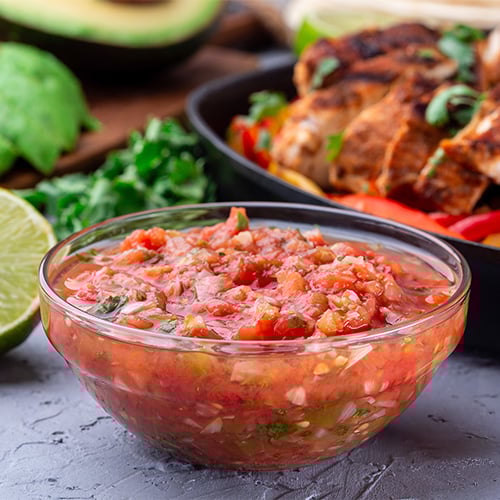
In Hispanic cuisine, salsa refers to a range of tomato-based sauces and condiments, each offering a unique consistency and level of heat. While most types of salsa feature a smooth, liquid consistency, they can also include chunks of tomatoes or peppers for a firmer, more solid texture. Salsa is not only perfect as a dip for tortilla chips or a topping for tacos and enchiladas, but can also be used to enhance soups, stews, grilled meats, and seafood dishes. At parties and catered events, salsa is a popular choice for dipping alongside guacamole and queso.
Where Does Salsa Come From?
While salsa is commonly associated with Mexican cuisine, its roots extend to the diverse culinary traditions of Central and South America. The Aztecs, Mayans, and Incas were among the early cultures that laid the foundation for the salsa we know today. Over the years, salsa recipes were perfected and adapted to incorporate diverse ingredients and flavor profiles. Although salsa has been used in various forms for generations, its emergence as a popular dip in North America took hold in the 1980s. This trend was particularly prominent in Mexican restaurants, where its fresh and vibrant flavors quickly captivated palates and became a staple on tables across the country.
How Is Salsa Made?
While the exact specifications for making salsa vary depending on the type you’re preparing, most salsa recipes require you to blend a variety of chopped ingredients, which can be done using a blender or food processor to achieve the desired texture. Consistency is key when it comes to salsa, with some preferring it smooth while others like it chunky. One defining characteristic of salsa is its higher water content, which gives it a wetter, saucier texture compared to pico de gallo.
Pico de Gallo vs Salsa
While pico de gallo and salsa share similar origins and come from the same region, they are distinct from one another. No matter if you’re using them as a condiment, a topping, or blending them into a larger recipe, identifying what sets these two popular options apart is essential for any kitchen.
- Appearance: Pico de gallo features a chunkier appearance with less liquid, while salsa is typically smoother due to high water content.
- Taste: Both options are tomato-based and feature a strong tomato taste. However, pico de gallo features onion, cilantro, and lime, generally with a lower level of spiciness, while salsa comes in many forms, allowing for more flexibility in terms of heat level.
- Uses: Pico de gallo works great as a topping or mix-in with Hispanic foods, adding a fresh element. On the other hand, salsa is extremely popular as a dip, offering a versatile option for adding flavor and heat to a variety of dishes.
Pico de Gallo and Salsa FAQ
Pico de gallo and salsa can be found in restaurants and kitchens across the globe, adding a burst of flavor to dishes and are enjoyed by many for their fresh and vibrant taste. If you are looking to incorporate these delicious toppings into your menu or want to learn more about them, we've answered some of the most common questions below.
How To Store Pico de Gallo and Salsa
To store pico de gallo and salsa, use airtight containers that help preserve their flavors and textures. This ensures that they stay fresh and safe for consumption until you are ready to serve them. If you anticipate needing to store pico de gallo and salsa for an extended period, consider transferring them to airtight freezer-safe bags or containers to prolong their shelf life without compromising their quality.
How Long Do Pico de Gallo and Salsa Last?
When stored correctly, fresh pico de gallo can last 3-4 days in the refrigerator. While it's ideal to let the recipe sit so that the flavors can develop, Pico de gallo is best consumed within the first 1-2 days after it is made to enjoy its peak freshness. On the other hand, fresh salsa generally has a longer shelf life, lasting 3-7 days in the refrigerator, with the exact duration depending on what ingredients were used to make it. Salsas with a higher water content are more prone to spoilage and will not keep as long as chunkier options, which can last longer due to their thicker texture and lower water content.
Understanding the distinctions between pico de gallo and salsa can help you optimize your menu by offering diverse options that cater to different preferences and culinary experiences. By leveraging the unique characteristics of each, you can compliment your signature dishes and provide customers with a memorable dining experience.