Automatic Gratuity: What You Need to Know
Last updated on Jan 14, 2026Christine PottsGiving your server a tip is a cultural expectation of dining at a restaurant in the United States. Recently, more restaurants have added automatic gratuity charges to the final bill, which some customers find confusing. While the purpose of this charge ranges from simplifying checks for large parties to eliminating tipping, automatic gratuity plays a unique role in restaurant bookkeeping and employee payroll. Use this guide to auto gratuity to fully understand how it works, the laws surrounding the charge, and the pros and cons to decide if it's right for your restaurant.
What Is Automatic Gratuity?
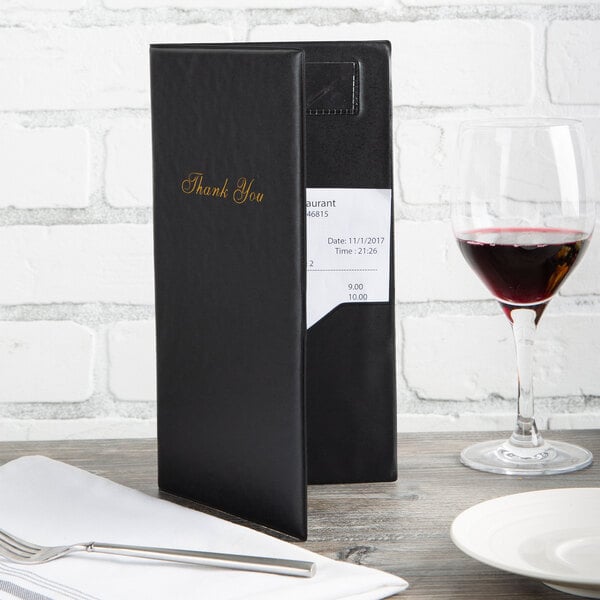
Auto gratuity is a legal service charge added to a party's bill that goes directly to the waitstaff serving that table. Usually, this gratuity equals 18% of the check and is only applied to parties of six or more to ensure that servers receive ample compensation for their efforts. A restaurant will generally print this policy on its menu to alert patrons before they receive their bill.
Is Automatic Gratuity a Tip?
No, automatic gratuity is a service charge. This classification means the amount is predetermined and considered a fee, so the customer is legally obligated to pay it.
Why Do Restaurants Add Gratuity for Large Parties?
In the past, automatic gratuities often ensured adequate compensation for a server when handling a large party. A table of this size could want to split their bill, and as a result, confusion or miscalculation could arise and leave the server improperly tipped.
Is Automatic Gratuity Legal?

Yes, automatic gratuity is legal. Laws instated by the IRS rule that automatic gratuity is a service charge, and no legislation prohibits this practice. However, state laws may differ on if this charge is compulsory. In some states, restaurants must mention automatic gratuities on the menu or verbally inform customers about the fee before they receive it. To avoid confusion or conflict, clearly state your automatic gratuity policy on your menu or have your servers inform any affected parties at the beginning of their meal.
Can You Refuse to Pay Automatic Gratuity?
No. Customers cannot refuse to pay automatic gratuity since the payment is a service charge. Tips are optional and freely given by customers, but charges on the receipt from the restaurant itself are mandatory fees. Not paying the automatic gratuity is the same as not paying for the food.
However, a recommended or suggested tip is not the same as an auto gratuity. With suggested tips, the percentage is merely a guideline, not a requirement. The customer may choose what tip amount they want to give their server, if any. Restaurants should clearly label suggested tips and automatic gratuities on the bill.
Auto Gratuity Law

In 2012, the IRS stated that automatic gratuities would be classified as service charges beginning in January 2014. With this update from the IRS, automatic gratuities count toward employees' regular paychecks and are taxed differently than traditional tips. Employers must also report charges as a wage on payroll reports, not as tips.
If the restaurant institutes auto gratuity, the server's income must be at least equal to the state's minimum wage since they are not receiving any tips. Due to the differences in taxation and classification, traditional tips allow employers could pay employees less than minimum wage because of their supplemental tip income. However, with automatic gratuity counting as a service charge and not a tip, servers must receive the legal minimum wage of their area for their shifts worked with only auto gratuity on guests’ bills.
What Is the Difference between a Service Charge and a Tip?
A service charge differs from a tip in that a service charge is counted as a wage, whereas a tip is a separate source of income. The following guidelines determine if something qualifies as a tip.
- The customer gives it freely
- The customer determines the amount
- It is not affected by employer policy or negotiation
- The customer is free to choose who receives the payment
As a service charge, automatic gratuity is compulsory. Unlike a tip, automatic gratuity funds are considered restaurant funds and are not specifically designated as the property of the server by the customer. An employer may share part or none of the automatic gratuity funds with their employee.
Pros and Cons of Automatic Gratuity
Here are some pros and cons of implementing an automatic gratuity policy in your restaurant.
Pros of Automatic Gratuity

- Helps avoid confusion when large parties split bills
- Is a service charge designated as restaurant funds, so the restaurant owner can choose how to allocate the total
Cons of Automatic Gratuity
- Requires restaurateurs to pay employees minimum wage for any shifts worked where no traditional tips were given
- Discourages customers from tipping more than the gratuity, even if they would normally leave a 20% tip
While automatic gratuity can help ensure adequate compensation after serving large parties, it can also bring about some challenges regarding your restaurant's bookkeeping. If you want to implement an auto gratuity policy in your establishment, familiarize yourself with the applicable legislation in your state. Remember that automatic gratuity funds are taxed differently than tipped income for servers, and print your policy on your menu or another prominent place to avoid confusion with customers.
Related Resources
Guidelines for Training Restaurant Servers
Regardless of a restaurant's size or style, the serving staff represents the face of every dining establishment. These individuals have the most face time with your customers during their visit, and positive interactions can go a long way to ensuring those same patrons return. Hiring the right employees for the job from the start is always ideal, but the introduction of a structured server training program can pay huge dividends for your business. Server Training By putting some thought and effort into a restaurant training program, you can immediately emphasize your workplace culture for every new hire and lower the turnover rate for your business. The following guidelines for restaurant server training will help you establish an effective, knowledgeable staff. Click below to learn how to train restaurant servers: Create a Server Handbook Hold a Server Orientation for All New Hires Set Goals for Server Training Cross Train Your Servers Shadow an Experienced Server Hold a Menu Tasting Perform Testing and Roleplay Ongoing Training Create Incentives 1. Create a Server Handbook If you don’t have an employee handbook yet, it’s a good idea to get one created. This restaurant training manual will serve as an important resource for new hires learning how to be a server as well as the rest of your established server staff. Provide a handbook to every server and keep one or two copies in the restaurant so anyone can reference it in times of need. A server training manual should include the following: Server Etiquette Guidelines - The scope of your etiquette may vary depending on the type of restaurant you own. For instance, fine dining has very specific guidelines that dictate every aspect of service. But on the whole, any type of restaurant customer service should emphasize politeness, humility, and the ability to anticipate the needs of your guests. Server Uniforms - Outline all dress code requirements in your guide, including expectations concerning server uniforms, hair, jewelry, facial piercings, and fingernails. Some of these details are small, but they should be a large focus for any waitress training program. Make it a priority to discuss these things at length during servers' training and ensure the appearance standards are clear. Server Scripts - How do you want your servers to introduce themselves to each new table? By providing a script for your serving staff you can help them to remember to share specific information about your establishment. How to Upsell - Not everyone is a salesperson, but upselling is a skill that can be learned. Share tips that will help your servers encourage guests to order appetizers, desserts, and upgrade cocktails with top-shelf liquor. Safety Policies - A busy restaurant is full of hazards and you can make sure your staff is safe at all times by outlining all of your safety policies. Stress the importance of wearing non-slip footwear and explain safe methods for carrying trays, ice buckets, bag-in-box sodas, or other heavy items. You should also include emergency procedures and fire exit routes. 2. Hold a Server Orientation for All New Hires As a busy restaurant owner, it can be tempting to skip this step or delegate it to your managers. However, holding an orientation to meet your new servers face-to-face goes a long way to building a workplace culture that improves employee retention in the long run. These are some topics that you can discuss: Mission Statement and Company History - As the owner, this is your chance to share the mission statement of the restaurant with your new employees. By passing on information about what your business stands for and the values that you want to uphold, you can create a trickle-down effect. You would be surprised how often servers get questions from customers about when the business started and who owns it. This is your chance to make sure your servers are sharing your vision with your customers. Restaurant Concept and Culture - You probably put a lot of creativity and thought into your restaurant concept, but your new employees will need an introduction to your theme and how they can help support it. For instance, if your restaurant specializes in locally grown produce, you'll want your staff to be educated about regional fruits and vegetables. If you own a BBQ restaurant with a blues music theme, you'll want your staff to have some knowledge and appreciation for blues music. Tour the Building - By giving your new staff a tour of the restaurant before their first shift, you can help put them at ease. When they arrive on their first day, they'll know which entrance to use, how to find the time clock, and where to keep their belongings. 3. Set Goals for Server Training By setting training goals, you can create a standard that you'd like all servers to meet. This ensures that your program is consistent and every server gets the same level of restaurant training. Provide a Training Schedule - Before each server gets their own tables, they should complete your serving training program. Create a set schedule for your trainers to follow so that your new servers are hitting each step in the program. A sample schedule might last one week or two weeks, depending on the type of restaurant and style of your service. Create Benchmarks for Training - Make sure your training schedule has built-in benchmarks or small goals that each server should meet along the way. For example, after their first day of training they should be able to recite the permanent beer list, recount the company history, or memorize the table numbers. 4. Cross Train Your Servers Cross training with other employees provides valuable insight into how a particular restaurant operates. Before new servers start working with your waitstaff training team, it can be very helpful to have them train with some other key positions first. Cross Train with Hosts / Hostesses - Members of the host team are experts on the layout of your dining room, how to use your reservation software, and how to rotate tables so guests receive the best service possible. By spending a couple of shifts working with the host team, a server will quickly learn the dining room sections and the numbers of each table. They'll also be capable of attending to any guests that walk through the door, in the absence of a host or hostess. Cross Train with Food Runners - The next training session should be with a food runner so that your new servers can apply the knowledge they just learned about the dining room in a different application. They should know where each table is and be able to deliver food to the correct guest. This training session is also an introduction to your menu and what the different food items look like. 5. Shadow an Experienced Server Before completing the training program, your new servers should perform a few shadowing sessions with your most experienced servers. You can designate a certain number of required training sessions, or rely on your trainer's judgment as to how many are needed. During these sessions, the new server is essentially an assistant and any of the tips that are earned go to the trainer. The trainer should go over the following topics: How to Take Orders - After completing a training session with the food runners, your new servers will have a better sense of the most popular food items on your menu when it comes time to interact with guests. They should practice taking orders for each table, with the trainer acting as a guide if any questions pop up. How to Use the POS System - A big part of transitioning to a new restaurant is learning how to use the POS system. Trainers should show the new server how to use the system, then give them hands-on experience entering all the orders for the shift. Sidework Rotation - In addition to serving guests, servers also have sidework duties that must be performed during every shift. These duties usually consist of prep work like cutting lemons, stocking the salad bar, or stocking beverage stations. At the end of the shift, they should make sure all the tables in their section are clean and that condiments are full. Learn Where Items are Stocked - Servers will need to retrieve various items from dry and cold storage during a shift. It's very helpful to point out the location of items like glass racks, ice buckets, and take-out containers so they can be found quickly. Restaurant Layout - During waiter or waitress training, be sure to identify key routes to the most important parts of the facility. Additionally, your staff will always want to be aware of the surroundings, so point out potential problem areas as well. This can include high-traffic locations or places that could contain one or two "blind spots" for servers carrying full trays of food. How to Close Out - The close-out procedure includes everything a server needs to do before they can end their shift. To close out of the POS system, a server needs to print their sales for the shift and turn their cash in to a manager. They'll also need to use their sales to tip out any bartenders, bussers, or food runners. Sometimes a server will be designated as a sidework checker and will have to sign off on each server's sidework. 6. Hold a Menu Tasting One of the best parts about server training is trying out the menu items. Servers can't answer questions or make recommendations if they've never tasted the food. At the conclusion of server shadowing, the trainer should sit down and do a menu tasting with the new server(s). This is a great time to sample a variety of the most popular food items, go over the most commonly asked menu questions, and discuss allergen information. It's also a celebratory moment because training is almost complete. Even the most descriptive of menus still require clarification from time to time, and your wait staff should be as familiar as possible with the menu. The best serving staff should be able to not only explain in detail each menu item, but also provide suggestions, recite any daily specials with ease, and answer a customer's questions. 7. Perform Testing and Roleplay The last step before a new server can work independently is to pass a final test. For some restaurants, this test might be very lengthy if there is a lot of memorization involved, as with extensive wine or beer lists. Written Test - This test could cover everything from menu knowledge to policies in your handbook. It should include everything you think is vital for your servers to know. Roleplay - Require the new server to wait on a manager before their training is complete. With this method, a variety of common interactions can be touched on, all within the span of just a few minutes. In addition, this method can prepare new staff members with the proper responses to complaints or upset customers. 8. Ongoing Training Several of these guidelines, such as your restaurant layout and the menu, may change over time, so it's important to use all of these teaching points as part of ongoing training sessions for all your servers. By implementing an ongoing training program, you have the opportunity to increase productivity, update policies to comply with new industry regulations, and improve job satisfaction in a work area that's often high in employee turnover. You can get a little help with ongoing training by integrating a digital app like Connecteam, which allows you to communicate with your teams, manage schedules, and streamline tasks. Some specific things to make part of long-term training include: Learning which menu items are most popular, least expensive, most expensive, etc. Acquiring knowledge of weekly or daily specials Successfully selling guests on appetizers or desserts Finding the right balance between too much and too little interaction with guests at their table Improving awareness and multi-tasking skills Reading personalities/attitudes and determining exactly which kind of service the guest desires 9. Create Incentives Make sure your serving staff stays engaged by offering incentives for performance. You can reward servers that participate in ongoing training sessions with free meals, preferred parking spots, or raises. Keep track of server wins like the highest alcohol or appetizer sales and give out a gift card to the winner each week. There are many ways to incentivize performance and create a fun work environment to help you retain your best employees. Single-event training can often be forgotten or seem overwhelming for a new employee on the first day. By creating and following a detailed training program, you can set your new employees up for mutual success. Ongoing training allows employers to evaluate and follow up effectively to get the most out of their staff. This type of restaurant server training can help propel your operation to the next level of professional, award-winning service.
Understanding Tip Credits
The topic of tip credits can be confusing for business owners and employees, but it’s important to understand the role that tip credits play in minimum wage calculations. Approaching tip credits the right way ensures that your employees are fairly compensated and your taxes are prepared correctly. You’ll also improve your employee retention rate. We’ll break down the basics of tip credits and explain the latest requirements. Already understand tip credits? Jump to the latest updates from the US Department of Labor. What Is a Tip Credit? Claiming a tip credit is a legal way for employers to count employee tips towards their obligation to pay minimum wage. Employers do not "take" the tip credit away from employees. It’s simply a figure that is used in minimum wage calculations. Tip credits show the federal government that Employee A has made enough money in tips that they don’t need to be paid the full minimum wage. What Employers Need to Know About Tip Credits - Employees must be paid the federal minimum wage unless you're claiming a tip credit for them. You must provide written or verbal notice that you're claiming a tip credit. What Workers Need to Know About Tip Credits - If employers are claiming a tip credit for you, it must be accurately declared on a pay stub and/or tip credit report. You keep all your tips, and tip credits don't take anything away from your pay. In fact, if you aren't making enough money in tips, a tip credit can help you get paid more. If that doesn't clear things up, you're not alone. Tip credits are notoriously confusing, so we'll give a deeper explanation below. What Is a Tipped Employee? First of all, what are tipped employees? According to the Fair Labor Standards Act (FLSA), tipped employees are described as any employee who regularly receives more than $30 per month in tips. Restaurant servers probably come to mind, but tipped employees also include valet staff, delivery drivers, and bartenders. What Is the Minimum Tip Wage? The amount of gratuity that tipped employees earn usually exceeds the federal minimum wage ($7.25 an hour), so employers are allowed to pay these employees less than the standard minimum. This is called the minimum tip wage. Every state sets its own tipped minimum wage, but it must meet the federal requirement of at least $2.13 an hour. Many states, like California and Washington, pay a much higher tipped minimum wage. The US Department of Labor website provides more info on minimum wages for tipped employees by state. What If Employees Don’t Make Enough Tips? Did you know that employers are required to pay tipped employees the federal minimum wage ($7.25) if they don’t make enough tips in one pay period? You might be thinking, "Hold on, what about the tipped minimum wage?" Even though tipped employees can legally be paid the lesser tipped minimum wage ($2.13), it is only with the understanding that their tips and wages combined will be equal to or greater than $7.25. When tips plus wages don't equal $7.25, the employer must make up the difference. Since many tips are cash, how does the federal government know that employees are making enough tips to meet minimum wage? This is where tip credits come into play. How To Calculate a Tip Credit To legally prove a tipped employee is making enough money, the tip credit should be declared on a pay stub and/or a tip credit report. Tip credits are calculated on a weekly or bi-weekly basis, depending on the pay schedule. It's also the employer's responsibility to explain tip credits to their tipped employees verbally or in writing. Every state sets a maximum tip credit, but the federal max tip credit is $5.12 per hour ($7.25 min wage - $2.13 tipped min wage = $5.12 max tip credit). Many POS systems can be set up to perform this function automatically, but a tip credit calculation would look something like this: Hours Worked: 30 hours Total Tips Earned: $375 Max Tip Credit: $5.12 / hour Divide the total number of tips by the hours worked to calculate how much the server has earned per hour for that pay period. $375 tips ÷ 30 hours = $12.50 per hour $12.50 per hour is greater than the maximum tip credit of $5.12, so the server has made enough money in tips. The employer can claim the full tip credit of $5.12 and has no further obligation to pay the employee additional wages. Remember, the employer is not taking the tip credit away from the employee. The tip credit represents the amount the employer doesn't have to pay. Let's take a look at a tip credit calculation that is less than the max tip credit: Hours Worked: 30 hours Total Tips Earned: $120 Max Tip Credit: $5.12 / hour $120 tips ÷ 30 hours = $4 / hour Because $4 per hour is less than the tip credit of $5.12, the employer can only claim $4 toward their obligation to pay minimum wage. They must make up the difference on the employee's paycheck. $5.12 tip credit - $4 / hour = $1.12 / hour $1.12 / hour x 30 hours = $33.60 The employer pays an additional $1.12 an hour to this employee for a total of $33.60 added to their normal wages. Updates to Fair Labors Standards Act (FLSA) Restaurant owners know that servers and waitstaff perform a lot of duties besides just serving their customers. Sidework duties for servers could include sweeping the floors around their section, keeping salt and pepper shakers filled, or filling the ice at their beverage station. Many of these duties are necessary to be able to serve customers, but there are instances when tipped workers should be compensated for performing non-tipped labor and dual jobs. The most recent updates to the Fair Labor Standards Act divide a tipped employee’s duties into three categories: Tip-producing work - Tasks that provide a service to customers and result in a tip Directly supporting work - Duties spent preparing for tip-producing work or assisting others with customer service work that results in a tip Work that is not part of a tipped occupation - Any tasks that do not result in a tip and do not support tip-producing work Note: Any time spent performing work that is not part of a tipped occupation (C) will be compensated at the full minimum wage and a tip credit cannot be claimed. Examples of this type of work would be requiring servers to clean the kitchen or restrooms, perform accounting duties, or prepare food items. What Is the 80/20 Rule? The final ruling on the 80/20 rule that went into effect in December 2021 states that there is a 20% limit on time spent performing non-tipped duties. If a server spends more than 20% of their total workweek performing duties that fall into the directly supporting work category (B), they must be paid full minimum wage for that time and the employer can’t claim a tip credit. What Is the 30 Minute Rule? Under the 30 minute rule, if a server spends more than 30 minutes performing directly supporting work (B), they must be compensated at full minimum wage for all time exceeding 30 minutes. For example, the employee opens the store and spends 35 minutes setting up the beverage stations. They must be paid for the time exceeding 30 minutes (5 minutes) and the employer cannot claim a tip credit for this time. What About Idle Time? Sometimes business is slow and servers wait a considerable amount of time for a table. According to the Department of Labor, this idle time is included in directly supporting work (B). This means that idle time that exceeds 30 minutes needs to be fairly compensated at minimum wage with no tip credit. What Employers Need to Know About the Updates for Tipped Employees - In general, you'll need to pay closer attention to the sidework duties your servers are performing and for how long. You'll need to recognize the difference between duties that support earning tips versus duties that have nothing to do with tips. If you have servers on the clock and they have no tables to wait on, you have to pay them fairly for the time they spend on sidework duties. What Workers Need to Know About the Updates for Tipped Employees - If you regularly spend time on non-tip producing labor when you have no tables to serve, keep track of how long you're performing these duties. You may deserve a better pay rate if the time equals out to more than 30 minutes of continuous work or 20% of your entire workweek. The idle time when you have no tables is also included. Calculating compensation for tipped employees does come with its challenges. Banning the tipping system altogether is an idea that some restaurant owners have tried, but it has failed to gain support from the majority of employers and employees. The truth is, working for tips can be very profitable and it lowers the labor cost for operators. Understanding and abiding by compensation laws is the best way to make sure your tipped employees are treated fairly and the tipping system continues to be beneficial for all.

Are Tips Taxable?
Whether received directly from a customer, through a tip pool, or added on a credit card slip, the Internal Revenue Service (IRS) considers all tips you earn as reportable income, subject to federal and often state income taxes. For restaurant employees and operators, navigating the rules for tracking and reporting this income is a critical part of financial compliance. This guide breaks down the essential procedures for both staff and management, detailing how tips are taxed and the correct way to report them to avoid penalties and ensure accurate paychecks and filings. Click below to learn more about how tips are taxed: What Are Tips? 2025 One Big Beautiful Bill Reporting Tips Penalty for Not Reporting Tips Tip Tax FAQ What Are Tips? In the foodservice industry, tips are discretionary, or optional, payments customers make directly to an employee for services provided. This gratuity can be given in cash left on a table, added to a credit or debit card transaction, or through a digital payment app. For tax purposes, these voluntary payments are not considered gifts but are a form of employee compensation. Are Tips Taxed? All tips you receive are taxable income. Cash tips (including card tips paid out by your employer and tip-pool distributions) totaling $20 or more in a month from a single employer are also subject to Social Security and Medicare tax and must be reported to your employer. Non-cash tips (such as tickets or other items of value) are taxable for income tax purposes but are not subject to Social Security and Medicare tax and are not reported to your employer. Are Shared Tips Taxed? Tips you receive from a tip-sharing arrangement, such as a tip pool where contributions are distributed among eligible staff like servers, bussers, and bartenders, are fully taxable to you as the recipient. You are required to report only the actual amount you receive personally, not the total amount you contributed to the pool. The tax liability follows the money to the employee who ultimately keeps it. Do Employers Pay Taxes on Tips? Employers have specific payroll tax responsibilities for their employees' reported tips. Restaurants are required to pay a matching portion of FICA taxes, contributing 7.65% for Social Security and Medicare on every dollar of tip income reported by their staff. Employers must also pay Federal Unemployment Tax (FUTA) on these tips, as the IRS considers them part of an employee's taxable wages. Taxing Tips vs Service Charges Tips are voluntary customer payments and are taxed differently from service charges, which are mandatory fees treated as regular wages. Under IRS rules, a payment is a tip only if the customer decides whether to pay, how much to pay, and who receives it, otherwise it’s a service charge. Voluntary tips are taxable to employees, and cash/charged tips of $20+ in a month per employer are also subject to FICA and must be reported to the employer, non-cash tips are taxable for income tax but not FICA. Service charges are employer-paid wages. You need to run them through payroll with income tax, Social Security, and Medicare withholding, and show them on the employee’s W-2 as wages, not as tips. How Does the 2025 One Big Beautiful Bill Act Affect Tips? The One Big Beautiful Bill Act lets many tipped workers deduct up to $25,000 of qualified tips from federal taxable income for tax years 2025–2028, but it does not eliminate payroll taxes or the duty to track and report tips. For restaurants, day-to-day tip handling stays the same, what changes is how some employees may deduct properly reported tips on their personal returns. Creates a Temporary Federal Deduction for “Qualified Tips”: Employees in IRS-listed tipped occupations can deduct up to $25,000 of voluntary, customer-paid tips that are correctly reported on a W-2, 1099, or Form 4137, but the deduction phases out at higher incomes. Restaurants don’t claim this deduction, but accurate reporting enables staff to use it. Does Not Change Social Security/Medicare (FICA) on Tips: Cash and charged tips of $20+ in a month per employer remain wages for FICA, so employers must withhold the employee share and pay the matching employer share as before. This new deduction affects federal income tax only, after reporting. Keeps the Tip vs. Service-Charge Line Intact: Automatic gratuities and service fees are still treated as wages, not tips, so they don’t qualify for the deduction, label them clearly in your POS and on receipts. Adds New Information-Reporting Expectations: Employers and payors are expected to separately identify certain cash tips and the worker’s tipped occupation on information returns. The IRS has granted penalty relief for 2025 while systems update. Leaves Employee and Employer Recordkeeping in Place: When you file your annual personal income tax return, the total tips you reported to your employer must be included on your Form 1040. If you received any tips you did not report to your employer, you must also declare these and may need to file Form 4137 to pay the Social Security and Medicare taxes on them. Reporting Tips Accurate tip reporting is a fundamental requirement for both restaurant employees and the establishment itself. Employees bear the responsibility for tracking and declaring their gratuities, while employers must handle the withholding, matching, and filing of associated payroll taxes. Failure on either side can lead to IRS penalties, making a clear understanding of the process essential for compliance. Your primary responsibilities include: How to Report Tips as an Employee As a foodservice employee, you are legally required to report all your tips, cash, credit card, and shared, to your employer on a monthly basis. This allows your employer to withhold the correct federal income, Social Security, and Medicare taxes from your paycheck, ensuring your tax obligations are met throughout the year. Maintaining your own daily tip record is crucial for accuracy. Keeping a Daily Log: Document all tips you receive each day, using Form 4070A (the IRS Employee's Daily Tip Record) or your own system with the same details: date, cash tips, credit card tips, and tips paid out to other staff. Submitting a Monthly Report: Provide a tip report to your employer by the 10th of the following month, using Form 4070 (Employee's Report of Tips to Employer). You must report if your total tips for the month are $20 or more. Reporting All Tips on Your Tax Return: When you file your annual personal income tax return, the total tips you reported to your employer must be included on your Form 1040. If you received any tips you did not report to your employer, you must also declare these and may need to file Form 4137 to pay the Social Security and Medicare taxes on them. How to Report Tips as an Employer Restaurant operators must collect tip reports from employees, withhold taxes accordingly, and report the totals to the IRS. Your role is to act as a facilitator, ensuring the tip income flows correctly into the tax system through your standard payroll processing while maintaining specific records for IRS verification. Your key duties involve: Collecting Employee Tip Reports: Ensure you receive Form 4070 or its equivalent from all tipped employees by the 10th of each month. Withholding and Paying Payroll Taxes: Withhold federal income tax and the employee's share of Social Security and Medicare taxes (7.65%) from their regular wages and reported tips. You must also pay the matching employer's share of Social Security and Medicare taxes (7.65%) from your own funds. Filing Form 8027: File Form 8027 for each large food or beverage establishment by the last day of February if filing on paper, or by March 31 if filing electronically. Reporting on W-2s: Include all reported tip income in the "Wages, tips, other compensation" box on each employee's Form W-2 for the year. What Are Allocated Tips? Allocated tips are a figure reported by the employer to the IRS on Form 8027 and on an employee's W-2 when the total tips reported by staff fall short of a certain threshold. This amount represents the IRS's estimate of what an employee likely received based on a formula, which typically uses the establishment's gross receipts and a mandated tip rate of 8%. Allocated tips appear in Box 8 of Form W-2 and aren’t included in Box 1 wages or withholding. On your tax return, you generally add allocated tips to income and compute any Social Security/Medicare due on Form 4137, unless your own records substantiate that you received less in tips than the allocated amount. Accurate daily reporting is the best defense against allocation. Penalty for Not Reporting Tips Failing to accurately report tip income can trigger significant IRS penalties for both employees and restaurant owners. The consequences extend beyond simple interest charges to include substantial fines based on the unpaid tax amount. For the business, lax tip reporting compliance can also lead to costly payroll tax audits. Compromised Loan and Benefit Eligibility: For employees, underreporting income leads to an artificially low earnings record, which can reduce their qualification for mortgages, car loans, unemployment benefits, and future Social Security retirement payouts. A 50% Penalty on FICA Taxes: Employees who do not report all their tips to their employer must pay the full Social Security and Medicare tax owed on that unreported income, plus an additional penalty of 50% of that tax when they file their annual return using IRS Form 4137. Fines and Criminal Charges for Employers: Restaurant owners who willfully fail to report tips may face penalties for failing to furnish W-2s, with fines per form, and could be subject to criminal prosecution for tax evasion. Tip Tax FAQ Below, we answer some frequently asked questions about how tips are taxed and reported: Are Cash Tips Taxable? Cash tips are fully taxable. The IRS treats all cash received as gratuity for services as reportable income. You must include these amounts in your daily record and report them to your employer if they total $20 or more in a month. What Percentage of Tips Do Servers Have to Claim? There is no set percentage servers are required to claim, as the law mandates reporting 100% of all tips received. Some restaurants may use a point-of-sale system that suggests a tip amount based on sales, but your actual legal obligation is to report the full amount you earn, not an estimated percentage. Are Tips Considered Income? Tips are compensation subject to federal income tax. For any server or bartender, tips are not optional gifts but a direct form of compensation for work performed, making them subject to federal income tax, just like a regular paycheck. Declared Tips Meaning Declared tips are the gratuities you formally report to your employer and the IRS. When you "declare" your tips, you are providing a precise record of your cash and credit card earnings, which your employer then uses to withhold the correct taxes from your paycheck and report your true earnings to the government at year's end. Mastering the flow of tip income, from defining what qualifies to executing precise reporting procedures, is a critical component of financial health. Adhering to these guidelines ensures your business remains compliant, safeguards your staff from unexpected tax liabilities, and fosters a transparent workplace. Treating gratuities with the same diligence as any other revenue stream is the most effective strategy for protecting both your establishment and your employees.