Add a sophisticated option to your restaurant seafood menu by offering shucked oysters on the half shell. Different types of oysters are a delicacy that can elevate the status of your restaurant among seafood enthusiasts. Shucking oysters may seem daunting at first, but with the right tools and technique, it can be a rewarding culinary skill to master. We'll show you how to shuck an oyster the right way so you can make a good impression and create repeat customers.
Shop All Seafood ToolsHow to Shuck Oysters Video
Learn how to serve oysters on the half shell by following our step-by-step video on shucking oysters and plating oysters, demonstrated by Chef Larry Williams.
What Is Shucking?
Shucking is the method used to open an oyster shell so the meat can be eaten raw. The live oyster shell is sealed very tightly, but with the right shucking method, the shell will open safely.
How To Open an Oyster
Follow these instructions for shucking oysters the right way:
Oyster Shucking Tools
- Oyster shucking knife
- Oyster shucking gloves
- Two clean towels
- Bed of ice in a serving dish (if serving oysters on the half shell)
How to Open Oysters
Your oysters need to be as fresh as possible. Guests are eating them raw, so make sure your oysters are properly stored before serving. Follow the instructions below on how to shuck an oyster:
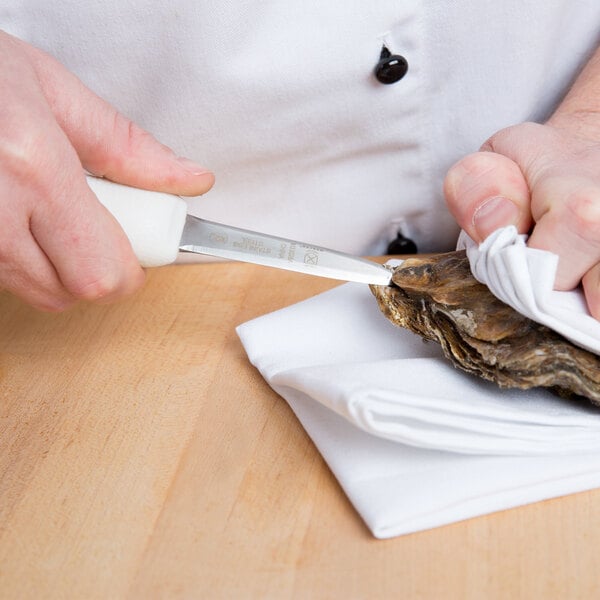
- Start by acquiring an oyster shucking knife. An oyster glove can also be used for extra protection. If you do not have an oyster knife, a butter knife, paring knife, or even a screwdriver can work as substitutes but are not the safest options due to their design.
- Place your oyster cup side down on one half of a clean towel and fold the other half to almost completely cover the oyster, leaving the hinge exposed.
- Insert the tip of the oyster knife into the hinge of the oyster, which is the pointed, V-shaped end of the oyster.
- With gentle pressure, wiggle the knife into the shell until it pops open. Wipe your knife off on a clean towel to remove any extra sand or grit.
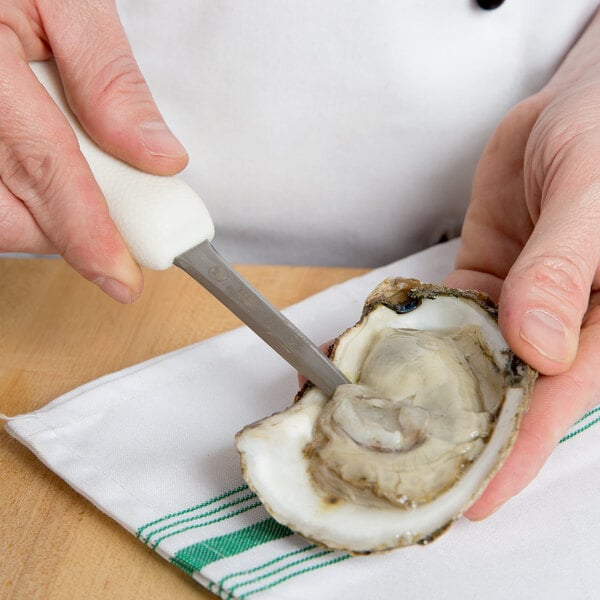
- Place the knife back into the oyster and bring the knife towards yourself. Keeping the knife along the top of the shell, unhinge the oyster's shell and separate its adductor muscle, which keeps the oyster shut.
- Once the top shell is completely unhinged, scrape the meat that's attached to the inside of that top shell back into the bottom shell where the rest of the oyster's meat and liquid sits.
- Discard the top shell.
- In one swooping motion, run your knife along the bottom part of the bottom shell under the oyster's meat to detach it, then flip the oyster’s meat so the smooth part of the meat comes up to the top.
- There might be grime or mud on the shell that was stuck in the inner clamp. If you come across this, do not rinse the oyster. Instead, take a clean towel and carefully wipe off any grime or mud.
- Place on a bed of ice with other shucked oysters and serve.
How to Shuck Oysters Fast
If you have to shuck large quantities of oysters in a hurry, there is a special tool that gets the job done quickly. A specialty oyster opener takes the stress off your hands and uses leverage to open the oyster shell in one stroke. For caterers and large seafood restaurants, investing in an oyster opener can reduce labor and make kitchen prep more efficient.
Shucking oysters requires practice, but in due time, you’ll be an expert. Learning how to do it quickly and effortlessly will make serving time speedy, which is imperative when serving fresh oysters on a bed of ice to your customers.
Related Resources
How to Peel and Devein Shrimp
For many prep cooks, shrimp duty shows up somewhere between “character building” and “recurring nightmare.” But much like deboning a fish or breaking down a chicken, peeling and deveining shrimp is a foundational kitchen skill. We’ve broken the process down step by step so it feels less intimidating and more automatic. Shop All Bulk Shrimp How to Peel Shrimp Peeling raw shrimp is easy to do by hand. Before you start, decide how much of the shrimp you want to peel, because not every dish calls for fully shelled shrimp. As you work, save the shells. They’re full of flavor and perfect for building a quick seafood stock or sauce later on. If you’re peeling shrimp in large batches, keep them on ice throughout the process to keep them out of the temperature danger zone and maintain quality. Remove the head (if attached). Hold the shrimp firmly and twist the head off just behind the gills. Discard or reserve for stock. Loosen the shell. Starting at the legs, gently pull the shell away from the body. The shell should separate easily if the shrimp is fresh. Peel toward the tail. Using your thumbs to get underneath the shell, remove the shell segments one by one, working your way down the body. Decide on the tail. For tail-on shrimp, pinch and pull the shell off while leaving the tail fan intact. For fully peeled shrimp, remove the tail completely by giving it a gentle tug. Rinse lightly if needed. If there’s excess shell debris, give the shrimp a quick rinse and pat dry. How to Devein Peeled Shrimp Once the shrimp are peeled, deveining is quick and straightforward. The “vein” is actually the digestive tract, and while it’s not harmful, it can contain grit that affects both texture and presentation. Locate the vein. Lay the shrimp on its back. The vein runs along the curved top (the dorsal side). Make a shallow cut. Using a paring knife or a shrimp deveiner, slice gently along the back, just deep enough to expose the vein. Remove the vein. Lift it out with the tip of your knife or your fingers and discard. Clean and dry. Rinse the shrimp briefly to remove any residue, then pat dry before cooking or storing. How to Devein Unpeeled Shrimp Sometimes you’ll want to devein shrimp while keeping the shell on, especially for grilled or butter-poached preparations where the shell protects the meat and adds flavor. Position the shrimp. Place it on a cutting board, shell-side up. Cut through the shell. With a paring knife or shrimp deveiner, make a shallow incision along the back, cutting through the shell and just into the flesh. Extract the vein. Pull the vein out carefully with the knife tip or your fingers, leaving the shell intact. Peeling and Deveining Shrimp FAQs Let’s clear up a few of the most common shrimp-prep questions that come up in kitchens of all levels. From whether deveining is truly necessary to when peeling makes the most sense, these FAQs tackle the small but important details that can affect flavor, texture, and presentation. Do You Have to Devein Shrimp? Technically, no, shrimp are safe to eat with the vein intact. However, deveining improves texture and appearance, especially in larger shrimp where the vein may contain sand or grit. In professional kitchens, it’s considered best practice. Where Is the Vein on a Shrimp? The vein runs along the shrimp’s back, following the curve of its body. It’s usually darker in color and more visible in larger shrimp. Smaller shrimp may have barely noticeable veins. Do You Need to Peel Shrimp Before Cooking? It depends on the dish. Peeled shrimp cook faster and absorb marinades more easily, while shell-on shrimp retain more moisture and flavor. Many chefs choose based on the cooking method and presentation. Peel entirely when shrimp will be chopped, sauteed, fried, or folded into pastas, risottos, or fillings. Leave the tail on for presentation-forward dishes like shrimp cocktail, scampi, or grilled shrimp. Don’t peel at all when boiling or steaming shrimp for maximum flavor, or when serving peel-and-eat styles like shrimp boils. What Is a Shrimp Deveiner? A shrimp deveiner is a small kitchen tool designed to remove the digestive tract from shrimp quickly and cleanly. It resembles a narrow, curved pick or hook, enabling you to slide it under the vein and lift it out with minimal damage to the surrounding flesh. While not strictly necessary (a paring knife works just fine), shrimp deveiners are popular in professional kitchens for their speed, consistency, and ease of use, especially when breaking down large volumes of shrimp. The next time shrimp shows up on your prep list, take a breath, grab your tools, and get to work. Like most kitchen fundamentals, mastering shrimp prep is less about speed and more about repetition. Once you understand when and how to peel and how to devein efficiently, the process becomes second nature.

The Complete Guide to Scallops
Scallops are a type of mollusk that can be found in oceans all around the world. They are known for their delicious flavor and tender texture, which makes them a popular choice in many different types of cuisine. Easy to prepare, scallops are a convenient option you can use to expand your seafood menu. Keep reading to learn all about scallops, where they come from, and how to prepare them. What Are Scallops? Scallops are bivalve mollusks, which means they are a type of shellfish with two shells that are hinged together. When the scallop opens its shell, you can see the fleshy part of the animal inside. This is the part that we eat! The interior muscle of a scallop can range in color from white to pink or even orange. When cooked, the muscle becomes round and tender, making it a favorite among seafood lovers. Scallops are also known for their impressive swimming abilities. Using their powerful adductor muscles, scallops can propel themselves through the water by opening and closing their shells. What Do Scallops Taste Like? Scallops have a mild, sweet, and slightly briny taste. When cooked, they are tender and buttery. They don’t have a strong taste like their cousins, clams and oysters. Sometimes their delicate flavor is compared to lobster or types of crab. This makes them an extremely popular option for those who don't normally enjoy seafood. What Do Scallops Look Like? Scallops are easy to recognize, thanks to their distinctive shell. They have a symmetrical, fan-like shape with a scalloped edge and a bottom hinge. Scallop shells come in a range of colors, from pale white or beige to shades of pink or orange. Some scallops even have a slightly iridescent shimmer to their shells. Where Do Scallops Come From? Bay scallops, which are smaller and sweeter than sea scallops, are found in bays, estuaries, and shallow waters along the East Coast. These scallops live in sandy bottoms and can be found from New England down to the Gulf of Mexico. While they are harvested by hand in some areas, many are now farmed. Sea scallops, on the other hand, are found in cold, deep ocean waters. These larger scallops are typically found off the coast of New England and Canada, as well as in the waters around Iceland and Norway. When Is Scallop Season? Scallop season occurs in the late fall and winter months when the water is cooler and scallops are at their peak. During this time, scallops are harvested and shipped out to restaurants and seafood markets across the country. However, just because scallop season is limited to a few months out of the year doesn't mean you can't enjoy them year-round. Frozen scallops are available year-round and can be just as delicious as fresh scallops when prepared correctly. In fact, many chefs prefer to use frozen scallops because they are easier to work with and have a longer shelf life. Types of Scallops Scallops are categorized in several different ways depending on where and how they are harvested. Learn more about the types of scallops below: Bay Scallops vs Sea Scallops There are two main types of scallops - bay scallops and sea scallops. While they may look similar at first glance, there are a few key differences that set them apart. Bay scallops are smaller in size compared to their sea scallop counterparts, measuring in at around 1 inch in diameter. They are found in estuaries and shallow waters, which contributes to their smaller size. On the other hand, sea scallops are much larger, measuring in at around 2 inches across. They are often found in deep ocean waters, which allows them to grow to a much larger size than bay scallops. While both types of scallops are delicious and versatile in the kitchen, they do have slightly different applications. Bay scallops are often used in dishes where their small size is an advantage, such as in pasta dishes or as a topping for salads. Sea scallops, with their larger size, are often used as a standalone entree or in dishes where their size won't be an issue. Diver Scallops Diver scallops are handpicked from the ocean floor by skilled divers. This means they are not harvested by bottom trawlers, which can damage the ocean floor and result in bycatch. One of the things that set diver scallops apart is their slightly larger size. This makes them a great choice for recipes that call for larger scallops. Because they are handpicked, they are minimally damaged, which can affect their texture and taste. Dayboat Scallops Dayboat scallops are the more common type of scallops you'll find on the market because they are harvested on a larger scale than diver scallops. Unlike diver scallops, which are individually hand-harvested by divers, dayboat scallops are caught using chain drag nets. While this method may not be as selective as hand-diving, it allows for larger quantities of scallops to be harvested at once. Wet Scallops vs Dry Scallops When you see scallops labeled as “wet” or “dry”, this refers to their packaging. Dry scallops, also known as natural scallops, are untreated and chemical-free. They are packaged immediately after being shucked. Dry scallops have a slightly sweet and briny flavor, and they are often preferred by chefs for their purity and natural taste. After shucking, wet scallops are treated with a preservative called sodium triphosphate. This additive helps the scallops retain moisture and increases their weight, making them more profitable for distributors. However, the downside is that the sodium triphosphate can give wet scallops a slightly soapy flavor and a rubbery texture. If you're looking for the purest and most natural scallop flavor, dry scallops are the way to go. But if you're working with a tighter budget or need to increase the weight of your scallops, wet scallops may be a better option. Scallop Sizes When it comes to cooking with scallops, size matters. Scallops are sized by the number of pieces per pound. The smaller the number, the larger the scallop. U10 means that there are under 10 scallops in a pound, while U40 means there are about 40 scallops in a pound. If you're looking to sear scallops, larger scallops will take longer to cook. On the other hand, if you're making a scallop ceviche, you may want to use smaller scallops for a more delicate texture. This is a general size guide you can use to purchase scallops: U8 Scallops - Under 8 scallops per pound (2 1/2" to 2 3/4" diameter) U10 Scallops - Under 10 scallops per pound (2 1/2" diameter) U12 Scallops - Under 12 scallops per pound (2 1/4" to 2 1/2" diameter) U10/20 Scallops - 10 to 20 scallops per pound (2" diameter) U30/40 Scallops - 30 to 40 scallops per pound (1 1/2" to 1 3/4" diameter) U40/60 Scallops - 40 to 60 scallops per pound (1" to 1 1/2" diameter) U60/80 Scallops - 60 to 80 scallops per pound (1” diameter or less) How to Buy Scallops It's important to know what to look for when buying scallops so you get a safe, consistent product. First and foremost, avoid fresh scallops that are discolored. This is a sign that the scallops have been sitting in storage for too long. Look for scallops that are plump and have a fresh, briny smell. They should be a creamy, off-white color and have a firm texture. If you're buying fresh scallops, try to purchase them the same day you plan on cooking them to ensure maximum freshness. If you're buying frozen scallops, make sure they don’t have ice crystals. This is an indicator they may have thawed in storage. Scallops that have been thawed and refrozen can become mushy and lose their flavor. How to Store Scallops Proper storage of scallops is essential to food safety and to maintain their quality and freshness. Here's what you need to know about storing scallops: Keep them cold - Scallops are considered a TCS food, so they need to be received at 40 degrees or below. If you have fresh scallops that you won't be using within a day or two, you can also freeze them. Use airtight containers - When storing scallops in the refrigerator, make sure to use an airtight container or a resealable plastic bag to prevent the scallops from drying out or absorbing unwanted flavors. Don't store them for too long - Depending on the freshness of the scallops, they can be stored in the refrigerator for up to two days. If you're not sure how fresh your scallops are, it's best to use them within a day of purchasing them. Check for any signs of spoilage - Before cooking scallops, always check them for any signs of spoilage, such as a strong odor, slimy texture, or discoloration. If you notice any of these signs, discard the scallops immediately. How to Cook Scallops There are several ways to cook scallops, but one of the most popular cooking methods is by searing them. This involves cooking them quickly over high heat in a pan, which creates a nice crust on the outside while keeping the inside tender and juicy. To sear scallops, start by heating a pan over medium-high heat. Add a bit of oil or butter to the pan and let it get hot. Pat the scallops dry with a paper towel and season them with salt and pepper. Then, carefully add them to the pan, making sure they are not touching each other. Let them cook for about 1-2 minutes on each side, or until they are golden brown and cooked through. Scallops cook very quickly, which makes them ideal for your seafood menu. Can You Cook Frozen Scallops? We recommend using a food-safe thawing method before cooking your scallops. Cooking frozen scallops is possible, but it won't result in the best texture. Also, more liquid is released from a frozen scallop which isn't ideal for searing. Scallops FAQ If you're still looking for answers, we cover some frequently asked questions about scallops below: Are Scallops Shellfish? Yes, scallops are a type of shellfish that belong to the mollusk family, which includes clams, oysters, and mussels. Similar to other shellfish, scallops have a hard outer shell that protects their soft and delicate insides. However, unlike other shellfish, scallops can swim by rapidly opening and closing their shells, which allows them to move through the water quickly. Are Scallops Sustainable? Yes, many types of scallops are considered a sustainable seafood option according to Seafood Watch. Scallops are filter feeders, meaning they don't require any additional food or resources to grow. This makes them a low-impact seafood choice. But, not all scallop fisheries are created equal. Some scallop fisheries have been known to create negative impacts on the surrounding environment. That's why it's important to look for scallops that are certified sustainable by organizations like the Marine Stewardship Council or Seafood Watch. Can You Eat Scallops Raw? Yes, but it's important to ensure that scallops are fresh and handled properly before serving them raw to your customers. Raw scallops are a popular ingredient in dishes such as sashimi, ceviche, or carpaccio. Always purchase scallops from a reputable seafood seller and keep them refrigerated until ready to use. Inspect shipments carefully and if the scallops have a strong fishy odor or slimy texture, do not accept the delivery. With their delicious flavor and versatile nature, scallops make an easy addition to your menu. They can be used in a variety of dishes, including scallop ceviche, scallop risotto, and even scallop tacos. Thanks to their creamy, mild taste and delicate texture, scallops have a wide appeal, even with customers who don't normally order seafood.

Crab Varieties Explained
Nothing ushers in the summer season quite like a seafood boil. With an array of edible crabs available, it may be challenging to pick the best one for your menu. From the humble peekytoe crab to the gargantuan king crab, we’ll explore the differences between the most common kinds of crabs and how they are best served. Shop For Crabs Types of Crabs While there are hundreds of crab varieties, not all of them are suitable or substantial for cooking. Below, we created a list of the most popular types of edible crabs so you can prepare a menu that will have your seafood-loving customers coming back for more. 1. King Crab King crabs (Paralithodes camtschaticus) are one of the largest edible crabs you’ll find on a menu. Also known as red king crabs or Alaskan king crabs, they get their name from their notable size, usually weighing anywhere from 6 to 25 pounds. The carapace (the body portion excluding the legs) can measure anywhere from 7 to 11 inches across, with a potential leg span of 5 feet. King crabs are usually found in the icy waters off the coast of Alaska from November through January. King Crab Season: November through January King Crab Size: 7” - 11” Carapace; 5’ leg span King Crab Weight: 6 - 25 lb. King Crab Color: Red-brown when alive, vibrant red with white underbelly when cooked Where Are King Crabs Found? North Pacific Ocean between Alaska and Russia (Bering Sea, Gulf of Alaska) Cooking King Crab Although king crabs have large carapaces, their edible meat is predominately in their legs. When cooking king crab legs, you can steam, bake, boil, or grill them to bring out their subtly sweet flavor. King crab legs are best known for the chunks of firm white meat that can be extracted from the vibrant deep-red shell when cooked. Plate your cooked crab legs with some melted butter and a wedge of lemon for the perfect finishing touch. Edible Parts of King Crab: Legs What Does King Crab Taste Like? Delicate sweetness, similar to lobster How to Prepare King Crab Legs: Steamed, boiled, grilled, or baked 2. Dungeness Crab As one of the most abundant types of crabs in the seafood market, Dungeness crabs (Metacarcinus magister) are a popular choice for restaurant menus. They are primarily found along the Pacific Coast of the United States from November through July, with Newport, Oregon claiming the title of “The Dungeness Crab Capital of the World”. Growing to be about 4 pounds and 7 inches in width, only male Dungeness crabs can be legally harvested after they surpass 6 1/4 inches in size to prevent overfishing. Dungeness Crab Season: November through July Dungeness Crab Size: 6” - 7” (Must be a minimum of 6 1/4” for harvest) Dungeness Crab Weight: 1.75 - 4 lb. Dungeness Crab Color: Brownish purple when alive, light red-orange with pale claws when cooked Where Are Dungeness Crabs Found? Pacific Coast of the U.S. (From Southern California to Alaska) Cooking Dungeness Crab While the prominent edible portions of a Dungeness crab are in the legs and claws, the rest of the crab can either be eaten or used in recipes. When they are boiled, steamed, or grilled, their brown shell turns a light red-orange hue. The legs and claws offer dense meat that is slightly sweet and nutty in flavor, pairing perfectly with butter and lemon. The body can be cracked open and picked with seafood tools for additional meat. Many chefs like to save Dungeness crab shells to make a flavorful fish stock. Edible Parts of Dungeness Crab: Legs, claws, and body What Does Dungeness Crab Taste Like? Sweet and nutty How to Prepare Dungeness Crab: Steamed, boiled, or grilled 3. Snow Crab Snow crabs (Chionoecetes opilio), also known as rock crabs, get their name from the rocky, frigid waters they inhabit and the white color of their meat. Found in the Northern Pacific and Atlantic oceans, snow crabs are usually abundant between October to May. They bear a striking resemblance to king crabs with their long, spindly legs but are much smaller in size. Snow crabs weigh in at only 2 to 4 pounds and feature 6- to 7-inch carapaces. Snow Crab Season: October to May Snow Crab Size: 6” - 7” Snow Crab Weight: 2 - 4 lb. Snow Crab Color: Light orange-brown when alive, bright orange-red when cooked Where Are Snow Crabs Found? Northern Pacific and Atlantic (Maine to Greenland, Sea of Japan to Bering Sea) Cooking Snow Crab Snow crabs or rock crabs are a favorite among crab lovers because of how easy they are to crack. The shell of a snow crab can be cracked by hand, meaning seafood tools aren’t required to extract the snow-white meat. Because of their shell thinness, snow crab legs can be easily overcooked. It is recommended to gently steam them to bring out their sweetness and tenderness before serving with lemon and butter. Edible Parts of Snow Crab: Legs and claws What Does Snow Crab Taste Like? Subtly sweet and slightly briny How to Prepare Snow Crab: Steamed Snow Crab vs King Crab Although they look similar, the difference between snow crab and king crab comes down to their size and crackability. Where the king crab usually weighs 6 pounds and has a hard shell that requires tools to crack, snow crabs are usually no more than 4 pounds and have a soft shell that can be cracked by hand. King crabs have thicker legs with distinguishable spines that offer firmer meat than that of snow crabs. The flavor of snow crab has a slightly more briny flavor than king crab meat. 4. Blue Crab Blue crabs (Callinectes sapidus) are a staple of the Chesapeake Bay off the coast of Maryland but can be found along the east coast of the U.S. Their name comes from the vibrant blue-green color of their shells which turn a bright red when cooked. Blue crabs are usually no more than 6 inches in size and 1 pound in weight. They are harvested between June to October, with the molting season occurring predominantly during the spring. Molted crabs (crabs that have shed their hard exoskeleton) are what chefs would list as soft shell crabs on a menu and are considered a delicacy. Blue Crab Season: June to October (Molting from May to September) Blue Crab Size: 3” - 6” Blue Crab Weight: .25 - 1 lb. Blue Crab Color: Blue-green when alive, red with white speckles when cooked Where Are Blue Crabs Found? Eastern Atlantic Coast of the U.S. (Primarily in Chesapeake Bay) What Is a Soft Shell Crab? Soft shell crabs are blue crabs that have molted (shed their hard outer shell). Blue crabs are only considered to be soft shelled for 12 hours after molting. When harvesting blue crabs, fishermen look for a line on the paddler fin that turns from white to red to know if they are about to molt. Recently molted blue crabs have incredibly soft shells, meaning that every part, with the exception of their lungs and gills, is edible. This makes soft shell crabs a hot commodity in the spring and summer months. Cooking Blue Crab Perfect for seafood boils, hard shell blue crabs are usually steamed or boiled with Old Bay seasoning before the succulent crab meat is picked. Their soft white meat bears a rich and nutty flavor and is full of protein and Omega-3 fatty acids. Soft shell crabs can be fried in batter or sauteed whole and served with melted butter. Soft shell crabs have a satisfying crunch that crab-enthusiasts enjoy. Edible Parts of Blue Crab: Legs, claws, body, and shell when molted What Does Blue Crab Taste Like? Rich, succulent, with mild nuttiness How to Prepare Blue Crab: Steamed or boiled when hard shell, fried or sauteed when soft shell 5. Stone Crab Stone crabs (Menippe mercenaria), often referred to as Florida stone crabs or Gulf stone crabs, are prized for their claws and unique claw regeneration abilities. Predominately found off the coast of Florida between October to May, fishermen twist off just one of the stone crab’s claws before throwing them back, leaving the other claw for defense. A new claw will regenerate within 18 months of the previous one being removed. Stone crabs usually grow to 3 to 4 inches in size but claws must be a minimum of 2 3/4 inches long to be harvested. Stone Crab Season: October to May Stone Crab Size: 3” - 4” (Claws must be 2 3/4” for harvest) Stone Crab Weight: .2 - 5 lb. Stone Crab Color: Dark red-brown with white underbelly when alive, pale red-orange with black claws when cooked Where Are Stone Crabs Found? Gulf of Mexico and Southern Atlantic Coast of U.S (Primarily around Florida) Cooking Stone Crab Claws Stone crab claws make an eye-catching addition to seafood trays and towers. Only their claws are edible and are best when boiled or steamed. Serve stone crab claws on ice with lemon, mustard sauce, and the appropriate seafood tools to crack them. Stone crab claw meat has a hearty texture and subtle sweetness akin to shrimp or lobster. Edible Parts of Stone Crab: Claws What Does Stone Crab Taste Like? Subtly sweet, like shrimp or lobster How to Prepare Stone Crab: Steamed or boiled 6. Peekytoe Crab Peekytoe crabs (Cancer irroratus), also known as Atlantic rock crabs or sand crabs, used to be considered a throw-away species in the fishing industry. Formally known as Maine rock crabs, they didn’t ship well alive and were considered a pest in lobster pots. However, once it was discovered that their meat could be steamed and picked upon catching, the peekytoe was given its whimsical name and became highly in demand. Peekytoe crabs are usually found from August to November in the Northern Atlantic Ocean, from Nova Scotia to Rhode Island. Relatively small in size, peekytoe crabs are usually only 3 to 5 inches wide and around half a pound in weight. Peekytoe Crab Season: August to November Peekytoe Crab Size: 3”- 5” Peekytoe Crab Weight: .2 - 5 lb. Peekytoe Crab Color: Pale orange-brown when alive, white and pink meat when picked Where Are Peekytoe Crabs Found? Northern Atlantic Ocean (Nova Scotia to Rhode Island) Cooking Peekytoe Crab Because they are cleaned and picked when they are caught, peekytoe crab meat is relatively expensive and usually only sold fresh to restaurants directly. It can also be canned and shipped after picking. The sweet and tender peekytoe crab meat is perfect for shredding over salads or forming into delicious crab cakes. Edible Parts of Peekytoe Crab: Legs and claws What Does Peekytoe Crab Taste Like? Subtly sweet and briny How to Prepare Peekytoe Crab: Baked or roasted Find the perfect seafood for your restaurant with the help of our crab guide. With the different crab varieties available, there is sure to be one that will really impress the crab-lovers in your area. Kick off the warmer months with delicious crab recipes to create an unforgettable seafood menu.