
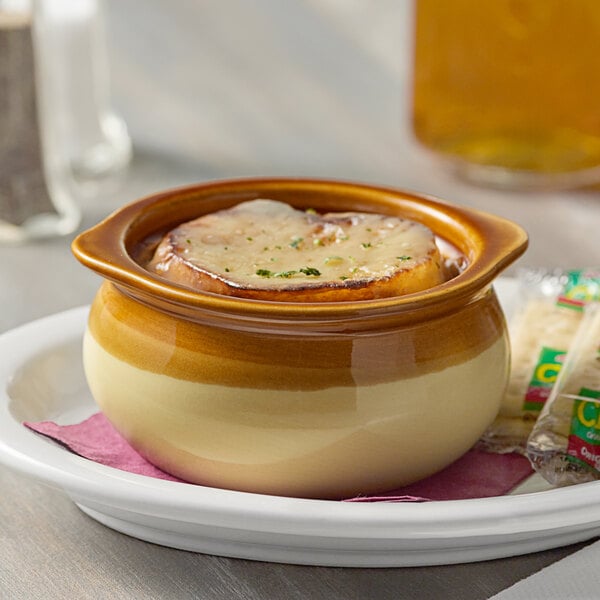
Elevate your soup du jour offerings with this bold twist on the classic French onion soup. Our recipe uses a 12 oz. bottle of coffee stout, bringing roasted malt notes that complement the sweetness of the caramelized onions and deepen the broth's richness. Perfect for nearly any restaurant's menu, from cozy taverns to upscale hotels, this hearty soup offers guests a cozy, warming dish to help fight the winter blues and embrace the season’s comforts.
French Onion Soup with Beer
Check out our video to follow a step-by-step guide on how to make coffee stout French onion soup:
What Special Equipment Do I Need?
While no special equipment is technically needed to make this recipe, below are some supplies that help with cooking time and presentation.
- Salamander Broiler: We use a salamander broiler to melt the cheese quickly, since it has higher heat capabilities than a standard broiler or cheese melter. If you don't own a salamander oven, the broil setting on your oven or a cheese melter unit will work just fine.
- Onion Soup Crock: Serve the soup in the traditional fashion using an onion soup crock.
- Sachet d’Epices: Sachet d'epices is a pouch of aromatics and spices used to infuse flavors into a liquid while cooking and is removed before serving. Use cheesecloth to hold the contents together and twine to tie it into a secure bundle.
Coffee Stout French Onion Soup
This recipe transforms the classic yet basic French onion soup, swapping coffee stout for the traditional sherry and combining Swiss and provolone instead of gruyere cheese. Its umami-rich flavor is unexpected yet approachable, making it a standout special on any menu. While perfect as a starter, it’s also substantial enough to serve as a main course when paired with a light side salad. To adapt it for a vegetarian diet, simply substitute beef broth with vegetable broth.
Yield: (8) 8-ounce servings
Total Time: 70 minutes
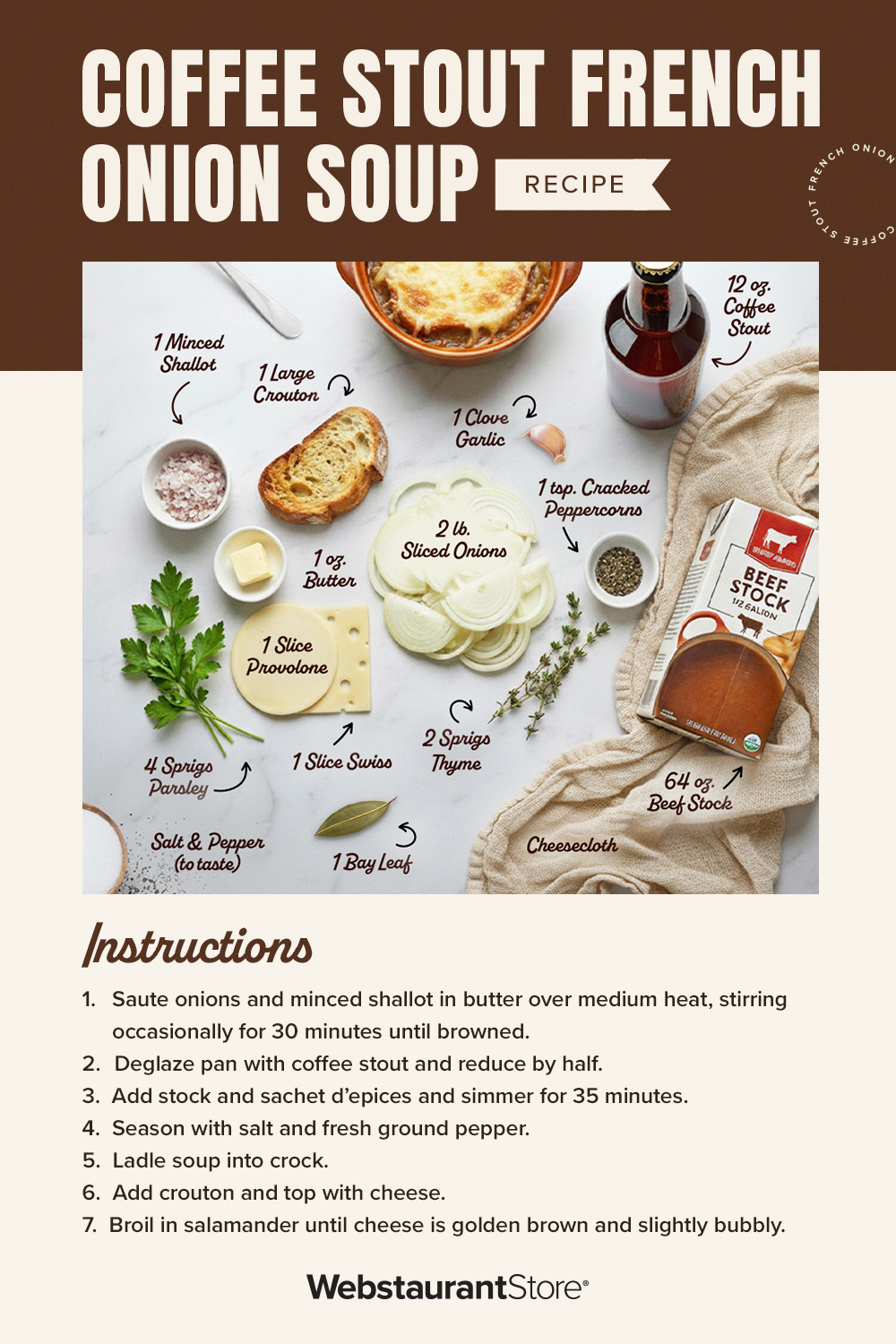
French Onion Soup Ingredients
- 1 ounce unsalted butter
- 1 shallot, minced
- 2 pounds sweet onions, thinly sliced
- 12 ounces coffee stout
- 64 ounces beef stock
- 1 Sachet d’Epices
- Salt and pepper to taste
- 1 large crouton or slice of baguette
- 1 slice Swiss cheese
- 1 slice provolone cheese
Sachet d'Epices Ingredients
- 4 sprigs fresh parsley
- 1 bay leaf
- 2 sprigs fresh thyme
- 1 garlic clove
- 1 teaspoon cracked peppercorns
Directions
- Saute onions and minced shallot in butter over medium heat, stirring occasionally for 30 minutes until browned.
- Deglaze pan with coffee stout and reduce by half.
- Add stock and sachet and simmer for 35 minutes.
- Season with salt and fresh ground pepper.
- Ladle soup into crock.
- Add crouton and top with cheese.
- Broil in salamander until cheese is golden brown and slightly bubbly.
This beer-infused French onion soup brings a modern twist to the classic, with roasted, creamy notes that elevate its flavor profile. The simple ingredients and easy preparation make it an ideal option for busy commercial kitchens looking to serve something unique with minimal effort. Get creative by experimenting with different cheeses, beers, or herbs, and tailor the recipe to suit your taste.
Related Resources
Types of Onions
Onions, a staple in kitchens worldwide, are versatile and flavorful root vegetables that come in various types. A key ingredient in mirepoix, these bulbous plants belong to the Allium family and are characterized by their distinct pungent aroma and taste. From the robust yellow to the mild shallot, each type brings its unique characteristics to the table. Read on to discover the most common types of onions and their applications. Shop All Onions List of Onion Types Onions add flavor and depth to a wide range of dishes, from meaty stews to plant-based dishes. We made a list of different types of onions and their characteristics, so you can confidently incorporate them into your recipes. 1. Yellow Onions Yellow onions are perhaps the most widely used type of onion in the culinary world. They have a strong, pungent flavor and a slightly sweet taste when cooked. Their high sulfur content gives them a bold flavor that makes them perfect for caramelizing or adding depth to soups, stews, and sauces. Yellow onions are also great for grilling or roasting, as they become soft and sweet when cooked. When in doubt, reach for yellow onions for your recipe. What Do Yellow Onions Look Like? Yellow onions feature a brown papery skin that peels away to reveal light yellow and semi-translucent flesh. What Do Yellow Onions Taste Like? Bold and assertive when raw, mild and sweet when cooked. How to Use Yellow Onions: Cooked in soups, stews, and sauces; can be grilled, roasted, or braised. 2. Sweet Onions Sweet onions are known for their approachable sweetness. Some sweet onion varieties include Vidalia, Walla Walla, and Maui. These onions are often enjoyed raw in salads or used in dishes where their delicate flavor can shine, such as in types of salsa or sandwiches. Sweet onions are also popular for making onion rings, as their natural sweetness pairs well with the crispy batter. Additionally, the lower sulfur content in sweet onions makes them less likely to make you cry while cutting them. What Do Sweet Onions Look Like? Sweet onions have thin and golden skin. Their flesh is pale yellow, almost white. What Do Sweet Onions Taste Like? Mild sweetness with less of a bite than most onions when raw, sweet and soft when cooked. How to Use Sweet Onions: Raw on salads, salsa, and sandwiches; can be fried, roasted, or caramelized. Sweet Onions vs Yellow Onions The difference between sweet onions and yellow onions comes down to their flavor profile. Yellow onions have a higher sulfur content than sweet onions, which gives them their distinctive pungent taste. They are commonly used in savory cooked dishes like soups, stews, and stir-fries. Sweet onions, on the other hand, have a milder and sweeter flavor compared to their yellow counterparts and are more suitable for raw recipes like salads and sandwiches. 3. Red Onions Red onions are known for their vibrant color, mild flavor, and appealing crunch. They have a slightly sweet and tangy taste, making them a popular choice for adding a pop of color and flavor to salads, sandwiches, and pickled dishes. Their beautiful purple hue makes them an attractive garnish as well. What Do Red Onions Look Like? Red onions are wrapped in a deep-red papery skin. Their flesh is a deep maroon on the outside of the rings and a purplish-white on the inside. What Do Red Onions Taste Like? Pungent and peppery when raw, mild sweetness when cooked. How to Use Red Onions: Raw on salads, sandwiches, and ceviche; can be grilled, roasted, or pickled. Red Onions vs Yellow Onions The difference between red and yellow onions lies in their appearance, taste, and culinary applications. Red onions have a vibrant purple-red hue, while yellow onions have a golden yellow skin. In terms of flavor, red onions are milder and slightly sweeter, making them a great choice for raw dishes like salads or salsas. On the other hand, yellow onions have a stronger, more pungent taste, which makes them ideal for cooking and adding depth of flavor to soups, stews, and sauces. 4. White Onions White onions are what most will picture when they think of onions. It has that classic white outer layer and white flesh. The flavor of white onions is similar to that of yellow onions but with less of an aftertaste and more sweetness. They have a crisp texture and are often used in Mexican and Latin American cuisine, where their flavor can complement spicy dishes or salsas. White onions are also commonly used in raw preparations such as ceviche or pico de gallo. What Do White Onions Look Like? White onions feature a white skin with occasional green streaks radiating from the top. The flesh is white and nearly translucent. What Do White Onions Taste Like? Crisp and zingy with a sharp crunch when raw, mild and sweet when cooked. How to Use White Onions: Raw in prepared salads, salsa, and guacamole; can be grilled, sauteed, or stewed for soups. White Onions vs Yellow Onions The difference between white and yellow onions is in their taste and texture. White onions have a milder, sweeter flavor compared to yellow onions, making them a great choice for dishes where you want a subtle onion taste. Yellow onions have a stronger, more pungent flavor, making them ideal for adding a bold kick to savory recipes. Additionally, white onions have a crisp, crunchy texture, while yellow onions are softer and tend to caramelize more easily when cooked. Red Onions vs White Onions When comparing the difference between red and white onions, their appearance and taste set them apart. Red onions have a vibrant, purplish-red skin and a mild, sweet flavor. They are often used raw in salads or salsas, as their color adds a pop of brightness to dishes. White onions have a papery white skin and a sharper, more pungent taste. They are commonly used in cooked dishes, such as soups or stir-fries, where their flavor can stand up to other ingredients. 5. Shallots Shallots are a member of the onion family but have a more delicate and subtle flavor. They have a mild onion taste with hints of garlic and are often used in French cuisine to add flavor to sauces, dressings, and vinaigrettes. Shallots are small and similar in shape to a garlic clove. It can be minced and added raw to dishes or cooked to enhance the flavor of the recipe. What Do Shallots Look Like? Shallots are a bulb-shaped allium that looks similar to a garlic clove. It had pinkish-purple skin, and light purple and white flesh. What Do Shallots Taste Like? Peppery when raw, sweet and garlicky when cooked. How to Use Shallots: Raw in dressing and vinaigrettes; can be pickled, caramelized, or roasted. Shallot vs Onion While both shallots and onions belong to the allium family, they have distinct characteristics that set them apart. The difference between shallots and onions is that shallots are smaller in size and have a milder, sweeter flavor compared to onions. They also have a subtle hint of garlic, making them a popular choice in French cuisine. Onions are larger and have a stronger, more pungent flavor. They are versatile and can be used in a wide range of dishes, from soups and stews to stir-fries and salads. 6. Scallions Scallions, also known as green onions, have a mild flavor with a hint of sharpness. Scallions are actually young onions that have been harvested early. The green shoots and small white bulbs are both edible. Often a staple of Asian cuisine, green onions are commonly used as a garnish for dishes such as soups, salads, stir-fries, and curries. Scallions can also be grilled or roasted whole to bring out their natural sweetness. What Do Scallions Look Like? Scallions have long and thin green shoots that spring from the top of a small white bulb. What Do Scallions Taste Like? Peppery and grassy green shoots, pungent and sweet white bulb. How to Use Scallions: Raw as a garnish for soup, dips, and stir-fry; can be sauteed, roasted, or grilled. Scallions vs Green Onions Scallions and green onions are the same vegetable, just labeled under different names. Scallions are often referred to as “green onions” since they are harvested before the onion fully matures. Scallions have a milder and sweeter flavor compared to their fully-grown counterparts. They are typically used in a variety of culinary applications, adding a subtle onion flavor to dishes such as salads, dips, and soups. 7. Leeks Leeks are another member of the onion family with a milder and sweeter flavor compared to other onions. Raw leeks are too tough to eat, but when cooked, they become tender and sweet, adding a world of flavor to recipes. They have a subtle onion taste with a hint of garlic and are often used in soups, stews, and quiches. Leeks can be sauteed, braised, or roasted to bring out their unique flavor. What Do Leeks Look Like? Leeks have a white cylindrical stalk with green leaves fanning out from the top. What Do Leeks Taste Like? Tender and sweet with a subtle onion and garlic flavor when cooked. How to Use Leeks: Braised in stock, roasted for soup, or sauteed in stir-fries. Leeks vs Green Onions Leeks and green onions are both versatile and flavorful members of the onion family. While they may look similar, there are some key differences between the two. Leeks have a milder, sweeter taste compared to green onions, making them a popular choice for soups and stews. They have a larger, cylindrical shape with a white bulb and long green leaves. Scallions have a more pungent flavor and are often used as a garnish or in salads. They are smaller in size and consist of a white bulb and thin green stalks. Onions FAQs We answer some of the most common questions about onions below: How to Store Onions There are a few methods you can use to store onions to ensure they stay fresh for longer. The best way to store onions is in a cool, dry, and well-ventilated area. You can either store them in a mesh bag or a wire basket, allowing air to circulate around them. For proper produce storage, avoid storing onions near potatoes or other fruits and vegetables that release moisture, as this can cause them to spoil faster. Best Onion for Grilling When it comes to grilling, not all onions are created equal. Some onions hold up better on the grill, adding a delicious smoky flavor to your dishes. The best onions for grilling include red onions, Vidalia onions, and sweet onions. These onions have a high sugar content, which caramelizes beautifully when grilled, resulting in a sweet and savory flavor profile. Their firm texture also holds up well during the grilling process, making them perfect for skewers or adding to burgers. With their diverse flavors and uses, the various types of onions offer chefs and cooks a wide range of options to enhance their culinary creations. Whether you're looking for bold flavor while making onion blossoms or a subtle hint of sweetness in a classic potato and leek soup, there's an onion variety out there to suit your menu.

Best Soup Kettle Reviews
A staple wherever hot, ready-to-serve soup needs to stay at a safe holding temperature, soup kettles enable soup warming without constant check-ins from staff. Some units are built strictly for holding pre-cooked soup, while other models can bring cold or frozen product up to temperature and then keep it there through service. Getting the right size and style means less product waste, faster service during peak hours, and one less burner tied up on the line. Check out some of the top soup kettles available below: Shop All Commercial Soup Kettles Use these links to jump between the best soup kettles: Best Soup Kettle Overall: Nemco 6510A-2D7 Best Soup Kettle for Catering: Benchmark USA 51072S Best Soup Cooker/Warmer Combination Unit: Nemco 6103A Best Soup Rethermalizer: Vollrath 72045 Cayenne Best Soup Warmer: Nemco 6510-T4P Best Budget Soup Kettle: Avantco S30SS

Guide to French Cuisine
French cuisine holds a revered position in the culinary world, often regarded as the epitome of gastronomic excellence. This reputation is not solely based on flavor but on the deep-rooted traditions, meticulous techniques, and rigid mise en place standards that underpin French culinary artistry. In 2010, the cultural significance of French cuisine was officially recognized by UNESCO when the “gastronomic meal of the French” was added to the organization's Representative List of the Intangible Cultural Heritage of Humanity. This acknowledgment further solidifies the importance of French cuisine as a cornerstone of culinary excellence and cultural identity. We explore the many facets of French cuisine, from its history and the chefs who shaped it to popular dishes and regional distinctions, to provide an understanding of this foundational culinary tradition. What Is French Cuisine? French cuisine is a cornerstone of global gastronomy, renowned for its emphasis on high-quality ingredients, meticulous preparation techniques, and deep respect for culinary traditions. Major global cuisines are defined as a fundamental aspect of culture that encompasses the foods and methods of preparation traditional to a specific region or population. French cuisine, therefore, represents the foods, culinary culture, and ingredients of the geographic area of France. Shaped by factors such as global powers, trade, climate, and pioneering chefs, French cuisine has been influenced over centuries to develop a unique and sophisticated culinary tradition. The meticulous cooking methods, plating techniques, and advanced pastry arts within French cuisine have set a standard for culinary excellence worldwide. What Is French Cuisine Known For? French cuisine is renowned for its emphasis on high-quality ingredients, meticulous preparation techniques, and rich flavors. It is characterized by its use of butter, cream, and sauces, such as hollandaise and bechamel. French cuisine is also known for its diverse regional specialties, including coq au vin from Burgundy, bouillabaisse from Provence, and cassoulet from Languedoc. Additionally, French culinary traditions place a strong emphasis on plating and presentation, making it a favorite choice for fine dining establishments around the world. Types of French Cuisine There are three main types, or perhaps the better word is “classes” of French cuisine: haute cuisine, provincial cuisine, and nouvelle cuisine. Not tied to a region, these three categories surmise different time periods in French cuisine’s evolution, as well as the cultural influences and techniques that shaped the national palate of France through each wave of culinary influence. Haute Cuisine Definition: Also referred to as high cuisine, haute cuisine represents the epitome of French culinary excellence that flourished during the lavish reigns of Louis XIV and Louis XV. This culinary tradition was closely associated with the French aristocracy, symbolizing the grandeur and splendor of the royal court. In haute cuisine, meticulous attention is paid to every aspect of food preparation, from slicing and dicing to garnishing. The resulting dishes often bear a striking resemblance to elaborate works of art carefully arranged on a plate. Provincial Cuisine Definition: Provincial cuisine, also referred to as regional cuisine, showcases the traditional, rustic home-style cooking of a particular region in France. It acts as a valuable historical archive of the region's culinary legacy, highlighting the importance of using fresh, locally sourced ingredients. Each region celebrates its distinctive dishes, with local culinary practices influenced by factors such as geography, available resources, and neighboring culinary traditions. Family recipes, seasonal produce, and a commitment to authentic flavors are essential components of provincial cuisine. Nouvelle Cuisine Definition: The culinary movement known as Nouvelle Cuisine first gained prominence in the 1960s and '70s as a refreshing departure from the rich, heavy dishes commonly associated with haute cuisine. Influential figures such as Henri Gault and Christian Millau promoted this new style through their publication "Gault-Millau.” At the same time, esteemed chefs like Paul Bocuse, Alain Chapel, Michel Guerard, and the Troisgros brothers led the way in embracing this culinary revolution. Nouvelle cuisine emphasizes lightness and simplicity, showcasing the main ingredients rather than overpowering them. This style is characterized by its innovative cooking techniques, artful presentation, vibrant colors, and sophisticated garnishes. French Culinary History The origins of French cuisine can be traced back to the 14th century, when the first documented French recipe collection emerged. During this era, French cuisine primarily centered around extravagant banquets for the affluent, where food was served en confusion, meaning all the dishes were brought to the table simultaneously. It was customary for people to dine using their hands. Spiced or smoked meats, alongside seasonal vegetables, were the main staples. The Renaissance period ushered in the exploration of the "new world," introducing an array of international spices and flavors that significantly impacted French culinary traditions. For instance, ingredients like haricot beans were only integrated into French cuisine following the discovery of the Americas. In 1547, when Catherine de Medici ascended to the position of French queen, she brought Italian influences with her, introducing ingredients such as tomatoes and emphasizing the significance of exquisite tableware and glassware. From the 17th century onwards, innovative chefs have molded French cuisine by continuously pushing boundaries and refining culinary methods, sculpting it into the culinary masterpiece it is today. Famous French Chefs While France is the homeland of many notable chefs, we provide a short-hand list of culinary pioneers who have been foundational to the development and evolution of French cuisine. Francois Pierre La Varenne (1615-1678): Credited with laying the foundation for modern French culinary practices, Francois Pierre La Varenne published the first important book on French cooking. Before La Varenne, French cuisine relied heavily on rich, heavy sauces, but he introduced lighter dishes that focused on the natural flavors of the ingredients. In addition to his groundbreaking work on savory dishes, La Varenne also published a book that highlighted the art of French pastries and desserts, further solidifying his culinary legacy. Marie-Antoine Careme (1784-1833): Also known as Antonin Careme, Marie-Antoine Careme is another legendary French chef who made significant contributions to the culinary world. He is famous for inventing the first four (later five) “mother sauces”, which form the basis of classical French cuisine. Careme was also renowned for his intricate sugar work and extravagant patisserie creations. He introduced the concept of serving a succession of courses to diners, as outlined on a menu, rather than bringing all the dishes at once, a practice that continues to influence fine dining experiences today. Georges Auguste Escoffier (1846-1935): A culinary innovator ahead of his time, Escoffier revolutionized the organization and management of commercial kitchens. He introduced the concept of different stations and specialties in the kitchen (the French Brigade System), which is still widely used in modern culinary operations. Escoffier emphasized simpler dishes with lighter sauces, incorporating innovative ingredients to create dishes that have become French classics. His culinary contributions have had a lasting impact on the way kitchens operate and how dishes are prepared and presented. Paul Bocuse (1926-2018): A trailblazer in the culinary world, Paul Bocuse played a pivotal role in the nouvelle cuisine movement. He championed lighter dishes that featured less butter and cream, focusing instead on the highest quality ingredients and precise plating presentations. His dedication to culinary excellence earned him the title Chef of the Century by the Culinary Institute of America. His influence extended beyond his own kitchen, as he trained numerous future top chefs who would go on to earn Michelin stars, further solidifying his legacy. French Food Culture The French take pride in their culinary heritage, and safeguard the techniques, ingredients, and high-quality dining experiences that are central to their way of life. Check out some facts about French food culture for a glimpse into how French cuisine is experienced by the residents of France: Multi-Course Meals: A key aspect of French food culture is the tradition of serving multiple courses during a meal. A French meal typically starts with an appetizer, followed by a main course, cheese course, and dessert. It’s consumed slowly over the course of several hours, allowing diners to savor a variety of flavors and build connections around the table. No Snacking: French food culture doesn't include snacking throughout the day, allowing people to come with full appetites to their mealtimes and enjoy multiple courses. This leads to a mindful way of eating where mealtimes are anticipated and savored; food isn't consumed thoughtlessly throughout the day. Cheese, Please: The French have a deep appreciation for cheese, with the average French person consuming around 55 pounds of cheese each year. France boasts a rich tradition of cheese-making, with over 400 different types of cheese produced in the country. Wine Supremacy: France's deep-rooted appreciation for wine is evident in its per capita consumption, which ranges between 41 and 45 liters per year. The country boasts 11 major wine regions covering 2,155,400 acres as of 2014, with Bordeaux, Bourgogne, the Rhone Valley, the Loire Valley, and Champagne being the most notable. French wines have been instrumental in shaping the global wine industry, with popular wine varieties like cabernet sauvignon, syrah, pinot noir, and Chardonnay originating in France and becoming staples in winemaking worldwide. Organic, Healthful Food: France holds the title of the largest consumer of organic food in Europe, reflecting the country's commitment to sustainable and environmentally friendly practices. Most kitchens in France do not have microwaves, as traditional cooking methods are highly valued in French culinary culture. In addition, the French consume more fish than meat, emphasizing the importance of fresh and high-quality ingredients in their diet. High Standard of Service: When dining out in France, visitors can expect a high standard of service in restaurants. French dining etiquette emphasizes the importance of presentation and service, creating a memorable dining experience for patrons. Baguette Facts and Myths: While baguettes are on UNESCO’s list of “intangible cultural heritage”, it is a myth that French people eat baguettes with every meal. Baguettes are typically enjoyed at breakfast or lunch but are rarely served for dinner. It is estimated that there are approximately 36,000 bakeries in France, showcasing the French passion for freshly baked breads. Food Waste Prevention: To reduce food waste, France has implemented a law that prohibits supermarkets from discarding unsold food. Instead, supermarkets are required to donate unsold food to charities or as animal feed, promoting sustainability and social responsibility. Cafe Culture: Cafes serve as social hubs for locals and tourists alike. Sidewalk cafes, known as cafes en terrasse, are a common sight in France, where patrons can enjoy a leisurely meal, a cup of coffee, or a glass of wine while watching the world go by. Additionally, cafes often offer a variety of pastries and light dishes that pair perfectly with a cup of coffee or an aperitif. No Ketchup: The French culinary culture discourages the use of ketchup on steak and other traditional dishes, except for fries and burgers, to preserve the authenticity of French cuisine and promote healthy eating habits. In 2011, France introduced regulations in school and university cafeterias to promote healthier eating habits and safeguard the nation's culinary heritage. One of the measures restricted ketchup’s availability, which was limited to being served only with fries. In restaurants, abstaining from ketchup is more about culinary etiquette and respecting the flavors of the dish. French Dishes French cuisine is renowned worldwide for its exquisite flavors, rich history, and culinary artistry. From savory dishes to delectable pastries, French food offers a diverse range of flavors and textures. Explore some of the most famous French foods, meals, and patisserie creations that have captivated food enthusiasts for centuries. Coq au Vin: A classic French dish, coq au vin is a flavorful chicken stew braised with red wine, mushrooms, and onions. Ratatouille: This vegetable stew features a medley of eggplant, zucchini, bell peppers, tomatoes, and herbs, offering a taste of Provencal cuisine. Bouillabaisse: A traditional seafood stew originating from Marseille, bouillabaisse typically includes a variety of fish, shellfish, aromatic vegetables, and luxurious saffron. Quiche Lorraine: A savory pastry filled with a custard mixture of eggs, heavy cream, cheese, and bacon, quiche Lorraine is a popular French dish enjoyed for breakfast or lunch. Beef Bourguignon: A rich and hearty beef stew cooked with red wine, onions, carrots, and mushrooms, beef bourguignon is a comforting dish with deep flavors. Croque Monsieur: A classic French sandwich made with ham and Gruyere cheese, topped with bechamel sauce and baked until golden and bubbly. Escargot: A delicacy in French cuisine, escargot refers to cooked land snails typically prepared with garlic, butter, and parsley. Tarte Tatin: A caramelized upside-down apple tart, tarte tatin is a popular French dessert that highlights the sweetness of baked apples and buttery pastry. Creme Brulee: A creamy custard dessert topped with a layer of caramelized sugar, creme brulee is a decadent treat enjoyed for its contrasting textures. Macarons: Colorful and delicate almond meringue cookies sandwiched with ganache, buttercream, or jam, macarons are a beloved French patisserie known for their light and airy texture. Why Are French Fries Called French Fries? The origins of the beloved french fry are a subject of culinary debate. While it is widely believed that Belgians began the process of frying strips of potatoes between the late 17th and early 18th centuries, both France and Spain claim the french fry and its subsequent rise to prominence result from their culinary contributions. In the United States, the term “french fry” was alluded to when, in 1802, Thomas Jefferson requested “potatoes served in the French manner” to accompany a White House meal. This marked one of the earliest references to the term in American history. By 1856, the term "french-fried potatoes" was being used in print, first and most notably in an E. Warren cookbook, solidifying the association of the delicious snack with French cuisine. Regional French Cuisine Each region in France offers a culinary journey filled with history, tradition, and a deep appreciation for quality ingredients and culinary craftsmanship. From the bustling streets of Paris to the picturesque landscapes of Provence, here is a guide to the regional cuisines that define the culinary tapestry of France: Paris and Ile-de-France: As the capital city of France, Paris is a melting pot of culinary influences. The region is known for its haute cuisine, iconic dishes like coq au vin and escargot, and decadent pastries such as croissants and macarons. Nord-Pas-de-Calais and Picardy: Located in northern France, this region is famous for its hearty comfort foods like potjevleesch (meat terrine) and carbonade flamande (beef stewed in beer). Champagne Lorraine and Alsace: Known for its sparkling wines, this region also offers classic Alsatian dishes like choucroute garnie (sauerkraut with sausages) and tarte flambee (thin-crust pizza). Normandy: This coastal region is celebrated for its seafood dishes like moules marinieres (mussels in white wine) and Normandy-style fish stew. Brittany: With its strong maritime heritage, Brittany is renowned for its seafood specialties, as well as crepes and galettes made with buckwheat flour. Loire Valley and Central France: This region is known for its goat cheeses, freshwater fish dishes, and the iconic dish coq au vin jaune (chicken in yellow wine). Burgundy and Franche-Comte: Famous for its rich and indulgent cuisine, this region is home to dishes like boeuf bourguignon (beef stewed in red wine) and escargots de Bourgogne (Burgundy snails). Rhone-Alpes and Savoy: Nestled in the French Alps, this region offers hearty mountain fare such as fondue, raclette, and tartiflette (potato, cheese, and bacon casserole). Poitou-Charentes, Limousin, and Auvergne: Known for its rustic and flavorful dishes, this region features specialties like confit de canard (duck confit) and pate de pommes de terre (potato pie). Aquitaine and French Basque Country: This region is famous for its Basque cuisine, including dishes like piperade (pepper and tomato stew) and axoa (spicy veal stew). Languedoc-Roussillon and Midi-Pyrenees: With its Mediterranean influences, this region offers dishes like cassoulet (white bean stew with meat) and brandade de morue (salt cod puree). Provence-Alpes-Cote d’Azur: Known for its vibrant flavors and fresh ingredients, this region features dishes like ratatouille, bouillabaisse (fish stew), and pissaladiere (onion tart). Corsica: This island region boasts a unique blend of French and Italian influences, with dishes like civet de sanglier (wild boar stew) and fiadone (ricotta cheesecake). French Cooking Techniques French cuisine is renowned for its intricate techniques that elevate dishes to a level of sophistication and flavor that is unparalleled. Understanding and mastering these techniques is essential for any chef looking to delve into the world of French cooking. Here are some key French cooking methods commonly used in kitchens around the world: Flambeing: This dramatic technique involves igniting alcohol to create a burst of flames, as seen in popular dishes like crepes suzette. Searing: Searing is the process of browning the surface of meat or fish by exposing it to high temperatures. This method seals in the natural juices and enhance the flavor of French dishes like steak au poivre and seared foie gras. Sauteing: Sauteing involves cooking food quickly in a small amount of fat over high heat. In French cuisine, this technique is commonly used to make poulet saute Alice, saute d’agneau, and sides like green beans or mushrooms. Pan Frying: Pan frying is similar to sauteing but uses a larger amount of oil or fat to cook food. It creates a crunchy outer layer while retaining a tender interior in dishes like steak-frites, sole meuniere, and magret de canard. Poaching: Poaching is a gentle cooking technique that involves simmering food in liquid, such as water, broth, or wine. This method is commonly used in French cuisine for oeufs en meurette, salad Lyonnaise, and cod bonne femme. Broiling: Broiling exposes food to direct heat from above, creating a caramelized exterior while keeping the interior juicy and flavorful. It is used in preparing French onion soup, croque monsieur, and moules gratinees. Grilling: Grilling entails cooking food over an exposed flame or hot coals. This technique produces attractive grill patterns on French delicacies such as merguez sausages, cote de boeuf, and herbes de Provence seasoned chicken. Braising: Braising begins by searing food in fat to lock in flavor and then gently simmering it in liquid over low heat. Some timeless braised French dishes include beef bourguignon, coq au vin, and blanquette de veau. Baking: Baking is a dry-heat cooking technique that employs an oven. This method is commonly used for pastries, bread, and desserts, resulting in dishes that are light, fluffy, and perfectly cooked. Roasting: Roasting is a technique that involves cooking food at high temperatures in an oven. This method is ideal for meats, poultry, and vegetables, resulting in dishes that are caramelized on the outside and tender on the inside. French Cooking FAQ Now that you know the history of French cuisine, the chefs who shaped it, its wide regional varieties, and its most famous dishes, you have a thorough overview. However, you may still have some curiosity questions. To leave no stone unturned, we answer the most frequently asked questions about French cuisine. When Were the First French Cookbooks Written? French cuisine has a rich history dating back to the Middle Ages, with the first known French cookbooks written in the 14th century. Notably, "Le Viandier" by Guillaume Tirel, also known as Taillevent, is one of the earliest French culinary works. This influential cookbook provided detailed recipes and techniques that laid the foundation for French gastronomy. Subsequent centuries saw the publication of other notable French cookbooks, which have shaped the culinary traditions that continue to influence chefs and food enthusiasts around the world today. Why Is French Cuisine Considered the Best? French cuisine is often considered the best not as a commentary on flavor, which is up to personal preference, but because of how foundational it has been to the development of gastronomy. French culinary traditions have set the standard for techniques, ingredients, and presentation that have shaped the culinary landscape worldwide. How Were New World Foods Introduced to France? New World foods, such as tomatoes, potatoes, and chocolate, were introduced to France through explorers and traders who brought these exotic ingredients back from their journeys. The French aristocracy, with their means to buy imported products, quickly incorporated these novel foods into their cuisine, leading to the integration of flavors and techniques that have since become essential elements of French cooking. What Are the 5 Mother Sauces in French Cuisine? French cuisine is renowned for its rich and diverse flavors, and at the heart of many classic French dishes are the five mother sauces. These foundational sauces, known as the "Sauces Meres," include bechamel, veloute, espagnole, hollandaise, and tomate. Each sauce serves as a base for countless variations and plays a crucial role in traditional French cooking, providing a solid foundation for creating a wide range of delicious dishes. French cuisine is renowned for its rich history, diverse flavors, and meticulous techniques. By incorporating French cooking methods into your commercial kitchen, you can elevate your culinary creations to new heights. Explore regional French dishes to expand your culinary repertoire and experiment with making derivatives of the classic mother sauces to add depth and complexity to your menu offerings.