
- Topics 1568
- Industrial 59
- Troubleshooting Guides 32
- Restaurant Management 145
- Bar Management 69
- Catering Tips 43
- Bakery Management 44
- Food Trucks & Concessions 36
- Advertising & Marketing 41
- Eco-Friendly Tips 13
- Facility Layout & Design 47
- Coffee Shop Tips 32
- Installation & Maintenance 63
- Janitorial & Pest Control 34
- Safety & Sanitation 122
- Startup Tips 110
- Menu Design 13
- Kitchen & Cooking Tips 108
- Hospitality Management 25
- Pizza & Sandwich Shop Tips 21
- Smallwares 42
- Food Prep 102
- Tabletop Items 21
- Disposables 28
- Calculators & Tools 7
- Consumables 77
- Warewashing & Laundry 22
- Cooking Equipment 107
- Food Storage & Refrigeration 57
- Beverage Equipment 42
- Office Supplies 6

Attempting to fit the wrong size can liner into a trash can is extremely frustrating. It's a common problem because the gallon size listed on trash can liners isn't always the perfect match for your trash receptacles. Factors like the shape and height of a trash can also determine what type of can liner is appropriate. Size, along with density and strength, are important features to consider before making your can liner purchase. We'll explain these factors in more depth and help you choose the right can liners for all types of trash cans.
Shop All Can Liners and Garbage Bags
1. Can Liner Sizes
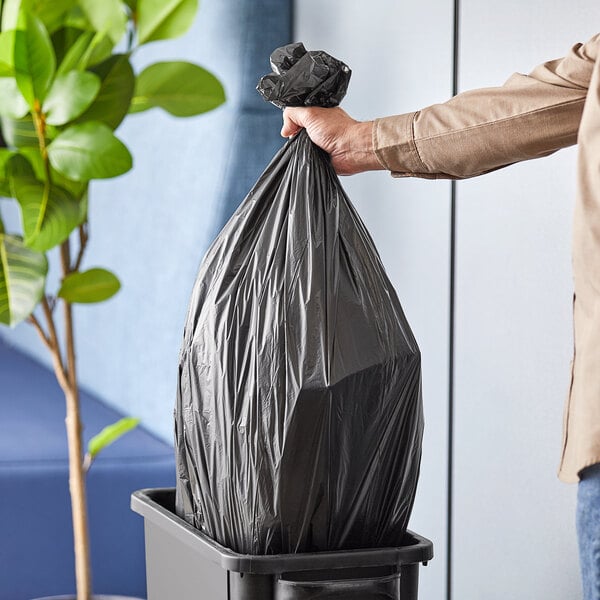
You can find the perfect fit for your commercial trash cans by using these simple measurements for length and width.
How to Calculate Liner Length
To calculate the right liner length for your commercial trash can, follow these simple steps:
- For the bag length, start by measuring the height of the trash can.
- Add 3 inches to this measurement to account for overhang.
- If you have a round trash can, you'll need to add some additional length.
- Measure the diameter of the can and divide it by 2. Add this to the total length.
Example: A round trash can with a diameter of 24" and height of 30" will be calculated as follows: 30" + 3" + (24"/2) = 45"
How to Calculate Liner Width
Follow these steps to calculate the appropriate can liner width:
- Start by measuring the circumference of the opening of the trash can.
- For square or rectangular cans, the circumference is the sum of all sides
- For round cans, the circumference is equal to the diameter multiplied by 3.14
- Now divide the circumference by 2 and round up to find the total width
Example: A round trash can with a diameter of 24" will be calculated as follows: (24" x 3.14) / 2 = 37.68"
By following these steps to calculate the correct liner length and width, you can ensure a proper fit for your commercial trash can, helping to prevent leaks and spills while making it easier to remove and replace the liner when needed.
2. Can Liner Density

Density, in the context of can liners, refers to the amount of material packed into a specific area. This can be a confusing topic because high density seems like it should be more tear-resistant than low density, but this isn't the case. High density contains more material per cubic centimeter which makes it more stiff, less flexible, and more prone to being punctured.
Understanding the different types of density - high density, low density, and linear low density - can help you choose the right liner for your specific needs:
- High-Density Liners: High-density can liners are typically more cost-effective than their low-density counterparts. These liners are best suited for applications where light weight and disposable liners are sufficient, such as in restrooms or office spaces with minimal waste volume. Another factor to consider is that high-density liners have lower freight, storage, and warehousing costs.
- Low-Density Liners: Low-density can liners, on the other hand, are more durable than high-density liners. These liners are made from low molecular weight resins, offering superior tear resistance and load capacity. Low-density liners are ideal for heavy-duty applications, such as in kitchens, warehouses, or outdoor settings, where sharp or heavy waste may puncture the liner.
- Linear Low-Density Liners: Linear low-density can liners combine the best qualities of both high and low-density liners. They are thicker and more puncture-resistant than high-density liners while remaining more cost-effective than low-density liners. Linear low-density liners are suitable for a wide range of commercial settings, including restaurants, hospitals, and retail stores, where a balance of strength and affordability is essential.
Density vs Thickness
It's important to note that density and thickness are not the same thing when it comes to can liners. While thicker can liners tend to have lower density, it is possible to have a low-density can liner that is thin but still strong.
Trash Liner Density Chart
Here's a cheat sheet to help you remember the differences between types of density in can liners:
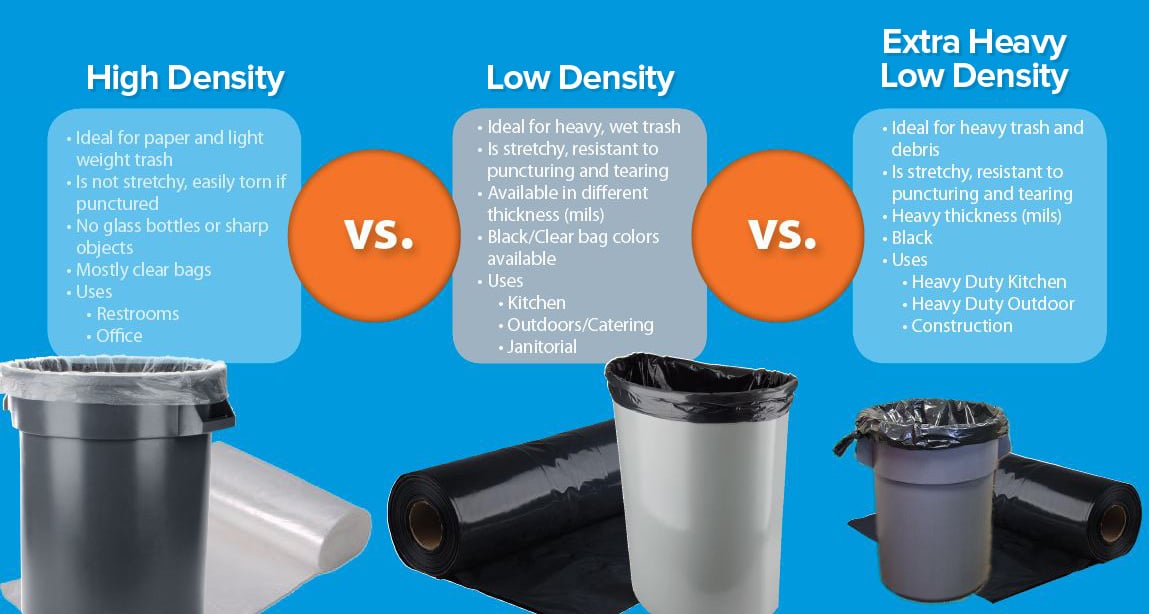
By understanding the differences between high density, low density, and linear low-density can liners, you can make an informed decision when selecting the right liner for your commercial trash cans. Choose a liner density that aligns with the specific needs and waste volume of your establishment to ensure efficient waste management and cost-effectiveness.
3. Can Liner Thickness
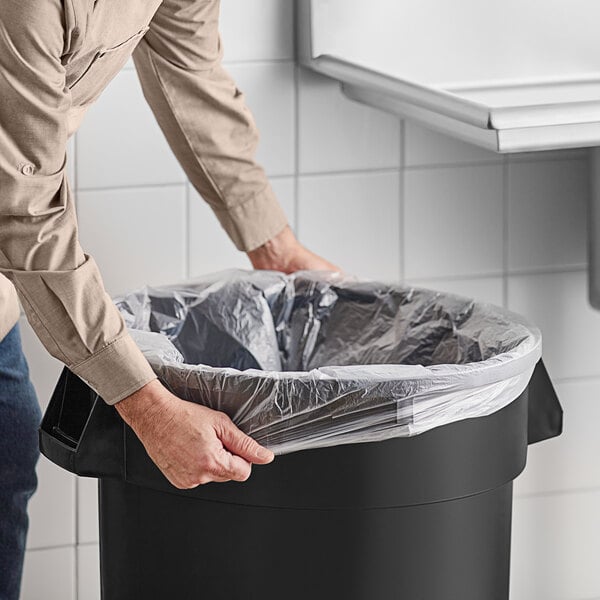
When you're shopping for can liners, you'll see thickness represented by microns or mils. We'll explain more about these measurements below:
- Mils: Mils, short for thousandths of an inch, are the standard unit of measurement for can liners in the United States. A mil is equivalent to 0.001 inches, providing a precise measurement of thickness. This measurement is used for low-density can liners, which are thicker and more durable, making them ideal for heavy-duty applications where puncture and tear resistance are essential. The higher the mils, the thicker the can liner.
- Microns: Microns, also known as micrometers, are the preferred unit of measurement for high-density can liners. A micron is equal to one-millionth of a meter or 0.001 millimeters. High-density can liners are thinner and more light weight than their low-density counterparts, making them suitable for paper trash in offices or restrooms. A higher number of microns means a thicker bag.
Understanding the difference between mils and microns will help you select the right can liner for your specific needs. Whether you require a heavy-duty liner for industrial waste or a light weight liner for office trash, choosing the appropriate thickness measurement will ensure optimal performance and cost-effectiveness for your business.
Related Resources

October 2026 WebstaurantStore Coupon Code
Fall flavors are in full swing, and the deals at WebstaurantStore are just as irresistible! Stock up on everything your kitchen needs for a busy stretch of autumn, from disposables and pantry staples to equipment that keeps service moving. Browse our featured sale items below, and use code SPICE26 at checkout to save up to 20% on your purchase. Hot drinks, cozy desserts, and warm soups take center stage this time of year, so there's plenty here to fuel your seasonal menu. Sign up for our emails to get exclusive deals and coupon codes delivered straight to your inbox! Looking to save even more? Check out the new Webstaurant Rewards® Visa Business Card ! Sign up for a new card today and start earning rewards on every WebstaurantStore purchase

Pest Control Products Guide
Controlling and eliminating pests is important for all businesses, but it is especially critical in the food service and hospitality industries . The presence of pests is an indicator of uncleanliness and poor hygiene, which will damage your business's reputation. Pests also carry harmful diseases and bacteria that can harm staff and customers, meaning it's vital you take the proper preventative measures to keep your business pest-free . Protect your business with a variety of pest control products, allowing you to combat the threat pests pose to your establishment and even prevent infestations before they can even start. Shop All Pest Control Products Use the following links to Iearn more about different types of pest control products: Rod

Restaurant Food Waste Solutions
As a foodservice operator, you're constantly faced with the tyranny of the urgent, so it's easy to overlook food waste prevention. According to the National Restaurant Association, the United States foodservice sector generates an estimated 22 to 33 billion pounds of food waste each year. Environmental and humanitarian concerns aside, reducing food waste is vital for a restaurant's financial success . The average restaurant loses anywhere from 4 to 10 percent of the food they purchase to food waste, so reducing food waste can cut your costs by 2 to 6 percent. In the tight margins of a restaurant budget, this effort is more than worth your while. We walk you through the different aspects of reducing food waste so you can put an effective pla
Join Our Mailing List
Receive coupon codes and more right to your inbox.