- Topics 1577
- Industrial 59
- Troubleshooting Guides 32
- Restaurant Management 144
- Bar Management 70
- Catering Tips 46
- Bakery Management 45
- Food Trucks & Concessions 41
- Advertising & Marketing 41
- Eco-Friendly Tips 13
- Facility Layout & Design 47
- Coffee Shop Tips 32
- Installation & Maintenance 63
- Janitorial & Pest Control 34
- Safety & Sanitation 121
- Startup Tips 111
- Menu Design 11
- Kitchen & Cooking Tips 106
- Hospitality Management 26
- Pizza & Sandwich Shop Tips 23
- Smallwares 42
- Food Prep 102
- Tabletop Items 21
- Disposables 28
- Calculators & Tools 7
- Consumables 77
- Warewashing & Laundry 22
- Cooking Equipment 106
- Food Storage & Refrigeration 58
- Beverage Equipment 43
- Office Supplies 6
Water is an essential element that serves many purposes in a restaurant. It functions as an ingredient in recipes, a refreshing beverage for customers, and a crucial tool for proper handwashing and cleanliness. Although it may appear to be a basic consideration, the selection of a suitable faucet to deliver water can significantly impact the overall efficiency, convenience, and visual appeal of your establishment. Faucets have many features, and it can be confusing to understand what they all mean. We'll break down the most important components of commercial faucets to help you choose the right one for your bar or restaurant.
Shop All Commercial Faucets
Click below to learn more about the features of commercial faucets:
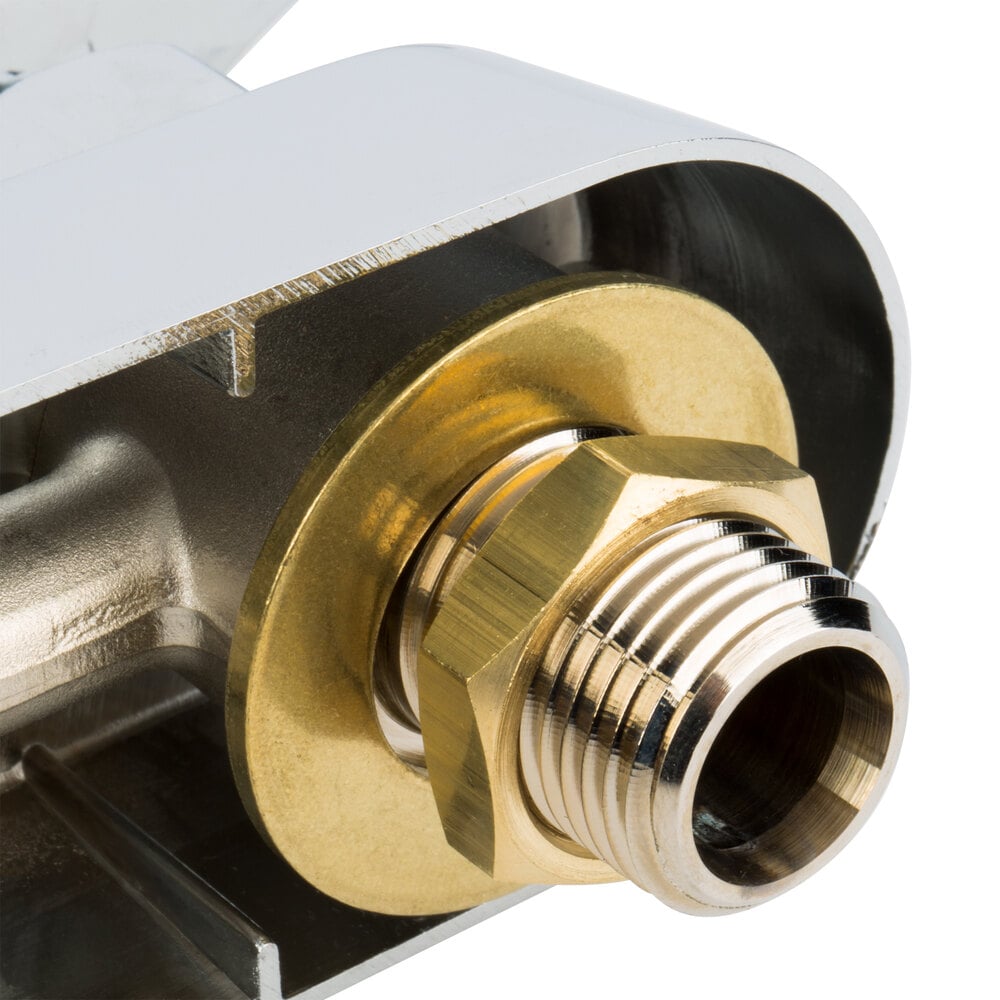
The first thing you should do before purchasing a new faucet is to determine the type of inlets you need. The inlets on a faucet are the components that connect to your water supply lines. Most faucets in the United States have a 1/2" MPT (male) or 1/2" FPT (female) threaded inlet. These connections use the NPT (National Pipe Thread) standard. Check the specification sheet of the faucet to verify the connection, because some faucets may use a different connection size or a different thread like NPSM (National Pipe Straight Mechanical).
Many faucet supply hoses have a 1/2" connection, with a 3/8" compression fitting added to connect to the building water lines. Take note of all connector measurements and make sure you have any necessary fittings to connect your new faucet to your water lines before you begin the installation process. In some cases, you may need fittings like elbows to make tight turns. If you feel the installation is above your skill level, hire a professional.
Male vs Female Pipe Thread
A male threaded fitting (MPT) has grooves on the outside and a female thread fitting (FPT) has grooves on the inside. Male and female pipe threads are designed to fit together, much like a bolt and nut. The male thread screws into the female thread to create a secure connection.
One of the key components of a commercial faucet is the spout or nozzle. This is the part of the faucet where the water flows out. While it may seem like a simple feature, the design and functionality of the spout can greatly impact the performance of the faucet in a commercial setting. For a three-compartment sink, you'll need a longer spout that swings back and forth to reach each sink basin. On a hand sink, you may want a small gooseneck spout that provides plenty of clearance for washing hands.
Gooseneck Spouts
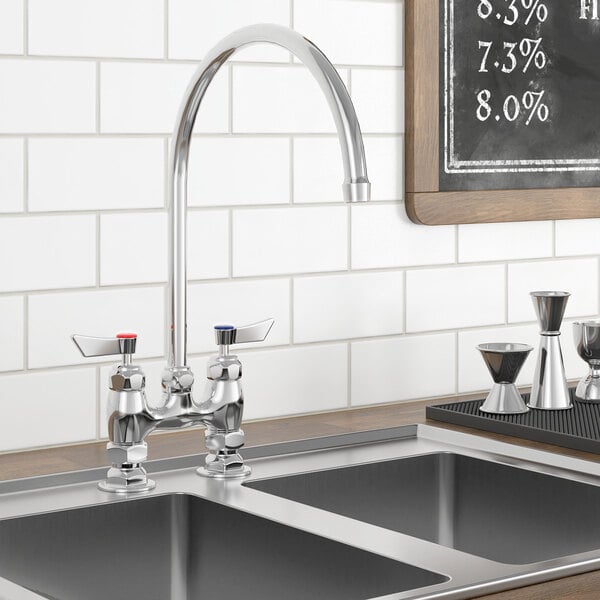
Gooseneck spouts are a popular choice for commercial settings because of their tall, curved design. These spouts provide ample clearance for filling large pots and pans, making them ideal for busy kitchens. The high clearance also helps prevent splashing, keeping your workspace clean and dry. Gooseneck spouts are available in different heights, so you can choose one that suits your specific needs.
- High spout design provides extra clearance
- Available as swing or rigid
- Great for 1-compartment, hand, and utility sinks
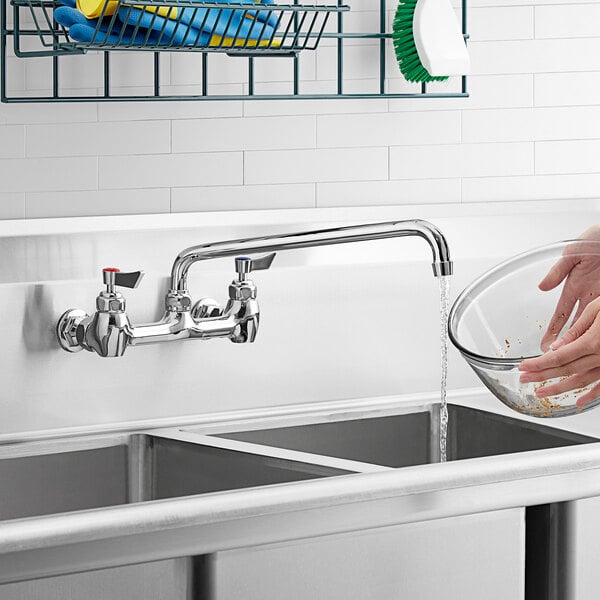
Swing Spouts
Swing spouts are another versatile option for commercial faucets. These spouts can be rotated from side to side, allowing you to direct the water flow exactly where you need it. This flexibility is especially useful in situations where you need to fill multiple sinks or containers. Swing spouts are available in various lengths, so you can find one that fits your sink or countertop perfectly.
- Straight nozzle swings left and right
- Wide variety of lengths for various sink depths
- Great for all compartment sinks
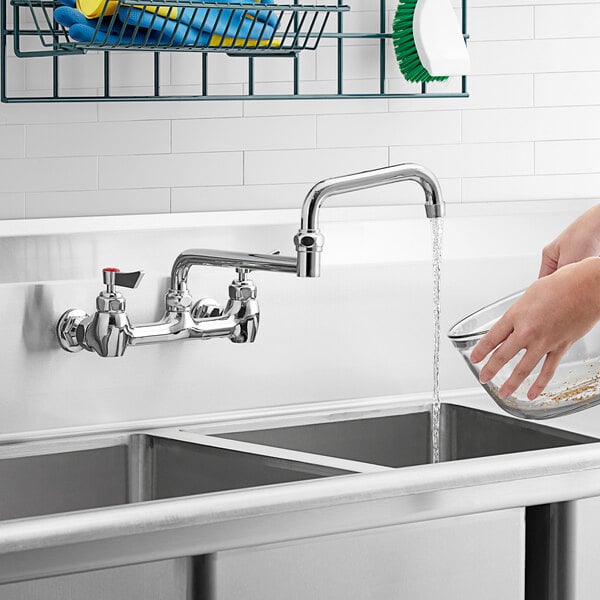
Double-Jointed Spouts
One of the main advantages of a double-jointed faucet spout is its ability to reach multiple sink compartments. This is particularly useful in a commercial kitchen where there may be multiple sinks for different purposes, such as washing dishes, prepping ingredients, or cleaning utensils. With a double-jointed spout, you can easily switch between different compartments without having to move the entire faucet.
- Maximum flexibility to fill multi-compartment sinks
- Delivers water exactly where you need it
- Can be folded out of the way when not in use
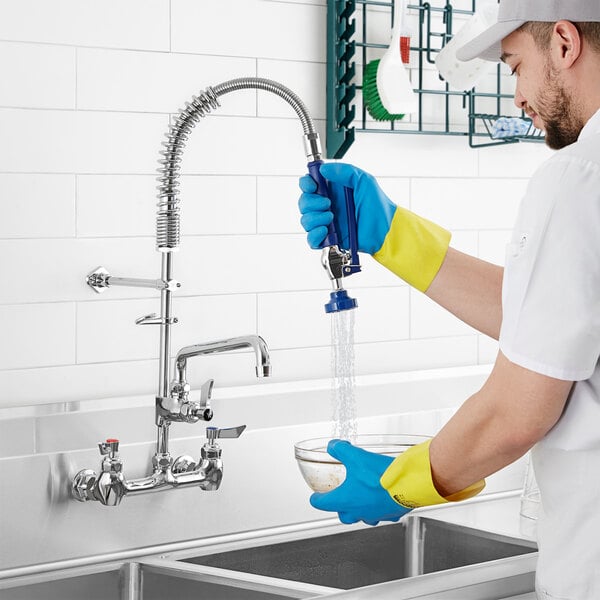
Pre-Rinse Faucet
A pre-rinse faucet is a specialized type of faucet that is designed to make the process of rinsing dishes and utensils more efficient. It typically consists of a high-pressure spray valve, a flexible hose, and a wall-mounted faucet. The high-pressure spray valve allows for a powerful stream of water, which is ideal for removing food particles and other debris from dishes.
- Easy to maneuver
- Saves time when cleaning dishes
- Can be combined with other faucet spouts
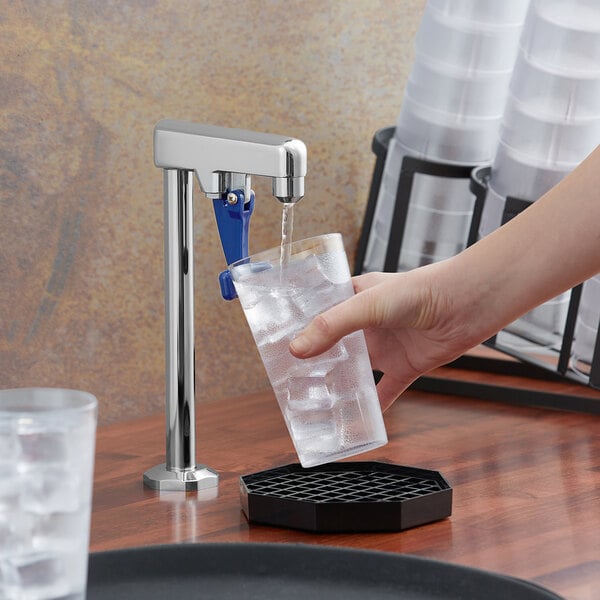
Glass Filler Faucet
A glass filler faucet, also known as a water station or water filling faucet, is a specialized type of faucet commonly found in commercial kitchens and bars. Its primary function is to quickly and efficiently fill glasses and containers with water. These faucets are designed to provide a steady and controlled flow of water, making them ideal for high-volume establishments.
- Designed for a dedicated glass-filling area
- Helps your waitstaff save time when serving customers
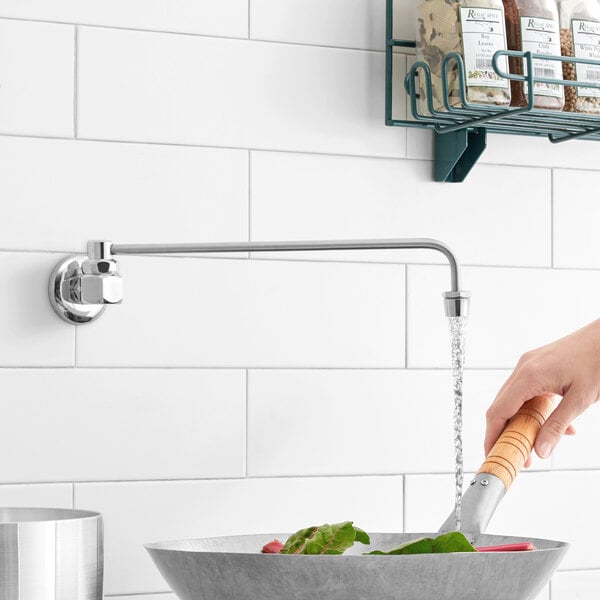
Pot Filler Faucet
A pot filler faucet spout is designed specifically for filling large pots with water. It's typically mounted on the wall near the stove or cooktop, allowing you to easily fill pots without having to carry them back and forth to the sink. Double-jointed spouts with high clearance provide plenty of room for tall pots, and hook nozzles can be rested against the pot side for convenience.
- Features an outlet with a high flow rate
- Makes filling pots and kettles more convenient
- High-clearance spouts or hook nozzles
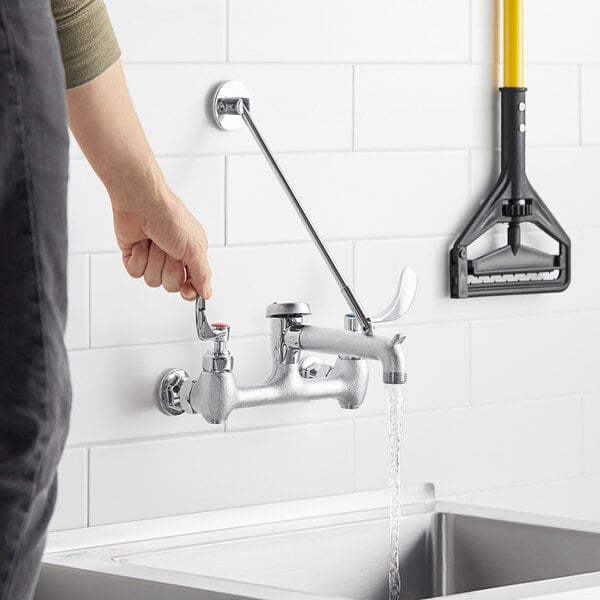
Mop Sink Faucet
The spout on a mop sink faucet has some different features than the spout you would use to wash hands or dishes. These spouts are designed to be shorter and more durable because they are meant to fill heavy mop buckets. It's common to see mop sink spouts with a pail hook and wall support so that you can actually hang buckets from the spout without fear of it becoming damaged.
- Short and sturdy nozzle style
- Pail hook for extra convenience
- Wall support keeps faucet secure
Every faucet is designed with a mounting style that dictates how it should be installed. When choosing the right faucet, you'll need to decide which mounting style works with your sink or countertop.
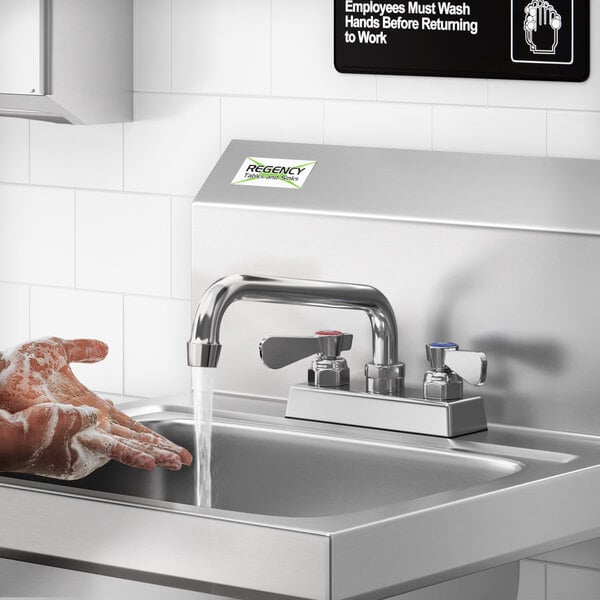
Deck Mount Faucets
Deck-mounted faucets are installed directly on the sink or countertop. This type of faucet requires a hole to be drilled into the surface, and the faucet is then secured with nuts underneath. Deck-mounted faucets are often chosen for their aesthetic appeal, as they can be seamlessly integrated into the overall design of the kitchen. They also tend to be easier to install and repair, as the plumbing connections are more accessible.
- Mounts directly onto sink or countertop
- Easy to install and connect to a water supply
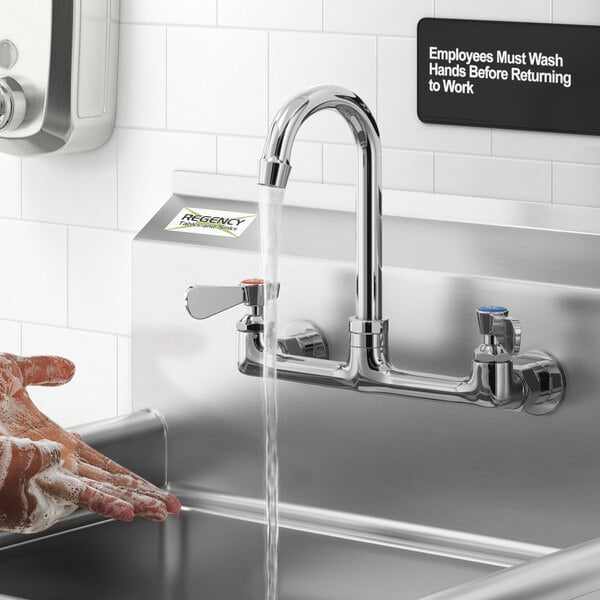
Wall Mount Faucet
Wall-mounted faucets, as the name suggests, are installed directly into the wall above the sink. This type of faucet is a space-saving option because it eliminates the need for a deck or countertop to mount the faucet. This can be particularly advantageous in smaller kitchens where every inch of space matters. Wall-mounted faucets offer more flexibility in terms of sink placement, as they can be positioned at any height on the wall.
- Mounts to the wall or sink backsplash
- Easy to clean and maintain
- Water supply lines may need to be rerouted to meet the faucet
The faucet handle is the part of the faucet that you use to turn the water on and off. It's typically located at the top or side of the faucet and can be operated with a single hand or both hands, depending on the design.
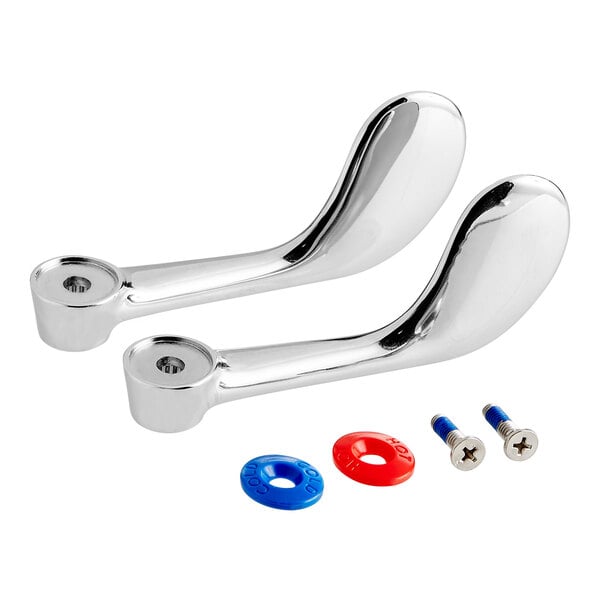
Wrist Handles
A wrist handle is a type of faucet handle that is designed to be operated with the use of your wrist rather than your hand. This unique design allows for easy and convenient operation, especially when your hands are occupied or dirty. In a foodservice environment, it is crucial to maintain high levels of cleanliness to prevent cross-contamination and the spread of germs. With a wrist handle, employees can easily turn the faucet on and off without having to touch it with their hands, reducing the risk of contaminating the handle and the surrounding area.
- Handle can be operated with wrist instead of hand
- Promotes cleanliness to prevent cross-contamination
- Great for handwashing sinks
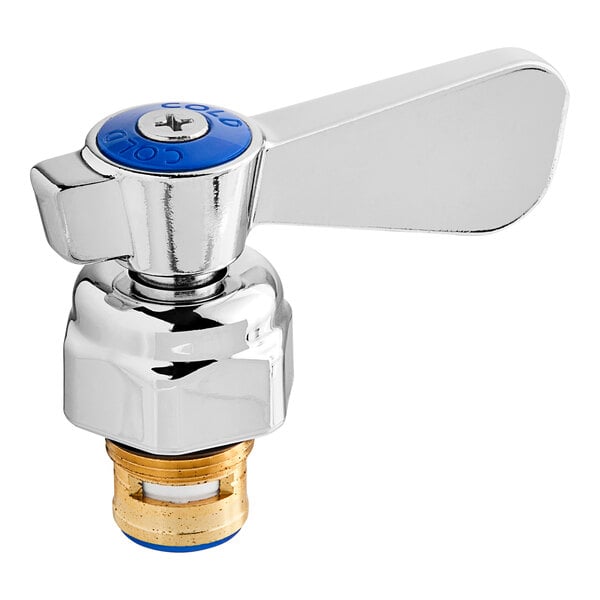
Lever Handles
A lever handle is a long, thin metal bar that turns to activate the faucet. These handles are incredibly user-friendly, especially in fast-paced foodservice environments where time is of the essence. Commercial faucets are subject to heavy usage, often enduring constant turning and twisting. Lever handles, with their simple motion, are built to withstand the rigors of a busy foodservice environment. Made from durable materials, such as stainless steel or brass, they offer long-lasting performance and reliability.
- Compact design for small sink stations
- Easy to operate with a simple motion
- Most common handle design
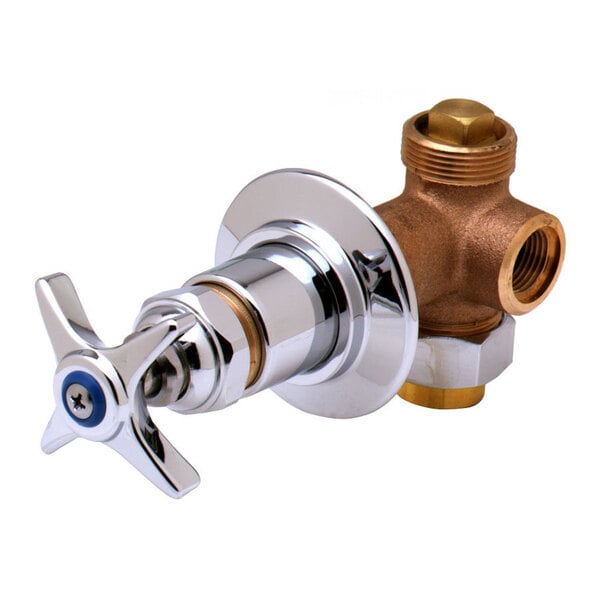
4-Arm Handles
A 4-arm handle is a type of faucet handle that features four individual arms or prongs. These prongs are designed to provide a sturdy grip, allowing for easy control and operation of the faucet. The four arms provide a larger surface area to grasp, making it easier to turn the faucet on and off, even with wet or greasy hands. This can be especially beneficial in a fast-paced foodservice environment where efficiency is key.
- Pronged design is easy to grip
- More precise control over water pressure
When you see the term "centers" being used in regards to faucets, it represents the distance between the hot and cold inlets or the components that connect to your water source. If the center measurement on the faucet doesn't align with the mounting holes on your sink or wall, you may encounter difficulties during the installation process. This can lead to leaks, wobbling, or even potential damage to the faucet or sink.
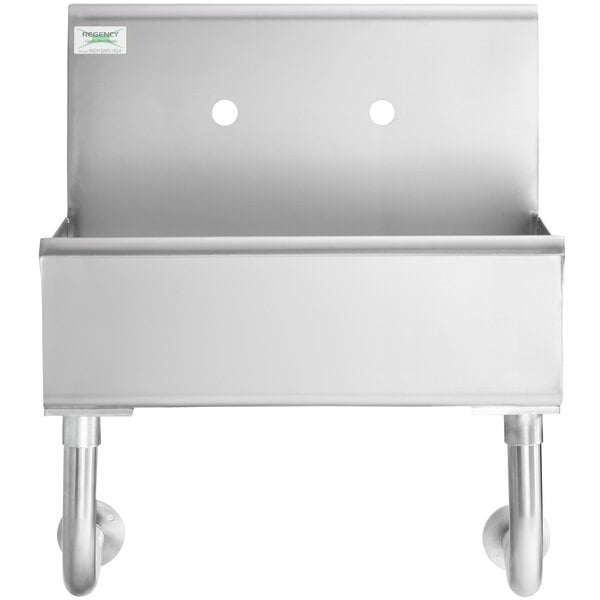
Pre-Drilled Holes
Many sinks come with pre-drilled holes designed for mounting your faucet. Measure the distance between the center of each hole to find the center measurement. When you purchase a faucet, make sure to choose one with centers that match the sink.
Adjustable Centers
Faucets with adjustable centers are equipped with supply arms that can be adjusted to fit different mounting holes. You can easily replace an existing faucet without having to worry about the distance between the water inlets. This is especially useful if you're working with an older sink or plumbing system that may not conform to standard measurements.
The faucet outlet or flow regulator determines how water leaves your faucet spout, what pattern it forms (if any), and how fast the water can flow. Without an outlet on the spout, the water flow would be too forceful and cause unnecessary splashing.
Water flow on an outlet is rated by gallons per minute (GPM). The standard GPM for most faucet outlets is between 1.0 GPM to 2.2 GPM. On a hand sink faucet, the GPM will be lower for a softer flow that is ideal for handwashing. Pot fillers and compartment sink faucets will have a GPM on the higher side, which is meant to help fill the sink basin or pot more quickly.
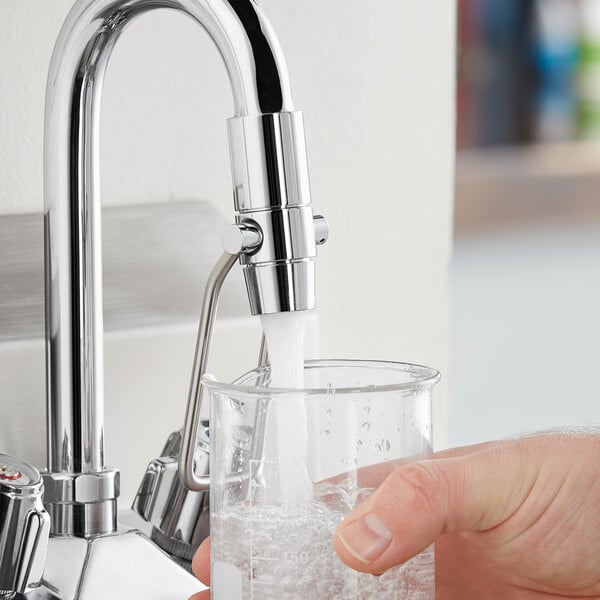
- Aerators - These standard outlets restrict the flow of water and soften the stream by mixing air into the water. This makes them great for general-purpose use and hand-washing applications.
- Laminar Flow Devices - Use a laminar flow device to create a solid stream with no air in the mixture, which is important in settings like laboratories and healthcare facilities where contamination is a concern. Because aerators mix air into a stream, there is some risk for airborne contaminants to enter the water flow. Laminar flow devices reduce this risk.
- Garden Hose Faucet Outlets - These outlets are seen most often on janitorial faucets. They have a threaded connection so that you can attach a garden hose to the end of the faucet and they don't generally restrict water flow significantly.
- Spray / Shower Outlets - Use these outlets to create a spray pattern similar to a shower head. Depending on the flow rate, these can be chosen for their aesthetic appeal or to help blast away dirt and debris.
Operating a faucet is a simple procedure. You use the handle to release the water. But the real action is going on inside of the handles, where the faucet cartridges are doing the work. When you operate the handles, these small valves open and close to regulate the flow and temperature of the water. When you're shopping for a new faucet, pay attention to the type of cartridges that are included.
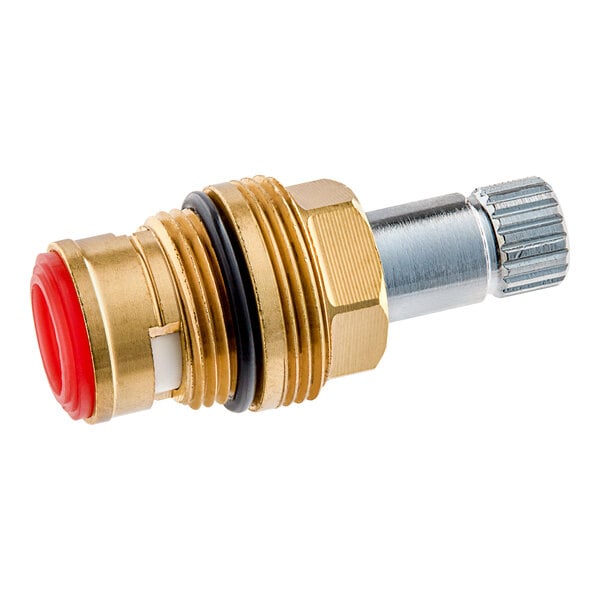
Compression Cartridges
Compression cartridges are a time-tested, traditional type of faucet valve that generally has a lower upfront cost, but they need to be replaced more frequently. When the handle is turned to shut off the water flow, a rubber seat washer creates a waterproof seal within the valve body. It works well, but the grinding motion will wear down the rubber and cause the washer to fail over time. Some manufacturers engineer their faucets to reduce the rate of washer deterioration but most will still require replacement at some point.
Ceramic Cartridges
Ceramic cartridges are gaining popularity and generally have a higher upfront cost, but a much lower replacement rate - some manufacturers even guarantee their ceramic cartridges for life. When the handle is turned to shut off the water flow, two fitted ceramic discs slide together to create the seal. The discs won't wear down like a rubber seat washer, meaning the cartridge won't leak under normal use.
Restroom faucets require slightly different considerations than commercial kitchen faucets. First and foremost, you want to ensure that the faucet is designed to withstand heavy usage. Restrooms in restaurants experience high traffic, and faucets need to be able to handle constant use without wearing out or breaking down.
Because these faucets will be used by your guests, aesthetic design and the amount of water that flows during use are both important factors to keep in mind.
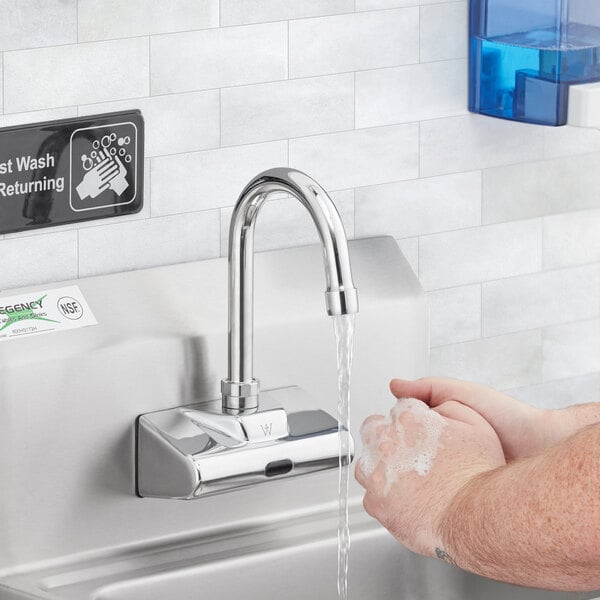
Electronic Faucets
Electronic hands-free faucets operate without the need for manual touch. Instead, they rely on sensors to detect the presence of a person's hands and automatically turn on the water flow. This not only eliminates the need for touching the faucet handle but also helps conserve water by only turning on when needed. Most electric hands-free faucets are powered by either batteries or an electrical outlet. Battery-powered faucets offer the advantage of being more flexible in terms of installation since they don't require a nearby outlet. However, they do require regular battery replacements. On the other hand, faucets that are connected to an electrical outlet provide a continuous power source but may require professional installation.
- No hand contact to reduce spread of germs
- Automatic shut-off conserves water
- Helps to save on utility cost
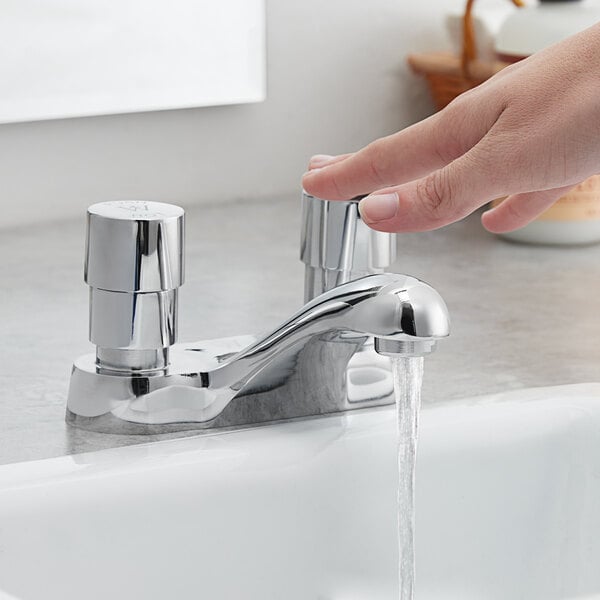
Metering Faucets
A metering faucet, also known as a self-closing or push-button faucet, is a type of faucet that is designed to automatically shut off after a predetermined amount of water flow. This makes it an ideal choice for high-traffic areas such as restrooms, where water conservation and cost savings are important considerations. With a traditional faucet, users have to touch the handle to turn the water on and off, which can spread germs and bacteria. The push-button on a metering faucet can be activated with a wrist or elbow to limit hand contact. This can help prevent the spread of illness and maintain a sanitary environment in the restaurant.
- Releases a measured amount of water
- Adjustable run time
- Push-button operation for ease of use and cleanliness
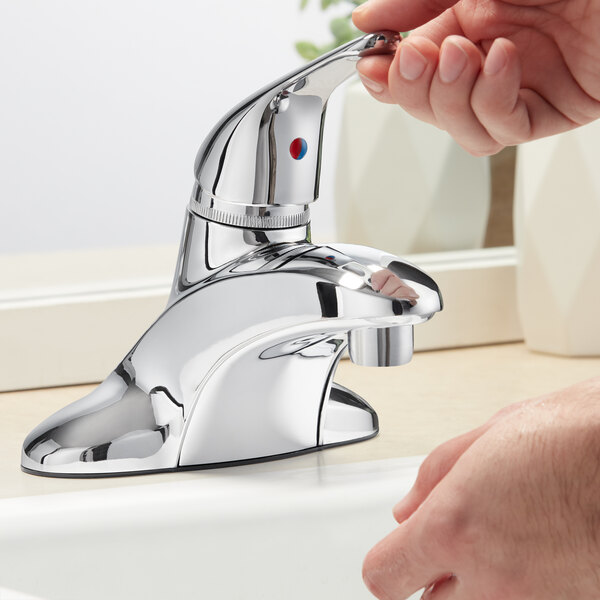
Single-Lever Faucet
A single-lever bathroom faucet is a faucet that is operated by a single lever or handle. Instead of having separate handles for hot and cold water, this type of faucet allows you to control both the temperature and flow of water with just one lever. One of the key benefits of a single-lever bathroom faucet is its ease of use. With just a simple movement of the lever, you can easily adjust the water temperature and flow to your desired level. This is particularly important in businesses such as restaurants or hotels, where employees and guests need to quickly and efficiently wash their hands.
- Easy to activate with a simple motion
- Sleek and modern design
Related Resources

Restaurant Cleaning Checklist
Cleaning, sanitizing, and disinfecting are incredibly important in the foodservice industry to prevent cross-contamination and the spread of viruses. But, with so many things to clean in a restaurant, it can be difficult to remember all of the individual cleaning tasks that you need to take care of and how regularly you need to clean your equipment. To lessen the burden, we created this restaurant cleaning checklist that your employees can use to keep track of the cleaning tasks that need to be completed. Pair this commercial kitchen cleaning checklist with our wide selection of restaurant cleaning supplies . Click below for our downloadable restaurant cleaning checklist PDF that your employees can use as they're cleaning. Printable Cleanin

Commercial Water Filters FAQ
As a restaurant owner, ensuring the quality of your food and beverages is crucial for the success of your business. One key component that often gets overlooked but plays a significant role in maintaining that quality is the water filter system. Water filters are essential for providing clean and safe water for cooking, drinking, and ice production in your restaurant. Filtering your water also helps prevent mineral buildup and sediment accumulation in your equipment, such as coffee makers, ice machines, and steamers. This buildup can lead to clogs, corrosion, and reduced performance, ultimately affecting the lifespan of your equipment. If you have questions about water filters and their importance, we created this FAQ for you. Shop All Wate

Cleaning, Sanitizing, Disinfecting: What’s the Difference?
Ensuring a safe, compliant commercial kitchen hinges on understanding the critical differences between cleaning, sanitizing, and disinfecting. These terms are often mistakenly used interchangeably, and while all three are essential pillars of food safety, each targets distinct threats and achieves unique levels of pathogen reduction crucial for health code compliance. Mastering these distinctions is fundamental for developing an effective cleaning checklist that prevents cross-contamination and foodborne illness outbreaks in your establishment. Shop All Cleaning Supplies Use these links to learn more about cleaning, sanitizing, and disinfecting: What Is Cleaning? What Is Sanitizing? What Is Disinfecting? What Is the Difference Between Clean
Join Our Mailing List
Receive coupon codes and more right to your inbox.