- Topics 1577
- Industrial 59
- Troubleshooting Guides 32
- Restaurant Management 144
- Bar Management 70
- Catering Tips 46
- Bakery Management 45
- Food Trucks & Concessions 41
- Advertising & Marketing 41
- Eco-Friendly Tips 13
- Facility Layout & Design 47
- Coffee Shop Tips 32
- Installation & Maintenance 63
- Janitorial & Pest Control 34
- Safety & Sanitation 121
- Startup Tips 111
- Menu Design 11
- Kitchen & Cooking Tips 106
- Hospitality Management 26
- Pizza & Sandwich Shop Tips 23
- Smallwares 42
- Food Prep 102
- Tabletop Items 21
- Disposables 28
- Calculators & Tools 7
- Consumables 77
- Warewashing & Laundry 22
- Cooking Equipment 106
- Food Storage & Refrigeration 58
- Beverage Equipment 43
- Office Supplies 6
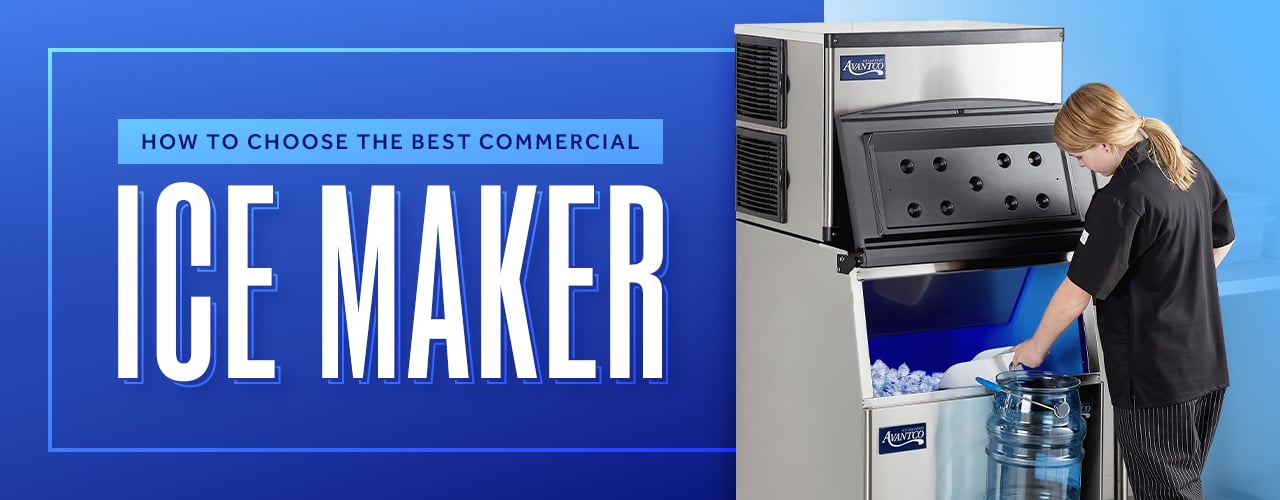
Nearly every type of food service establishment needs an ice machine, and there are a lot of factors to consider when choosing one. Because so many configurations and styles exist, it's good to understand what is out there to find the best ice makers to suit your business's needs. Use this guide to help you sort through the different types of ice machines and features available.
Shop All Commercial Ice Machines
While there are variations within each type, commercial ice machines generally fall into four basic styles: modular ice machines, undercounter ice machines, ice dispensers, and combination ice and water machines. When choosing your ice machine, consider the type of ice it'll produce. For example, nugget ice is ideal for healthcare facilities since it's soft and easy for hospital patients and children to chew, whereas half cube ice is great for virtually any commercial foodservice setting.
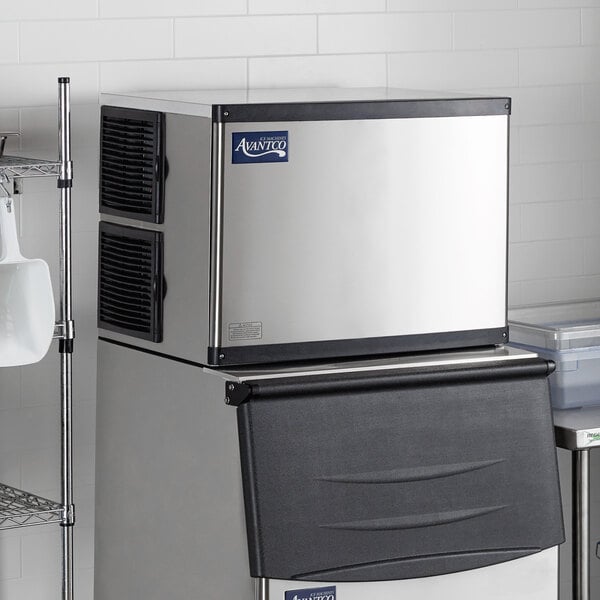
1. Modular Ice Machine
Modular ice makers produce large amounts of ice and are paired with separate units to dispense the ice. Modular ice machines are commonly available in 22", 30", and 48" widths and sit on top of and supply ice to an ice machine bin, an ice dispenser, or a soda dispenser.
Modular Ice Machine Output: Ice outputs range from 250 lb. per day to well over 1000 lb. per day
Ice Types: All ice types
2. Undercounter Ice Machine
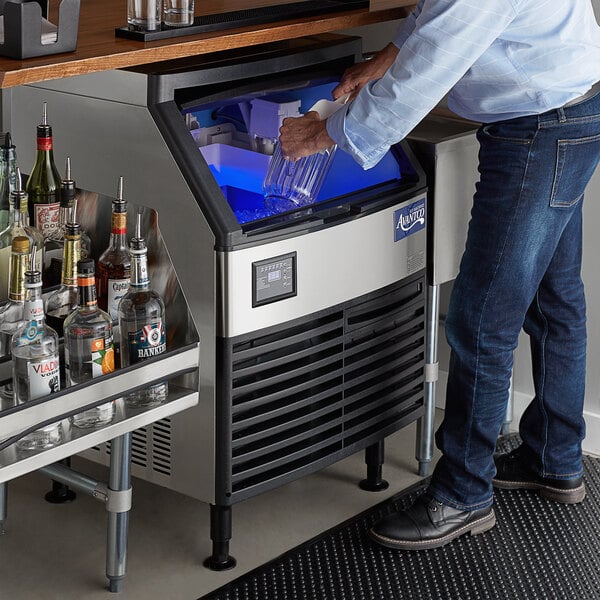
An integral piece of equipment in any bar, undercounter ice makers fit underneath countertops and are out of the way of foot traffic. They combine the ice machine with a storage bin and fit under most 40" high counters. An undercounter ice machine will meet the output needs of small bars, cafes, and restaurants.
Undercounter Ice Machine Output: Ice outputs generally top out at about 350 lb. per day, though a few higher capacity models exist.
Ice Types: All ice types
3. Ice Dispenser
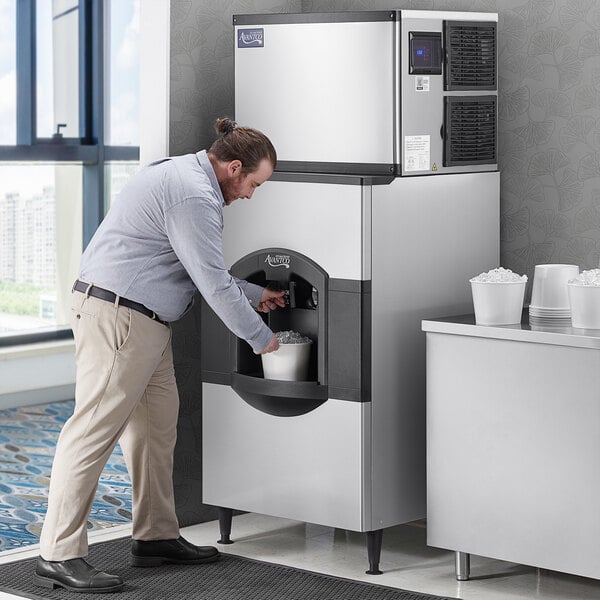
Typically paired with a modular ice machine, a commercial ice dispenser is similar to an ice bin in that it holds ice until use, but it eliminates human contact with the ice supply by using a sensor or lever dispenser system. Ice dispensers are commonly used in hotels and healthcare settings because they can be used for self-service applications and keeps ice safe and free of contaminants. These units come in both floor and countertop models and are generally only available with an air cooled ice machine.
Ice Dispenser Output: Ice outputs range from 120 lb. per day to 618 lb. per day
Ice Types: Full cube, half cube, and nugget
4. Combination Ice and Water Dispenser
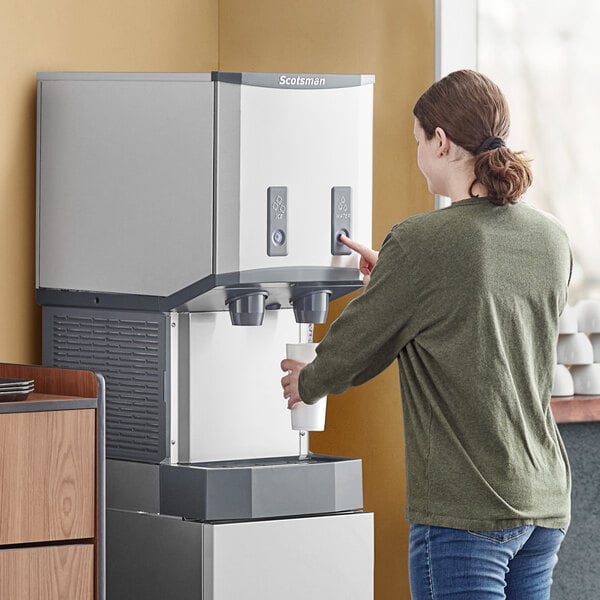
Able to dispense both water and ice, commercial ice and water dispensers are great for offices, cafeterias, break rooms, and healthcare facilities. Since many combination units are used for self-service, they are designed to be space-saving, easy to use, and easy to clean. They come in countertop and floor models and usually dispense nugget-style ice.
Combination Ice and Water Dispenser Output: Despite many having a small ice storage bin, they can still produce up to 500 lb. of ice per day.
Ice Types: Nugget, full cube, crescent, cubelet
Once you've decided what type of machine and ice you want, the next important consideration is to choose whether you want an air cooled, water cooled, or remote condenser. Where your ice machine will be located will be the main deciding factor of which condenser type is best for you.
Air Cooled Ice Machine
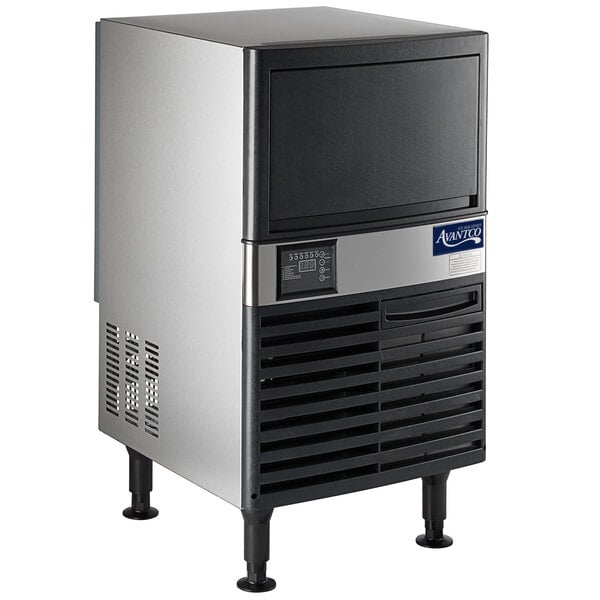
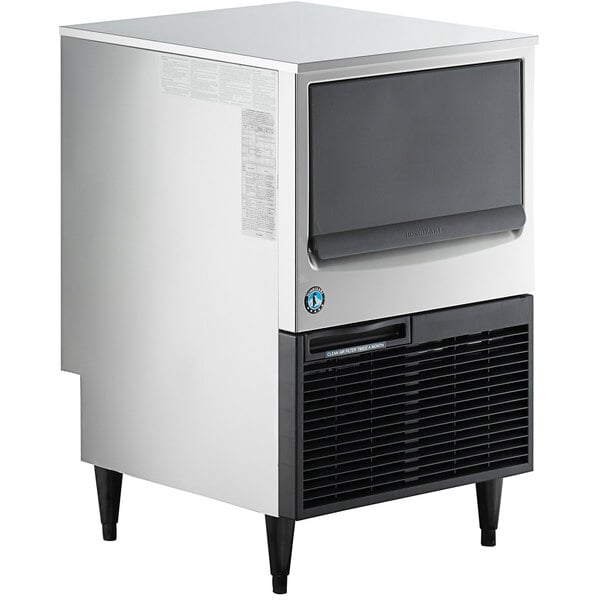
Using air to transfer internal heat out of the rear or sides of the unit, air-cooled ice machines are the most common condenser type used in commercial kitchens. They are also more cost-effective and energy-efficient than water cooled machines, as they do not involve additional water costs, and many air cooled units even achieve Energy Star compliance.
Because air cooled ice machines intake and discharge air, they are best for use in clean, temperature-controlled settings with at least 6" of clearance around the air intake and discharge areas. If the setting is too hot, too prone to airborne contaminants, or has inadequate ventilation, it can overwork the machine and reduce its efficiency and lifespan.
Water Cooled Ice Machine
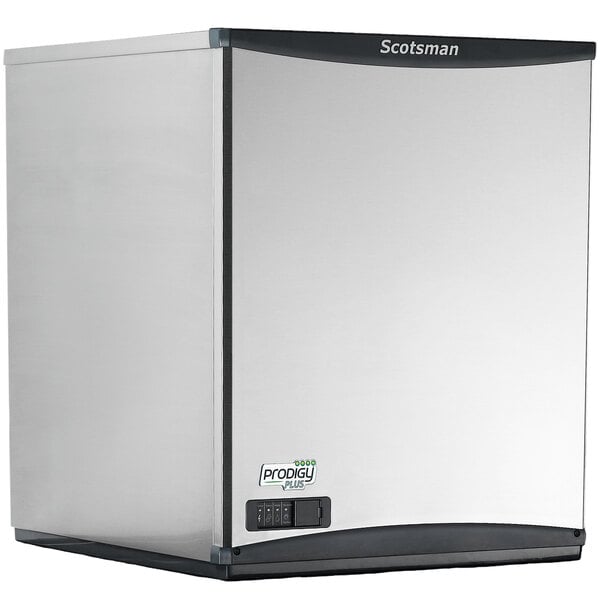
Featuring water coils that run along the condenser coils to transfer internal heat out of the unit, water cooled ice machines are a better choice than air cooled models only if one or more of the following conditions exists:
- The machine would be installed where ambient air temperatures are greater than 80 degrees Fahrenheit
- The machine would be installed in an area where the air contains a high level of contaminants, like grease
- The machine would be installed where there is not enough clearance for an air cooled machine
Water consumption will be much higher than with an air cooled ice machine. In fact, some municipalities do not even allow businesses to use a water cooled ice machine for that reason.
Remote Cooled Ice Machine
With remote condenser ice machines, the condenser is air cooled but mounted in a separate location from the ice maker itself. The condenser is usually placed outdoors on a roof and refrigerant lines run between the condenser and the machine. The greatest benefits of using a remote ice machine include removing the heat and noise of the condensing unit from the kitchen or service area. As a result, a remote condensing ice machine will be much quieter and cooler than its air or water cooled counterparts
It's important to keep in mind that installation and maintenance of a remote setup can be much more costly than other types, and most operators only choose a remote condenser ice machine if conditions prohibit the use of an air cooled or water cooled unit.
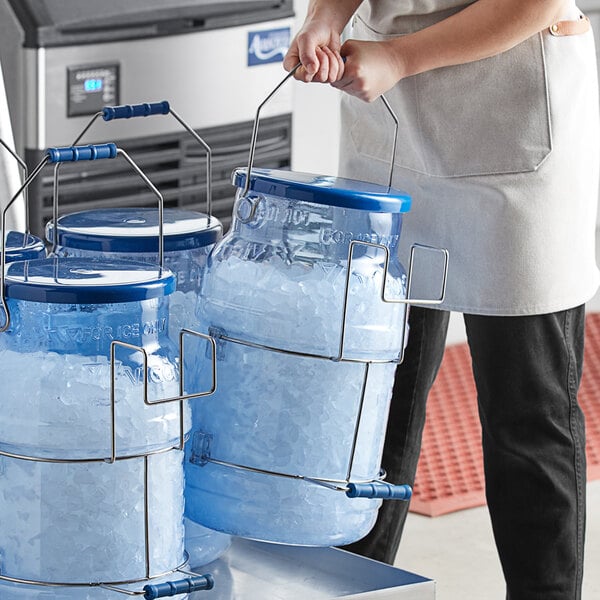
Ice machine sizes are stated as the amount of ice that they can produce in 24 hours. This is called the "24 hour yield" or "ice yield" of the ice machine. Different types of ice machines yield different amounts of ice. Small undercounter or countertop machines may provide as little as 50 lb. of ice in 24 hours, just enough for a small beverage station in an office setting. On the other hand, large 48" wide modular units can produce as much as 2500 to 3400 lb. of ice per machine per day.
Here are some tips for selecting a machine with the right capacity for your needs.
- Consider your estimated growth. If you're a new restaurant, make sure your estimates allow for growth, or you could quickly exceed the production capacity of the machine you wish to purchase.
- Base the amount of ice you need off of peak times. By preparing for peak times, such as holidays and weekends, you can ensure you will have enough ice to handle the rush.
- Base the amount of ice you need off your hottest day. Since an increase in heat lowers ice production rates, purchasing an ice machine with a higher output can help make up for the drop in production.
How Much Ice Do I Need?
Most restaurants use about 1.5 lb. of ice per meal served. For example, a restaurant that serves 250 customers per day will require approximately 450 lb. of ice in a day. At the same time, a hospital uses approximately 10 lb. of ice per patient, so for 250 patients you might need about 3000 lb. of ice per day.
Different applications require different amounts of ice. The best ice machines for bar use will not work well for a large hotel. Use the ice machine sizing chart below to get an idea of how much ice you might use based on the application.
Application Type | Typical Daily Ice Use | Ice Needed for 100 Customers | Ice Needed for 250 Customers | Ice Needed for 500 Customers | Ice Needed for 1000 Customers | Ice Needed for 1500 Customers |
|---|---|---|---|---|---|---|
Restaurant | 1.5 lb. ice per meal sold | 180 lb. | 450 lb. | 900 lb. | 1800 lb. | 2700 lb. |
Cocktail Bar | 3 lb. ice per seat | 360 lb. | 900 lb. | 1800 lb. | 3600 lb. | 5400 lb. |
Water Glass | 6 oz. ice per 12 oz. glass | 45 lb. | 113 lb. | 225 lb. | 450 lb. | 675 lb. |
Salad Bar | 35 lb. ice per cubic foot | --- | --- | --- | --- | --- |
Beverage Only | 5 oz. ice per 7-10 oz. cup | 38 lb. | 94 lb. | 188 lb. | 375 lb. | 563 lb. |
Beverage Only | 8 oz. ice per 12-16 oz. cup | 60 lb. | 150 lb. | 300 lb. | 600 lb. | 900 lb. |
Beverage Only | 12 oz. ice per 18-24 oz. cup | 90 lb. | 225 lb. | 450 lb. | 900 lb. | 1350 lb. |
Guest Ice | 5 lb. per hotel room | 600 lb. | 1500 lb. | 3000 lb. | 6000 lb. | 9000 lb. |
Hotel Catering | 1 lb. per person | 120 lb. | 300 lb. | 600 lb. | 1200 lb. | 1800 lb. |
Patient Ice | 10 lb. per person | 1200 lb. | 3000 lb. | 6000 lb. | 12000 lb. | 18000 lb. |
Cafeteria | 1 lb. per person | 120 lb. | 300 lb. | 600 lb. | 1200 lb. | 1800 lb. |
Why Should I Use Multiple Ice Makers?
The biggest reasons to use multiple ice makers include labor savings and reduced downtime. While it may seem easier to supply all your ice from one large machine and bin, this is usually inefficient.
With only one large machine, your staff will constantly be running back and forth from the ice bin to soda machines, under bar ice chests, and salad bars. That will cost you time and also increase the chances of cross-contamination. Instead, consider using several smaller machines right where you need them.
Use multiple machines if downtime is a big concern. Multiple ice machines ensure you will always have ice when you need it. If one large machine breaks down, you will not be able to make ice until it is fixed. However, if you use multiple smaller machines, you will still have ice if one of the units is in repair.
Figuring out where to install your ice machine is crucial for good commercial kitchen design. Even the highest-rated ice machine won't perform well if it doesn't have the proper space, ventilation, drainage, and power supply, so it is necessary to consider these factors when choosing and installing your unit.
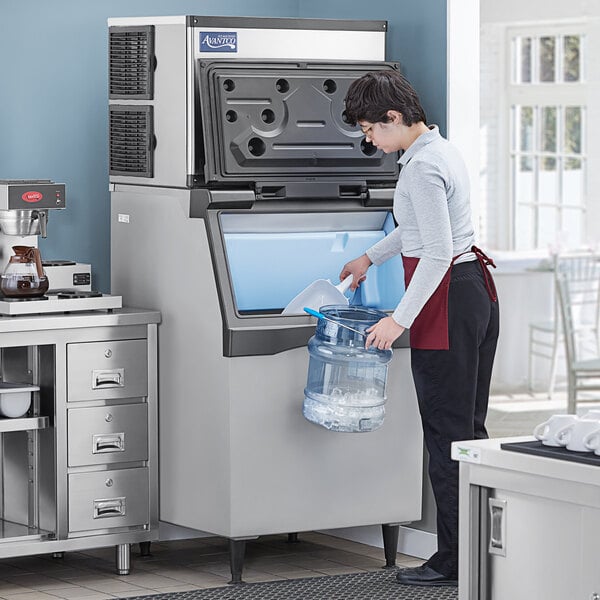
- Space and Ventilation: Make sure you have enough space for the machine, bin, and filter. Adequate air flow is crucial for maximum ice production, so installing an ice machine in a storage room or closet is not recommended. A well-placed ice machine can increase worker productivity and efficiency, but even the best commercial ice maker in a poor location can cost you more in labor and utilities.
- Water Supply and Floor Drain: Your ice machine will need a cold water supply with a shutoff valve. It will need a floor drain, too. Check your local codes for specific drain types and placement requirements.
- Power Supply: Many ice machines do not include a cord and plug and must be hardwired by a professional. Be aware of the machine's power requirements before purchasing - not all ice makers operate on a standard 110V electrical supply. Electrical requirements and any other special installation considerations can be found in the machine's manual.
Factors like restricted air flow/ventilation, incoming water temperature, water quality, and the cleanliness of the machine can affect the amount of ice it can produce. While the output listed in the ice maker's specifications is a fair estimate of how much ice it will make in 24 hours, these factors can hurt your ice machine's performance.
- Ventilation/Air Temperature: Especially for air cooled units, the amount of ventilation and the air temperature can dramatically affect ice output. Poor ventilation can create high ambient temperatures, and installing the ice machine in a hot kitchen can make the unit work harder. To ensure it produces ice at its optimum level, carefully read the ventilation and air temperature requirements in your unit's manual.
- Water Temperature: Verify that the potable water (the water that turns into ice) you supply to your ice machine is at the proper temperature. If the water is too warm, the machine will work harder and take longer to make ice. Additionally, if you use a water cooled ice machine, check that the cooling water is also at the proper temperature.
- Water Quality: Hard water can leave mineral deposits on internal components and in water lines, which slows down the flow of water in your ice machine. This will affect how quickly and efficiently your ice machine can work. To avoid this issue, use a water filter to reduce the buildup of mineral deposits within the unit and keep your ice tasting great
- Cleanliness: It is important to regularly clean your ice machine to ensure it stays at optimum output. Buildup on internal components can block water flow and obscure sensors, which slows down production and causes poor-quality ice.
Related Resources

June 2026 WebstaurantStore Coupon Code
Summer is upon us, and to celebrate WebstaurantStore has blazing hot deals all month long! With summer vacations underway and holidays like Independence Day rapidly approaching, now is the time to stock up on essential supplies and equipment you'll need to get through the summer season. Take a look at our wide array of sale items below and don't forget to enter the code SUMMERSALE at checkout to enjoy up to 20% off your purchases! Looking to save even more? Check out the new Webstaurant Rewards® Visa Business Card ! Sign up for a new card today and start earning rewards on every WebstaurantStore purchase, and save on a WebstaurantPlus subscription. Have a look at some incredible deals on disposable items with June's monthly coupon code! Whe
Follett Ice Machine Troubleshooting
Whether you run a hotel, hospital cafeteria, or restaurant, commercial ice machines are a crucial part of your operation. Though Follett ice machines are a great option on the market, they still break down occasionally and disrupt service. However, knowing some general troubleshooting solutions for Follett ice machines helps you continue serving clients. Use this Follett ice machine troubleshooting guide to solve simple problems or identify issues for service technicians when repairs are needed. Shop All Follett Ice Machines and Accessories Use the following links to troubleshoot your Follett ice machine: Follett Ice Machine Not Working How to Reset a Follett Ice Machine Follett Ice Machine Not Making Ice Follett Ice Machine Not Dispensing
Hoshizaki Ice Maker Troubleshooting Guide
Whether you operate a restaurant, bar, or cafe, commercial ice machines are an essential piece of equipment. They provide clean, fresh, and consistent ice, ensuring your foods and drinks are always chilled to perfection. Because of heavy-duty, day-to-day use, even high-performance brands like Hoshizaki need maintenance from time to time. Hoshizaki ice makers are designed with simple service in mind, allowing you to remedy many problems on your own. We'll walk you through how to alleviate some of the most common issues below so that you can identify which problems you can solve and which ones require a service agent. Shop All Hoshizaki Parts and Accessories Use the following links to navigate and learn how to troubleshoot common Hoshizaki ic
Join Our Mailing List
Receive coupon codes and more right to your inbox.