- Topics 1577
- Industrial 59
- Troubleshooting Guides 32
- Restaurant Management 144
- Bar Management 70
- Catering Tips 46
- Bakery Management 45
- Food Trucks & Concessions 41
- Advertising & Marketing 41
- Eco-Friendly Tips 13
- Facility Layout & Design 47
- Coffee Shop Tips 32
- Installation & Maintenance 63
- Janitorial & Pest Control 34
- Safety & Sanitation 121
- Startup Tips 111
- Menu Design 11
- Kitchen & Cooking Tips 106
- Hospitality Management 26
- Pizza & Sandwich Shop Tips 23
- Smallwares 42
- Food Prep 102
- Tabletop Items 21
- Disposables 28
- Calculators & Tools 7
- Consumables 77
- Warewashing & Laundry 22
- Cooking Equipment 106
- Food Storage & Refrigeration 58
- Beverage Equipment 43
- Office Supplies 6
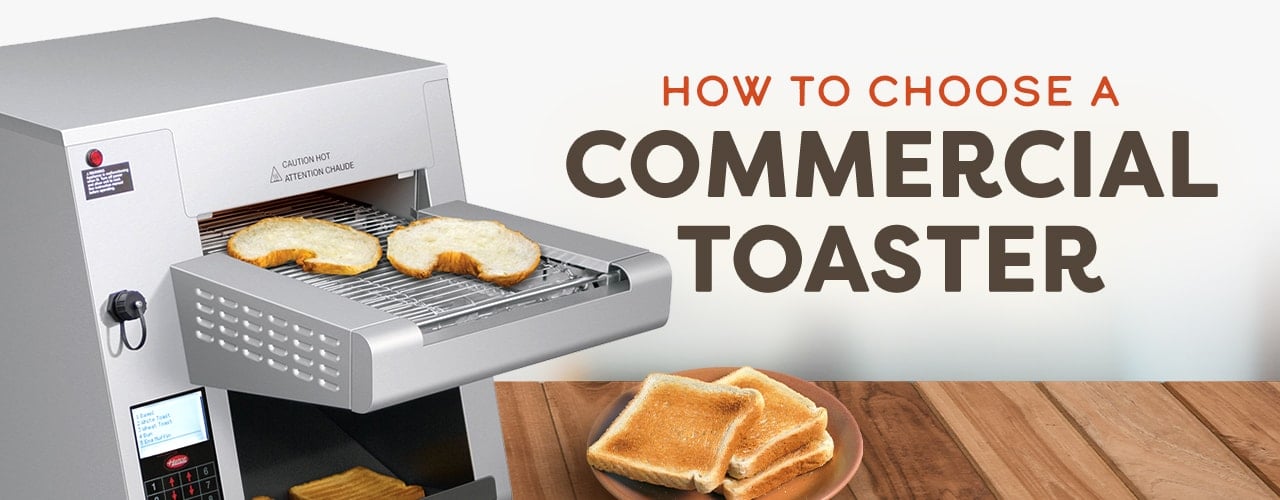
Commercial toasters are one of the essential pieces of kitchen equipment every restaurant needs. Purchasing the right one for your establishment is an important step in offering a selection of toasted and grilled menu items.
Shop All Commercial Toasters
What Is a Commercial Toaster?
Commercial toasters are used to toast bread, bagels, English muffins, buns, and many other types of bread products. There are three types of toasters: pop-up, conveyor, and bun grilling. See how they stack up against your needs and narrow your search in our point-by-point comparison.
What to Consider before Purchasing a Commercial Toaster
There are four main questions you will want to ask yourself before purchasing a new toaster:
What will it toast?
Some toasters only toast bread, while others also toast bagels, buns, English muffins, or all of the above. Knowing what items you'll be toasting will help you choose the right option.How much can it toast?
A high-volume establishment with a low-output toaster results in longer waits and frustrated customers. Similarly, a low-volume establishment with a high-output toaster may incurr an unnecessary cost. Choose from models that can toast anywhere from 60 to 1,600 slices per hour.How much space will it take up?
Counter space is at a premium in any kitchen. Make sure you have enough space to hold the toaster you purchase, and also check to see if you have enough clearance for the taller units.What electrical requirements do I need?
Consider whether or not you need 120V, 208 / 240V, or 240V electrical connections. This ensures both the toaster and the rest of your equipment continue to function well.
Pop-up Toaster
Pop-up toasters are perfect during lower-volume meals since they conserve more energy than conveyor toasters. Perfect for toasting bread, bagels, and similar items, a pop-up toaster is an ideal solution for small diners, coffee shops, and other areas with relatively small demands.
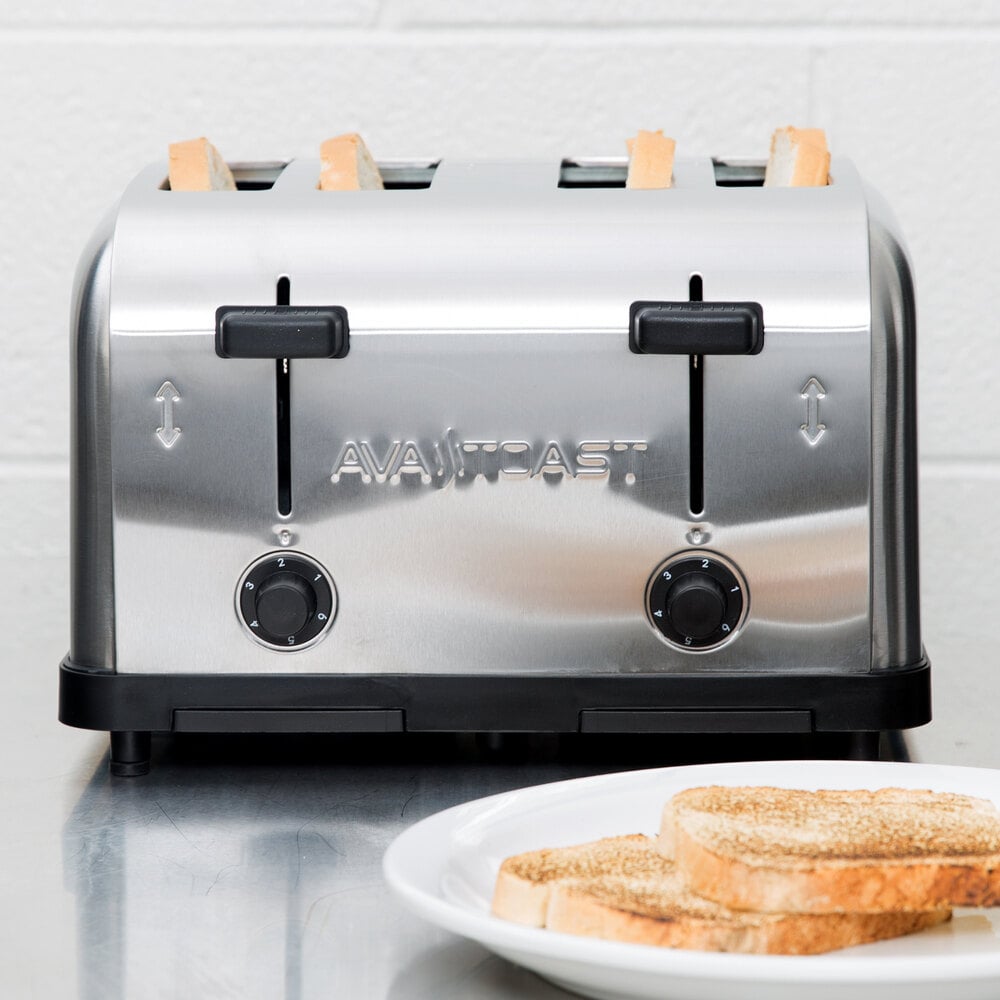
- What will it toast? Great for bread and English muffins. Some will accommodate bagel halves and thicker items like Texas toast, but not all.
- How much can it toast? About 60 - 380 slices per hour.
- How much space will it take up? Uses the smallest amount of counter space; most will be under 13" wide x 14" deep.
- What electrical requirements do I need? Most are 120V. Some heavy-duty models need a 208/240V connection.
Things to Consider When Buying a Pop-up Toaster
Product Opening: Most commercial toasters will have 2 or 4 slots and will include the slot size, so you can tell if your most commonly used items will fit. Some models also feature two different slot sizes, so you can toast bread on one side and Texas toast or bagels on the other.
Heat Control: Generally speaking, the operating temperature for a pop-up toaster cannot be adjusted. Some commercial toasters only have heating elements on one side, which is great for one-sided toasting and bagels; others have heating elements on either side of the slot for double-sided toasting.
Toasting Time: A timer is the most common way to control toasting time on a pop-up toaster. A longer toasting time results in a darker, crisper finished product while a shorter time makes it lighter and softer.
Usage: Pop-up toasters can be divided into three basic categories when it comes to usage: light-duty, medium-duty, and heavy-duty.
Types of Pop-up Toasters
There are three types of pop-up toasters:
- Light-duty toasters are for small operations, producing around 60 slices per hour. They are not NSF or commercially rated and are ideal for residential use, office break rooms, and low-volume hotels.
- Medium-duty toasters handle 60 to 225 slices per hour and are commercially rated. This toaster is ideal for small coffee shops and diners.
- Heavy-duty toasters are intended for high-volume use and produce 225 to 380 slices per hour. They're commercially rated and ideal for breakfast buffets, coffee shops, cafes, and diners.
Conveyor Toaster
Conveyor toasters are designed for higher output and a wider range of bread types than commercial pop-up toasters. The product is loaded into a feed area in the front of the unit and is drawn back into the heating chamber using a conveyor belt. After being toasted by heating elements located above and below the belt, your product falls down a slanted chute into a collection area. If you operate a breakfast buffet, catering business, or a busy restaurant, a conveyor toaster is a great option for your business.
Tip: A stacking kit will let you put two conveyor toasters together to increase your production capacity while saving space.

- What will it toast? Bread, bagels, English muffins, and even specialty breads. All conveyor toasters have a specific product opening; just make sure that what you're toasting will fit through that space.
- How much can it toast? Anywhere from 200 - 2,400 slices per hour.
- How much space will it take up? Can range from about 15" to 24" wide and 18" to 26" deep.
- What electrical requirements do I need? Lower-production models can fit a standard 120V connection. If you're looking above 500 slices per hour, you'll probably need a heavier-duty connection, like 208 / 240V.
Things to Consider When Purchasing a Conveyor Toaster
Product Opening: Conveyor toasters all come with a specific opening size ranging from about 1 1/2" to 3". You'll want to look at all the items you could potentially be toasting and make sure they'll fit through that opening before making a final purchase.
Heat Control: Some toasters allow you to control the temperature of the top and bottom elements independently or even turn one off. This lets you toast on only one side if you so desire.
Toasting Time: The toasting time and the color and texture of the final product are determined by conveyor speed. Speed it up to achieve lighter toasting, and slow it down for a darker appearance.
Bun Grilling Toaster
A bun grilling toaster can toast all the same things as a conveyor toaster and more. Plus, it can match conveyor toasters in slice output. If you're a high-volume sandwich shop or cafeteria who wants to give the house burger or sandwich a boost with a buttered, toasted bun, this is probably the machine for you. If you need to toast a large quantity of bagels for the breakfast line, a conveyor toaster might be the better choice.
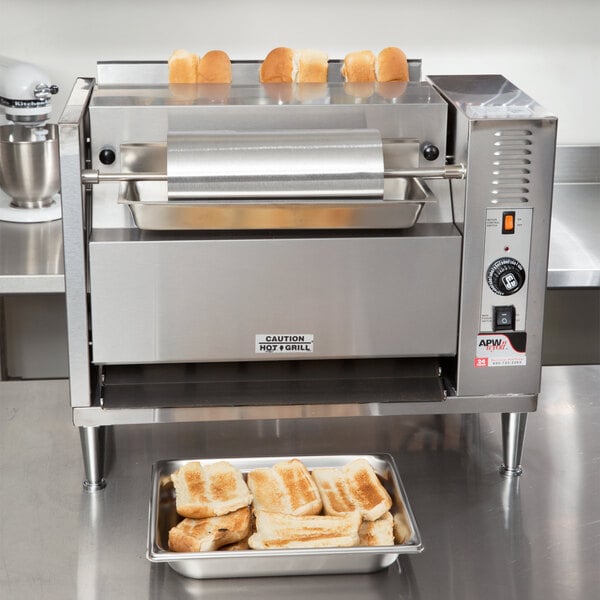
- What will it toast? Designed for bun halves, sub rolls, and similar items, it can also take bagels and sliced bread. It can toast dry or use a butter coating and griddle plate to caramelize the product, rather than truly "toasting". We offer commercial toaster models that automatically adjust to different product sizes.
- How much can it toast? Anywhere from 550 - 1,600 slices per hour.
- How much space will it take up? These tend to be bigger than the other types, ranging from about 22" to 25" wide and 12" to 18" deep. Because they have a vertical feed chute, they can be as tall as 31".
- What electrical requirements do I need? Most units will require a 208V or 240V connection, although 120V models do exist.
Things to Consider When Purchasing a Bun Grilling Toaster
Dry vs. Wet Toasting: A butter spreader lets you butter the bread for wet toasting. If you'd like to toast products dry, without butter, these units require the use of Teflon® sheets, which usually ship with the product. We also offer replacement sheets.
The Teflon® sheets are placed against the grill plates to prevent the bread from sticking to the equipment. It is also recommended to use Teflon® sheets with bread products brushed with garlic butter, butter with cheese in it, or other high-protein kinds of butter.
Product Opening: Most of these models feature a self-adjusting conveyor system, so whether toasting bagels or buns, it will adjust accordingly.
Heat Control: The griddle plate on these toasters can be adjusted to the desired temperature using a thermostatic control.
Toasting Time: This is usually determined by the gear setting on a bun griller. Different gears correspond with different toasting times (22 seconds, 35 seconds, 55 seconds, etc.). Use these settings and the griddle temperature to achieve the desired texture.
How to Safely Clean and Remove Crumbs from a Toaster
Keeping your commercial toaster clean is important to the overall performance and safety of the unit. Before cleaning your toaster, always switch off the unit, unplug it, and make sure it's cool. The outside of the toaster can be wiped down daily with a damp cloth, and a small brush can be used to clean tough-to-reach spaces.
Most toasters have a tray at the bottom where the majority of crumbs will fall. Remove the toaster's crumb tray, empty all of the loose crumbs, and wipe the tray clean, making sure it's dry before replacing it.
Do not turn toasters upside down or shake them to remove crumbs. This can be damaging, loosening internal components and further lodging crumbs inside of the toaster. Shaking a toaster can also cause knobs and levers not to work over time.
What Is the Fastest Toaster?
A toaster's speed depends on a variety of factors, and the key is to first know which toaster works best for you. Overall, a conveyor toaster will be the fastest option based on its output per hour. Generally, a conveyor toaster can produce anywhere from 200 - 2,400 slices per hour.
However, a conveyor toaster is best for medium-scale to large-scale operations, such as catering businesses, breakfast buffets, or restaurants. If you are producing less output, you may want to choose a pop-up toaster. To select the fastest, ensure your pop-up toaster has the optimal number of slots to toast more slices simultaneously. It's also best to have features, such as a removable crumb tray, that speed up your cleaning time.
Related Resources

June 2026 WebstaurantStore Coupon Code
Summer is upon us, and to celebrate WebstaurantStore has blazing hot deals all month long! With summer vacations underway and holidays like Independence Day rapidly approaching, now is the time to stock up on essential supplies and equipment you'll need to get through the summer season. Take a look at our wide array of sale items below and don't forget to enter the code SUMMERSALE at checkout to enjoy up to 20% off your purchases! Looking to save even more? Check out the new Webstaurant Rewards® Visa Business Card ! Sign up for a new card today and start earning rewards on every WebstaurantStore purchase, and save on a WebstaurantPlus subscription. Have a look at some incredible deals on disposable items with June's monthly coupon code! Whe

Coffee Shop Equipment List
You have a business plan for opening your coffee shop, a great location, and the perfect name with an awesome logo to go with it. Now that it's time to set up the shop, you might be unsure where to start. Even though specific requirements will vary from business to business, there are essential items new coffee shops require. If you're ready to take your coffee shop from a dream to a reality , check out our coffee shop equipment list below. Shop All Coffee Shop Supplies Use the following links to explore different types of coffee shop equipment: Coffee, Espresso, and Beverage Equipment Barista Tools Coffee Shop Accessories Coffee Shop Ingredients Disposable Coffee Shop Supplies Coffee Equipment Cleaning Tools Miscellaneous Barista Supplies
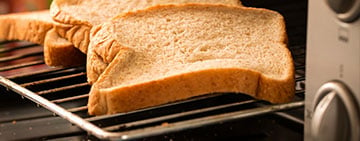
Commercial Toaster Ovens
Our toaster oven reviews help you compare the pros and cons of each commercial toaster oven as well as their price quotes side-by-side. You can use commercial toaster ovens to warm bread, melt cheese, or even bake treats in faster amounts of time. Thanks to their convection-style technology, these ovens circulate hot air around products, making them cook faster and more evenly. They're also compact, so you can fit them in your smaller kitchen without taking up additional floor space. Check out the internal space difference between ovens to find one that will accommodate your volume of product, too.
Join Our Mailing List
Receive coupon codes and more right to your inbox.