
- Topics 1577
- Industrial 59
- Troubleshooting Guides 32
- Restaurant Management 144
- Bar Management 70
- Catering Tips 46
- Bakery Management 45
- Food Trucks & Concessions 41
- Advertising & Marketing 41
- Eco-Friendly Tips 13
- Facility Layout & Design 47
- Coffee Shop Tips 32
- Installation & Maintenance 63
- Janitorial & Pest Control 34
- Safety & Sanitation 121
- Startup Tips 111
- Menu Design 11
- Kitchen & Cooking Tips 106
- Hospitality Management 26
- Pizza & Sandwich Shop Tips 23
- Smallwares 42
- Food Prep 102
- Tabletop Items 21
- Disposables 28
- Calculators & Tools 7
- Consumables 77
- Warewashing & Laundry 22
- Cooking Equipment 106
- Food Storage & Refrigeration 58
- Beverage Equipment 43
- Office Supplies 6
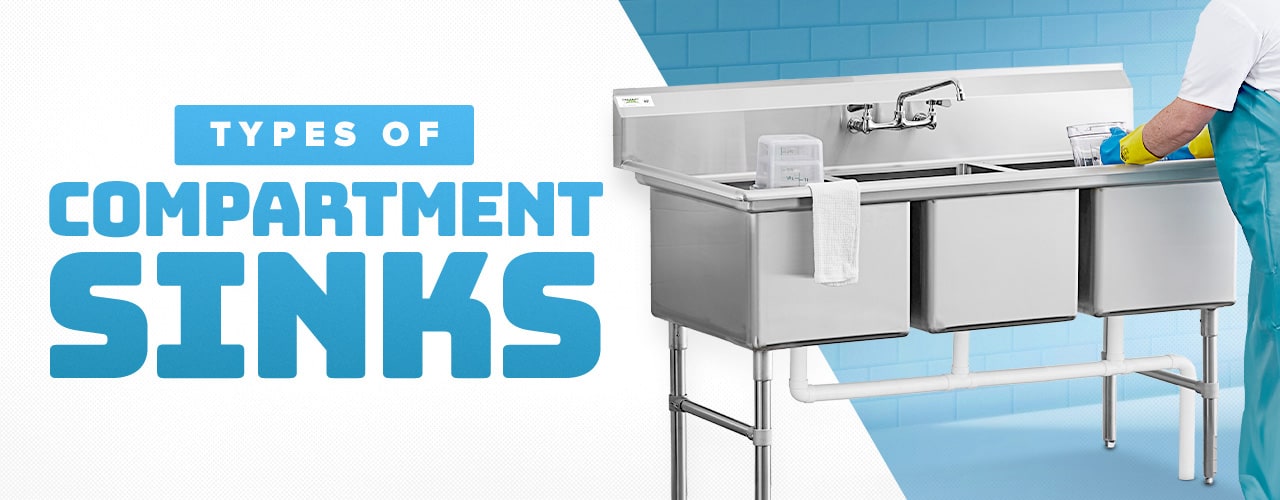
Compartment sinks are an essential piece of equipment in any commercial kitchen, providing a convenient and efficient way to wash and clean dishes as well as prep food items. These sinks can come with multiple compartments, each serving a specific purpose and function. Commercial kitchens are subject to strict health and safety regulations, and having the right type of compartment sink is crucial to maintaining a clean and sanitary workspace. Compartment sinks are available in various sizes and configurations to suit different needs and kitchen layouts.
Number of Sink Compartments
The first factor to consider as you look into buying kitchen sinks is how many sink compartments you'll need. Among the types of sinks available, the different number of compartments serve various purposes and help improve efficiency in your establishment. Although the three compartment sink is the most common compartment sink in the industry, you can also choose between one compartment, two compartment, and four compartment sinks.
One Compartment Sink
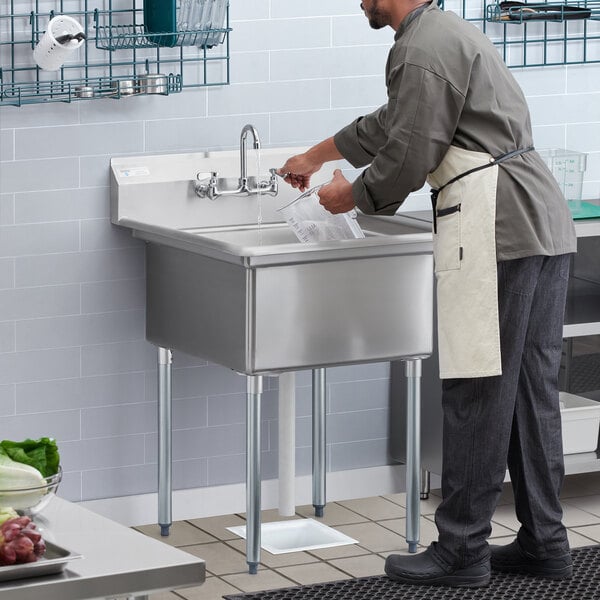
A one compartment sink consists of a single basin. One of the key advantages of a one compartment sink is its space-saving design, making it an ideal choice for small kitchens or food trucks, where space is often limited.
A one compartment sink is best used for utility or vegetable washing. These sinks can come with just the basin or can be upgraded to include a drainboard. With the added drainboard, you can increase the drying space and declutter your drying racks and countertops, making it perfect for utility purposes.
- Space-saving design
- Best used for utility or vegetable washing
- Perfect for food trucks
Two Compartment Sink
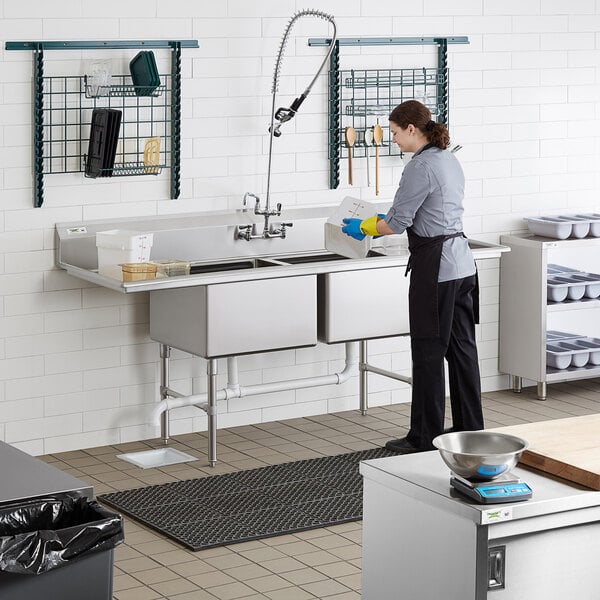
Two compartment sinks increase the flexibility of your operation while still maintaining a relatively compact footprint. These sinks consist of two separate bowls, each with its own drain, allowing for simultaneous use and easy organization of tasks. The bowls can often vary in size and depth and the sinks can come with just the basins or can be upgraded to include one or two drainboards.
Two compartment sinks are best used for food thawing and prep. The separate bowls allow for easy segregation of tasks, such as soaking and rinsing dishes or washing fruit and vegetables. This helps to maintain a clean and organized workspace, increasing efficiency and productivity in the kitchen.
- Compact footprint
- Bowls can often vary in size and depth
- Best used for food thawing and prep
- Perfect for snack bars, cafes, or concession stands
Three Compartment Sink
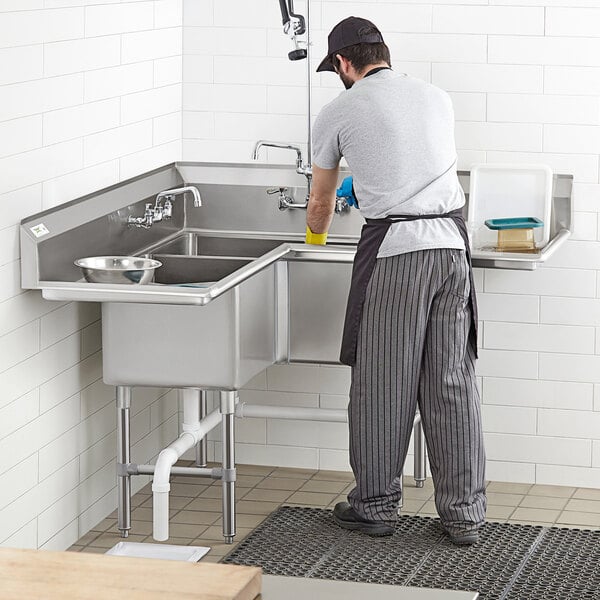
The most common type of compartment sink found in commercial kitchens, three compartment sinks have a logical order to help you properly clean and sanitize dishes, allowing you to designate one basin for washing, the second for rinsing, and the third for sanitizing.
When using a three compartment sink, it is important to follow health regulations and guidelines. This includes maintaining the proper water temperatures, regularly changing out the water in each compartment, and using approved cleaning and sanitizing agents. By adhering to these regulations, you can ensure that your dishes are properly cleaned and sanitized, reducing the risk of foodborne illnesses.
- Most common for commercial kitchens
- Keeps each step of the cleaning process separate
- Best used to wash, rinse, and sanitize dishes
- Perfect for standard restaurant kitchens
Four Compartment Sink
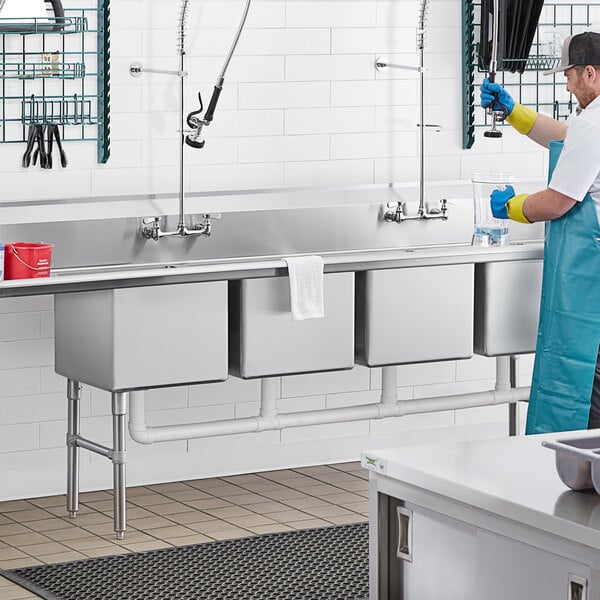
The four compartment sink has the largest footprint among all the different types of compartment sinks. This type of sink is designed to handle high-volume dishwashing operations and is commonly found in commercial kitchens, especially in university and hospital settings.
The four compartment sink is best used for soaking, washing, rinsing, and sanitizing dishes. With its four separate compartments, it allows for a systematic and efficient dishwashing process. The first compartment is typically used for soaking and pre-washing food residues from the dishes. The second compartment is used for washing the dishes with detergent. The third compartment is for rinsing off any remaining debris or soap, while the fourth compartment is dedicated to sanitizing the dishes with a sanitizing solution or hot water.
- Features the largest footprint
- Best used to soak, wash, rinse, and sanitize
- Perfect for university and hospital kitchens
Compartment Sink Materials
The material of the sink you buy is just as important as its number of compartments and size. All compartment sinks are made of stainless steel to ensure long-lasting durability, but there are different grades of steel used. You will often find compartment sinks made of either 430 stainless steel or 304 stainless steel.
The difference between type 304 and type 430 stainless steel is the small percentage of nickel present in 304 stainless steel. Although 304 is not magnetic, it is generally considered the higher-quality stainless steel thanks to its extra rust resistance, which makes it the better option in wet environments.
Compartment Sink Gauges
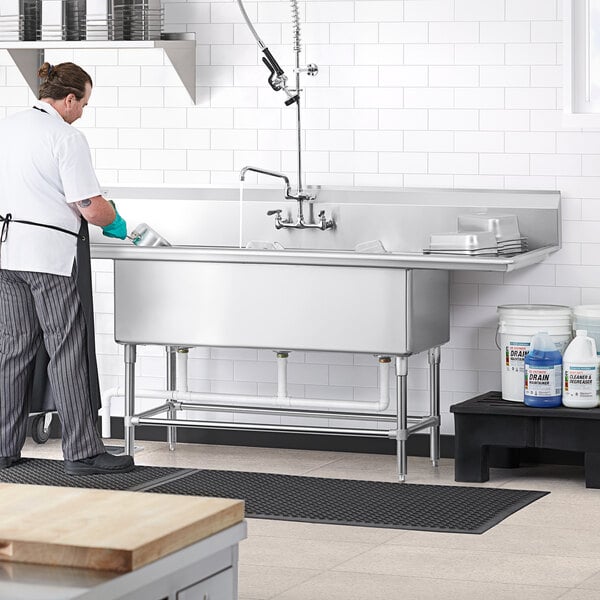
Each compartment sink is also made with a specific gauge of steel. The gauge is a measurement of the steel's thickness, with lower gauges indicating a thicker metal. The most common gauges for compartment sinks are 18 gauge, 16 gauge, and 14 gauge.
18 Gauge Stainless Steel Compartment Sink
- Thinnest material
- Good for soft water areas
- Quality: Good
16 Gauge Stainless Steel Compartment Sink
- Medium-grade material
- Stronger legs for basin support
- Quality: Better
14 Gauge Stainless Steel Compartment Sink
- Thickest material
- Greatest durability
- Quality: Best
Compartment Sink Accessories
You can pair your compartment sink with a variety of accessories and configurations to maximize your experience and efficiency.
- Drainboards: For the best convenience, compartment sinks can come with drainboards on one or both sides for a variety of purposes, from drying washed dishware to adding extra table space.
- Faucets: Most sinks also include holes drilled into the backsplash to support swing nozzle, gooseneck, or pre-rinse faucets, depending on what you need, to give you the chance to streamline rinsing and cleaning. With three and four compartment sinks, the units commonly come with multiple centers punched over different sinks so that you can have multiple faucets for separate purposes while you work.
Related Resources

June 2026 WebstaurantStore Coupon Code
Summer is upon us, and to celebrate WebstaurantStore has blazing hot deals all month long! With summer vacations underway and holidays like Independence Day rapidly approaching, now is the time to stock up on essential supplies and equipment you'll need to get through the summer season. Take a look at our wide array of sale items below and don't forget to enter the code SUMMERSALE at checkout to enjoy up to 20% off your purchases! Looking to save even more? Check out the new Webstaurant Rewards® Visa Business Card ! Sign up for a new card today and start earning rewards on every WebstaurantStore purchase, and save on a WebstaurantPlus subscription. Have a look at some incredible deals on disposable items with June's monthly coupon code! Whe

Types of Floor Mats
Choosing the right commercial floor mat for your business can increase safety , improve productivity, and reduce maintenance costs. From anti-fatigue mats that lessen the day-to-day aches and pains of your cashiers to durable commercial doormats, there are a variety of different floor mat types that you may need for your business. Use our floor mat guide to help you make the best selection and improve your working environment. Shop All Commercial Floor Mats

Types of Warewashing Chemicals
With the wide range of warewashing chemicals available, you might not know which products work for your kitchen. Whether you wash dishes manually or with a dish machine, each method has detergents and sanitizers for cleaning and sanitizing that are important to meet regulations. By choosing the right warewashing chemicals within your budget, your dishes will be spotlessly clean to impress your customers and your health inspector. Shop All Warewashing Chemicals
Join Our Mailing List
Receive coupon codes and more right to your inbox.