
- Topics 1577
- Industrial 59
- Troubleshooting Guides 32
- Restaurant Management 144
- Bar Management 70
- Catering Tips 46
- Bakery Management 45
- Food Trucks & Concessions 41
- Advertising & Marketing 41
- Eco-Friendly Tips 13
- Facility Layout & Design 47
- Coffee Shop Tips 32
- Installation & Maintenance 63
- Janitorial & Pest Control 34
- Safety & Sanitation 121
- Startup Tips 111
- Menu Design 11
- Kitchen & Cooking Tips 106
- Hospitality Management 26
- Pizza & Sandwich Shop Tips 23
- Smallwares 42
- Food Prep 102
- Tabletop Items 21
- Disposables 28
- Calculators & Tools 7
- Consumables 77
- Warewashing & Laundry 22
- Cooking Equipment 106
- Food Storage & Refrigeration 58
- Beverage Equipment 43
- Office Supplies 6

Choosing the right size grease trap for your business is crucial for maintaining a clean and efficient kitchen environment. Grease traps play a vital role in capturing fats, oils, and grease (FOG) from wastewater before it enters the sewer system. Improperly sized grease traps can lead to costly consequences such as clogged pipes, foul odors, and potential fines for non-compliance with local regulations. We'll explain how to choose the right size grease trap for your needs so you can maintain a sanitary commercial kitchen.
Shop All Grease TrapsClick below to learn more about grease trap sizing:
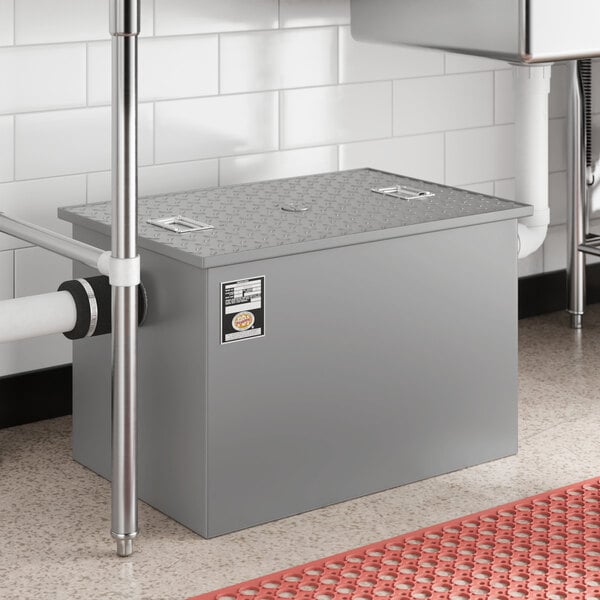
How does grease trap sizing work? The size of a grease trap is determined by the amount of FOG your commercial kitchen produces. If the grease trap is too small, it will quickly reach its capacity, allowing FOG to bypass the trap and accumulate in the sewer lines. This can result in blockages that disrupt your kitchen operations and lead to expensive repairs. On the other hand, an oversized grease trap may not function efficiently, as the FOG may not accumulate sufficiently to be captured effectively.
By selecting the appropriate size grease trap for your business, you ensure that it operates at its optimal capacity, effectively capturing FOG and preventing it from causing issues downstream. Properly sized grease traps also help in reducing the risk of sewer overflows and environmental contamination, demonstrating your commitment to sustainability and regulatory compliance.
Two major factors determine what size grease trap you'll need: the rate of incoming flow and local plumbing codes. Keep both factors in mind as you design your kitchen space. Continue reading to learn about both factors and how they relate to your kitchen:
- Rate of incoming flow: Typically measured in gallons per minute (GPM), the rate of incoming flow refers to the amount of water coming out of a faucet during a specified period. Also referred to as flow rate, it plays a significant role in determining grease trap capacity. The accepted capacity of a grease trap should generally be twice as much as the flow rate. For example, a 10 GPM grease trap has a rated capacity of 20 pounds.
- Local plumbing codes: These codes follow the guidelines established by the Plumbing and Drainage Institute (PDI), though it's important to note they can still vary depending on location. They determine the design and installation criteria of your grease traps to ensure kitchen safety. Communicate with local authorities to verify that your grease traps comply with all local laws and regulations.
The following calculator will help you determine the flow rate of your sink so that you can choose the grease trap that matches your kitchen's needs. Be sure to round up to the next largest size if your GPM calculation comes to a number that is even slightly above the rating of the grease trap you're considering.
- Calculate the capacity of the sink in cubic inches (measurements of one compartment), and multiply that total by the number of compartments:
- Convert the capacity from Total cubic inches to gallons per minute (GPM):
- Adjust for displacement (displacement takes into consideration the actual useable capacity of your sink):
If you are draining multiple sinks into one grease trap, use this formula to determine the recommended flow rate in GPM:
- Use the grease trap sizing calculator to determine the flow rate for each individual sink that will be serviced by the trap.
- Add together 100% of the largest flow rate, 50% of the second largest, and 25% of every other flow rate.
Determining the correct size of a grease trap for your commercial kitchen is crucial to maintaining a clean and efficient operation. A grease trap calculator is a valuable tool that helps you accurately assess the capacity needed to effectively trap grease and prevent it from entering your plumbing system.
- Accurate Measurement: A grease trap calculator takes into account various factors such as the number of sinks, dishwashers, and other equipment that produce grease in your kitchen. By inputting these details, the calculator provides you with a precise estimation of the size of the grease trap required.
- Regulatory Compliance: Many municipalities have specific regulations regarding the size of grease traps based on the volume of wastewater generated in a commercial kitchen. Using a grease trap calculator helps you meet these regulatory requirements as well as avoid potential fines and penalties.
- Cost-Effective Solution: Investing in the right size grease trap not only ensures compliance but also helps you avoid unnecessary expenses in the long run. A correctly sized grease trap will effectively capture grease, reducing the risk of blockages and costly plumbing repairs.
- Efficient Operation: A properly sized grease trap allows for efficient removal of grease, preventing it from accumulating in your plumbing system and causing clogs. This helps maintain the overall efficiency of your kitchen operations and prolongs the lifespan of your equipment.
- Environmental Impact: By choosing the right size grease trap, you contribute to environmental conservation by reducing the amount of grease and other contaminants that enter the wastewater system. This promotes sustainability and responsible waste management practices in your commercial kitchen.
Using a grease trap calculator streamlines the process of selecting the appropriate grease trap size for your business, ensuring effective grease management and compliance with regulations. By leveraging this tool, you can optimize your kitchen operations, minimize maintenance costs, and promote environmentally friendly practices.

Commercial dishwashers are essential equipment in busy commercial kitchens, efficiently cleaning and sanitizing large volumes of dishes, utensils, and cookware. To ensure that your dishwasher operates effectively and to comply with local regulations, it is crucial to install a properly sized grease trap.
The recommended grease trap size for a dishwasher in a commercial kitchen depends on the flow rate of the dishwasher and the type of foodservice establishment. As a general guideline, the following recommended grease trap sizes based on dishwasher flow rates are commonly used:
- 10 GPM: For low-flow dishwashers with a flow rate of up to 10 gallons per minute, a grease trap with a minimum capacity of 20 to 30 gallons is recommended.
- 10 to 20 GPM: For medium-flow dishwashers with a flow rate between 10 to 20 gallons per minute, a grease trap with a capacity of 40 to 50 gallons is typically sufficient.
- 20+ GPM: High-flow dishwashers with a flow rate exceeding 20 gallons per minute may require a larger grease trap with a capacity of 75 gallons or more to effectively capture grease and prevent it from entering the drainage system.
It is important to consult with a professional plumber or a grease trap specialist to determine the exact grease trap size needed for your specific dishwasher model and kitchen setup. Local plumbing codes and regulations may dictate specific requirements for grease trap sizing based on the volume of wastewater generated by your commercial kitchen.
By installing the appropriate grease trap size for your commercial dishwasher, you can effectively manage FOG accumulation, prevent costly plumbing issues, and maintain a clean and sanitary kitchen environment.
Once you determine the size of the grease trap you need, you can consider other factors. In general, there are three different types of grease traps:
- Manual grease traps: Also called passive hydromechanical grease traps, manual grease traps come in several different shapes and sizes. Because of this, a manual grease trap can easily be installed under most commercial sinks. These traps have a low initial cost, making them ideal for smaller establishments or new restaurants.
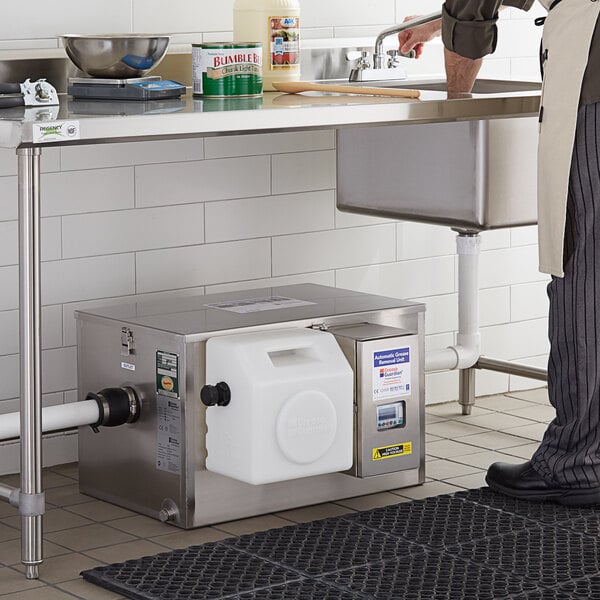
- Automatic grease traps: Often called Automatic Grease Removal Units (AGRUs), automatic grease traps are the most efficient type of grease trap. These systems automatically filter wastewater from your sink or dishwasher to separate grease and send it to an external grease collector. Though they have a higher initial cost, they have low long-term service costs.
- Gravity grease traps: Sometimes called solid strainers, gravity grease traps are large, in-ground containers that use gravity to separate grease from your water supply. They have a high initial cost and must be pumped on a regular basis, but feature large capacities that are ideal for high-volume needs.
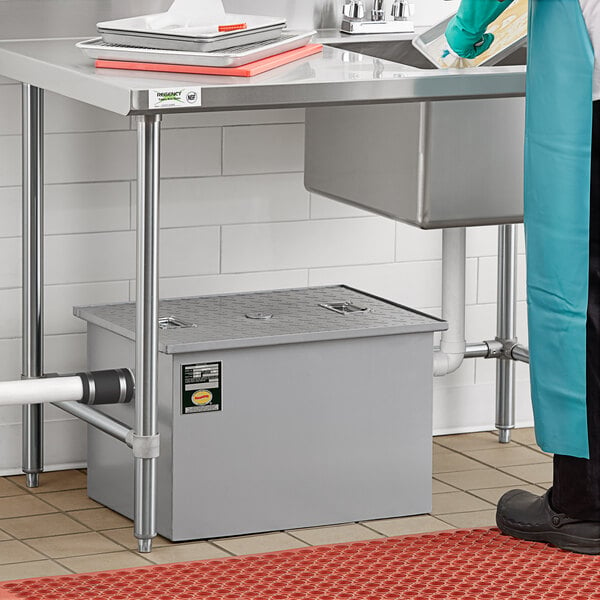
You should clean and maintain your grease trap every 1-3 months. The length of time you go between cleaning your trap can vary depending on how much grease your kitchen produces, and many professionals adhere to the 1/4th rule to set a cleaning schedule.
The 1/4th rule stipulates that you should clean your grease trap when it reaches a quarter of its capacity. Doing so allows you to prevent foul odors in the kitchen, reduce the risk of clogged pipes, and extend the life of your sink. It’s important to note that some states require grease traps to be cleaned and maintained every 90 days regardless of how full they are.
Follow these tips to keep your grease trap maintained:
- Wear PPE: Cleaning a grease trap can be a messy task. Consider purchasing rubber gloves, nose plugs, and protective clothing.
- Clean with cool water: Cool water allows fats, oils, and other greasy substances to float to the top faster. If you’ve recently run hot wastewater through your trap, wait at least 10 minutes for its contents to cool off before cleaning.
- Test your work: Before you finish, run a test to ensure your trap is completely clean. Verify that there are no blockages in the trap and that the water is draining properly.
- Dispose of waste properly: Use a double-lined garbage bag to hold all fats, oils, and greasy byproducts that you remove while cleaning.
Related Resources

Types of Range Hood Filters
Commercial range hoods are essential parts of any professional kitchen, removing smoke, heat, grease, and odors from the air to maintain a clean and safe cooking environment. At the heart of every effective range hood is its filter system, the primary component responsible for eliminating airborne contaminants. These filters come in various styles and designs to suit the specific needs of your kitchen setup and the configuration of your range hood. By understanding the different types of range hood filters and what sets them apart, you can select the right one to meet your culinary requirements. Shop All Exhaust Hood Filters Use the following links to explore the different types of commercial kitchen hood filters: Charcoal Hood Filters Baff
Types of Compartment Sinks
Compartment sinks are an essential piece of equipment in any commercial kitchen, providing a convenient and efficient way to wash and clean dishes as well as prep food items. These sinks can come with multiple compartments, each serving a specific purpose and function. Commercial kitchens are subject to strict health and safety regulations, and having the right type of compartment sink is crucial to maintaining a clean and sanitary workspace. Compartment sinks are available in various sizes and configurations to suit different needs and kitchen layouts .

Grease Removal for Restaurants
Running a restaurant involves a lot of moving parts, and one of the most important considerations is what to do with your fryer oil of choice when it is spent. Proper grease removal is crucial for maintaining a clean and efficient kitchen, as well as complying with health and safety regulations. We'll explore the best practices for grease removal in restaurants and the equipment available to effectively manage and dispose of fryer oil in a commercial kitchen. Shop All Fryer Oil Filtration Supplies What Is F.O.G? F.O.G., or fats, oils, and grease, is a common byproduct of cooking in restaurants. It is a mixture of animal fats, like bacon grease , and vegetable oils that solidify and accumulate in kitchen drains, sewer lines, and grease traps
Join Our Mailing List
Receive coupon codes and more right to your inbox.