- Topics 1577
- Industrial 59
- Troubleshooting Guides 32
- Restaurant Management 144
- Bar Management 70
- Catering Tips 46
- Bakery Management 45
- Food Trucks & Concessions 41
- Advertising & Marketing 41
- Eco-Friendly Tips 13
- Facility Layout & Design 47
- Coffee Shop Tips 32
- Installation & Maintenance 63
- Janitorial & Pest Control 34
- Safety & Sanitation 121
- Startup Tips 111
- Menu Design 11
- Kitchen & Cooking Tips 106
- Hospitality Management 26
- Pizza & Sandwich Shop Tips 23
- Smallwares 42
- Food Prep 102
- Tabletop Items 21
- Disposables 28
- Calculators & Tools 7
- Consumables 77
- Warewashing & Laundry 22
- Cooking Equipment 106
- Food Storage & Refrigeration 58
- Beverage Equipment 43
- Office Supplies 6
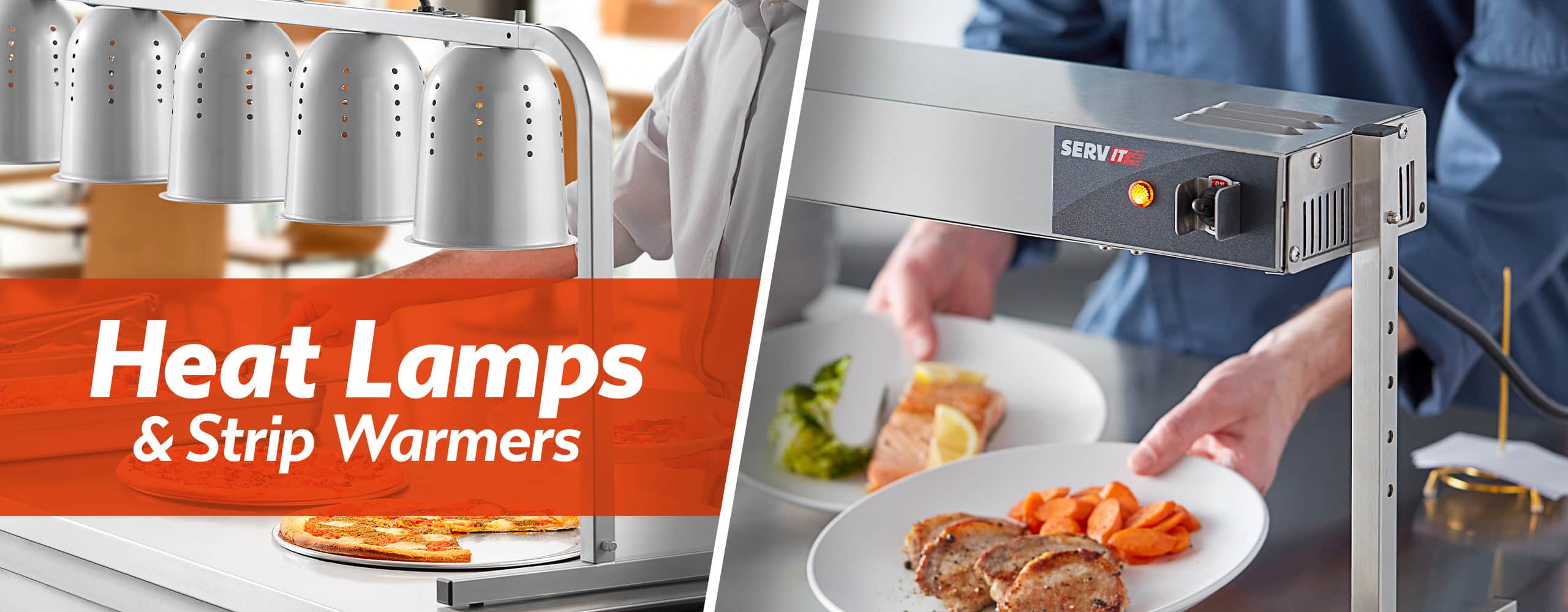
Keeping hot food hot is an ongoing struggle in a commercial kitchen. It's not just a customer service issue, it's also a food safety issue. When hot food starts to cool down, it can enter the danger zone (40 degrees to 135 degrees Fahrenheit), the temperature range that is most hospitable to the bacteria that cause foodborne illness. Thankfully, many types of food-warming equipment can help restaurant owners combat this issue. We'll walk you through the features of commercial heat lamps and strip warmers to guide you in your purchasing decision.
Choosing the Best Food Warmer for Your Restaurant
Both heat lamps and strip warmers are effective at keeping food hot in different applications. Heat lamps are ideal for front-of-house food displays, buffets, and carving stations. Strip warmers are essential for back-of-house prep and staging areas. One of the main differences between the two is that heat lamps direct heat to a small area, and strip warmers are used to warm a larger surface. Before diving into the features of these food warmers, let's identify what makes them unique.
What Is a Heat Lamp?
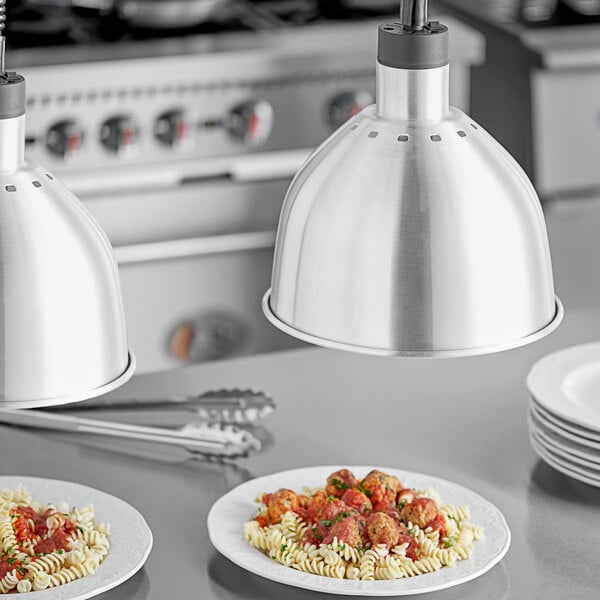
A foodservice heat lamp, or bulb warmer, utilizes infrared bulbs to direct heat and light onto foods. These lamps keep food at a safe serving temperature, preventing it from drying out or becoming cold. Heat lamps are commonly used in buffet lines, carving stations, and pass-through areas where food is displayed or served. They are designed to be mounted above the food, providing a consistent and even heat distribution.
Bulb warmers are the most economical choice in overhead heating and are used primarily in the sight of guests. In addition to warming, they produce light to present the product and make it look enticing. The tradeoff is that bulb warmers generate less heat compared to strip warmers and can only cover a small area.
What Is a Strip Warmer?
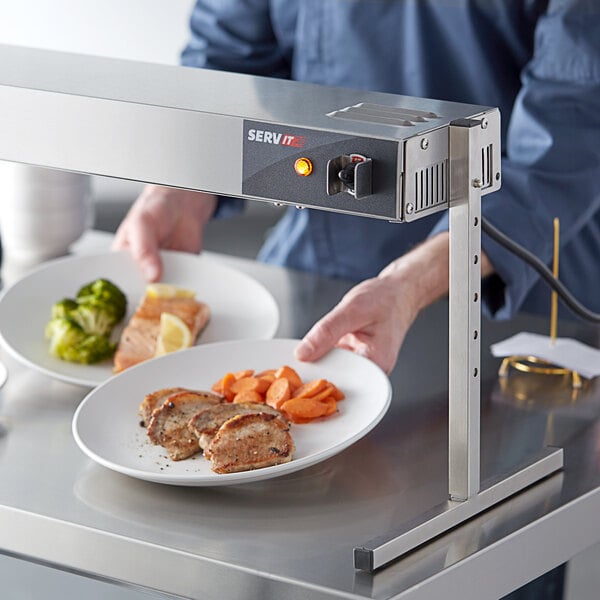
A strip warmer consists of a long, narrow metal strip with heating elements inside. These handy devices are typically mounted above food preparation areas, such as grills or countertops. When turned on, the strip evenly distributes heat across its surface, keeping food warm without drying it out.
Strip warmers are designed with durable housings and heating elements that can withstand the rigors of a busy commercial kitchen. They're also available in different sizes and configurations to suit the needs of your restaurant. You will see strip warmers used more often in the back-of-house to keep food warm after being plated, but they can also be used for large buffets.
Types of Heat Lamps
Learn about the different types of heat lamps and their applications below:
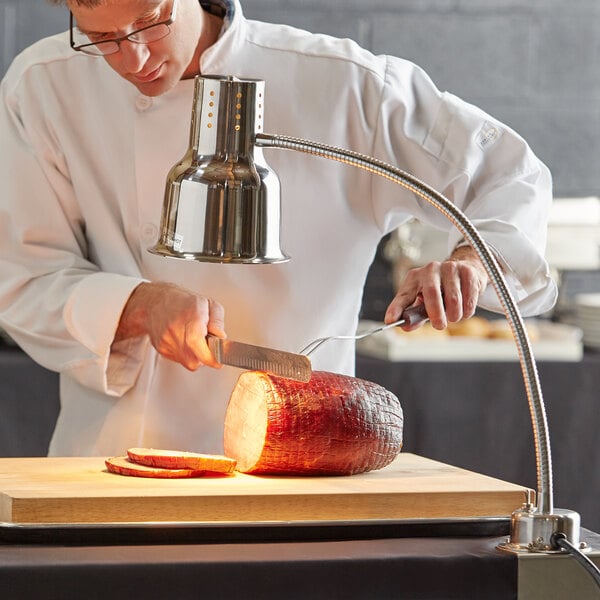
Freestanding Lamps
Freestanding bulb warmers are designed with a base that can be placed on any countertop or surface. They can be moved around wherever you need them, as long as you have access to an electrical outlet. If you want to apply warmth to one tray of food, choose a one-bulb or two-bulb lamp. For larger surface areas, freestanding lamps can be purchased with up to eight bulbs.
Clamp and Screw-On Lamps
A screw-on heat lamp is similar to a freestanding lamp, except it has no base. Instead, it's mounted to a countertop or carving board for a more permanent solution. Many of these heat lamps also have flexible, adjustable arms so that you can direct the heat where you need it most. Screw-on lamps typically have a maximum of two bulbs and require access to an electrical outlet. They are available in a variety of attractive finishes since they are commonly used in dining rooms or catering venues.
Hanging Heat Lamps
Hanging heat lamps are mounted to the ceiling and suspended directly over the area you want to keep warm. They're mostly used in the front-of-house, so you can find hanging heat lamps in many different designs, colors, and finishes. Unlike freestanding or screw-on lamps, hanging lamps must be hard-wired into your electrical system. This means they are permanent fixtures that can't be easily moved around, but they can be adjusted for height.
Types of Strip Warmers
Strip warmers have many different features that can be customized to suit your specific needs.
Usage / Wattage
The wattage of the strip warmer heating elements dictates the level of usage. Choose a low-wattage unit for small spaces and light-duty use. Level up the wattage for high-volume kitchens that require heavy usage.
Double vs Single
Strip warmers come in two styles: single-element or double-element. A single unit has one heating element and a dual unit has two. Consider the depth of coverage that you need before choosing. A single-strip unit will heat a narrower surface, while a double-strip unit provides heat to a wider surface area.
Heat Source
There are two common types of heating elements in strip warmers. Metal-sheathed elements are comprised of wires encased in metal. They're effective and economical, which makes them popular for most foodservice applications. Ceramic heating elements provide more intense heat for covering greater depth and height clearance. However, they do come with a higher price tag than metal-sheathed strip warmers.
Installation
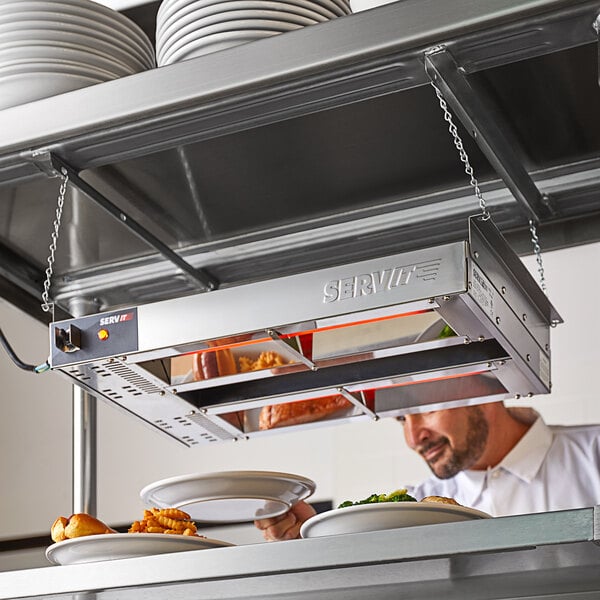
Strip warmers are available with different mounting hardware. For permanent installation, use mounting brackets to attach the strip heater over a food pickup area. Support chains can be used to hang the strip warmer from the ceiling. To create a portable solution, a leg stand can turn a strip warmer into a mobile food heater that you can use on any countertop.
Electrical Connection
Hardwired strip warmers are permanently connected to your electrical system. If you plan on moving the warmer around, choose a cord and plug option for greater mobility.
Control Type
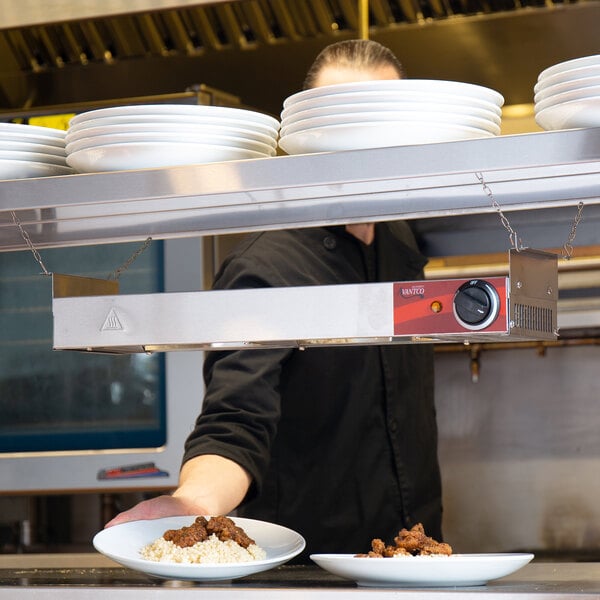
Choosing strip warmer controls can be a little bit confusing. We'll walk you through the four types of controls and explain the benefits of each one.
Attached Toggle - An attached toggle control has a simple on/off button on the strip warmer. The unit is either turned on or it's turned off. There is no temperature control with an attached toggle button, which makes it simple for anyone to use.
Attached Infinite - An attached infinite control is a dial located on the unit. You turn the dial to power on the unit and also to adjust the heat level. This gives the user more control over the amount of heat being applied.
Remote Toggle - A remote toggle switch is located in a different location than the strip warmer, which is useful for a couple of reasons. The heat from a strip warmer can take its toll on attached controls. Placing the remote control box in a cooler location can extend the life of the components. This toggle control is limited to powering on or off and has no temperature control.
Remote Infinite - The remote infinite control is a great option if the strip warmer is located in the dining room. You can power it on from a distance and turn the dial to control the temperature. This also prevents guests from tampering with the controls.
Food Warmer FAQ
If you still have questions about strip warmers and heat lamps, check out the information below.
How Do You Keep Buffet Food Warm?
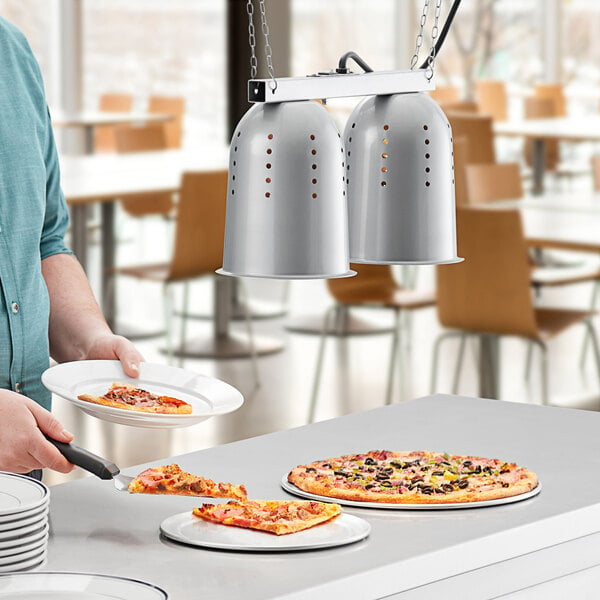
Depending on the style of your buffet, there are a couple of ways to keep food at the perfect serving temperature. On a display table with chafing dishes, freestanding heat lamps or hanging heat lamps can be placed strategically to direct heat toward your hot foods. In a cafeteria setting or large buffet line, strip warmers can be installed onto your buffet equipment to provide steady warmth.
How Many Watts Is a Heat Lamp?
Foodservice heat lamps can range from 250 watts to 2000 watts. Strip warmers cover an even greater range at 250 watts to 8000 watts.
How Long Can You Keep a Heat Lamp On?
Heat lamps and strip warmers for foodservice are designed for continuous use, so they are safe to leave on throughout service. That being said, they are meant to heat dishes of food for a short time before they are served. Being held under a heat lamp for too long will cause foods to dry out. Always remember to turn off heat lamps and strip warmers before closing to prevent a fire hazard.
Related Resources

June 2026 WebstaurantStore Coupon Code
Summer is upon us, and to celebrate WebstaurantStore has blazing hot deals all month long! With summer vacations underway and holidays like Independence Day rapidly approaching, now is the time to stock up on essential supplies and equipment you'll need to get through the summer season. Take a look at our wide array of sale items below and don't forget to enter the code SUMMERSALE at checkout to enjoy up to 20% off your purchases! Looking to save even more? Check out the new Webstaurant Rewards® Visa Business Card ! Sign up for a new card today and start earning rewards on every WebstaurantStore purchase, and save on a WebstaurantPlus subscription. Have a look at some incredible deals on disposable items with June's monthly coupon code! Whe
Guide to Chafing Dishes
Chafing dishes are an essential addition to any foodservice establishment or engagement. They keep hot food hot and ensure food safety . Keep reading to learn more about what chafing dishes are, what they're used for, and all about the different types so you can find the right chafing dish for your catering business, hotel, or banquet hall. Shop All Chafing Dishes Use the following links to navigate this guide and learn more about chafing dishes: What Are Chafing Dishes? Chafing Dish Sizes Types of Chafing Dishes How to Choose a Chafing Dish Chafing Dish Fuel Chafing Dish Covers Chafing Dish Finishes Chafer Trim Styles Chafing Dish Accessories

A Guide to Commercial Drawer Warmers
Commercial drawer warmers function as a buffer between cooking and service, allowing kitchens to stage items, manage fluctuating ticket times, and maintain product quality during peak periods. From quick-service lines to full-service kitchens, these units support everything from holding proteins and sides to proofing dough. Understanding how drawer warmers work and how to select and use them effectively directly impacts food safety compliance , operational efficiency, and guest satisfaction. Below, we break down the practical considerations operators need to evaluate before integrating a drawer warmer into their workflow. Shop All Warming Drawers Use the following links to explore the different features of warming drawers: What Is a Drawer
Join Our Mailing List
Receive coupon codes and more right to your inbox.