- Topics 1577
- Industrial 59
- Troubleshooting Guides 32
- Restaurant Management 144
- Bar Management 70
- Catering Tips 46
- Bakery Management 45
- Food Trucks & Concessions 41
- Advertising & Marketing 41
- Eco-Friendly Tips 13
- Facility Layout & Design 47
- Coffee Shop Tips 32
- Installation & Maintenance 63
- Janitorial & Pest Control 34
- Safety & Sanitation 121
- Startup Tips 111
- Menu Design 11
- Kitchen & Cooking Tips 106
- Hospitality Management 26
- Pizza & Sandwich Shop Tips 23
- Smallwares 42
- Food Prep 102
- Tabletop Items 21
- Disposables 28
- Calculators & Tools 7
- Consumables 77
- Warewashing & Laundry 22
- Cooking Equipment 106
- Food Storage & Refrigeration 58
- Beverage Equipment 43
- Office Supplies 6

Baking is both a science and an art. Not only do the ingredients you use matter, but the types of pans you use also play a role in the quality of your baked goods. Whether you've just started a bakery, coffee shop, or restaurant, it's important to invest in the proper baking pans and baking pan materials to ensure the best results. We'll outline the most popular baking pan materials and what sets them apart below so that you can make informed purchasing decisions.
Shop All Baking Pans
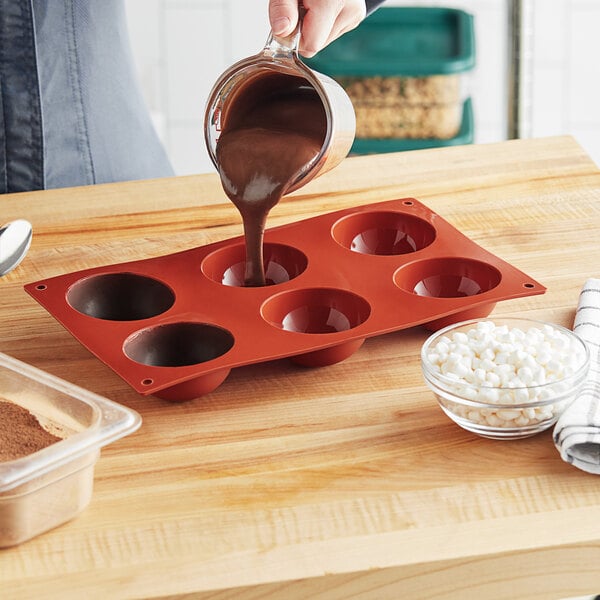
Silicone baking molds, which are flexible and naturally non-stick, are a great choice for baking delicate foods that may easily break apart. They are known for their stain resistance and odor absorption, promoting long-lasting use and allowing for easy cleaning. While silicone molds have excellent heat resistance, they are poor heat conductors, meaning your foods may take longer to bake than in other pans. Adjust your recipe or baking time accordingly to ensure even and thorough baking.
- Used for: Muffins, cakes, candies
- Dishwasher safe? Yes
- Non-reactive? Yes
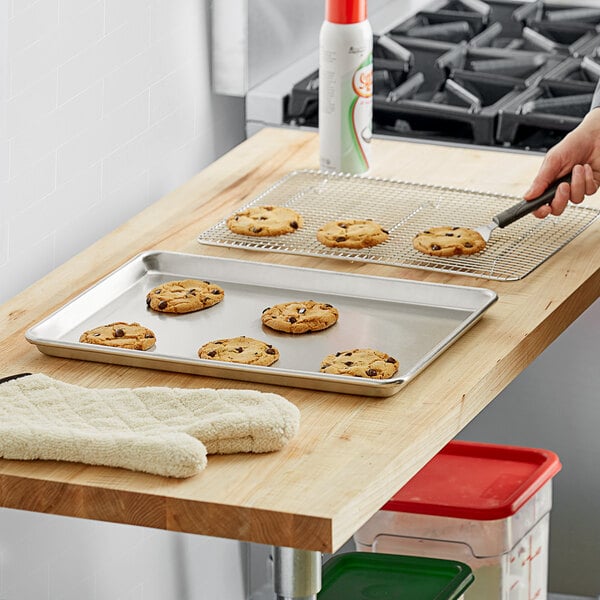
Made from a blend of steel and chromium, stainless steel baking pans are designed to resist warping, denting, and scratching. These pans are non-reactive, meaning they will not interact with acidic ingredients, ensuring the integrity and flavor of your baked goods. They are also corrosion- and rust-resistant, making them easy to clean and maintain. Despite these advantages, stainless steel baking pans are inefficient heat conductors, which can result in uneven baking and potential hot spots.
- Used for: Cookies, pastries, meats
- Dishwasher safe? Yes
- Non-reactive? Yes
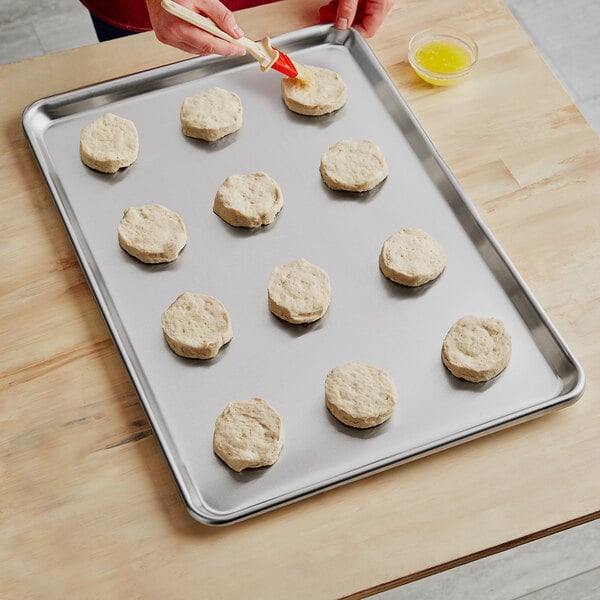
Aluminum baking pans work best for dishes that bake with high heat over short periods of time. Their ability to heat up and cool down quickly promotes even browning and ensures that your recipes are baked to perfection. They offer enhanced corrosion and rust resistance, providing a durable pan that withstands the demands of busy commercial kitchens. Aluminum baking pans are one of the most affordable options for bakers, and their lightweight construction makes them easy to handle, allowing for quick transfer from the oven to the cooling rack.
- Used for: Cookies, biscuits, muffins
- Dishwasher safe? No
- Non-reactive? No
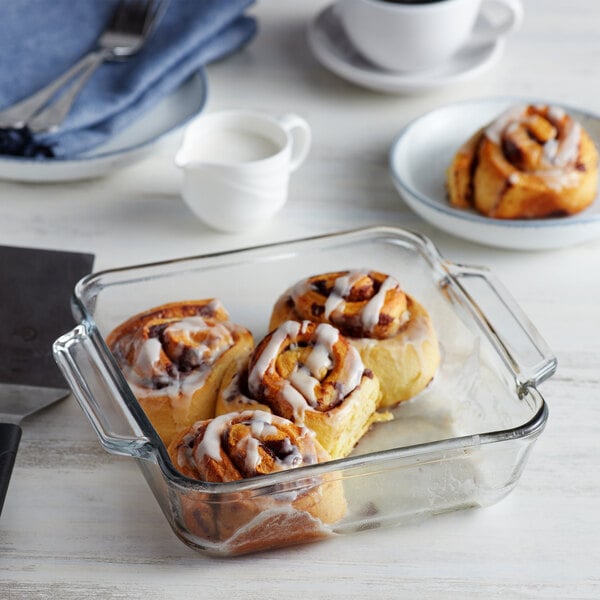
Glass baking dishes are ideal for foods that require a consistent, even temperature for optimal baking results. One drawback is that they are poor heat conductors, meaning they take longer to heat up and cool down. The intense heat that glass dishes retain can sometimes result in over-browning or burning, especially in sugary recipes like cakes or pastries. Glass dishes are also susceptible to thermal shock, meaning they can crack or shatter if exposed to sudden temperature changes.
- Used for: Casseroles, baked meats
- Dishwasher safe? Yes
- Non-reactive? Yes
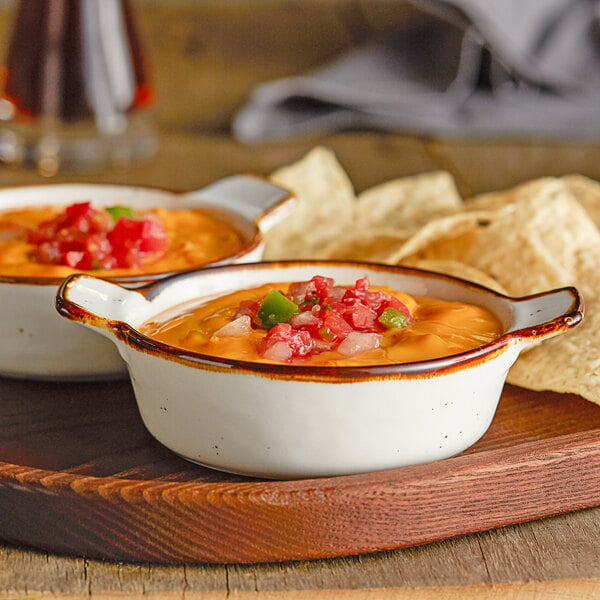
Stoneware baking dishes retain heat well, ensuring slow, even heat distribution. Like glass dishes, they may cause browning or burning in sweet dishes and should be monitored closely in the oven. They are susceptible to thermal shock and breakage and can be heavy, meaning they must be handled with care. Some stoneware baking dishes can double as attractive serving vessels, enhancing your table setting. Season your stoneware baking dishes before using them for the best results.
- Used for: Baked pasta, casserole, gratin, bread pudding, pie
- Dishwasher safe? Yes
- Non-reactive? Yes
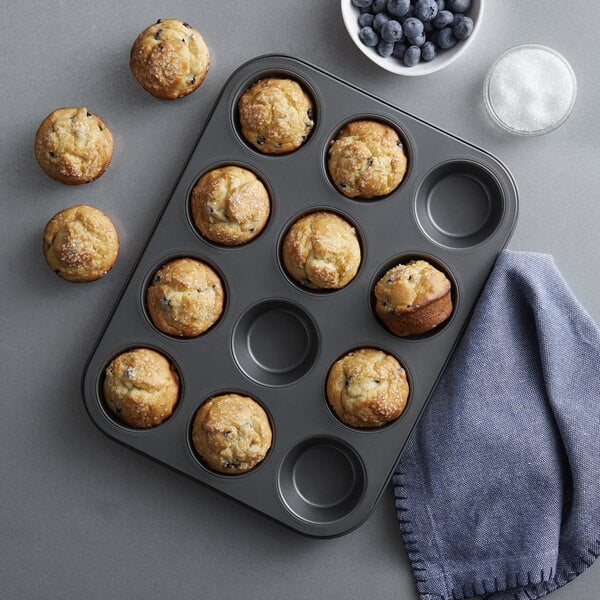
Carbon steel baking pans are made by pressing raw, heavy-gauge steel, resulting in a more durable material than other baking pans. They require regular seasoning and maintenance but will last long when cared for correctly. Additionally, they are prone to rust and must be carefully cleaned to avoid long-term damage. These pans are known as superior heat conductors and have non-stick properties, ensuring easy, even baking.
- Used for: Casserole, cake, bread, pie, meat, seafood
- Dishwasher safe? No
- Non-reactive? No

Aluminum steel baking pans are made from steel coated in an aluminum-silicon alloy, providing exceptional strength and heat distribution properties. They are one of the most popular pans for commercial bakeries because of their superior durability and corrosion resistance. The steel and aluminum-silicon alloy allows efficient heat distribution, ensuring even baking and browning. Despite their high cost and need for regular maintenance and careful cleaning, they are well worth the investment for specialty or high-volume commercial bakeries.
- Used for: Baked goods, roasted foods
- Dishwasher safe? No
- Non-reactive? No
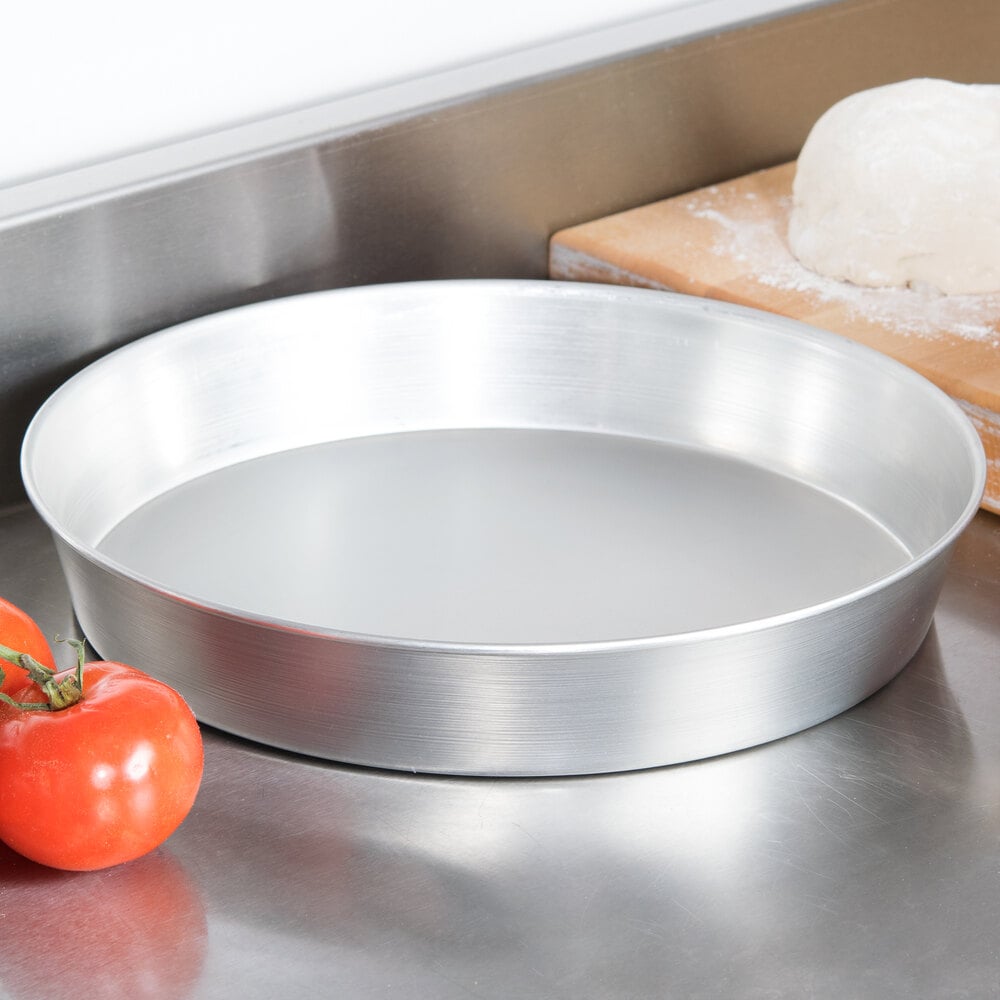
Tin-plated steel baking pans are made from sheets of steel coated with a thin layer of tin. They retain and distribute heat at a high level, allowing you to craft delicate pastries while minimizing the possibility of uneven baking. However, they are prone to rust and must be dried thoroughly after cleaning to prevent permanent damage. Their surface will darken with use, which doesn't affect performance but may result in a visually unappealing pan.
- Used for: Cake, deep dish pizza
- Dishwasher safe? No
- Non-reactive? Yes
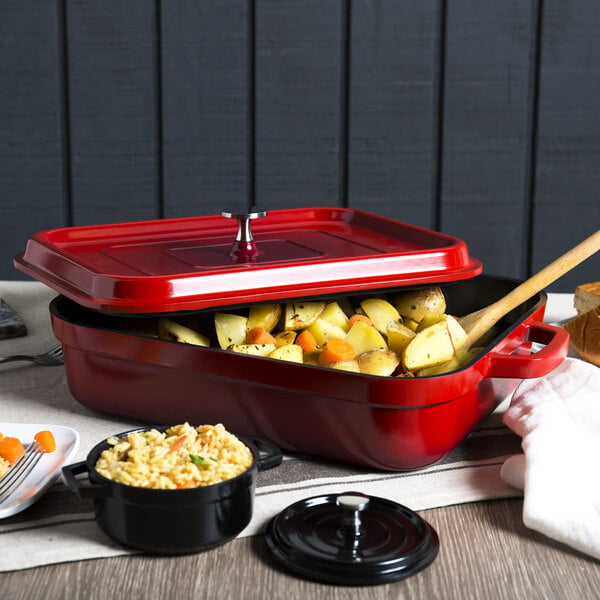
Cast aluminum is heated to extremely high temperatures before being molded to its desired shape. The result is a baking pan with a durable, lightweight construction that distributes and retains heat exceedingly well. Cast aluminum pans are also one of the more affordable options on the market, offering great value for budget-conscious businesses. These pans will react to acidic ingredients and are prone to darkening over time.
- Used for: Casseroles, meats
- Dishwasher safe? No
- Non-reactive? No
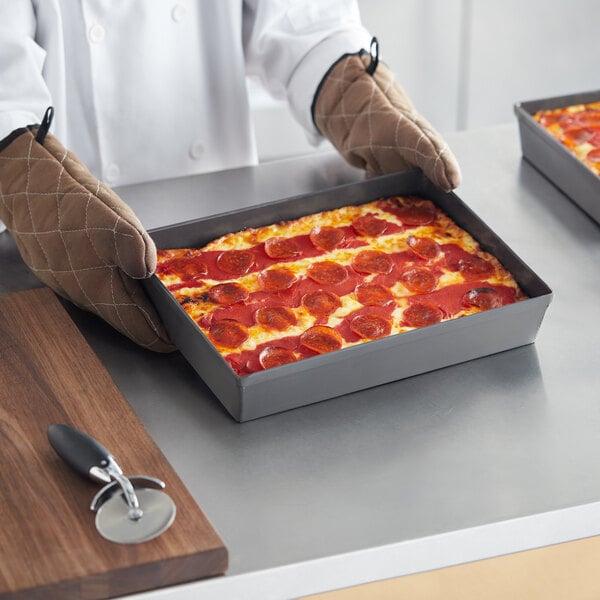
Hard anodized aluminum baking pans undergo a unique electro-chemical production process, hardening their outer layer and thickening their surface. The material is immersed in an acid-electrolyte bath, resulting in a long-lasting, scratch-resistant pan. These pans are efficient heat distributors and have advanced conducting properties, ensuring consistent baking results. Because of their unique nature, you may have to adjust your recipes or expected bake time when using these pans.
- Used for: Pizza, cake
- Dishwasher safe? No
- Non-reactive? Yes

Exoglass® baking pans are a proprietary product of Matfer Bourgeat. Exoglass® is a non-porous, natural, composite material with non-stick properties. It can withstand temperatures from -40 to 450 degrees Fahrenheit without warping or losing shape. While these pans are known for their exceptional durability, it's important to note that they are more expensive than other options.
- Used for: Cake, bread, tarts, quiches
- Dishwasher safe? Yes
- Non-reactive? No
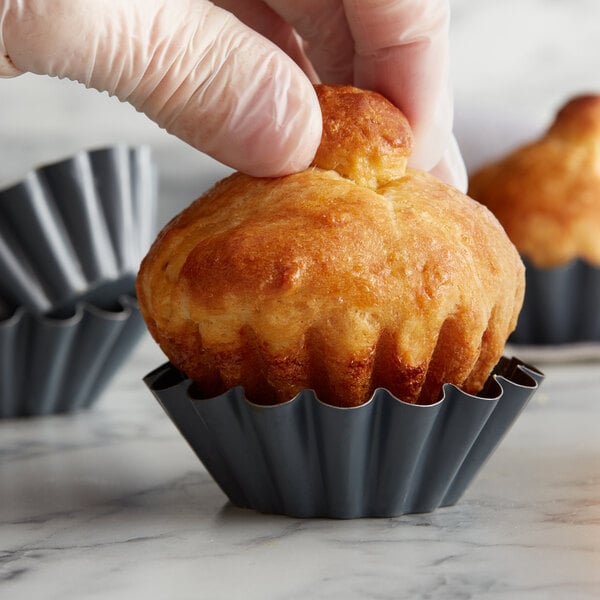
Developed by Mafter Beurgeat, Exopan® baking pans are made from fine steel, providing excellent durability. They can withstand temperatures from -20 to 450 degrees Fahrenheit. Their edges are rolled over copper wire, enhancing strength and promoting even heat distribution. They require minimal greasing but are more expensive than other baking pan materials.
- Used for: Cake, bread, tarts, quiches
- Dishwasher safe? Yes
- Non-reactive? No
Baking Pan Coatings
Non-stick coatings and glazes reduce the ability of foods to stick to the surface of your baking pans, making cooking and cleanup easier. By using baking pans with non-stick coatings, you can significantly reduce the amount of oils and fats needed to make your baked goods.
- PTFE: PolyTetraFluoroEthylene (PTFE) coatings offer a durable, heat-resistant finish and nearly complete chemical inertness. They are designed to last through 3000+ uses.
- DuraShield®: Proprietary to Chicago Metallic, this coating offers a durable, heat-resistant finish and is certified free of potentially harmful perfluorooctanoic acid (PFOA). It is designed to last through 3000+ uses.
- AMERICOAT® ePlus: Proprietary to Chicago Metallic, this leading silicone release technology provides up to 30% more release than other competing silicone glazes for long-lasting performance. It is PFOA-free and reduces pan oil usage by up to 50%.
Baking Pan Colors
The color of your baking pan may not be the first thing that comes to mind when selecting bakeware, but it can play a significant role in how your foods cook. Choose a color that best fits the needs of your chefs and the foods on your menu.
- Light baking pans: These pans absorb less heat and are ideal for baking foods where minimal browning on the bottom is desired, such as cakes and cookies.
- Dark baking pans: These pans absorb heat well and distribute it quickly. This promotes browning, making them perfect for dishes that require a crispy exterior, like pizza or cornbread.
- Purple baking pans: Purple baking pans are designed for allergen-free cooking, allowing you to create separation from your other dishes and reduce the risk of cross-contamination.
Related Resources

June 2026 WebstaurantStore Coupon Code
Summer is upon us, and to celebrate WebstaurantStore has blazing hot deals all month long! With summer vacations underway and holidays like Independence Day rapidly approaching, now is the time to stock up on essential supplies and equipment you'll need to get through the summer season. Take a look at our wide array of sale items below and don't forget to enter the code SUMMERSALE at checkout to enjoy up to 20% off your purchases! Looking to save even more? Check out the new Webstaurant Rewards® Visa Business Card ! Sign up for a new card today and start earning rewards on every WebstaurantStore purchase, and save on a WebstaurantPlus subscription. Have a look at some incredible deals on disposable items with June's monthly coupon code! Whe

Types and Styles of Baking Cups
Baking cups are essential supplies for any bakery . These versatile cups are used to line cupcake or muffin pans and prevent the batter from sticking to the sides. They come in a range of sizes, colors, and materials to suit a variety of confections and create unique presentations. Shop All Baking Cups
How to Start a Bakery
Whether you dream of opening a donut shop or a boulangerie, starting a bakery allows you to serve niche markets and express culinary creativity without taking on the financial burden of opening a restaurant. You can even start your bakery business from home before investing in a commercial space. While bakeries are comparatively accessible foodservice businesses, they present unique challenges. From writing a bakery business plan to getting funding and filing for permits, we walk you through each step of opening a bakery. Shop All Bakery Supplies Jump to a specific step of opening a bakery: Choose Your Bakery Style Write a Bakery Business Plan Get Startup Loans Lease a Bakery Location Bakery Permits and Licenses Order Bakery Equipment Desig
Join Our Mailing List
Receive coupon codes and more right to your inbox.