

Nothing affects the longevity and daily performance of your knives more than sharpening and maintenance. When it comes to knife safety, a dull knife is more dangerous than a sharp one. There are different ways to sharpen a knife, such as using a manual or electric sharpener, but using a sharpening stone or whetstone is preferred by professionals because it removes less steel from the blade than other methods. We'll teach you how to sharpen a knife with a stone for a long-lasting edge that cuts through ingredients safely and quickly so you can perform all the classic culinary knife cuts.
How to Sharpen a Kitchen Knife Video
Learn how to sharpen a knife with a stone and hone the edge with a rod in our sharpening video.
Knife Sharpening Angle Guide
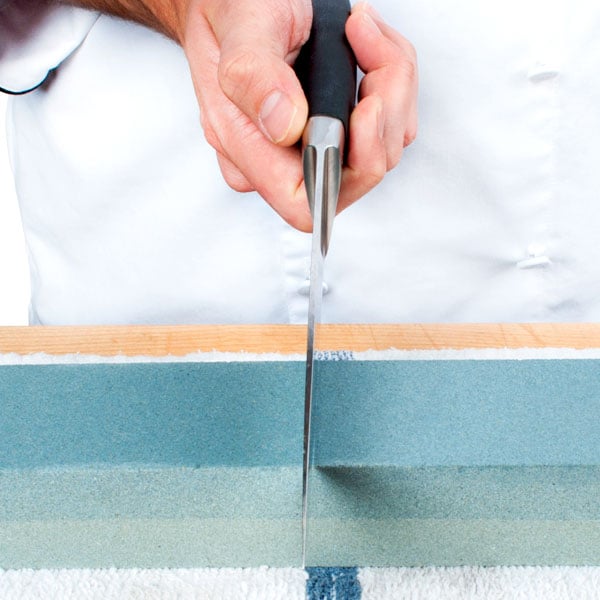
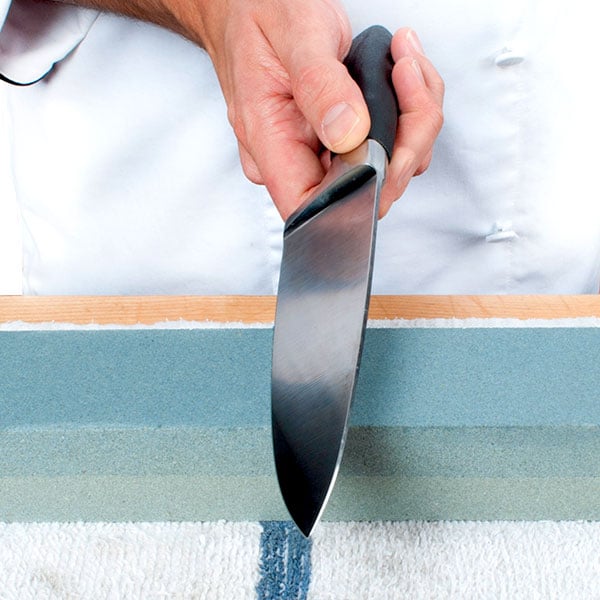
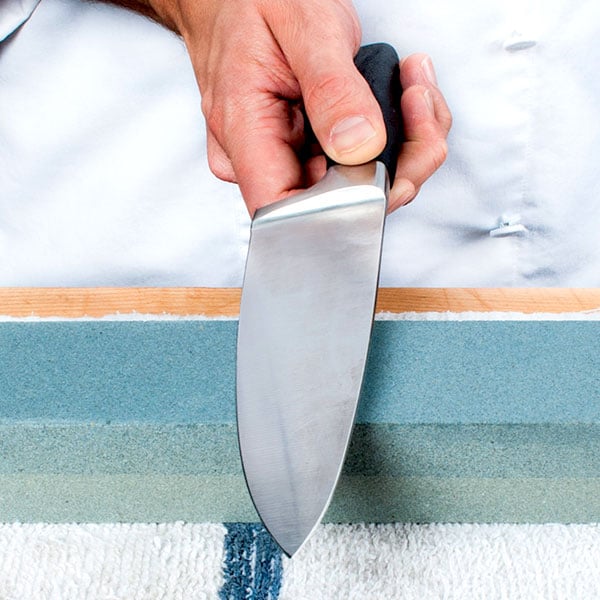
Knife sharpening should always start with finding the right angle for the blade. Many types of chef knives work best with a 22.5-degree angle. Follow these simple steps to find the perfect angle for restoring the sharpness of your blade.
- Place blade down: Hold the knife with the blade down, at a 90-degree angle.
- Rotate blade halfway: Move the knife to a 45-degree angle, halving the distance between the 90-degree angle and the table.
- Rotate blade halfway again: Once more, move the knife to half of the remaining angle. Now you have a good estimate of the appropriate sharpening angle. You can adjust the angle up or down as needed.
Please Note: Japanese chef knives require a 10- to 15-degree sharpening angle, which is harder to achieve. Unless you are very skilled at knife sharpening, take your Japanese knives to a professional knife sharpener.
How to Use A Sharpening Stone
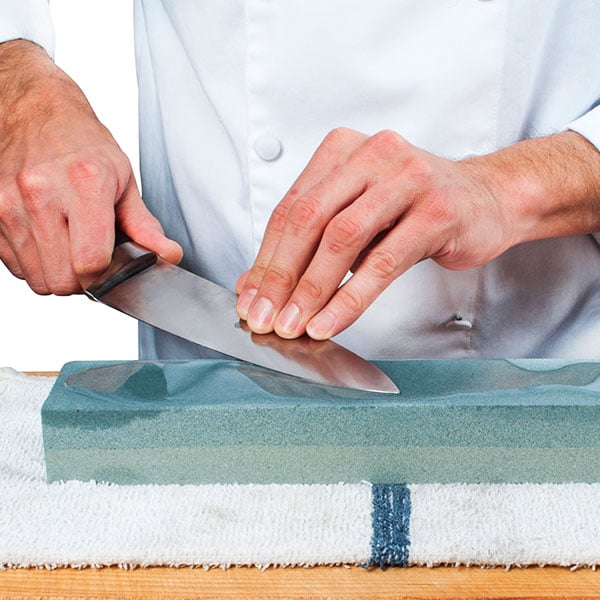
Once you've found the correct angle for your knife, you can begin sharpening with a stone. This technique might take some time to get used to, but it's one of the best methods for sharpening knives. The act of sharpening grinds away part of the blade, so over time, the edge is worn down. With a sharpening stone, less of the blade is worn away so the life of your chef knife is extended.
What Is a Whetstone?
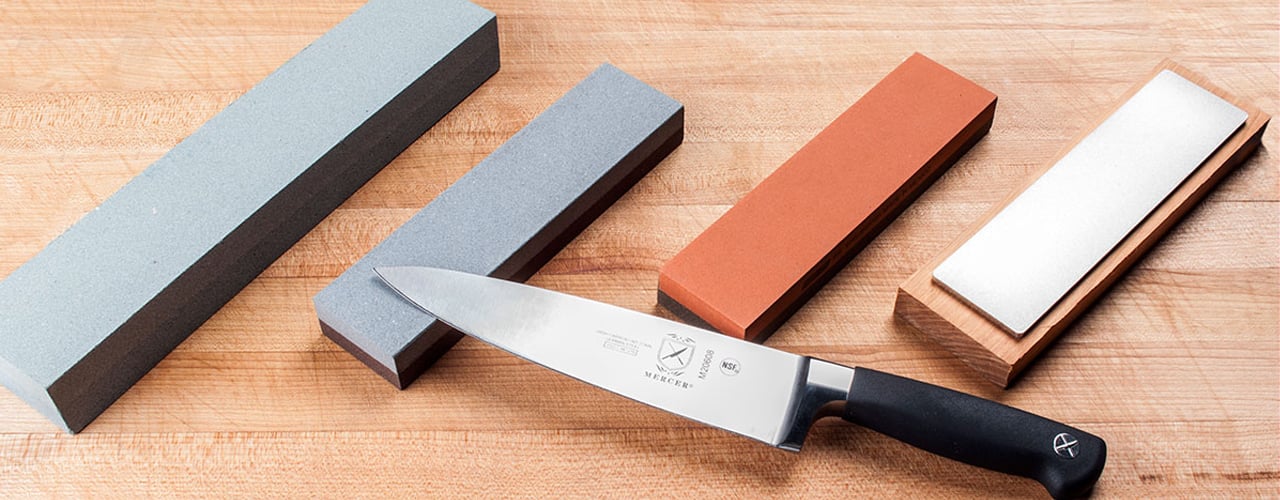
Whetstone is another name for a sharpening stone. This rectangular block is made of a gritty stone material that is very efficient at sharpening knives. But does the stone actually get wet? It depends — there are some types of whetstones called water stones that must be soaked in water before use. Our instructions below are for a sharpening stone that doesn't require soaking. Make sure to check your manufacturer's instructions for any nuances.
How to Use a Whetstone
Follow these steps to sharpen your knives with a whetstone:
- Prepare workspace: Put your sharpening stone on a moist towel atop a flat surface.
- Begin coarse side up: Before you start sharpening your knives, make sure that the coarse side of the stone is on top. This is the quickest way to form the knife blade back into the correct shape.
- Lubricate the stone: Be sure to check the manufacturer’s specifications for how to properly lubricate your sharpening stone. Some options like diamond stones don't need any lubricant at all, so be sure to check the stone's instructions.
- Begin sharpening: With your knife at a 22.5-degree angle, slowly draw the knife down and across the stone in a smooth motion, starting at the heel and finishing at the tip.
- Repeat: Once you've begun sharpening, repeat this action five times. You may need to repeat this motion additional times, depending on the dullness of the knife.
- Change sides and continue: Flip the knife to the other side and sharpen the reverse side using the same motion. You should sharpen this side the same number of times as the other side for consistency.
- Sharpen in reverse: Return the knife to the original side, but this time, draw the knife from the tip to the heel. Repeat this motion five times.
- Change sides again: Flip to the reverse side and sharpen from tip to heel five times.
- Sharpen final side: Turn your sharpening stone over to the fine side and repeat steps 1-5.
- Hone the blade with a sharpening steel: Follow up the sharpening process by honing the edge of the knife with a honing rod.
Please Note: When sharpening knives with a sharpening stone, consistency is key. Be sure to use the same angle each time and sharpen both sides of the knife equally.
How to Hone a Knife
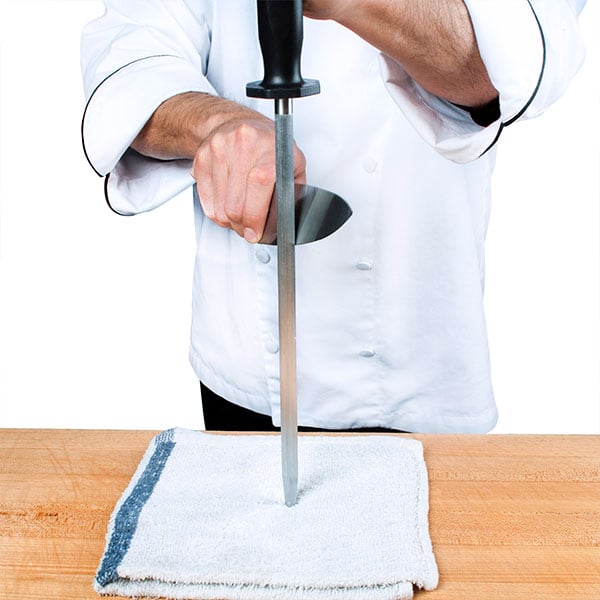
Many sharpening steels are actually designed for honing a knife edge instead of sharpening it. These long metal rods are also called sharpening rods, honing rods, or honing steels. Honing is an important step after sharpening because it aligns the blade edge.
What Is the Difference Between Honing and Sharpening a Knife?
When you sharpen a knife, the blade is ground down to produce a new, sharp edge. The blade will bend just a little bit from the pressure and create a raised edge called a burr. Honing is required to remove the burr and put the blade edge back into alignment.
How to Use a Sharpening Steel
Learn how to hone a knife with a sharpening steel following our steps below:
- Position steel: Hold the steel straight up and down and rest the tip on a cutting board or work table.
- Position knife: Place your knife edge against the steel at a horizontal angle.
- Angle knife: Turn the knife until it's roughly at a 22.5-degree angle with the sharpening steel.
- Begin honing: Gently pull the knife down and back across the sharpening steel, going from the heel to the tip of the knife.
- Repeat: Once you've begun, repeat this motion five to ten times.
- Change sides: Switch to the other side of the blade and steel, and repeat the same motions.
How to Flatten a Sharpening Stone
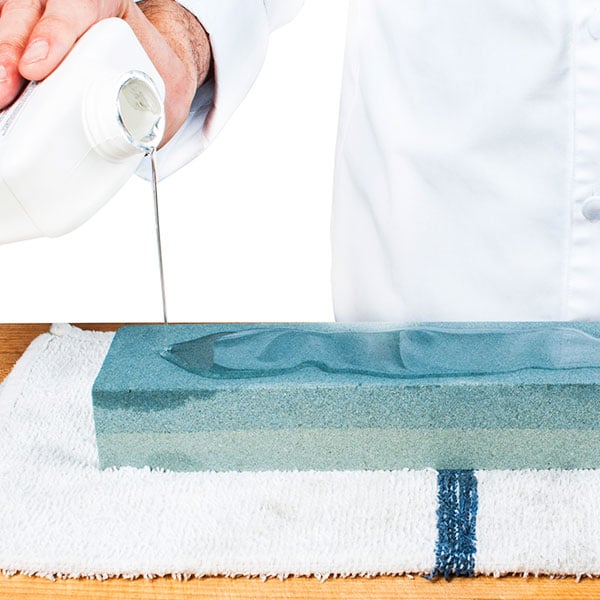
Since the middle wears down more quickly than the edges, sharpening stones become uneven with use. If you don't flatten your sharpening stone, it will round the edges of your kitchen knives.
Execute these simple steps to flatten your sharpening stone:
- Place stone on a flat surface: To ensure that you have a working base to level the stone, we recommend using a flat surface such as a cutting board.
- Choose lubricant: Check the documents that came with your sharpening stone to see whether it requires oil or water.
- Lubricate the stone: Put a small line of oil or water down the middle of the stone. Gently massage and disperse the oil or water across your sharpening stone.
- Begin smoothing: Smooth the stone by rubbing it with 100 grit sandpaper until it is flat.
- (Optional) Repeat: If your stone has coarse scratch marks, repeat the previous step with 400 grit sandpaper. Or, if your stone shows little wear, simply wipe it down with a 400 grit paper and skip the previous step.
Please Note: Never apply food oils such as vegetable or olive oil to sharpening stones. Only use honing oils approved for sharpening stones.
Knife Sharpness Test
After you've sharpened your knife with a stone and honed the edge, how do you know if it's sharp enough? You can perform a knife sharpness test with a tomato! Tomato skin is thin but strong, so only a sharp knife will slice cleanly through the tomato without damaging the fruit.
To perform the sharpness test, place a clean tomato on your cutting board. Press the knife edge against the tomato and apply light pressure to perform a cut. The blade should sink into the skin without tearing. A dull knife blade will produce a rough tear or won't cut through the skin at all. If your knife fails the tomato sharpness test, try honing the blade one more time.
How to Sharpen a Knife with a Rod
Even though the metal rod that came with your knife set is called a sharpening steel, it doesn't actually sharpen your knives. Use the sharpening steel to hone the knife edge after you've sharpened it with a whetstone.
How to Clean a Sharpening Stone
To clean your sharpening stone after use, simply use a damp towel to wipe away any metal shavings and excess oil. There is no need to rinse or wash your sharpening stone after use. After wiping down your sharpening stone, place it back in its box or store it in a dry place.
Not only does regularly sharpening your chef knives with sharpening stones and steels make food prep easier, but it can also prevent accidents and injuries in the kitchen. Use this guide to Incorporate knife maintenance into your routine.