


From the venue to the menu, weddings are expensive. According to The Knot’s data, the average couple pays $70 a head to feed their reception guests, bringing most wedding catering fees over $9,000. If you’re looking for an economical way to cater your wedding, a DIY reception menu is a potential solution.
While self-catered weddings require careful planning and budgeting, they can create an affordable and personal celebration. Self-catering is incredibly meaningful for couples who share a passion for cooking. Read on to learn how to cater your own wedding and decide if a DIY reception menu is right for you.
How to Plan a Wedding Reception with DIY Catering
The most important aspect of planning a wedding reception with DIY catering is organization. From ingredients and servingware to cooking equipment and cleanup supplies, you need to write down everything you need, research the best prices, and establish an execution timeline. For a smooth and budget-friendly experience, follow these steps to plan a wedding reception with DIY catering.
1. Decide How You Want to Serve Your Reception Meal
How you plan to serve your meal affects the food items you select. If you want a full course meal, you’ll require multiple small dishes. If you’re creating an action station, you must consider all the toppings and add-ins you want to offer.
DIY brides must choose a food service style they can prepare in advance to minimize stress on the day of the wedding. You will either need the food squared away prior to your ceremony starting, or you will need to hire people to carry appetizer trays and clear your guests' plates.
Best and Worst Wedding Food Service Styles for Self Catered Weddings
From dessert-only receptions to family-style feasts, there are numerous wedding food service styles. We break down your reception food serving style options and explain which formats work best for DIY catering.
- Cocktail Style Reception - Save yourself the expense and hassle of preparing a sit-down dinner with a cocktail style reception. Set up an hors d’oeuvres table for your guests to graze on in between dancing the night away! A sumptuous charcuterie board requires little prep work, and there are many premade appetizers you can buy in bulk, making hors d’oeuvres receptions an excellent choice for self-catered weddings.
- Buffet Style Reception - If you want to have a full dinner, buffets are a great option for self-catered receptions. The last thing you want to worry about is getting hot food to tables during your event. Chafing dishes preserve food-safe temperatures so you can set up buffet lines in advance. Buffets allow your guests to serve themselves, saving you money on hired wait staff.
- Station Style Reception - Station-style receptions are growing in popularity. While they’re traditionally staffed by a chef, you can set up DIY stations in your event space. Popular options for station-style reception meals are taco stations, potato bar stations, and pasta bar stations. Station-style receptions allow guests to customize their meal, so they can build it to their dietary needs and flavor preferences.
- Dessert Reception - Feeding a crowd is extremely expensive. If you feel like you can only invite a handful of guests to affordably feed everyone, you have another option – just serve dessert! Everyone’s favorite part of a wedding feast is the cake and sweets, so set up a killer dessert table for your guests to enjoy. From macaron towers and donut walls to s'mores makers and ice cream bars, there are so many ways to create a fun and interactive dessert reception you and your guests will love.
- Family-Style Reception - While you may think your homemade reception dinner is perfect for family-style service, we recommend you strongly reconsider. Family-style receptions use servers to deliver food to guests at their pre-assigned tables. The last thing you need to worry about at your reception is transporting food from the kitchen. You can always ask your loved ones to help, but keep in mind that if they’re serving your guests, they can’t participate in the fun themselves. Another option is to hire wait-staff, but this will increase your costs.
- Plated Sit-Down Style Reception - The most traditional and formal wedding reception style is not well suited for self-catered weddings. Plated sit-down dinners offer guests multiple courses (anywhere from three to twelve), which is a lot of food to prepare. You’ll also have to purchase the appropriate servingware for each dish and hire waiters to serve each course. If you have dreams of a plated sit-down-style reception, then DIY catering is not for you.
2. Create a Simple, Personal Menu
While imported ingredients and intricate dishes are attractive, you should keep your wedding menu simple if you’re preparing it yourself. You’ll be serving a sizable number of guests, so choose dishes that are neither labor nor cost-intensive. Attempting a new dish is the food equivalent of cutting bangs right before your wedding. Stick to a recipe you have practice making because producing it in bulk will be challenging enough. Use our recipe converter to bulk up your favorite dishes without altering their flavor.
Self Catered Wedding Menu Ideas
A simple menu with just a few crowd-pleasing options saves you stress and helps your food come out well on the day of the event. Don’t feel pressured to provide several hors d’oeuvres, three main entrees, and four side dishes. The beauty of a self-catered wedding is you can truly personalize it. Use beloved family recipes and dishes that speak to your respective cultures. This is your day. This is your menu. Keep it simple and special. For inspiration, consider these DIY reception dinner ideas that are easy to make in bulk while still providing a satisfying amount of protein per person:
- Salad - Panzanella salad, garden salad, burrata salad
- Rotisserie Meats - chicken, prime rib, ham
- Pasta - carbonara, pappardelle Bolognese, chicken rigatoni
- Roasted Vegetables - balsamic brussels sprouts, maple glazed carrots, curried cauliflower
- Rice Dishes - fried rice, arroz con pollo, jambalaya
3. Buy Your DIY Catering Supplies in Bulk
The wedding industry has inflated prices, so renting your reception supplies usually isn’t the most cost-effective option. Instead of renting items like vending carts and utility carts, purchase wholesale catering equipment and supplies. Ownership saves you the hassle of returns after your wedding. Keep mementos from your celebration, reuse them for your next big occasion, or sell your supplies to a bride-to-be and recoup some of your investment. You can find the chinaware, flatware, and glassware you need from a restaurant wholesaler.
Buying in bulk is key for staying within your wedding budget. Most likely, you will require larger quantities of ingredients than you’re used to working with. When purchased from a grocery store, items like spices and sauces add up fast. Disposables and dinnerware are key to serving your meal, but they can devour your budget if you don’t look for the best deal. Review your carefully planned menu and purchase the ingredients and supplies you need in bulk to secure the best price.
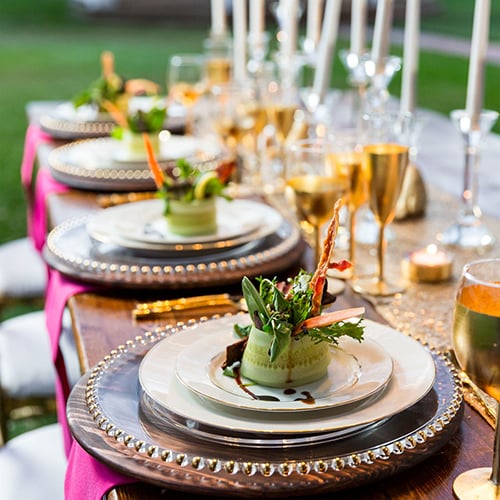
Buying bulk supplies lowers your presentation costs as well. Enhance the appearance of your tables with wholesale candles, tabletop displays, and linens and table covers. Purchasing reception decor from a wholesale retailer can save you a lot of money, freeing you to use the venue of your dreams or purchase the perfect dress.
Back to Top4. Ask for Help
Self-catered doesn’t mean solo catered. When making plans to cater your own wedding, remember that you are one person. In fact, you are one very busy person around the time of your wedding. From photo ops to first dances, your wedding day will be filled with a frenzy of fun. Food will probably not be at the forefront of your mind, nor should it be. Remember that you’re not in this alone. Rely on your partner, a close friend, or family to assist in the organization and delegation of tasks.
While you should do everything you can to prepare in advance, you will still need assistance setting up and breaking down your food stations on the day of your wedding. You may want to enlist outside help to execute your reception dinner so your loved ones can participate in the festivities. Ask around and see if there is anyone in your outside circle looking to make pocket money. You can also put out an ad and see if local teenagers or college students would help out in exchange for cash. Depending on the formality of your event, you may need to train them in fine dining etiquette for servers.
5. Create a Catering Cleanup Plan
No matter how much planning and preparation you put into your big day; you will likely have some food leftover. Not only do you need to make sure that you leave no food behind, but you must also have a removal plan for any cooking equipment, serving supplies, or displayware that you brought. If you are taking your honeymoon immediately after the wedding, be sure to delegate these tasks to someone you trust, so nothing gets left behind at the venue.
To thank your friends and family who helped you cater your wedding, provide take-out containers so they can take leftover food home. If you and your partner share a commitment to giving back, consider contacting a local homeless shelter before your wedding and set up a plan to donate leftovers after your reception.
6. Write Out a Catering Timeline
With your menu ironed out and your help lined up, it’s time to write out your reception catering schedule. Many venues limit access to their space, so let your assistants know when to arrive and when they need to start packing up. Schedule times for warming, serving, and cleaning up the food. Don’t forget to incorporate a cocktail hour and cake cutting into your timeline.
Sample Wedding Catering Timeline
| Time | Task |
| 12:00 - 3:00 | Set up and decorate the venue |
| 3:00 - 6:00 | Prepare food |
| 6:00 - 6:30 | Send food out to buffet line or send appetizers out with servers |
| 6:30 - 7:30 | Appetizers end, dinner is served |
| 7:30 - 8:00 | Send food back to the kitchen and tear down the buffet line |
| 8:00 - 10:00 | Wash dishes, put away food, and clean up the kitchen |
| 10:00 | End of event |
Self Catering Wedding Checklist
You’ll need a solid catering supplies checklist to make sure nothing is forgotten. You can click below for a downloadable catering checklist template:
Download Our Catering Checklist PDF
Ask yourself the following questions to make sure you’ve checked all the boxes and are ready to cater your own wedding.
- Does your venue have cooking equipment?
- Does your venue have refrigeration?
- How will you transport your supplies to and from the venue?
- When will you cook the food?
- What temperature must you maintain for your food to be safe to eat?
- How will you keep your food at that temperature?
- If you are using chafing dishes, when will you light them?
- How will you light your chafer fuel?
- Do you have serving utensils?
- Who will prepare/warm the food once your wedding has started?
- Who will clear the food while you are spending time with your guests?
- Do you have somewhere to clean the dishes afterward?
Back to Top
How to Safely Cater Your Own Wedding
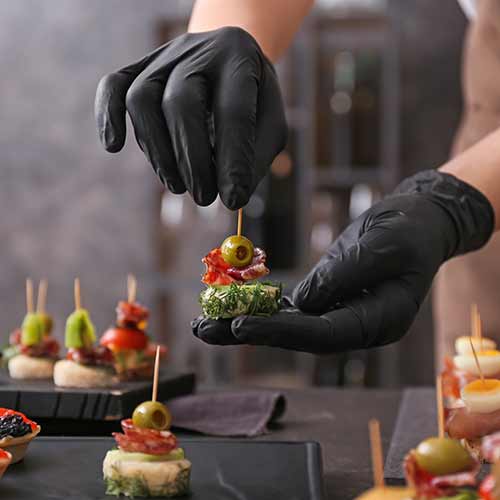
Thousands of people each year get sick from improper food handling. To make sure your wedding reception doesn’t aid in that statistic, educate yourself on safe food handling techniques. You’ll need to supply your helpers with gloves and proper sanitizing chemicals for use throughout the day. Use food thermometers to keep your meal out of the temperature danger zone.
The COVID-19 pandemic increased awareness of transmittable diseases and expectations for sanitation. For a deep dive into post-pandemic catering, read our guide to safe event planning for caterers.
Is It Cheaper to Cater Your Own Wedding?
If you purchase your supplies in bulk and stick to a simple menu made with inexpensive ingredients, it is usually cheaper to cater your own wedding. However, if you have your heart set on a complex menu that requires a lot of labor and serving supplies, it’s typically less expensive to hire an experienced caterer who already has the tools and expertise required.
If you work with a caterer, you will agree on a price, and your final bill will remain in that range (with slight fluctuations based on market prices and ingredient availability). With self-catering, it’s dangerously easy to go over your projected budget.
How to Hire a Wedding Caterer
If catering your own wedding sounds like more work than you want to take on, it’s time to start searching for a caterer who can create the reception of your dreams. You don’t have to hire a traditional caterer for your wedding. If you were hoping for something personal, fun, and interactive, have your favorite food truck cater your reception. Below, we have a few tips for hiring a wedding caterer:
- Finding a caterer: Many venues have a list of preferred caterers. If you don’t like the options they provide, do an internet search for caterers in your area.
- Figuring out pricing: Ask how much you will be paying per dish. The caterer may even have flat rate packages for different reception sizes.
- Budgeting for price fluctuations: Remember that the cost may end up being different than the caterer’s original quote, depending on market prices and ingredient availability.
- Asking for a tasting: If you are going to invest in a caterer, make sure you love their food by trying a sample menu.
Back to Top
Catering your own wedding is a major undertaking, but it can be a great way to cut costs. Joining forces with family and friends to create a wedding feast can make the day more meaningful. If you're considering catering your own wedding, use this article to get organized and prepare for your big day.