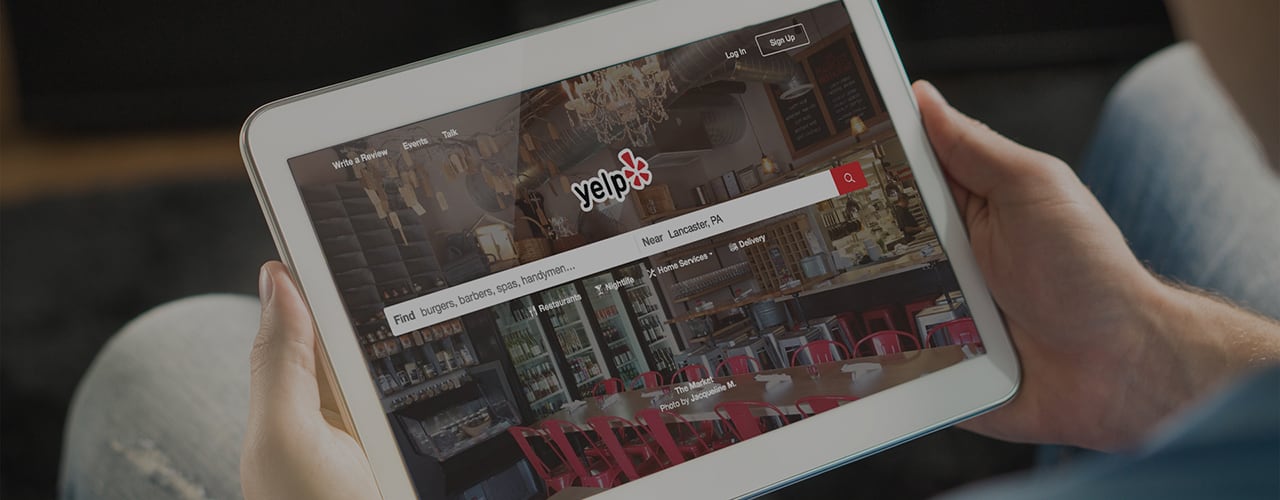
One of the most popular sites for finding, rating, and reviewing bars and restaurants is Yelp. And having a favorable score on Yelp can create a free advertising boost that can bring in more customers. That’s because, for many, the search for a new restaurant starts on the Internet, with 90% of customers seeking out online reviews before making a purchase from a business. Keep reading to learn how this popular site can affect your business and the best practices you can use for getting more Yelp reviews.
How Does Yelp Work?

Yelp is a social media website that allows customers to review their experience at foodservice establishments. Over 50 million new customers visit Yelp’s website a month. The website features over 135 million reviews and 90% of total Yelp users say that the reviews they read impact their purchases. Yelp rewards customers who post frequent and useful reviews by providing them with the title of Elite Yelper and extra influence. These Yelp reviewers hold a higher impact on a restaurant's Yelp score.
Yelp also provides important business information including the address, hours of operation, and amenities included in order to help potential customers decide where to eat. While the website was created with the consumer in mind, they offer tools that business owners can use to communicate with customers and market their restaurant. These include the ability to add a menu, update business profile information, view visitor activity, and respond to customer reviews.
How to Get Yelp Reviews
When it comes to Yelp, you’ll want not only positive reviews but a lot of reviews in general. This creates the impression that your establishment is popular and busy, which is an appealing attribute for future guests. So, how can you get more Yelp reviews? Here are a few tips on what to do and not to do in order to get your customers to leave reviews of your business online.
1. Don’t Ask for or Influence Your Customers’ Reviews
If you want to get more Yelp reviews, authenticity is key. You want customers to give their honest impression of your business, because that honesty is what will persuade other customers to visit your establishment.
Explicitly asking customers to leave a positive Yelp review is not recommended. Doing this could easily turn off some customers from writing a review altogether or, even worse, coming back to your restaurant.
Never Buy Yelp Reviews or Add Fake Ones
One important thing you need to know about Yelp is that they punish users who buy Yelp reviews or have employees leave fake Yelp reviews. The website and its community of loyal followers can easily tell when an unauthentic review has been posted. The Yelp algorithm, as well as other filters, and programs are in place to help them find fake and paid Yelp reviews.
Associating your business with these types of reviews can have a negative impact on your restaurant. If the website determines that you buy Yelp reviews, it will post a Consumer Alert banner on your page for 90 days. This banner will notify your potential customers that your company was caught attempting to pay for Yelp reviews, which will break their trust in your brand. Yelp fake reviews and paid endorsements are also a violation with the Federal Trade Commission (FTC) and can result in serious fines or further repercussions.
Yelp filters reviews with these common attributes as fake or insincere:
- No profile image on the reviewer's profile
- Review lacks specifics about the dining experience
- Review is under 135 characters
- Reviewer writes similar reviews each time
- Review is either entirely negative or entirely positive, sometimes sounding exaggerated
- Reviewer has little to no review history with other businesses
- Reviewer has little to no “Yelp friends” on the profile
- Reviewer’s profile includes no information about themselves
- Reviewer posts multiple reviews around the same time or in a day
- Reviewer posts a 5-star review for one company and a 1-star review for its competitor
Yelp’s algorithm will err on the side of caution and filters out reviews that sound fake even when they may be real reviews. For that reason, it is important to advertise review options for all of your customers, encouraging as many of them as possible to write an authentic Yelp company review.
2. Post Reminders and Yelp Signs in Your Dining Space

There are ways that you can let your customers know you’re on Yelp and interested in receiving reviews without explicitly asking. Directly asking for a review is against the Yelp review policy, but a simple “Let us know how we’ve been doing!” sign in your business and on social media is an effective way to encourage your guests to share their thoughts.
Place an official Yelp sticker around your establishment to let guests know your business is active on the site and you’d appreciate their reviews. Consider placing these stickers near your cash register or front door so it’s the last thing your customers see before leaving. Seeing the Yelp stickers in your business may remind your customers to write a Yelp review when they return home.
Yelp even offers the HTML coding that allows you to add a Yelp badge on your website and social media profile pages. You may pair the badge with a caption inviting customers to visit your Yelp page, along with some authentic review examples that previous customers have written. If you do so, choose well-formatted reviews that can show customers how to write a Yelp review that will be approved by the Yelp review filtering process.
3. Follow up with Customers After Their Experience
Customers usually don’t think about leaving a review after a dining experience. It is estimated that only 15 in 1,000 customers will bother to write a review about a business. A great way to increase the number of customers who are willing to leave a review is by following up with them after their experience.
This interaction can begin face-to-face by training your staff to ask your customers how their meal and experience was before presenting the check. If the customer expresses a positive experience, kindly suggest that they share their feedback online on their favorite review website. If the experience was negative, you then have a chance to make it up to the customer by asking further questions and offering some sort of discount or freebie as an apology. This may save your Yelp business page from a negative review.
Consider adding a location on your receipt where customers can provide their email or phone number for feedback. You can then enter their information into ReputationStacker’s system, and the website will automatically send them a single-question survey asking about their experience. Once your customer replies, they will be guided to the review sites of your choice and you will be notified about any negative reviews that need addressing.
4. Offer Exclusive Deals and Gift Certificates on Yelp
While businesses should not offer deals or coupons in exchange for reviews, Yelp Deals can be an effective way to get customers in the door and leaving a review of your business. These deals can be in the form of a discount coupon or a gift certificate, and customers can print or pull up these coupons on their smartphones to easily show their server.
Offering a discount or coupon is an excellent way to bring Yelp users into your establishment and, because they got the coupon from Yelp, there's a good chance that they'll leave a review after their visit. You may also offer a discount or promotion to customers who bring in a copy of their Yelp review, regardless of star rating, during their next visit. This will encourage them to write reviews on Yelp and become repeat customers.
5. Respond to Both Negative and Positive Yelp Reviews
It is inevitable that customers will post negative reviews on Yelp, but negative reviews aren’t always bad Yelp reviews! Fortunately, Yelp allows owners to respond to reviews, so you can turn negative reviews into a positive for your business.
Here are some tips you can use when responding to a negative review:
- Respond within 2 weeks of the original review posted
- Read the entire review before responding
- Start the response by apologizing and thank them for reaching out
- Admit any mistakes your business may have made in the situation
- Include details in your response that show you read the whole review
- Do not insult the customer or accuse them of lying
- Defend your business without becoming defensive
- Try to offer a solution or offer to contact the customer directly for further discussion and a personal resolution
- Provide manager contact information such as a phone number or email
Try to reserve public messages for comments that will benefit all customers. If you can add something to a positive review, then post it publicly—but recognize that multiple public “thank yous” can look like pandering to customers for reviews. If your customers posted a review, it means they had such an impressive visit that they want to share it.
6. Keep Your Business Profile Up to Date
As a restaurant or bar owner, you need to claim your Yelp business page to ensure the information posted is accurate. Yelp licenses business information from third party data collectors and posts that information online. As a result, the information that Yelp puts up on your business's page isn't always correct.
It’s also important to post your restaurant’s menu on Yelp. This could be the difference between a guest coming to check out your new dinner special or heading to their regular place down the block. Posting a menu will also give you the advantage when out-of-town guests are looking for somewhere to eat.
Yelp is a valuable resource for curious consumers and business owners who refuse to pay for reviews. Thanks to an entire community built on offering candid, honest feedback, restaurants can be held accountable for their actions, praised by happy customers, and offered valuable critique to help them improve. Follow these simple tips to build your business’s reputation and get more reviews on Yelp.